







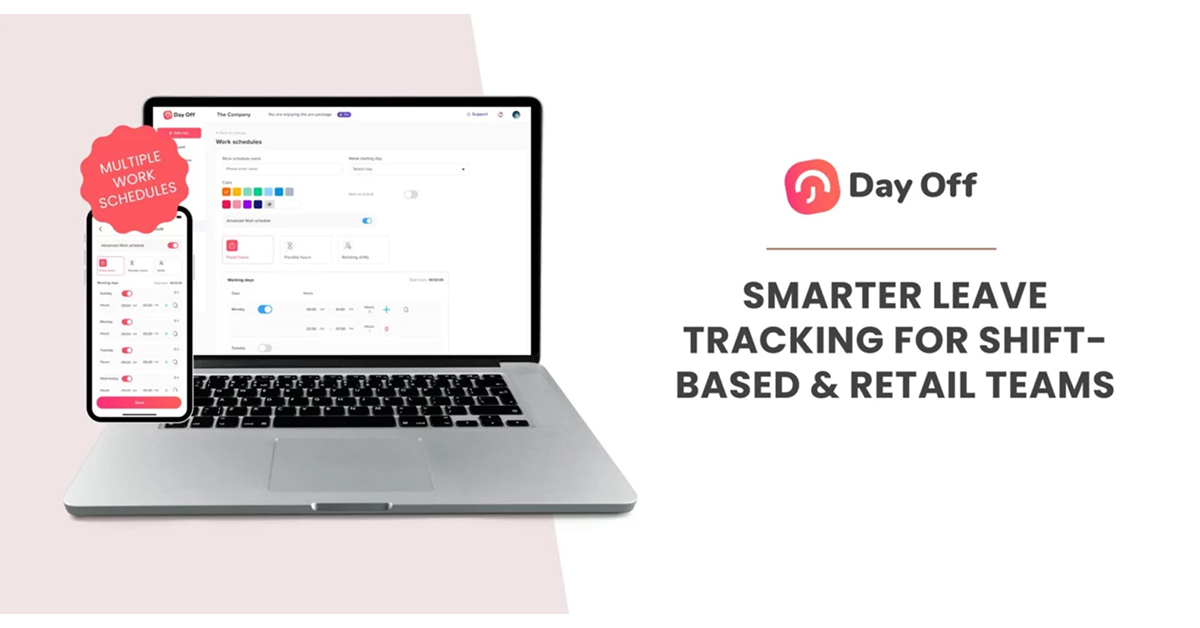
Leave management is one of the most underestimated operational challenges in shift-based and retail organizations. While leave tracking may seem simple on the surface, when employees request time off and managers approve it, the reality is far more complex when schedules change daily, staffing levels must be precise, and customer demand is unpredictable.
For retail stores, restaurants, warehouses, healthcare facilities, and any team operating in shifts, poor leave tracking leads directly to coverage gaps. These gaps impact customer experience, employee morale, compliance, and revenue.
This article provides a comprehensive, step-by-step exploration of how leave tracking works in shift-based and retail environments, where most teams fail, and how businesses can design a system that ensures full coverage without sacrificing employee wellbeing. We will also explore how Day Off helps teams modernize leave management and eliminate coverage risks.

Why Leave Tracking Is More Complex in Shift-Based & Retail Teams
Constantly Changing Work Schedules
Unlike office teams with predictable weekly schedules, shift-based employees work under rotating and often changing patterns. An employee may cover early mornings one week, late nights the next, and weekends or split shifts depending on demand.
Because schedules are fluid, leave cannot be treated as a simple “Monday to Friday” absence. A single day off can affect multiple shifts, disrupt handovers, or remove coverage during peak hours. Without a system that understands actual work schedules, managers may approve leave without fully seeing its operational impact.
Minimum Coverage and Role-Specific Requirements
Retail and shift-based teams don’t operate on headcount alone. Each shift requires specific coverage, including a minimum number of employees, mandatory roles such as supervisors or key holders, and compliance with legal or safety requirements.
Approving leave for one supervisor may be manageable, but approving two for the same shift can make operations impossible. Effective leave tracking must therefore account for who is off, not just how many employees are absent.
High Volume of Leave Requests
Shift-based environments often include part-time employees, students, and seasonal workers. These teams naturally generate a higher volume of leave requests, often for short periods or irregular timeframes.
When requests are handled manually, managers quickly become overwhelmed. This increases the risk of overlapping approvals, missed conflicts, and inconsistent decisions that lead to coverage gaps.
Short-Notice Absences
Unplanned absences due to illness, emergencies, or last-minute changes are more common in shift-based work. Without real-time visibility into leave and availability, managers are forced into reactive scheduling, calling staff at the last minute, reshuffling shifts, or relying on overtime.
Over time, this reactive approach strains both operations and employees, making proper leave tracking essential rather than optional.
The Hidden Business Cost of Coverage Gaps
Coverage gaps are not just scheduling inconveniences; they represent a real and often underestimated business cost. When the right people are not in the right place at the right time, the impact quickly spreads across operations, employees, and management.
Operational Disruptions
Understaffed shifts immediately affect day-to-day operations. Checkout lines grow longer, customer service slows, and essential tasks such as restocking or cleaning are delayed or skipped altogether. In retail and service environments, these disruptions are highly visible to customers and can directly damage both revenue and brand perception,even when they occur for short periods.
Employee Burnout and Turnover
When leave and coverage are poorly managed, the pressure falls on the employees who are present. They are asked to work longer hours, give up planned time off, or repeatedly step in to cover gaps. Over time, this creates fatigue and frustration, particularly among reliable team members who feel punished for their availability. The result is higher burnout, disengagement, and ultimately increased staff turnover, further intensifying staffing challenges.
Management Overload
Managers caught in leave and coverage chaos spend a disproportionate amount of time reacting to problems rather than leading their teams. Hours are lost updating schedules, responding to messages, and resolving last-minute conflicts. Instead of focusing on performance, training, or improving the customer experience, managers are forced into constant firefighting, draining both productivity and morale.
Common Leave Tracking Mistakes in Shift-Based Teams
Many coverage issues don’t come from staff shortages, but from avoidable mistakes in how leave is tracked and approved. In shift-based environments, small process gaps can quickly escalate into operational problems.
Relying on Spreadsheets or Paper
Manual leave tracking systems quickly become outdated in fast-moving teams. They struggle to reflect real-time changes, are difficult to share across managers, and often lead to version confusion. A single missed update or overwritten file can result in entire shifts being left understaffed.
Informal Leave Approvals
When leave requests are approved through WhatsApp messages, emails, or verbal conversations, there is no reliable audit trail. Details are easily forgotten or misunderstood, leading to disputes over what was approved and when. Over time, this creates inconsistency and erodes trust between managers and employees.
Approving Leave Without Full Visibility
Approving leave without clear visibility into who else is already off, which shifts are affected, and whether minimum coverage requirements are still met is one of the most common causes of coverage gaps. Without this context, well-intentioned approvals can unintentionally disrupt operations.
Inconsistent Leave Policies
When leave rules are unclear or applied inconsistently, employees begin to perceive favoritism, unfair treatment, or unpredictable decision-making. This damages morale, increases conflict, and makes leave management more difficult over time.
What an Effective Leave Tracking System Must Include
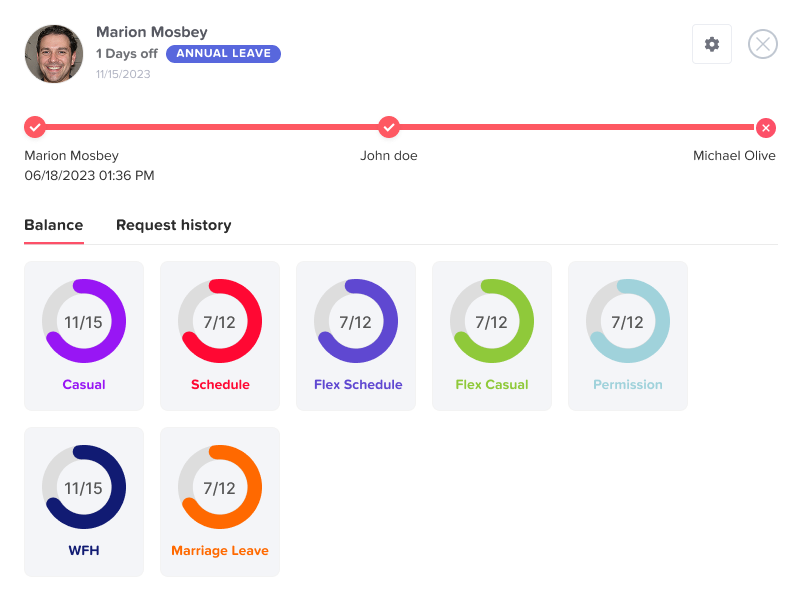
An effective leave tracking system for shift-based teams goes far beyond simply recording PTO balances. It must support fast-moving schedules, provide real-time visibility, and help managers make informed decisions that protect both operations and employee wellbeing.
Centralized Leave Requests
All leave requests should be submitted and managed through a single, centralized system. This creates one source of truth, ensuring no requests are missed or overlooked. A centralized approach also provides a clear approval history, making it easy to see who approved what and when, and improving accountability across the organization.
Real-Time Visibility Across the Team
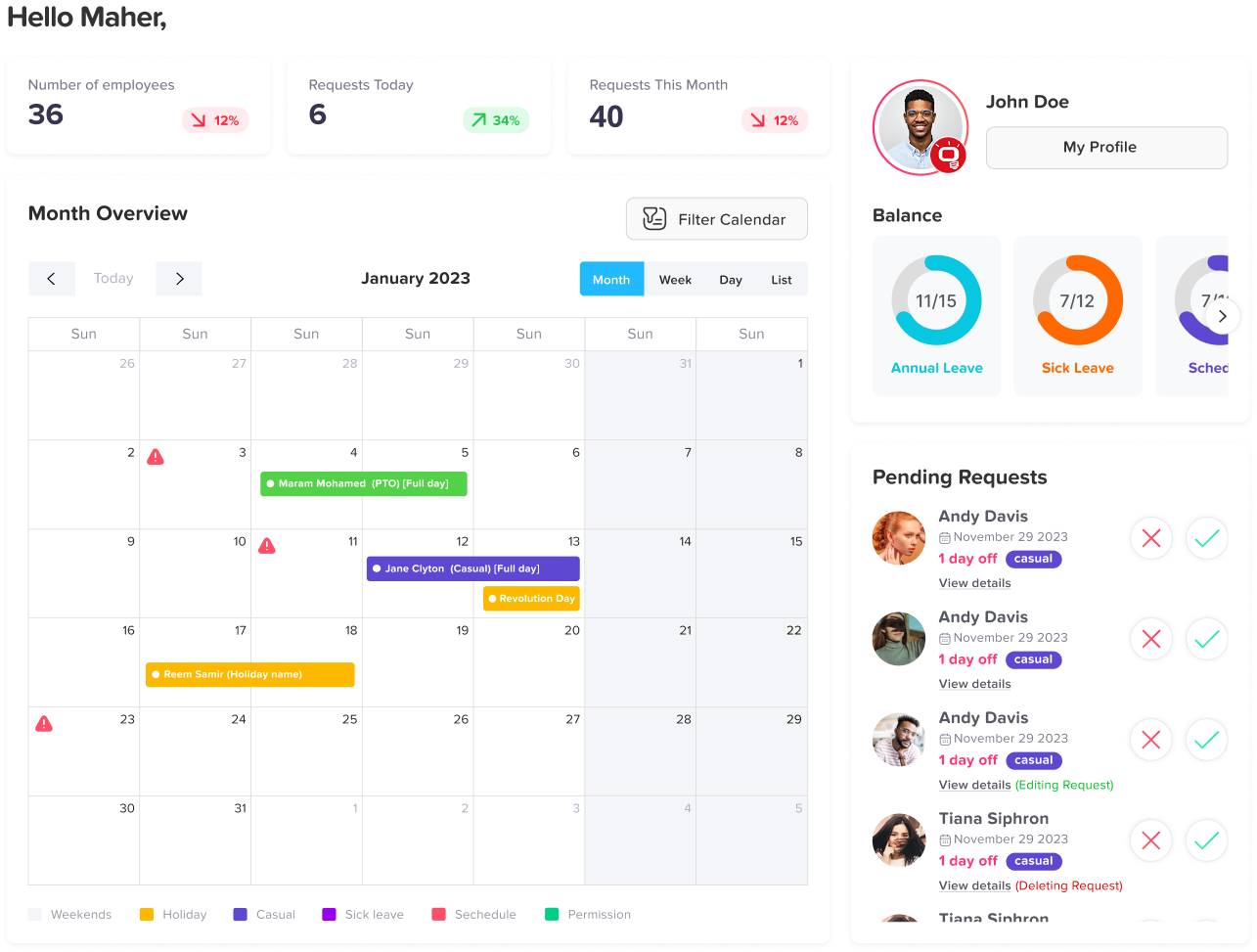
Managers need immediate, real-time insight into team availability. This includes visibility into who is off today, who will be off in the coming days or weeks, and where leave overlaps occur. With this level of awareness, managers can plan, adjust schedules proactively, and prevent coverage gaps before they happen.
Structured Approval Workflows
Leave requests should follow a consistent and well-defined approval process. Employees submit requests through the system, managers review them with full visibility into schedules and coverage, and every decision is clearly recorded. Structured workflows remove ambiguity, reduce back-and-forth communication, and ensure leave is approved fairly and consistently.
Transparency for Employees
Transparency is critical to building trust in any leave system. Employees should always be able to see how much leave they have remaining, the status of their requests, and the rules that apply to time off. When expectations are clear, employees are less likely to question decisions, disputes are reduced, and overall satisfaction improves.
Day Off Leave Tracker
Day Off is a modern leave and work schedule management platform built for teams where availability, coverage, and fairness truly matter. Designed with shift-based and retail organizations in mind, Day Off helps businesses manage time off in a way that aligns with real work schedules, operational needs, and employee wellbeing.
Unlike traditional leave tools that treat time off as a simple balance deduction, Day Off connects leave management directly to work schedules and team availability. This allows managers to approve leave with full context, prevent coverage gaps, and plan confidently, even in environments with rotating shifts, flexible hours, and changing demand.
With centralized leave requests, real-time visibility, flexible scheduling, configurable policies such as notice periods, and a built-in shift planner, Day Off gives organizations the structure they need to stay fully staffed while offering employees transparency, fairness, and control over their time off.
How Day Off Helps Prevent Coverage Gaps
Day Off is designed to remove complexity from leave management in shift-based environments. By combining leave tracking with work schedule visibility, it helps managers make informed decisions that protect coverage while giving employees a clear and fair experience.
One Central Place for Leave Management
Day Off brings all leave requests, approvals, and records into a single platform. This eliminates scattered messages, lost emails, and verbal approvals, ensuring every request is tracked and auditable. Managers and employees share one source of truth, reducing confusion and administrative overhead.
Integrated Work Schedules and Real-Time Availability
Unlike basic leave tools, Day Off connects leave directly to work schedules. Managers can see who is scheduled to work, who is off, and how leave requests overlap with upcoming shifts. This real-time visibility makes it easy to identify coverage risks early and avoid approving leave that would leave critical shifts understaffed.
Smarter, Context-Aware Leave Approvals
With full visibility into schedules and availability, managers can review each leave request in context. Before approving, they can immediately see which shifts are affected and whether coverage requirements are still met. This leads to better decisions, fewer last-minute emergencies, and more stable operations.
Fair and Transparent Leave Balances for Employees
Day Off gives employees clear insight into their leave balances, request status, and leave history, all in one place. Combined with visibility into work schedules, this transparency helps employees plan time off more responsibly and reduces back-and-forth with managers.
Built for Retail and Shift-Based Operations
Day Off is purpose-built for teams where schedules change frequently, and coverage is critical. It supports retail stores, hospitality teams, warehouses, logistics operations, healthcare, and support services, in any environment where leave decisions must align with real-world scheduling needs.
Flexible Work Schedules Built for Real-World Teams
Day Off supports the reality that not all employees work the same way. Teams can create multiple work schedules to match different roles, contracts, and operating models, while still keeping leave calculations accurate and coverage under control.
Multiple Schedule Types to Match Any Team
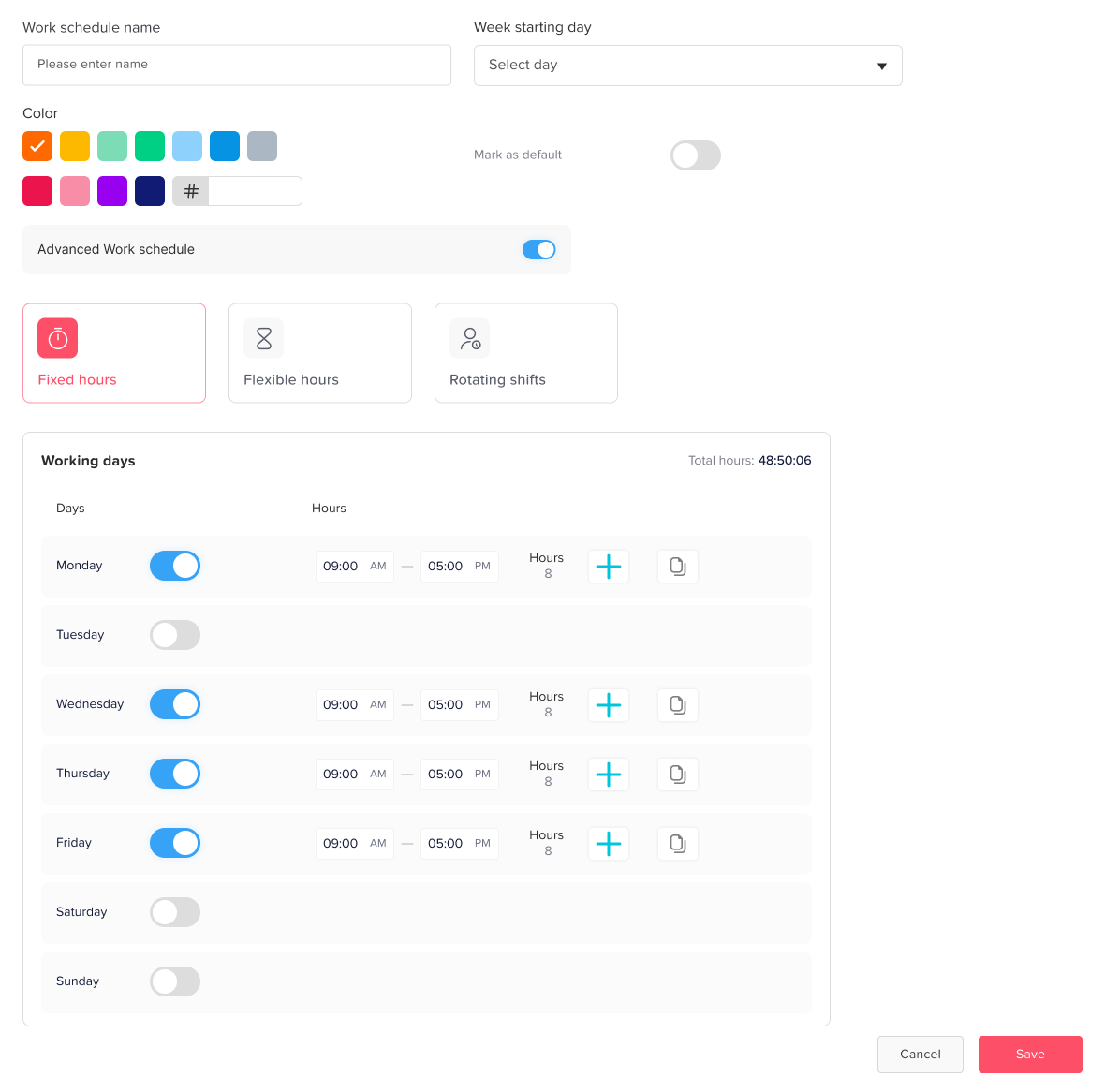
Day Off allows managers to create and manage multiple work schedules within the same organization. Schedules can be set up as fixed working days, fixed working hours, flexible hours, or rotating shifts. This makes it easy to support full-time staff, part-time employees, and shift workers side by side without forcing everyone into a single schedule structure.
Individual Schedule Customization
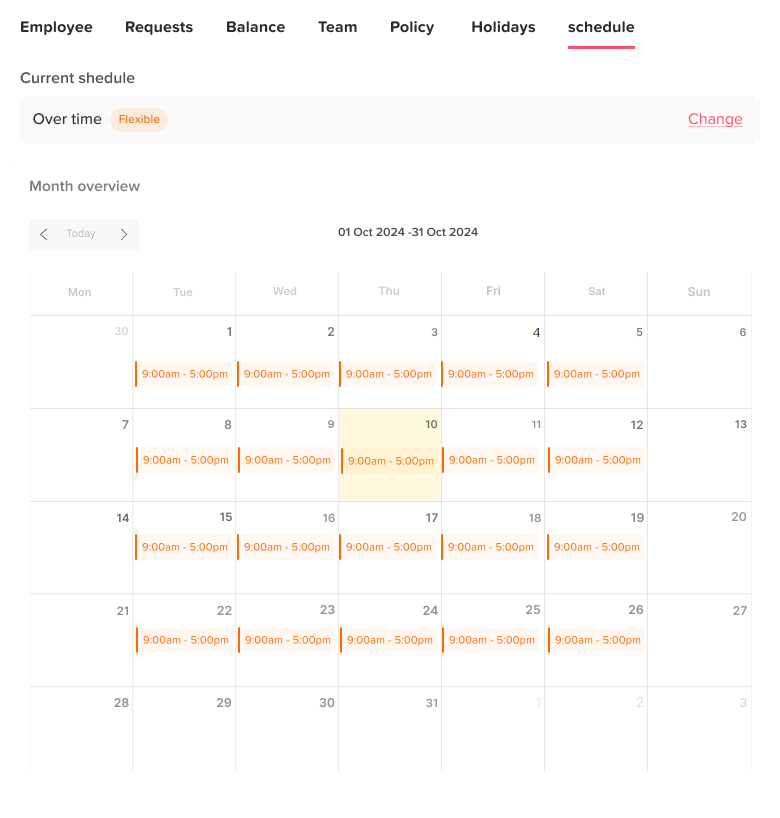
While schedules can be defined at a team or role level, managers can still manually edit schedules for individual employees when needed. This flexibility is essential for handling special arrangements, temporary changes, or unique contracts, without breaking the overall scheduling logic.
Leave Calculated Based on Actual Work Schedules
In Day Off, time off is always calculated based on each employee’s assigned work schedule. Whether an employee works fixed hours or rotating shifts, their leave is deducted accurately according to the days or hours they were scheduled to work. This ensures fairness, consistency, and compliance across the team.
Built-In Shift Planner
Day Off also includes a shift planner that helps managers visualize and plan coverage across schedules. By combining shift planning with real-time leave data, managers can quickly see who is available, assign shifts confidently, and adjust plans before coverage gaps appear.
Together, these scheduling capabilities allow Day Off to handle complex workforce setups with ease, helping teams stay organized, fair, and fully staffed, even as schedules change.
Best Practices for Avoiding Coverage Gaps
Avoiding coverage gaps requires more than reactive scheduling. It depends on clear policies, proactive planning, and the right tools to support consistent decision-making across the team.
Define Clear Leave Policies
Clear and well-communicated leave policies set expectations for both employees and managers. This includes defining advance notice requirements, setting limits on how many employees can be off during the same shift, and applying restrictions during peak or high-demand periods.
When rules are clearly established, leave decisions feel fair and predictable, reducing conflict and misunderstandings. Day Off supports this by allowing organizations to configure leave rules directly in the system, including notice period requirements, so requests that don’t meet policy guidelines can be flagged or restricted automatically.
Align Leave Planning With Scheduling
Leave should never be reviewed in isolation. Every request needs to be evaluated in the context of existing schedules, role requirements, and coverage needs. When leave and scheduling are disconnected, gaps are almost inevitable.
Day Off aligns leave planning with work schedules by showing how each request affects upcoming shifts and overall availability. This integrated view helps managers make informed decisions and ensures coverage is considered before approvals are granted.
Encourage Early Leave Requests
The earlier employees submit leave requests, the more flexibility managers have to adjust schedules, redistribute shifts, or plan coverage without disruption. Last-minute requests limit options and increase reliance on overtime or emergency call-ins.
Day Off encourages early planning through clear notice period rules and transparent request workflows. Employees know how far in advance they need to submit requests, and managers gain the time they need to plan effectively.
Use Data to Improve Planning Over Time
Leave data provides valuable insight when reviewed over time. Patterns can reveal high-risk periods, recurring staffing shortages, and seasonal trends that consistently impact coverage.
With Day Off, this information is captured automatically, helping managers move from reactive scheduling to proactive workforce planning. By using real data rather than assumptions, teams can improve staffing decisions, adjust policies, and reduce coverage risks long-term.
Balancing Business Needs and Employee Wellbeing
Avoiding coverage gaps is not about restricting or denying leave, it’s about managing time off in a way that supports both the business and its people. When leave is handled responsibly, organizations can maintain operational stability while still prioritizing employee wellbeing.
With proper leave tracking, employees feel respected and treated fairly. They can trust that their time off is recorded accurately, their requests are reviewed consistently, and their need for rest is taken seriously. This sense of fairness helps protect morale and prevents burnout.
At the same time, clear visibility into leave and schedules allows teams to operate smoothly. Managers can plan, avoid last-minute disruptions, and ensure coverage without placing unnecessary pressure on available staff.
Day Off helps organizations strike this balance by bringing structure, transparency, and real-time insight to leave and scheduling. The result is stronger business continuity, without sacrificing fairness, trust, or employee wellbeing.
Frequently Asked Questions (FAQ)
Why is leave management harder in shift-based and retail teams than in office environments?
Shift-based teams operate with rotating schedules, variable hours, and role-specific coverage requirements. Unlike fixed office schedules, a single day of leave can impact multiple shifts or critical roles. This makes leave decisions more complex and increases the risk of coverage gaps if leave is not reviewed alongside real schedules.
What are coverage gaps and why are they such a problem?
Coverage gaps occur when a shift does not have enough staff, or the right roles, to operate effectively. They lead to longer wait times, reduced service quality, employee stress, compliance risks, and lost revenue. In customer-facing environments, even short gaps are immediately visible and damaging.
Why do spreadsheets and manual systems fail for leave tracking?
Spreadsheets and paper-based systems cannot keep up with real-time changes in availability, shift swaps, or short-notice absences. They are difficult to share, easy to overwrite, and often outdated, leading to missed conflicts and accidental understaffing.
How does linking leave to work schedules prevent coverage gaps?
When leave is reviewed in isolation, managers may approve requests without seeing which shifts are affected. Linking leave to work schedules provides full context, showing who is scheduled, who is already off, and whether coverage requirements are still met before approvals are made.
Can Day Off handle different types of work schedules?
Yes. Day Off supports multiple schedule types, including fixed days, fixed hours, flexible hours, and rotating shifts. Teams can also manually customize schedules for individual employees while keeping leave calculations accurate and fair.
How is time off calculated for employees with rotating or flexible shifts?
In Day Off, leave is always calculated based on the employee’s assigned work schedule. Whether someone works rotating shifts or flexible hours, time off is deducted only for the days or hours they were scheduled to work, ensuring accuracy and fairness.
What is the notice period feature and why does it matter?
The notice period feature allows organizations to define how far in advance leave requests must be submitted. This helps managers plan coverage early, reduces last-minute disruptions, and ensures leave requests align with company policy and operational needs.
How does Day Off help managers approve leave more confidently?
Day Off provides real-time visibility into team availability, scheduled shifts, and overlapping leave. Managers can see the full impact of each request before approving it, leading to smarter decisions and fewer emergencies.
Does Day Off help reduce employee burnout?
Yes. By preventing coverage gaps and reducing last-minute overtime, Day Off helps protect employees’ rest time and distributes workload more fairly. Transparency around leave balances and approvals also builds trust and reduces frustration.
Is Day Off suitable only for retail teams?
No. While Day Off is ideal for retail, it is also widely used by hospitality teams, warehouses, logistics operations, healthcare facilities, and customer support teams, in any environment where shift coverage and availability are critical.
Can employees see their schedules and leave information in one place?
Yes. Employees can view their assigned work schedules, approved and pending leave requests, remaining balances, and company policies in one platform. This clarity empowers better planning and reduces unnecessary back-and-forth with managers.
What is the biggest benefit of using Day Off for leave management?
The biggest benefit is control without complexity. Day Off gives managers the visibility and structure they need to protect coverage, while employees gain transparency, fairness, and confidence in how leave is managed.
Conclusion
Leave management in shift-based and retail environments is far more than an administrative task, it is a critical operational function. When leave is tracked without real-time schedules, clear policies, or full visibility, even well-intentioned decisions can lead to coverage gaps, employee burnout, and unnecessary disruption.
By understanding the unique challenges of shift-based work and addressing common mistakes, organizations can move from reactive firefighting to proactive planning. Effective leave management requires centralized requests, schedule-aware approvals, transparent policies, and data-driven insight, all working together to protect coverage while respecting employees’ need for rest.
Day Off enables this balance by connecting leave tracking directly to real work schedules, supporting flexible and rotating shifts, enforcing notice periods, and providing real-time visibility for both managers and employees. The result is smoother operations, fairer decision-making, and healthier, more engaged teams.
In environments where coverage matters every day, the right leave management system doesn’t just prevent problems, it creates stability, trust, and long-term operational success.