







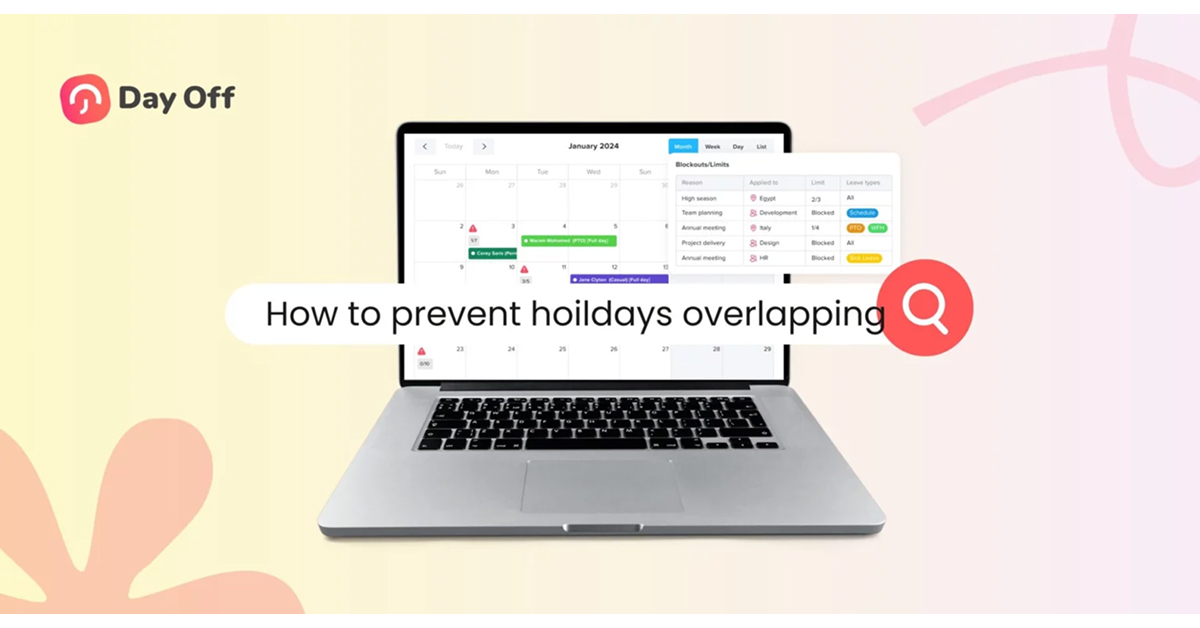
Holiday seasons are when leave management systems are truly tested. Requests surge, overlapping absences become harder to avoid, and even well run teams can suddenly find themselves understaffed. When this happens repeatedly, it is rarely because employees are unreasonable. More often, it is because organizations rely on informal processes, manual tracking, or unclear rules that cannot scale during high demand periods.
Preventing vacation overlaps and staff shortages during holidays requires more than good intentions. It requires structure, visibility, and accurate data. This article breaks down proven strategies in depth and explains how a modern leave management platform like Day Off, used by teams worldwide to manage PTO, sick leave, and holidays, supports these strategies in real, practical ways.

Treat Holiday Leave as a Predictable Workforce Planning Challenge
Why holiday shortages keep repeating
Every year, the same holidays generate the same pressure. Yet many organizations still approach holiday leave reactively, waiting until requests appear in inboxes or spreadsheets. By that point, managers are forced into difficult trade-offs that feel personal and inconsistent.
Holiday leave should be treated as a recurring planning cycle, just like budgeting or performance reviews. When organizations acknowledge that peak leave periods are inevitable, they can plan staffing levels, define expectations, and communicate early.
How Day Off supports proactive planning
Day Off provides a centralized calendar that shows upcoming leave across teams and departments. Managers can see future absences weeks or months ahead instead of discovering conflicts too late. Because public holidays and company holidays can be preconfigured, teams plan around known dates rather than reacting to them. This early visibility turns holiday planning into a controlled process instead of a seasonal emergency.
Build Clear and Transparent Holiday Leave Policies
Why vague policies damage trust
When employees do not understand how holiday leave decisions are made, frustration grows quickly. If approvals appear inconsistent, people assume favoritism, even when managers are simply improvising under pressure.
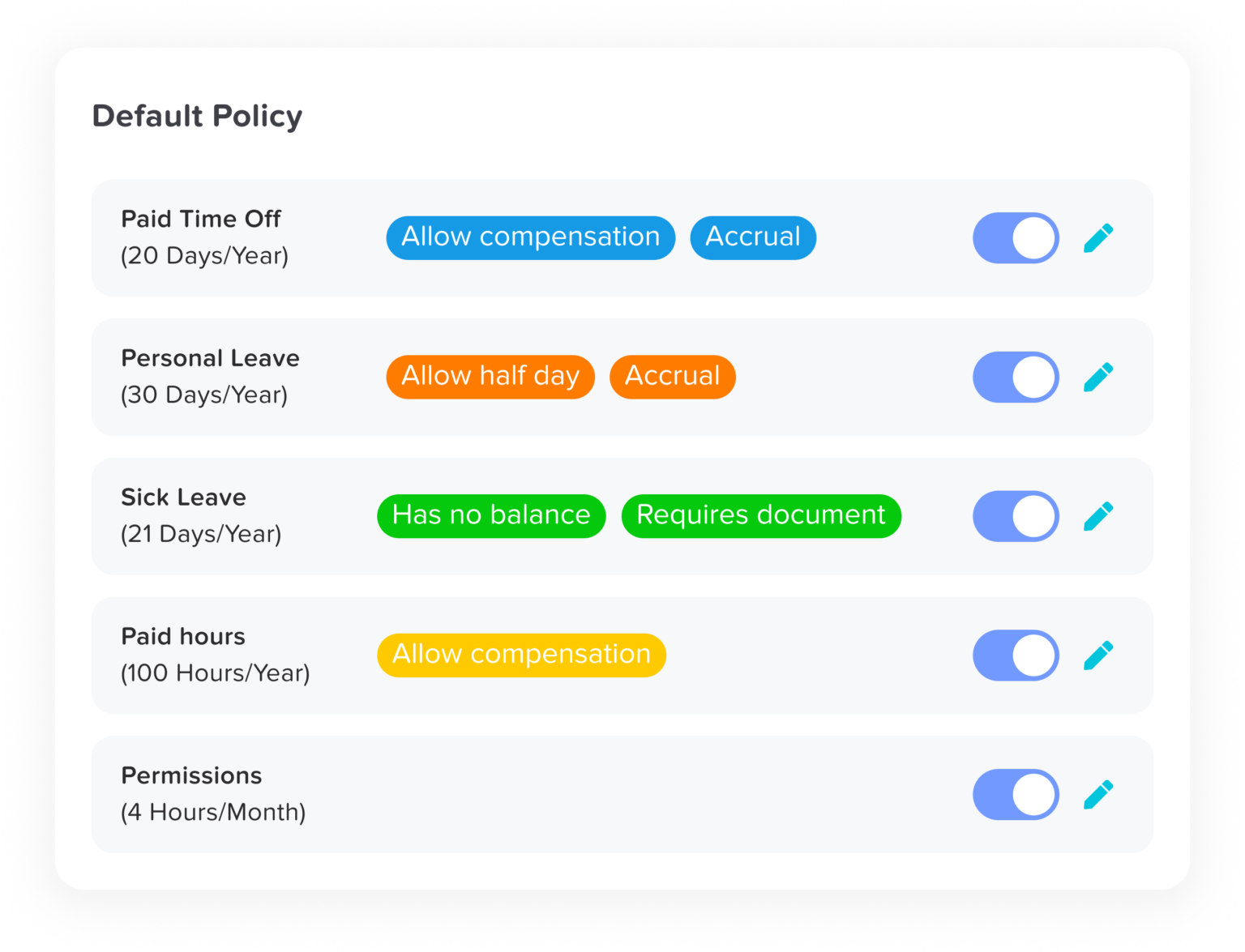
Clear policies reduce emotional tension. They set expectations around how many people can be off at once, how approvals are prioritized during peak periods, and why certain limits exist. Importantly, clarity does not remove flexibility; it simply defines the boundaries within which flexibility operates.
How Day Off enforces policies in practice
Day Off allows organizations to define leave types, approval flows, and balance rules in one place. Employees can see their remaining balance and applicable rules before submitting a request. This transparency reduces unrealistic requests and helps employees understand outcomes without needing lengthy explanations. Managers, in turn, apply the same rules consistently rather than relying on memory or judgment alone.
Move Beyond First-Come, First-Served Approvals
Why speed-based systems feel unfair over time
First-come, first-served appears objective, but it often benefits employees who are constantly online or who happen to see announcements first. Over multiple years, the same people may repeatedly miss out on popular holidays, creating quiet resentment.
True fairness considers patterns, not moments. Employees are more accepting of denied requests when they believe the system balances opportunities over time rather than rewarding speed.
How Day Off enables fairer decisions
Because Day Off stores historical leave data, managers can review who took time off during previous holiday periods and who worked through them. This context allows for more balanced decisions year over year. While Day Off does not automatically enforce rotation, it gives managers the factual insight needed to apply fair judgment consistently.
Protect Critical Roles Without Burning Out Key Employees
The problem with single points of failure
In many teams, certain roles are essential for daily operations. When only one person can perform those tasks, approving their holiday leave feels risky. Over time, these employees feel trapped, repeatedly postponing time off to keep things running.
This is not a leave problem, it is a coverage design problem. Organizations need visibility into where leave is consistently restricted so they can address the underlying issue.
How Day Off reveals coverage risks
By showing who is frequently absent, approved, or blocked during holiday periods, Day Off helps managers identify roles that are creating bottlenecks. When the same employee struggles to take leave every holiday season, it signals the need for documentation, backup planning, or cross training. This insight protects both operations and employee wellbeing.
Use Cross-Training to Increase Holiday Flexibility
Why cross-training directly reduces shortages
Cross-training ensures that work continues even when several people are away. It does not require full expertise, often, basic operational knowledge is enough to maintain continuity during holidays.
Teams that invest in cross training experience fewer leave conflicts, fewer emergency call-ins, and significantly less stress during peak periods.
How Day Off supports smarter cross-training decisions
Patterns in Day Off’s leave data highlight where absence creates the most strain. Leaders can use this information to prioritize cross-training efforts where they will have the biggest impact, rather than guessing where coverage gaps might appear.
Make Leave Visibility a Normal Part of Team Culture
Why hidden leave leads to accidental overlaps
When time off is tracked across private calendars, email threads, or static spreadsheets, employees make requests in isolation. They simply cannot see the broader staffing picture. Managers, meanwhile, often approve requests one by one without a clear view of how those approvals compound over time. The result is predictable: conflicts surface late, coverage gaps appear unexpectedly, and difficult reversals happen after plans are already made. At that stage, options are limited and frustration is high.
How visibility encourages shared responsibility
Visibility changes behavior in a subtle but powerful way. When employees can see who is already off, they naturally factor team impact into their decisions. Instead of being told “no,” they often self-adjust, choosing different dates, shortening leave, or coordinating with colleagues. This shared awareness reduces the need for rigid controls because responsibility is distributed across the team rather than enforced from the top down.
How Day Off makes visibility simple
Day Off centralizes leave information in a shared, real-time calendar accessible to employees, managers, and HR. Everyone sees the same, up-to-date view of approved absences, eliminating guesswork and miscommunication. During holidays, when timing matters most, this transparency significantly reduces accidental overlaps and allows teams to plan collaboratively instead of reactively.
Encourage Flexible and Staggered Holiday Leave
Why flexibility solves more problems than denial
Holiday conflicts often arise not because coverage is impossible, but because too many people request the same exact dates. In reality, many employees are open to flexibility if it means their request can still be approved. Leaving a day earlier, returning a day later, or splitting leave across weeks can preserve essential coverage while still providing meaningful rest. Flexibility transforms leave planning from a zero-sum game into a collaborative problem-solving exercise.
Removing friction from compromise
Even the most reasonable compromise will fail if it feels administratively heavy. When adjusting a request requires multiple emails, manual recalculations, or restarting approval chains, employees are far less likely to propose alternatives. Friction pushes people toward all-or-nothing requests, which increases denials and dissatisfaction.
How Day Off supports flexible requests
Day Off is designed to make adjustments easy. Employees can submit, modify, or split leave requests, including partial days, without administrative complexity. Managers can suggest changes or approve alternatives quickly, keeping the conversation constructive. This ease of adjustment makes staggered leave a practical, everyday solution rather than an exception reserved for emergencies.
Recognize and Reward Holiday Coverage Fairly
Why appreciation matters during peak periods
Employees who work during holidays often do so to support their colleagues and keep the business running. When that effort goes unnoticed, it quietly erodes morale and goodwill. Over time, people become less willing to step up, and managers face even greater staffing challenges. Recognition, when done sincerely and consistently, reframes holiday coverage as a valued contribution rather than an unfair burden.
The importance of accurate records
Fair recognition depends on accuracy. Without reliable data, rewards can feel arbitrary or biased, even when intentions are good. This undermines trust and can create more resentment than no recognition at all.
How Day Off enables fair recognition
Day Off maintains a clear record of who worked during high-demand or peak holiday periods. This allows organizations to recognize contributions based on facts rather than memory, whether through future time off, priority scheduling, or other forms of acknowledgment. Transparency ensures that appreciation feels earned, not political.
Review and Improve After Every Holiday Season
Why reflection prevents repeat problems
Many organizations experience the same holiday staffing issues year after year because they never pause to analyze what went wrong. Over time, stress, last minute fixes, and denied requests become normalized instead of addressed. Without reflection, even the best intentions fail to produce lasting improvement.
Turning leave data into meaningful improvement
Post-holiday reviews reveal patterns that are invisible day to day. Repeated overlaps, frequent denials, or emergency coverage requests all point to deeper issues, whether in staffing levels, policies, or role coverage. When these patterns are identified, leaders can make targeted changes rather than broad, ineffective adjustments.
How Day Off supports continuous improvement
Because Day Off stores historical leave data in one place, leaders can analyze trends across multiple holiday cycles. Reviews become objective and actionable instead of anecdotal. This data-driven insight allows organizations to refine policies, improve planning, and make each holiday season smoother than the last, benefiting both employees and the business.
How Day Off Helps Prevent Holiday Staffing Issues with Blockout Dates
One of the most effective ways organizations prevent vacation overlaps and critical staff shortages during peak periods is by clearly defining when time off is not available. This is where Day Off plays a particularly important role through its blockout dates feature.
What blockout dates really mean in practice
Blockout dates are specific days or periods during which leave requests are restricted or fully blocked. These are typically tied to high demand business cycles such as end-of-year operations, major sales events, audits, product launches, or peak customer support periods. Contrary to common fears, blockout dates are not about denying flexibility, they are about protecting business continuity during the most sensitive times.
When blockout dates are clearly defined in advance, employees can plan their vacations realistically. This removes the disappointment and frustration that come from late denials and replaces it with clarity and predictability.
Why blockout dates reduce conflict instead of creating it
Many holiday staffing conflicts arise because employees submit requests assuming availability, only to learn later that coverage is impossible. Blockout dates eliminate this mismatch between expectation and reality. When restrictions are visible early, employees naturally plan around them, which significantly reduces last-minute disputes and emotional conversations.
Just as importantly, blockout dates apply equally to everyone. This consistency reinforces fairness and prevents the perception that restrictions are applied selectively or arbitrarily.
How Day Off makes blockout dates clear and transparent
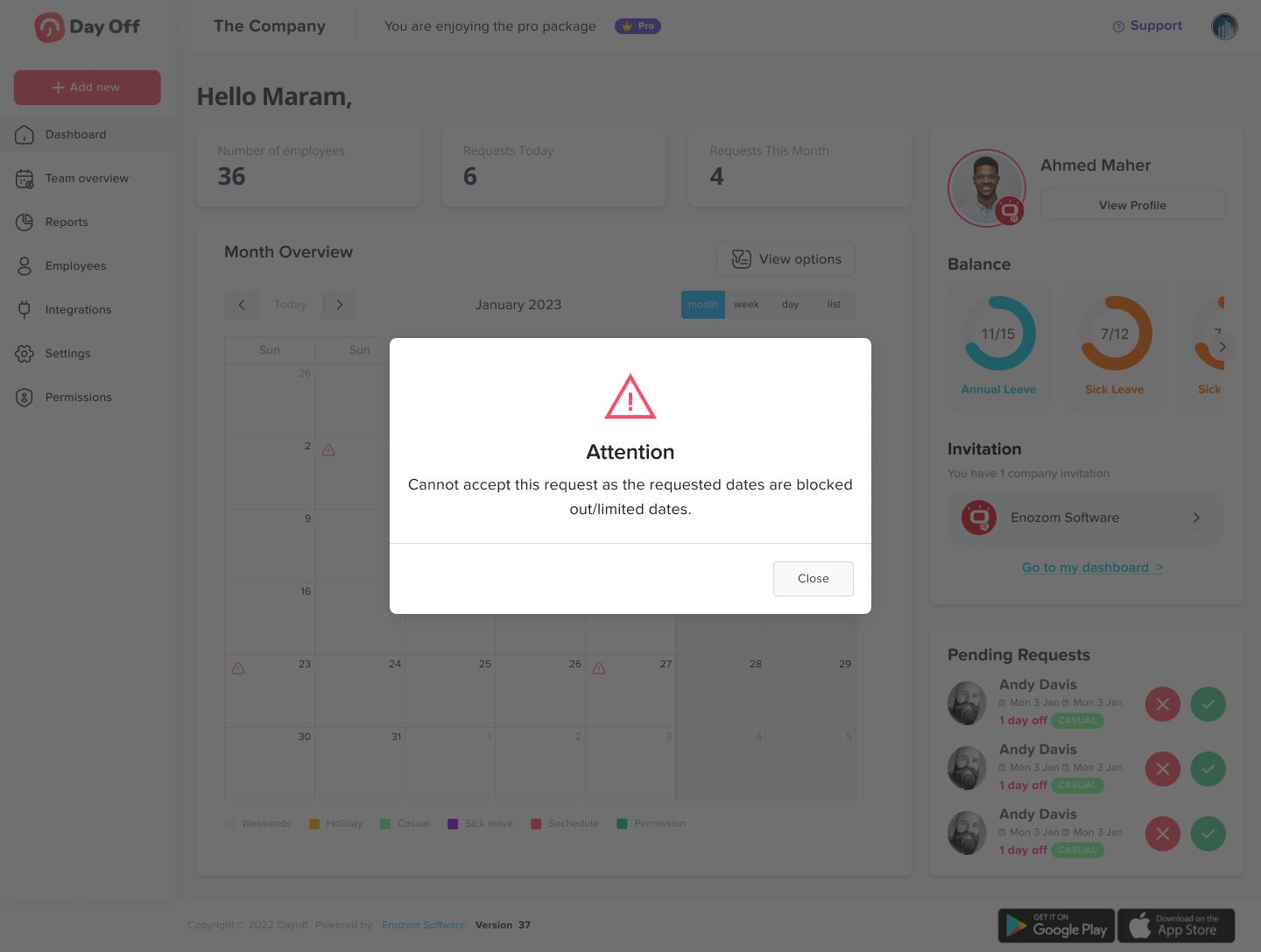
Day Off allows organizations to define blackout dates directly within the leave system. Once configured, these dates are visible to employees at the time they submit a request. If a request overlaps with a blockout period, the system immediately reflects that restriction, removing ambiguity before approval is even needed.
Because blackout dates live inside the same shared calendar used for leave visibility, everyone sees the same rules at the same time. Managers are no longer forced to explain or justify denials repeatedly, and employees are not left guessing which dates are “safe” to request.
Balancing structure with flexibility
Importantly, blockout dates in Day Off do not eliminate managerial discretion. Organizations can still allow exceptions when truly necessary, but those exceptions are conscious, documented decisions, not accidental gaps caused by poor visibility. This balance ensures that structure supports flexibility rather than replacing it.
Why blackout dates are especially valuable during holidays
During holiday seasons, when demand for time off spikes dramatically, blockout dates act as a stabilizing mechanism. They protect essential coverage, set clear boundaries, and reduce emotional friction, allowing managers and employees to focus on planning instead of negotiating.
By using blackout dates thoughtfully, Day Off helps organizations move from reactive holiday crisis management to calm, predictable, and fair leave planning, even during the busiest times of the year.
How Blackout Dates Work in Day Off
Full or Limited Blockout Options
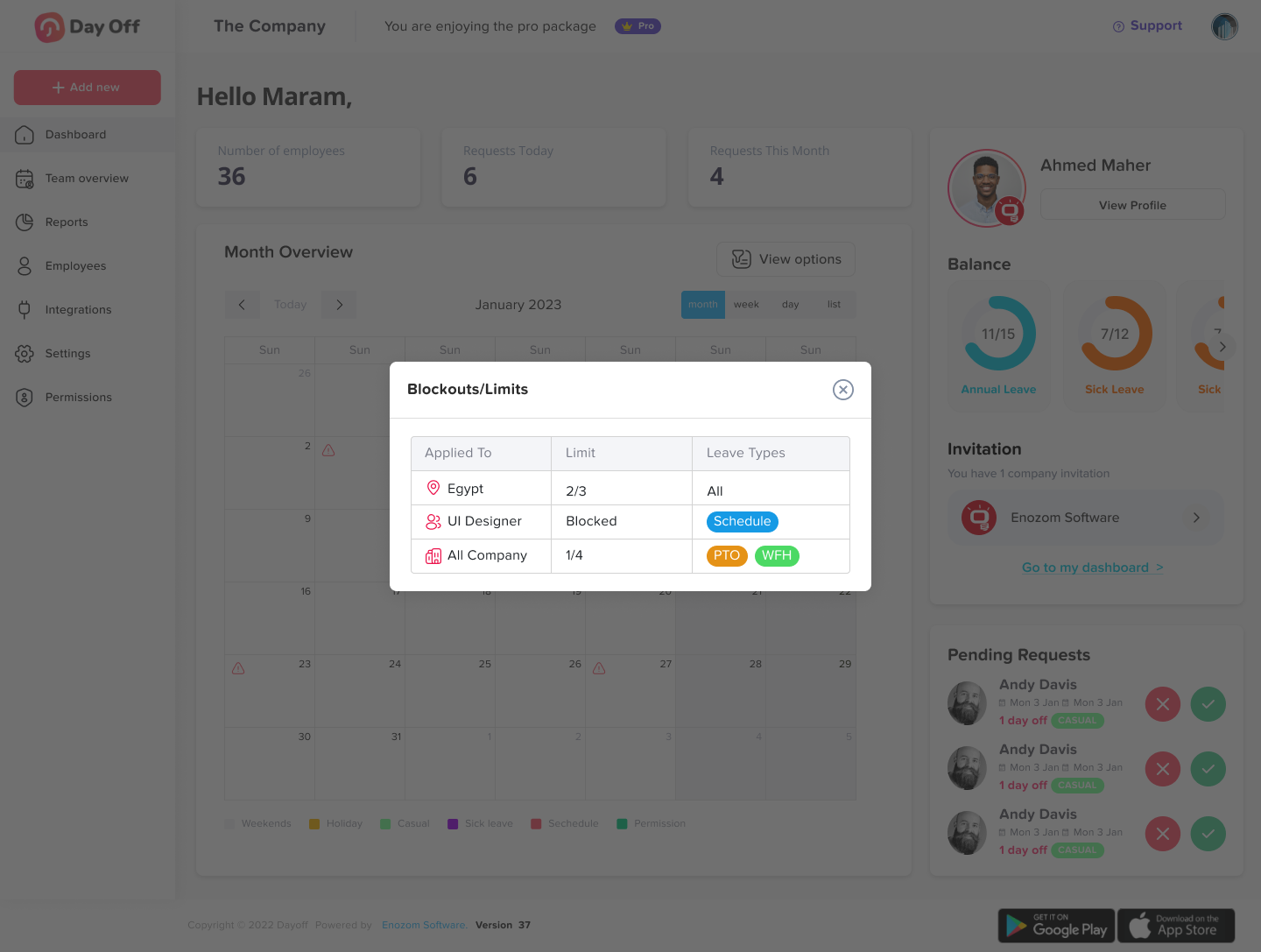
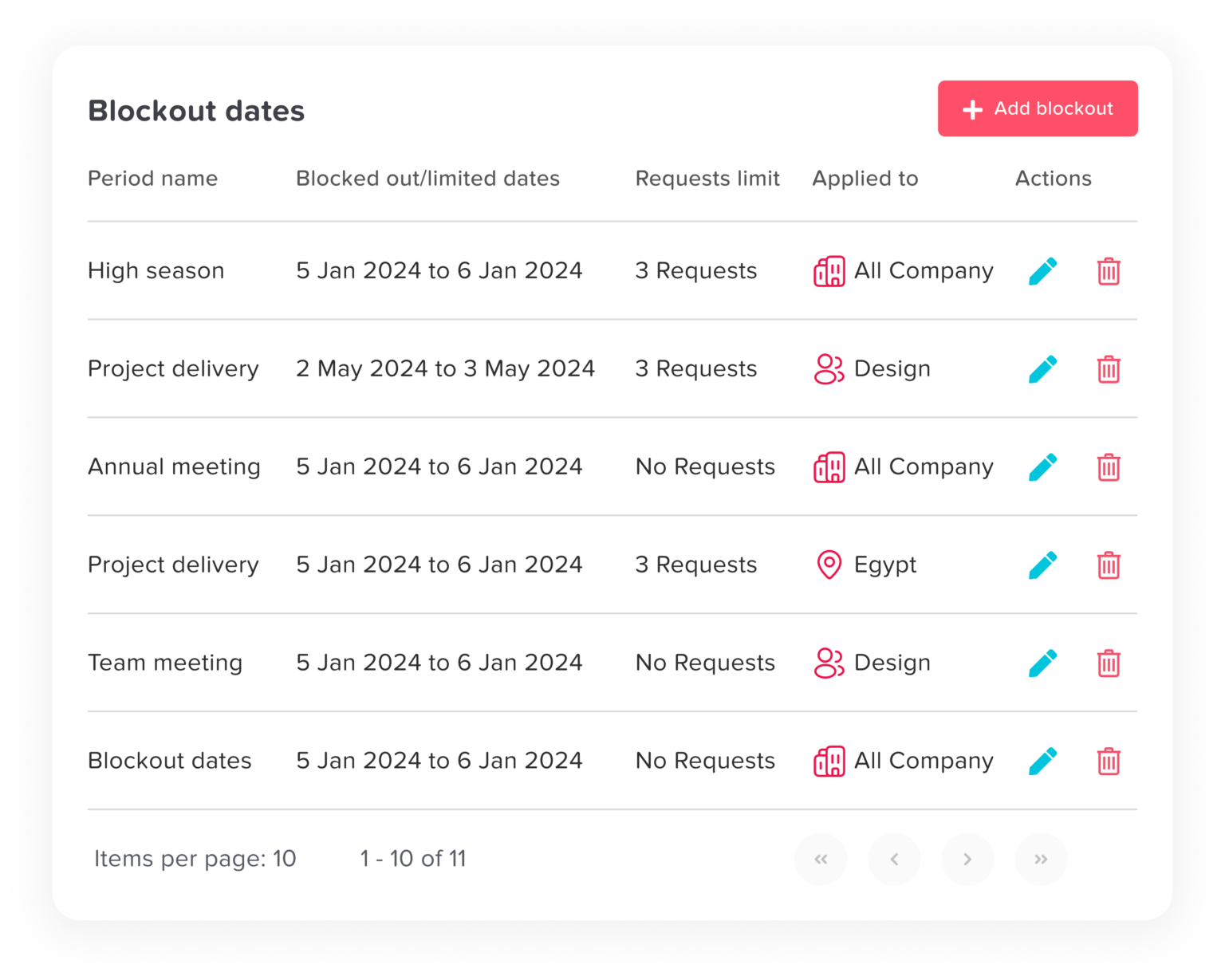
Day Off allows organizations to configure blockout dates in more than one way, depending on how strict coverage needs to be. Blockout periods can be fully blocked, meaning no leave requests are allowed at all during specific dates. This is useful for critical business periods when full staffing is required.
Alternatively, blockout dates can be limited rather than absolute. For example, an organization may allow only two employees to take time off during a specific holiday period while blocking additional requests. This approach preserves minimum staffing levels while still offering employees some flexibility.
Apply Blockout Dates at the Right Level
Blockout dates in Day Off are not restricted to company-wide rules. They can be applied at different levels based on operational needs. Organizations can set blockout dates for the entire company, for a specific team or department, or for a particular location. This ensures that restrictions are targeted and relevant, rather than overly broad.
Transparency at the Time of Request
Blockout dates are visible to employees when they submit a leave request. If a date is fully blocked or has reached its request limit, employees see this immediately. This transparency prevents unrealistic requests, avoids late rejections, and reduces frustration during busy holiday periods.
Flexibility Without Losing Control
While blockout dates provide structure, they do not remove managerial discretion. Managers can still approve exceptions when genuinely necessary, but those decisions are deliberate and documented. This balance ensures that Day Off supports both business continuity and employee flexibility.
By offering full and limited blockout options, flexible scope control, and upfront visibility, Day Off helps organizations manage holiday leave calmly and predictably, without sacrificing fairness or coverage.
Frequently Asked Questions (FAQ)
What causes vacation overlaps most often during holidays?
Vacation overlaps usually happen because organizations rely on manual tracking, private calendars, or late approvals. When employees cannot see who is already off and managers lack a real-time overview, requests pile up around the same popular dates. The issue is rarely employee behavior, it is almost always a lack of visibility, structure, and forward planning.
How far in advance should holiday leave planning start?
Ideally, holiday leave planning should begin several months in advance. Peak periods such as end-of-year holidays, religious events, or summer travel seasons are predictable. Early planning allows teams to set expectations, identify coverage risks, and communicate clearly before requests surge.
Are blockout dates unfair to employees?
When implemented transparently, blockout dates are generally perceived as fair. Problems arise only when restrictions are introduced late or applied inconsistently. When employees know blockout periods in advance and understand the business reason behind them, they can plan realistically and avoid disappointment.
Can blockout dates still allow exceptions?
Yes. Blockout dates are meant to create structure, not rigidity. With tools like Day Off, managers can still approve exceptions when necessary. The key difference is that exceptions become deliberate, documented decisions rather than accidental gaps caused by poor visibility.
How does leave visibility actually change employee behavior?
When employees can see approved leave across their team, they tend to make more thoughtful requests. Many adjust dates voluntarily or coordinate with colleagues to avoid conflicts. Visibility shifts responsibility from managers alone to the entire team, reducing the need for strict enforcement.
Is first-come, first-served ever a good approach?
First-come, first-served can work for low-demand periods, but it often fails during holidays. Over time, it rewards speed rather than fairness and can disadvantage employees with caregiving responsibilities or limited flexibility. A more balanced approach considers historical patterns and shared opportunity over time.
How can small teams avoid shortages if they lack extra staff?
Small teams benefit most from early planning, cross-training, and clear boundaries. Even basic cross-training and staggered leave can significantly reduce risk. Visibility and structured rules matter even more in smaller teams because a single absence can have a larger impact.
How does Day Off help managers make better decisions?
Day Off centralizes leave data, approval flows, balances, and calendars in one system. Managers can see upcoming absences, historical patterns, and blockout periods before approving requests. This replaces guesswork with data and helps ensure decisions are consistent, fair, and defensible.
Does using a leave management system reduce flexibility?
In practice, it does the opposite. By removing administrative friction and making rules visible upfront, systems like Day Off make it easier to approve flexible, staggered, or partial leave. Structure enables flexibility by preventing chaos.
What should organizations review after each holiday season?
After holidays, organizations should review overlap patterns, denied requests, emergency coverage incidents, and feedback from employees. These insights reveal where policies, staffing levels, or role coverage need adjustment. Continuous review is what prevents the same problems from repeating every year.
What is the biggest benefit of using blockout dates during holidays?
The biggest benefit is predictability. Blockout dates align expectations early, protect essential coverage, and significantly reduce last-minute conflicts. Instead of negotiating under pressure, teams can plan calmly and collaboratively, turning holidays into a manageable period rather than a recurring crisis.
Conclusion: Turning Holiday Leave from a Risk into a Strength
Holiday staffing challenges are rarely caused by employees taking too much time off, they are usually the result of limited visibility, unclear rules, and reactive planning. When organizations rely on informal processes, even predictable holiday periods can turn into stressful, last-minute crises.
By planning ahead, setting clear expectations, and using accurate leave data, teams can prevent vacation overlaps without sacrificing fairness or flexibility. Shared visibility, thoughtful policies, and tools like blockout dates help employees plan realistically while protecting essential coverage.
With the support of Day Off, holiday leave management becomes structured, transparent, and predictable. The result is fewer conflicts, stronger coverage, and a workplace where employees can truly enjoy their time off, without putting the business at risk.