







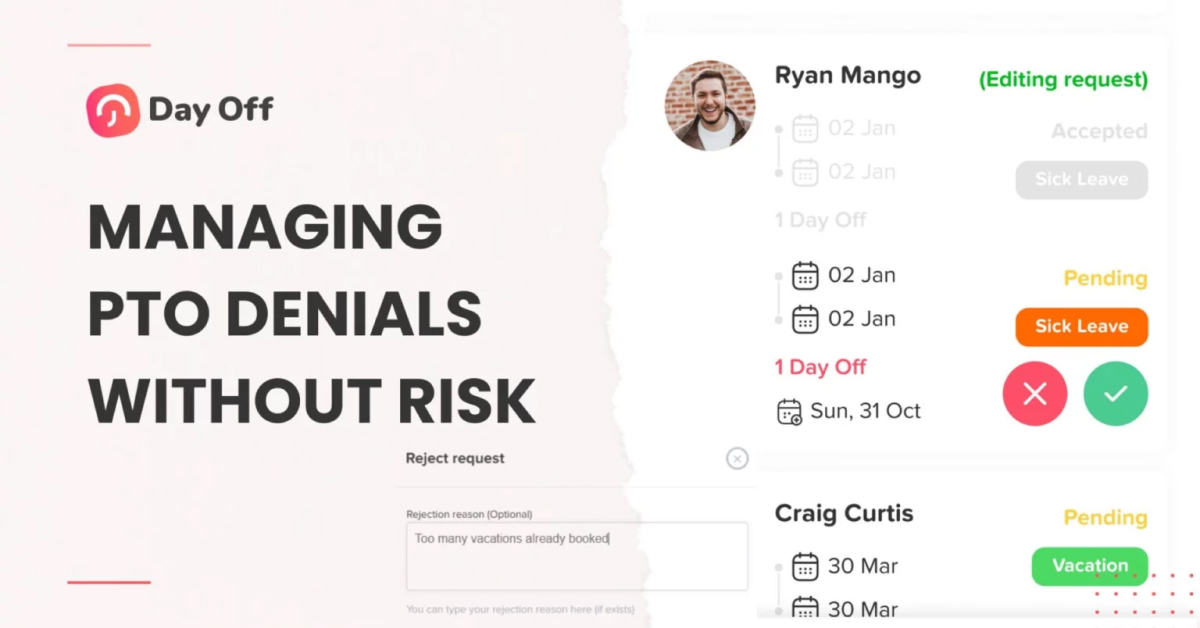
Paid Time Off (PTO) denials are among the most frequent, and legally sensitive, decisions managers make. While employers generally have the right to deny PTO, even well-intentioned decisions can create serious risk if they are inconsistent, poorly documented, or handled without clear process. Missteps can quickly lead to discrimination claims, retaliation allegations, compliance violations, and lasting damage to employee trust.
This article explains how to manage and deny PTO requests safely, fairly, and defensibly, using clear policies, objective decision making, and structured processes. The goal is not just to reduce legal exposure, but to create a transparent approach that protects the organization while keeping employees informed, respected, and engaged.

Establishing a Clear and Defensible PTO Policy
Why a Written PTO Policy Is Your First Line of Defense
A clearly written PTO policy is essential for reducing legal exposure. When PTO decisions are questioned, investigators and attorneys look first at what your policy says and whether your actions align with it. A policy that is vague, outdated, or inconsistently applied creates unnecessary risk.
Your policy should clearly explain eligibility, how requests are submitted, how far in advance notice is required, and what factors influence approval or denial. Ambiguous language such as “management discretion” should be avoided unless it is paired with defined, job-related criteria.
Ensuring the Policy Is Accessible and Understood
Even a well-written policy provides little protection if employees cannot reasonably access or understand it. PTO policies should be easy to find, regularly updated, and referenced during onboarding and manager training. Consistent communication reinforces that decisions are based on policy, not personal preference.
Understanding the Difference Between PTO and Protected Leave
Why This Distinction Matters Legally
Not all time-off requests are equal under the law. PTO is typically discretionary and governed by company policy, while protected leave is governed by employment laws and cannot be denied when eligibility requirements are met.
Many legal issues arise when a request labeled as “PTO” is actually related to a medical condition, family obligation, or other protected circumstance. Denying such a request without proper review can trigger serious compliance violations.
How to Handle Requests That May Be Protected
Managers should be trained to recognize when a PTO request may involve medical, family, religious, military, or civic obligations. In these situations, the safest approach is to pause the decision and escalate the request to HR for review before responding. This process-based safeguard prevents accidental legal violations.
Using Objective, Business-Based Reasons for PTO Denials
What Makes a PTO Denial Legally Defensible
A PTO denial should always be tied to legitimate business needs rather than subjective opinions about an employee’s performance, commitment, or reliability. Objective reasons are easier to explain, document, and defend.
Examples include minimum staffing requirements, operational deadlines, safety considerations, seasonal workload peaks, or overlapping approved absences that would leave a team understaffed.
Language That Increases Legal Risk
Avoid explanations that reference personal judgments or imply punishment, such as comments about recent time off, dedication, or attitude. Even casual phrasing can be interpreted as retaliatory or discriminatory when reviewed later.
Maintaining Consistency Across PTO Decisions
Why Consistency Is Critical for Legal Protection
Consistency is one of the strongest defenses against claims of unfair treatment. If similar PTO requests are handled differently without a clear explanation, employees may reasonably perceive bias or favoritism.
Inconsistent approvals are especially risky when they affect employees in protected groups or occur after an employee has engaged in protected activity, such as filing a complaint.
Documenting Legitimate Differences
When PTO decisions differ, the reasons must be clearly documented at the time of the decision. Differences such as job role, seniority rules, timing of requests, or previously approved absences should be recorded objectively to support the decision if questioned later.
Communicating PTO Denials Professionally and Clearly
Why Communication Style Matters
The way a PTO denial is communicated can significantly influence how it is received. Even a legally sound decision can escalate into conflict if delivered abruptly or without explanation.
Professional communication should acknowledge the request, explain the business reason for denial, and reference the relevant policy or operational constraint. Empathy and clarity reduce frustration and help preserve trust.
Avoiding Language That Escalates Conflict
Sarcasm, defensiveness, or informal remarks should be avoided, especially in written communication. Written responses may be reviewed long after the decision is made and should always reflect professionalism and neutrality.
Documenting PTO Denials Thoroughly
What Should Be Included in PTO Documentation
Every PTO denial should be documented with the date of the request, the response date, the specific reason for denial, and the policy or business requirement supporting the decision. Documentation should be factual and free from emotional or judgmental language.
Why Documentation Protects the Organization
Well-maintained records provide critical protection in the event of internal complaints, audits, or legal claims. Documentation created at the time of the decision is far more credible than explanations created after the fact.
Avoiding Retaliation and Timing Pitfalls
Understanding Retaliation Risk
Even a valid PTO denial can become legally problematic if it occurs shortly after an employee engages in protected activity, such as reporting misconduct, requesting accommodation, or participating in an investigation.
In these situations, the denial may be perceived as punishment, regardless of intent.
Best Practices for High-Risk Timing
When timing raises potential concerns, managers should involve HR before finalizing the decision. Extra scrutiny ensures the business rationale is solid, consistent with past practice, and properly documented.
Offering Alternatives to Reduce Conflict
Why Alternatives Matter
While employers are not required to offer alternatives, doing so demonstrates good faith and flexibility. This can significantly reduce employee frustration and the likelihood of formal complaints.
Common Alternative Options
When feasible, alternatives may include different dates, partial PTO, shift swaps, remote work arrangements, or unpaid time off where legally permitted. These options show that the organization values employee needs while maintaining operational requirements.
Training Managers to Handle PTO Denials Correctly
Managers as the Primary Risk Point
Most PTO related legal issues arise from untrained managers making informal or inconsistent decisions. Clear training ensures managers understand policy boundaries, legal distinctions, and communication expectations.
What Effective Training Should Cover
Manager training should address PTO versus protected leave, escalation procedures, documentation standards, and examples of high-risk language to avoid. Consistent training reduces individual discretion and improves compliance.
Auditing PTO Practices for Ongoing Compliance
Identifying Patterns Before They Become Problems
Periodic reviews of PTO approvals and denials can reveal patterns that may indicate risk, such as disproportionate denials within certain teams or repeated overrides of policy.
Using Audits as a Preventive Tool
Audits allow organizations to correct issues early, retrain managers, and update policies as needed, before concerns escalate into formal complaints or legal action.
How You Can Use Day Off to Manage PTO Denials Safely and Effectively
Using a dedicated PTO management tool like Day Off can significantly reduce the legal, operational, and communication risks associated with PTO denials. Instead of relying on emails, spreadsheets, or informal conversations, Day Off creates a structured, transparent, and well-documented process that supports fair decision-making and compliance.
Below is how Day Off can be used specifically to handle PTO denials without legal backfire.
Centralizing PTO Policies for Consistent Application
One of the biggest risks with PTO denials is inconsistency. Day Off allows organizations to configure PTO rules directly within the system, including accrual methods, notice requirements, blackout periods, and approval hierarchies.
By embedding these rules into the platform, managers are guided by the same standards every time they review a request. This reduces reliance on memory or personal judgment and helps ensure that denials are based on predefined criteria rather than ad hoc decisions. When policies are enforced through the system itself, it becomes much easier to demonstrate fairness if a decision is questioned.
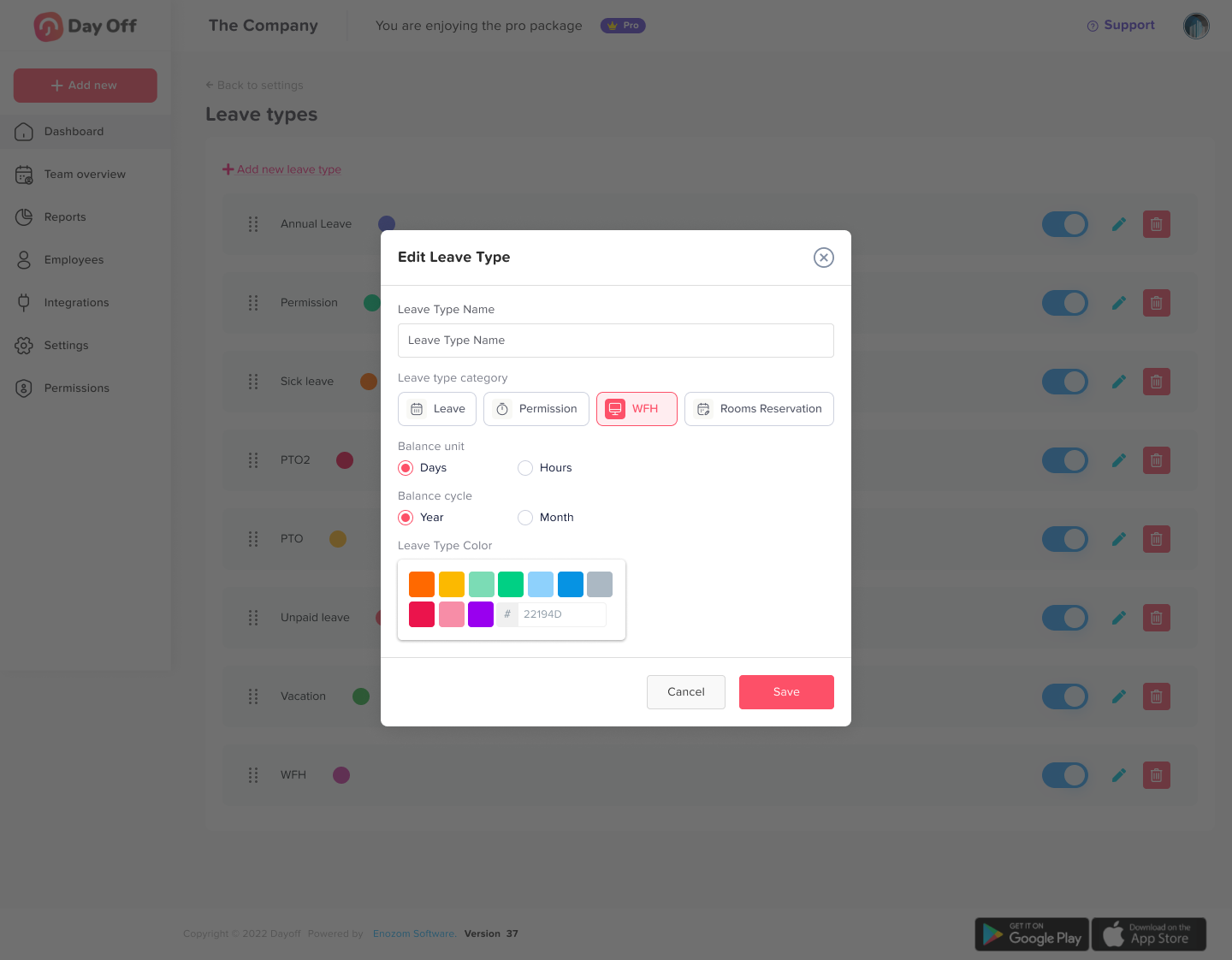
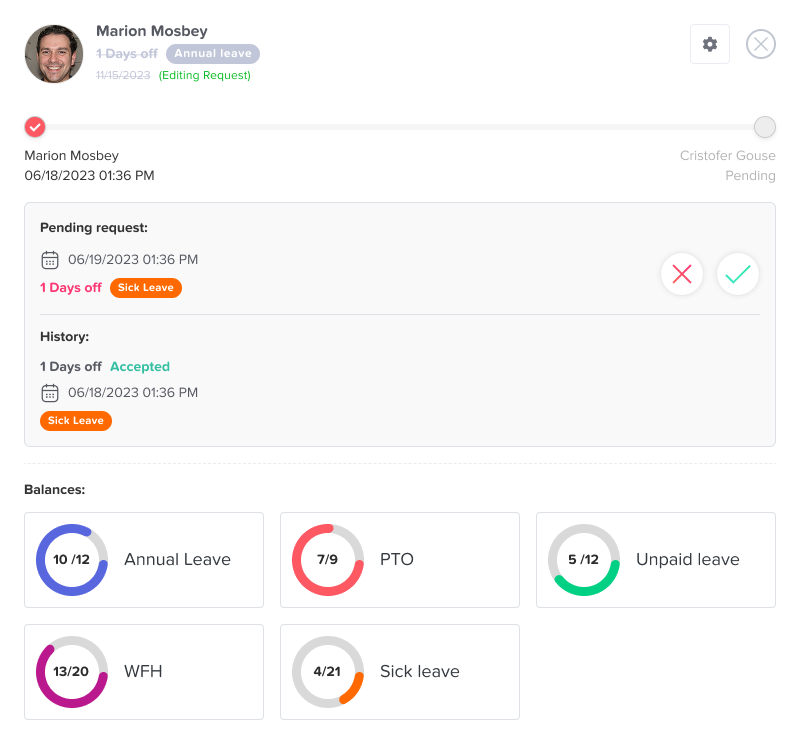
Automatically Distinguishing PTO From Other Leave Types
Day Off enables employers to separate PTO from other categories of leave, such as sick time, unpaid leave, or special leave types. This separation is critical from a compliance perspective.
When employees submit requests through Day Off, the leave type is clearly identified, reducing the risk that a protected or sensitive request is mistakenly treated as discretionary PTO. This structure helps managers recognize when a request should be escalated to HR instead of being immediately approved or denied, preventing accidental legal violations.
Improving Visibility Into Team Availability and Coverage

Many PTO denials are based on legitimate staffing concerns, but those concerns must be demonstrable. Day Off provides real time visibility into who is off, who is scheduled to be off, and how absences overlap across teams.
This visibility allows managers to make defensible decisions grounded in operational reality. If a request is denied because approving it would drop coverage below acceptable levels, Day Off’s calendar and team view serve as objective evidence supporting that decision. This reduces disputes and strengthens documentation.
Creating a Clear Approval and Denial Trail
One of Day Off’s strongest advantages is automatic recordkeeping. Every PTO request, approval, denial, comment, and timestamp is stored in the system.
When a request is denied, the manager can record the reason directly within Day Off. This creates a contemporaneous, factual explanation that can be referenced later if questions arise. Because the documentation is created at the time of the decision, and not retroactively, it carries far more credibility in audits, investigations, or internal reviews.
Standardizing Manager Communication
Inconsistent or poorly worded explanations are a common source of PTO related conflict. Day Off helps standardize communication by keeping responses professional, written, and tied directly to the request.
Managers can clearly explain the reason for denial within the platform, referencing staffing levels, blackout periods, or notice requirements. This reduces the likelihood of emotional or informal language that could later be interpreted as retaliatory or discriminatory. Written, system based communication also minimizes misunderstandings compared to verbal conversations.
Reducing Retaliation Risk Through Objective Timing Records
Retaliation claims often hinge on timing. Day Off automatically tracks when a request is submitted, when it is reviewed, and when a decision is made.
If a PTO denial occurs after a sensitive event, such as a complaint or accommodation request, Day Off’s timestamps and history help demonstrate that the decision followed standard procedures and timelines. This objective data can be critical in showing that a denial was based on business needs rather than employee behavior.
Offering and Tracking Alternative Solutions
When alternatives are offered, such as different dates or partial PTO, Day Off makes it easy to document those options. Employees can submit revised requests, and managers can review them within the same workflow.
This creates a clear record showing that the organization acted in good faith, explored reasonable alternatives, and did not simply reject the request outright. Such records are valuable for both employee relations and legal defense.
Supporting Audits and Pattern Reviews
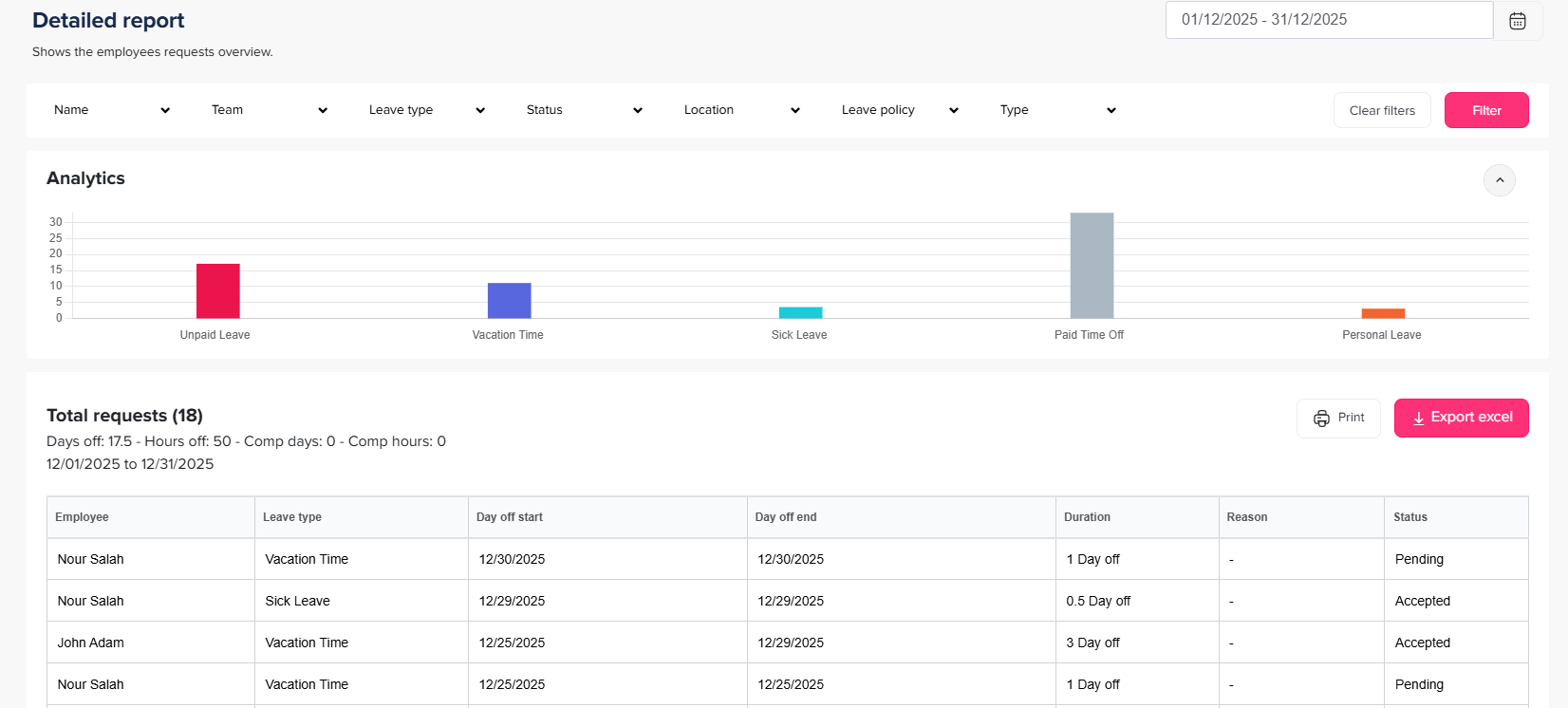
Over time, Day Off provides valuable data that can be reviewed to identify trends. HR teams can analyze approval and denial patterns across departments, managers, or time periods.
This makes it easier to spot potential inconsistencies, overuse of discretion, or systemic issues before they escalate into complaints or legal claims. Regular internal reviews using Day Off data strengthen compliance and demonstrate proactive risk management.
Strengthening Trust While Reducing Legal Exposure
Beyond compliance, Day Off helps build employee trust. When employees can see that PTO decisions are handled through a transparent system with clear rules and documented reasoning, denials feel less personal, even when disappointing.
From a legal standpoint, Day Off transforms PTO denials from informal judgments into structured, policy-driven decisions backed by data. That structure is one of the most effective ways to prevent PTO denials from turning into legal backfire.
Blockout Dates in Day Off to Prevent PTO Conflicts, Without Rejecting Requests
One of the most effective ways to avoid PTO denials, and the legal or cultural risk that comes with them, is to prevent conflicts before employees submit requests. This is where the blockout feature in Day Off becomes a powerful compliance and employee relations tool.
Rather than rejecting requests after the fact, blackout periods allow organizations to set clear boundaries in advance, creating transparency, fairness, and predictability for everyone involved.
What Is the Blockout Feature in Day Off?
Defining PTO Blackout Periods
The blockout feature in Day Off allows employers to predefine specific dates or periods during which PTO requests are restricted or unavailable. These periods are typically tied to high-demand business cycles such as year-end closings, product launches, audits, peak sales seasons, or critical operational windows.
Once a blockout period is configured, employees can immediately see that certain dates are unavailable when they attempt to submit a PTO request. This shifts the decision from a manager’s denial to a policy-based system rule.
Why Blackout Periods Reduce Legal Risk
Eliminating Subjective Manager Decisions
Many PTO disputes arise not because time off was denied, but because employees feel the decision was personal, inconsistent, or unfair. Blackout periods reduce discretion by applying the same restriction to everyone equally.
From a legal standpoint, this is critical. A system-enforced blockout period demonstrates that PTO limits are:
Pre-planned
Job-related
Consistently applied
Not targeted at specific individuals
This consistency is one of the strongest defenses against discrimination or retaliation claims.
Strengthening Policy Enforcement
Blockout dates in Day Off align directly with written PTO policies. When policies state that certain periods are unavailable for vacation, the system enforces that rule automatically, removing ambiguity and reducing policy violations.
How Day Off Blockouts Work in Practice
Employee Experience
When an employee opens Day Off to request time off, blockout dates are clearly visible on the calendar. The employee either cannot select those dates or receives an immediate notification that PTO is unavailable during that period.
This real-time feedback prevents frustration later and eliminates the emotional impact of a manual rejection.
Manager and HR Experience
Managers are no longer placed in the uncomfortable position of denying PTO requests during critical periods. HR teams gain confidence that staffing levels will be maintained without relying on last-minute decisions or inconsistent enforcement.
A Smarter Alternative to Rejecting PTO Requests
Preventing the Request Instead of Denying It
One of the biggest advantages of blockout periods is that they reduce the need for rejection entirely. When employees know in advance which dates are unavailable, they naturally plan around them.
This proactive approach:
Reduces conflict
Preserves employee morale
Protects managers from making risky decisions
Minimizes documentation and escalation issues
In many cases, the best PTO denial is the one that never happens.
Using Partial Blackouts as a Flexible Solution
Limiting Capacity Instead of Fully Blocking PTO
Day Off blackout settings can be used strategically, not just as all-or-nothing restrictions. Instead of blocking all PTO, organizations can:
Limit the number of employees off per team
Restrict specific roles or departments
This approach balances business needs with flexibility, ensuring operations continue while still allowing limited time off where feasible.
Frequently Asked Questions (FAQ)
Can employers legally deny PTO requests?
Yes, in most cases employers can legally deny PTO requests. PTO is generally considered a discretionary benefit governed by company policy. However, denials must be based on legitimate business reasons and applied consistently. Problems arise when denials are discriminatory, retaliatory, or conflict with protected leave laws.
What is the difference between PTO and protected leave?
PTO typically includes vacation or personal days and can usually be approved or denied based on business needs. Protected leave, such as medical, family, military, or civic leave, is governed by law and cannot be denied if eligibility requirements are met. Misclassifying protected leave as PTO is a common and serious compliance risk.
What are the most common legal risks associated with PTO denials?
The most common risks include discrimination claims, retaliation allegations, inconsistent application of policy, and poor documentation. These risks increase when managers rely on subjective judgment, fail to follow written policies, or deny requests shortly after an employee engages in protected activity.
How can managers deny PTO without damaging employee trust?
Clear communication is key. Managers should explain the business reason for the denial, reference the relevant policy or operational constraint, and communicate respectfully. Offering alternative dates or solutions when possible also helps employees feel heard and treated fairly.
Why is documentation so important when denying PTO?
Documentation provides objective evidence that a PTO denial was based on policy and business needs rather than personal bias. Records created at the time of the decision are especially valuable during audits, internal complaints, or legal reviews.
How does using a PTO management system reduce legal risk?
A system like Day Off enforces consistency, centralizes policies, tracks approvals and denials, and creates an automatic audit trail. This structure reduces reliance on informal decisions and provides defensible records if PTO decisions are questioned.
What are blackout dates, and are they legal?
Blackout dates are predefined periods when PTO is restricted due to operational needs, such as peak seasons or critical deadlines. They are legal when applied consistently, communicated in advance, and tied to legitimate business reasons. System-enforced blackout dates are often safer than manual denials.
How do blackout dates help avoid PTO rejections?
Blackout dates prevent employees from requesting unavailable time in the first place. By making restrictions visible in advance, employees plan around them, reducing the need for denials and minimizing frustration, conflict, and legal exposure.
Can blackout dates be flexible?
Yes. Instead of fully blocking PTO, organizations can use partial blackout strategies, such as limiting the number of employees off at one time or restricting specific roles. This approach balances operational needs with employee flexibility.
What should managers do if a PTO request involves a medical or family issue?
Managers should pause and escalate the request to HR before making a decision. Even if the request is labeled as PTO, it may qualify as protected leave. Escalation helps ensure compliance and prevents accidental violations.
How often should PTO practices be audited?
PTO practices should be reviewed periodically, especially in larger organizations or regulated environments. Regular audits help identify inconsistent patterns, training gaps, or policy weaknesses before they escalate into complaints or legal claims.
What is the biggest mistake employers make with PTO denials?
The biggest mistake is inconsistency, approving similar requests for some employees while denying others without clear, documented reasons. Inconsistency undermines trust and is one of the strongest predictors of legal risk.
Is offering alternatives required when denying PTO?
No, offering alternatives is not legally required. However, doing so demonstrates good faith, reduces employee frustration, and strengthens the organization’s position if the decision is later challenged.
How can organizations reduce PTO-related disputes long term?
The most effective strategies include clear policies, manager training, system-based enforcement, early communication of blackout periods, consistent documentation, and the use of centralized PTO management tools. Together, these practices turn PTO denials into structured, defensible decisions rather than reactive conflicts.
Conclusion
PTO denials are a normal part of managing a workforce, but they should never feel arbitrary, personal, or risky. When organizations rely on clear and accessible policies, apply decisions consistently, and base denials on legitimate business needs, they create a process that employees can understand, even when the answer is no. Strong documentation, thoughtful communication, and well-trained managers further reduce the likelihood that a simple scheduling decision turns into a legal or cultural issue.
Technology plays an important role in supporting this structure. Tools like Day Off help turn PTO management into a transparent, policy-driven system by enforcing rules, improving visibility, and preventing conflicts before they arise. The result is a PTO process that protects the organization, supports managers, and preserves employee trust, making time off decisions safer, clearer, and easier to manage for everyone involved.
