







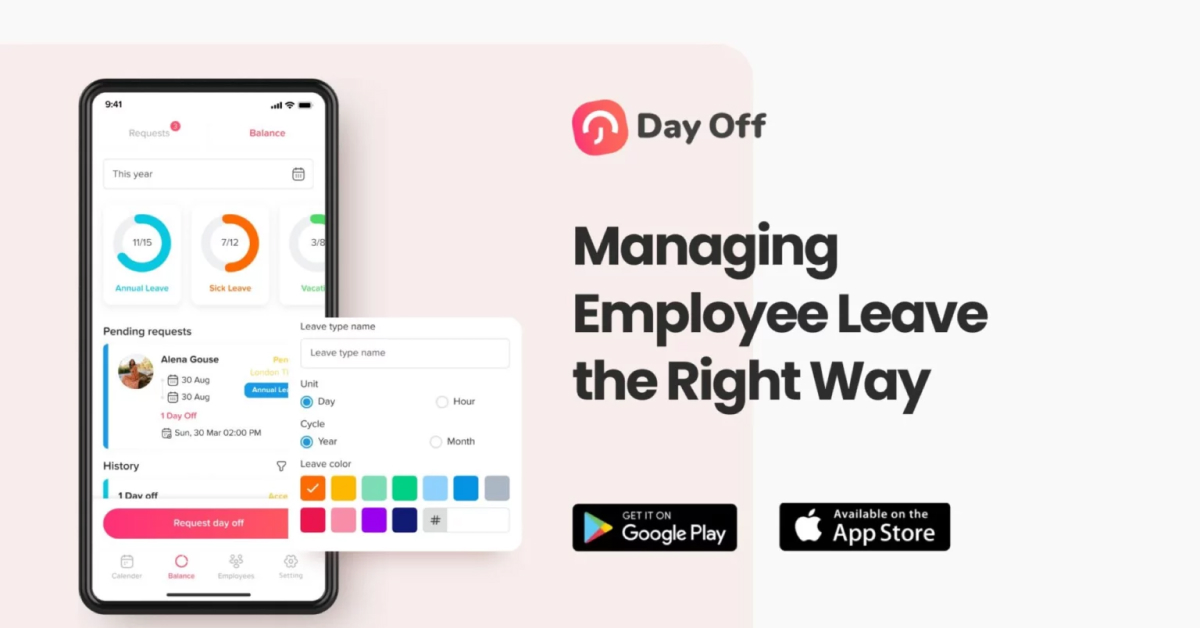
Employee leave is far more than a set of days off written in an HR handbook. It reflects how an organization values its people, complies with labor laws, and sustains long term productivity. A well designed leave policy supports employees through rest, illness, family responsibilities, and personal growth, while also helping businesses plan resources effectively.
This comprehensive guide breaks down every major type of employee leave, explaining not only what each leave type is, but why it exists, how it’s commonly structured, and what best practices look like. We’ll also explore how modern tools like Day Off simplify leave management for both employees and employers.

Understanding Employee Leave: The Big Picture
Employee leave refers to formally approved time away from work. Leave can be paid or unpaid, mandatory or optional, and legally required or employer provided. Regardless of type, leave policies aim to:
Protect employee health and mental well-being
Support major life events without job insecurity
Reduce burnout and absenteeism
Improve morale, loyalty, and retention
Ensure compliance with local labor regulations
When leave policies are unclear or poorly managed, organizations often face disputes, disengagement, and legal risks. Clear, well communicated leave structures benefit everyone involved.
Annual Leave (Vacation Leave / Paid Time Off)
What Is Annual Leave?
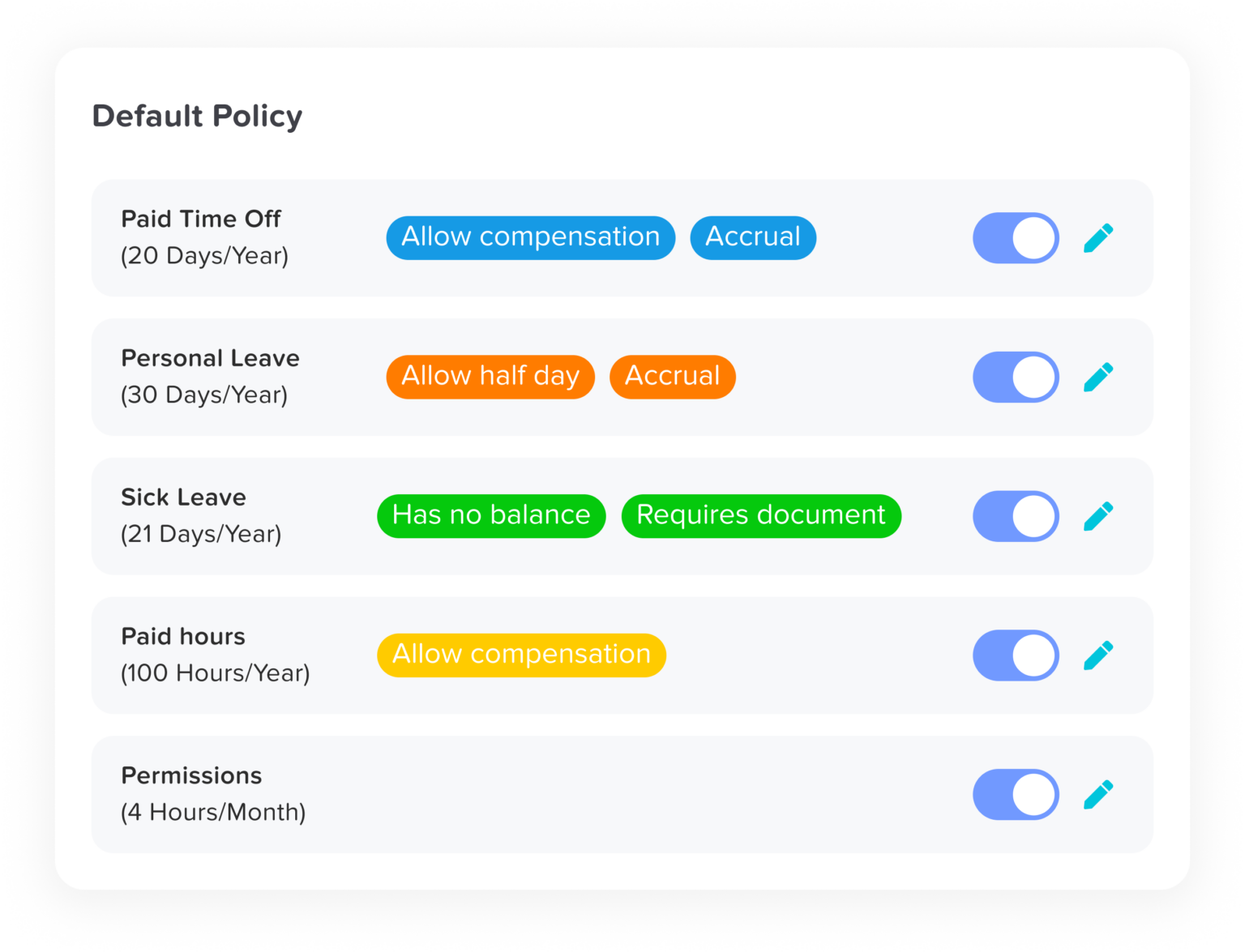
Annual leave, also known as vacation leave or paid time off (PTO), is a form of employer-provided, paid absence that allows employees to take time away from work for rest, relaxation, travel, personal commitments, or leisure activities. Unlike sick leave or emergency leave, annual leave is generally planned and taken at the employee’s discretion, subject to operational requirements and management approval.
Annual leave recognizes the importance of work life balance and provides employees with the opportunity to recharge both physically and mentally without financial loss.
Why Annual Leave Is Essential
Regularly taking annual leave is critical for both employee well-being and organizational performance. Research and workplace experience consistently show that adequate time away from work helps to:
Reduce stress, fatigue, and burnout, particularly in high-pressure roles
Improve mental clarity, creativity, and problem-solving ability
Enhance overall job satisfaction and morale
Boost long-term productivity and performance
Lower absenteeism and employee turnover rates
Employees who are encouraged to take their full annual leave entitlement tend to return to work more focused, motivated, and engaged, contributing positively to team dynamics and business outcomes.
How Annual Leave Is Structured
Organizations may structure annual leave in several ways, depending on company policy, industry standards, and local labor laws. Common approaches include:
Fixed Annual Entitlement
Employees receive a set number of leave days per year (e.g., 20–25 working days), often aligned with legal minimums or company benefits philosophy.Accrual-Based Leave
Leave is earned gradually, such as monthly or per pay period, allowing employees to build up their entitlement over time.Tenure-Based Leave Enhancements
Additional leave days are awarded based on length of service, rewarding long-term commitment and experience.Consolidated PTO Policies
Some organizations combine annual leave, personal leave, and other short-term absences into a single PTO balance, while others keep annual leave separate for clarity and compliance purposes.
The chosen structure should be clearly documented and consistently applied to ensure fairness and transparency.
Planning, Approval, and Scheduling
Employees are generally required to submit annual leave requests in advance through the company’s designated system or approval process. Approval is subject to business needs, workload considerations, and team coverage requirements. Managers are encouraged to balance operational demands with employees’ need for rest and personal time.
Organizations may also implement guidelines around peak periods, blackout dates, or minimum staffing levels to maintain business continuity.
Carry Forward, Caps, and Payouts
To manage leave balances effectively, organizations often establish rules around unused annual leave:
Carry Forward
Allows employees to transfer unused leave into the next leave year, often with defined limits or expiration periods.Caps on Accumulation
Prevent excessive buildup of leave balances that could disrupt operations or create financial liabilities.Encashment or Payout
Depending on company policy and local labor laws, unused annual leave may be paid out upon resignation, retirement, or termination.
Clear and well communicated rules in these areas help avoid misunderstandings, ensure legal compliance, and support effective workforce planning.
Sick Leave
What Is Sick Leave?
Sick leave is a form of paid time off that allows employees to be absent from work when they are physically or mentally unwell, without fear of losing income or employment. It is designed to support recovery, protect employee health, and ensure a safe and productive workplace for everyone.
Sick leave may be used for short-term illnesses, injuries, medical conditions, or mental health concerns that temporarily prevent an employee from performing their duties effectively.
The Importance of Sick Leave
A well-structured sick leave policy is one of the most critical components of employee protection and workplace well-being. Effective sick leave provisions help to:
Encourage employees to rest and recover properly, reducing the risk of prolonged illness
Prevent the spread of contagious diseases in the workplace
Support mental health and emotional well-being, particularly during periods of stress or burnout
Reduce presenteeism, where employees work while unwell but perform below capacity
Demonstrate trust, care, and responsibility from the employer toward employees
When employees feel safe taking sick leave, overall productivity improves, healthcare costs decrease, and workplace morale is strengthened.
Common Sick Leave Policies
Organizations may structure sick leave differently depending on business needs and legal requirements. Common approaches include:
Annual Allocation
Employees receive a fixed number of sick leave days per year (e.g., 10–15 working days).Separate from Annual Leave
Sick leave is typically distinct from vacation leave to ensure employees do not have to choose between rest and personal time.Medical Certification Requirements
A medical certificate or documentation may be required after a specified number of consecutive sick days to verify the need for leave.Inclusive of Mental Health Leave
Progressive organizations explicitly recognize mental health conditions as valid reasons for sick leave, treating them with the same seriousness as physical illness.
Some organizations also allow limited carry-forward of unused sick leave or convert it into extended medical leave eligibility.
Reporting and Notification Requirements
Employees are generally expected to notify their manager or HR as soon as reasonably possible when they are unable to work due to illness. Clear reporting procedures help ensure appropriate workload adjustments and team coverage while respecting employee privacy and dignity.
Long-Term or Extended Sick Leave
For serious illnesses, injuries, or medical conditions requiring extended recovery time, organizations may provide long-term or extended sick leave. This may involve:
Additional paid or unpaid medical leave
Coordination with health insurance or disability benefits
Compliance with statutory medical leave protections
Gradual return-to-work or modified duties where appropriate
These arrangements are typically managed on a case-by-case basis in consultation with HR, medical professionals, and applicable legal frameworks.
Supporting a Healthy Workplace Culture
Employees are encouraged to use sick leave responsibly and without hesitation when genuinely unwell. Managers should support recovery-focused decisions and avoid pressuring employees to return before they are medically fit.
A fair and compassionate sick leave policy protects individual health, promotes public safety, and contributes to a resilient and sustainable workforce.
Parental Leave (Maternity, Paternity, and Adoption Leave)
Parental leave encompasses a range of leave entitlements designed to support employees as they welcome a new child into their family. These policies recognize the physical, emotional, and practical demands of parenthood and aim to promote family well-being, gender equality, and long-term employee engagement.
Maternity Leave
Maternity leave supports employees during pregnancy, childbirth, and postnatal recovery. The duration and payment structure of maternity leave vary depending on local labor laws, organizational policy, and benefit programs. It may be:
Fully paid by the employer
Partially paid, with a combination of employer support and statutory benefits
Paid through social security, insurance, or government programs
Beyond physical recovery, maternity leave plays a crucial role in supporting maternal health, emotional well-being, and early bonding between mother and child. Adequate maternity leave has been shown to reduce postpartum health complications, improve infant care outcomes, and support a smoother transition back to work.
Organizations may also offer flexibility, such as extended unpaid leave, phased return-to-work arrangements, or remote work options, following maternity leave.
Paternity Leave
Paternity leave allows fathers or partners to take time off work following the birth of a child to support the family during the early stages of parenthood. While paternity leave is often shorter than maternity leave, its impact is significant.
Paternity leave supports:
Shared caregiving responsibilities, promoting gender equality at home and at work
Emotional and physical support for the mother, especially during recovery
Early bonding between parent and child
Stronger family adjustment during a critical life transition
Organizations that encourage paternity leave help normalize caregiving roles for all parents and foster inclusive workplace cultures.
Adoption and Surrogacy Leave
Adoption and surrogacy leave recognize that parenthood extends beyond biological childbirth. These leave types ensure that employees who become parents through adoption or surrogacy have sufficient time to:
Bond with their child
Manage legal, medical, and administrative processes
Adjust to new caregiving responsibilities and routines
Leave entitlements for adoption and surrogacy are often aligned with maternity or parental leave policies to ensure fairness and inclusivity. Policies may apply equally to primary and secondary caregivers, regardless of gender.
Eligibility, Duration, and Notice Requirements
Eligibility criteria, leave duration, and notice requirements are typically defined by local legislation and company policy. Employees may be required to provide advance notice and supporting documentation, where legally permitted, to allow for effective workforce planning.
Clear guidelines help ensure consistency, compliance, and transparency in how parental leave is administered.
Why Parental Leave Policies Matter
Strong parental leave policies provide long-term benefits for both employees and organizations. Effective parental leave programs:
Improve employee retention and loyalty, particularly among experienced professionals
Promote workplace equality and inclusion across gender and family structures
Enhance employer branding and talent attraction
Support healthier families, children, and communities
Reduce burnout and turnover associated with major life transitions
Organizations that invest in meaningful parental leave demonstrate a commitment to employee well-being and sustainable workforce practices.
Supporting a Smooth Return to Work
Employees returning from parental leave may benefit from flexible working arrangements, reduced workloads, or transitional support. Managers and HR teams are encouraged to work collaboratively with returning employees to ensure a respectful, supportive, and successful reintegration into the workplace.
Compensatory Off (Comp-Off)
What Is Compensatory Off?
Compensatory off, commonly referred to as comp off, is a form of paid time off granted to employees in lieu of monetary compensation for working beyond their regular working hours. This typically includes work performed on weekends, public holidays, rest days, or during extended shifts outside normal schedules.
Comp off allows organizations to recognize and reward additional effort while maintaining payroll control and operational flexibility.
When Comp Off Is Used
Compensatory off is most commonly applied in roles or situations where work demands occasionally exceed standard working hours, including:
Project-based or deadline-driven roles, where extended hours may be required temporarily
Operations requiring 24/7 or shift-based coverage, such as IT, manufacturing, or customer support
Emergency response or on-call duties, where employees are required to work outside normal schedules
Critical business events, such as system outages, audits, or time-sensitive deliverables
Comp-off ensures that employees who contribute additional time are acknowledged fairly without encouraging excessive overtime.
How Comp Off Is Managed
To ensure transparency, consistency, and compliance, organizations typically define clear rules for compensatory off, such as:
Prior Approval
Overtime or additional work must usually be approved in advance by a manager, except in genuine emergencies.Equivalent Time Off
Employees may receive a full day or partial day off based on the number of extra hours worked, in accordance with company guidelines.Usage Timeframe
Comp off must often be used within a specified period (e.g., 30–90 days) after it is earned, after which it may lapse if unused.Recording and Tracking
Extra hours worked and comp off balances are typically recorded through attendance or time-tracking systems to ensure accuracy and auditability.
Eligibility and Limitations
Comp off eligibility may vary by role, employment category, or local labor laws. Some organizations limit comp-off to non-exempt or shift-based employees, while others extend it more broadly. Caps may also be applied to prevent excessive accumulation or misuse.
Clear eligibility criteria help avoid confusion and ensure fair application across teams.
Benefits of a Comp Off Policy
A well designed comp-off policy helps organizations:
Recognize and reward extra effort fairly
Prevent employee fatigue and burnout
Maintain cost control without frequent overtime payouts
Encourage responsible workforce planning
For employees, comp off provides flexibility and work life balance while acknowledging contributions beyond normal expectations.
Responsible Use of Comp Off
Employees are encouraged to use earned comp off promptly and responsibly, in coordination with their manager. Managers should actively support the timely utilization of comp off to ensure employees receive adequate rest following periods of extended work.
Public Holidays
What Are Public Holidays?
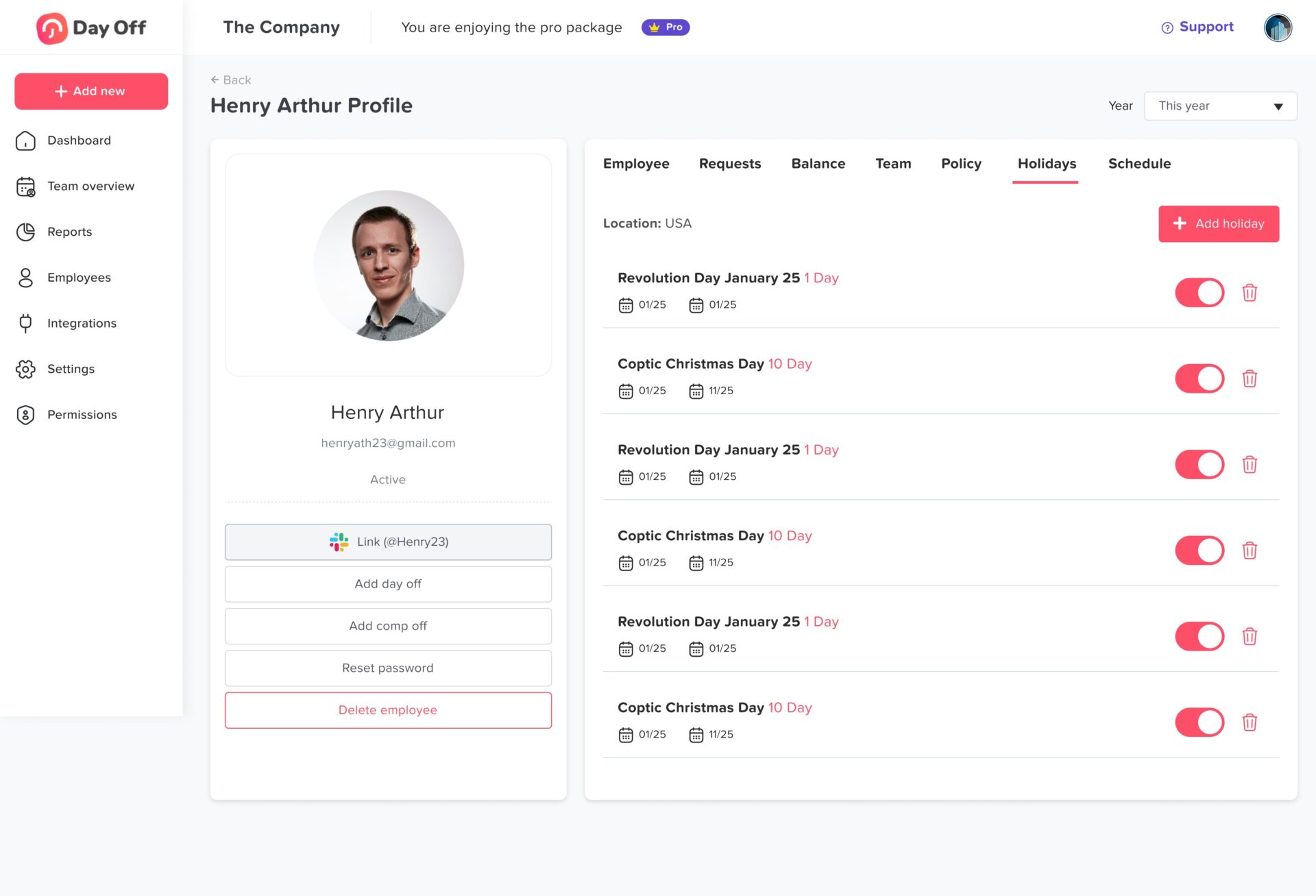
Public holidays are government declared days of national, regional, cultural, or religious significance on which employees are typically entitled to a paid day off. These holidays recognize important historical events, cultural traditions, and religious observances and support employee well being and social inclusion.
Public holidays are generally mandated by law, though the number and type of holidays may vary by location.
Managing Public Holidays
To ensure clarity and compliance, organizations are responsible for:
Publishing an annual holiday calendar at the beginning of each year
Clarifying regional or location based variations, particularly for organizations operating across multiple states or countries
Defining compensation or time off in lieu for employees required to work on public holidays due to operational needs
Some organizations also offer floating or optional holidays, allowing employees to select days aligned with their personal beliefs, cultural background, or religious practices. This approach promotes inclusivity while maintaining operational consistency.
Working on Public Holidays
When business requirements necessitate work on a public holiday, organizations typically provide:
Additional pay (as per legal or policy requirements), or
Compensatory off in lieu of the holiday
Clear guidelines ensure fair treatment and prevent disputes.
Casual Leave
What Is Casual Leave?
Casual leave is designed to address short-term, unplanned absences arising from personal matters, minor emergencies, or urgent responsibilities that cannot be postponed. It provides employees with flexibility for everyday life events without requiring extensive documentation or long approval processes.
Key Characteristics of Casual Leave
Casual leave typically has the following features:
Short duration, usually 1–2 days at a time
Limited annual entitlement, such as 5–10 days per year
Non-cumulative, meaning unused casual leave often does not carry forward to the next year
Quick approval process, reflecting its informal and urgent nature
Casual leave helps employees manage unexpected situations without disrupting longer-term leave planning.
Responsible Use
Employees are encouraged to use casual leave responsibly and inform their manager as early as possible. Excessive or patterned use may be reviewed to ensure fairness and operational continuity.
Bereavement or Compassionate Leave
Purpose of Bereavement Leave
Bereavement or compassionate leave provides employees with time off following the death of a close family member or loved one. This leave allows employees to grieve, attend funeral or memorial services, and support their family during emotionally challenging times.
Recognizing grief as a legitimate need reflects empathy, respect, and humane workplace values.
Typical Policy Structure
Bereavement leave policies commonly include:
2–7 days of paid leave, depending on relationship and circumstances
Applicability to immediate family members, such as spouse, parents, children, siblings, or grandparents
Minimal documentation requirements, handled sensitively and discreetly
Some organizations also offer unpaid extensions or flexible arrangements where additional time is needed.
Workplace Support
Managers are encouraged to approach bereavement leave with compassion and discretion, recognizing that emotional recovery timelines vary from person to person.
Unpaid Leave (Leave Without Pay)
What Is Unpaid Leave?
Unpaid leave, also known as leave without pay (LWP), is approved time off that is not compensated, typically used when paid leave entitlements have been exhausted or when the reason for absence falls outside standard leave categories.
Common Scenarios for Unpaid Leave
Unpaid leave may be granted for reasons such as:
Extended personal travel or sabbaticals not covered by policy
Family emergencies requiring longer absences
Education, examinations, or relocation
Personal or medical circumstances not eligible for paid leave
Approval is usually discretionary and subject to business needs.
Important Considerations
Employees should be aware that unpaid leave may impact:
Salary and payroll calculations
Benefits eligibility (e.g., insurance or retirement contributions)
Accrual of paid leave
Seniority or service continuity, depending on policy
For this reason, unpaid leave policies must be clearly documented, and employees should be informed of the implications before approval.
Study Leave and Sabbatical Leave
Study Leave
Study leave supports employees pursuing education, certifications, examinations, or professional development that enhance job performance or future career growth.
Study leave may be:
Fully paid, particularly for job-related training
Partially paid, with a mix of paid and unpaid days
Unpaid, while ensuring job protection during the study period
Eligibility, duration, and repayment obligations (if any) are typically outlined in formal policy agreements.
Sabbatical Leave
Sabbatical leave is a long-term planned absence, usually offered after a defined period of service (e.g., 5–7 years). Sabbaticals allow employees to:
Rest and recharge
Conduct research or pursue learning
Travel or engage in personal projects
Focus on health, creativity, or community service
Sabbaticals may be paid, partially paid, or unpaid, depending on organizational policy.
Organizational Benefits of Sabbaticals
Organizations that offer sabbatical programs often experience:
Increased employee loyalty and retention
Reduced burnout among long-tenured staff
Enhanced skills, creativity, and perspective upon return
Strong employer branding and talent attraction
Day Off Centralized Leave Management Platform
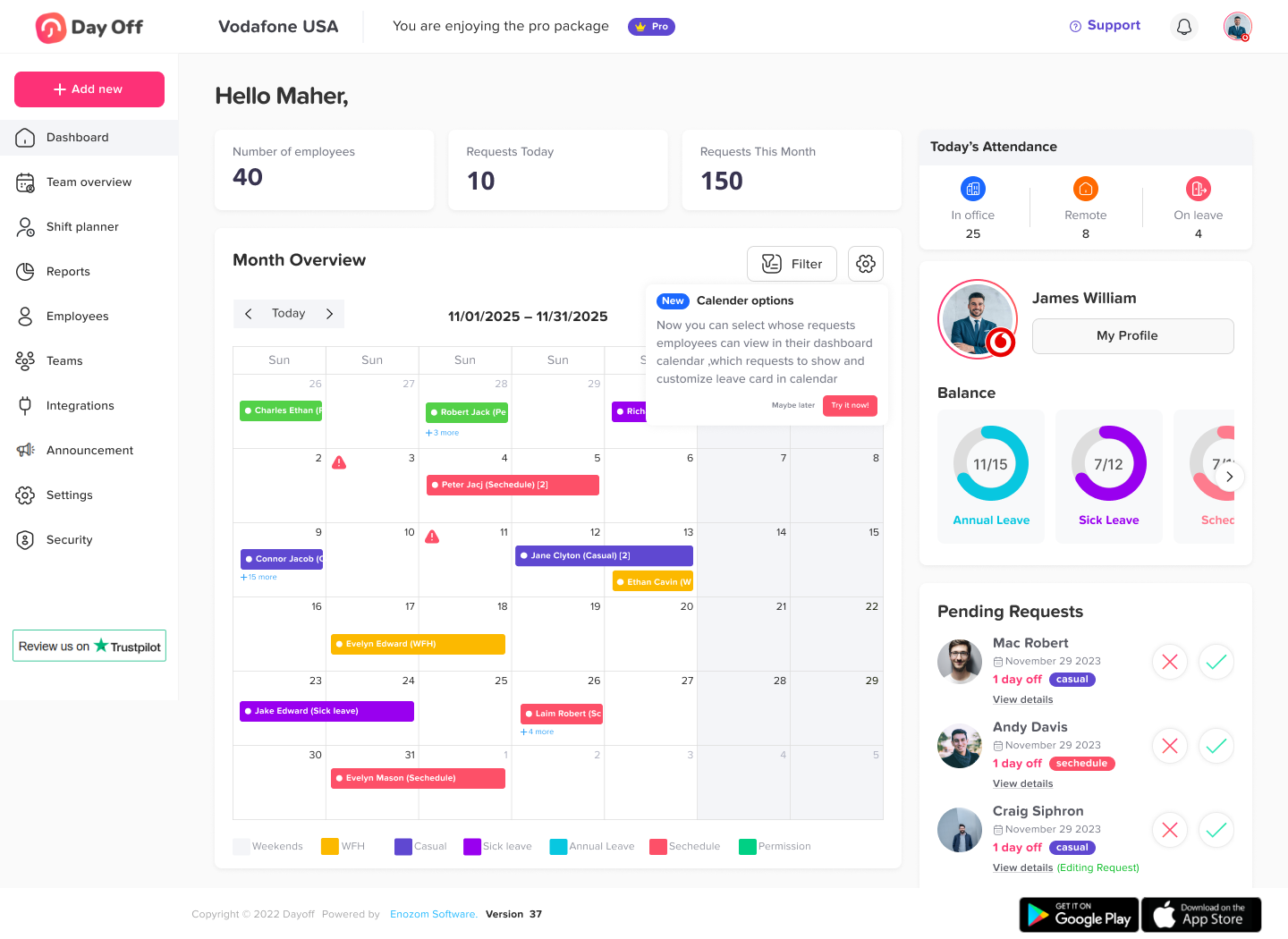
Day Off is a digital leave and time off management platform designed to help organizations track, approve, and manage employee absences in a structured and transparent manner. It serves as a single system of record where all types of leave, paid or unpaid, are requested, approved, recorded, and reported consistently.
Day Off does not replace company leave policies; instead, it operationalizes them, ensuring that every approved absence is correctly categorized, documented, and reflected in attendance and leave balances.
Core Purpose of Day Off
The primary purpose of Day Off is to standardize how employees take time away from work and how organizations manage workforce availability. By centralizing leave data, the platform reduces manual errors, prevents policy misuse, and improves visibility for employees, managers, and HR teams.
Day Off ensures that every absence is clearly defined, properly approved, and aligned with organizational rules and local labor requirements.
Key Features of Day Off
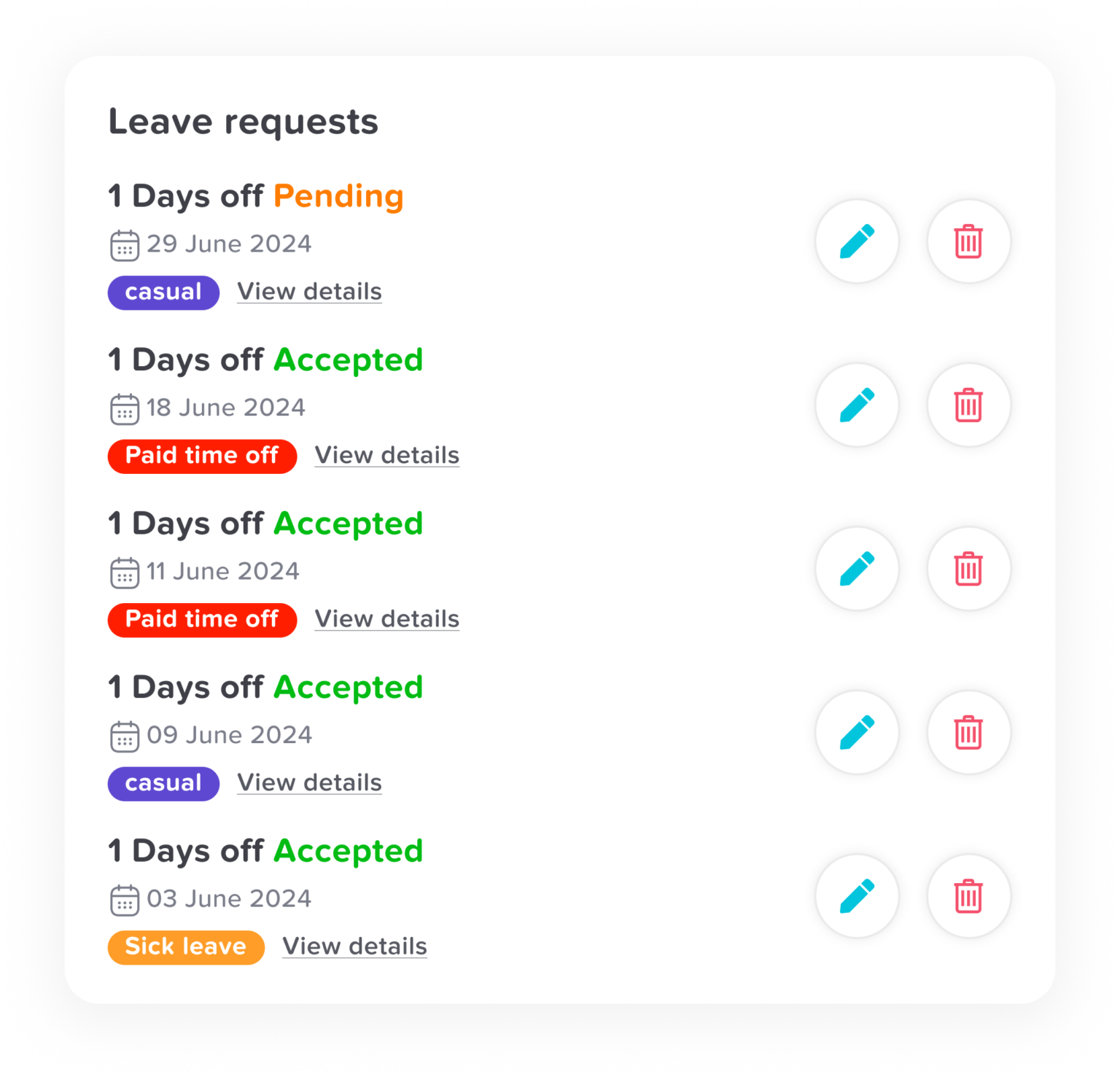
Day Off provides a structured framework for managing absences through predefined leave categories such as annual leave, sick leave, parental leave, compensatory off, public holidays, casual leave, bereavement leave, unpaid leave, and study or sabbatical leave.
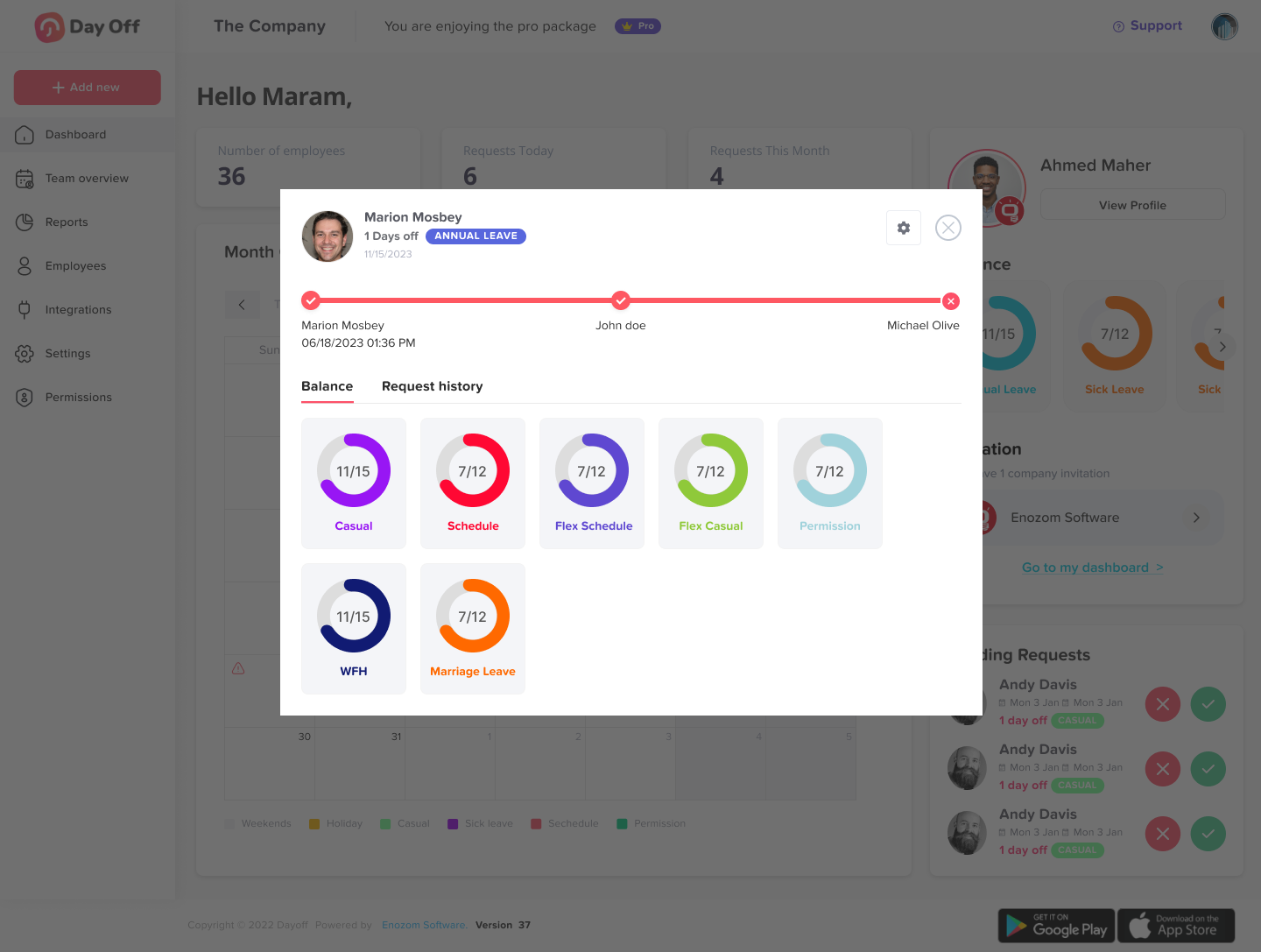
Each day off requested in the system must be assigned to one specific leave type. This classification determines approval workflows, balance deductions, payroll treatment, and reporting outcomes. The system enforces consistency by preventing the same day from being counted under multiple leave categories.
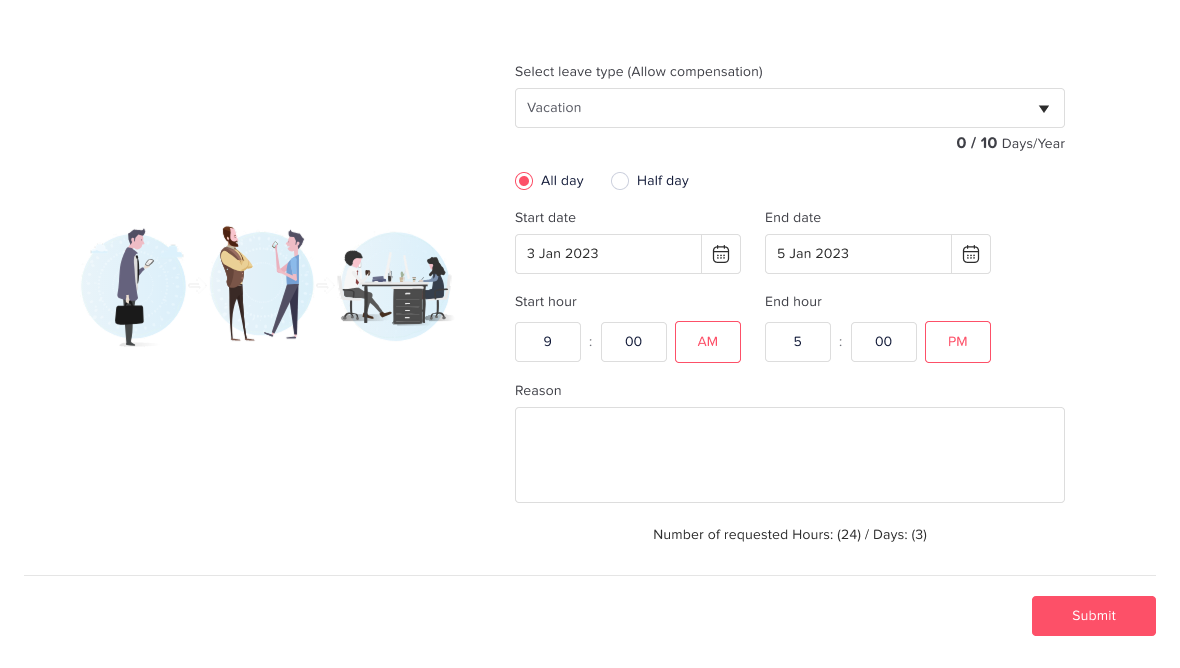
Day Off also supports full day and partial day absences, enabling organizations to apply flexible working arrangements without losing control over attendance tracking.
How Day Off Is Used Across Leave Types
When an employee requests time away from work, the request is submitted through Day Off and tagged to the appropriate leave category. For example, a planned vacation day is recorded as annual leave, while an unplanned illness-related absence is recorded as sick leave. Working on a weekend or public holiday may generate compensatory off, which is later redeemed as a day off through the same system.
Public holidays are typically pre-configured in Day Off based on location, ensuring automatic recognition of paid days off while allowing exceptions for employees required to work on those days. Casual leave and bereavement leave are handled with simplified approval processes, reflecting their urgent or sensitive nature.
Unpaid leave is clearly marked in the system, ensuring transparency around salary and benefits impact. Study leave and sabbaticals are managed as extended leave periods, composed of multiple approved days off within a single request.
Approval, Tracking, and Accountability
Day Off establishes a clear approval structure by routing leave requests to the appropriate manager or HR authority, and it can be multi-approvers and multiple levels. This ensures that operational needs are considered before approval while maintaining fairness and consistency.
Once approved, each day off is automatically reflected in leave balances, calendars, and reports. This real time visibility helps managers plan workloads, prevents overlapping absences, and supports compliance audits.
Employees benefit from clear visibility into their remaining leave balances and request history, reducing confusion and disputes.
Paid and Unpaid Leave Management in Day Off
Day Off distinguishes clearly between paid and unpaid absences based on leave type and policy configuration. Paid leave reduces the relevant leave balance, while unpaid leave is recorded separately to ensure accurate payroll processing.
This distinction is critical for maintaining compliance, financial accuracy, and employee trust, particularly in cases of extended absences or leave without pay.
Role of Day Off in Organizational Culture
By providing a transparent, consistent, and easy to use leave management system, Day Off supports a culture of trust, accountability, and work life balance. Employees feel confident requesting time off, managers gain clarity in decision-making, and HR teams benefit from reliable data and reduced administrative effort.
Frequently Asked Questions (FAQ)
What is employee leave, and why is it important?
Employee leave refers to formally approved time away from work, either paid or unpaid, for specific reasons such as rest, illness, family responsibilities, or personal development. It is important because it protects employee well-being, supports major life events, prevents burnout, and ensures compliance with labor laws. Well designed leave policies also help organizations plan resources effectively and maintain productivity.
What is the difference between paid leave and unpaid leave?
Paid leave allows employees to take time off while continuing to receive their regular salary. Examples include annual leave, sick leave, public holidays, parental leave, and compensatory off.
Unpaid leave, also known as leave without pay, is time off that is not compensated and is usually taken when paid leave balances are exhausted or when the reason for leave is not covered by standard policies. Unpaid leave may affect salary, benefits, and service continuity, depending on company policy.
Can employers decide how much leave employees receive?
Employers can design leave policies, but they must comply with local labor laws, which often mandate minimum entitlements for certain leave types such as annual leave, sick leave, public holidays, and parental leave. Many organizations choose to offer benefits above the legal minimum to attract and retain talent.
Is sick leave different from annual leave?
Yes. Sick leave is specifically intended for physical or mental health-related absences and protects employees from losing income when they are unwell. Annual leave, on the other hand, is meant for rest, leisure, and personal time and is usually planned in advance. Keeping these leave types separate prevents employees from having to choose between recovery and vacation time.
Can mental health be a valid reason for sick leave?
Yes. In many organizations and jurisdictions, mental health conditions are recognized as legitimate reasons for sick leave. Progressive leave policies treat mental health the same as physical illness, acknowledging its impact on performance, safety, and overall well-being.
What happens if an employee works on a public holiday?
If an employee is required to work on a public holiday, organizations typically provide additional compensation or grant a compensatory day off, depending on company policy and legal requirements. Clear guidelines help ensure fairness and compliance.
What is compensatory off, and how is it different from overtime pay?
Compensatory off, or comp off, is paid time off granted instead of monetary overtime compensation when employees work beyond regular hours, such as weekends or public holidays. It allows employees to recover time rather than receive additional pay, helping organizations manage costs while still recognizing extra effort.
Can employees carry forward unused leave?
Carry-forward rules depend on company policy and local laws. Some organizations allow unused annual leave to be carried into the next year with limits, while others require employees to use leave within a defined period. Sick leave and casual leave often have different carry forward rules or may not carry forward at all.
What happens to unused leave when an employee leaves the company?
This depends on the leave type, company policy, and local labor regulations. In many jurisdictions, unused annual leave must be paid out upon resignation or termination, while sick leave or casual leave may not be encashable. Clear policies help prevent disputes at exit.
How does parental leave differ for maternity, paternity, and adoption?
Maternity leave focuses on pregnancy, childbirth, and postnatal recovery. Paternity leave allows partners to support the family and bond with the child. Adoption and surrogacy leave recognize non-biological paths to parenthood and focus on bonding and adjustment. While durations and pay structures may differ, modern policies aim for fairness and inclusivity across all parental leave types.
What is casual leave used for?
Casual leave is designed for short, unplanned absences due to personal matters, minor emergencies, or urgent errands. It is typically limited in duration, easy to request, and does not require extensive documentation.
When should unpaid leave be used?
Unpaid leave is generally used when paid leave balances are exhausted or when the reason for absence falls outside standard leave categories, such as extended personal travel, long family emergencies, or relocation. Because unpaid leave affects salary and benefits, it requires clear approval and documentation.
What is the difference between study leave and a sabbatical?
Study leave supports education, certifications, or training and is often short to medium term. Sabbatical leave is a long-term planned absence, usually offered after several years of service, allowing employees to rest, pursue personal projects, or focus on development. Sabbaticals are often seen as a retention and engagement benefit.
What is Day Off, and how does it help manage employee leave?
Day Off is a centralized leave management platform that helps organizations track, approve, and manage all types of employee leave in one system. It ensures every absence is properly categorized, approved, and recorded, improving transparency, accuracy, and compliance.
How does Day Off benefit employees?
Employees gain clear visibility into their leave balances, request history, and approvals. They can submit leave requests easily, understand how each absence is classified, and feel confident that their time off is handled fairly and consistently.
How does Day Off benefit managers and HR teams?
Managers and HR teams benefit from real-time visibility into team availability, automated approval workflows, accurate reporting, and reduced administrative work. Day Off helps prevent overlapping absences, supports workforce planning, and creates reliable records for audits and compliance.
Can Day Off handle both paid and unpaid leave?
Yes. Day Off clearly distinguishes between paid and unpaid leave based on policy configuration. This ensures accurate payroll processing, correct leave balance deductions, and transparency for both employees and employers.
Why is a centralized leave system important?
A centralized system like Day Off reduces errors, eliminates manual tracking, ensures consistent policy application, and improves trust across the organization. It transforms leave management from a manual HR task into a strategic tool that supports employee well-being and operational efficiency.
Conclusion
Employee leave is a foundational part of a healthy and sustainable workplace. When designed and managed well, leave policies protect employee well being, support major life events, and help organizations maintain long term productivity and compliance.
Each leave type serves a clear purpose, but policies alone are not enough. Clarity, consistency, and transparency in how leave is applied are essential. Modern tools like Day Off make this possible by centralizing leave management, reducing administrative effort, and ensuring every absence is handled fairly and accurately.
Ultimately, effective leave management benefits everyone, employees feel supported, managers stay informed, and organizations build stronger, more resilient teams.
