







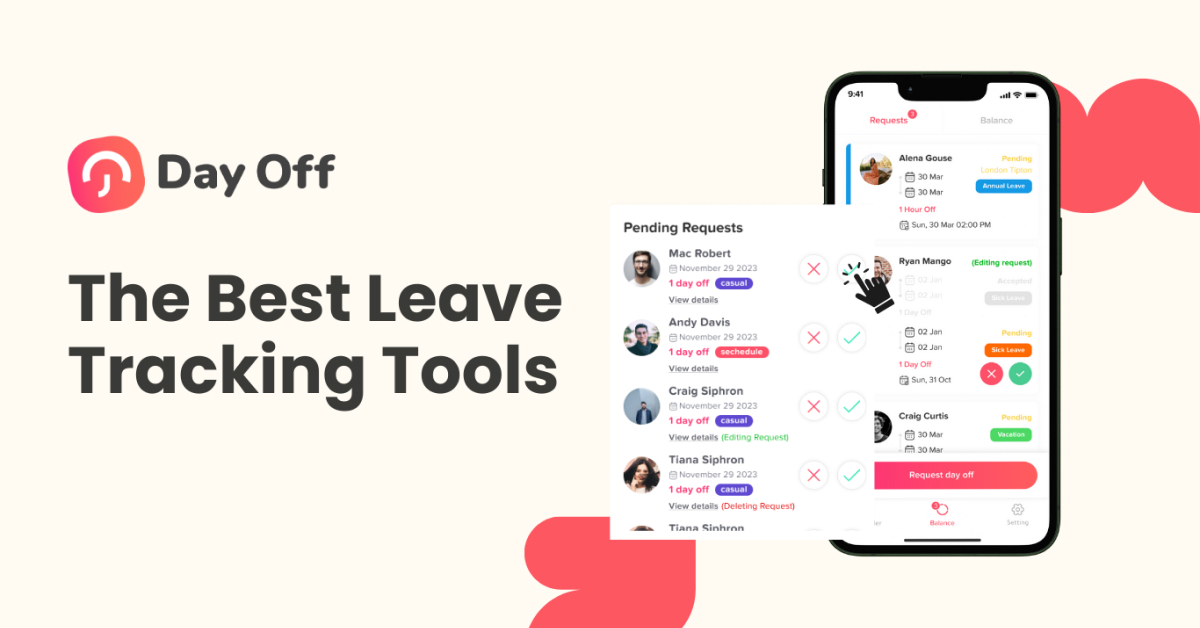
Leave tracking is no longer just a routine HR task. It plays a critical role in payroll accuracy, legal compliance, employee trust, and everyday operations. When leave data is unclear or inconsistent, small mistakes can quickly turn into bigger problems.
As teams become more distributed and leave policies grow more flexible, tracking time off manually or with outdated systems simply doesn’t work anymore. Companies need tools that are reliable, easy to understand, and capable of scaling as the organization grows.
This article takes an in-depth look at the best leave tracking tools available today. In addition, we explore how each platform works, the ideas behind its design, and the features that make it stand out. We start with Day Off, the top choice for teams that want a simple, intuitive solution without giving up powerful functionality.

Day Off Vacation Tracker
A Dedicated Leave Tracking Platform Built for Clarity, Speed, and Adoption
Day Off stands out as the top choice because it focuses on doing one thing exceptionally well: leave tracking. Instead of being buried inside a large and complex HR system, Day Off is built entirely around making time off management simple, transparent, and easy to use for everyone involved.
This focused approach shows in every part of the product. Employees understand it instantly, managers can make decisions quickly, and HR teams don’t need to spend time maintaining or explaining the system.
Product Vision and User Experience
Day Off is built on a simple idea: tracking leave should never feel like extra work. The platform has a clean, modern interface that feels intuitive from the first login. As a result, employees can submit requests, check balances, and view upcoming leave without training or guidance.
Because the system is so easy to use, adoption happens naturally across the company. Whether a team is fully in-office, hybrid, or completely remote, Day Off fits seamlessly into daily workflows and works just as well for growing teams as it does for established ones.
Leave Types and Policy Configuration
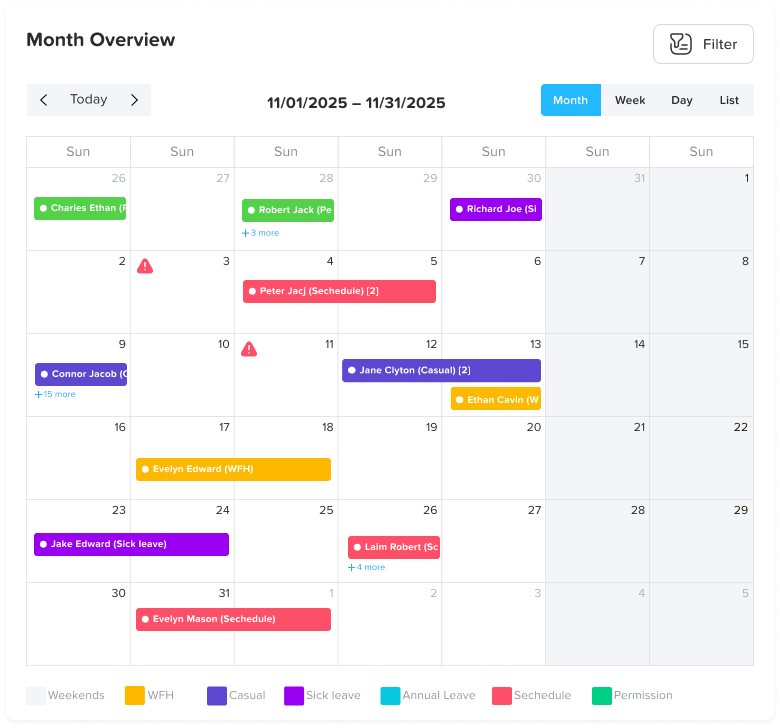
Day Off gives companies complete flexibility in how they define and manage leave policies. For example, organizations can create unlimited leave types, including PTO, sick leave, parental leave, mental health days, compensatory time, unpaid leave, and any custom policy they need.
Each leave type can be configured with specific rules, such as:
Accrual schedules (monthly, weekly, biweekly, semi-monthly, or fixed)
Maximum balance caps
Carryover limits
Reset dates and policy cycles
This level of control allows companies to mirror real-world policies accurately, whether they use traditional accrual-based systems, fixed annual allowances, or flexible and unlimited PTO models.
Accruals, Balances, and Transparency
One of Day Off’s biggest strengths is transparency. Employees always know exactly where they stand. They can see how much leave they’ve accrued, how much they’ve used, what’s pending approval, and what their future balance will look like.
Accruals are calculated automatically and consistently, removing the risk of manual errors or unfair discrepancies. As a result, this clarity reduces confusion, prevents disputes, and significantly cuts down on HR questions related to leave balances.
Request, Approval, and Team Coordination
Requesting time off in Day Off is fast and straightforward. Employees submit requests in just a few clicks, and managers receive instant notifications. Also, managers can approve or reject requests immediately, without back-and-forth emails or delays.
Once approved, leave appears automatically on shared team calendars. This gives managers and teams full visibility into upcoming absences, making it easier to plan workloads, avoid staffing gaps, and coordinate schedules across departments.
Ideal Use Cases
Day Off is an excellent fit for startups, small and mid-sized businesses, and remote-first teams that want a modern, lightweight solution without unnecessary complexity. It’s especially well suited for organizations that prioritize clarity, speed, and employee self-service over heavy HR systems.
For teams that want a powerful leave tracking tool that stays out of the way and simply works, Day Off sets the standard.
BambooHR
Leave Tracking as Part of a Structured, All-in-One HR Platform
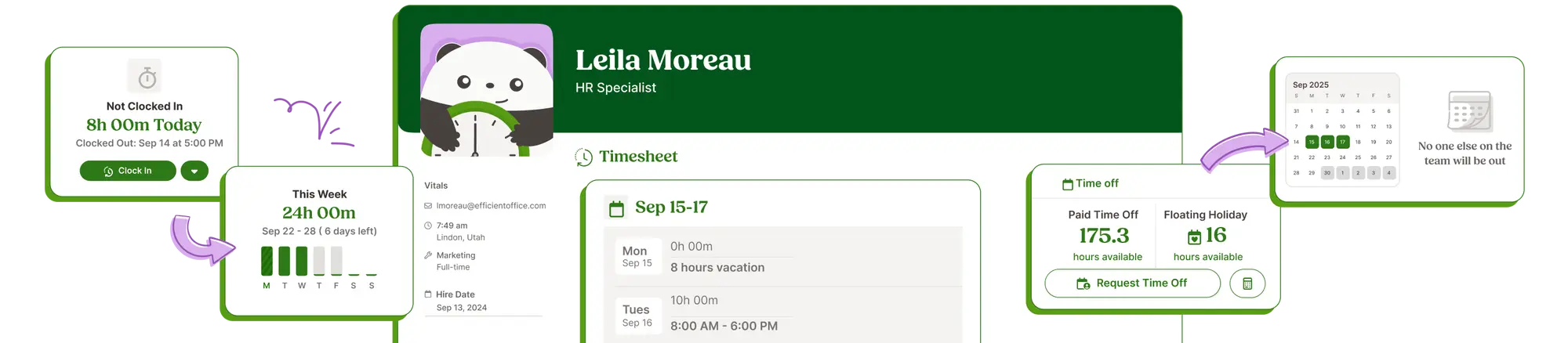
BambooHR approaches leave management from a traditional HR perspective, embedding it within a comprehensive human resources system. For organizations that want all employee data centralized under one platform, BambooHR offers a structured and well established solution.
Integration with Employee Lifecycle Management
In BambooHR, leave tracking is closely connected to employee profiles, onboarding workflows, and performance records. In addition, this integration allows HR teams to view leave history in context, alongside promotions, role changes, and compensation adjustments.
This holistic view is particularly valuable for organizations with formal HR processes and documentation requirements.
Automated Rules and Policy Consistency
BambooHR enables companies to define standardized leave policies that are automatically applied across the organization. Accruals are calculated based on tenure, employment status, or predefined schedules, ensuring consistency and fairness.
Once configured, these rules run quietly in the background, reducing manual work and preventing policy exceptions from slipping through unnoticed.
Reporting and Organizational Oversight
The platform includes reporting tools that help HR teams analyze leave usage across departments and time periods. Furthermore, these insights can highlight patterns such as burnout risk, underutilized PTO, or staffing gaps during peak vacation seasons.
Who BambooHR Is Best For
BambooHR is best suited for small to mid-sized organizations with dedicated HR teams that want leave tracking tightly integrated with broader HR operations.
Rippling
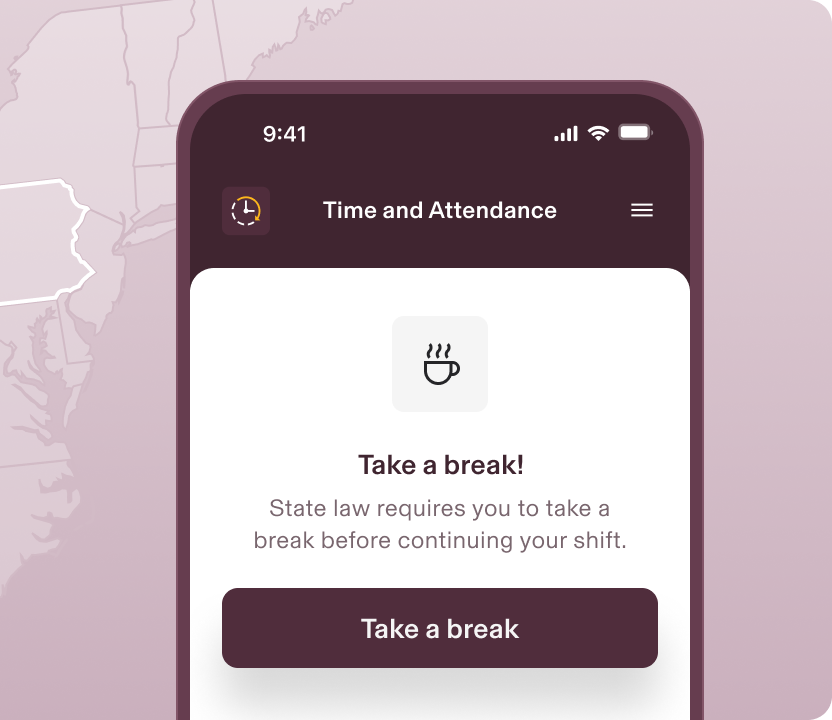
Rippling takes a systems first approach to leave management by tightly linking time off with payroll, IT, and finance. Instead of treating leave as a standalone HR task, Rippling automates how leave data flows across the organization, making it one of the most powerful options for companies operating at scale.
Payroll First Leave Synchronization
Rippling’s biggest strength is how seamlessly leave data connects to payroll. When an employee takes time off, payroll updates automatically, reducing manual adjustments and minimizing errors. Therefore, this is especially valuable for teams managing hourly employees, contractors, or global workforces.
Advanced Approval Workflows
Rippling supports flexible approval workflows that adapt to complex organizational structures. Approvals can differ by role, department, or location, allowing growing companies to maintain control without slowing down operations.
Global Workforce Support
With built-in support for international teams, Rippling helps organizations manage leave policies across countries while keeping payroll and compliance aligned.
Best Fit
Rippling is best suited for fast scaling companies that prioritize automation, deep integrations, and operational efficiency over simplicity.
Zoho People
Flexible Leave Tracking at an Accessible Price Point
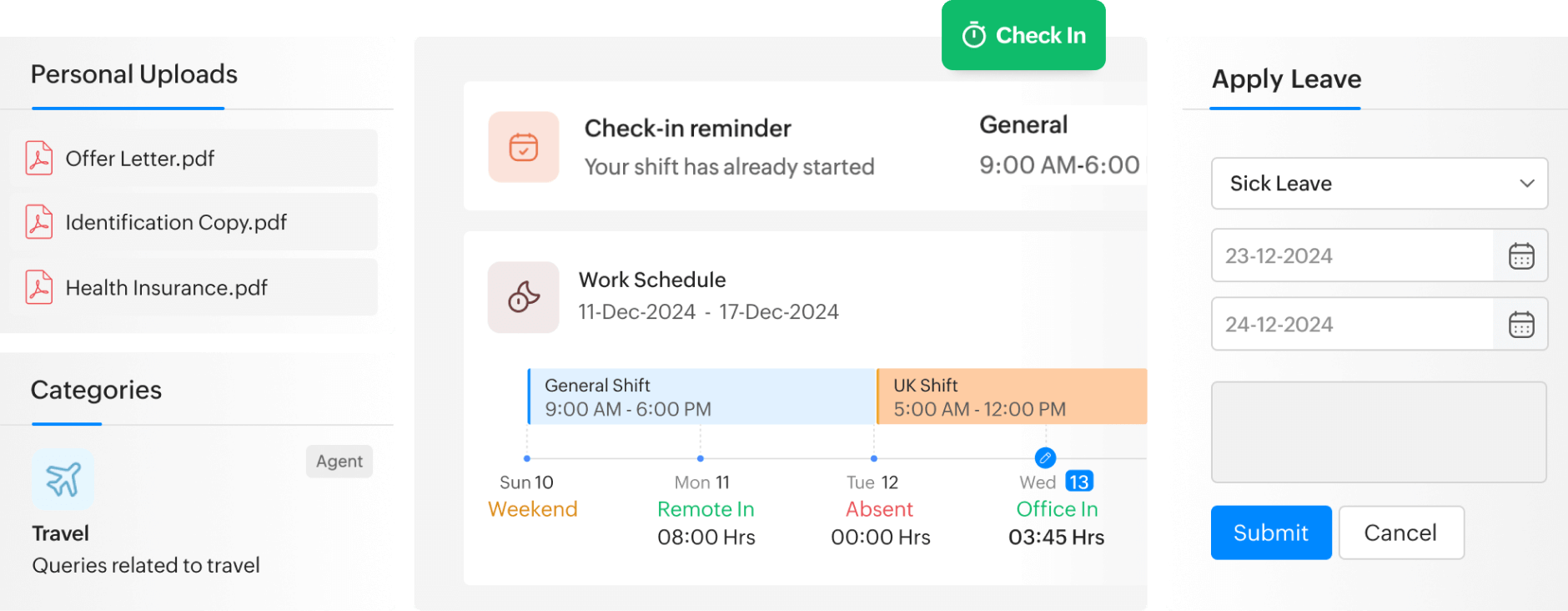
Zoho People stands out as a practical solution for organizations that need robust and customizable leave management without the cost or complexity of enterprise software. It delivers a strong balance between affordability and functionality, making it especially attractive to small and growing businesses.
Customizable Leave Policies
Zoho People allows teams to configure leave policies in detail, including eligibility rules, accrual schedules, carryover limits, and usage restrictions. This flexibility makes it easy to manage different leave rules for various roles, departments, or employment types without relying on manual tracking.
Reporting and Visibility
The platform includes reporting tools that give managers clear insight into absence trends, leave utilization, and employee availability. Overall, these reports help organizations spot patterns, plan staffing more effectively, and evaluate whether leave policies are working as intended.
Seamless Zoho Ecosystem Integration
For companies already using Zoho applications, Zoho People integrates smoothly into existing workflows. As a result, this reduces setup time, minimizes data duplication, and creates a more connected operational environment.
Best Fit
Zoho People is best suited for budget conscious small businesses and startups that need flexible leave policies, basic analytics, and a reliable system without premium pricing.
Personio
Leave Management Designed Around European Labor Laws
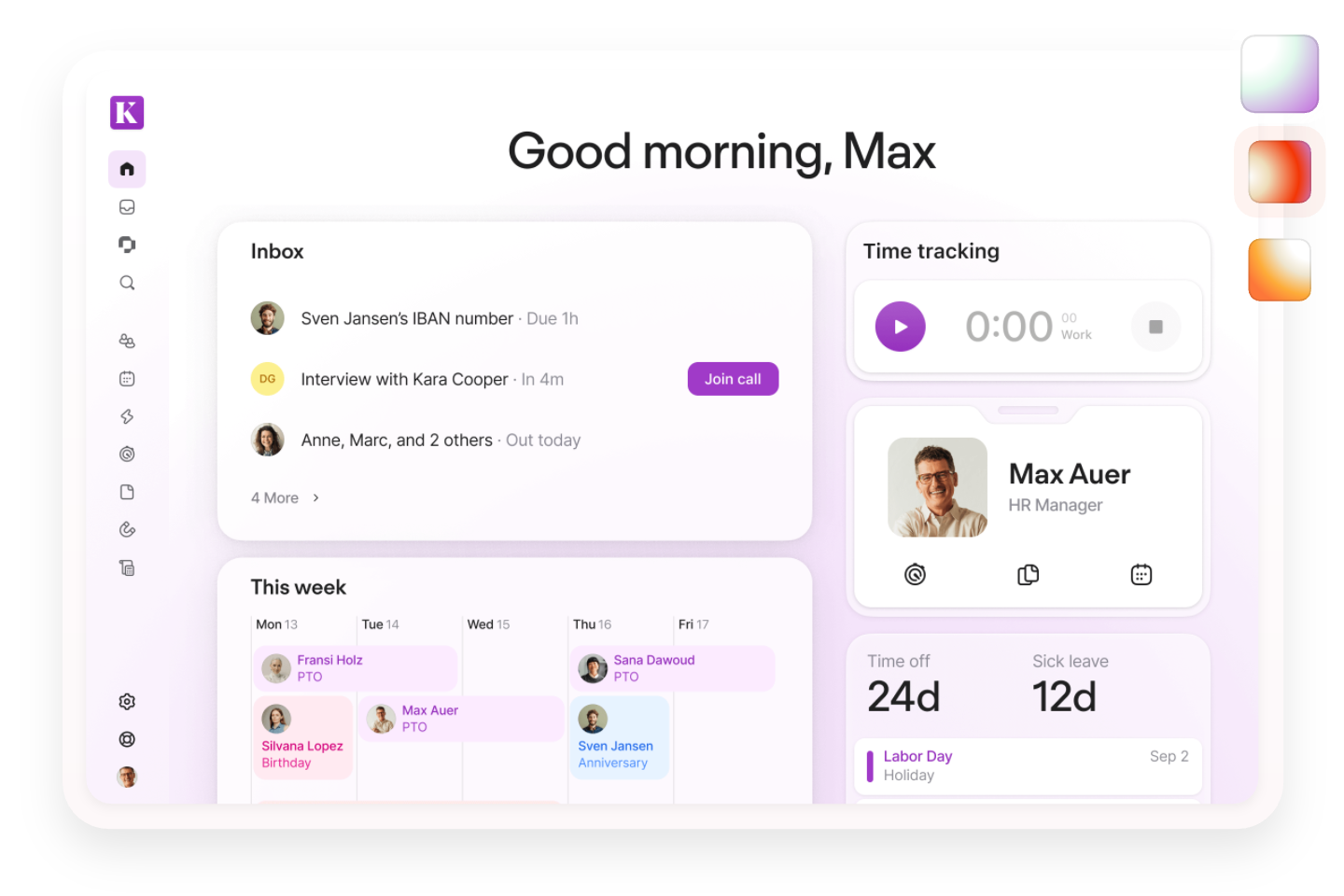
Personio sets itself apart by being built specifically for the European market, with compliance at the core of its leave management system. Rather than adapting global HR tools to fit EU regulations, Personio is designed from the ground up to reflect European labor standards, making it a trusted solution for organizations operating across one or more EU countries.
Compliance-First Leave Management
Personio automatically aligns leave accruals, entitlements, and approval workflows with local labor laws. Consequently, this significantly reduces the risk of compliance errors, fines, or disputes, especially for companies managing employees in multiple European jurisdictions.
Structured Absence Planning and Visibility
The platform provides a clear, centralized absence calendar that gives managers real-time visibility into who is off and when. Standardized workflows ensure that leave requests are handled consistently across teams and locations, supporting better staffing and operational planning.
Unified HR and Payroll Data
By tightly connecting leave management with payroll and employee records, Personio eliminates duplicate data entry and improves overall accuracy. Meanwhile, changes in leave status update automatically across systems, reducing administrative effort for HR teams.
Best Fit
Personio is best suited for European based companies and compliance driven organizations that need reliable, regulation aligned leave tracking within a structured HR environment.
Workday
Enterprise-Scale Leave Management for Global Organizations
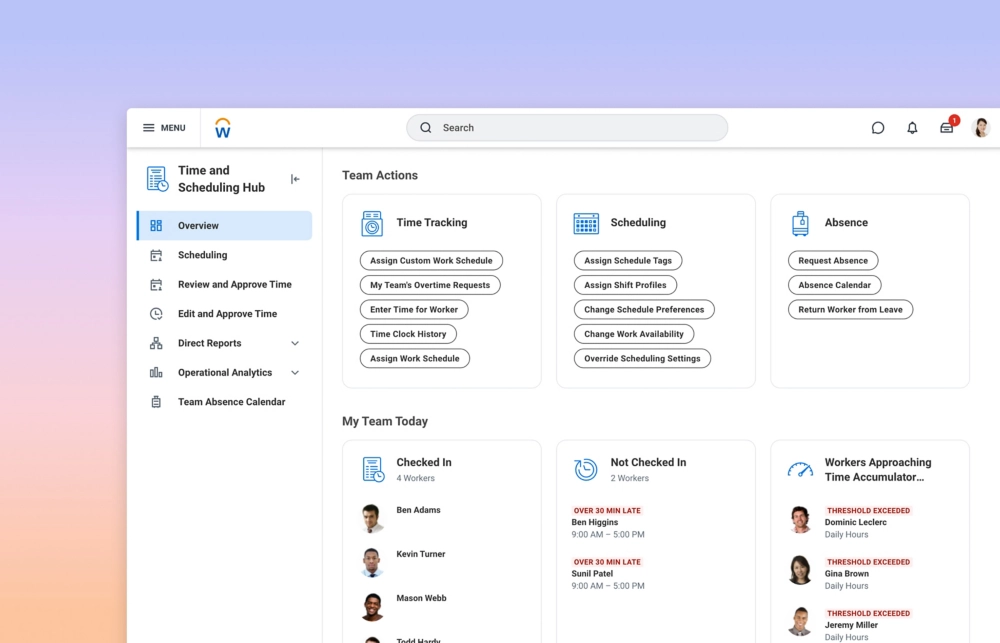
Workday is built for organizations operating at significant scale and complexity. Its leave management capabilities are designed to support multinational workforces, diverse employment contracts, union agreements, and highly customized policies. Rather than focusing on simplicity, Workday prioritizes depth, control, and consistency across large enterprises.
Advanced Absence Management Capabilities
Workday supports a wide range of leave types and policy rules, including region-specific regulations, collective bargaining agreements, and country-level variations. This makes it one of the most comprehensive leave management systems available for organizations with complex legal and operational requirements.
Strategic Workforce Analytics and Planning
Workday’s analytics tools allow organizations to analyze long-term absence trends, identify workforce risks, and forecast staffing needs. These insights support strategic decision-making and help large organizations plan more effectively across departments and regions.
Deep Enterprise Integration and Scalability
Workday integrates tightly with finance, payroll, and ERP systems, ensuring that leave data flows seamlessly across the enterprise. Its architecture is designed to scale globally, supporting thousands of employees without sacrificing accuracy or performance.
Best Fit
Workday is best suited for large multinational enterprises that require advanced compliance support, deep integrations, and enterprise-grade reporting capabilities.
Comparison Table: Best Leave Tracking Tools (With Day Off Standing Out)
| Tool | Core Focus | Ease of Use | Flexibility of Leave Policies | Scalability | Ideal For |
|---|---|---|---|---|---|
|
Day Off |
Dedicated leave tracking |
Very High |
Very High |
High |
Teams that want powerful leave tracking without HR complexity |
|
BambooHR |
Full HR suite |
Medium |
Medium |
Medium |
Companies with established HR departments |
|
Rippling |
Automation & systems |
Medium |
High |
Very High |
Fast-scaling, operations-heavy organizations |
|
Zoho People |
Budget HR tool |
Medium |
High |
Medium |
Cost conscious small businesses |
|
Personio |
EU compliance |
Medium |
Medium |
Medium |
European, regulation-focused companies |
|
Workday |
Enterprise HR & analytics |
Low |
Very High |
Very High |
Large multinational enterprises |
Frequently Asked Questions (FAQ)
Is a dedicated leave tracking tool better than an all-in-one HR system?
For many teams, yes. Dedicated tools like Day Off focus entirely on leave tracking, which results in better usability, faster setup, and higher employee adoption. All-in-one HR systems are better suited only when a company truly needs complex HR processes beyond time off.
Can leave tracking software handle custom or country-specific policies?
Modern leave tracking tools can, but not all do it equally well. Tools like Day Off and Personio allow flexible policy configuration, while enterprise systems like Workday handle country-specific rules at scale. However, manual systems struggle the most with this complexity.
How does leave tracking software improve payroll accuracy?
When leave data is centralized and automated, payroll calculations are based on accurate, up-to-date information. Therefore, this prevents overpayments, underpayments, and manual corrections. Tools with real-time balance updates, like Day Off, significantly reduce payroll-related errors.
Is leave tracking software necessary for small teams?
Yes, even small teams benefit. Without a system in place, leave tracking quickly becomes inconsistent as teams grow. A lightweight tool like Day Off is often ideal for small teams because it adds structure without introducing unnecessary complexity.
How does leave tracking help managers plan workloads?
Shared calendars and real-time visibility allow managers to see upcoming absences in advance. This helps prevent understaffing, distribute workloads more fairly, and avoid last-minute scheduling issues, especially in remote or cross-functional teams.
Can leave tracking software support unlimited PTO policies?
Yes. However, unlimited PTO still requires tracking for planning, reporting, and compliance reasons. Day Off, for example, supports unlimited and flexible PTO models while still providing visibility into usage and trends.
What happens if leave policies change over time?
Good leave tracking tools allow policies to be updated without losing historical data. Moreover, this ensures accurate records for audits and reporting while allowing companies to evolve their policies as they grow.
Is employee adoption really that important?
Absolutely. Finally, a leave tracking system only works if employees actually use it. Tools that are intuitive and transparent, like Day Off, see much higher adoption, which leads to cleaner data and fewer HR issues.
How secure is employee leave data?
Reputable leave tracking platforms use modern security practices to protect employee data. Cloud-based tools are often more secure than spreadsheets or shared documents, which are prone to access issues and version errors.
Can leave tracking software reduce HR workload?
Yes, significantly. By giving employees self-service access to balances and automating approvals and accruals, tools like Day Off dramatically reduce repetitive HR questions and manual tracking tasks.
How quickly can a company get started with leave tracking software?
This varies by tool. Enterprise platforms may take weeks or months to implement. Focused tools like Day Off can often be set up and used within the same day, making them ideal for fast-moving teams.
What’s the biggest sign a company has outgrown manual leave tracking?
Frequent balance disputes, payroll corrections, lack of visibility into who’s off, and HR spending excessive time answering leave related questions are all clear indicators that it’s time for a dedicated leave tracking tool.
Conclusion
Leave tracking is no longer a background HR task, it’s essential for accuracy, compliance, and employee trust. As teams grow and work becomes more flexible, companies need tools that are clear, reliable, and easy to use.
While enterprise platforms serve specific needs, most teams benefit more from simplicity than complexity. Day Off stands out by focusing entirely on leave tracking and doing it exceptionally well. It’s easy to adopt, transparent for employees, and flexible enough to grow with the organization.
For teams that want a modern leave tracking solution that simply works, Day Off is the clear choice.
