







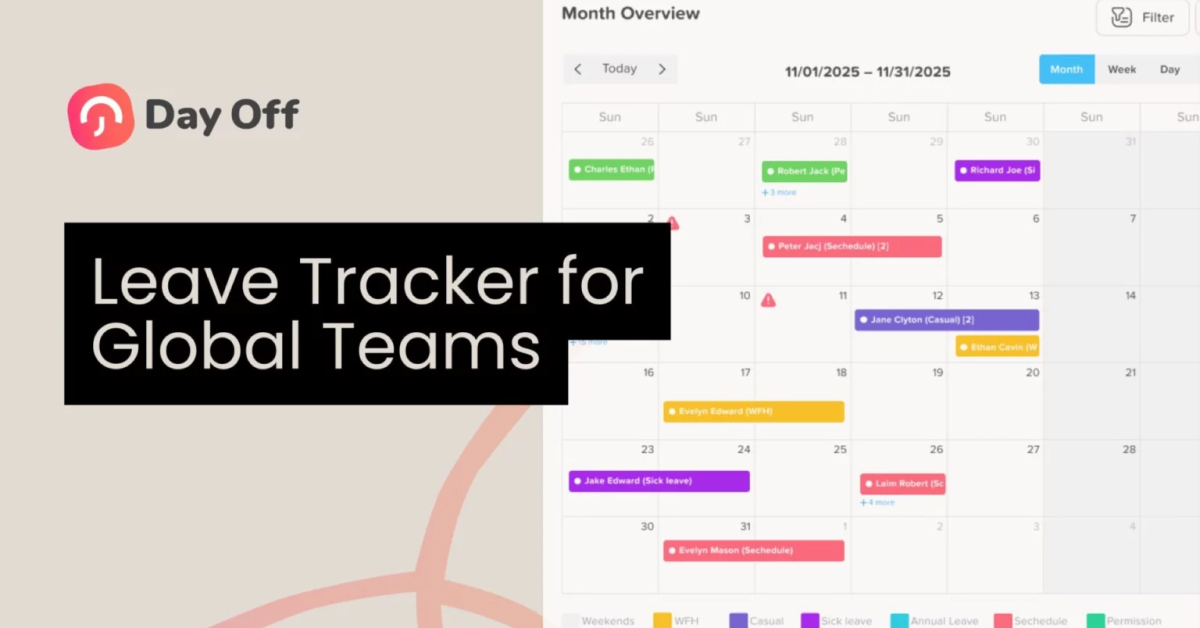
Managing employee leave sounds simple, until it isn’t.
At first glance, “time off” feels straightforward: someone ask for a day off, a manager approves it, and work continues. But for modern organizations with teams spread across countries, cultures, and time zones, leave tracking quickly becomes one of the most complex and high stakes responsibilities in HR and operations.
Suddenly, you’re dealing with different labor laws, public holidays that don’t align, cultural expectations around rest, overlapping time zones, and employees who may never share the same working day. One missed detail can lead to payroll errors, compliance risks, team friction, or burnout.

For global teams, leave tracking is no longer just an administrative checkbox. It’s a strategic system that affects:
Legal compliance across multiple jurisdictions
Operational continuity and staffing coverage
Employee trust, wellbeing, and fairness
Manager visibility and decision making
This guide breaks it all down, step by step. We’ll explore leave tracking for global teams in depth, explaining every core concept, common challenge, and practical solution. Whether you’re an HR leader, operations manager, founder, or team lead, this article is designed to give you clarity and confidence.
Understanding Leave Tracking in the Context of Global Teams
Global teams aren’t just remote teams. They include employees working in different countries, under various employment laws, across multiple time zones, and within diverse cultural expectations regarding time off.
Because of this complexity, leave tracking becomes more than an HR responsibility. It directly affects managers planning coverage, payroll ensuring accuracy, and employees needing clarity and fairness. When leave is managed well, teams stay aligned and productive. When it isn’t, confusion and frustration grow quickly.
What Is a Leave Tracker for Global Teams?
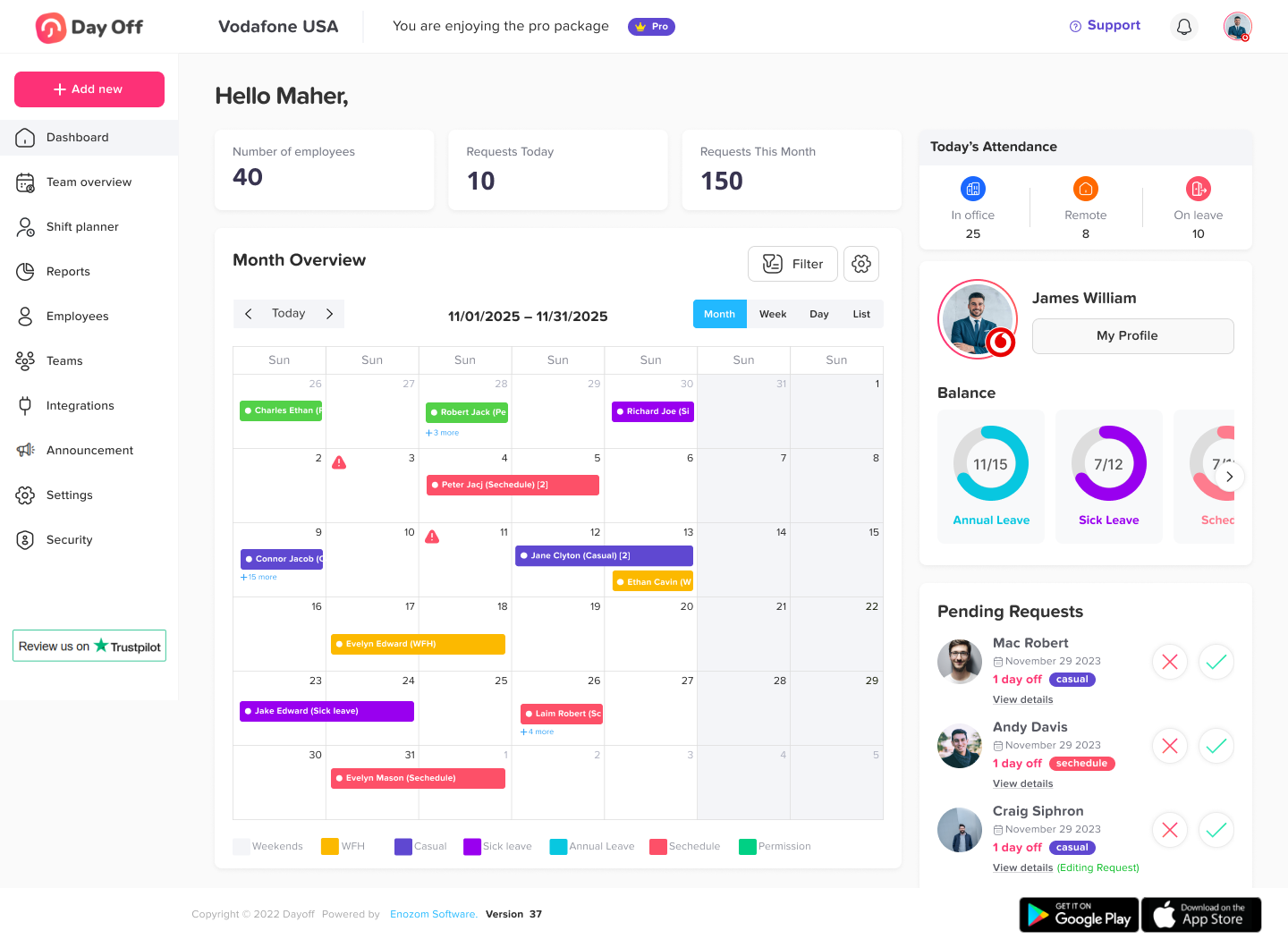
A leave tracker for global teams is a centralized digital system that manages employee time off, regardless of employees’ locations or the local rules applicable to them.
Unlike basic vacation trackers, a global leave tracker is built to handle complexity. It must:
Apply country-specific leave rules automatically
Accurately calculate leave balances
Show team availability across time zones
Stay simple enough for everyday use
At its core, a global leave tracker becomes the single source of truth for time off across the entire organization, ensuring consistency, clarity, and confidence for everyone involved.
Why Leave Tracking Is Especially Challenging for Global Teams
Time Zones Add Hidden Complexity
When teams are spread across continents, time zones quietly complicate everything. A leave request might be submitted while a manager is asleep, approvals can be delayed, and overlapping absences may go unnoticed until it’s too late.
A global leave tracker must support asynchronous workflows, so planning continues smoothly without depending on everyone being online at the same time.
Labor Laws Vary Widely by Country
Every country has its own rules around time off, including:
Minimum annual leave
Sick leave entitlements
Paid versus unpaid leave
Carryover limits
Required public holidays
Managing these differences manually is time-consuming and risky. A global leave tracker reduces that risk by automating compliance and applying the correct rules consistently for each employee.
Public Holidays Aren’t Universal
Public holidays differ:
Between countries
Between regions within the same country
Across religious and cultural calendars
Without automation, teams often plan work on days when colleagues are unavailable, or misunderstand who’s actually off. A global leave tracker automatically assigns the right holidays to the right people, eliminating confusion and misaligned schedules.
Introducing Day Off: A Leave Tracker Built for Global Teams
Day Off is a modern leave tracking platform purpose-built for global teams. Instead of trying to do everything like traditional HR systems, Day Off focuses on doing one thing exceptionally well: managing time off across borders.
Its guiding principle is simple but powerful:
Make time off clear, fair, compliant, and effortless for everyone.
By keeping leave management focused and intuitive, Day Off removes confusion, reduces risk, and scales naturally with your organization. This makes it an ideal solution for startups, fast-growing companies, and established global teams, without the weight or complexity of full HR suites.
Core Features of Day Off
Centralized Leave Tracking: One System, One Source of Truth
At the heart of Day Off is a single, centralized system where all leave data lives. Instead of information being scattered across emails, chat messages, spreadsheets, or personal notes, everything is captured in one reliable place.
This means employees always know where to submit requests, managers always know where to check availability, and HR always works from accurate, up-to-date data. Every request, approved, pending, rejected, or historical, is recorded and traceable.
By eliminating fragmented tracking, Day Off creates a shared source of truth that reduces errors, builds trust, and ensures everyone is working with the same information.
Multiple Leave Types with Full Flexibility
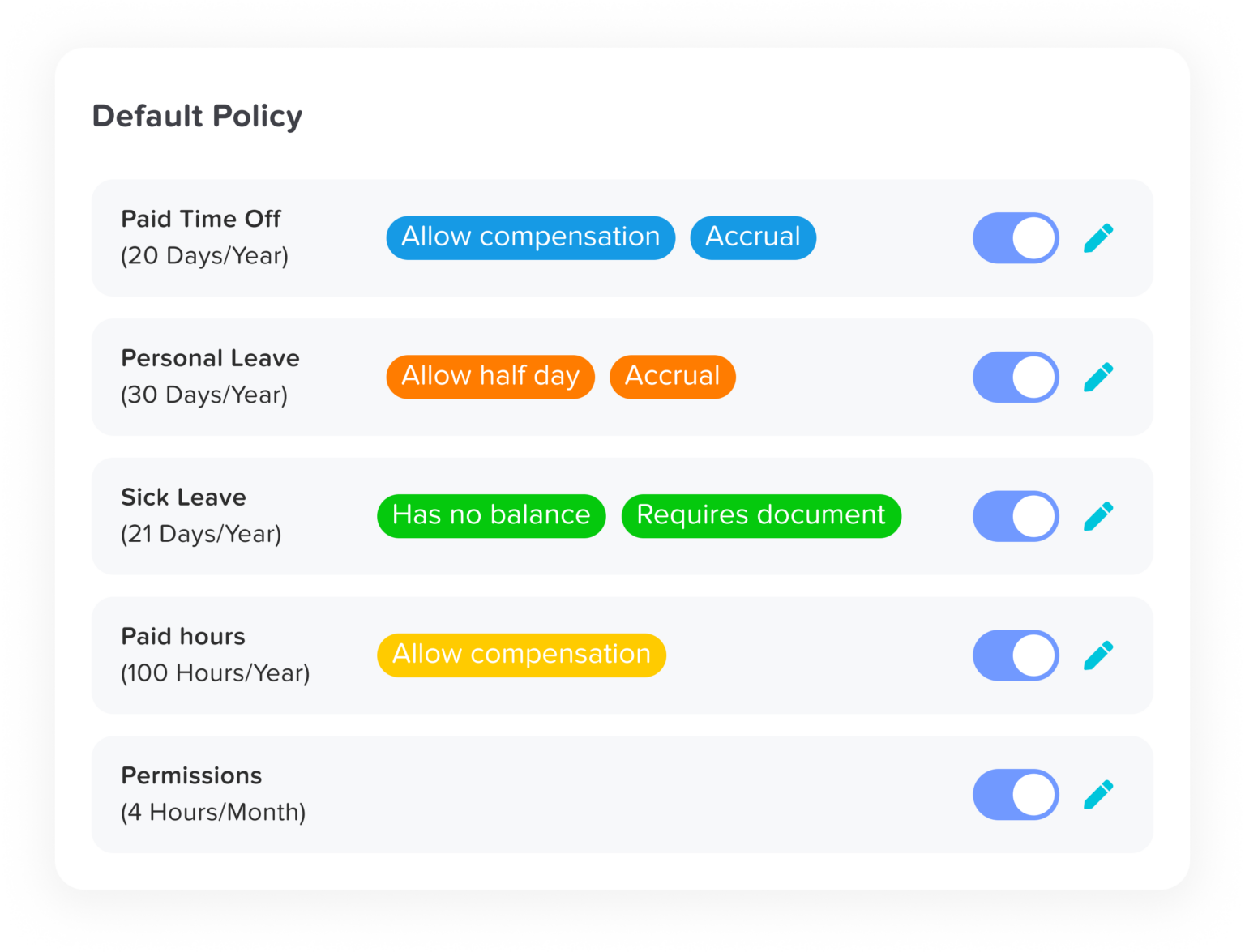
Real organizations don’t run on a single “vacation” category, and Day Off reflects that reality. The platform supports a wide variety of leave types, such as vacation or PTO, sick leave, personal leave, unpaid leave, and fully custom company-defined leave types.
Each leave type can be configured independently. You can define how it accrues, whether it requires approval, who can see it, and how it appears in calendars and reports. This allows companies to mirror real internal policies instead of forcing them into rigid templates.
The result is a system that adapts to your organization, not the other way around.
Country-Specific Leave Policies
Global companies can’t rely on a one-size-fits-all approach to leave. Laws, entitlements, and expectations vary widely by country, and managing this manually introduces serious compliance risks.
Day Off allows organizations to create country-specific leave policies and automatically assign them based on each employee’s location. Entitlements, accrual rules, carryover limits, and leave types can all differ by region, without overlapping or conflict.
This ensures employees receive exactly what they’re entitled to under local regulations, while HR teams avoid constant manual adjustments and legal uncertainty.
Automated Leave Accruals
Manually calculating leave accruals is one of the most error-prone parts of leave management. Day Off removes this risk entirely by automating accruals based on clearly defined rules.
Accruals can be set to run monthly or yearly, aligned with employee start dates and local policies. As time passes, balances update automatically, no spreadsheets, no formulas, no guesswork.
Employees always see accurate balances, payroll data stays consistent, and HR teams are freed from repetitive calculations that drain time and focus.
Public Holidays by Location
Public holidays are a major source of confusion in global teams. What’s a working day in one country may be a national holiday in another, and manually tracking this is inefficient and error-prone.
Day Off automatically assigns public holidays based on each employee’s location. These holidays appear directly in the leave calendar, alongside personal leave requests, giving everyone immediate visibility.
This ensures fair treatment across regions, prevents accidental scheduling on holidays, and helps teams plan realistically around availability.
Global Leave Calendar with Full Transparency
The shared leave calendar is where everything comes together. It provides a clear, visual overview of who is off, when, and why, across teams, departments, and regions.
Managers can quickly spot coverage gaps, employees can plan leave without overlap surprises, and teams gain a better understanding of each other’s availability. Different leave types are clearly labeled, removing ambiguity.
This level of transparency turns leave planning from a reactive task into a proactive one.
Simple, Asynchronous Approval Workflows
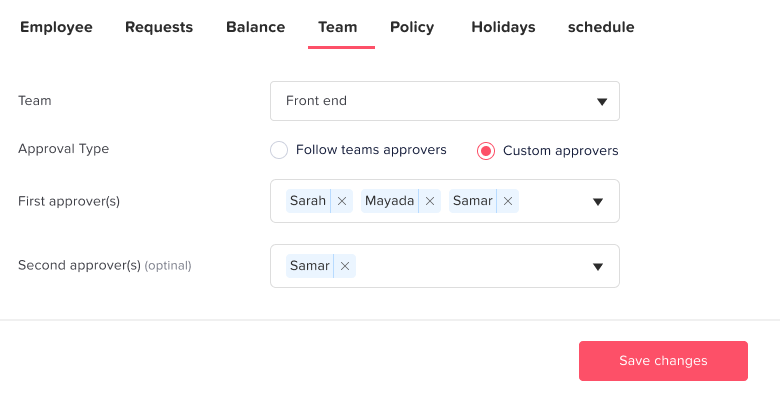
In global teams, real-time approvals aren’t always possible. Time zones, flexible schedules, and remote work demand an asynchronous approach.
Day Off’s approval workflow is intentionally lightweight. Employees submit requests in seconds, and managers can approve or decline with a single click, whenever they’re online. There’s no unnecessary back-and-forth or complicated chains.
This keeps leave requests moving smoothly, without creating delays or friction across time zones.
Real-Time Leave Balances for Employees
One of the most common HR questions is, “How much leave do I have left?” Day Off eliminates this by giving employees constant access to their own leave data.
Employees can see what they’ve used, what’s been approved, what’s pending, and what they’ve accrued so far. Everything is updated in real time and easy to understand.
This transparency builds trust, reduces HR workload, and encourages employees to plan their time off responsibly.
Custom Leave Types for Cultural Inclusivity
Global teams are diverse, not just geographically, but culturally. Different regions observe different traditions, life events, and responsibilities that standard leave categories don’t always cover.
Day Off allows organizations to create custom leave types for religious observances, compassionate leave, parental leave, sabbaticals, study leave, and more. These can be tailored with their own rules and visibility settings.
This flexibility allows companies to be genuinely inclusive without creating administrative complexity or exceptions outside the system.
Clean, Intuitive User Experience
Even the most powerful leave system fails if people don’t use it. That’s why Day Off prioritizes simplicity and clarity in its design.
The interface is clean, intuitive, and free from unnecessary HR jargon. Employees can submit requests without training, managers can review leave at a glance, and HR teams can configure policies without technical effort.
This ease of use drives consistent adoption, which is essential for accurate, reliable leave tracking at scale.
Benefits of Day Off for Employees
Improved Clarity
With Day Off, employees no longer need to guess how much leave they have or which rules apply to them. Their entitlements, balances, and upcoming time off are always visible in one place.
This removes uncertainty and eliminates the need to message HR for basic questions, giving employees confidence when planning vacations, personal time, or important life events.
Increased Trust
When leave rules are applied manually, employees can sometimes perceive decisions as inconsistent or unfair. Day Off removes this concern by enforcing policies automatically and transparently.
Everyone is subject to the same clearly defined rules, which builds trust in the system and reassures employees that leave decisions are objective, not influenced by favoritism or guesswork.
Better Work–Life Balance
Requesting time off should feel easy, not stressful. Day Off makes the process simple and frictionless, encouraging employees to take the time off they’re entitled to.
By reducing barriers to requesting leave, the platform helps prevent burnout, supports mental well-being, and promotes healthier, more sustainable work habits across the organization.
Benefits of Day Off for Managers and HR Teams
Reduced Manual Work
Day Off eliminates the need for spreadsheets, email threads, and manual calculations. Leave balances, accruals, and approvals are handled automatically, significantly reducing administrative overhead.
HR teams spend less time fixing errors and more time focusing on strategic, people centered initiatives.
Better Planning and Visibility
Managers gain a clear, real-time view of who is available and when. With the global leave calendar and accurate data, staffing decisions become proactive instead of reactive.
This visibility helps teams avoid coverage gaps, meet deadlines, and plan workloads with confidence.
Lower Compliance Risk
Keeping up with local labor laws across multiple countries is challenging and risky when done manually. Day Off enforces country specific policies automatically, ensuring legal requirements are consistently met.
This reduces the risk of non-compliance, protects the organization from legal exposure, and gives HR peace of mind.
Reporting and Strategic Insights
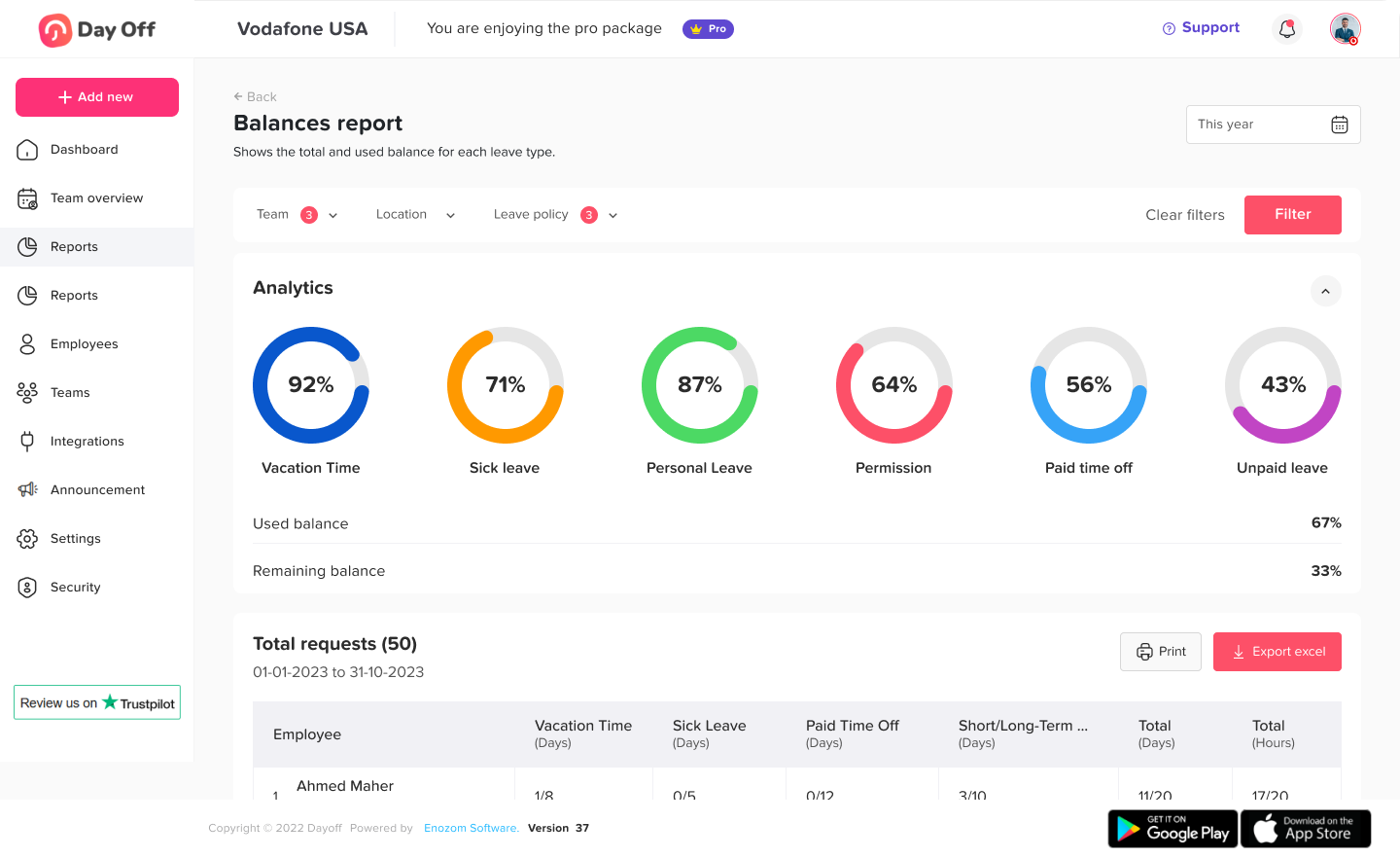
Beyond day-to-day leave management, Day Off provides leaders with meaningful insights into how time off is actually used across the organization.
Teams and leadership can analyze:
Leave usage trends over time
Teams or roles showing signs of overwork
Seasonal or recurring absence patterns
These insights help organizations move from reactive decisions to proactive workforce planning. Leaders can identify burnout risks early, plan hiring or coverage around predictable absences, and design leave policies that genuinely support long-term productivity and employee wellbeing.
Security and Data Responsibility
For global teams, data responsibility is not optional, it’s essential. Day Off is built with security and accountability at its core.
The platform includes:
Role-based access controls, ensuring users only see what they need
Secure data handling, protecting sensitive employee information
Clear ownership and permission structures, reducing accidental exposure
This makes Day Off suitable for organizations operating across multiple regions, each with its own data protection expectations and regulatory requirements.
Who Should Use Day Off?
Day Off is built for organizations that want clarity, consistency, and control, without unnecessary complexity. It’s designed to fit companies of all sizes, structures, and working models.
Day Off works equally well for:
On-site, hybrid, and remote teams
Small businesses and fast-growing startups
Mid-sized companies and global enterprises
International agencies, NGOs, and professional services firms
Organizations operating in one country or across many
Whether you’re managing a close-knit local team or a workforce spread across multiple regions, Day Off adapts to how you work. It scales with your organization, supports evolving policies, and keeps leave management simple, fair, and reliable at every stage of growth.
The Role of Day Off in the Future of Global Work
As work becomes increasingly global, flexible, and distributed, leave tracking will play a more critical role than ever before. What was once a simple administrative task is evolving into a key pillar of employee experience, compliance, and sustainable performance.
Day Off is built for this future. By combining clarity, fairness, and automation, it enables organizations to manage time off with confidence, no matter how complex their structure becomes.
In a world of borderless teams and evolving expectations around work-life balance, Day Off stands as a foundational operational tool, supporting transparency, protecting employee well-being, and helping organizations scale responsibly.
Frequently Asked Questions (FAQ)
Can Day Off handle part-time employees and non-standard schedules?
Yes. Day Off is flexible enough to support part-time employees, reduced schedules, and custom working patterns. Leave accruals and balances can be adjusted to reflect actual working time, ensuring fairness and accuracy for employees who don’t follow a standard full-time schedule.
Does Day Off support contractors or freelancers?
Day Off can be used to track time off for contractors or freelancers when organizations want visibility and coordination, even if those workers aren’t legally entitled to leave. This is especially useful for long-term contractors or hybrid teams where planning availability matters.
How easy is it to move from spreadsheets or another system to Day Off?
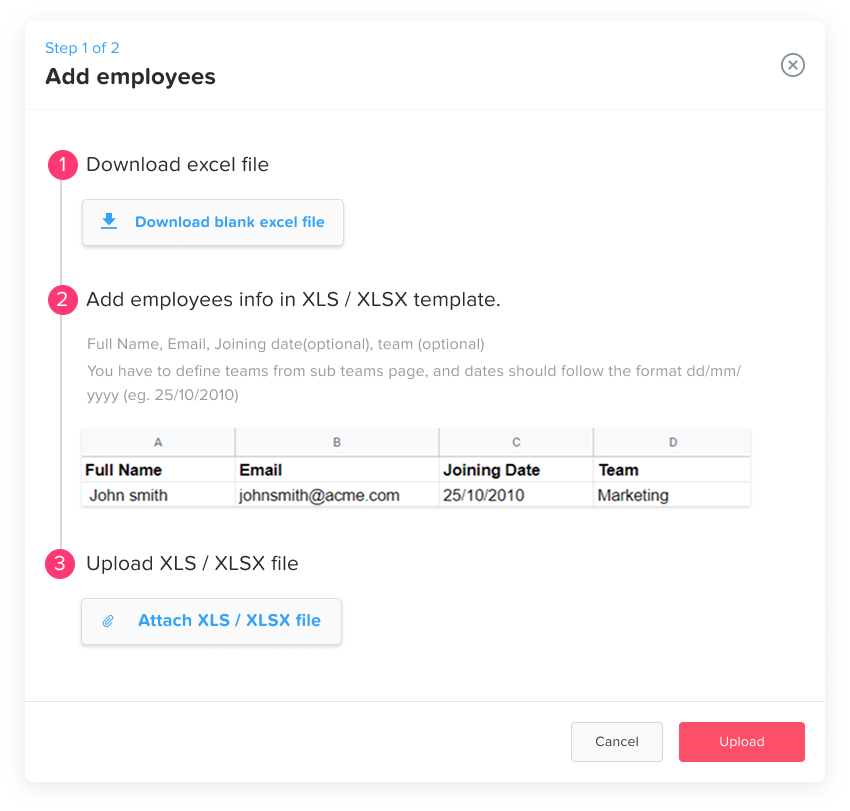
Migrating to Day Off is straightforward. Existing leave balances, employee data, and policies can be imported so teams don’t have to start from scratch. This makes it easy to transition away from spreadsheets or legacy tools without disrupting ongoing operations.
Can approval workflows be customized beyond a single manager?
Yes. Approval workflows can be tailored to match real organizational structures. This includes multiple approvers, layered approvals, or different approval rules depending on leave type, team, or location, useful for larger or more regulated organizations.
Does Day Off integrate with other tools?
Day Off supports integrations that help it fit seamlessly into existing workflows, such as calendars and other workplace tools. This ensures leave information stays visible where teams already work, reducing context switching and missed updates.
How does Day Off handle audits or historical leave records?
All leave activity is logged and stored securely. Historical records remain accessible for audits, compliance checks, or internal reviews, giving HR and leadership confidence that past decisions are documented and traceable.
Are employees notified about approvals and changes?
Yes. Employees receive notifications when leave is approved, declined, or updated. Managers are also notified of new requests, ensuring nothing gets lost, and everyone stays informed without manual follow-ups.
Is Day Off suitable for companies in highly regulated industries?
Day Off is designed with structure, consistency, and data responsibility in mind, making it suitable for organizations that need clear records, controlled access, and reliable enforcement of policies. It supports compliance-focused environments without adding unnecessary operational burden.
Can policies evolve as the company grows?
Absolutely. Policies, leave types, approval flows, and locations can all be updated as an organization scales. Day Off is designed to grow with companies, whether they’re adding new teams, entering new countries, or updating internal policies.
How long does it take for a team to start using Day Off effectively?
Most teams can start using Day Off immediately. The interface is intuitive, requires little to no training, and is designed for daily use by both employees and managers. This fast adoption is key to maintaining accurate leave data from day one.
Conclusion: Making Leave Management Work at a Global Scale
As teams grow more distributed and ways of working continue to evolve, managing time off has become far more than an administrative responsibility. It directly influences compliance, operational stability, employee trust, and long-term performance.
Day Off helps organizations navigate this complexity by bringing structure, clarity, and consistency to leave management. By centralizing policies, automating rules, and making time off easy to understand for everyone, Day Off turns a traditionally fragile process into a reliable system.
With the right leave tracker in place, organizations don’t just manage absences better, they build healthier teams, plan more effectively, and scale with confidence in an increasingly global world.