







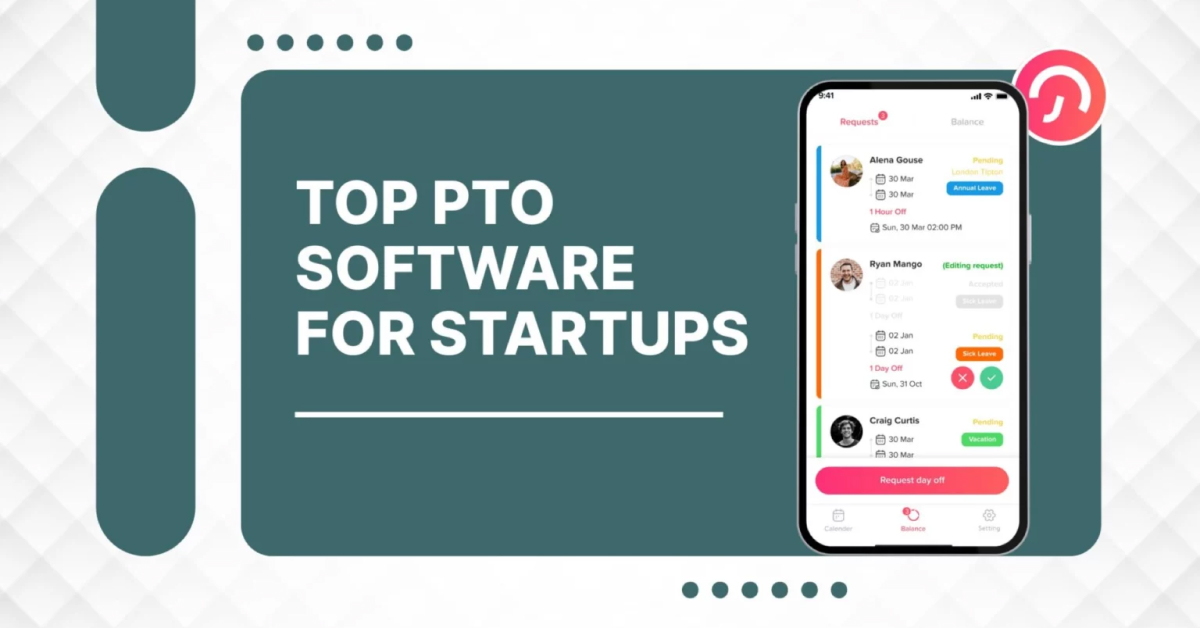
Managing employee time off can quickly become complicated for small businesses and startups. What starts as a simple spreadsheet often leads to overlapping vacations, miscalculated leave balances, delayed approvals, payroll errors, and compliance risks as your team grows.
Using reliable leave management software helps automate time off tracking, streamline approvals, ensure accurate leave calculations, and reduce administrative workload. It improves transparency, keeps payroll aligned, and creates a smoother experience for both employees and managers.

Below is a curated list of the best leave management tools for small businesses and startups, starting with our top overall recommendation: Day Off.
Day Off: Leave Management Tool for Small Businesses & Startups
When it comes to simple, powerful, and affordable leave management software for small businesses and startups, Day Off stands out as the clear leader.
Unlike complex enterprise HR systems packed with unnecessary modules, Day Off focuses on one thing, making employee leave management effortless, accurate, and scalable.
Why Day Off Is the Best Choice
Small businesses and startups need:
Quick implementation
Easy-to-use interface
Transparent leave tracking
Custom leave policies
Affordable pricing
Scalability as the team grows
Day Off delivers all of this, without complexity.
Key Features of Day Off
Simple Leave Requests & One-Click Approvals
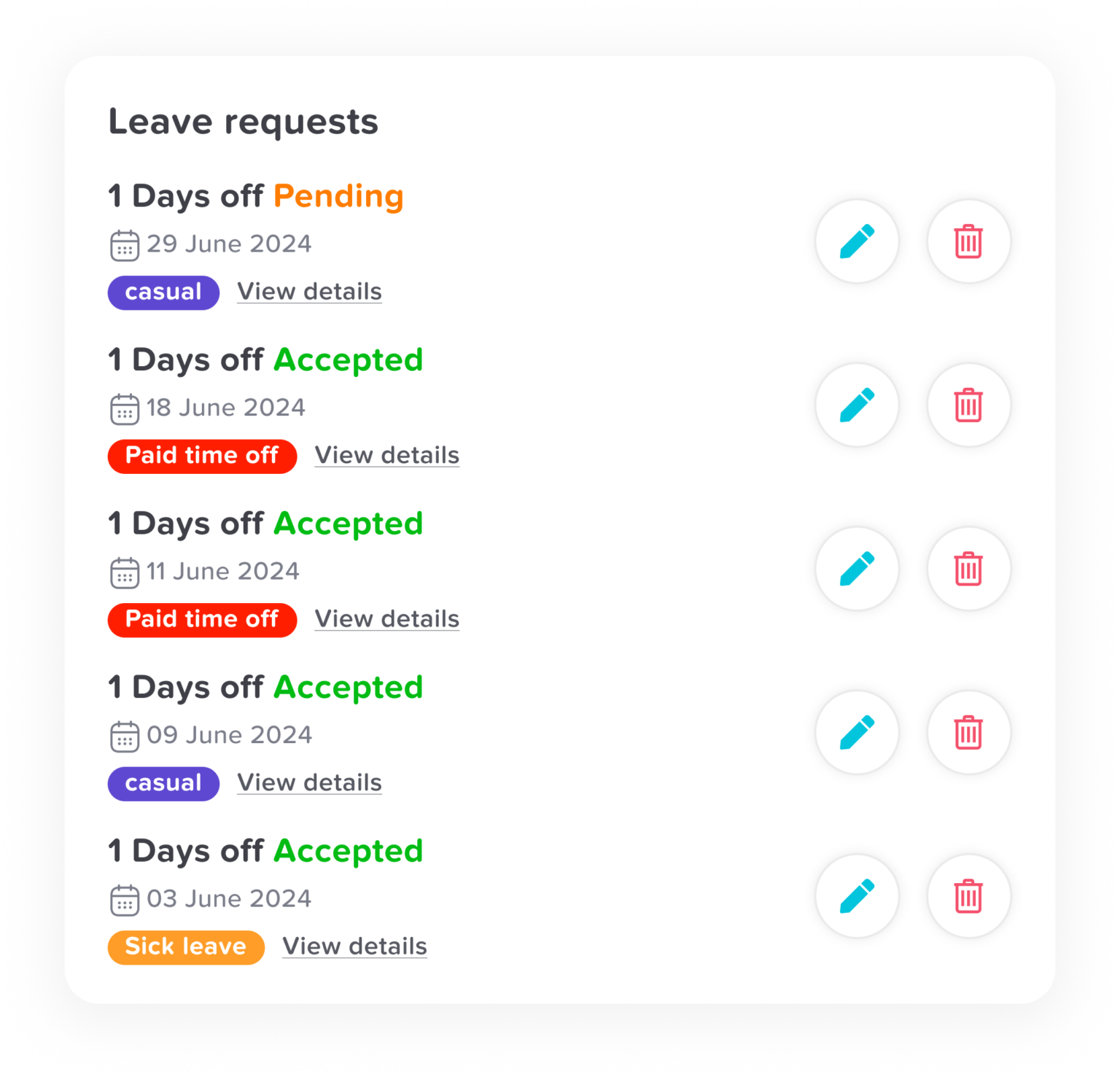
Submitting and approving leave should not be complicated. With Day Off, employees can request vacation, sick leave, or any custom leave type in just a few seconds from desktop or mobile.
Managers receive instant notifications and can review requests with full visibility of leave balances and team availability before approving. The one-click approval system eliminates delays and removes the need for back-and-forth emails.
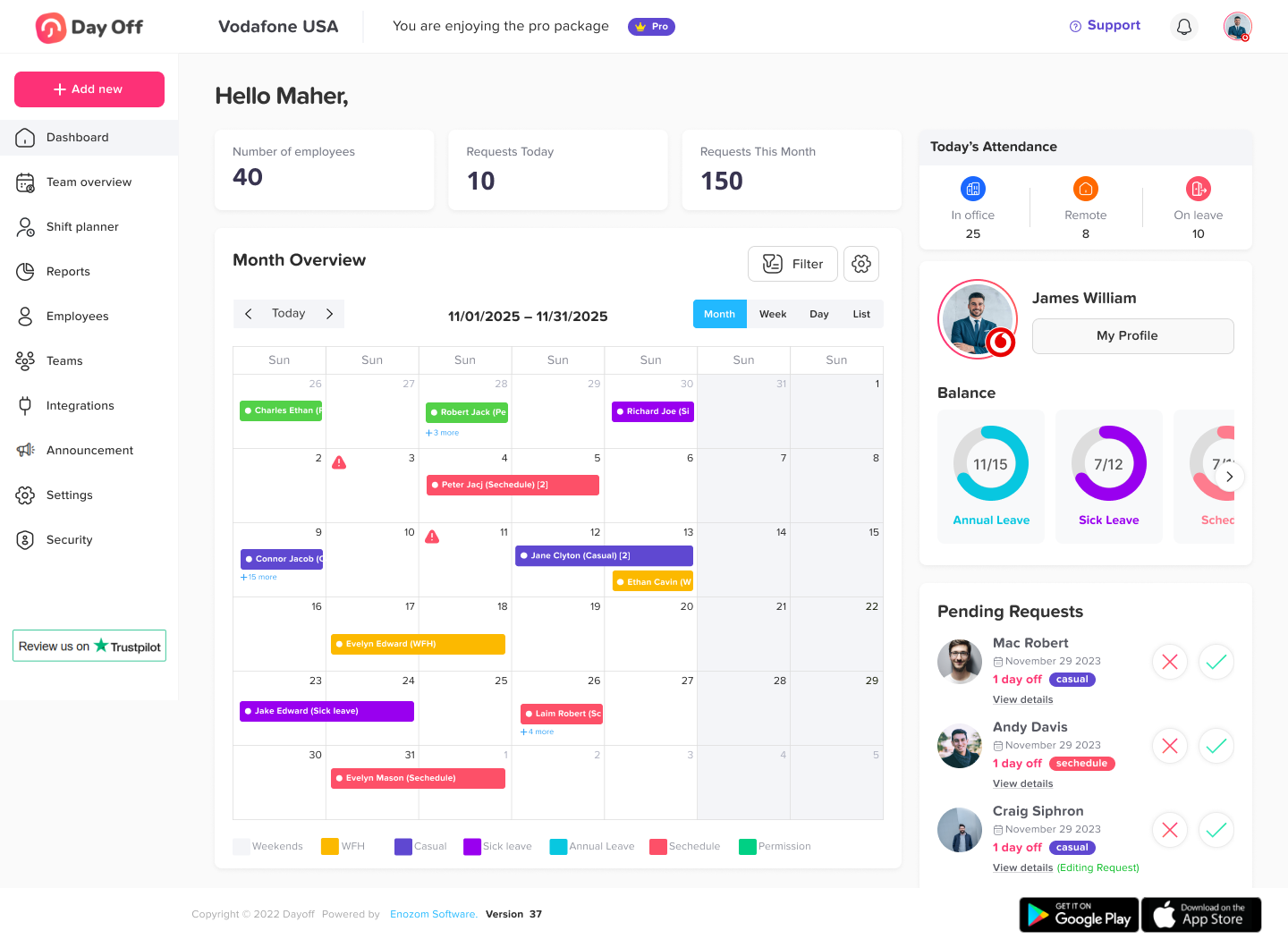
Smart Team Leave Calendar
One of the biggest challenges in small teams is overlapping vacations. A single absence can significantly impact operations when resources are limited.
Day Off’s shared leave calendar provides a real-time visual overview of:
Who is off
When they are off
Which departments may be affected
Managers can quickly identify potential conflicts before approving requests. This visibility allows better resource planning, smoother project execution, and stronger team coordination.
Automatic Leave Balance Tracking
Manual leave tracking in spreadsheets often leads to calculation errors, outdated balances, and payroll inconsistencies.
Day Off automates all leave calculations, including:
Accrual rates (weekly, monthly, bi-weekly, or semi-monthly)
Carryover limits
Remaining leave balances
Used leave days
Pending requests
Employees can access their leave balance anytime, which reduces HR inquiries and improves transparency.
Accurate automation not only prevents mistakes but also protects the company from compliance risks and payroll discrepancies.
Fully Customizable Leave Policies
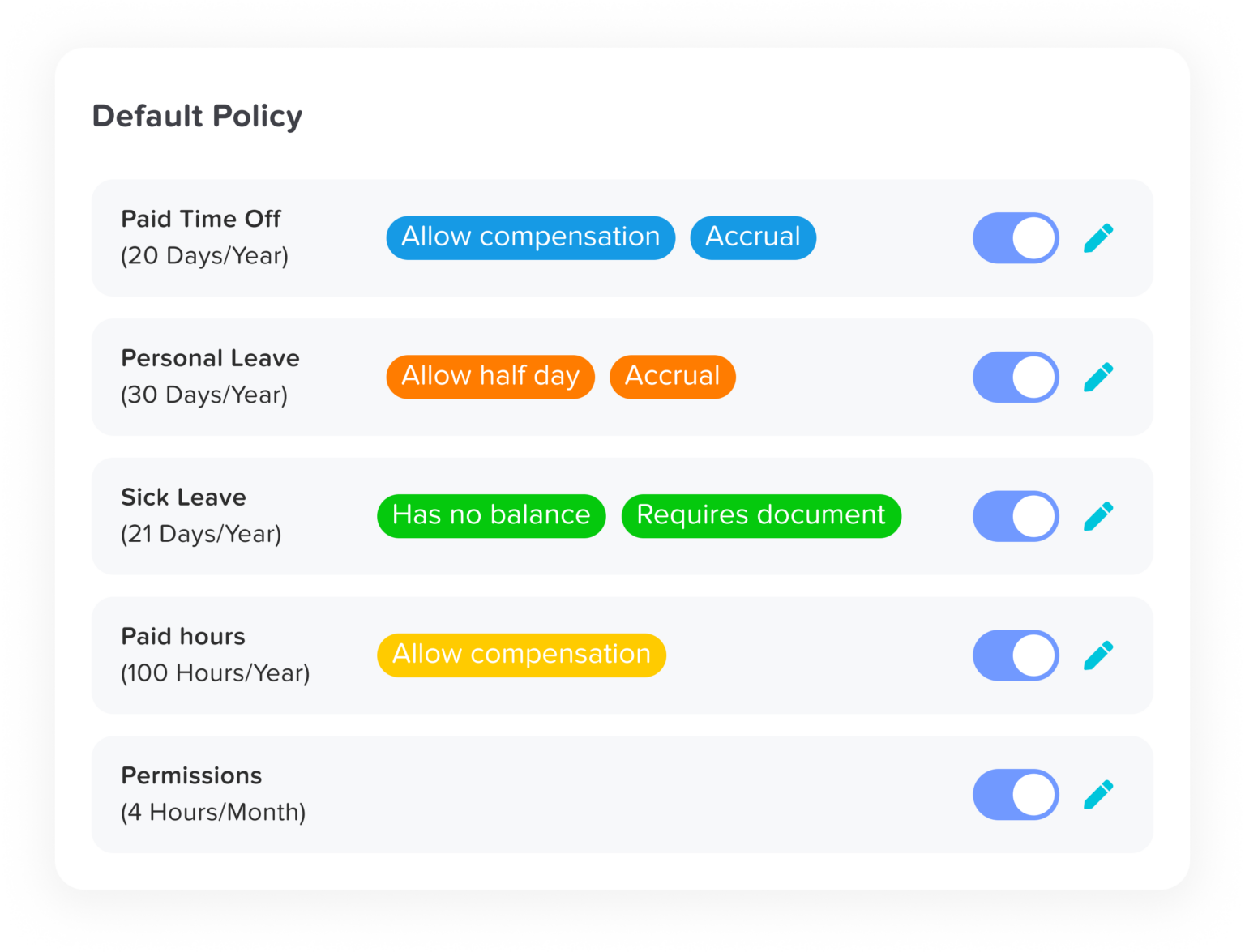
Every company has unique leave policies depending on country regulations, company culture, and team structure.
Day Off allows businesses to create and configure:
Vacation leave
Sick leave
Maternity & paternity leave
Unpaid leave
Compensatory time off
Custom leave categories
You can set accrual rules, define carryover policies, assign leave types by department, and customize approval flows.
This flexibility ensures your leave management system grows with your company rather than limiting it.
Multi-Level Approval Workflows
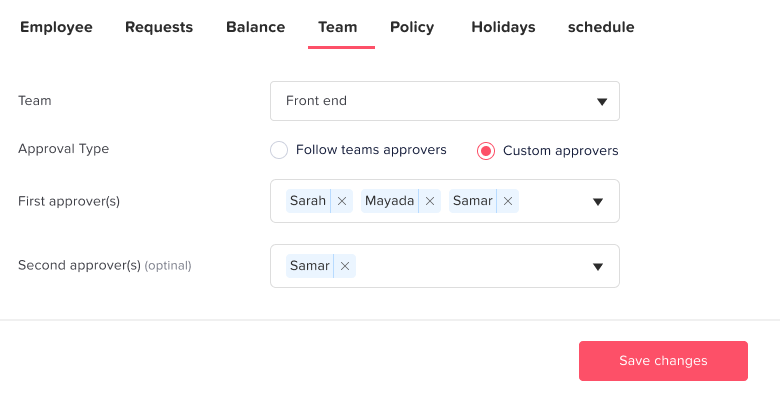
As startups scale, approval structures become more complex. A single manager may no longer be enough for certain leave types or senior roles.
Day Off supports multi-level approval workflows, ensuring that leave requests can pass through multiple reviewers when required.
This helps:
Maintain proper authorization processes
Increase transparency
Prevent unauthorized absences
Align with internal policies
It’s particularly valuable for startups transitioning into structured management systems.
Mobile App for Remote & Hybrid Teams
Remote and hybrid work models are now standard for many startups. Employees need the flexibility to manage time off from anywhere.
Day Off’s mobile-friendly platform allows employees to:
Submit leave requests on the go
Check leave balances instantly
View the team calendar
Receive real-time approval notifications
This accessibility improves employee satisfaction and ensures leave management doesn’t slow down productivity.
Multi-Location & Public Holiday Support
For startups operating across multiple cities or countries, leave policies and public holidays can vary significantly.
Day Off supports:
Different public holiday calendars by country
Multiple office locations
Location-specific leave rules
This ensures accurate leave tracking for distributed teams and prevents confusion caused by regional differences.
For international startups, this feature is essential for maintaining compliance and operational clarity.
Reporting & Workforce Insights
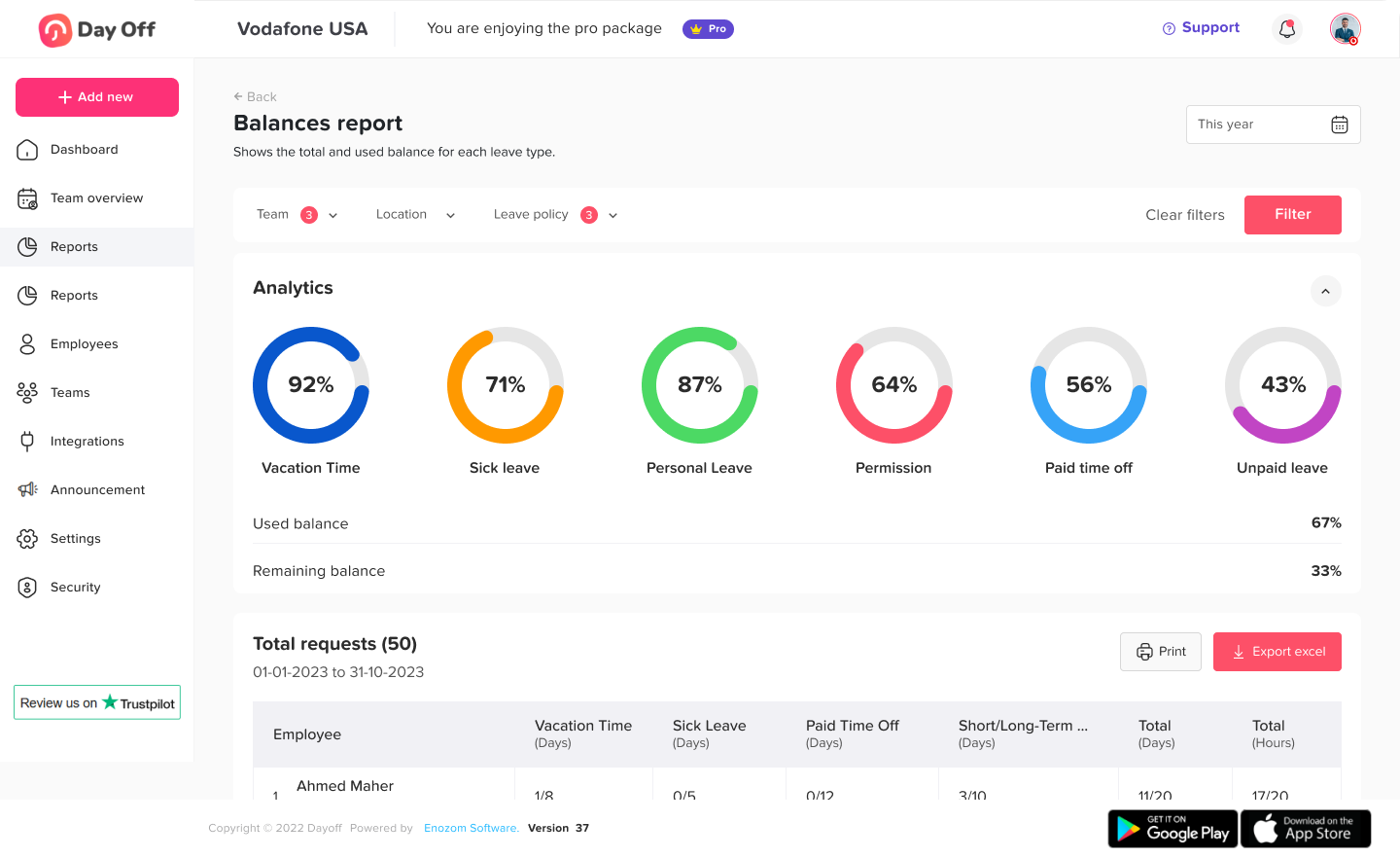
Data-driven decisions are critical for growing companies. Day Off provides detailed reports that help managers:
Identify leave trends
Monitor absenteeism rates
Forecast staffing shortages
Support payroll reconciliation
Plan future hiring needs
These insights allow leadership teams to make informed operational decisions rather than reacting to surprises.
Fast Setup & Easy Onboarding
Many HR systems require weeks of implementation, training sessions, and external consultants.
Day Off is designed for speed. Setup takes minutes, not weeks. The intuitive interface ensures employees can start using the platform immediately without complex onboarding.
For startups that value agility and efficiency, this ease of adoption is a major advantage.
Why Startups Prefer Day Off Over Enterprise HR Systems
Enterprise HR platforms often bundle features like:
Recruitment management
Performance tracking
Payroll engines
Benefits administration
While valuable for large corporations, these additional modules increase costs and complexity for small businesses.
Day Off focuses exclusively on streamlined, efficient leave management. It provides exactly what small teams need, automation, transparency, compliance support, and scalability, without overwhelming them.
For startups with fewer than 100 employees, Day Off offers the perfect balance between functionality, affordability, and simplicity.
BambooHR: Best All-in-One HR Platform with Leave Management
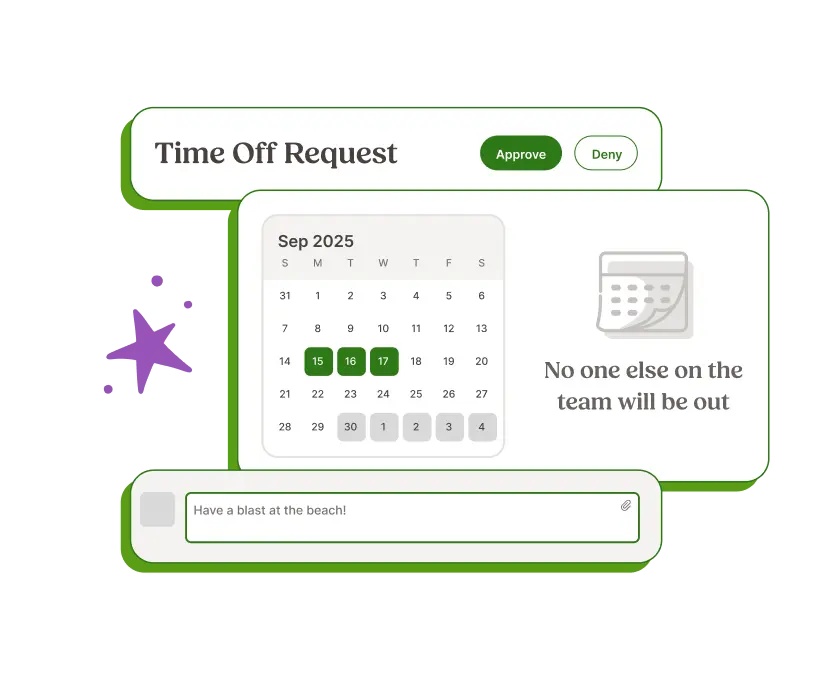
BambooHR is one of the most well-known HR software platforms for small and mid-sized businesses. Unlike standalone leave management tools, BambooHR offers time off tracking as part of a complete HR management system, making it a strong option for companies looking to centralize their HR operations.
Key Features
PTO tracking & automated accruals: Manage paid time off, sick leave, and custom leave types with automated accrual calculations and approval workflows.
Employee database management: Centralized employee records, documents, contracts, and HR data in one secure system.
Hiring & onboarding tools: Applicant tracking system (ATS), offer management, and digital onboarding workflows.
Reporting & analytics: Custom HR reports, workforce insights, and compliance tracking.
Performance management: Goal tracking, performance reviews, and employee feedback tools.
BambooHR is designed to function as an all-in-one HR platform rather than just a leave tracker.
Strengths
BambooHR’s biggest advantage is HR centralization. As companies grow beyond 50–100 employees, managing HR processes across multiple tools can become inefficient. BambooHR consolidates:
Time off management
Hiring
Employee records
Performance evaluations
HR reporting
This integrated approach reduces data silos and improves organizational visibility. For scaling companies building structured HR departments, this can be a major benefit.
Limitations for Startups
While powerful, BambooHR may not be the ideal fit for early-stage startups.
Higher pricing compared to focused leave management tools
More complex implementation and onboarding process
Feature-heavy system that includes modules small teams may not yet need
For startups with lean teams and simple requirements, BambooHR can feel overwhelming, both operationally and financially.
Zoho People: Affordable Leave Management Within a Broader HR Suite
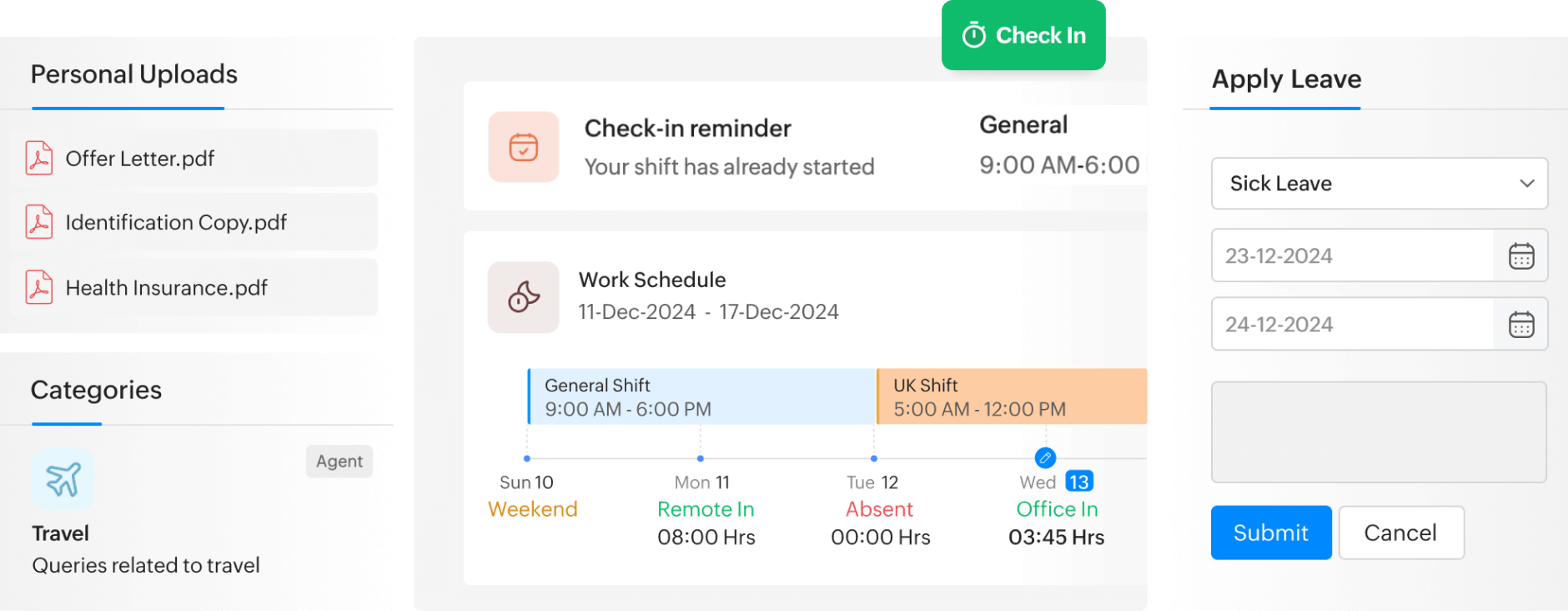
Zoho People is a cloud-based HR software solution that includes leave management as part of a broader HR ecosystem. It is designed for small and mid-sized businesses that want an affordable system capable of handling multiple HR functions in one place.
Because it’s part of the larger Zoho ecosystem, Zoho People appeals to companies already using other Zoho products and looking to centralize operations.
Key Features
Leave tracking & policy configuration: Create and manage multiple leave types, define accrual rules, set carryover limits, and automate approvals.
Attendance integration: Sync leave data with attendance tracking to ensure accurate workforce records and better visibility into employee availability.
Workflow automation: Build automated approval workflows, notifications, and role-based permissions to streamline HR processes.
Customizable forms & HR processes: Tailor HR forms, employee data fields, and internal processes to match your company’s structure.
Zoho People provides flexibility and customization, making it adaptable to different business models.
Best For
Zoho People is particularly well-suited for:
Small businesses already using tools like Zoho CRM or Zoho Books
Companies seeking an affordable, all-in-one HR platform
Teams that want leave management integrated with attendance and broader HR operations
If your company is invested in the Zoho ecosystem, integration across platforms can improve efficiency and data consistency.
Drawbacks
While feature-rich, Zoho People can feel complex for smaller teams:
The interface may require time to learn, especially for non-technical users
The wide range of customization options can feel overwhelming
Setup may take longer compared to simpler, dedicated leave management tools
Startups that prioritize extreme simplicity and fast onboarding may find a focused solution like Day Off more intuitive and easier to implement.
Factorial HR: Modern HR & Leave Management for Growing Teams
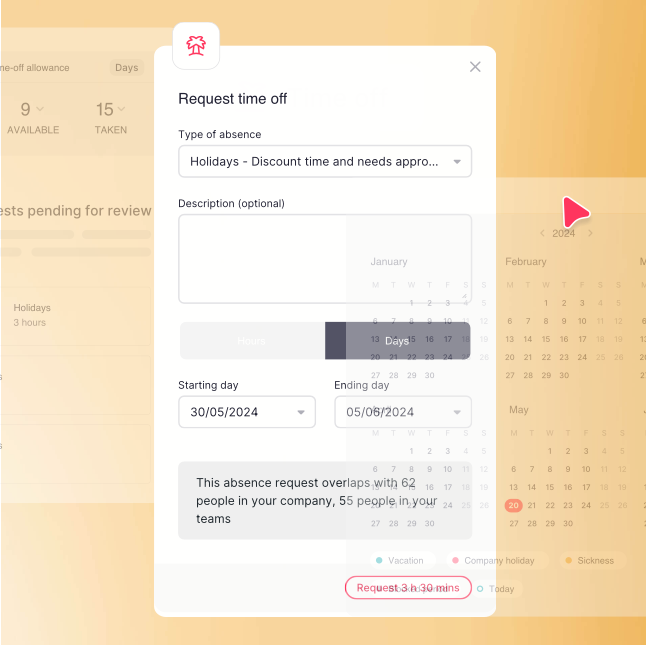
Factorial HR is a modern, all-in-one HR software platform designed for growing companies that want to professionalize their internal processes. It combines leave management, document storage, performance tracking, and compliance tools into a clean, visually appealing system.
For startups moving into scale-up mode, Factorial offers more structure without jumping to enterprise-level complexity.
Key Capabilities
Automated leave accrual: Manage vacation, sick leave, and custom leave types with automated accrual rules and structured approval workflows.
Document management: Store contracts, employee records, and HR documents securely in a centralized system.
Performance reviews: Conduct evaluations, set goals, and track employee development within the same platform.
Compliance tools: Monitor labor law compliance, manage time tracking, and generate HR reports.
Factorial positions itself as a comprehensive HR hub rather than just a leave management tool.
Ideal For
Factorial HR is best suited for:
Companies transitioning from early startup to structured scale-up
Teams building a formal HR function
Businesses that want both leave management and broader HR tools in one system
As companies grow beyond 30–50 employees, having centralized documentation and performance tracking alongside PTO management becomes increasingly valuable.
Considerations
While Factorial offers robust functionality, it may not be the right fit for every small business:
Pricing can increase as additional modules and advanced features are added
The system may feel heavier than necessary for early-stage teams
Implementation may require more configuration compared to simpler tools
For startups that primarily need straightforward, easy-to-use leave management software, a focused solution like Day Off may offer a more streamlined and cost-effective approach.
Gusto: Payroll-Centric PTO Management
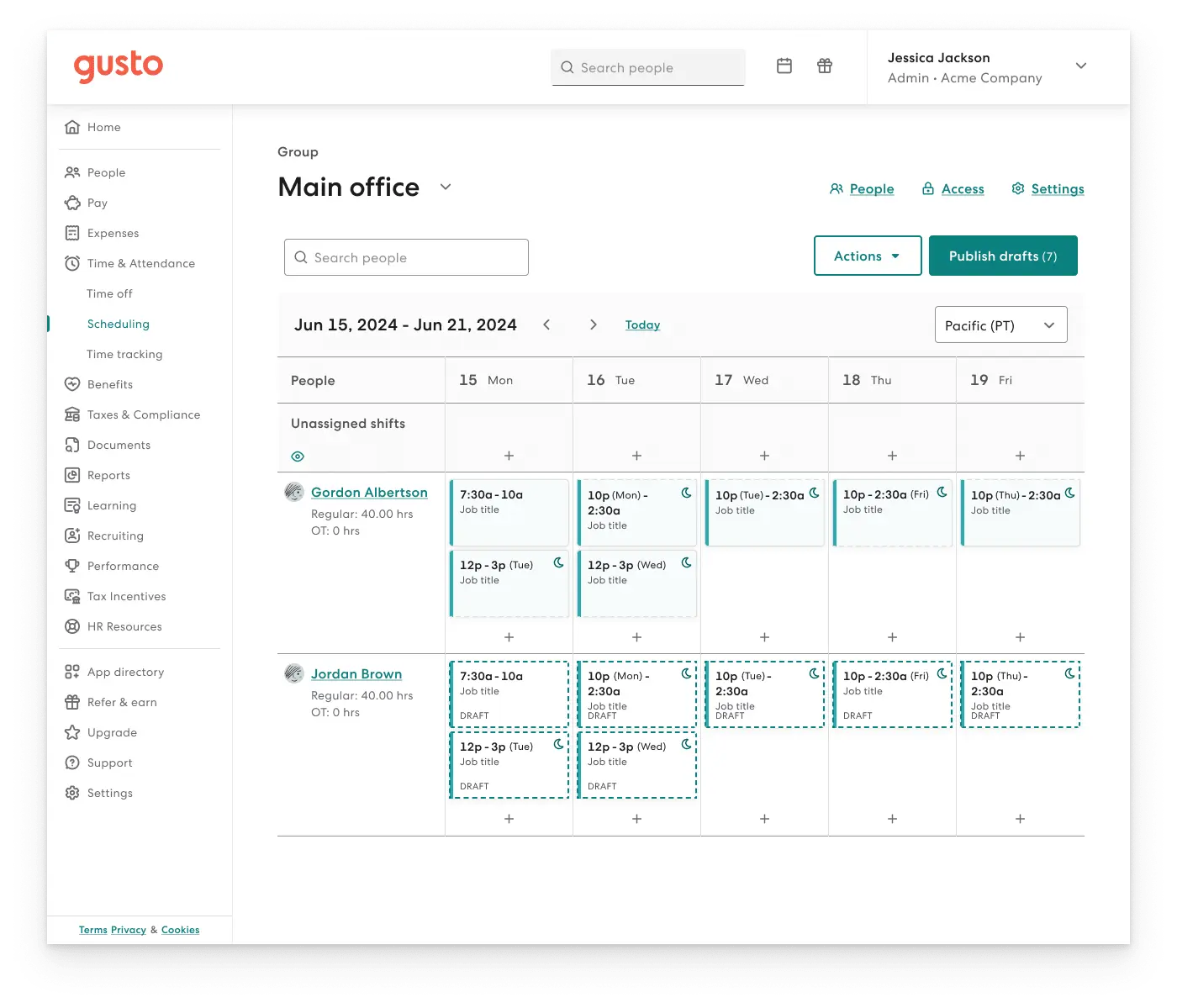
Gusto is widely known as a payroll and benefits platform for small businesses, and it includes built-in PTO tracking as part of its payroll system. Rather than being a standalone leave management tool, Gusto integrates time-off management directly into payroll processing.
This makes it particularly attractive to businesses that prioritize seamless salary calculations and compliance.
Advantages
Payroll & leave integration: Approved time off automatically reflects in payroll calculations, reducing manual adjustments.
Automatic PTO calculations: Accrual rules can be configured so balances update automatically.
Benefits management: Health insurance, tax filings, and compliance tools are managed within the same system.
For business owners who want everything connected to payroll, this integration simplifies administration and reduces errors.
Best For
Gusto works best for:
Small businesses already using Gusto for payroll
Companies that want PTO data tightly integrated with pay runs
Teams that prefer an all-in-one payroll-first solution
If payroll accuracy and automation are your main priorities, Gusto provides a convenient solution.
Limitations
It is not a dedicated leave management system
Limited advanced leave policy customization
Fewer visualization and team planning tools compared to specialized platforms
While effective for payroll-connected PTO tracking, it lacks the focused leave planning features and flexibility offered by tools like Day Off.
Timetastic: Simple and Lightweight Leave Planner
Timetastic is a straightforward, no-frills leave planner designed for small teams that want an easy way to manage employee time off.
Its core strength lies in simplicity. It focuses exclusively on PTO tracking without adding broader HR functionality.
What It Offers
Visual leave calendar: A clear team overview showing who is off and when.
Quick leave requests: Simple submission and approval process.
Basic reporting: Standard leave summaries and balance tracking.
Fast setup: Minimal configuration required to get started.
Timetastic delivers exactly what very small teams need: and nothing more.
Best For
Timetastic is ideal for:
Very small teams (under 20–30 employees)
Companies needing basic PTO tracking
Businesses that want a simple, low-maintenance leave calendar
It’s especially appealing to founders who want a lightweight solution without learning a complex system.
Where It Falls Short
Limited advanced leave policy customization
Basic reporting and analytics
Fewer scalability options for growing teams
As a company expands and needs more structured workflows or deeper insights, Timetastic may feel restrictive compared to more robust tools like Day Off.
Frequently Asked Questions (FAQ)
What is leave management software?
Leave management software is a digital system that helps businesses track, manage, and automate employee time off. It replaces spreadsheets and manual processes with structured workflows for leave requests, approvals, accrual calculations, balance tracking, reporting, and compliance. For small businesses and startups, it reduces administrative workload and prevents payroll and scheduling errors.
Why do small businesses need leave management software?
As teams grow, managing time off manually becomes inefficient and risky. Overlapping vacations, incorrect leave balances, delayed approvals, and payroll inconsistencies can disrupt operations. A dedicated leave management tool improves transparency, ensures accurate leave calculations, supports compliance, and saves significant administrative time.
What features should startups look for in leave management software?
Startups should prioritize simplicity and scalability. Key features include automated leave accruals, customizable leave policies, real-time leave balance tracking, team calendars, mobile access, multi-level approvals, reporting tools, and quick setup. The system should be easy to use while still supporting growth as the company expands.
Is a full HR suite better than a dedicated leave management tool?
It depends on your company’s stage. Full HR platforms like BambooHR or Factorial are ideal for businesses building structured HR departments and managing hiring, performance, and employee records in one place. However, early-stage startups that primarily need efficient time-off tracking often benefit more from a focused leave management tool that is easier to implement and more affordable.
How does leave management software help with payroll accuracy?
Modern leave management systems automatically calculate accruals, track used leave days, and update balances in real time. When integrated with payroll systems, approved leave is reflected in salary calculations, reducing manual adjustments and minimizing payroll errors.
Can leave management software handle different countries and public holidays?
Yes. Many modern tools support multi-location teams and allow businesses to configure country-specific public holidays, regional leave rules, and customized policies. This is especially important for remote teams and international startups.
Is leave management software expensive for small teams?
Pricing varies by provider, but many tools offer startup-friendly plans based on team size. Dedicated leave management systems are typically more affordable than full HR platforms, making them a cost-effective solution for companies under 100 employees.
What is the best leave management software for startups in 2026?
The best solution depends on your needs. If you require a complete HR ecosystem, platforms like BambooHR or Factorial may be suitable. If payroll integration is your priority, Gusto is a strong option. However, for startups seeking simple setup, transparent leave tracking, scalable features, and affordable pricing, Day Off stands out as one of the strongest overall choices in 2026.
Final Comparison: Which Leave Management Tool Is Best?
The best leave management software depends on your company’s priorities. If you need a full HR system with performance management and employee records, tools like BambooHR or Factorial may be a better fit. If payroll integration is your main focus, Gusto works well.
However, if you want simple implementation, transparent leave tracking, affordable pricing, and a system designed specifically for startups and small businesses, Day Off is the strongest overall choice in 2026. It delivers focused, scalable leave management without the complexity of larger HR platforms.