

Table of Contents
ToggleManaging leave in a distributed workforce is more complex than in a traditional office. When teams span multiple cities, countries, and time zones, visibility becomes harder, compliance requirements vary, and coordination directly impacts productivity.
What works for a small, co-located team, like spreadsheets or shared calendars, quickly breaks down as headcount grows. Without a centralized system, leave tracking becomes fragmented, balances become unreliable, and scheduling conflicts become inevitable.
Distributed teams need structure, automation, and real-time visibility, not manual workarounds.

To manage leave efficiently in remote and hybrid organizations, you need the right tools.
Below are 7 tools commonly used to manage distributed workforce leave, starting with the most focused and scalable option.
Day Off: Leave Management for Distributed Teams
For distributed teams that want simplicity, automation, and total clarity, Day Off is purpose-built to solve modern leave management challenges, without unnecessary HR complexity.
Unlike full HR suites that treat time off tracking as a secondary feature, Day Off focuses entirely on making leave management seamless across locations, time zones, and employment structures.

Why Day Off Works So Well for Distributed Teams
Centralized Visibility Across Locations
Distributed teams struggle when managers lack clarity about who’s off and when. Day Off eliminates guesswork with a real-time, company-wide leave dashboard.
Unified team calendar with instant updates
Department, office, and country-level filtering
Clear return dates and leave durations
Overlap detection to prevent understaffing
Coverage planning before approvals
Managers can immediately see potential resource gaps and adjust workloads proactively, preventing delays, missed deadlines, and project bottlenecks.
Custom Leave Policies by Country or Office
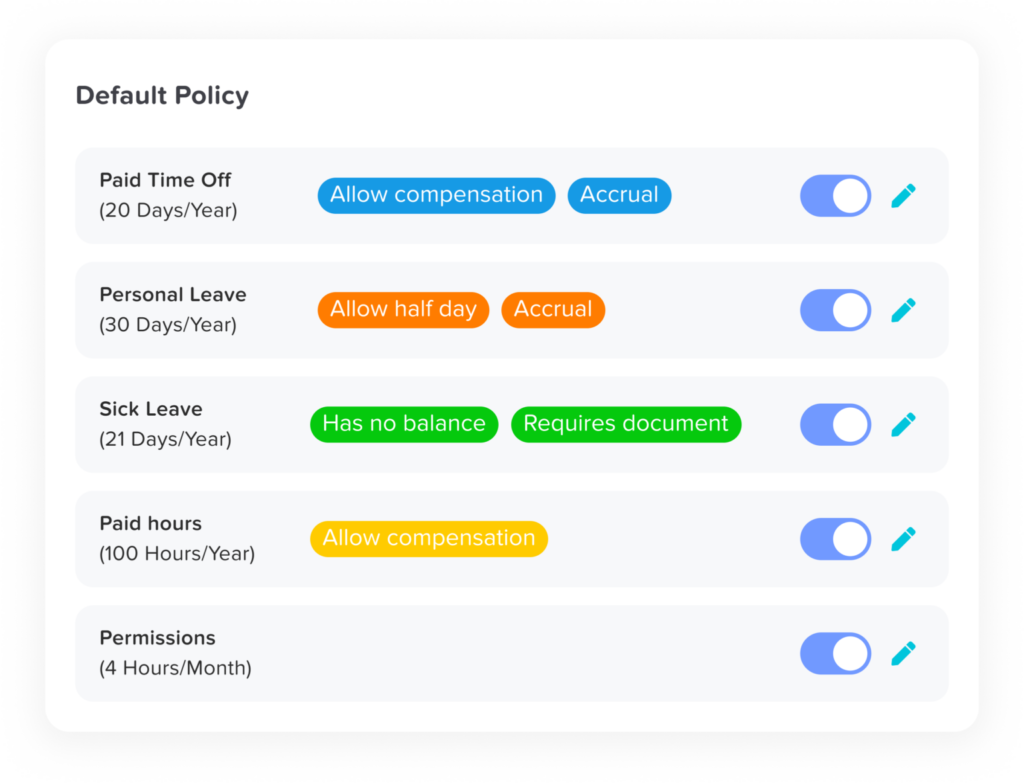
Operating across multiple regions means navigating different labor laws, holiday calendars, and entitlement rules. Day Off provides full policy flexibility without complexity.
Country-specific leave configurations
Custom leave types (PTO, sick, maternity, unpaid, etc.)
Regional public holiday calendars
Accrual rules tailored by location
Carryover limits and expiration rules
Proration for new hires
This ensures compliance while maintaining fairness and consistency across international teams.
Automated PTO Accrual & Real-Time Balance Tracking
Manual spreadsheets and formula errors create frustration and risk. Day Off automates accrual calculations to guarantee accuracy at all times.
Automatic accrual calculations
Real-time leave balance updates
Monthly, bi-weekly, or custom accrual schedules
Pro-rated accrual for mid-year hires
Automatic carryover calculations
Balance adjustments when needed
Employees always know exactly how much leave they have, reducing HR questions and administrative workload.
Structured & Multi-Level Approval Workflows

In distributed teams, approval processes can easily become chaotic. Day Off brings structure and speed to every request.
Custom multi-level approval chains
Role-based approval permissions
Delegated approvers during manager absence
One-click approve/reject functionality
Automatic notifications and reminders
Clear audit trail of all actions
Requests move efficiently without getting buried in emails or Slack threads, while maintaining accountability and transparency.
Mobile-First, Remote-Ready Experience
Distributed teams work everywhere, not just at desks. Day Off is fully optimized for mobile usage.
Submit leave requests from any device
Instant access to leave balances
View team availability on the go
Push notifications for approvals and updates
Clean, intuitive interface
This ensures high adoption rates and makes leave management effortless for remote employees.
Real-Time Notifications & Conflict Alerts
Proactive communication prevents operational disruption. Day Off keeps everyone informed in real time.
Instant notifications for new requests
Approval confirmations and status updates
Overlapping leave alerts
Upcoming absence reminders
Team-wide visibility updates
Managers can identify staffing conflicts early and take action before they impact productivity.
Advanced Reporting & Workforce Insights

Data-driven teams need visibility beyond the calendar. Day Off provides actionable insights into leave trends and workforce availability.
Leave usage reports by team or department
Absence trend analysis
Accrual liability tracking
Exportable payroll-ready reports
Custom reporting filters
These insights help leadership forecast staffing needs, monitor burnout risks, and improve workforce planning.
Role-Based Access & Enterprise-Grade Security
Distributed teams require both transparency and controlled access. Day Off provides secure, structured permissions.
Admin, manager, and employee roles
Granular access controls
Data privacy protection
Secure cloud-based infrastructure
Full audit logs
Sensitive information remains protected while maintaining operational visibility where needed.
Fast Implementation & Scalable Growth
Complex HR systems can take months to deploy. Day Off is designed for rapid rollout and international scalability.
Quick onboarding process
Simple policy configuration
Minimal training required
Scales across multiple countries
No unnecessary HR modules
Teams can implement Day Off quickly and expand effortlessly as they grow globally.
BambooHR: Comprehensive HR Platform with Leave Features
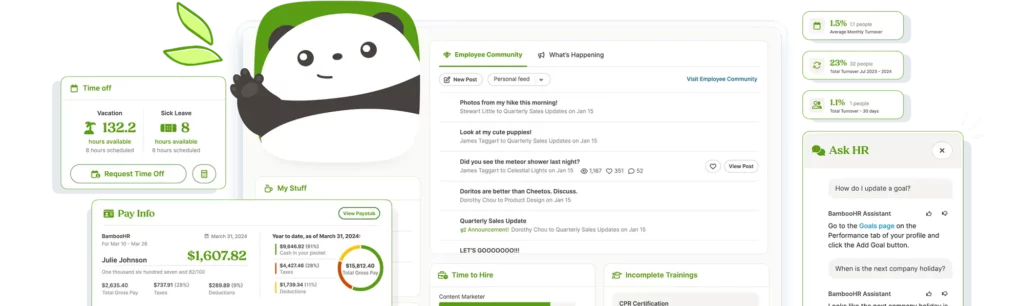
BambooHR is a well-established HR management platform designed primarily for small to mid-sized businesses. While it includes leave tracking, that functionality sits within a much broader HR ecosystem.
What It Does Well
BambooHR’s biggest strength is centralization. It connects employee records, onboarding workflows, payroll data, benefits administration, and performance management into one cohesive system. Because leave tracking is embedded within that ecosystem, PTO balances, accruals, and time-off history naturally tie into employee profiles and reporting dashboards.
For HR teams managing compliance and documentation, this integration reduces administrative silos. Reporting capabilities are also strong, HR leaders can analyze absence trends, team capacity, seasonal leave patterns, and workforce planning metrics without exporting data into separate systems.
For companies that want a single source of truth for all HR operations, this unified approach can significantly reduce tool fragmentation.
Where It Can Fall Short for Distributed Teams
However, for organizations that primarily need streamlined leave management, BambooHR can feel heavier than necessary. Implementation typically requires onboarding sessions, configuration of policies, and process alignment across departments.
Pricing can also scale quickly as headcount grows. For distributed startups prioritizing agility, speed, and simplicity, a full-suite HR system may introduce more complexity than value, especially if leave management is the core requirement.
In short, BambooHR is powerful, but potentially overbuilt for teams that want lean, focused leave operations.
Deel: Strong for Global Hiring & Compliance
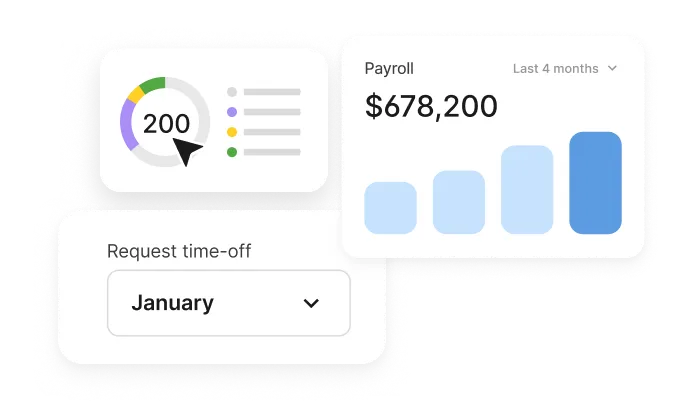
Deel has built its reputation around global payroll, contractor management, and international compliance. It is particularly popular among distributed teams hiring across multiple countries.
Strengths for Distributed Companies
If your organization employs international contractors or full-time staff across borders, Deel simplifies tax compliance, local labor law adherence, and payment processing. Leave tracking can be integrated into payroll workflows, ensuring PTO aligns with region-specific regulations.
For globally distributed teams navigating complex employment frameworks, this compliance-first infrastructure provides confidence and legal clarity.
Limitations
However, leave management is not Deel’s primary focus. While PTO tracking exists, it may not offer the depth of customization or workflow optimization that dedicated leave management tools provide.
Organizations looking for:
Highly flexible PTO policy structures
Advanced approval routing
Detailed leave analytics
Lightweight, leave-only systems
may find Deel more payroll-centric than leave-centric.
Deel excels when global hiring complexity is the primary operational challenge, not necessarily when PTO visibility and workflow refinement are the main priorities.
Workday: Enterprise-Level HR Infrastructure
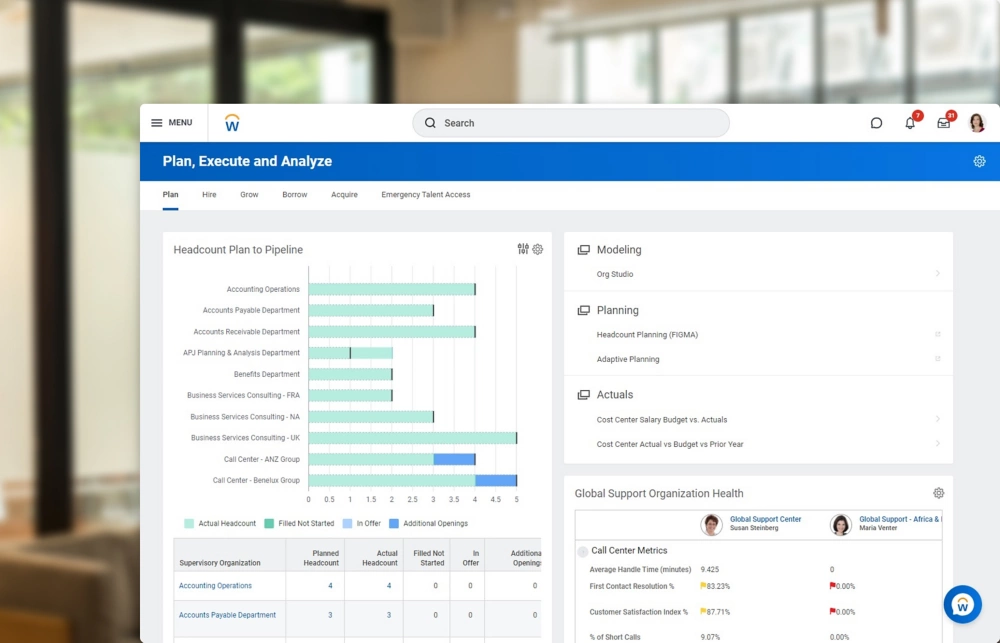
Workday is an enterprise-grade HR and finance platform designed for large organizations with complex operational requirements.
Advantages
Workday offers deep functionality across workforce planning, global compliance, financial integration, advanced analytics, and enterprise reporting. Its leave management capabilities can support multinational corporations with complex accrual structures, regional compliance rules, and unionized workforce requirements.
For enterprises operating at scale, particularly those with layered approval processes and strict governance structures, Workday provides powerful configurability and data control.
Drawbacks for Smaller Distributed Teams
The trade-off is complexity, cost, and implementation time. Workday deployments often require months of planning, system integration, and dedicated HR IT resources.
For startups and mid-sized distributed teams, this level of infrastructure can be excessive if the primary need is simple leave tracking and visibility.
Workday is built for structured, process-heavy enterprises, not necessarily for lean, fast-moving distributed companies.
Zoho People: Budget-Friendly HR Option
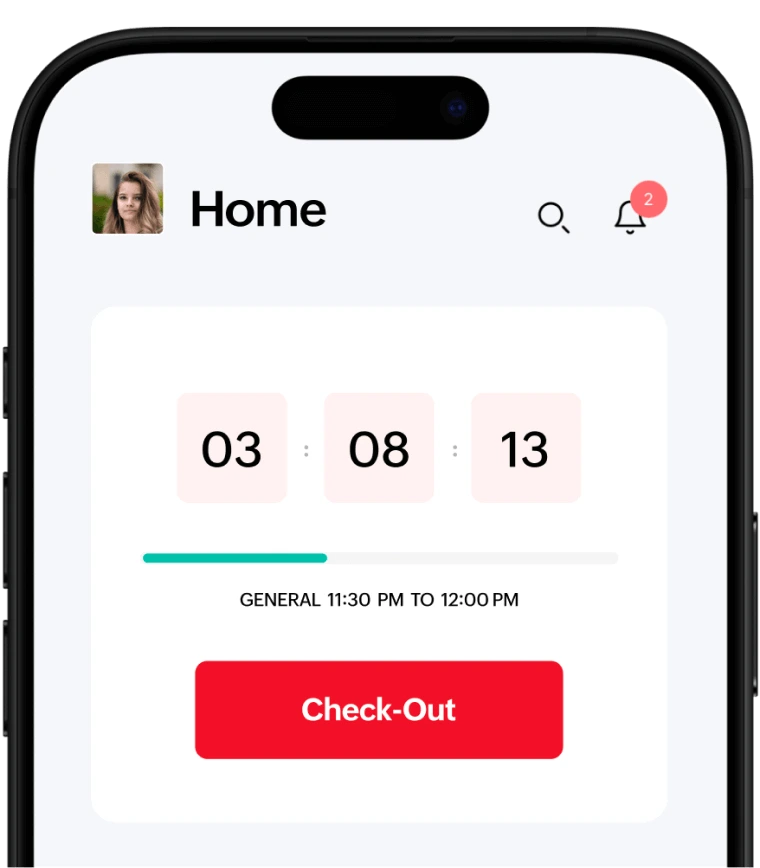
Zoho People is part of the broader Zoho ecosystem and offers leave management within a more comprehensive HR suite.
Benefits
Its affordability makes it attractive for growing businesses with limited budgets. It integrates well with other Zoho tools such as CRM, Projects, and Finance, making it convenient for companies already embedded in the Zoho ecosystem.
The platform includes:
Leave requests and approvals
Accrual tracking
Policy configuration
Basic reporting
For companies seeking cost efficiency without sacrificing core HR functionality, Zoho People offers solid value.
Considerations
However, configuration may require meaningful setup, particularly for distributed teams operating across multiple jurisdictions. Leave rules may need to be manually customized to reflect regional policies.
While capable, Zoho People remains a general HR platform rather than a purpose-built leave optimization tool. Teams seeking highly refined, minimal workflows for PTO management may find it broader than necessary.
Factorial: Modern HR Software with Leave Module

Factorial is a modern HR platform designed for growing companies that want a clean interface and digital-first workflows.
Strengths
Its intuitive design makes onboarding easy for HR teams and employees alike. The platform combines attendance tracking, document management, onboarding, and leave monitoring in one streamlined system.
Automated leave accruals, clear dashboards, and HR analytics help teams maintain visibility without excessive manual oversight. For scaling companies transitioning from spreadsheets to structured HR software, Factorial offers a user-friendly bridge.
Limitations
Like many HR suites, leave management is just one component of a broader product. Teams seeking a hyper-focused PTO management tool with advanced workflow automation may find Factorial broader than strictly necessary.
It strikes a balance between simplicity and comprehensiveness, but may not fully specialize in leave optimization.
Google Workspace (Sheets + Calendar): The Manual Method
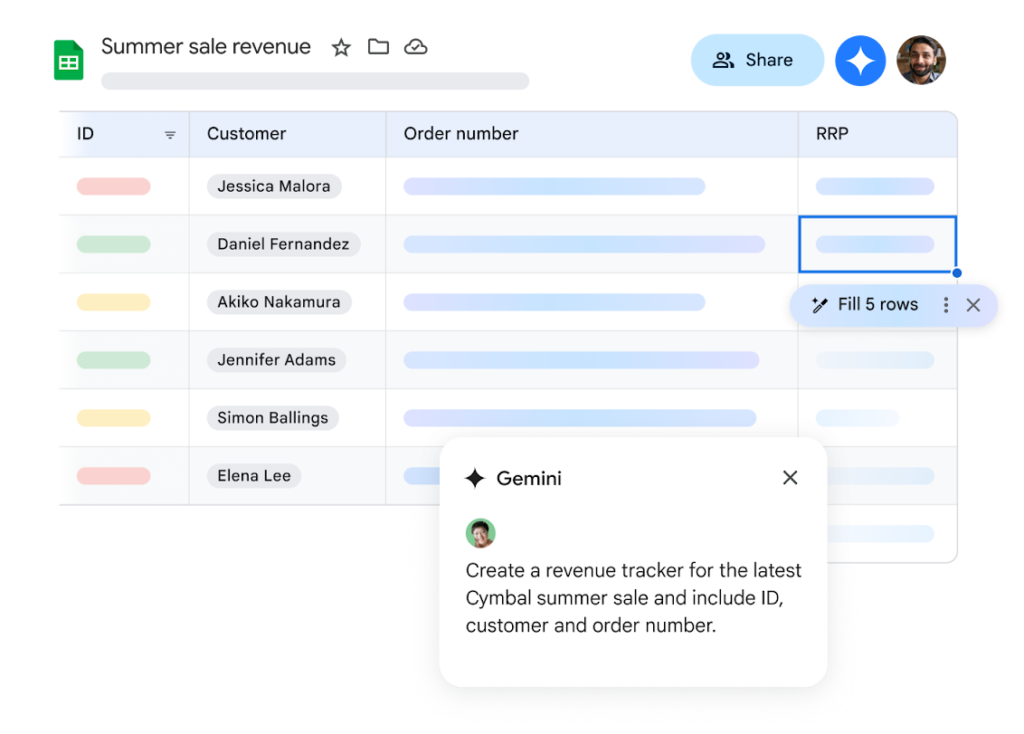
Many distributed teams begin their leave management journey using Google Sheets and shared calendars.
Why It’s Popular
It’s accessible, low-cost (or free), and immediately familiar to most teams. Creating a PTO tracker spreadsheet and pairing it with a shared calendar requires minimal setup. For small teams, this lightweight approach can feel efficient and flexible.
Why It Breaks at Scale
As team size grows, manual systems introduce significant risk:
Manual updates increase human error
No automated accrual calculations
No structured approval workflows
Limited reporting and forecasting
No compliance safeguards
No centralized audit trail
What works smoothly for 5 employees can become unreliable at 50, and chaotic at 100. Visibility gaps widen, approval chains become inconsistent, and data integrity declines.
Spreadsheets are often a starting point, but rarely a sustainable solution for scaling distributed teams.
Choosing the Right Tool for Your Distributed Workforce
Selecting a leave management solution for a distributed team isn’t just a software decision; it’s an operational one. Time off visibility directly impacts productivity, planning accuracy, compliance, and employee experience. The right system should reduce friction, not introduce new layers of administration.
When evaluating tools, prioritize the following:
Multi-Country Leave Policy Flexibility
Distributed teams often span multiple countries, each with different statutory requirements, public holidays, accrual rules, and cultural norms around time off.
Your system should allow:
Country-specific leave types and accrual rules
Custom public holiday calendars by region
Flexible PTO policies (fixed, accrual-based, unlimited, tenure-based)
Compliance alignment without manual tracking
Without this flexibility, HR teams end up managing exceptions manually, increasing risk and workload.
Automated Accrual Calculations
Manual accrual tracking quickly becomes error-prone, especially as headcount grows. Automated accrual engines ensure that PTO balances update in real time based on tenure, policy rules, and carryover limits.
Look for systems that:
Automatically calculate accruals by policy
Handle prorated balances for new hires
Manage carryover caps and expiration rules
Sync directly with payroll if needed
Automation reduces disputes, builds trust, and eliminates spreadsheet maintenance.
Transparent Team Calendars
In distributed environments, visibility is critical. Managers need to quickly see who is off, when, and how it affects capacity.
A strong leave tool should offer:
Shared team calendars
Department-level filtering
Public holiday overlays
Conflict warnings for overlapping absences
This improves workforce planning and prevents accidental understaffing.
Structured Approval Workflows
As teams scale, informal “Slack approvals” or email confirmations stop working. Structured workflows create clarity and accountability.
Prioritize systems that provide:
Multi-level approval chains
Automatic manager notifications
Clear status tracking
Documented approval history
Structured workflows ensure consistency and eliminate ambiguity.
Mobile Accessibility
Distributed work means employees may request or approve leave from anywhere. A mobile-friendly platform increases adoption and reduces delays.
Essential capabilities include:
Easy PTO requests from mobile devices
Instant approval or rejection options
Real-time balance visibility
Accessibility supports a smoother employee experience.
Real-Time Reporting
Leave data is not just administrative, it’s strategic. Leaders should be able to analyze absence patterns, burnout risks, seasonal trends, and department-level utilization.
Look for:
Customizable reports
Exportable data
Capacity forecasting tools
Trend analysis dashboards
Real-time reporting transforms leave management from reactive to proactive.
Scalability Without Complexity
Many HR platforms include leave tracking. But scaling from 10 to 100 to 500 employees shouldn’t require re-implementation or major process overhauls.
The ideal solution:
Maintains simplicity as headcount grows
Doesn’t require heavy configuration for every new policy
Avoids unnecessary modules that add cost and friction
Supports growth without operational drag
Complex systems may offer power, but distributed teams often benefit more from clarity and speed.
Frequently Asked Questions (FAQ)
Why is leave management more complex in distributed teams?
Distributed teams operate across multiple time zones, countries, and employment types. This creates challenges around legal compliance, public holidays, accrual rules, and visibility. Without a structured system, coordination becomes difficult, and staffing gaps are harder to anticipate.
When should a company move beyond spreadsheets?
Spreadsheets typically work for very small teams. Once you’re managing 15–25+ employees, multiple leave policies, or international staff, manual tracking becomes error-prone. If HR is spending too much time updating balances or resolving confusion, it’s time to automate.
Do small remote teams really need leave management software?
Very small teams can manage with basic tools at first. However, if you’re planning to grow, hiring internationally, or introducing structured PTO policies, implementing a proper system early prevents operational headaches later.
What’s the difference between an HR suite and a dedicated leave tool?
An HR suite includes leave tracking as one feature within a broader system (payroll, onboarding, performance, etc.). A dedicated leave tool focuses specifically on time off management, often offering simpler workflows, faster setup, and more streamlined visibility.
How does automated accrual improve operations?
Automated accrual ensures leave balances are always accurate. It eliminates manual calculations, reduces disputes, and saves HR time. Employees can trust their balances without needing to confirm them manually.
What should growing distributed companies prioritize most?
Flexibility, visibility, and scalability. The right tool should handle multi-country policies, provide clear team calendars, automate approvals, and scale without becoming overly complex.
Conclusion
Managing leave in a distributed workforce requires more than a shared spreadsheet or informal approvals. As teams grow across locations and time zones, visibility, compliance, and coordination become mission-critical.
The right leave management tool should simplify operations, not complicate them. It should provide clarity for managers, transparency for employees, and confidence for HR.
Whether you choose a comprehensive HR suite or a focused leave management platform depends on your organization’s priorities. But if leave visibility and workflow efficiency are central to your operations, investing in a purpose-built solution can significantly reduce administrative burden, improve planning accuracy, and support sustainable global growth.
