

Table of Contents
ToggleRetail workforce management is fast-paced and operationally demanding. Rotating shifts, weekend coverage, seasonal hiring spikes, part-time employees, and multi-location coordination all add layers of complexity. In this environment, even a single unplanned absence can disrupt schedules, increase labor costs, and impact customer experience.
When leave requests are managed through spreadsheets, emails, or paper forms, mistakes and scheduling conflicts are almost inevitable. Managers end up reacting to problems instead of preventing them.
Modern leave tracking software changes that. The right tool automates approvals, enforces policies, prevents shift conflicts, and gives real-time visibility across locations, helping retail teams stay fully staffed during peak hours.

Day Off: Best Overall Leave Tracking Tool for Retail Businesses
Retail is fast, unpredictable, and coverage-sensitive. One unexpected absence during a weekend rush or holiday promotion can immediately impact sales, customer experience, and team morale. That’s why retail businesses don’t just need leave tracking, they need smart, shift-aware leave management built for operational realities.
Day Off stands out as the best overall leave tracking tool for retail because it’s intentionally designed to solve the problems retail managers face every day: overlapping requests, coverage gaps, unclear PTO balances, and multi-store coordination challenges.

Unlike bulky HR platforms designed for corporate offices, Day Off focuses on doing one thing exceptionally well: managing employee leave in a way that protects operations.
It’s:
Fast to deploy
Simple for frontline staff to use
Easy for managers to control
Flexible enough for growing retail chains
Affordable for small and mid-sized businesses
For retail, simplicity isn’t a luxury, it’s a necessity. And that’s exactly where Day Off excels.
Why Day Off Is the #1 Choice for Retail
Retail managers don’t have time to navigate complex HR dashboards while handling customers, supervising staff, and managing inventory. They need immediate clarity:
Who is off?
Who requested time off?
Are we still fully staffed?
Will approving this request create a coverage problem?
Day Off answers those questions instantly through a clean, intuitive interface that provides full visibility into team availability.
The system reduces:
Last-minute scheduling conflicts
Manual spreadsheet errors
Back-and-forth emails about approvals
Payroll disputes related to leave balances
Instead of reacting to staffing problems, managers can proactively prevent them. That shift, from reactive to proactive scheduling, is what makes Day Off particularly powerful in retail environments.
Key Features for Retail Operations
Shift-Friendly Leave Management

Retail scheduling is built around shifts, mornings, evenings, weekends, and holiday surges. A single overlapping leave request can leave departments understaffed during peak hours.
Day Off is designed with shift coverage in mind. Managers can:
View leave requests alongside team calendars
Detect overlapping time off requests instantly
Set minimum staffing rules
Limit the number of employees off per day
Approve or reject requests in seconds
This visibility allows managers to make informed decisions before approving time off. Instead of discovering coverage issues after the fact, they can prevent them at the request stage.
For retail stores that depend heavily on peak-hour performance, this feature alone significantly reduces operational risk.
Mobile-First Experience
Retail employees are rarely sitting behind desks. They’re assisting customers, managing inventory, handling checkouts, or supervising departments.
That’s why a mobile-first leave management system is essential.
With Day Off’s mobile app:
Employees can submit leave requests in seconds
Managers can review and approve requests from anywhere
Real-time notifications eliminate delays
Staff can instantly see updated leave balances
This eliminates the need for paper forms, text messages, or informal verbal requests, all of which increase the risk of miscommunication.
For floor managers constantly moving throughout the store, the ability to approve requests on the go ensures faster decision-making and smoother communication.
Clear Leave Balances and Automatic Calculations

Retail workforces often include:
Part-time employees
Variable-hour workers
Temporary and seasonal staff
Full-time supervisors
Manually calculating PTO accrual for such a diverse workforce can be complicated and error-prone.
Day Off automates leave balance calculations based on each employee’s assigned policy. This ensures:
Accurate PTO tracking
Reduced payroll errors
Transparent balances for employees
Fewer disputes about remaining time off
Employees can see exactly how much leave they’ve earned and how much they’ve used. That transparency builds trust and reduces administrative back-and-forth between HR and staff.
For retail businesses operating with lean administrative teams, this automation significantly reduces workload.
Multi-Location Support for Growing Retail Chains
Managing leave becomes more complex when you operate multiple stores, franchises, or branches.
Different locations may have:
Separate teams
Different managers
Unique leave policies
Varying peak seasons
Day Off allows you to:
Create separate teams by location
Assign customized leave policies per branch
Maintain centralized HR oversight
View company-wide leave analytics
This structure is ideal for regional retail chains, franchise groups, and expanding brands that need consistency without sacrificing local flexibility.
Head office can maintain visibility and control, while store managers retain day-to-day authority over approvals.


Easy Setup, Minimal Training, and Affordable Pricing
Many retail businesses delay adopting HR software because they fear:
Complicated implementation
Lengthy employee training
High subscription costs
Paying for unused features
Day Off eliminates those barriers.
The platform is:
Quick to set up
Easy to configure
Simple for employees to learn
Focused exclusively on leave management
There are no unnecessary HR modules, payroll integrations you don’t need, or overwhelming configuration processes. Retail teams can be up and running quickly, without disrupting daily operations.
For small retailers and mid-sized chains alike, this balance of simplicity and power makes Day Off a practical, scalable solution.
Best For:
Retail chains
Franchise groups
Boutique stores
Supermarkets
Seasonal retail operations
Growing multi-location brands
Deputy: Best for Integrated Scheduling & Leave
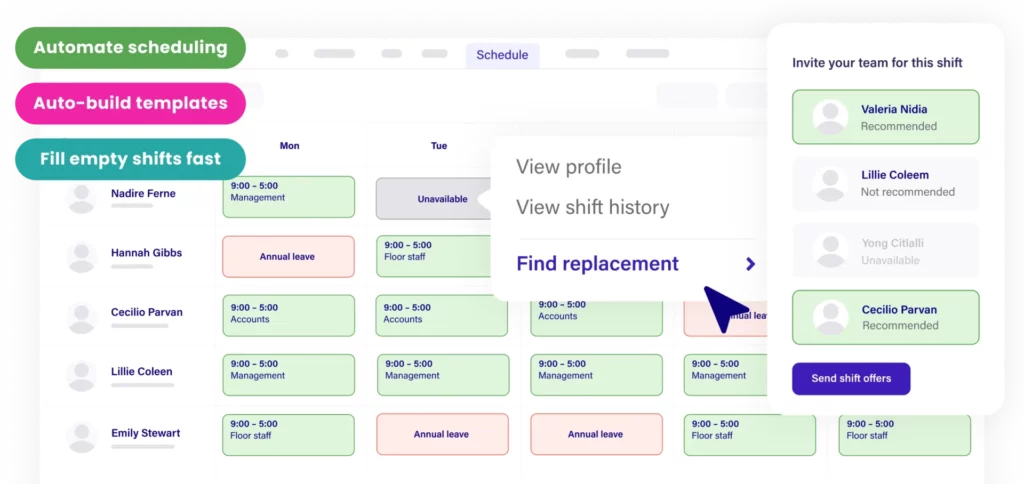
For retailers that want leave management tightly connected to employee scheduling, Deputy is one of the strongest options on the market. Rather than treating leave as a separate HR function, Deputy integrates time off requests directly into shift planning, helping managers maintain coverage without manually adjusting rosters.
This makes it particularly valuable for retail businesses where schedules change weekly, and staffing levels directly impact revenue.
Why Deputy Works Well for Retail
Retail operations live and die by their schedules. When leave is approved in a disconnected system, managers often have to manually update shift plans, notify employees, and find replacements, increasing the risk of errors.
Deputy solves this by connecting:
Leave management
Shift scheduling
Time tracking
Payroll syncing
Everything works within one ecosystem, reducing duplication and saving administrative time.
Key Strengths
Leave Automatically Updates Schedules
When a leave request is approved in Deputy, it immediately reflects in the employee’s schedule. This prevents:
Accidental double-booking
Forgotten shift removals
Manual spreadsheet edits
Managers instantly see open shifts that need coverage, which is critical during peak retail hours or promotional events.
Smart Shift Replacement Suggestions
One standout feature is Deputy’s ability to suggest replacement staff based on:
Availability
Qualifications
Overtime rules
Labor cost considerations
This helps managers fill gaps quickly without violating labor policies or exceeding budgeted hours.
For medium-to-large retailers with complex staffing structures, this automation significantly reduces scheduling stress.
Time Clock Integration
Deputy includes built-in time clock functionality, allowing retailers to:
Track employee clock-ins and clock-outs
Monitor attendance
Compare scheduled vs. actual hours worked
This creates a unified workforce management system where leave, scheduling, and attendance are all connected.
Payroll Syncing
Approved hours, overtime, and leave data can sync with payroll systems, reducing:
Manual data entry
Payroll discrepancies
End-of-period reconciliation headaches
For retail businesses processing payroll across multiple stores, this integration can streamline administrative workflows.
Limitations to Consider
While Deputy is powerful, it may not be the perfect fit for every retailer.
More Complex Setup
Because it combines scheduling, time tracking, and workforce management, implementation can take longer than a dedicated leave tool.
Higher Cost
Deputy’s broader feature set typically comes at a higher price point compared to leave-only software.
Potential Overkill for Small Retailers
If your primary need is simple leave tracking, without advanced scheduling automation, Deputy may offer more functionality than necessary.
Best For
Medium-to-large retail chains
Multi-location operations
Retailers already using workforce scheduling tools
Businesses that want scheduling and leave fully integrated
BambooHR: Best for Growing Retail Chains
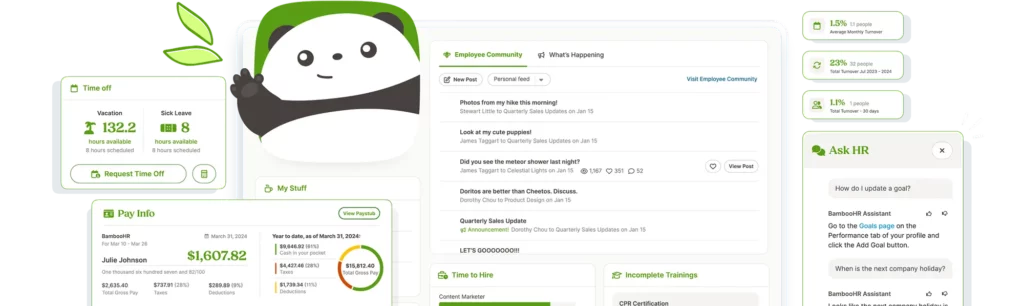
BambooHR is a comprehensive human resources management platform that includes PTO and leave tracking as part of a much broader HR ecosystem. Unlike tools built specifically for shift-heavy environments, BambooHR is designed to centralize and formalize HR processes across an organization.
For retail businesses evolving from single-store operations into structured, multi-location companies with dedicated HR teams, BambooHR offers powerful administrative capabilities beyond just leave management.
Why BambooHR Appeals to Growing Retail Businesses
As retailers expand, workforce management becomes more complex. You’re no longer just tracking time off, you’re managing:
Hiring pipelines
Employee records
Compliance documentation
Performance tracking
Benefits enrollment
BambooHR brings all of these elements into one unified system, making it attractive for retail businesses transitioning toward corporate-level operations.
Key Strengths
Advanced Reporting & Analytics
BambooHR provides in-depth reporting tools that allow leadership to analyze:
PTO usage trends
Absenteeism patterns
Turnover rates
Workforce growth metrics
For retail businesses managing dozens or hundreds of employees across locations, this visibility supports strategic decision-making and workforce planning.
Compliance Tracking
Labor law compliance is especially important in retail, where part-time employment, overtime, and local regulations frequently come into play.
BambooHR helps track:
Time off policies
Employee documentation
Regulatory compliance requirements
This reduces risk as your retail operation grows into multiple jurisdictions.
Onboarding & Employee Lifecycle Management
Retail businesses with frequent hiring, particularly seasonal retailers, benefit from BambooHR’s onboarding tools.
The platform supports:
Digital onboarding workflows
Offer letters and document management
Employee record centralization
This is particularly useful for retailers scaling quickly or managing high turnover.
Benefits Administration
For retail companies offering structured benefits packages to full-time employees, BambooHR can manage:
Benefits enrollment
Eligibility tracking
Employee records
This makes it well-suited for retailers transitioning into more corporate HR models.
Limitations for Retail Environments
While BambooHR is robust, it may not be ideal for every retail operation.
Expensive for Small Stores
Smaller retailers may find the cost difficult to justify, especially if they primarily need simple leave tracking.
Feature Overload
Many retail businesses don’t require advanced HR modules like performance management or benefits administration, yet they may still pay for them.
Less Optimized for Shift-Based Scheduling
BambooHR includes PTO tracking, but it is not specifically designed around shift coverage or real-time retail scheduling needs. Managers may still require separate scheduling tools.
Best For
Growing retail chains
Retail businesses building formal HR departments
Multi-location operations with complex compliance needs
Retailers transitioning into corporate-level structures
Connecteam: Best for Deskless Retail Teams

Retail teams are rarely behind desks. They’re on the sales floor, in fitting rooms, managing inventory, or assisting customers. That’s why Connecteam stands out, it’s built specifically for deskless workforces.
Rather than functioning as a traditional HR platform, Connecteam operates as a mobile-first workforce management app that combines scheduling, leave tracking, communication, and task management into one system.
For retailers that want to centralize team coordination inside a single app, Connecteam is a strong contender.
Why Connecteam Works Well for Retail
Retail environments depend on fast communication and constant coordination. Managers need to:
Send updates about promotions or policy changes
Adjust shifts quickly
Approve time off requests
Assign daily tasks
Connecteam brings these functions together in one mobile app, making it especially appealing for stores with younger, mobile-native teams.
Key Strengths
Mobile-First Design
Connecteam is built around the smartphone experience. Employees can:
Submit leave requests
Check schedules
Clock in and out
Receive announcements
Chat with managers
This makes it ideal for retail teams who don’t regularly access desktop systems.
For store managers, having workforce tools in their pocket simplifies day-to-day oversight.
Built-In Communication Tools
Retail teams thrive on real-time updates, whether it’s about flash sales, stock arrivals, or staffing changes.
Connecteam includes:
Team chat
Company-wide announcements
Push notifications
Read confirmations
This reduces reliance on external messaging apps and keeps communication centralized and trackable.
Scheduling + Leave Management
Connecteam combines shift scheduling and leave tracking within the same platform. When time off is approved, managers can adjust schedules accordingly without switching systems.
This integration helps prevent:
Overlapping leave requests
Understaffed shifts
Miscommunication about approved absences
For retailers juggling rotating schedules, this connection between scheduling and leave is a major advantage.
Task Management Features
Retail operations often require structured daily task lists, from merchandising resets to inventory checks.
Connecteam allows managers to:
Assign tasks to individuals or teams
Set deadlines
Track completion
While not directly related to leave tracking, this feature adds operational value for retailers wanting an all-in-one workforce tool.
Limitations to Consider
Can Feel Cluttered
Because Connecteam includes multiple modules, including communication, tasks, scheduling, and time tracking, the interface can feel busy for teams that only need leave management.
Pricing Increases with Added Modules
The more features you enable, the higher the cost. Retailers primarily looking for a simple leave tracker may end up paying for functionality they don’t fully use.
Best For
Retailers with fully deskless teams
Stores wanting communication + scheduling + leave in one app
Growing retail operations seeking an all-in-one workforce solution
Teams that rely heavily on mobile coordination
When I Work: Best for Scheduling-Focused Retailers

For many retail businesses, scheduling is the core operational priority. If shifts are covered, the store runs smoothly. If they’re not, everything suffers, from customer experience to sales performance.
When I Work is primarily built as a scheduling platform, with leave management included as a supporting feature. For retailers whose biggest challenge is organizing shifts and managing availability, this scheduling-first approach can be highly effective.
Why When I Work Appeals to Retailers
Retail scheduling is often dynamic and fast-moving. Employees swap shifts, request time off, adjust availability, and respond to peak demand changes.
When I Work centralizes:
Shift scheduling
Employee availability
Shift swapping
Basic leave requests
By focusing heavily on shift coordination, it gives retail managers a clear, visual overview of staffing coverage at any given time.
Key Strengths
Easy Shift Swapping
Retail employees frequently need to trade shifts due to school, second jobs, or personal commitments.
When I Work allows:
Employees to request shift swaps
Managers to approve swaps quickly
Open shifts to be posted for available staff
This reduces the administrative burden on managers and gives employees more flexibility, which can improve retention in high-turnover retail environments.
Schedule-Based Leave Visibility
Leave requests are directly reflected within the schedule view. Managers can see:
Who is unavailable
Where coverage gaps exist
How time-off requests impact upcoming shifts
This tight integration ensures that leave decisions are made with full awareness of staffing needs.
Mobile-Friendly Experience
Retail teams operate on the go, and When I Work supports that with a strong mobile app.
Employees can:
View schedules
Request time off
Swap shifts
Receive notifications
Managers can build and adjust schedules from their phones, which is especially useful for store leaders working on the sales floor.
Limitations to Consider
Leave Tracking Isn’t as Robust as Dedicated Tools
While When I Work includes time-off features, it’s not a specialized leave management system. Advanced PTO tracking, accrual customization, and detailed leave policy controls may be limited compared to tools focused solely on leave.
Limited HR Reporting
Retailers looking for deep analytics on absenteeism trends, compliance tracking, or workforce reporting may find reporting capabilities less comprehensive than full HR platforms.
Best For
Retailers prioritizing shift scheduling efficiency
Small-to-mid-sized stores with frequent shift swaps
Teams that value schedule visibility over advanced HR analytics
Retail managers focused primarily on coverage optimization
How to Choose the Right Leave Tracking Tool for Your Retail Business
Choosing leave tracking software for retail isn’t just about recording time off, it’s about protecting coverage, controlling labor costs, and avoiding operational disruptions.
Because retail environments are fast-paced and shift-driven, your decision should focus on practical, day-to-day usability, not just feature lists.
Here are the key factors every retail business should evaluate:
Shift Compatibility
Retail operates on peak hours, weekend traffic, and seasonal demand. Your leave tracking system should actively help prevent understaffing, not just record absences.
Ask:
Does the system show leave alongside team calendars?
Can it prevent overlapping time-off requests?
Can you limit how many employees are off per day?
Does it support shift-based teams?
If the tool doesn’t protect coverage at the approval stage, managers may still face last-minute scheduling chaos.
Mobile Accessibility
Retail managers are rarely behind desks. They’re supervising staff, handling customer issues, and moving throughout the store.
Your leave system should allow:
Employees to submit requests in seconds
Managers to approve or reject requests on the go
Real-time notifications for faster decisions
Without strong mobile functionality, leave approvals get delayed, and delays create operational friction.
Multi-Location Support
If you operate more than one store, complexity increases quickly.
You’ll need to consider:
Separate teams per location
Different leave policies per branch
Central oversight for HR or ownership
Location-level visibility
A scalable system should let you maintain centralized control while giving store managers appropriate approval authority.
Ease of Use
Retail turnover rates are often higher than in other industries. That means constant onboarding and training.
Complicated HR software slows teams down and creates resistance.
Look for:
Clean interface
Minimal training requirements
Simple request-and-approval workflows
Clear leave balance visibility
If employees can’t use the system confidently, managers end up reverting to manual processes.
Budget & ROI
Retail margins can be tight. Every software investment must justify itself.
Instead of choosing the platform with the longest feature list, ask:
Does this solve our main operational problems?
Are we paying for modules we won’t use?
Will it reduce scheduling errors and payroll disputes?
Does it scale as we grow?
The best solution is one that delivers operational control without unnecessary overhead.
Final Recommendation
While tools like Deputy, BambooHR, Connecteam, and When I Work offer strong capabilities, Day Off remains the best overall leave tracking tool for retail businesses.
It stands out because it:
Focuses specifically on leave management
Is simple and fast to implement
Works seamlessly for shift-based retail teams
Offers true mobile-first functionality
Provides affordability without enterprise HR bloat
Scales easily for growing multi-location operations
For retail businesses seeking clarity, simplicity, and better workforce control, without the complexity of full-scale corporate HR systems, Day Off is the smartest long-term investment.
Frequently Asked Questions (FAQ)
Why do retail businesses need specialized leave tracking software?
Retail environments are shift-based, fast-moving, and coverage-sensitive. Unlike traditional office settings, retail businesses must account for:
Peak shopping hours
Weekend and holiday demand
Part-time and seasonal staff
Frequent shift changes
A general HR system may track PTO, but retail-focused leave tracking software helps prevent understaffing, reduce shift conflicts, and protect daily operations in real time.
Can leave tracking software prevent scheduling conflicts?
Yes, but only if the system is built with shift visibility in mind.
The best tools allow managers to:
View leave requests alongside team calendars
Prevent overlapping absences
Limit the number of employees off per day
Maintain minimum staffing levels
For example, solutions like Deputy integrate leave directly into scheduling, while dedicated tools like Day Off focus on preventing conflicts at the approval stage.
Is leave tracking software necessary for small retail stores?
Even small retail teams benefit from structured leave tracking.
Manual processes (spreadsheets, WhatsApp messages, paper forms) often lead to:
Miscommunication
Lost requests
Payroll errors
Coverage gaps
Affordable, simple tools can eliminate these risks without adding unnecessary complexity. For smaller retailers, ease of use and cost efficiency are usually more important than advanced HR modules.
What’s the difference between leave tracking software and full HR software?
Leave tracking software focuses specifically on:
Time off requests
PTO balances
Approval workflows
Leave visibility
Full HR platforms like BambooHR include additional features such as:
Hiring and onboarding
Benefits administration
Performance management
Compliance tracking
Retailers should choose based on operational needs. If your main challenge is staffing coverage and shift coordination, a focused leave tool may be more practical.
How important is mobile access for retail leave management?
Extremely important.
Retail managers and employees are rarely at desks. Mobile functionality allows:
Quick leave submissions
Instant approval decisions
Real-time notifications
On-the-floor schedule awareness
Platforms like Connecteam and When I Work are known for strong mobile experiences, which is especially valuable in deskless retail environments.
Can leave tracking software support multi-location retail chains?
Yes. Many modern systems allow you to:
Separate teams by store
Assign different leave policies per location
Maintain centralized HR oversight
Generate company-wide reports
This is essential for franchise groups and expanding retail brands that need consistency across branches while preserving local flexibility.
Will leave tracking software integrate with payroll?
Some platforms do.
Scheduling-focused systems like Deputy often include payroll syncing features, while full HR platforms like BambooHR integrate deeply with payroll and benefits systems.
If payroll integration is critical, confirm compatibility before choosing a solution.
What should retailers prioritize when choosing a tool?
Retailers should prioritize:
Shift compatibility
Mobile accessibility
Ease of use
Multi-location support
Budget alignment
The ideal system should reduce administrative burden while protecting staffing levels during peak sales periods.
How quickly can a retail business implement leave tracking software?
Implementation time depends on the platform’s complexity.
Dedicated leave tools are typically faster to deploy.
Full HR suites may require longer setup and configuration.
Scheduling-integrated platforms may require training for managers.
Retailers looking for rapid deployment should focus on systems that are simple, intuitive, and purpose-built.
What is the best overall leave tracking solution for retail?
While several tools offer strong capabilities, Day Off stands out for retail businesses because it:
Focuses exclusively on leave management
Protects shift coverage
Offers mobile-first functionality
Supports multi-location teams
Avoids unnecessary HR complexity
For retailers seeking clarity, operational control, and simplicity, it remains the most balanced and retail-friendly choice.
Conclusion
In retail, effective leave tracking is essential to maintaining proper staffing, avoiding scheduling conflicts, and keeping operations running smoothly. The right tool should be simple, mobile-friendly, and built for shift-based teams.
Among the available options, Day Off stands out as the best choice for retail businesses. Its ease of use, affordability, and retail-focused functionality make it ideal for managing time off without unnecessary complexity.
For retailers looking to streamline leave management and improve workforce planning, choosing the right system can make a measurable difference, and Day Off delivers exactly what retail teams need.