

Table of Contents
ToggleManaging employee leave is a critical responsibility for HR teams, but it can quickly become complicated as organizations grow. Tracking vacation days, sick leave, personal days, and other types of time off requires precise calculations, clear policies, and reliable records. When companies rely on spreadsheets, email requests, or manual tracking, the process often becomes time consuming and prone to mistakes.
A time off calculator helps HR teams simplify this process by automatically calculating employee leave balances and accruals. Instead of performing repetitive calculations or verifying multiple spreadsheets, HR professionals can rely on a structured system that delivers accurate results instantly.

Using a time off calculator not only improves efficiency but also enhances transparency, compliance, and workforce planning. Below are the top benefits of using a time off calculator for HR teams, along with deeper insights into how this tool improves leave management.
What Is a Time Off Calculator?
A time off calculator is a digital tool designed to calculate employee leave balances automatically based on company policies and accrual rules. It determines how much paid time off an employee has earned, how much has been used, and how much remains available.
Most time off calculators work by applying predefined rules such as:
PTO accrual rates (monthly, semi monthly, weekly, or bi weekly)
Employee start date and tenure
Company leave policies
Carryover limits or expiration rules
Leave already taken or scheduled
Once these rules are set, the calculator automatically updates leave balances whenever employees accrue or use time off.
For HR teams, this automation eliminates manual work and ensures leave data remains accurate across the organization.


Key Benefits of Using a Time Off Calculator
Eliminates Manual Calculation Errors
Manual PTO tracking can easily lead to mistakes. A single incorrect formula in a spreadsheet or a small data entry error can result in inaccurate leave balances.
For example, if accrual rates differ by employee tenure or employment type, HR teams may need to calculate balances individually. This increases the likelihood of errors that may affect payroll, employee trust, or compliance.
A time off calculator removes this risk by automatically applying consistent formulas. Each employee’s leave balance is calculated using predefined rules, ensuring the results are always correct.
Accurate calculations also reduce disputes between employees and HR teams regarding available leave balances.

Saves Time and Reduces Administrative Work
HR departments often spend a surprising amount of time managing employee leave. Tasks such as verifying PTO balances, updating spreadsheets, and responding to employee questions can consume hours each week.
A time off calculator automates these tasks by performing calculations instantly. Instead of manually reviewing records, HR professionals can access accurate leave balances in seconds.
This time savings allows HR teams to focus on more meaningful initiatives such as:
Employee engagement programs
Recruitment and onboarding
Talent development
Workplace culture initiatives
By reducing repetitive administrative work, HR teams become more efficient and strategic.
Improves Accuracy of PTO Accrual Tracking
Many companies use accrual based PTO systems, where employees earn time off gradually over time rather than receiving all leave days at once.
For example, an employee might earn:
1.25 vacation days per month
0.5 sick days per pay period
Additional leave after completing a certain number of years
Tracking these accrual rules manually can be complicated, especially when employees join mid year or work part time schedules.
A time off calculator automatically applies accrual formulas based on the employee’s start date and the company’s policy rules. The system continuously updates balances so HR teams always know exactly how much leave each employee has earned.
Provides Real Time Visibility into Leave Balances
Without a centralized calculation system, HR teams may need to review multiple records to determine an employee’s remaining leave balance.
A time off calculator provides real time visibility into PTO balances. HR teams can immediately see:
Total accrued leave
Used leave days
Pending leave requests
Remaining available PTO
This instant visibility improves decision making and reduces delays when reviewing leave requests.
Employees also benefit from clearer access to their own leave balances, which increases transparency and trust.

Simplifies Leave Policy Management
Organizations often maintain multiple leave policies. These policies may vary based on:
Employee role or department
Full time vs part time employment
Country or regional regulations
Employee tenure
Applying these rules manually can be difficult and inconsistent.
A time off calculator allows HR teams to configure policy rules once and apply them automatically to each employee group. The calculator ensures the correct accrual rates and limits are applied consistently.
This structured approach prevents policy misunderstandings and helps maintain fairness across the organization.
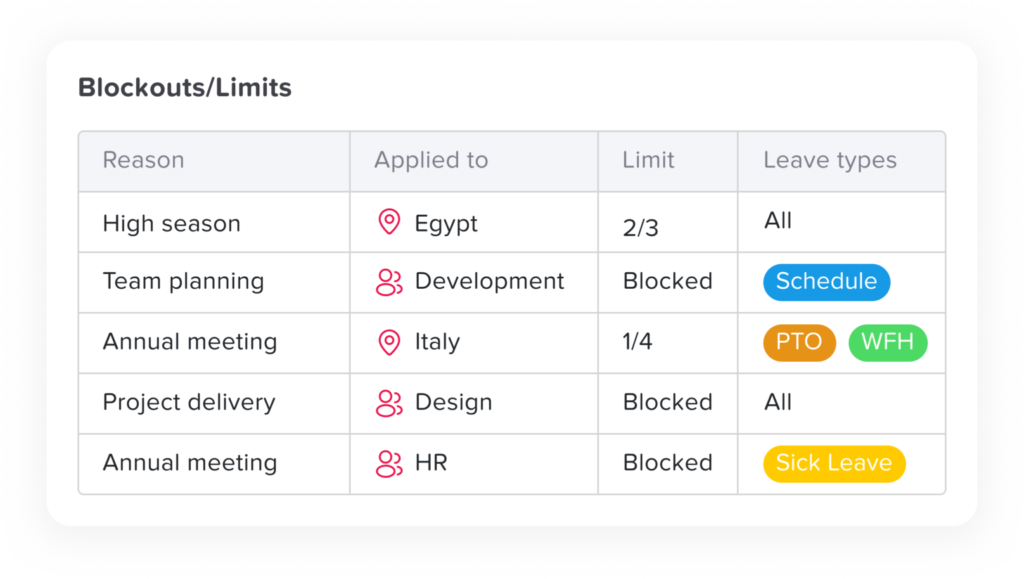
Improves Workforce Planning and Scheduling
Employee absences can affect productivity if teams are not prepared for them. Managers need accurate information about upcoming leave to plan workloads and ensure projects stay on schedule.
A time off calculator helps HR teams maintain clear and accurate leave records that managers can reference when planning staffing.
By analyzing leave balances and usage trends, organizations can:
Anticipate busy vacation periods
Avoid scheduling conflicts
Ensure critical roles remain covered
Maintain balanced workloads across teams
Better planning helps organizations maintain productivity while supporting employee time off.

Supports Compliance with Labor Regulations
Leave policies often intersect with labor laws and employment regulations. In many countries, companies must maintain accurate records of employee leave balances and ensure that PTO policies comply with local laws.
Incorrect leave calculations may lead to compliance issues, legal disputes, or financial penalties.
A time off calculator helps HR teams maintain detailed and consistent leave records. Automated calculations create reliable documentation that organizations can use during audits or regulatory reviews.
Accurate records also help ensure employees receive the leave benefits they are entitled to under company policies and employment laws.
Reduces HR Support Requests
Employees frequently ask HR questions about their PTO balances, especially when leave tracking systems are unclear or outdated.
Common questions include:
How many vacation days do I have left?
How much PTO will I accrue this month?
Can I take additional leave later in the year?
A time off calculator provides clear and up to date leave information, reducing the number of inquiries HR teams must handle.
When employees can easily understand their leave balances, HR teams spend less time answering routine questions.
Improves Employee Transparency and Trust
Transparency plays a major role in building trust between employees and HR teams. When employees feel uncertain about their leave balances, they may worry about inaccuracies or unfair policy enforcement.
A time off calculator ensures employees receive clear and accurate information about their available time off.
This transparency helps employees:
Plan vacations more confidently
Avoid unexpected balance issues
Understand how their PTO accrues over time
Clear and consistent information strengthens employee confidence in HR processes.
Helps Identify Leave Usage Trends
Tracking employee leave data provides valuable insights into workforce behavior. HR teams can analyze patterns to understand how employees use their time off.
For example, leave data may reveal:
Seasonal vacation trends
Departments with high absence rates
Employees accumulating large unused PTO balances
These insights help HR teams identify potential issues such as employee burnout or staffing shortages.
Encouraging employees to take regular time off can improve well being, productivity, and job satisfaction.
Reduces Financial Liability from Unused PTO
Unused PTO can become a financial liability for companies, especially if unused days must be paid out when employees leave the organization.
Without accurate tracking, companies may underestimate or overlook accumulated PTO balances.
A time off calculator helps HR teams monitor unused leave and ensure balances remain manageable. Organizations can also enforce carryover limits or encourage employees to take time off before balances grow too large.
Managing PTO liability effectively protects company finances and ensures fair leave distribution.
Scales Easily as Organizations Grow
Manual leave tracking systems may work for very small teams, but they quickly become inefficient as companies expand.
As organizations grow, they must track more employees, more leave requests, and more complex policy rules.
A time off calculator provides a scalable solution that supports growth without increasing administrative complexity.
Whether managing ten employees or hundreds, automated calculations ensure leave tracking remains accurate and efficient.
The Strategic Value of a Time Off Calculator
While a time off calculator may seem like a small tool, it plays an important role in improving HR efficiency and employee experience.
By automating calculations, ensuring accuracy, and providing clear visibility into leave balances, these tools help HR teams manage one of the most common administrative tasks in the workplace.
As organizations continue adopting digital HR systems, time off calculators are becoming a standard component of modern leave management.
FAQ
What is a time off calculator?
A time off calculator is a tool that automatically calculates employee leave balances based on company policies and accrual rules. It determines how much paid time off (PTO) an employee has earned, how much has been used, and how much time remains available.
Instead of manually calculating leave balances in spreadsheets, HR teams can use a time off calculator to ensure that PTO accruals and leave records remain accurate and up to date.
How does a time off calculator work?
A time off calculator applies predefined leave policies and accrual formulas to determine employee leave balances. It typically considers several factors such as the employee’s start date, PTO accrual rate, company leave policy, and previously used leave.
Once these inputs are set, the calculator automatically updates leave balances as employees accrue time off or submit leave requests.
Why do HR teams use time off calculators?
HR teams use time off calculators to simplify leave management and reduce administrative work. Manually calculating PTO balances can be time consuming and prone to errors.
A time off calculator automates the calculation process, improves accuracy, and provides real time visibility into employee leave balances. This allows HR professionals to focus on strategic tasks rather than repetitive administrative work.
What is the difference between a time off calculator and leave management software?
A time off calculator focuses specifically on calculating PTO accruals and leave balances. It determines how much time off employees have earned and how much remains available.
Leave management software, on the other hand, includes additional features such as leave requests, approval workflows, absence calendars, and reporting tools. Many leave management platforms include a built in time off calculator as part of the system.
Can a time off calculator handle PTO accrual automatically?
Yes. Most time off calculators are designed to automatically track PTO accrual based on company policies. For example, employees may earn a certain number of vacation days per month or per pay period.
The calculator applies the accrual formula continuously, ensuring that employee leave balances remain accurate throughout the year.
Why is accurate PTO calculation important?
Accurate PTO calculation helps organizations maintain trust with employees and avoid administrative errors. Incorrect leave balances may lead to payroll issues, policy violations, or employee dissatisfaction.
Using a time off calculator ensures that leave balances are calculated consistently according to company rules, reducing disputes and improving transparency.
Can small businesses benefit from a time off calculator?
Yes. Small businesses often manage employee leave manually using spreadsheets or shared calendars. As teams grow, this approach becomes difficult to maintain and increases the risk of errors.
A time off calculator provides a simple way for small companies to track PTO balances accurately while reducing the administrative burden on HR teams or managers.
How does a time off calculator improve workforce planning?
A time off calculator helps HR teams maintain accurate leave records, which allows managers to better plan staffing and workloads. When organizations have clear visibility into employee leave balances and upcoming absences, they can reduce scheduling conflicts and ensure adequate coverage.
Better planning helps teams remain productive while allowing employees to take the time off they need.
Conclusion
Tracking employee leave should not require complex spreadsheets or manual calculations. A time off calculator offers a reliable solution that simplifies PTO management while improving accuracy and transparency.
For HR teams, the benefits are substantial. Automated calculations eliminate errors, reduce administrative work, support compliance, and provide valuable insights into workforce trends.
For employees, the system offers clear visibility into leave balances and ensures their time off is tracked fairly and consistently.
By adopting a time off calculator, organizations can create a more efficient, transparent, and employee friendly approach to managing time off.