




Call centers and customer support teams operate in one of the most performance-sensitive business environments. Unlike many departments where workloads can be postponed or redistributed easily, customer support functions in real time. Every incoming call, chat, or ticket must be handled within defined Service Level Agreements (SLAs).
In this environment, leave management becomes a strategic operational function, not just an HR process. A single day off affects staffing coverage, queue times, response speed, customer satisfaction (CSAT), and even revenue in sales-driven contact centers.

Effective leave management in support teams requires balancing three critical elements:
-
Workforce forecasting accuracy
-
Operational stability
-
Employee wellbeing and retention
This article explores leave management in detail, starting with the most operationally impactful leave option: Day Off.
Why Day Off Is Critical in Support Teams
When a leave request is submitted in a contact center, approving it affects multiple performance dimensions. Day Off helps managers control this impact through structured governance and visibility.
Approving leave influences:
Service Level (e.g., 80/20 rule)
Contact centers often operate under the 80/20 SLA model, answering 80% of contacts within 20 seconds. Day Off enables managers to limit approvals per day or shift, preventing over-approval that would cause SLA breaches.
Average Speed of Answer (ASA)
Reduced staffing increases queue time. With centralized leave dashboards, Day Off allows workforce planners to see daily leave concentration before approving requests.
Abandonment Rate
If too many agents are off simultaneously, abandonment increases. Day Off’s visibility and multi-level approvals reduce the risk of uncoordinated approvals.
Agent Occupancy
When staffing is tight, occupancy spikes. By tracking leave trends and approval density, Day Off helps managers maintain healthy staffing buffers.
First Contact Resolution (FCR) & CSAT
Staffing instability impacts resolution quality and customer satisfaction. Controlled leave approval protects performance consistency.
Shrinkage Control & Operational Alignment
Contact centers typically operate with planned shrinkage between 25% and 40%, covering:
-
Leave
-
Training
-
Coaching
-
Meetings
-
Breaks
Day Off supports shrinkage planning by:
-
Providing real-time leave calendars
-
Allowing policy-based caps
-
Offering reporting exports for workforce planning analysis
-
Enabling structured approval hierarchies
When leave approvals exceed shrinkage assumptions, SLAs decline rapidly. A centralized system like Day Off prevents ad hoc approvals that would destabilize staffing models.
Managing Multiple Leave Types in Support Teams with Day Off
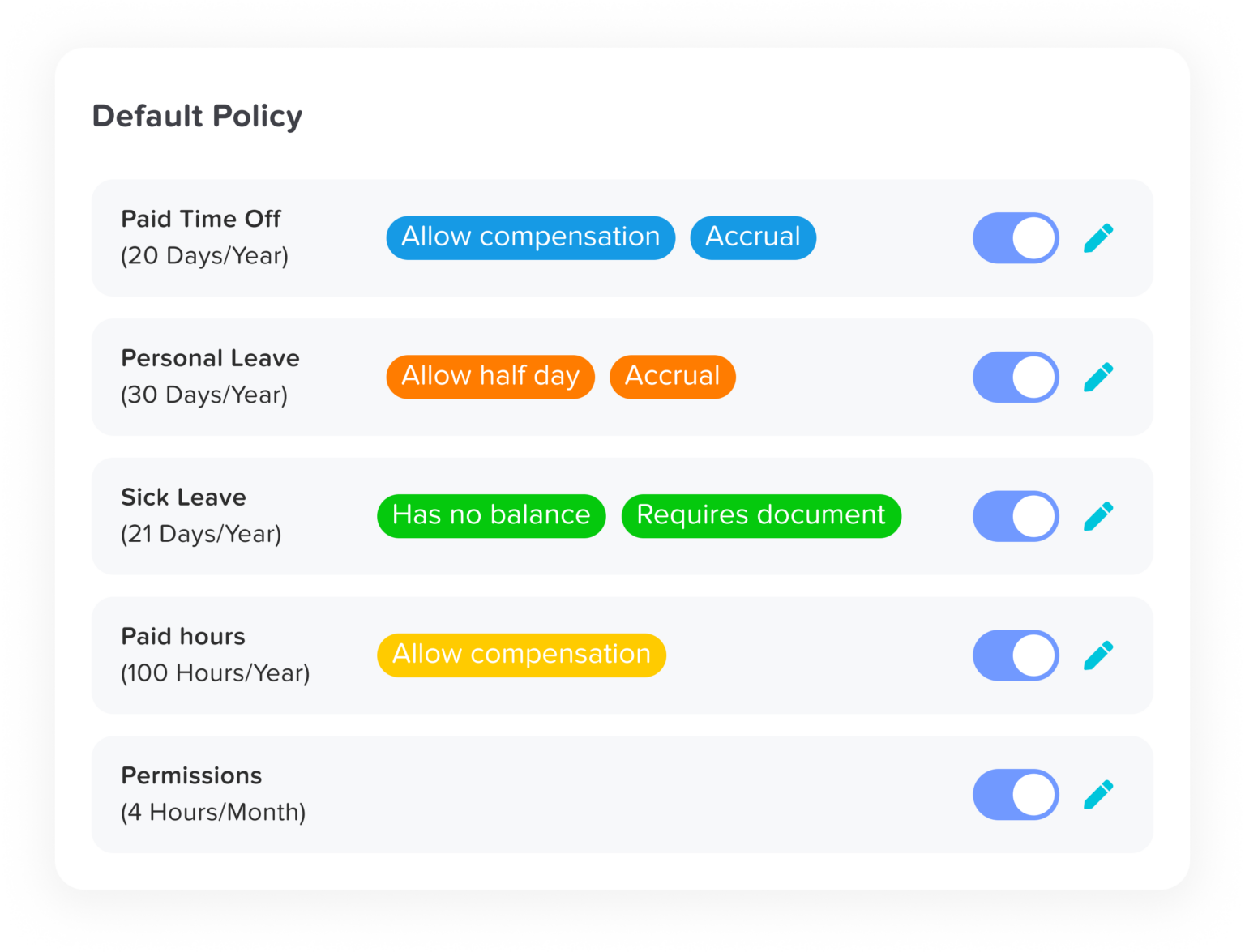
Customer support environments are fundamentally different from traditional office setups. They operate on rotating shifts, strict coverage models, and performance-based KPIs. Because of this, every leave category carries operational weight.
A modern leave management system must go beyond basic tracking, it must provide structured controls, workforce visibility, and policy flexibility.
Day Off (the leave management platform) allows contact centers to configure leave types in a way that aligns with real operational realities, not just HR recordkeeping.
Below is how different leave categories function inside support teams, and how Day Off enables structured control without sacrificing flexibility.
Scheduled Weekly Off (Rotational)
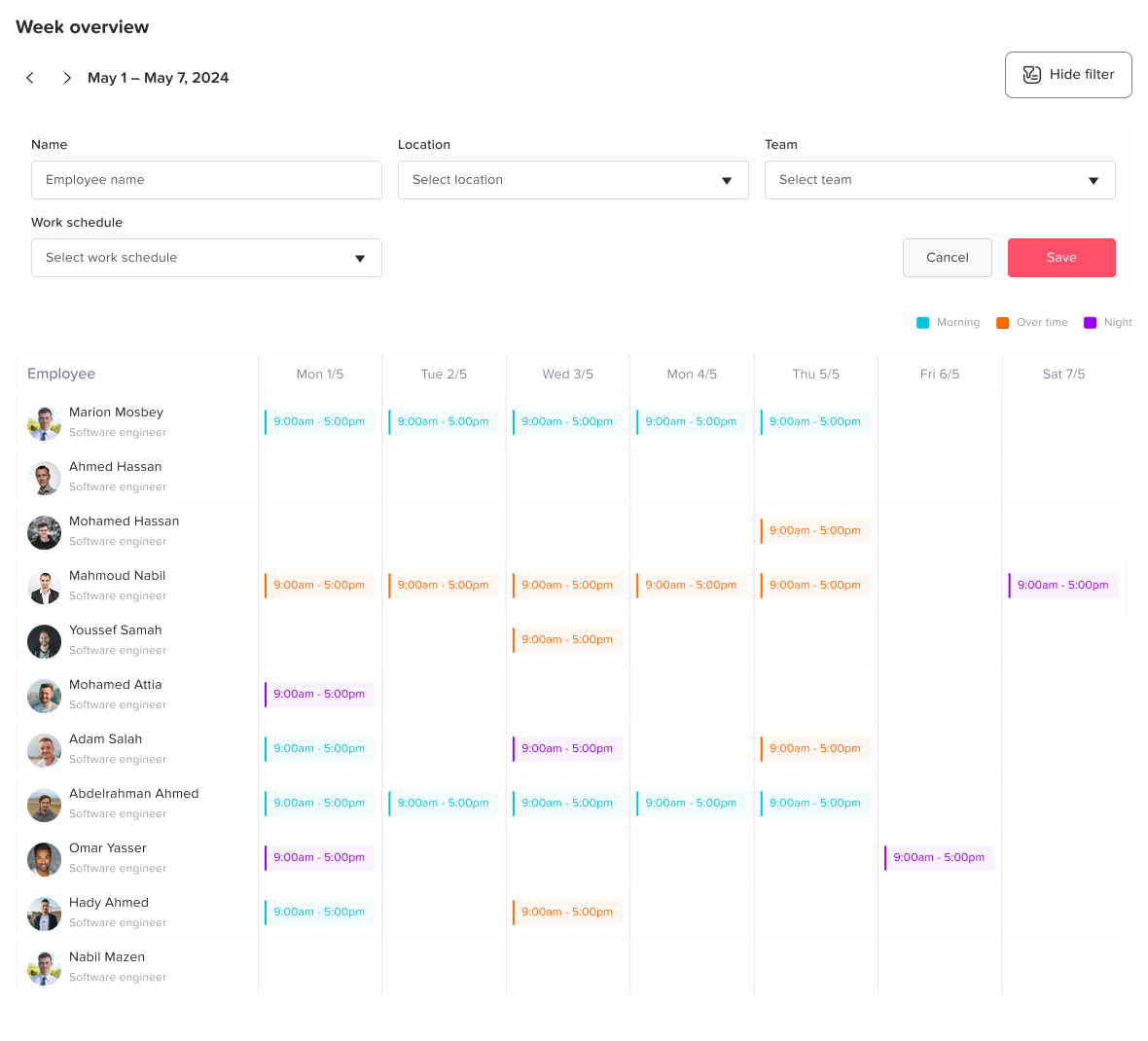
In shift-based environments, weekly offs are rarely fixed. Many support teams operate on rotational schedules (e.g., 5 days on, 2 days off, rotating weekends, split shifts).
Without a systemized approach, rotational offs can:
-
Create uneven weekday coverage
-
Overload weekend shifts
-
Cause recurring understaffing patterns
Day Off allows managers to pre-configure weekly off rules aligned with rotational shift models. This ensures:
-
Fair distribution of weekend and weekday offs
-
Visibility across the entire team calendar
-
Alignment between scheduling and leave records
For contact centers running 24/7 operations, this structured configuration prevents long-term coverage gaps while maintaining fairness across teams.
Planned Personal Leave
Planned leave is common, but in call centers, approval cannot be based on entitlement alone.
Approving personal leave impacts:
-
Shift coverage
-
Skill group availability
-
Forecasted staffing requirements
With Day Off, managers can review leave requests with full team visibility through shared calendars and approval dashboards. Before approving, they can see:
-
How many agents are already off that day
-
Whether daily leave caps have been reached
-
If the request overlaps with peak demand periods
This level of transparency helps ensure leave caps per shift are respected, protecting service levels and customer experience metrics.
Comp Off (Compensatory Leave)
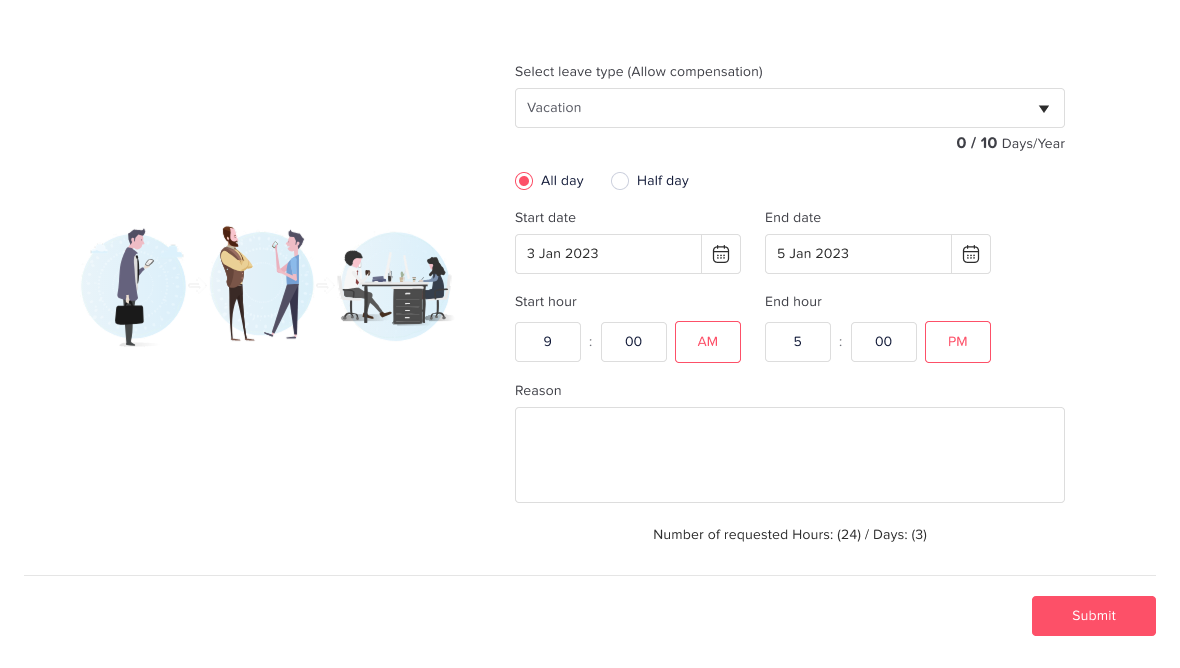
Compensatory off is frequently granted after overtime, public holiday work, or peak season contributions. However, comp off can create staffing strain if multiple agents redeem it at the same time.
Day Off automatically tracks accrual balances and expiration rules, eliminating manual spreadsheets and payroll discrepancies. Managers gain:
-
Clear visibility of outstanding comp off balances
-
Policy-based expiration tracking
-
Controlled approval workflows
This ensures compensatory time remains fair and transparent, while still protecting operational stability.
Floating Leave
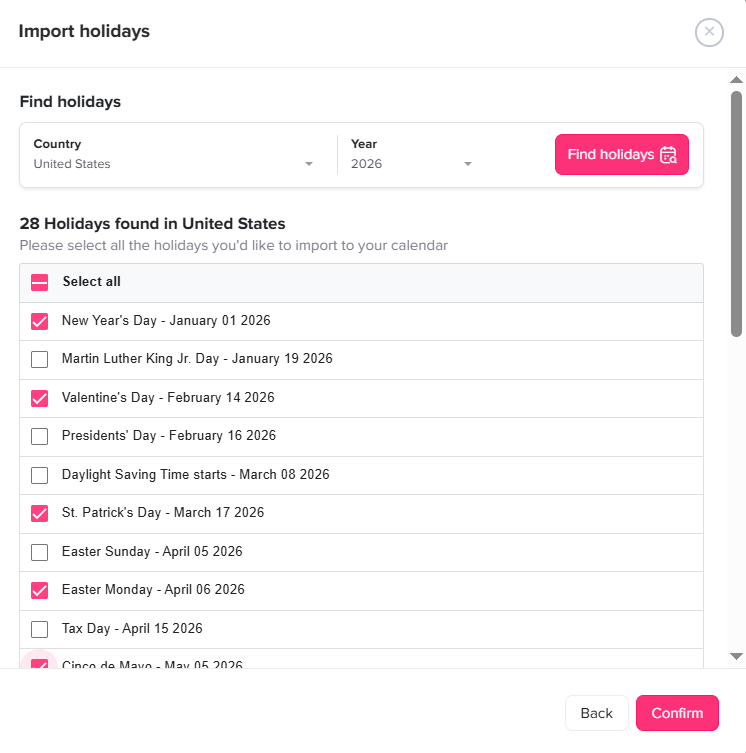
Floating leave policies give employees flexibility to take time off at their discretion, often replacing fixed public holidays in global or hybrid teams.
However, unrestricted floating leave can cause unpredictable coverage gaps, especially around long weekends or holiday seasons.
With Day Off, organizations can configure floating leave policies with:
-
Defined annual limits
-
Daily approval caps
-
Manager-level approval controls
-
Policy rules by location or department
This ensures flexibility for employees while maintaining operational guardrails for support teams.
Shift-Based Leave Approvals
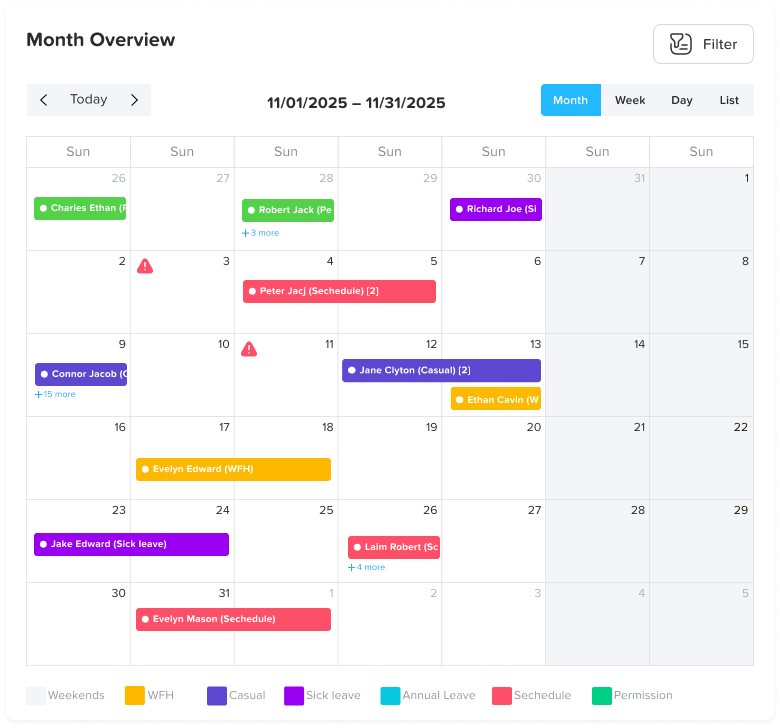
In contact centers, leave decisions should consider operational impact, not just leave balance.
Day Off allows managers to approve leave based on:
-
Shift coverage levels
-
Queue specialization
-
Team capacity thresholds
-
Multi-level approvals
For example, a team lead may approve entitlement eligibility, while a workforce manager validates staffing impact.
This dual-layer approval process ensures that leave decisions are aligned with real-time operational needs, not just HR policy compliance.
Best Practices for Using Day Off in Call Centers
Implementing a leave management system in a support environment requires thoughtful configuration. Here are proven best practices that maximize operational control while preserving employee flexibility.
Implement Shift-Based Approval Rules
One of the most important features for contact centers is the ability to configure leave caps per shift, per team, or per day.
By defining maximum allowable leave slots based on required staffing levels, organizations prevent:
-
Over-approval
-
SLA breaches
-
Last-minute scheduling chaos
Day Off enables structured caps that align with workforce planning models, creating a safeguard against accidental overstaffing reductions.
Use Multi-Level Approval Workflows
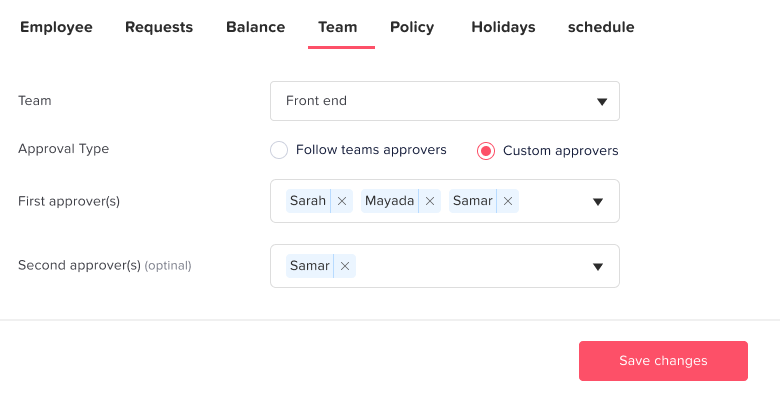
Single-level approval can create blind spots in high-volume environments.
Best practice involves:
-
First-level approval by team leads (who understand individual performance and attendance)
-
Second-level validation by workforce planners or operations managers
Day Off supports multi-level approval workflows, ensuring that both employee fairness and coverage control are maintained.
Integrate Leave Data into Workforce Planning
Leave management should not operate in isolation.
Exporting leave data into forecasting tools allows planners to compare:
-
Approved leave
-
Forecasted call volumes
-
Shrinkage assumptions
With Day Off’s reporting exports, workforce teams can align leave approvals with Erlang models or AI-based demand forecasting systems, ensuring that staffing models remain accurate.
Provide Self-Service Transparency
Modern support agents expect visibility and autonomy.
Day Off’s mobile-first interface allows employees to:
-
Check leave balances instantly
-
View team calendars
-
See approved absences
-
Submit requests from anywhere
This reduces unnecessary back-and-forth emails and increases trust in the approval process.
Transparency reduces friction, and improves employee experience.
Monitor Leave Density Trends
Leave patterns often cluster around:
-
National holidays
-
School breaks
-
Seasonal slowdowns
-
Major events
Day Off’s reporting tools allow managers to identify concentration patterns early. Monitoring leave density helps prevent operational bottlenecks before they impact KPIs.
Recommended Tools for Leave Management in Call Centers
Modern call centers and customer support teams rely on a combination of Workforce Management (WFM) software, HR systems, shift scheduling tools, and collaboration platforms to manage leave effectively.
In high-volume, KPI-driven environments, leave management must align with forecasting models, shrinkage assumptions, and real-time staffing dashboards. Below is a categorized overview of the most widely used tools across the industry.
A. Workforce Management (WFM) Tools
WFM platforms are designed specifically for contact centers. They combine forecasting, scheduling, real-time adherence tracking, and leave impact analysis, making them essential for SLA-driven operations.
NICE (CXone)
NICE CXone is widely used in enterprise contact centers for AI-powered workforce optimization.
Key capabilities:
-
AI-driven demand forecasting
-
Intraday management and staffing adjustments
-
Leave impact simulation before approval
-
Shrinkage and adherence tracking
For large-scale call centers, NICE allows workforce planners to model how leave approvals affect service level in advance, making it one of the most operationally robust platforms available.
Genesys (Genesys Cloud)
Genesys Cloud integrates contact center infrastructure with workforce management tools.
Key capabilities:
-
AI-based volume prediction
-
Integrated workforce scheduling
-
Real-time staffing dashboards
-
Leave request integration within scheduling modules
Genesys is particularly strong for teams that want WFM tightly embedded into their omnichannel contact center platform.
Verint
Verint provides a full workforce optimization suite for large support operations.
Key capabilities:
-
Automated leave approvals within workforce constraints
-
Forecast modeling and shrinkage planning
-
Performance analytics tied to staffing levels
It’s often used in enterprises requiring deep analytics and performance correlation with leave patterns.
Calabrio
Calabrio offers forecasting and scheduling solutions tailored to mid-to-large contact centers.
Key capabilities:
-
Advanced forecast modeling
-
Agent self-scheduling
-
Leave request management integrated into workforce planning
Calabrio is often preferred by organizations seeking balance between forecasting sophistication and usability.
B. HR & Leave Management Systems
These platforms focus on leave policy configuration, accrual tracking, and compliance management. They may not provide deep forecasting simulation but are essential for governance and payroll accuracy.
Workday
Workday is widely used by enterprise organizations for global HR management.
Key capabilities:
-
Automated leave balance calculations
-
Complex policy configuration
-
Workflow-based approvals
-
Compliance tracking across jurisdictions
Best suited for large enterprises requiring integrated HR, payroll, and compliance.
SAP (SuccessFactors)
SAP SuccessFactors supports multinational leave compliance and policy automation.
Key capabilities:
-
Global leave compliance frameworks
-
Automated accrual tracking
-
Role-based approval flows
-
Enterprise reporting
Ideal for organizations with multi-country policy complexity.
BambooHR
BambooHR is popular among small to mid-sized support teams.
Key capabilities:
-
Employee self-service leave requests
-
Simple reporting dashboards
-
Easy policy setup
While not WFM-focused, it works well for growing teams that need clean leave tracking without enterprise complexity.
Zoho (Zoho People)
Zoho People provides cost-effective leave tracking for smaller organizations.
Key capabilities:
-
Custom leave types
-
Affordable pricing
-
Payroll integrations
-
Automated accrual configuration
Suitable for budget-conscious support teams.
D. Collaboration & Workflow Automation Tools
For smaller or scaling contact centers, collaboration platforms can support lightweight leave workflows before full WFM adoption.
Asana
Asana can be configured to manage leave approval workflows using custom project boards, task templates, and automation rules, making it a practical option for smaller support teams that don’t yet use a dedicated leave management system.
In a call center environment, teams can create:
-
A centralized Leave Requests board
-
Custom fields for leave type, dates, shift coverage, and approval status
-
Automated routing to team leads or operations managers
-
Reminder notifications for pending approvals
Managers gain a visual overview of upcoming absences, which helps prevent overlapping approvals during peak demand periods.
Monday.com
Monday.com allows organizations to build custom leave management boards with powerful automation and visual capacity tracking features.
Support teams can design dashboards that display:
-
Leave status by shift or department
-
Approval stages (requested, under review, approved, denied)
-
Capacity impact indicators
-
Upcoming leave density trends
Automation rules can trigger:
-
Notifications to managers
-
Escalations for pending approvals
-
Status changes once approved
-
Integrations with payroll or HR systems
For contact centers managing rotating shifts, Monday.com’s visual interface makes it easier to identify potential understaffing days before they become operational risks.
Although it is not a dedicated leave management platform, its flexibility makes it suitable for small to mid-sized support operations that require customization without enterprise complexity.
Slack
Slack supports leave approval workflows through bots, workflow builder automation, and integrations with HR or leave management systems.
In customer support environments, Slack can be used to:
-
Submit leave requests directly within channels
-
Send automated approval notifications to managers
-
Alert teams when multiple agents are off on the same day
-
Integrate leave updates into shared calendars
For fast-moving support teams, Slack reduces friction by keeping leave communication inside the platform agents already use daily.
However, Slack itself does not manage accrual logic or compliance tracking, it works best as a communication and notification layer on top of a structured leave or HR system.
For growing call centers, combining Slack with a dedicated leave management platform creates a streamlined approval experience while maintaining operational control.
Frequently Asked Questions (FAQ) About Leave Management in Call Centers
Why is leave management more critical in call centers than in other departments?
Call centers operate in real time. Unlike back-office teams where work can be postponed or redistributed, customer support must respond immediately to incoming calls, chats, and tickets.
Every approved leave request affects:
-
Staffing coverage
-
Service Level Agreements (SLAs)
-
Average Speed of Answer (ASA)
-
Customer Satisfaction (CSAT)
-
Revenue (especially in sales-driven environments)
This makes leave management a workforce planning function, not just an HR administrative process.
What is shrinkage in a contact center, and how does leave impact it?
Shrinkage refers to the percentage of paid time when agents are not available to handle customer interactions.
It typically includes:
-
Approved leave
-
Sick days
-
Training
-
Meetings
-
Coaching
-
Breaks
Most contact centers operate with planned shrinkage between 25% and 40%.
If leave approvals exceed forecasted shrinkage assumptions, service levels decline rapidly. That’s why leave must be aligned with workforce forecasting models.
How does Day Off help protect SLAs in support teams?
Day Off helps protect SLAs by providing:
-
Real-time team leave visibility
-
Daily or shift-based leave caps
-
Multi-level approval workflows
-
Reporting exports for workforce planners
-
Clear leave concentration tracking
By preventing over-approval and enabling structured governance, Day Off supports operational stability in SLA-driven environments.
What metrics should call centers track for effective leave management?
Key leave management metrics include:
-
Leave utilization rate
-
Leave denial percentage
-
Sick leave frequency
-
Leave vs. SLA performance correlation
-
Overtime cost due to leave
-
Attrition linked to denied leave
Tracking these metrics allows operations leaders to balance employee wellbeing with service performance.
What is the ideal leave approval process in a contact center?
Best practice typically involves multi-level approval:
-
Team lead approval (validates entitlement and team fairness)
-
Workforce or operations approval (validates staffing coverage and SLA impact)
This ensures leave decisions consider both employee needs and operational capacity.
Can leave management software integrate with workforce management (WFM) tools?
Yes. Many organizations integrate leave management systems with WFM platforms such as NICE, Genesys, Verint, or Calabrio.
Integration enables:
-
Leave impact simulation
-
Alignment with forecasting models
-
Accurate shrinkage planning
-
Real-time staffing adjustments
This integration is critical for large or performance-sensitive support teams.
How does poor leave management affect employee retention?
Poor leave management can lead to:
-
High denial rates
-
Increased burnout
-
Perceived unfairness
-
Higher absenteeism
-
Voluntary attrition spikes
When employees feel they cannot take necessary time off, morale declines. Structured and transparent leave policies significantly improve engagement and retention.
What’s the difference between HR leave systems and WFM tools?
HR systems focus on:
-
Policy configuration
-
Leave accrual automation
-
Compliance tracking
-
Payroll integration
WFM tools focus on:
-
Demand forecasting
-
Scheduling optimization
-
Intraday staffing adjustments
-
Leave impact modeling
In mature contact centers, both systems often work together.
How can smaller support teams manage leave without enterprise WFM software?
Smaller teams may use:
-
Dedicated leave platforms like Day Off
-
Scheduling tools like Deputy or When I Work
-
Collaboration tools such as Asana, Monday.com, or Slack for workflow automation
While these solutions may not offer full forecasting simulation, they provide structured visibility and approval control.
What are the biggest risks of unmanaged leave in call centers?
When leave is poorly controlled, organizations may experience:
-
SLA breaches
-
Rising overtime costs
-
Agent burnout
-
Increased sick leave
-
Customer dissatisfaction
-
Revenue loss
In high-volume support environments, even small leave planning errors can have measurable financial consequences.
Conclusion
In call centers and customer support teams, leave management is far more than an administrative process, it is a direct driver of operational performance.
Every approved day off affects staffing coverage, shrinkage, SLAs, and customer satisfaction. Without structured controls and forecasting alignment, leave decisions can quickly lead to overtime costs, burnout, and service instability.
By combining clear policies, workforce planning integration, and the right tools, organizations can balance employee flexibility with operational control.
When managed strategically, leave management protects performance, supports retention, and strengthens the overall customer experience, making it a critical function in modern support operations.