

Table of Contents
ToggleLeave management for remote teams is more complex than ever due to distributed workforces, multiple time zones, and varied leave policies. Manual tracking through spreadsheets or emails often leads to errors, delays, and lack of visibility. Modern leave management platforms solve these challenges by automating requests, approvals, accruals, and reporting, helping remote organizations maintain transparency, compliance, and productivity.

In this comprehensive guide, we explore the best 7 leave management platforms for remote teams in 2026, detailing their features, strengths, and ideal use cases. The article is fully original and crafted to provide actionable insights for HR leaders, founders, and remote team managers.
Why Remote Teams Need Dedicated Leave Management Software
Before diving into the tools, it’s important to understand why specialized leave management platforms are critical for remote teams.
Distributed Workforce Coordination
Remote teams operate across multiple locations and time zones. Leave management tools provide centralized dashboards to track absences in real time, preventing understaffing and project delays.
Automated Approvals and Policies
Manual tracking often leads to errors or inconsistencies. Automated leave workflows ensure consistent policy enforcement and faster approvals.
Compliance Across Regions
Global teams must adhere to different leave laws and statutory requirements. Modern platforms include built in compliance rules and automated accrual calculations to reduce legal risks.
Transparency and Employee Experience
Self service portals allow employees to check balances, submit requests, and view team calendars reducing HR queries and improving trust.
Day Off: Best Mobile First Leave Management Platform

Day Off ranks as the best leave management platform for remote teams in 2026 thanks to its mobile first design, flexible policy controls, and seamless integrations with collaboration tools. It is a cloud based PTO and vacation tracker trusted by thousands of companies worldwide to manage employee absences and leave workflows efficiently.
Unlike traditional HR systems, Day Off focuses on simplicity and accessibility, allowing remote employees and managers to submit, approve, and track leave requests from anywhere, at any time.
Key Features
Centralized leave tracking and PTO balance management
Mobile first access for remote and on the go teams
Multi level approval workflows and customizable leave policies
Shared calendars and real time leave visibility
Integrations with Slack, Microsoft Teams, Google Calendar, and Outlook
Flexible accrual, carry over, and policy settings for global teams
Why It’s the #1 Choice for Remote Teams
Day Off is specifically designed for distributed and hybrid environments. It enables teams to manage time off across locations and time zones while maintaining transparency and coordination.
Additionally, its self service portal empowers employees to check balances, submit requests, and view calendars without contacting HR, reducing administrative overhead and improving employee experience.
Vacation Tracker: Best for Collaboration Tool Integration

Vacation Tracker is one of the most popular leave management tools designed specifically for distributed teams. It integrates directly with collaboration tools like Slack, Microsoft Teams, and Google Workspace, allowing employees to request leave without switching platforms.
Key Features
Native integrations with Slack and Teams
Automated PTO accrual and policy customization
Shared team calendars for visibility
Multi region holiday and leave policies
Real-time reporting and analytics
Why It’s Great for Remote Teams
Because it works inside everyday communication tools, employees do not need to learn a new system, leading to faster adoption and smoother workflows.
Deel: Best for Global Compliance and Distributed Hiring
Deel is widely known as a global HR and Employer of Record (EOR) platform that also offers robust leave management capabilities for internationally distributed teams.
Key Features
Country specific leave compliance rules
Global payroll and benefits integration
Automated PTO accrual across jurisdictions
Centralized employee records
Why It’s Great for Remote Teams
When managing employees across multiple countries, compliance becomes complex. Deel simplifies global leave tracking and ensures adherence to local labor laws.
Flamingo: Best Slack Native Leave Management for Small Teams
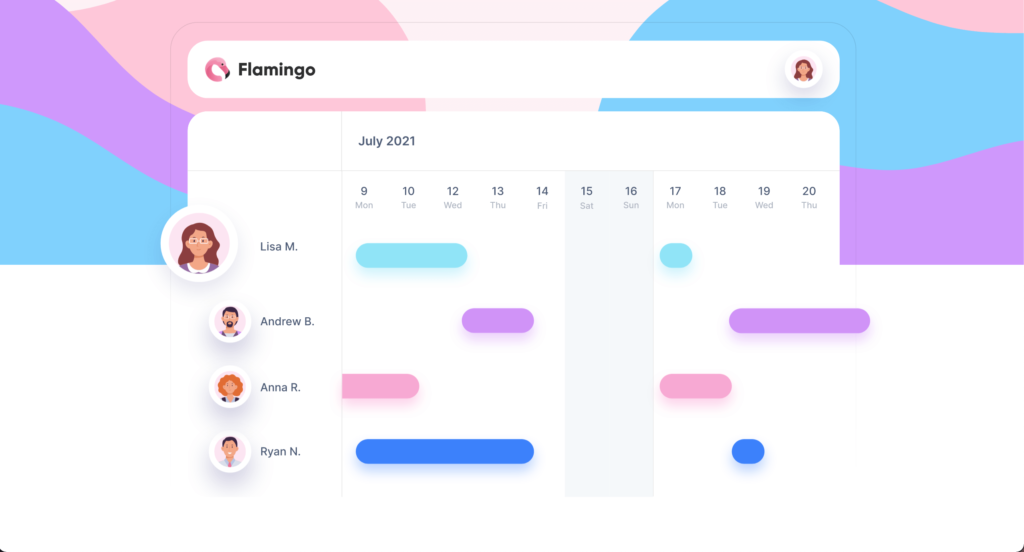
Flamingo is a lightweight leave management app built specifically for Slack users. It simplifies leave tracking by embedding requests, approvals, and calendars directly within Slack conversations.
Key Features
Slack first leave request workflow
Shared leave calendars and reminders
Simple setup for small distributed teams
Automatic approval routing
Why It’s Great for Remote Teams
Its minimal interface and Slack integration make it perfect for startups and smaller teams that want fast implementation with minimal complexity.
Rippling: Best All in One HR and Leave Management Platform

Rippling is a comprehensive workforce management platform that combines HR, IT, and finance functionalities, including advanced leave tracking and approvals.
Key Features
Centralized HR and leave management system
Automated workflows and analytics
Payroll and benefits integration
Remote device and workforce management tools
Why It’s Great for Remote Teams
Rippling’s scalability and integrated ecosystem allow remote first companies to manage employee data, leave, payroll, and devices from one platform, making it ideal for growing organizations.
Calamari: Best for Multi Level Approval Workflows
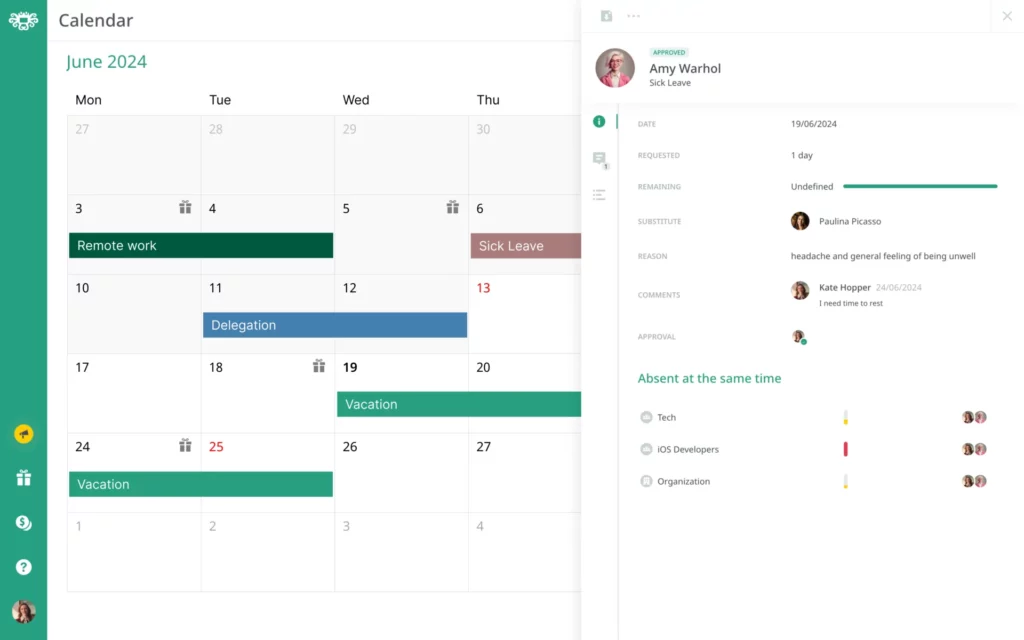
Calamari is a specialized leave and attendance management platform known for customizable workflows and multi level approval systems.
Key Features
Multi tier approval chains
Detailed absence analytics and reports
Integration with Slack, Jira, and HRIS tools
Flexible leave policy configurations
Why It’s Great for Remote Teams
Complex approval hierarchies are common in distributed teams. Calamari provides structured workflows to ensure transparency and control over leave decisions.
AttendanceBot: Best for Scheduling and Leave Management Combined

AttendanceBot combines leave management with scheduling and attendance tracking, offering an all in one solution for distributed teams that require workforce planning alongside PTO tracking.
Key Features
Leave requests directly via Slack or Teams
Shift scheduling and attendance tracking
Overtime and work hour insights
Automated leave reminders
Why It’s Great for Remote Teams
By combining scheduling and leave tracking, managers can quickly see staffing gaps and adjust workloads accordingly.
Future Trends in Leave Management for Remote Teams
The leave management landscape is evolving rapidly. Here are key trends shaping 2026 and beyond:
AI Powered Leave Forecasting
Platforms increasingly use predictive analytics to forecast workforce availability and prevent scheduling conflicts.
Deeper Collaboration Tool Integrations
Native integrations with workplace communication tools are becoming standard, reducing friction in request and approval workflows.
Global Workforce Compliance Automation
With distributed hiring on the rise, tools are expanding automated compliance features to handle statutory leave requirements worldwide.
Employee Centric Experience
Modern platforms emphasize transparency, self service access, and personalized leave dashboards to improve employee satisfaction.
FAQ
What is a leave management platform?
A leave management platform is a digital tool that automates the process of requesting, approving, tracking, and reporting employee time off. It replaces manual spreadsheets and email requests with centralized dashboards, automated workflows, and real time leave balance tracking.
Why do remote teams need leave management software?
Remote teams operate across different time zones and locations, making it harder to track availability manually. Leave management software provides visibility into who is off and when, prevents scheduling conflicts, and ensures consistent policy enforcement across distributed teams.
Why is Day Off considered the best leave management platform for remote teams in 2026?
Day Off stands out due to its mobile-first design, flexible policy configuration, seamless integrations with tools like Slack and Microsoft Teams, and intuitive self service experience. These features make it especially suitable for remote and hybrid work environments where accessibility and transparency are essential.
Can leave management tools handle different country leave policies?
Yes. Many modern platforms support multi country leave policies, accrual rules, and public holiday calendars. This allows global organizations to stay compliant with regional labor laws while managing all leave data in one centralized system.
What features should I look for in a leave management platform for remote teams?
Key features to consider include:
Automated leave requests and approvals
Real time leave balance tracking
Shared team calendars for visibility
Integration with collaboration and HR tools
Customizable leave policies and accrual rules
Mobile accessibility for distributed employees
Are leave management platforms suitable for small remote teams?
Absolutely. Many platforms are designed to scale from small startups to large enterprises. Lightweight tools are ideal for small teams that need simple tracking, while more advanced systems support complex workflows and global compliance as organizations grow.
How do leave management platforms improve employee experience?
These platforms provide self-service access where employees can view leave balances, submit requests, and check team availability instantly. This reduces HR dependency, speeds up approvals, and creates a more transparent and fair time off process.
Do leave management systems integrate with other HR tools?
Most modern solutions integrate with payroll systems, HRIS platforms, calendars, and communication tools like Slack and Microsoft Teams. This ensures that leave data automatically syncs across systems, reducing manual work and errors.
Can leave management software help with workforce planning?
Yes. With real time dashboards and analytics, managers can forecast absences, identify staffing gaps, and plan workloads more effectively. This is especially valuable for remote teams working on global projects.
Is leave management software secure for remote organizations?
Reputable platforms use secure cloud infrastructure, role based permissions, and data encryption to protect employee information. This ensures safe access to leave records while maintaining privacy and compliance standards.
Conclusion
As remote work continues to expand globally, leave management software plays a crucial role in maintaining productivity, fairness, and compliance. Among the many available tools, Day Off stands out as the best leave management platform for remote teams in 2026 due to its mobile first approach, global flexibility, seamless integrations, and ease of use.
While other platforms like Vacation Tracker, Deel, Rippling, Calamari, AttendanceBot, and Flamingo each offer valuable capabilities, Day Off provides the most balanced combination of simplicity, scalability, and remote work optimization, making it the top choice for modern distributed organizations.