
Table of Contents
ToggleEmployee leave management has become a far more strategic function than it was just a few years ago. In the past, HR teams could rely on spreadsheets, shared calendars, and email approvals to track vacation days and sick leave. While these methods worked for smaller teams, they often became inefficient and error prone as organizations grew.

By 2026, modern workplaces operate across multiple locations, time zones, and flexible work arrangements. This has increased the complexity of managing paid time off (PTO), making specialized software an essential part of HR operations. PTO management tools now help companies automate leave policies, prevent scheduling conflicts, ensure compliance, and give employees clear visibility into their available time off.
Today, many HR teams rely on dedicated PTO management platforms that simplify administration while improving the employee experience. Below is a closer look at some of the top tools organizations are using in 2026, along with the features that make them valuable.
Why PTO Management Software Is Essential in Modern Workplaces
As organizations adopt hybrid and remote work models, traditional methods of tracking leave have become increasingly unreliable. Manual systems often lead to errors, confusion around leave balances, and inconsistent policy enforcement.
Modern PTO management software addresses these challenges by introducing automation and transparency across the organization.
Key benefits of using PTO management tools include:
Automated leave accrual calculations that ensure employees receive the correct PTO balances without manual adjustments.
Centralized leave requests and approvals, eliminating scattered email threads and chat messages.
Real time visibility into team availability, helping managers avoid scheduling conflicts.
Compliance support for labor regulations that vary by country, state, or employment type.
Improved employee experience, allowing staff to easily view balances and request leave.
Reduced administrative workload for HR teams managing multiple policies and departments.
Better workforce planning through reports and absence analytics.
For many companies, these systems transform PTO tracking from a reactive administrative task into a proactive workforce management tool.

Key Features HR Teams Look for in PTO Management Tools
When evaluating PTO software in 2026, HR teams typically focus on a combination of functionality, ease of use, and integration capabilities.
Important features include:
Automated PTO Accruals
Organizations often have complex accrual policies based on tenure, employment type, or work hours. Automated systems calculate PTO balances accurately and update them in real time.
Flexible Leave Policy Configuration
Companies increasingly support multiple leave types, such as:
Vacation leave
Sick leave
Personal days
Parental leave
Mental health days
Volunteer leave
A good PTO tool allows HR teams to configure policies easily.
Employee Self Service
Employees should be able to:
View available PTO balances
Submit leave requests
Track approval status
Access team calendars
This reduces HR inquiries and improves transparency.
Manager Approval Workflows
Automated approval flows ensure requests are reviewed quickly while maintaining visibility across teams.
Calendar and Scheduling Integration
Team calendars allow managers to visualize upcoming absences and prevent critical staffing gaps.
Reporting and Insights
HR leaders increasingly rely on absence analytics to monitor trends such as:
Leave utilization rates
Seasonal absence patterns
Potential burnout indicators
Day Off

Day Off has become a widely used PTO management tool for small and mid sized companies that want a simple, focused solution without unnecessary complexity.
The platform emphasizes ease of use while still offering powerful features for leave tracking.
Employees can request time off within seconds through a clean and intuitive interface. Managers receive instant notifications and can approve requests quickly, helping teams avoid delays and confusion.
Key features of Day Off include:
Simple leave request and approval workflows
Real time PTO balance tracking
Multiple leave types and customizable policies
Team calendar showing upcoming absences
Mobile apps available on iOS and Android
Lightweight setup with minimal onboarding time
Day Off is especially valuable for organizations that want a dedicated leave management system without adopting a full HR suite. Its streamlined approach makes it ideal for startups, growing teams, and companies transitioning away from spreadsheets.
Vacation Tracker

Vacation Tracker is a PTO management tool designed specifically for teams that operate heavily within collaboration platforms such as Slack and Microsoft Teams.
Instead of requiring employees to access a separate HR portal, Vacation Tracker allows leave requests to be submitted directly through chat commands or integrated forms inside these communication tools.
Key features of Vacation Tracker include:
Slack and Microsoft Teams integration
Chat based PTO requests and approvals
Shared team calendars with absence visibility
Automated leave balance tracking
Custom leave types and policies
Email and chat notifications for requests
This approach significantly reduces friction in the leave request process. Employees interact with the PTO system within the same environment where they already communicate with colleagues.
Companies that prioritize workflow integration and digital collaboration often find Vacation Tracker particularly effective.
BambooHR
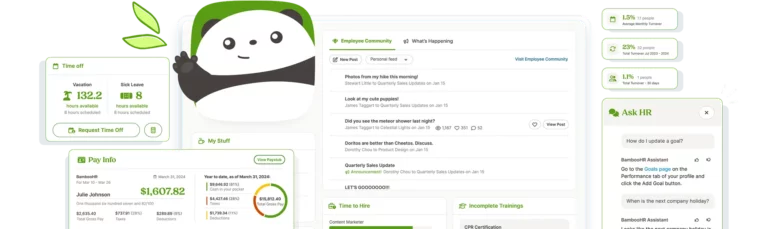
BambooHR is one of the most well known HR management systems and includes PTO tracking as part of its broader HR platform.
Rather than focusing exclusively on leave management, BambooHR combines multiple HR functions in one system, making it attractive for organizations looking to centralize HR operations.
Key PTO features within BambooHR include:
Automated PTO accrual calculations
Custom leave policies and approval workflows
Employee self service portals
Team leave calendars for scheduling visibility
Integration with payroll and employee records
Reporting tools for absence analysis
BambooHR is often chosen by mid sized organizations that want a single HR platform covering multiple functions rather than using separate tools for each HR process.
Gusto
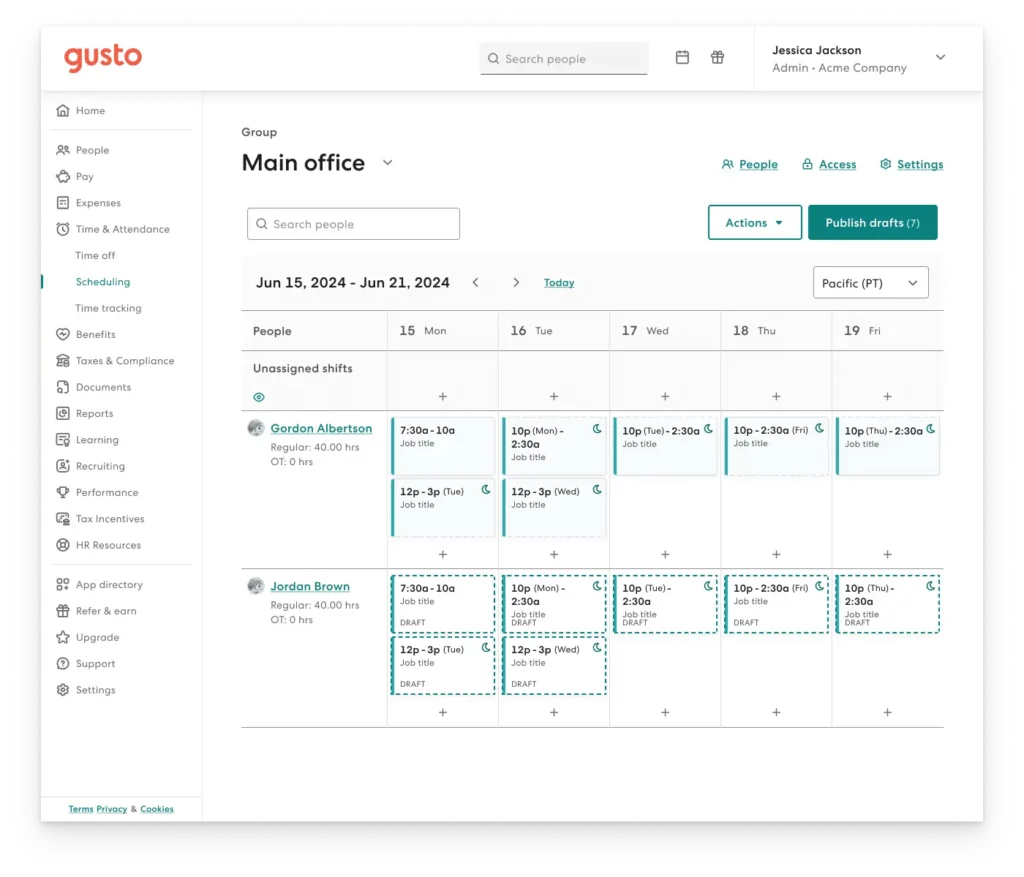
Gusto is primarily known as a payroll platform, but its HR features include PTO management capabilities that integrate directly with payroll operations.
For organizations managing payroll and leave in the same system, this integration can significantly reduce administrative complexity.
Key PTO management features in Gusto include:
Automated PTO tracking tied to payroll schedules
Flexible accrual policies and custom leave types
Employee dashboards showing available balances
Manager approval workflows
Leave impact on payroll calculations
Because PTO balances can directly influence payroll payouts, having both systems integrated helps ensure accuracy and compliance.
Gusto is particularly popular among small businesses and startups that want a payroll first HR solution with built in leave management.
Rippling

Rippling has emerged as a powerful workforce management platform designed for fast growing companies and organizations with complex operational structures.
Unlike lightweight PTO tools, Rippling integrates HR, payroll, benefits, and IT management into a single automated system.
PTO features available in Rippling include:
Advanced leave policy configuration
Automated accrual and carryover rules
Global leave management for distributed teams
Automated workflows for onboarding and offboarding
Integration with payroll, benefits, and HR data
Real time reporting and workforce analytics
Rippling’s automation capabilities allow organizations to manage PTO policies across multiple locations while maintaining consistent rules and compliance.
For companies scaling quickly or operating globally, Rippling provides a highly adaptable solution.
Factorial HR
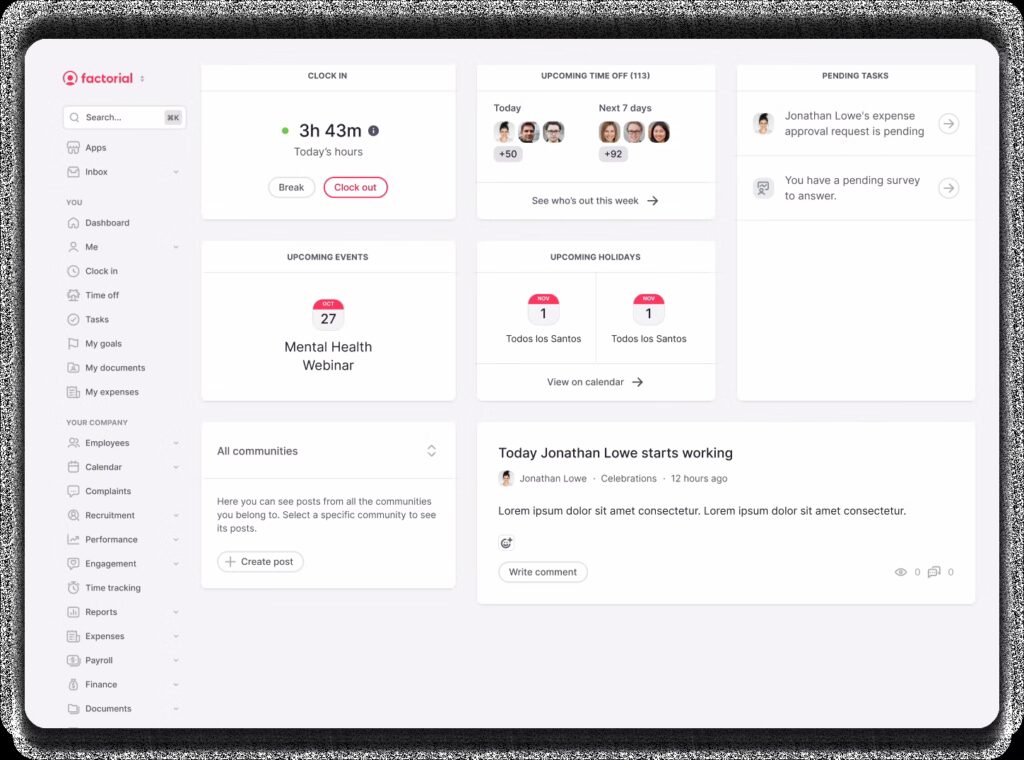
Factorial HR is another growing HR platform that combines leave management with broader HR functions such as document management, performance tracking, and expense reporting.
Its PTO module provides HR teams with flexible policy configuration and centralized absence tracking.
Key PTO features in Factorial include:
Customizable leave policies and approval workflows
PTO balance tracking and accrual automation
Team availability dashboards
Absence reporting and analytics
Integration with payroll and HR systems
Compliance support for regional labor regulations
One of Factorial’s strongest advantages is its reporting capability. HR leaders can analyze leave usage patterns and identify trends that help improve workforce planning.
Factorial has become particularly popular among European organizations due to its compliance support and adaptable HR framework.
How HR Teams Choose the Right PTO Management Tool
Selecting the right PTO management tool depends heavily on organizational size, operational complexity, and existing technology infrastructure.
HR teams often consider several factors before making a decision.
Company size
Smaller teams often prioritize simple, easy to use tools that can be implemented quickly without extensive training.
Integration needs
Organizations already using payroll systems, collaboration platforms, or HR suites may prefer PTO tools that integrate with these systems.
Policy complexity
Companies with multiple offices, varying labor regulations, or different employee classifications may require more advanced policy management capabilities.
Scalability
A good PTO system should grow alongside the company, supporting additional employees, policies, and regions without requiring a complete platform change.
The Future of PTO Management
PTO management technology continues to evolve alongside modern workplace trends. As organizations adopt more flexible work models, leave tracking tools are becoming more intelligent and data driven.
Several developments are shaping the future of PTO software.
Predictive workforce planning
Advanced systems will analyze historical leave patterns to help managers anticipate staffing shortages.
Burnout detection insights
HR teams may use PTO usage data to identify employees who rarely take time off, helping address potential burnout risks.
Deeper collaboration tool integrations
Future PTO tools will likely integrate even more closely with workplace platforms like Slack, Microsoft Teams, and project management systems.
Global compliance automation
As companies hire internationally, PTO systems will increasingly include built in compliance frameworks for regional labor laws.
FAQ
What is a PTO management tool?
A PTO management tool is software designed to help organizations track and manage employee paid time off. These systems automate leave requests, approvals, accrual calculations, and balance tracking. Instead of relying on spreadsheets or manual records, HR teams can manage all employee absences through a centralized platform that keeps information accurate and accessible.
Most modern PTO management tools also provide employee self service portals, team calendars, and reporting dashboards that help managers plan staffing more effectively.
Why do HR teams use PTO management software?
HR teams use PTO management software to simplify administrative work and reduce the risk of errors. Managing employee leave manually can become complicated as organizations grow, especially when multiple leave policies and accrual rules are involved.
A dedicated PTO management system helps HR teams automate leave accrual calculations, centralize leave requests and approvals, track employee balances in real time, prevent scheduling conflicts, improve transparency for employees, and generate reports and workforce insights. These tools allow HR departments to focus more on strategic initiatives rather than administrative tasks.
What features should a good PTO management tool include?
A reliable PTO management system should include several essential features that simplify both employee and HR workflows.
Important capabilities typically include automated PTO accrual calculations, customizable leave policies, employee self service leave requests, manager approval workflows, team calendars showing upcoming absences, reporting and analytics tools, and integrations with HR, payroll, or collaboration platforms. The best tools also provide mobile access so employees can request time off from anywhere.
What are the benefits of automated PTO tracking?
Automated PTO tracking provides several advantages compared to manual tracking systems.
First, automation ensures that leave balances remain accurate without requiring HR teams to update spreadsheets manually. This reduces errors that could affect payroll or employee trust. Second, automated systems speed up the leave approval process by allowing employees and managers to handle requests quickly through digital workflows. Finally, PTO tracking tools provide visibility across the organization so managers can easily see upcoming absences and plan workloads accordingly.
Are PTO management tools suitable for small businesses?
Yes, PTO management tools are highly beneficial for small businesses. Even small teams can face challenges when managing leave requests manually, especially when employees take overlapping vacations or policies become more complex.
Many modern PTO platforms are designed specifically for small and mid sized teams, offering simple interfaces, fast setup, and affordable pricing. Using a dedicated tool early can help companies avoid operational challenges as they grow.
Can PTO management software integrate with other workplace tools?
Most modern PTO management platforms offer integrations with commonly used business tools. These integrations allow leave tracking to fit naturally into existing workflows.
Common integrations include Slack or Microsoft Teams for leave requests and notifications, payroll systems for accurate compensation calculations, HR management platforms for employee records, and Google Calendar or Outlook for visibility into team absences. These integrations reduce friction and improve adoption across teams.
How do PTO management tools improve employee experience?
PTO management tools improve the employee experience by providing clarity and transparency around leave policies and balances.
Employees can easily check their available PTO, submit leave requests, and track approval status without contacting HR. This convenience encourages employees to take the time off they are entitled to, which supports better work life balance and overall wellbeing. Clear processes also reduce confusion and help create a more positive workplace culture.
Conclusion
Managing employee time off has become an essential part of modern HR operations. As teams grow and policies become more complex, manual methods are no longer reliable or scalable.
PTO management tools now provide HR teams with the automation, visibility, and insights needed to manage leave efficiently while supporting employee wellbeing.
Platforms such as Day Off, Vacation Tracker, BambooHR, Gusto, Rippling, and Factorial offer different approaches depending on organizational needs. Some focus on simplicity and ease of use, while others integrate leave management into larger HR ecosystems.
By choosing the right PTO management system, organizations can streamline HR workflows, reduce administrative errors, and create a smoother experience for employees requesting time off.