
Table of Contents
TogglePaid time off (PTO) is one of the most valued employee benefits in the United States. It allows employees to take vacation, recover from illness, handle personal responsibilities, and maintain a healthy work life balance. For employers, a clear managing PTO systems help maintain productivity while supporting employee wellbeing.
However, managing PTO in small companies is often more complicated than it appears. Many businesses begin with spreadsheets or manual tracking, but as teams grow, policies become harder to manage and mistakes become more common.

Using a PTO management tool allows small companies to automate leave tracking, simplify approvals, and maintain accurate records. Below is a detailed guide to PTO management tools used by small businesses in the United States and the features that make them effective.
Why PTO Management Is Important for Small Businesses
Small companies often do not have large HR departments. In many cases, PTO tracking is handled by founders, office managers, or finance teams. Without a structured system, several issues can arise.
Common challenges of manual PTO tracking
Calculation errors:
PTO accruals often depend on tenure, work hours, or company policies. Manual calculations can easily lead to incorrect balances.Lack of visibility:
Managers may not know who is planning time off, which can create staffing conflicts.Approval delays:
Leave requests submitted by email or chat can get lost or delayed.Compliance risks:
Certain states and cities in the U.S. require paid sick leave tracking, and manual systems can lead to compliance issues.Administrative burden:
HR or managers spend significant time updating spreadsheets and answering balance questions.
A PTO management tool helps eliminate these problems by centralizing leave tracking and automating key processes.
Typical PTO Policies in the United States
Unlike many countries, U.S. federal law does not require employers to offer paid vacation. However, most companies provide PTO as part of their benefits package.
Common types of PTO offered by U.S. companies
Vacation leave
Sick leave
Personal days
Floating holidays
Parental leave
Bereavement leave
Jury duty leave
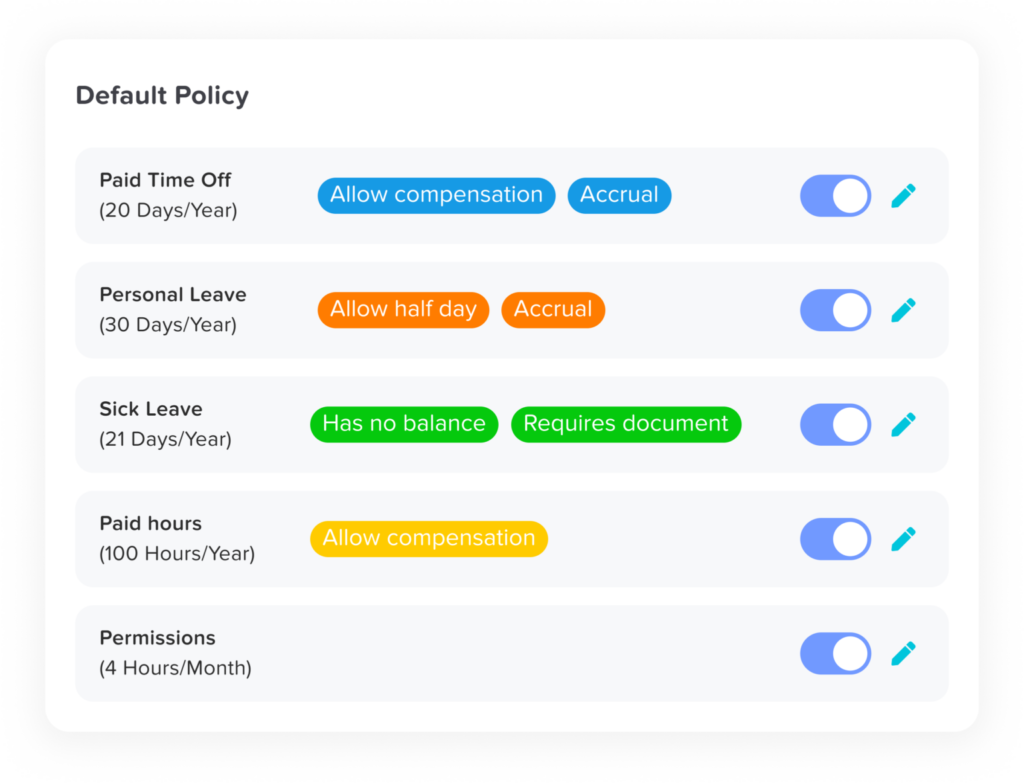
Common PTO policy structures
Separate leave categories:
Vacation, sick leave, and personal days are tracked individually.Combined PTO bank:
All leave types are combined into one balance that employees can use flexibly.Unlimited PTO:
Some companies offer unlimited leave with managerial approval.
Common accrual methods
Annual allocation:
Employees receive their PTO at the start of the year.Monthly accrual:
PTO accumulates gradually each month.Semi monthly:
PTO accumulates on the 1st and 15th of each month.Weekly:
PTO accumulates gradually on weekly basis.Bi weekly:
PTO accumulates gradually every 2 weeks.
Because policies vary widely, PTO software must support flexible configurations.

Key Features Small Businesses Should Look for in PTO Tools
When selecting a PTO management system, small companies should prioritize tools that simplify workflows rather than adding complexity.
Automated PTO Accruals
The system should automatically calculate PTO balances according to company policies.
Benefits include:
Eliminating manual calculations
Reducing errors in leave balances
Ensuring accurate payroll records
Simple Leave Request and Approval Workflow
Employees should be able to request leave quickly, and managers should approve requests easily.
Important capabilities include:
Online leave request submission
Manager approval notifications
Approval history tracking
Automatic balance updates
Real Time PTO Balance Visibility
Employees should always be able to see their available leave.
Advantages include:
Reducing HR inquiries
Improving transparency
Helping employees plan their time off
Shared Team Calendar
A visual calendar of employee absences helps teams plan schedules.
Benefits include:
Preventing overlapping leave requests
Avoiding staffing shortages
Improving team coordination
Mobile Access
Many employees work remotely or travel frequently.
Mobile friendly systems allow employees to:
Submit leave requests from their phones
View balances anytime
Receive approval notifications instantly
Integration With Workplace Tools
Many small companies rely heavily on collaboration platforms.
Integrations may include:
Slack
Microsoft Teams
Google Calendar
Outlook Calendar
These integrations allow PTO management to fit naturally into daily workflows.

Reporting and Analytics
Even small companies benefit from understanding leave patterns.
Reports can help track:
PTO utilization rates
Leave trends across teams
Employee absenteeism patterns
Remaining leave liabilities
Day Off

Day Off is a lightweight PTO management solution designed specifically for small teams and startups.
Key features
Simple leave request and approval workflow
Automated PTO balance calculations
Shared team leave calendar
Mobile applications for iOS and Android
Integrations with Slack and Microsoft Teams
Why it works well for small companies
Easy setup with minimal configuration
Simple user interface for employees
Affordable pricing structure
Focused exclusively on leave management
Day Off is ideal for companies that want a dedicated PTO tracking tool without implementing a full HR system.
Gusto
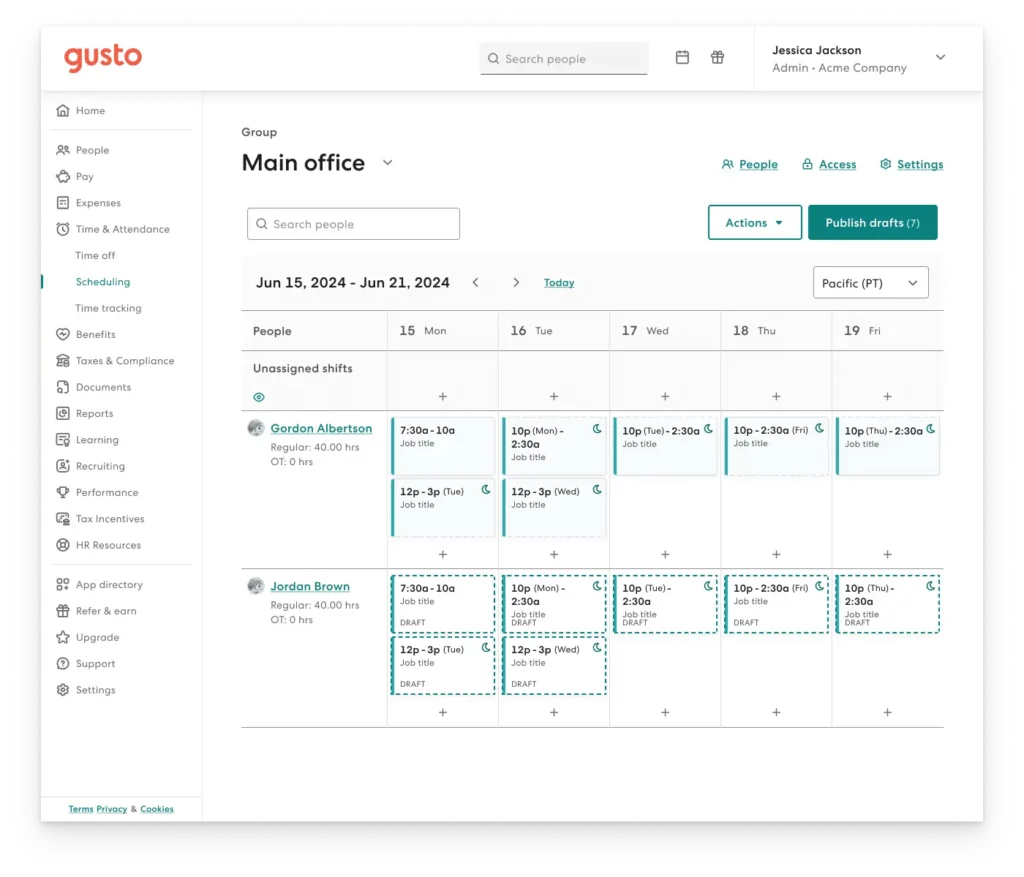
Gusto is a popular HR and payroll platform used by many small businesses in the United States.
Key features
Payroll and benefits management
PTO policy configuration
Automated PTO accrual calculations
Employee self service portal
Advantages
Strong integration between payroll and PTO tracking
Comprehensive HR functionality
Well suited for companies managing payroll and benefits in one system
Considerations
Because Gusto is a full HR platform, businesses that only need PTO tracking may find the system broader than necessary.
BambooHR
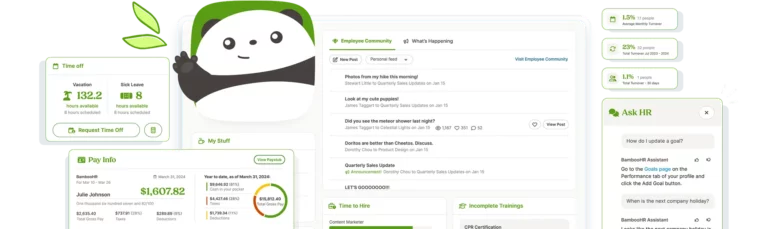
BambooHR is one of the most widely used HR software platforms for small and mid sized companies.
Key PTO features
Customizable PTO policies
Automated accrual tracking
Employee self service leave requests
Reporting and analytics
Additional HR capabilities
Employee records management
Hiring and onboarding tools
Performance management
HR reporting dashboards
Best suited for
Companies that want an all in one HR platform rather than a standalone PTO tool.
Vacation Tracker

Vacation Tracker is a leave management system built primarily for teams that operate within Slack or Microsoft Teams.
Key features
Leave requests directly within Slack or Teams
Instant manager approvals
PTO balance tracking
Shared leave calendars
Benefits
Seamless integration with collaboration platforms
Easy adoption for teams already using Slack or Teams
Simple PTO tracking interface
Vacation Tracker is particularly useful for companies that manage daily communication through chat platforms.
Factorial HR
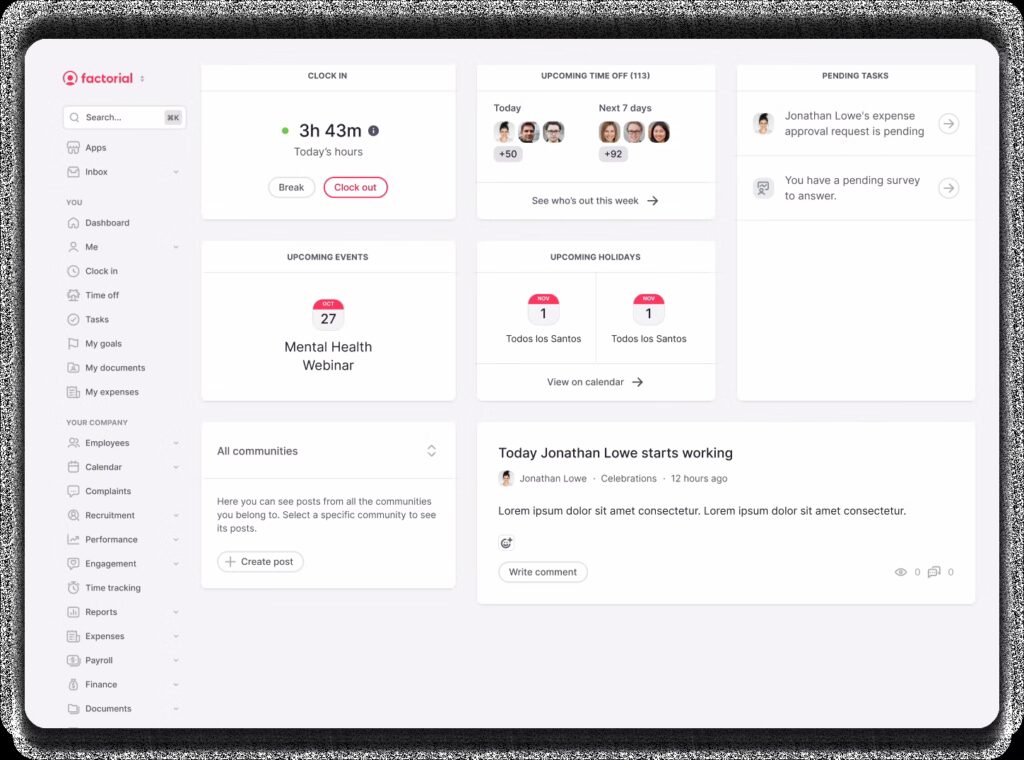
Factorial HR is a comprehensive HR platform that includes PTO management as part of a broader HR suite.
PTO management capabilities
Custom leave policy configuration
Automated accrual calculations
Leave request workflows
Absence reporting tools
Additional HR features
Document management
Performance reviews
Recruitment tools
Employee database
Factorial is a strong option for companies looking to centralize HR operations in a single platform.
Benefits of Using PTO Software for Small Businesses
Adopting a PTO management system provides several operational advantages.
Administrative efficiency
Eliminates manual record keeping
Reduces HR workload
Automates calculations and approvals
Improved transparency
Employees can see their PTO balances anytime
Managers have clear visibility into team schedules
Better workforce planning
Managers can plan workloads more effectively
Teams can avoid overlapping leave requests
Compliance support
Ensures PTO policies are applied consistently
Helps track required sick leave regulations
Enhanced employee experience
Faster leave request approvals
Clear understanding of PTO policies
Reduced confusion about available leave
Common Mistakes Small Companies Make With PTO Management
Even when companies introduce PTO tools, certain mistakes can still occur.
Unclear PTO policies
Employees must clearly understand:
How PTO accrues
How requests are approved
Whether unused PTO rolls over
Lack of communication
Managers should encourage employees to take time off and plan absences responsibly.
Poor system adoption
If employees are not trained to use the system correctly, inaccurate records can still occur.
Choosing intuitive software significantly improves adoption.
The Future of PTO Management
Workplace trends are reshaping how companies manage employee time off.
Emerging trends include
Greater workplace flexibility
Remote and distributed teams
Increased use of collaboration tools
Automation of HR workflows
Data driven workforce insights
Modern PTO management tools are evolving to support these trends by integrating directly into daily workflows and providing real time analytics.
FAQ
What is a PTO management tool?
A PTO management tool is software that helps companies track and manage employee paid time off. It automates processes such as leave requests, approvals, accrual calculations, and balance tracking.
Instead of relying on spreadsheets or manual records, businesses can use PTO software to centralize all leave information in one platform. Employees can submit requests digitally, while managers gain visibility into team availability and upcoming absences.
Why do small companies need PTO management software?
Small companies often manage employee leave using spreadsheets, emails, or shared calendars. While this may work for very small teams, it becomes inefficient as the organization grows.
PTO management software helps small companies by:
Automating PTO accrual calculations
Reducing manual administrative work
Preventing scheduling conflicts
Improving transparency for employees
Keeping accurate leave records for payroll and compliance
Using a structured system allows small businesses to manage time off more efficiently without needing a large HR department.
What features should a PTO tracking tool include?
A reliable PTO management tool should include several key features that simplify leave tracking for both employees and managers.
Important capabilities typically include:
Automated PTO accrual calculations
Leave request and approval workflows
Real time PTO balance tracking
Team absence calendars
Mobile access for employees
Integrations with tools like Slack or Microsoft Teams
Reporting and analytics for HR insights
These features help ensure that leave policies are applied consistently and that employees always know their available time off.
How do companies calculate PTO accrual?
PTO accrual is typically calculated based on time worked or employment duration. Companies often use one of the following methods:
Annual PTO allocation at the beginning of the year
Monthly accrual based on employment tenure
Accrual per payroll period
Accrual based on hours worked
Many PTO management tools automatically calculate these accruals according to company policies, ensuring accurate leave balances.
Can PTO software integrate with Slack or Microsoft Teams?
Yes. Many modern PTO management tools integrate directly with collaboration platforms such as Slack and Microsoft Teams.
These integrations allow employees to:
Request time off within chat platforms
Receive approval notifications instantly
View team leave calendars without leaving their workspace
This improves adoption and makes leave management part of the daily workflow.
Is PTO management software expensive for small businesses?
Not necessarily. Many PTO management tools are designed specifically for small teams and offer affordable pricing plans.
Some platforms even provide free plans for small organizations with basic leave tracking features. More advanced solutions may include additional HR modules such as payroll integration, employee records, or performance management.
The cost usually depends on the number of employees and the level of functionality required.
What are the benefits of using PTO software instead of spreadsheets?
While spreadsheets may work for very small teams, they become difficult to maintain as companies grow.
Using PTO software provides several advantages:
Automated leave calculations
Reduced risk of errors
Faster leave approvals
Real time PTO balance visibility
Improved workforce planning
Centralized leave records
These benefits help companies manage employee time off more efficiently while reducing administrative workload.
What is a healthy PTO utilization rate?
A healthy PTO utilization rate is typically between 80% and 95% of earned PTO within a year.
Lower utilization may indicate that employees are not taking enough time off, which can increase the risk of burnout. Extremely high utilization without flexibility may create staffing challenges.
PTO management tools often include reporting features that help companies monitor leave utilization trends.
Conclusion
Managing employee time off may seem like a minor administrative task, but it plays a major role in maintaining productivity, employee satisfaction, and organizational stability.
For small companies in the United States, manual PTO tracking methods often lead to confusion, errors, and unnecessary administrative work.
By adopting a PTO management tool, businesses can:
Automate leave tracking
Simplify approvals
Maintain accurate PTO balances
Improve transparency across teams
Whether using a lightweight solution like Day Off or a full HR platform such as BambooHR or Gusto, implementing the right system can significantly improve how small companies manage employee leave.