








Internships are no longer just short-term training opportunities. For many companies, interns are part of the talent pipeline. They help teams complete real work, learn professional skills, support projects, and often become future full-time employees.
But one question many HR teams and managers still ask is: Should interns receive PTO?
The answer depends on the type of internship, the intern’s classification, the length of the program, company policy, local labor rules, and how the company wants to design its internship experience.

Some internships last only a few weeks. Others run for several months. Some interns work part-time around school schedules, while others work full-time during the summer. Some interns are unpaid students receiving academic credit, while others are paid employees for a fixed period.
Because internship arrangements can vary so much, companies need a clear policy for intern time off.
A good intern PTO policy helps answer questions like:
- Can interns take paid time off?
- Do interns get sick leave?
- Are interns paid for public holidays?
- Do interns accrue PTO?
- Can interns take unpaid leave?
- How should managers approve intern absences?
- What happens if an intern has exams, family needs, or illness?
- Should intern PTO be tracked separately from full-time employee PTO?
In this guide, we will explain when companies may offer PTO to interns, the benefits and challenges, policy options, examples, and how Day Off can help teams track intern time off clearly.
What Does PTO for Interns Mean?
PTO for interns means giving interns paid time away from work during their internship period.
This may include:
- Vacation days
- Sick leave
- Personal days
- Public holidays
- Exam leave
- Emergency leave
- Mental health days
- Company-wide days off
- Unpaid leave, if paid leave is not offered
For full-time employees, PTO is often part of a standard benefits package. For interns, it is usually handled differently because internships are temporary and may have different legal, educational, and business rules.
The important thing is that the company defines the policy clearly before the internship starts.
Are Companies Required to Offer PTO to Interns?
This depends on the location, type of internship, and whether the intern is legally treated as an employee.
In many places, paid vacation is not automatically required for every worker. However, some countries, states, or cities may have rules around paid sick leave, public holidays, wage requirements, or employee classification.
Companies should not assume that all interns can be treated the same. A paid intern, unpaid intern, student intern, academic intern, full-time intern, and part-time intern may each need different handling depending on the law and company policy.
Before creating an intern PTO policy, HR should review:
- Local labor laws
- Paid sick leave rules
- Internship classification rules
- Wage and hour rules
- Employment contracts
- University or academic program requirements
- Company benefit policies
- Public holiday rules
- Internal HR guidelines
This article provides general HR guidance, not legal advice. Companies should review local requirements before finalizing an intern leave policy.
Paid Interns vs Unpaid Interns: Why Classification Matters
The first step is understanding the intern’s status.
Paid Interns
Paid interns are often treated more like temporary employees. They may work scheduled hours, receive wages, report to a manager, and contribute to company projects.
Because of that, companies often give paid interns access to certain leave benefits, especially sick leave, public holidays, or a small amount of prorated PTO.
This does not mean paid interns must always receive the same benefits as full-time employees. But the company should clearly state what they are eligible for.
Unpaid Interns
Unpaid internships are more complicated.
If an intern is truly unpaid and the internship is primarily educational, the company may not offer traditional PTO because the intern is not receiving wages for regular work hours.
However, the company should still define how absences work. Even unpaid interns may need to miss time for illness, exams, family needs, or academic obligations.
For unpaid interns, the policy may focus more on attendance expectations, schedule flexibility, academic requirements, and notice rules rather than paid leave.
Student or Academic Interns
Student interns may be completing an internship for academic credit. Their schedule may depend on a university program, required hours, supervisor evaluation, or academic calendar.
In this case, the company should coordinate time-off rules with the school’s requirements when needed.
Should Companies Offer PTO to Interns?
In many cases, yes, companies should consider offering some form of PTO or approved time off to interns, especially for paid internships that last several months.
Interns are still people with health needs, family responsibilities, school commitments, and personal obligations. If a company expects interns to show up consistently, contribute to real work, and follow workplace policies, it is reasonable to give them a clear way to request time off.
That does not mean every intern needs the same PTO plan as a full-time employee.
A better approach is to create an intern-specific time-off policy that matches the internship length, schedule, and role.
Why Offering PTO to Interns Can Be a Good Idea
It Creates a Better Internship Experience
Internships are often the first professional experience for students or early-career workers. A thoughtful PTO policy shows interns that the company respects work-life balance.
This can improve the intern’s impression of the company and make the workplace feel more professional.
It Supports Health and Wellbeing
Interns may get sick, experience stress, or need personal time just like regular employees.
If there is no clear sick leave or time-off process, interns may feel pressured to work while unwell or hide personal needs from their manager.
A clear policy supports healthier behavior.
It Helps Managers Plan Better
When interns know how to request time off properly, managers can plan around absences.
Without a formal process, interns may send last-minute messages, forget to notify the right person, or assume time off is allowed without approval.
A structured process reduces confusion.
It Makes the Company More Attractive
Internship candidates compare companies. A paid internship with clear time-off benefits can stand out, especially when students are choosing between multiple opportunities.
Offering intern PTO can support employer branding and improve candidate experience.
It Builds Fairness
If full-time employees get public holidays and sick leave but interns do not, interns may feel separated from the team.
Companies do not always need to provide identical benefits, but they should create a policy that feels fair and transparent.
It Prepares Interns for Professional Work
Internships are also learning experiences. Teaching interns how to request time off professionally is part of workplace development.
They learn how to communicate absences, plan ahead, follow approval processes, and respect team coverage needs.
When Intern PTO Makes the Most Sense
Offering PTO to interns is especially useful when:
- The internship lasts longer than 8 to 12 weeks
- The intern works full-time hours
- The intern is paid
- The intern contributes to ongoing projects
- The company wants to attract future full-time hires
- The internship overlaps with holidays or exam periods
- The intern works in a high-demand or structured schedule
- The company already tracks time off digitally
- The company wants consistent leave records for all workers
For very short internships, companies may not need a full PTO plan. Instead, they may offer flexible unpaid time off or manager-approved absences.
When Intern PTO May Need a Different Approach
Intern PTO may need a different structure when:
- The internship is unpaid
- The internship is for academic credit
- The intern works only a few hours per week
- The internship lasts less than one month
- The intern has a flexible schedule
- The intern is not classified as an employee
- The program requires a fixed number of completed hours
- The company operates in locations with different laws
In these cases, HR should create a simple attendance and absence policy rather than copying the regular employee PTO policy.
Intern PTO Policy Options
Companies can offer intern time off in several ways.
Option 1: No Paid PTO, But Flexible Approved Time Off
This option may work for short, flexible, or unpaid internships.
The company does not give paid vacation days, but interns can request approved time away for school, illness, exams, or personal needs.
This policy should still explain:
- How much notice is required
- Who approves the absence
- Whether missed hours must be made up
- Whether academic program hours are affected
- How illness should be reported
- Whether remote work or schedule changes are allowed
Option 2: Paid Sick Leave Only
Some companies choose to offer paid sick leave to interns, even if they do not offer vacation PTO.
This can be a practical middle ground. It encourages interns to stay home when sick without losing income, while keeping the policy simple.
The company should explain:
- How many sick days interns receive
- Whether sick leave accrues or is frontloaded
- How interns report sick time
- Whether documentation is needed
- Whether unused sick leave is paid out or expires
Option 3: Prorated PTO Based on Internship Length
This option works well for paid interns who work for several months.
For example, if full-time employees receive 12 PTO days per year and an intern works for 3 months, the intern may receive a prorated amount.
A simple formula could be:
Annual PTO allowance ÷ 12 × internship months
Example:
12 PTO days per year ÷ 12 months = 1 day per month
A 3-month internship = 3 PTO days
This makes the policy fair and easy to explain.
Option 4: Fixed Intern PTO Allowance
Instead of using a formula, the company can give all interns a fixed number of paid days off.
For example:
- 1 paid day off for internships under 8 weeks
- 2 paid days off for 8 to 12 week internships
- 3 paid days off for internships over 12 weeks
This is easy for interns and managers to understand.
Option 5: PTO Accrual for Interns
Interns may earn PTO gradually based on hours worked or weeks completed.
For example:
- 1 hour of PTO for every 30 hours worked
- 0.5 days per month
- 1 day after every 4 weeks of completed internship
This works well when interns have different schedules or part-time hours.
Option 6: Paid Public Holidays Only
Some companies do not offer vacation PTO to interns but pay them for company holidays that fall during the internship.
For example, if the company closes for a public holiday and interns were scheduled to work that day, the intern may still be paid.
This helps interns feel included in company-wide time off without creating a full PTO policy.
Sample Intern PTO Policy
Here is a simple example of an intern PTO policy:
“Paid interns working at least 30 hours per week are eligible for prorated PTO based on the length of their internship. PTO is calculated at one day per month of internship, up to a maximum of three days for a standard summer internship. Interns may also receive paid company holidays if the company is closed on a day they are normally scheduled to work. PTO requests must be submitted through the company’s leave tracking system and approved by the intern’s manager before the time off is taken.”
Here is another version for a flexible internship:
“Interns may request time off for illness, exams, academic obligations, or personal needs. Time off must be communicated to the intern’s manager as early as possible. Paid time off may not be available for all internship types, but approved absences will be recorded to keep schedules and project expectations clear.”
The right policy depends on your company’s internship structure.
How to Calculate PTO for Interns
The simplest method is to base PTO on internship length.
Example 1: Monthly Proration
A company gives full-time employees 12 PTO days per year.
That equals 1 PTO day per month.
An intern works for 3 months.
The intern receives 3 PTO days.
Example 2: Weekly Proration
A company gives interns 1 PTO day for every 4 weeks of internship.
A 12-week intern receives 3 PTO days.
An 8-week intern receives 2 PTO days.
Example 3: Hours-Based PTO
A part-time intern works 20 hours per week.
The company gives 1 hour of PTO for every 30 hours worked.
If the intern works 240 hours total:
240 ÷ 30 = 8 PTO hours
The intern receives 8 PTO hours.
Example 4: Fixed Allowance
The company gives every paid summer intern 2 PTO days, regardless of start date.
This is the easiest method but may be less precise for internships of different lengths.
Should Interns Get Paid Holidays?
Many companies choose to pay interns for company holidays if the intern would normally have worked that day.
For example, if an intern works Monday to Friday and the company closes on a Monday holiday, the intern may receive holiday pay for that day.
However, this depends on company policy and local rules.
A clear holiday policy should explain:
- Whether interns are paid for company holidays
- Whether holidays count against PTO
- Whether part-time interns receive holiday pay
- What happens if the intern does not normally work that day
- Whether remote interns follow the office holiday calendar
- Which holiday calendar applies to international interns
For multi-location teams, holiday calendars should be assigned carefully so interns are not given the wrong holidays.
Should Interns Get Sick Leave?
Sick leave is one of the most important types of intern time off.
Even if a company does not offer vacation PTO to interns, it should have a clear sick leave process.
A sick leave policy for interns should explain:
- How interns report illness
- Whether sick time is paid or unpaid
- How much sick time is available
- Whether sick leave accrues
- Whether documentation may be required
- Who should be notified
- Whether remote work is allowed when mildly ill
- Whether missed hours must be made up
Interns should not feel pressured to work while sick simply because the policy is unclear.
PTO for Part-Time Interns
Part-time interns need careful handling because their schedules may vary.
A full-time intern working 40 hours per week and a part-time intern working 15 hours per week should not always receive the same PTO allowance.
Companies can manage this by using:
- Hourly PTO
- Pro-rated PTO
- Accrual based on hours worked
- A smaller fixed allowance
- Unpaid approved absences
- Flexible schedule adjustments
For part-time internships, PTO in hours is usually clearer than PTO in days.
For example, if an intern works 4-hour shifts, one “day” of PTO may mean 4 hours, not 8 hours.
PTO for Remote Interns
Remote interns also need clear time-off rules.
A remote intern may work from a different city, country, or time zone. The company should decide:
- Which holiday calendar applies
- Which manager approves leave
- How schedule changes are communicated
- Whether the intern can make up missed hours
- How sick leave is reported
- Whether the intern follows the office time zone or local time zone
Remote internships can be flexible, but flexibility should not replace clarity.
PTO for International Interns
International internships may involve different labor laws, public holidays, academic schedules, and employment classifications.
Before offering PTO to international interns, HR should review:
- Local paid leave requirements
- Paid sick leave rules
- Public holiday rules
- Student internship regulations
- Work authorization limits
- Maximum working hours
- Contract requirements
- Payroll requirements
A global company may need different intern PTO policies by country or location.
This is where using a digital leave management system can help because each intern can be assigned to the correct location, policy, and holiday calendar.
How PTO for Interns Affects the Team
Intern PTO does not only affect the intern. It also affects the manager and team.
If an intern is supporting a project, the manager needs to know when the intern will be away. If the intern has a deadline, time off may affect delivery. If multiple interns request the same week off, the team may need to adjust training sessions or project schedules.
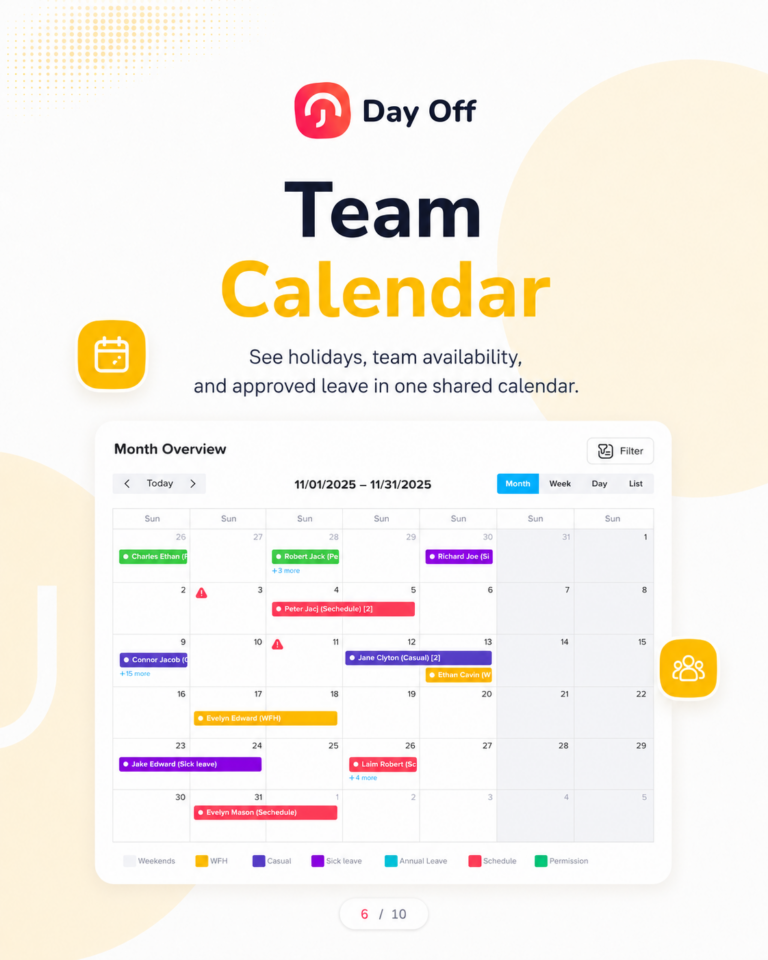
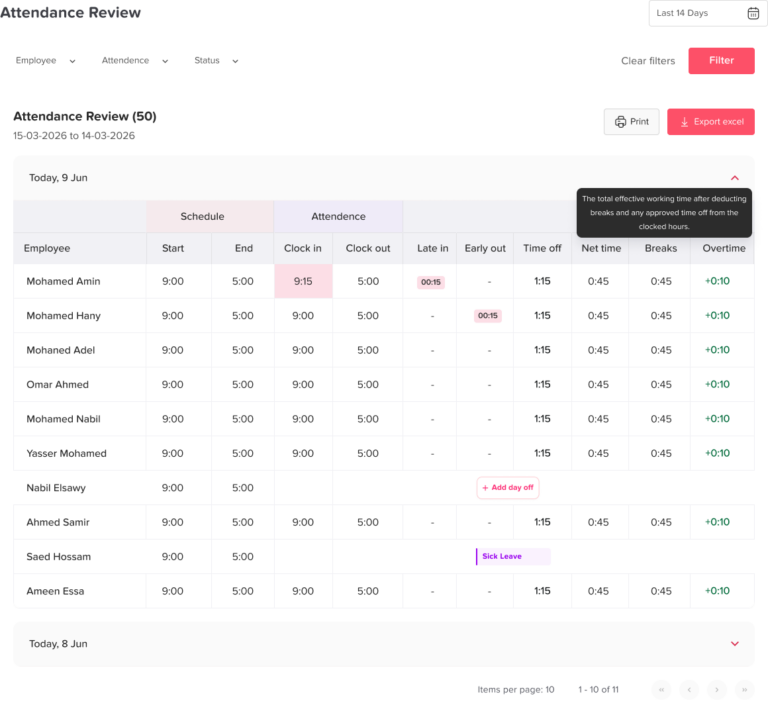
This is why intern PTO should be visible in a team calendar.
A shared leave calendar helps managers plan:
- Training sessions
- Onboarding tasks
- Project assignments
- Mentor meetings
- Team coverage
- Final presentations
- Performance reviews
- Internship completion dates
Interns may be temporary, but their time off still needs to be managed clearly.
How Day Off Helps Manage Intern PTO
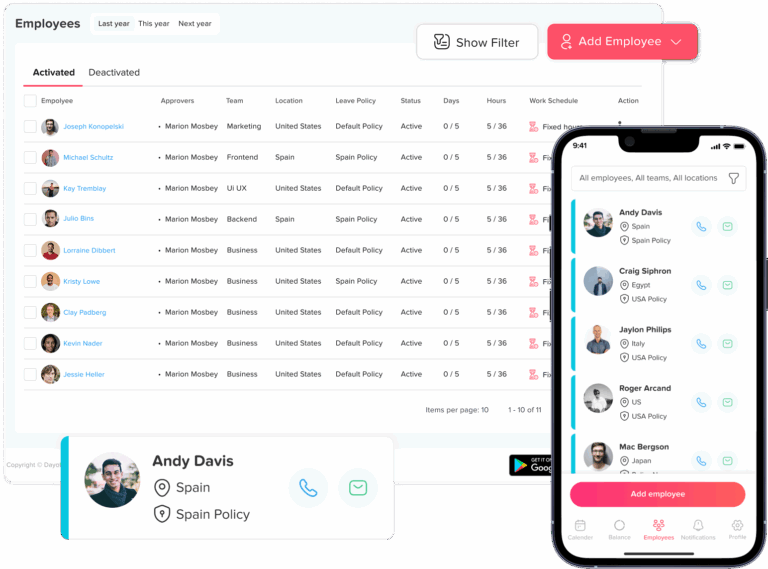
Day Off helps companies manage PTO, leave requests, approvals, balances, holiday calendars, reports, and team availability in one place.
For internship programs, Day Off can help HR and managers create a clearer process for intern time off without relying on scattered emails, spreadsheets, or chat messages.
With Day Off, companies can:
- Create intern-specific leave policies
- Track paid and unpaid time off
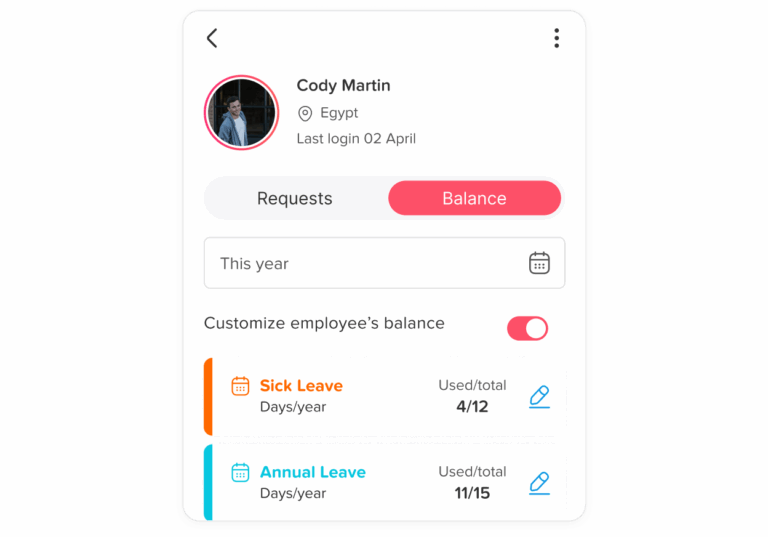
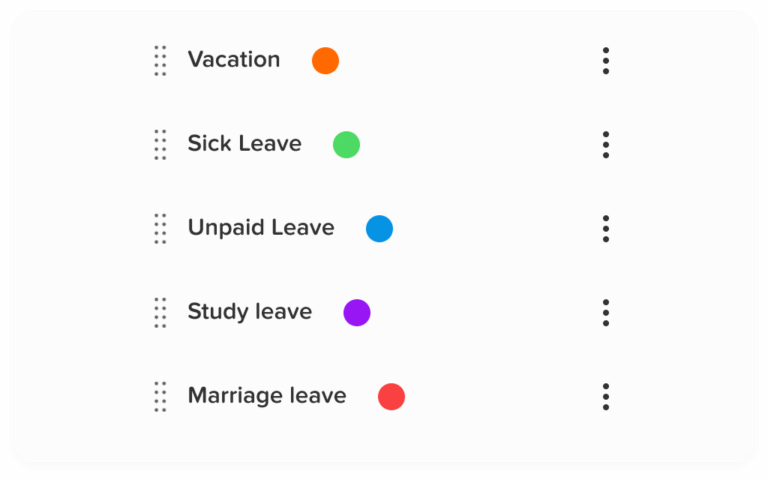
- Manage sick leave, personal leave, and vacation days
- Assign public holiday calendars by location
- Set approval workflows for managers
- View intern absences in the team calendar
- Track leave balances
- Review leave history
- Export reports
- Manage different policies for full-time, part-time, remote, or international interns
This is especially useful for companies that hire multiple interns every year or run structured internship programs across departments.
Instead of giving each manager their own informal process, Day Off helps companies create one organized leave system.
Using Day Off for Different Internship Types
Not every internship needs the same policy. Day Off makes it easier to organize different types of leave setups.
Paid Full-Time Interns
Companies can assign a paid intern policy with a small prorated PTO balance, sick leave, and company holidays.
Part-Time Interns
Companies can track PTO in hours or use a part-time leave policy based on the intern’s schedule.
Remote Interns
Remote interns can be assigned to the right location or holiday calendar, helping managers avoid confusion around time zones and local holidays.
Academic Interns
Companies can track approved absences even if PTO is unpaid, helping managers keep internship hours and participation organized.
International Interns
HR can create location-specific policies so interns follow the correct leave rules and holiday calendars.
Intern PTO Policy Checklist
Before launching an intern PTO policy, answer these questions:
- Are interns paid or unpaid?
- Are interns classified as employees?
- How long is the internship?
- Is the intern full-time or part-time?
- Does the intern receive academic credit?
- Does the intern need to complete a minimum number of hours?
- Will interns receive paid vacation days?
- Will interns receive sick leave?
- Will interns be paid for company holidays?
- Are public holidays based on office location or intern location?
- How should interns request time off?
- Who approves intern leave?
- Are missed hours allowed to be made up?
- Are leave balances tracked in days or hours?
- Does unused intern PTO expire at the end of the internship?
- Will unused PTO be paid out if required by law or policy?
- How will managers see intern availability?
This checklist helps HR create a clear, fair, and practical policy.
Best Practices for Offering PTO to Interns
Keep the Policy Simple
Internships are temporary, so the policy should be easy to understand.
Avoid complicated accrual rules unless the internship is long or part-time hours vary.
Explain Time Off During Onboarding
Interns should know how to request time off from the first day.
Include PTO rules in the intern handbook, onboarding session, or welcome email.
Track Time Off in One System
Even if the policy is simple, tracking matters.
Use a central system so HR and managers can see requests, approvals, balances, and absences.
Be Consistent Across Departments
Interns in different departments should not receive completely different treatment unless there is a clear reason.
Consider Internship Length
A 4-week internship may not need vacation PTO, while a 6-month internship likely needs a more formal leave policy.
Include Sick Leave Guidance
Every intern time-off policy should explain what happens when an intern is sick.
Use Hours for Part-Time Interns
If interns work different schedules, tracking PTO in hours can be more accurate than tracking full days.
Review Local Rules
Internship and leave rules vary by location. Always check applicable requirements before finalizing your policy.
FAQ
Should interns get PTO?
Interns can receive PTO, especially if they are paid and work for several months. However, the policy depends on internship type, classification, location, company policy, and local rules.
Do unpaid interns receive PTO?
Unpaid interns usually do not receive paid time off because they are not being paid wages. However, companies should still define how unpaid absences, illness, exams, and schedule changes are handled.
Should interns get paid sick leave?
Many companies choose to offer sick leave or approved sick time to interns. In some locations, paid sick leave rules may apply, so HR should check local requirements.
How do you calculate PTO for interns?
Intern PTO can be calculated by internship length, monthly proration, hours worked, or a fixed allowance. For example, a company may give one PTO day per month of internship.
Should interns be paid for public holidays?
Some companies pay interns for public holidays if the company is closed and the intern would normally have worked that day. This depends on company policy and local rules.
Can Day Off track PTO for interns?
Yes. Day Off helps companies track intern PTO, sick leave, unpaid leave, public holidays, approvals, balances, and leave history in one organized system.
Final Thoughts
Companies do not always need to offer interns the same PTO benefits as full-time employees, but they should have a clear and fair time-off policy.
Interns may be temporary, but they still need structure. They may get sick, have exams, need personal time, or observe public holidays. If there is no policy, managers may handle requests inconsistently and interns may feel unsure about what is allowed.
For paid internships, especially those lasting several months, offering some form of PTO, sick leave, or paid company holidays can improve the intern experience and support a stronger employer brand.
For unpaid, academic, short-term, or flexible internships, companies may choose approved unpaid time off instead of paid PTO.
The most important thing is clarity.
Day Off helps companies manage intern PTO and leave requests in a simple, organized way. HR can create intern-specific policies, track balances, assign holiday calendars, manage approvals, and give managers a clear view of intern availability.
A thoughtful intern PTO policy is not only about time off. It is about building a professional, fair, and well-organized internship program.