







A PTO expiration policy explains what happens to unused paid time off when employees do not use it by a certain date. For HR teams, this can be one of the most sensitive parts of a leave policy because it affects employee trust, payroll planning, carryover balances, and compliance.
Some companies allow unused PTO to carry over into the next year. Others set expiration dates, limit carryover, or use a “use it or lose it” approach. But the right policy depends on your company’s location, written leave rules, workforce needs, and local labor laws.

In the United States, federal law does not require employers to provide paid vacation, sick leave, or holiday pay under the Fair Labor Standards Act. These benefits are generally based on company policy, agreements, or state and local requirements.
That means employers need to be careful. A PTO expiration policy should be clearly written, legally reviewed, consistently applied, and easy for employees to understand.
In this guide, we will explain what a PTO expiration policy is, whether unused time off should expire, the pros and cons of expiring PTO, what HR should include in the policy, and how Day Off helps teams track PTO expiration, carryover, balances, and leave reports more clearly.
What Is a PTO Expiration Policy?
A PTO expiration policy is a company rule that explains whether unused paid time off expires after a specific period.
For example, a company may say:
- Employees must use annual PTO by December 31.
- Employees may carry over up to 5 unused days into the next year.
- Carried-over PTO must be used by March 31.
- PTO above the carryover limit expires.
- Sick leave follows a different expiration or carryover rule.
- Local labor laws may override company policy.
A clear PTO expiration policy helps employees know when to use their time off and helps HR avoid confusion at year-end.
What Does “Unused PTO” Mean?
Unused PTO is paid time off that an employee has earned or received but has not taken.
Depending on the company policy, unused PTO may include:
- Vacation days
- Personal days
- General paid time off
- Carried-over leave from a previous year
- Accrued but unused time off
- Front-loaded time off that has not been used
Unused PTO should not always be treated the same as sick leave or legally protected leave. Sick leave, medical leave, family leave, and statutory leave may follow different rules depending on location.
That is why HR should separate leave types clearly instead of combining everything into one unclear balance.
Should Unused PTO Expire?
Unused PTO can expire in some cases, but not always. Whether a company can make PTO expire depends on local law, the type of leave, the written policy, and whether the time off is considered earned wages.
For example, California does not allow “use it or lose it” vacation policies that take away accrued vacation pay. However, California allows reasonable caps that limit how much vacation can accrue.
In other states, the rule may be different. Tennessee, for example, says unused vacation pay does not have to be paid at termination unless the employer’s policy or labor agreement requires it.
This is why companies should not copy a PTO expiration policy from another employer without checking local requirements.
A safer approach is to ask:
- Is PTO treated as earned wages in this location?
- Are “use it or lose it” policies allowed?
- Are carryover limits allowed?
- Are accrual caps allowed?
- Does sick leave have separate rules?
- Does the company have employees in more than one state or country?
- Does the written policy clearly explain what happens to unused PTO?
- Has the policy been reviewed by legal or payroll experts?
PTO Expiration vs PTO Carryover vs PTO Accrual Cap
These terms are related, but they are not the same.
| Term | Meaning |
|---|---|
| PTO expiration | Unused PTO is removed after a certain deadline, if legally allowed. |
| PTO carryover | Unused PTO moves into the next period. |
| PTO accrual cap | Employees stop earning more PTO after reaching a maximum balance. |
| PTO rollover | Another term often used for carryover. |
| Use it or lose it | Employees lose unused PTO if they do not use it by the deadline. |
A PTO expiration policy says what happens when employees do not use their time off by a set date. A carryover policy says how much time can move forward. An accrual cap says when employees stop earning more time until they use some of their balance.
In many cases, an accrual cap may be more flexible than a strict expiration rule because it encourages employees to use time off without automatically removing already earned time.
Common PTO Expiration Policy Options
Companies usually choose one of several approaches.
No Expiration
Employees keep unused PTO until they use it, leave the company, or reach a legal or policy-based limit.
This approach is simple for employees but can create large unused balances if employees do not take time off regularly.
Full Expiration at Year-End
Employees lose unused PTO at the end of the year.
This may be called a “use it or lose it” policy. However, this approach is not allowed in every location. Employers should be especially careful before using this model.
Limited Carryover
Employees can carry over some unused PTO, but only up to a limit.
Example: Employees may carry over up to 5 days of unused PTO into the next year. Any unused PTO above 5 days expires, if allowed by law and company policy.
Carryover With Expiration Date
Employees can carry over unused PTO, but they must use the carried-over time by a specific date.
Example: Employees may carry over up to 5 days into the next year, but those days must be used by March 31.
Accrual Cap
Employees do not lose already earned PTO, but they stop earning more PTO once they reach a maximum balance.
Example: An employee can accrue up to 20 days. Once they reach 20 days, they stop earning new PTO until they use some of their balance.
Different Rules by Leave Type
A company may apply different expiration rules to vacation, sick leave, personal leave, unpaid leave, or custom leave types.
This is often the best approach because not every leave type should follow the same rule.
Pros of Having a PTO Expiration Policy
A PTO expiration policy can help companies manage leave more clearly when it is written and applied properly.
Encourages Employees to Take Time Off
When employees know PTO may expire or stop accruing after a certain point, they may be more likely to use their time off during the year.
This can help prevent burnout and reduce the habit of saving too much unused leave.
Reduces Large Unused Balances
If employees never use PTO, balances can grow over time. This may create financial or administrative challenges, especially if unused PTO must be paid out when employees leave.
Improves Workforce Planning
When PTO rules are clear, employees are more likely to request leave earlier. This helps managers plan team coverage, avoid last-minute requests, and reduce overlapping absences.
Helps HR Prepare for Year-End
A clear expiration or carryover rule gives HR a process to follow before the new leave year begins.
HR can review balances, send reminders, apply carryover limits, and generate reports before the reset date.
Cons of Having a PTO Expiration Policy
A PTO expiration policy can also create problems if it is too strict or poorly communicated.
Employees May Feel They Are Losing a Benefit
If employees believe they earned their PTO, losing it can feel unfair. This can hurt morale and reduce trust in HR.
It Can Create a Rush of Year-End Requests
When PTO expires on a specific date, employees may all try to use their remaining time at once. This can create staffing problems during December, holidays, or busy seasons.
It May Not Be Legal Everywhere
Some locations restrict or prohibit forfeiture of accrued vacation or PTO. For example, California treats accrued vacation as earned wages and does not allow policies that cause employees to forfeit accrued vacation pay.
It Can Be Hard to Manage Manually
Expiration rules, carryover limits, reset dates, and exceptions are difficult to track in spreadsheets.
Manual tracking can lead to:
- Incorrect expired balances
- Missed carryover
- Employees losing the wrong amount
- Sick leave being treated like vacation
- Payroll mistakes
- Disputes about old balances
What HR Should Include in a PTO Expiration Policy
A good PTO expiration policy should be specific, simple, and easy to apply.
Include these details:
Which Leave Types Can Expire
Do not say “leave expires” without explaining which leave types are included.
Clarify whether the policy applies to:
- Vacation leave
- General PTO
- Personal leave
- Sick leave
- Carried-over leave
- Compensatory time
- Custom leave types
Sick leave may have different rules, especially in locations with paid sick leave laws.
The Expiration Date
State the exact deadline.
Examples:
- Unused annual PTO expires on December 31.
- Carried-over PTO expires on March 31.
- Unused personal days expire at the end of the leave year.
Avoid vague wording like “PTO expires at year-end” unless the leave year is clearly defined.
Carryover Limits
If employees can carry over unused PTO, explain the limit.
Example:
Employees may carry over up to 5 days of unused PTO into the next leave year.
Accrual Caps
If your company uses an accrual cap, explain when employees stop earning additional PTO.
Example:
Employees may accrue up to 20 days of PTO. Once the employee reaches the cap, PTO accrual pauses until the balance falls below the cap.
Employee Notice
Employees should be informed before PTO expires.
Good communication includes:
- Policy handbook language
- Reminder emails
- Manager reminders
- Leave balance visibility
- Expiration alerts
- Year-end PTO reports
Exceptions
Some employees may need exceptions because of medical leave, parental leave, business needs, military leave, or other protected reasons.
The policy should explain how exceptions are handled and who approves them.
Local Law Disclaimer
If the company operates in multiple locations, the policy should explain that local laws may override company rules.
Example:
Where applicable law requires a different rule, the company will follow the legal requirement for that location.
Final Pay Rules
The policy should explain what happens to unused PTO when an employee leaves the company.
PTO payout rules vary by location and company policy, so HR should review state, local, and contractual requirements before final payroll.
PTO Expiration Policy Example
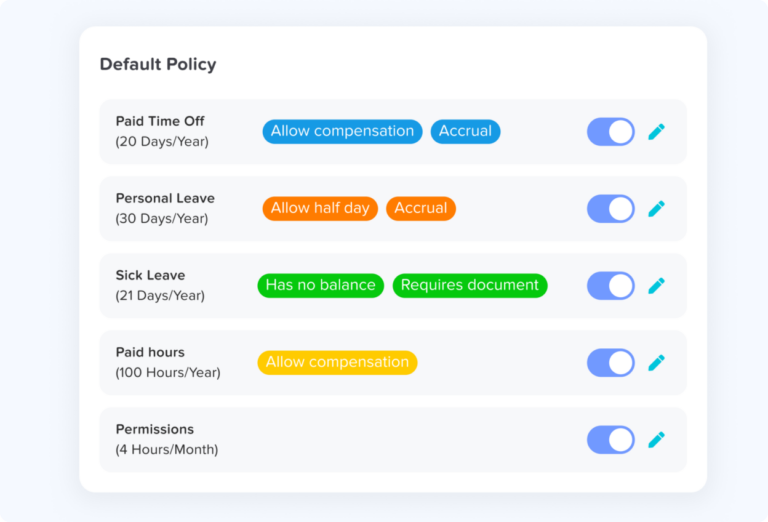
Here is a simple example HR teams can adapt:
Unused PTO Expiration:
Employees are encouraged to use their paid time off during the leave year. Employees may carry over up to 5 unused PTO days into the next leave year. Carried-over PTO must be used by March 31. Any unused carried-over PTO after March 31 may expire, unless applicable law requires a different rule or HR approves an exception. Sick leave, legally protected leave, and other leave types may follow separate rules. Employees can view their current balance and carryover status in the company leave tracking system.
This example should be reviewed and adjusted based on company policy, location, and legal requirements.
PTO Expiration Policy Checklist
Use this checklist before publishing or updating your policy.
| Checklist Item | What HR Should Review |
|---|---|
| Leave types | Which leave types can expire and which must stay separate. |
| Legal rules | Whether expiration is allowed in each employee location. |
| Carryover limit | How many days or hours can move forward. |
| Expiration date | The exact deadline for using carried-over leave. |
| Accrual cap | Whether employees stop earning PTO after a maximum balance. |
| Employee notice | How employees will be reminded before leave expires. |
| Balance visibility | Whether employees can see unused and expiring PTO. |
| Exceptions | How HR handles medical, parental, or business-related exceptions. |
| Payroll impact | Whether unused PTO must be paid out at termination. |
| Documentation | Whether the rule is written in the handbook or policy. |
| System setup | Whether the leave tracker matches the written policy. |
| Reports | How HR will review unused, expired, and carried-over leave. |
How to Communicate PTO Expiration to Employees
A PTO expiration policy should not surprise employees. If employees only learn about expiration after losing time off, the policy may create frustration and complaints.
HR should communicate:
- How much PTO employees have
- How much PTO can carry over
- When unused PTO expires
- Whether sick leave follows a different rule
- How employees can request time off
- Who approves leave requests
- What happens if business needs prevent employees from taking time off
Good communication helps employees plan earlier and reduces year-end confusion.
Why PTO Expiration Should Not Be Managed in Spreadsheets
Spreadsheets can work for very small teams, but PTO expiration rules become harder to manage as the company grows.
Common spreadsheet problems include:
- Formulas breaking
- Old versions being used
- Manual balance edits
- Missed carryover limits
- Expired leave removed from the wrong employee
- Lack of approval history
- No automatic reminders
- No clear audit trail
- Confusion between PTO, sick leave, and unpaid leave
A PTO expiration policy needs accurate tracking. If the tracking system is unreliable, the policy becomes harder to enforce fairly.
How Day Off Helps Track PTO Expiration and Carryover
Day Off helps HR teams manage PTO expiration, carryover, accruals, approvals, and leave balances in one place.
With Day Off, HR can:
- Create custom leave types
- Set accrual rules
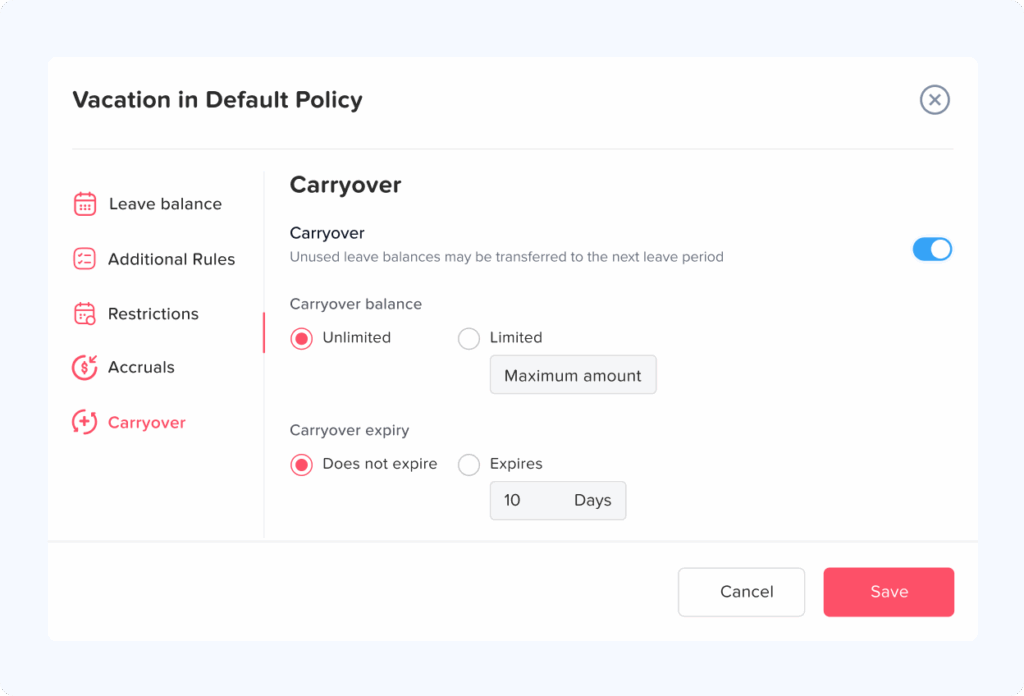
- Configure carryover limits
- Track leave balances automatically
- Manage expiration dates for unused PTO
- Review pending and approved requests
- Use approval workflows
- Give employees visibility into balances
- Export reports for HR review
- Track carryover and expiry dates
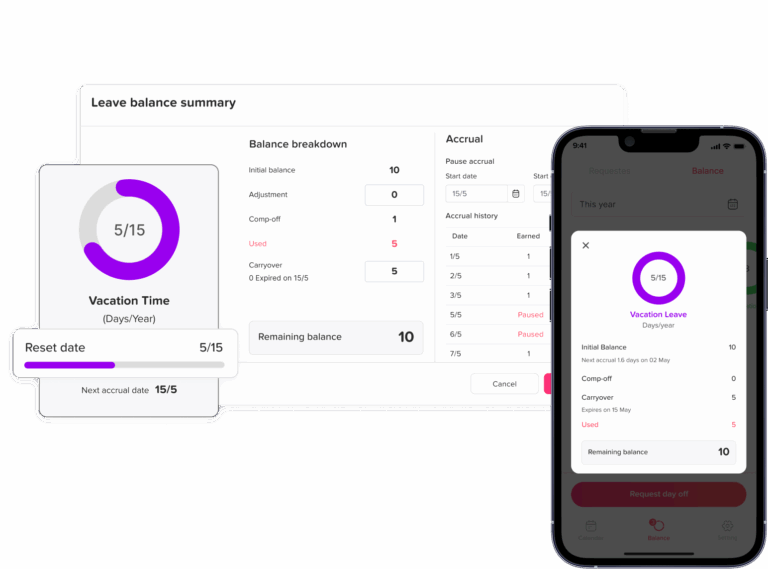
Day Off’s PTO tracker supports carryover limits, automatic balance resets, and expiration dates for unused PTO. It also helps employees see their balance before requesting time off and helps managers approve requests with updated leave data.
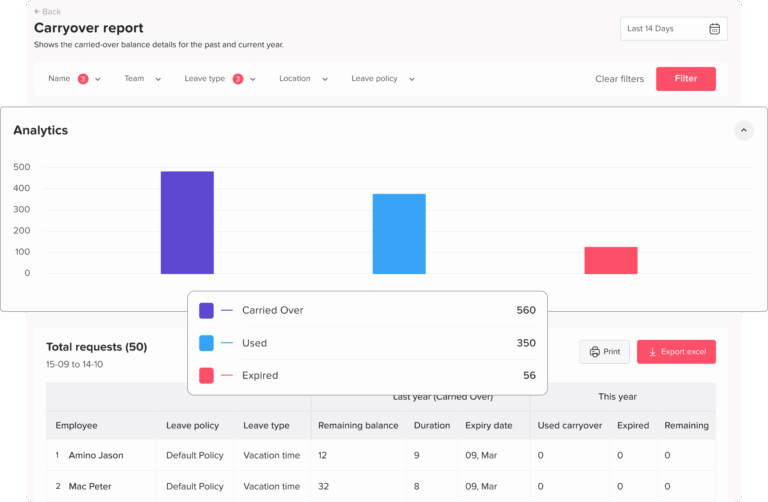
Day Off also includes a Carryover Report that shows employees’ remaining leave, carryover days, and expiry dates, helping HR monitor unused leave more clearly.
This makes PTO expiration easier to manage because HR does not have to manually calculate every employee’s unused balance at the end of the year.
PTO Expiration Policy Best Practices
Use Clear Policy Language
Employees should understand the rule without needing HR to explain it every time.
Separate Leave Types
Do not apply the same expiration rule to every leave type unless it is legally allowed and clearly written.
Review State and Local Rules
PTO, vacation, sick leave, and final payout rules can vary by location. Multi-state and global teams should review local requirements.
Give Employees Advance Notice
Send reminders before PTO expires. This helps employees plan and reduces disputes.
Use Carryover Limits Carefully
Carryover limits can help control large balances while still giving employees flexibility.
Consider Accrual Caps Instead of Forfeiture
In some cases, an accrual cap may be easier and fairer than removing unused PTO.
Track Expiration Automatically
Use a leave management system like Day Off to reduce manual errors and keep balances accurate.
Keep Reports for HR and Payroll
Export or save reports showing unused PTO, carryover, expiration, and adjustments.
FAQ: PTO Expiration Policy
Does PTO expire?
PTO can expire in some companies, but it depends on the company policy and local labor laws. Some employers allow unused PTO to carry over, some set expiration dates, and others use accrual caps. HR should always check state, local, or country-specific rules before removing unused PTO from employee balances.
Can a company take away unused PTO?
A company may be able to take away unused PTO only if the policy is legal in that location and clearly communicated to employees. In some places, accrued vacation or PTO is treated as earned wages and cannot simply be forfeited. For example, California does not allow “use it or lose it” vacation policies that take away accrued vacation pay.
Is use-it-or-lose-it PTO legal?
A use-it-or-lose-it PTO policy is legal in some places and restricted or prohibited in others. The rule depends on state or local law, the type of leave, and whether employees had clear notice and a fair chance to use their time off. Employers should review legal requirements before adding a use-it-or-lose-it rule.
What happens to unused PTO at the end of the year?
Unused PTO may expire, carry over into the next year, roll over with a limit, stay available, or stop accruing after a balance cap is reached. The result depends on the company’s written PTO policy and the laws that apply to the employee’s location.
What is the difference between PTO expiration and PTO carryover?
PTO expiration means unused time off is removed after a deadline, if legally allowed. PTO carryover means unused time off moves into the next leave year or next policy period. Some companies combine both by allowing limited carryover and setting an expiration date for carried-over PTO.
What is the difference between PTO carryover and PTO rollover?
PTO carryover and PTO rollover usually mean the same thing. Both describe unused PTO moving from one period into the next. For example, an employee may be allowed to roll over or carry over 5 unused PTO days into the next year.
Can PTO carry over to the next year?
Yes, PTO can carry over to the next year if the company policy allows it or if local law requires it. Some companies allow unlimited carryover, while others set a maximum number of days or hours employees can carry forward.
How much PTO should employees be allowed to carry over?
There is no single carryover amount that works for every company. Some employers allow 3, 5, or 10 days to carry over, while others use a maximum hour limit or an accrual cap. HR should consider business coverage, employee wellbeing, legal rules, and payroll impact before setting a carryover limit.
What is a PTO accrual cap?
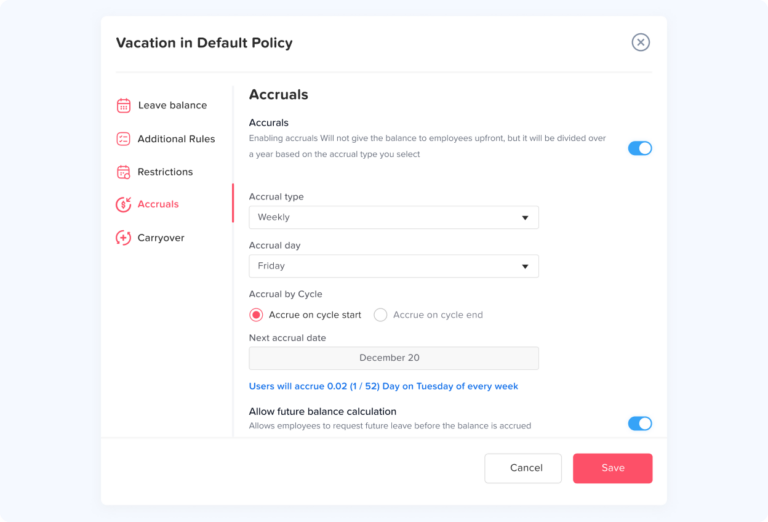
A PTO accrual cap is the maximum amount of PTO an employee can build up. Once the employee reaches the cap, they stop earning more PTO until they use some of their balance. This can help companies control large PTO balances without automatically removing already earned time off.
Is a PTO accrual cap better than PTO expiration?
A PTO accrual cap can be a better option in some cases because it limits large balances without taking away already accrued PTO. However, the best approach depends on company goals, employee locations, legal requirements, and how the PTO policy is written.
Does sick leave expire like PTO?
Sick leave should not automatically follow the same expiration rule as vacation or general PTO. Paid sick leave may have separate state, local, or country-specific rules for accrual, carryover, usage, and expiration. HR should track sick leave separately from vacation or general PTO.
Do employers have to pay out unused PTO when an employee leaves?
PTO payout rules depend on location and company policy. Some states require payout of earned unused vacation or PTO at termination, while others allow the employer’s written policy to decide. HR should review the applicable law and policy before processing final pay.
How can HR track expiring PTO?
HR can track expiring PTO by using leave management software that shows unused balances, carryover limits, expiration dates, and reports. Day Off helps HR manage PTO balances, carryover rules, expiry dates, requests, approvals, and reports in one place, making it easier to avoid spreadsheet errors.
Conclusion
A PTO expiration policy can help companies manage unused time off, reduce large balances, and encourage employees to take leave. But it must be handled carefully.
Unused PTO does not follow the same rules everywhere. In some locations, accrued vacation may be protected and cannot simply expire. In others, the company’s written policy may control what happens to unused time off. That is why HR should review local rules, write clear policy language, communicate early, and track balances accurately.
For a fair and organized process, companies should define which leave types can expire, how much PTO can carry over, when carried-over leave must be used, and how exceptions are handled.
With Day Off, HR teams can manage PTO expiration, carryover, accruals, leave balances, approvals, and reports in one place. This helps employees understand their time off, helps managers plan coverage, and helps HR avoid the confusion of manual spreadsheets.