


-
Leave Types
What are Leave Types in Day Off?
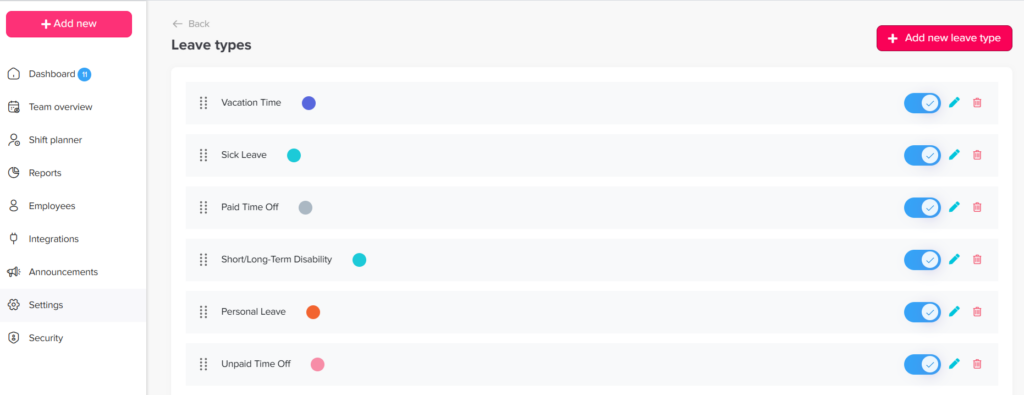
Leave types in Day Off represent the different categories of time off that employees can request and track within the system. Each leave type is designed to reflect a specific purpose for absence and can be configured with its own rules, balances, and approval workflows.
Why are leave types important?
Leave types are essential for organizing and managing time off in a clear, structured way. They ensure that every request is handled according to the right policy and that both employees and administrators have full visibility into how time off is used.
With well-defined leave types, you can:
- Understand time off patterns across teams and the entire organization
- Apply the correct policies automatically for each type of leave
- Accurately track balances and entitlements without manual effort
- Route requests through the right approval workflows
- Maintain reliable records for HR, payroll, and compliance purposes
In short, leave types bring clarity, consistency, and control to your leave management process.
Examples of leave types in Day Off
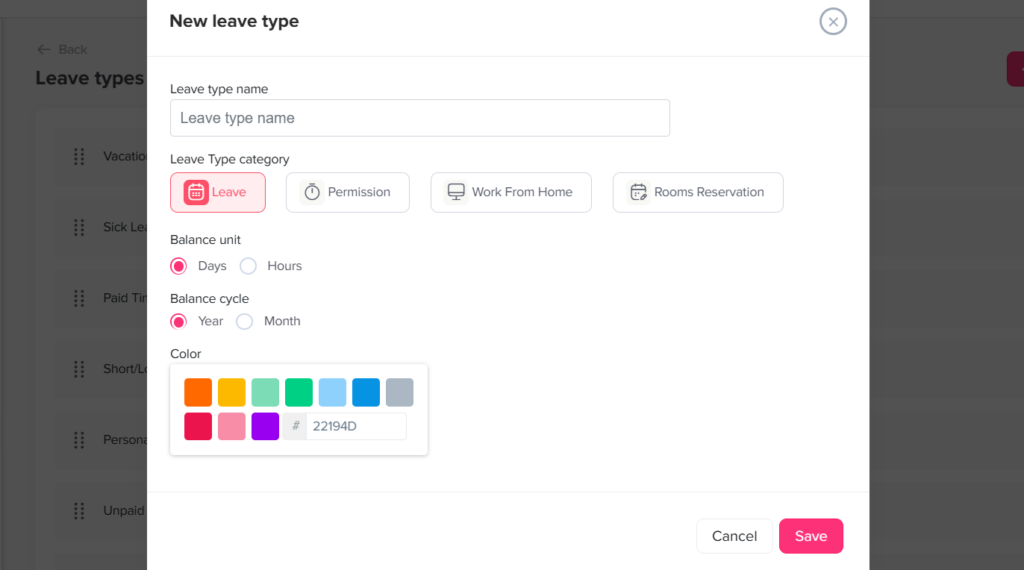
Day Off is designed to be fully flexible, there is no fixed list of leave types. You can create and name leave types based on your organization’s policies, terminology, and operational needs.
To get started, here are some commonly used examples:
Annual Leave
Paid time off that employees can use for vacations, personal plans, or general rest. It is typically accrued over time and may follow yearly entitlement rules.
Sick Leave
Time off taken when an employee is unwell or needs medical care. Depending on company policy, this may include doctor visits, recovery time, or required documentation.
Unpaid Leave
Leave taken without salary when no paid leave balance is available or when the situation falls outside standard paid leave policies.
Maternity and Paternity Leave
Time off granted to employees for childbirth and early childcare. The duration and conditions are usually defined by company policy and local labor laws.
Emergency Leave
Short notice leave for unexpected or urgent situations, such as family emergencies or critical personal matters.
Compensatory Leave (Comp Off)
Time off awarded to employees in exchange for working extra hours, weekends, or official holidays, helping balance additional workload.
Public Holidays
Predefined company or national holidays that are automatically applied to employees’ calendars and typically do not require a request.
Important
These are examples, not limitations. Day Off allows you to fully customize leave types, including their names, rules, and balances, to match your organization’s policies.
You can also control how each leave type is approved: whether it requires manager approval or is approved automatically, depending on how you want requests to be handled.