




Submitting a PTO request is usually simple when the employee’s manager is available. But what happens when the person responsible for approving the request is on vacation, sick leave, parental leave, or another extended absence?
A PTO request when a manager is on leave should not automatically disappear, become approved, or force the employee to wait indefinitely. What actually happens depends on the employer’s approval structure and whether another authorized person can review the request.

For ordinary vacation and PTO, federal law does not generally require private employers to provide paid vacation. Under the Fair Labor Standards Act, vacation benefits are generally established through employer policies or agreements, although state or local laws may create additional requirements.
This means employers should establish their own clear process for situations where an approver is unavailable.
A well-designed process might allow the request to:
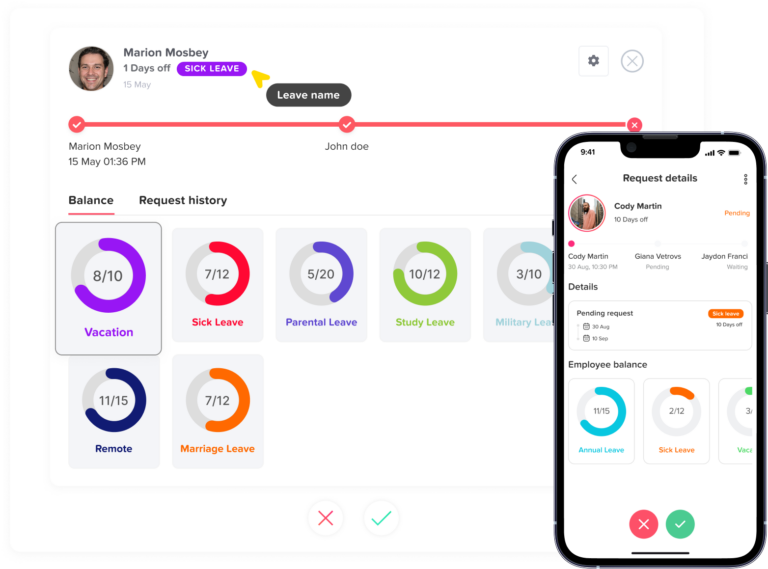
- Be reviewed by another assigned approver
- Move to a designated backup manager
- Be handled by HR or an administrator
- Follow another approval level
- Remain pending until an authorized person acts
- Bypass approval when the particular leave type is intentionally configured for auto approval
The important point is that employees should know what pending, approved, and escalated actually mean. A manager’s absence should not leave employees guessing whether they can take their planned time off.
Does PTO Automatically Get Approved if the Manager Is Away?
Usually, no.
A manager being unavailable does not normally turn a pending PTO request into an approved one. If the employer’s process requires approval, the request generally remains pending until someone with the necessary authority approves or rejects it.
This distinction matters because employees often make decisions based on their requested dates. They may want to book flights, reserve accommodation, arrange childcare, or coordinate family plans.
If the system still shows Pending, employees should not assume that silence means approval unless the employer has a written rule explicitly stating that requests become approved after a certain period.
A stronger PTO policy should explain:
- Who normally approves requests
- How quickly managers are expected to respond
- Who becomes responsible when the approver is unavailable
- When employees should follow up
- Whether requests can be escalated
- Whether any leave types use automatic approval
The goal is to eliminate ambiguity before an employee encounters the problem.
What Should Happen When the PTO Approver Is on Leave?
There is no single approval structure that works for every organization. A five-person startup may handle manager absences differently from a company with several departments, locations, and approval levels.
The strongest approach is to build enough backup into the workflow that a single absence does not stop every employee request.
Another Assigned Approver Reviews the Request
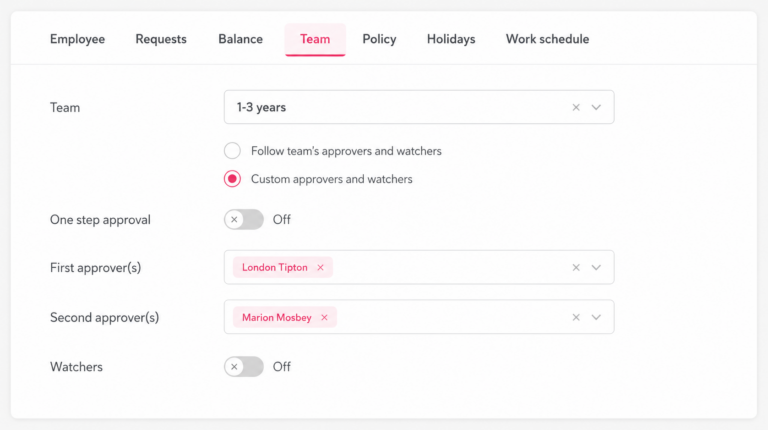
If several people are authorized within the same approval step, an available approver can review the request while the other manager is away.
For example, imagine the Marketing Director and Operations Director are both authorized to approve leave for a particular employee.
The Marketing Director goes on vacation for two weeks. The employee submits a PTO request during that period.
Because the Operations Director is also an authorized approver, the employee does not need to wait for the Marketing Director to return.
This arrangement works particularly well when several managers already share responsibility for scheduling or team coverage.
In Day Off, multiple approvers can be assigned within an approval step, allowing another assigned approver to act when one is unavailable. Multi-approver and multi-step approval capabilities are part of the more advanced approval setup.
A Designated Backup Approver Takes Over
Another approach is to give one person primary responsibility and identify someone else as backup.
For example: Olivia normally approves leave for the Customer Success team. Before taking vacation from August 10 to August 24, approval responsibility is covered by Daniel.
Employees should ideally continue using the same PTO request process. They should not have to remember to email Daniel directly or submit requests through an entirely different channel.
The backup arrangement should simply ensure there is someone available to make the same decision Olivia normally would.
A backup approver should also understand:
- The team’s minimum staffing requirements
- Existing approved leave
- Important deadlines
- Blackout periods
- Company PTO rules
Backup approval is not simply administrative access. The person still needs enough context to make a reasonable decision.
HR or an Administrator Intervenes
Sometimes there is no assigned backup, particularly when a manager’s absence is unexpected.
In that situation, HR or an administrator may need the authority to resolve a request rather than leaving it pending indefinitely.
Administrative intervention can be especially useful when:
- The requested PTO date is approaching
- The manager’s return date is uncertain
- No alternative approver was assigned
- The request has already been pending for several days
- Payroll or scheduling depends on the decision
- An employee has followed up but cannot get an answer
The administrator should still review the request against the company’s actual leave rules. Administrative authority should not mean that every pending request is automatically accepted.
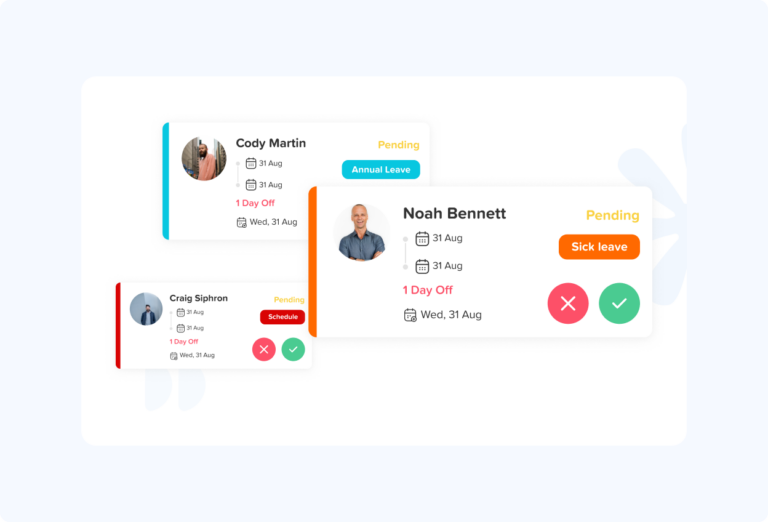
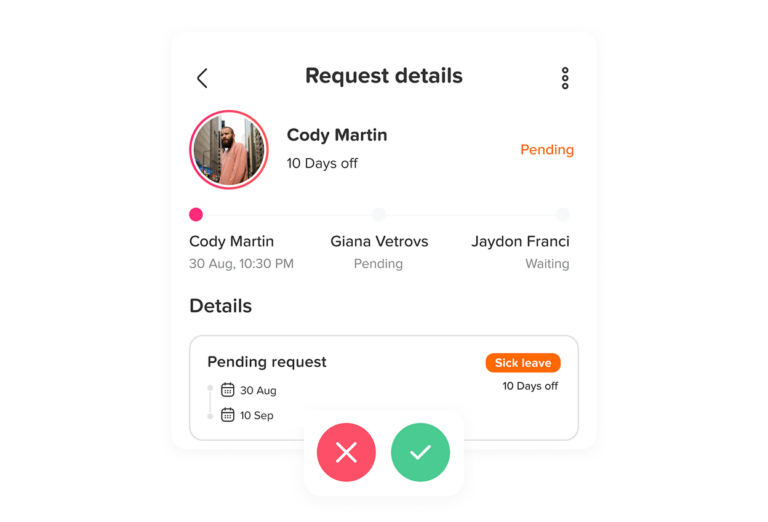
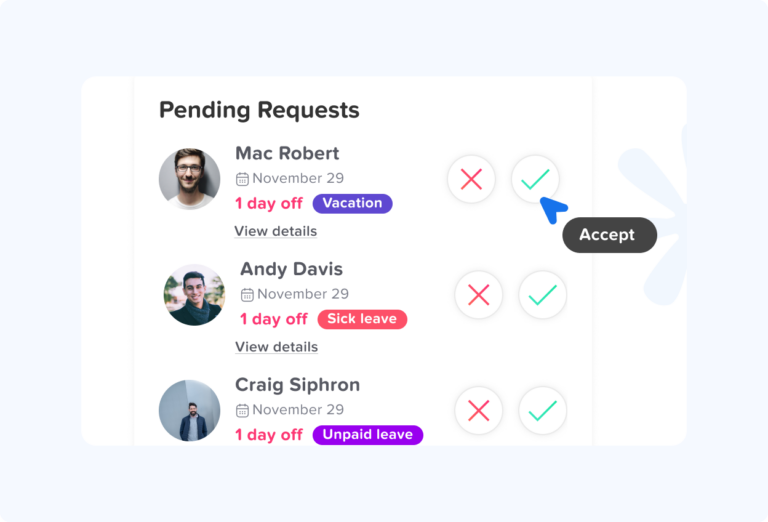
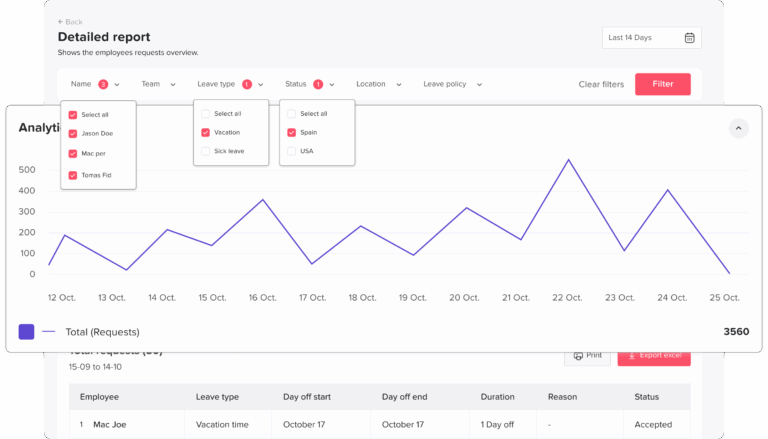
In Day Off, admins can open a pending request and use Force Accept or Force Reject when approvers have not responded.
The Request Remains Pending
If there is only one authorized approver and no administrative intervention occurs, the request may remain pending until that person becomes available.
Day Off specifically notes that the result depends on the approval configuration. When another assigned approver is available, the request can still be processed. Otherwise, administrative action may be needed.
For a manager who is away for one afternoon, waiting may not be a problem.
For a manager who is away for three weeks while an employee’s requested vacation begins in five days, it becomes a significant workflow issue.
The longer the organization relies on one person to approve every request, the greater the risk that normal employee absences will create bottlenecks.
Why PTO Approval Should Not Depend on One Person
An approval process with one point of failure works only while that person is consistently available.
Consider a manager with 20 employees who takes two weeks of PTO.
During that time:
- Three employees submit vacation requests
- One employee requests a personal day
- Another employee needs an upcoming medical absence
- A sixth employee wants to change an existing request
If nobody else can act, all six requests may remain unresolved.
This can affect much more than employee convenience.
Employees Cannot Plan Confidently
Employees may hesitate to make travel or family arrangements because they do not know whether their leave will be approved.
The longer the decision takes, the more difficult or expensive those arrangements may become.
Team Coverage Remains Uncertain
Until the request is approved or rejected, other managers may not know whether that employee will actually be available.
That uncertainty can affect:
- Shift planning
- Project deadlines
- Customer coverage
- Meeting schedules
- Holiday staffing
HR Receives More Follow-Up Questions
Instead of the approval workflow resolving the request, employees begin contacting HR manually:
“My manager is away. Who can approve this?”
“My request has been pending for a week. Is it approved?”
“My vacation starts before my manager comes back. What should I do?”
A backup workflow reduces those manual conversations.
Should Managers Approve PTO While They Are on Vacation?
An organization should not design its approval process around the assumption that managers will continue checking work while using their own PTO.
A manager may voluntarily respond to something urgent, but that is different from making routine approval work a requirement throughout their vacation.
If managers are expected to:
- Check new PTO requests
- Review coverage
- Respond to employee messages
- Update calendars
- Approve or reject requests
then their own ability to disconnect from work becomes limited.
A better approach is to arrange coverage before the manager leaves or give HR a clear way to intervene when necessary.
This creates a healthier system for both sides:
- Employees continue receiving decisions.
- Managers can actually use their approved time away from work.
Should Managers Review Pending PTO Before Going on Leave?
For a planned absence, reviewing pending requests before leaving is a useful management practice.
The manager should check whether any existing requests are:
- Still pending
- Missing information
- Awaiting a coverage decision
- Close to their requested start date
- Waiting for another approval stage
For straightforward requests, the manager may be able to complete the decision before leaving.
For requests that cannot yet be decided, the manager can make sure the backup approver understands what remains unresolved.
Example
Sophia manages a six-person design team and will be away for two weeks.
Before leaving, she reviews the dashboard and finds:
- One vacation request she can approve immediately
- One overlapping request that requires coverage review
- One request beginning while she will still be away
Instead of leaving all three untouched, she approves the first and tells the backup manager what needs to be reviewed for the other two.
This makes the handover much cleaner.
What if the PTO Request Was Submitted Before the Manager Left?
Submitting the request before the manager’s leave does not necessarily guarantee that it will be reviewed before they go.
A request can still become stuck if the manager overlooks it.
The company’s backup process should therefore apply to pending requests, not only requests submitted after the manager’s absence starts.
Example
- An employee submits vacation on Monday.
- The manager begins two weeks of PTO on Thursday but never responds.
- The employee’s requested vacation begins the following Wednesday.
- Waiting until the manager returns would mean the requested date has already passed.
The request should instead be reviewed by an authorized backup, administrator, or another person defined by the employer’s policy.
This is why companies should monitor the age of pending requests, not simply who submitted them.
What if the Employee’s PTO Starts Before the Manager Returns?
This is one of the clearest reasons to have an escalation procedure.
Suppose:
- PTO submitted: August 3
- Manager away: August 4 to August 18
- Requested employee PTO: August 12
Waiting for August 18 would provide the employee with an answer almost a week after the requested absence.
The organization should have a process that allows the request to reach someone who can make a decision before August 12.
That may be:
- Another assigned approver
- Department head
- Backup manager
- HR
- Administrator
If nobody else has authority, the company should at least communicate clearly with the employee rather than leaving the request unanswered.
What if the Manager’s Leave Was Unexpected?
Backup workflows become even more valuable when the manager did not know they would be unavailable.
Unexpected absences may result from illness, emergency leave, bereavement, family responsibilities, or another unplanned situation.
In these cases, the manager may not have had an opportunity to:
- Review outstanding requests
- Delegate responsibilities
- Notify employees
- Assign temporary approval coverage
This is why a permanent escalation rule can be stronger than relying entirely on managers to organize coverage manually before every absence.
For example, a company could establish: If a PTO request has been pending for more than three business days and the assigned manager is unavailable, HR may route the request to the department manager for review.
The exact timeframe can vary, but the process should be defined before it is needed.
How Long Should a PTO Request Stay Pending?
There is no general federal deadline requiring an employer to approve an ordinary vacation request within a particular number of days. Vacation benefits themselves are generally matters of employer policy or agreement under federal wage law.
That does not mean requests should remain pending indefinitely.
Employers can create an internal service standard such as:
- Routine PTO: Respond within 2 to 3 business days
- Requests requiring coverage review: Respond within 3 to 5 business days
- Urgent requests: Review as soon as reasonably practical
The exact number is less important than consistency.
- A defined response period helps in two ways.
- Employees know when it is reasonable to follow up.
- HR can identify requests that are taking unusually long to resolve.
Should Pending PTO Automatically Escalate?
Escalation is one of the best ways to prevent requests from sitting unnoticed.
A possible workflow might be:
- Employee submits the request.
- Manager receives the request.
- Request remains pending.
- Manager receives a reminder.
- Another authorized person is notified after the internal deadline.
- HR or an administrator can intervene if necessary.
The important distinction is that escalation is not the same as automatic approval.
Escalation means: “Someone else needs to review this request.”
Automatic approval means: “The request becomes approved without another person making the decision.”
Those are very different policies.
For vacation, employers may still want a manager to review staffing and overlapping absences before approving the request. For another type of leave, the company may intentionally decide that individual approval is unnecessary.
Should Some Requests Be Auto-Approved?
Auto approval can make sense when the employer has deliberately decided that a certain type of request does not need manager discretion.
For example, a company may create a particular leave type for which requests should immediately be accepted once the employee submits them.
The advantage is that manager absence cannot delay that type of request.
The disadvantage is that the company gives up the opportunity to review each request for staffing or scheduling impact before approval.
Auto approval therefore works best when it reflects the actual company policy rather than being used only as a workaround for unavailable managers.
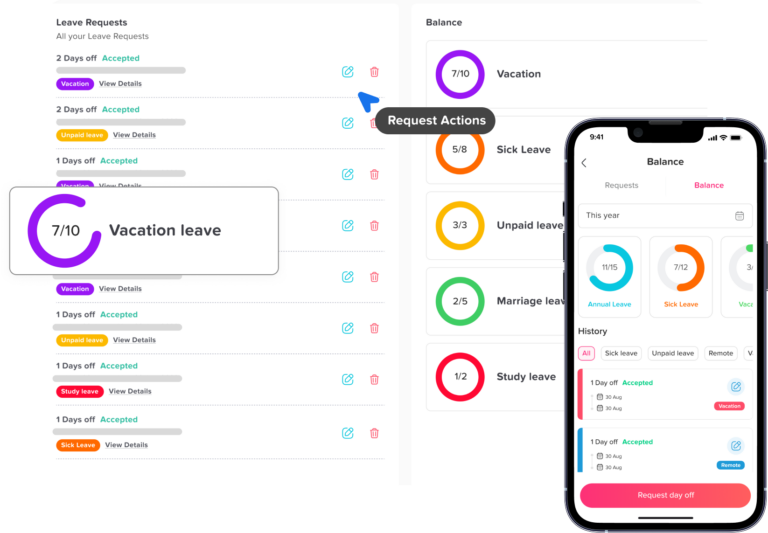
Day Off allows Auto Approval to be configured for specific leave types, causing those requests to bypass the normal manager approval workflow.
What Should Employees Do if Their Manager Is on Leave?
Employees should not create an entirely new PTO process simply because their manager is away.
Submit the PTO Request Normally
Employees should first use the company’s official leave-request system.
This creates a record of:
- When the request was submitted
- Which dates were requested
- Which leave type was selected
- Who is expected to approve it
- Whether the request is pending or completed
Submitting through the formal system is much easier to track than relying only on a chat message or verbal conversation.
Check the Request Status
Employees should verify whether the request is:
- Pending
- Approved
- Rejected
- Awaiting another approval stage
A pending request should not normally be treated as permission to take the day off.
Check Who Is Covering the Manager
The employer may already have communicated a backup contact.
This could be:
- Another manager
- Team lead
- Department head
- HR representative
If a backup exists, employees should follow the normal escalation process rather than submitting a second request.
Follow Up When the Date Is Approaching
If the request is still pending and the leave date is getting close, the employee should raise the issue.
For example: My PTO request for September 14 is still pending, and my manager is currently away. Could you please let me know who can review the request?
This is more useful than simply resubmitting the same leave request.
Wait for Clear Approval
When manager approval is required, employees should confirm the request has actually been approved before treating the time as finalized.
Keeping the final decision in the leave-management system also ensures balances, calendars, reports, and approval records stay aligned.
What Should HR Do When the Approver Is Away?
HR’s role is not necessarily to approve every request personally. Its role is to make sure the process has a path forward.
Identify Requests That Are at Risk of Becoming Stuck
HR can review requests assigned to unavailable managers and prioritize those with approaching start dates.
A vacation three months away may not require immediate intervention.
A request beginning tomorrow probably does.
Confirm Who Has Authority to Make the Decision
Before transferring or deciding the request, HR should confirm who is actually authorized.
That might be:
- Another assigned approver
- Temporary backup
- Department leader
- Administrator
- HR itself
Clear authority helps prevent an employee receiving approval from someone who was never authorized to give it.
Review the Same Information the Manager Would Have Used
A backup approver should not approve blindly.
They may need to check:
- Who else is already away
- Required staffing levels
- Project deadlines
- Customer commitments
- Shift coverage
- Blackout dates
- Employee balance and policy eligibility
The purpose is to preserve the normal decision process even though a different person is making the decision.
Keep the Decision Inside the Official System
If HR approves an exception through email while the PTO system still says Pending, the organization now has conflicting records.
The final decision should be recorded in the official system whenever possible so:
- The employee receives confirmation
- The PTO balance updates correctly
- The team calendar reflects the absence
- The approval history remains available
Fix Repeated Bottlenecks
If the same issue happens every time a particular manager takes leave, HR should not keep resolving it manually.
That is a signal that the approval structure itself needs improvement.
Multiple Approvers vs. Two-Step Approval
These configurations solve different problems and should not be confused.
Multiple Approvers in the Same Step
Several people are authorized within one approval stage.
For example:
Step 1: Sarah OR Michael
Either assigned approver can handle the request according to the configured workflow.
This creates resilience when one manager is unavailable.
Two-Step Approval
The request must pass through two separate stages.
For example:
Step 1: Team Manager
Step 2: HR Manager
Completing Step 1 does not complete the request. It moves the request to Step 2.
If nobody is available to complete Step 1, the second approver cannot simply replace the missing first stage unless the workflow permits it.
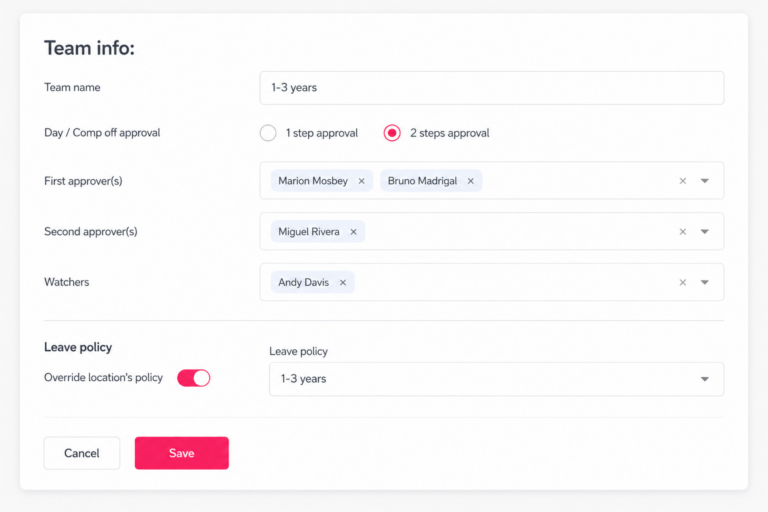
Day Off supports two-step approvals and allows multiple approvers to be assigned at each step, giving companies more flexibility when designing approval coverage.
What Happens if the Request May Be FMLA Leave?
Potentially protected leave should not be handled like an ordinary vacation request.
For covered employers and eligible employees, the Family and Medical Leave Act provides job-protected leave for qualifying family and medical reasons. An employee does not have to use the term “FMLA” to trigger the process. They need to provide enough information for the employer to recognize that the absence may qualify.
When an employer learns that leave may be FMLA-qualifying, federal rules generally require the eligibility notice within five business days, absent extenuating circumstances. Once the employer has sufficient information to determine whether the leave qualifies, designation requirements also apply.
That responsibility does not disappear because the employee’s normal manager is on vacation.
A request involving:
- A serious health condition
- Care for a qualifying family member
- Birth or placement of a child
- Other potentially FMLA-covered circumstances
should be routed through the employer’s FMLA process rather than simply sitting in an ordinary PTO approval queue.
Employers may also have state or local family and medical leave obligations in addition to federal FMLA requirements.
What if the Employee Needs Leave as a Disability Accommodation?
An employee may also request time away from work because of a disability.
Under the ADA, leave can in some circumstances be a reasonable accommodation unless providing the accommodation would cause undue hardship. The EEOC specifically recognizes employer-provided leave and additional unpaid leave as possible accommodations depending on the circumstances.
This means a manager should be careful about treating every medical absence as an ordinary discretionary PTO request.
If an employee indicates that leave may be needed because of a disability, the appropriate response may be to involve HR or whoever handles accommodations.
The manager’s absence should not prevent the employee from reaching that process.
Ordinary PTO and Protected Leave Should Follow Different Paths
| Type of Request | Main Consideration | Appropriate Response When Manager Is Away |
|---|---|---|
| Routine vacation months in advance | Staffing and policy | Another approver may review, or request may wait briefly |
| Vacation beginning soon | Timely decision and coverage | Escalate to backup or administrator |
| Ordinary personal PTO | Company policy | Follow backup approval process |
| Potential FMLA leave | Federal notice and eligibility requirements | Route promptly to HR or leave administrator |
| Disability-related leave | Possible ADA accommodation | Route to accommodation process |
| Emergency absence | Immediate operational response | Follow emergency call-out/leave procedure |
The reason for separating these categories is simple: not every absence is merely a manager’s discretionary vacation decision.
Common Mistakes When a Manager Is on Leave
Leaving Every Request Pending Until the Manager Returns
Waiting may be reasonable when the manager will return tomorrow and the requested vacation is months away.
It becomes unreasonable from a workflow perspective when the employee’s requested dates will arrive before the manager returns.
Requests should be prioritized according to urgency.
Treating No Response as Automatic Approval
Silence creates uncertainty.
Unless the policy explicitly provides automatic approval after a defined period, employees should be told that Pending means no final decision has been made.
Making Employees Find Their Own Approver
Employees should not have to message five managers asking:
“Can you approve this?”
The company should know who has backup authority.
Giving Backup Approvers No Context
A backup manager needs more than access to an Approve button.
They should be able to understand:
- Who is already away
- Whether coverage exists
- What policy applies
- Whether the employee has sufficient balance
- Whether special restrictions apply
Forgetting About Multi-Step Approvals
A two-level process needs coverage at both stages.
Having an available HR approver at Step 2 does not solve the problem if nobody can complete Step 1.
Delaying Potentially Protected Leave
FMLA and ADA-related issues may create legal obligations that require separate handling. They should not simply wait for a vacationing supervisor to return.
Expecting Managers to Remain Online Throughout PTO
A leave-management workflow should support manager absence just as it supports employee absence.
The solution is backup authority, not requiring managers to keep working during their own vacation.
How to Prevent PTO Requests From Getting Stuck
Use Multiple Approvers Where Appropriate
If more than one manager genuinely has authority to review the employee’s leave, assigning multiple approvers removes a single point of failure.
This can be particularly helpful for shared teams or departments with several managers.
Define a Backup Approval Rule
Companies should know who takes responsibility when the primary manager is unavailable.
The backup could be the:
- Manager’s manager
- Another department manager
- HR
- Designated team lead
Establish a Response Target
A simple internal rule such as “routine PTO requests should be reviewed within three business days” gives everyone a clear expectation.
It also gives HR a measurable point at which a request may need attention.
Review Pending Requests Before Planned Manager Leave
Before beginning a longer absence, managers should clear straightforward requests and hand off anything unresolved.
This is similar to handing over projects or customer responsibilities before vacation.
Keep PTO Requests in One System
When requests are scattered across email, Slack, Teams, spreadsheets, and verbal conversations, backup approval becomes much harder.
Centralizing requests makes it easier for another authorized person to see:
- Submission date
- Requested dates
- Leave type
- Balance
- Approval status
- History
Give Administrators an Exception Process
Even a well-designed system will occasionally encounter unusual situations.
Administrators should know how to resolve an urgent request without permanently changing the employee’s normal approval workflow.
Separate Protected Leave From Routine Vacation
Managers should be trained to recognize when an absence needs HR review rather than ordinary staffing approval.
This helps avoid delays when statutory or accommodation obligations may apply.
Sample PTO Policy for an Unavailable Approver
Approver Unavailability
Employees should continue submitting PTO and leave requests through the company’s designated leave-management process when their normal approver is unavailable.
When the primary approver is absent, requests may be reviewed by another assigned approver, designated backup manager, department leader, Human Resources, or another authorized administrator according to the company’s approval structure.
A request that remains marked Pending should not be considered approved unless the company’s policy specifically provides otherwise.
Managers taking planned leave should, whenever practical, review outstanding requests and confirm who will handle new or unresolved requests during their absence.
Employees whose requested leave date is approaching while their request remains pending should contact the designated backup approver or Human Resources rather than submitting duplicate requests.
Requests that may involve FMLA, disability accommodation, or another legally protected form of leave should be referred promptly to the person or department responsible for statutory leave and accommodation administration.
The company may establish separate response or escalation timelines for routine, urgent, and protected leave requests.
Employers should adapt this sample to their own operational requirements and applicable federal, state, and local laws.
How Day Off Handles an Approver Who Is on Leave
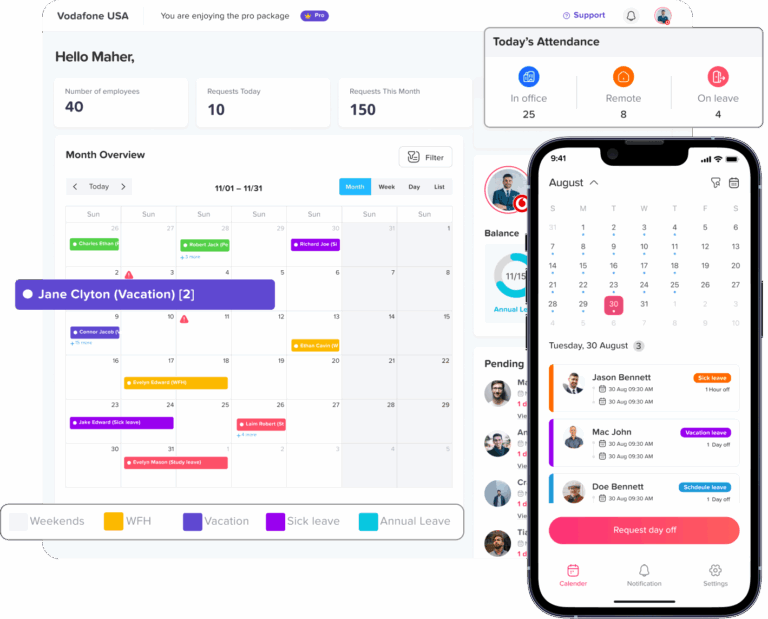
Day Off provides different ways to keep requests moving depending on how the company’s approval structure is configured.
Multiple Approvers
Day Off supports multiple approvers within an approval step. If one assigned approver is unavailable, another assigned approver can still review the request according to the configured workflow.
This is useful for teams where more than one manager is genuinely authorized to make leave decisions.
Two-Step Approvals
Organizations can also create two approval stages and assign multiple approvers at each stage. This allows the request to move through different levels of responsibility while still reducing dependence on one individual approver.
Admin Intervention
When approvers do not respond, a Day Off admin can open the pending request and use Force Accept or Force Reject when intervention is necessary.
This provides an exception path when a normal approver is unavailable and the request cannot reasonably remain pending.
Auto Approval
For leave types that the organization intentionally does not want to send through the normal approval process, Day Off also supports Auto Approval. When configured, requests for that leave type can bypass manager approval.
Together, these options allow organizations to design a leave workflow that fits both everyday approvals and situations where the normal decision-maker is away.
Frequently Asked Questions About Pending PTO Requests and Unavailable Managers
My PTO request is still pending. What should I do?
First, check whether your company’s PTO system shows the request as Pending, Approved, or waiting for another approval step. If it is still pending and the normal response period has passed, follow up with your manager or the designated backup approver.
If your manager is away and the requested date is approaching, contact HR or another authorized manager rather than submitting duplicate requests.
What happens to my PTO request if my manager is on vacation?
Your request will not usually become approved automatically just because your manager is away.
If another authorized approver is assigned, that person may be able to review it. If your company has no backup approver, the request may remain pending until your manager returns or an administrator intervenes.
In Day Off, admins can see pending requests and can Force Accept or Force Reject a request when necessary, helping prevent delays when the assigned approver is unavailable.
Does PTO automatically get approved if my manager doesn’t respond?
Usually, no.
Unless your employer has a written automatic-approval rule, no response normally means the request is still pending. Employees should not assume that silence equals approval.
Questions about whether unanswered requests become automatically approved appear frequently in employee searches and workplace discussions, which is why companies should state this rule clearly in their PTO policy.
How long can a manager leave a PTO request pending?
There is no general federal rule requiring an ordinary vacation request to be approved within a specific number of days. Under federal law, paid vacation is generally a matter of agreement between the employer and employee rather than a benefit required by the Fair Labor Standards Act.
Employers should still create an internal response target, such as two or three business days, so requests do not remain unresolved indefinitely.
How long should I wait for my PTO request to be approved?
Check your company’s PTO policy first. If it specifies an approval timeframe, wait until that period has passed before escalating the request.
If there is no stated timeframe, following up after several business days is reasonable, especially if the requested dates are approaching or you need to make travel arrangements.
Real employee searches frequently ask how long PTO approval should take when a request has remained pending for weeks.
Who approves my PTO if my manager is out of office?
That depends on your company’s approval structure.
The request may be reviewed by:
- Another assigned approver
- A backup manager
- Your manager’s manager
- HR
- An administrator
Companies should define this responsibility in advance so employees do not have to search for someone willing to approve the request.
Can another manager approve my PTO?
Yes, but only if that manager has the authority to approve your request under the company’s policy or leave-management system.
Simply being a manager does not automatically give someone authority over every employee’s PTO.
In Day Off, companies can assign multiple approvers within an approval step so another assigned approver can act when one is unavailable.
Can HR approve my PTO if my manager is away?
Potentially. It depends on the company’s approval policy and the permissions given to HR.
Some organizations allow HR to approve requests directly, while others limit HR to administration and require a manager to make the staffing decision.
In Day Off, admins can view all pending requests and use Force Accept or Force Reject when intervention is necessary.
Does a pending PTO request mean I can take the day off?
Normally, no.
A pending request means the approval process has not been completed. Unless your company specifically states otherwise, employees should wait until the request is confirmed as approved before treating the day as authorized PTO.
My vacation is coming up and my PTO is still pending. What should I do?
Do not wait until the day before your vacation to raise the issue.
Contact your manager, backup approver, or HR and include:
- The date you submitted the request
- The dates you requested
- The current pending status
- How soon the leave begins
Long-pending vacation requests are a common employee concern, particularly when flights, hotels, or other plans depend on receiving an answer.
Should I book a vacation before my PTO is approved?
It is generally safer to wait for formal approval before making non-refundable travel arrangements when your employer requires PTO approval.
A submitted request and an approved request are not necessarily the same thing. Keeping the approval recorded in the company’s official system also reduces disagreements later about whether permission was actually granted.
What if my manager verbally approved my PTO but the system still says pending?
Ask your manager or HR to make sure the official system is updated.
A verbal approval may provide useful context, but if the leave-management system still shows the request as pending, payroll, HR, and other managers may continue to see it as unresolved.
This exact mismatch between verbal approval and a pending HR-system request is a recurring employee concern.
What if my manager approved PTO but HR hasn’t approved it yet?
Some companies use more than one approval stage.
For example:
Step 1: Manager approval
Step 2: HR or department approval
If your company uses this structure, manager approval may not mean the request is final. Check the request status to see whether another approval step is still required.
Employees commonly search this question when a manager has approved leave but the request remains with HR.
Can my manager ignore my PTO request?
A manager may not always be required by federal law to respond to an ordinary vacation request within a specific timeframe, but leaving requests unresolved for long periods creates planning problems for both employees and the business.
Employers should set clear approval deadlines and provide an escalation process for requests that receive no response.
What should I do if my manager keeps ignoring my PTO request?
Keep the original request in the official system and follow up in writing.
If you still receive no response, follow your company’s escalation process, which may involve:
- A backup manager
- Department head
- HR
- Another authorized approver
Keeping the request and follow-up documented helps establish when you asked and how long it has been waiting.
What happens to PTO requests when a manager is on sick leave or medical leave?
The same general backup process should apply to ordinary PTO requests. Another authorized approver or administrator should be able to keep the workflow moving when possible.
The manager should not be expected to continue performing routine approval work during their own leave simply because employees need decisions.
Can PTO be approved by more than one manager?
Yes, if the company’s approval system supports multiple authorized approvers.
In Day Off, companies can configure multiple approvers within the same approval step, and the platform also supports two-step approval workflows. This reduces the risk that a request will become stuck because one approver is unavailable.
Conclusion
A manager taking leave should not bring the rest of the team’s PTO approval process to a stop.
For routine PTO, employers should establish a clear backup process that explains who can act when the normal manager is unavailable, how long requests should remain pending, and when HR or another administrator should intervene.
The strongest workflows use a combination of clear response expectations, backup authority, multiple approvers where appropriate, and centralized records. Potentially protected leave should be routed separately so legal notice or accommodation processes are not delayed simply because a direct manager is away.
When employees know exactly who will review their request and managers know their responsibilities are covered during their own PTO, the approval process becomes faster, clearer, and much easier to manage.