







Manage time off has always been an important part of running a healthy and productive workplace. But with remote and hybrid teams, it becomes even more important. When employees are working from different locations, time zones, schedules, and sometimes even countries, managers need a clear and reliable way to understand who is available, who is away, and how absences may affect daily work.

In a traditional office, manage time off is often easier to notice. A manager can see when someone is not at their desk, coworkers may hear about upcoming vacations, and HR can follow up in person when needed. In remote and hybrid work environments, that visibility disappears. Without the right process, leave requests can get buried in emails, approvals can be delayed, and teams may discover too late that several people are off at the same time.
That is why remote and hybrid teams need a structured approach to time off management. A clear leave policy, shared visibility, accurate PTO tracking, and the right leave management software can help companies avoid confusion and keep work moving smoothly.
Why manage time off Is More Complex for Remote and Hybrid Teams
Remote and hybrid work gives employees more flexibility, but it also creates new challenges for managers and HR teams. Employees may not all work the same hours. Some may work fully remotely, others may come to the office a few days a week, and some may be located in different regions or time zones.
This makes manage time off harder to manage manually because availability is not always obvious. A manager may assume someone is online, only to discover they are on vacation. A team member may schedule work with a colleague without knowing they are away. HR may need to check multiple spreadsheets, calendars, or messages just to confirm whether a leave request was approved.
Common challenges include:
- Lack of visibility into who is off and when
- Delayed leave approvals due to different working hours
- Overlapping vacations within the same team
- Confusion around public holidays in different locations
- Inaccurate PTO balances
- Difficulty planning team coverage
- Too many leave requests spread across emails, chats, and spreadsheets
When these issues are not managed properly, they can affect productivity, employee satisfaction, and team planning.
Create a Clear Time Off Policy
The first step in manage time off for remote and hybrid teams is to create a clear leave policy. Employees should know exactly how much time off they are entitled to, how to request it, who approves it, and how much notice they need to give.
A strong time off policy should explain:
- Available leave types, such as vacation, sick leave, personal leave, unpaid leave, or parental leave
- How PTO is earned or assigned
- Whether leave balances reset annually, monthly, or based on work anniversaries
- Minimum notice required before requesting leave
- Rules for overlapping leave requests
- Approval steps and manager responsibilities
- How public holidays are handled for different locations
- Whether employees can request half days or hourly leave
For remote and hybrid teams, clarity is especially important because employees cannot always rely on informal office conversations. The policy should be easy to access and written in simple language so everyone understands the rules.
A clear policy also helps managers make fair decisions. Instead of approving or rejecting requests based on personal judgment, managers can follow the same process for everyone.
Use One Central System for Leave Requests
One of the biggest mistakes companies make is allowing leave requests to come from too many places. An employee may send a request by email, another may use a chat message, and another may mention it during a meeting. This creates confusion and makes it easy for requests to be missed.
Remote and hybrid teams need one central place for all manage time off requests. This helps employees, managers, and HR stay aligned.
Using a central leave management system allows employees to submit requests in a structured way. Managers can approve or reject requests from the same platform, and HR can track everything without manually updating spreadsheets.
A centralized system helps teams by:
- Keeping all leave requests in one place
- Reducing missed or forgotten requests
- Making approvals faster and easier
- Updating leave balances automatically
- Giving managers better visibility into team availability
- Helping HR avoid manual tracking errors
For remote teams, this is especially useful because employees can request manage time off from anywhere, whether they are working from home, traveling, or using a mobile device.
Maintain a Shared Leave Calendar
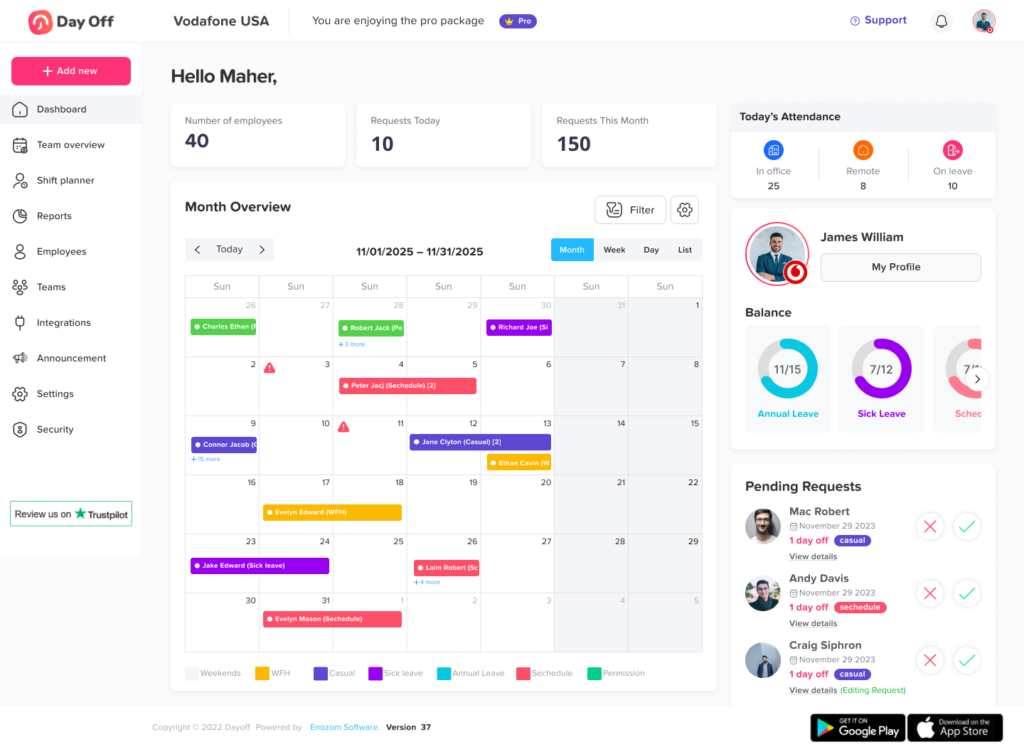
A shared leave calendar is one of the most useful tools for remote and hybrid teams. It gives managers and employees a clear view of who is off, who is available, and when upcoming absences may affect the team.
Without a shared leave calendar, employees may not know when their coworkers are unavailable. This can lead to missed deadlines, poor handovers, and scheduling conflicts.
A shared calendar helps teams:
- Plan meetings around employee availability
- Avoid assigning urgent tasks to people who are away
- Prepare coverage before someone goes on leave
- Reduce overlapping vacations
- Improve transparency across departments
- Keep remote and office based employees aligned
For hybrid teams, the calendar is even more valuable because availability can already be harder to understand. Some employees may be working from the office, some from home, and others may be off completely. A shared leave calendar removes the guesswork.
Track PTO Balances Accurately
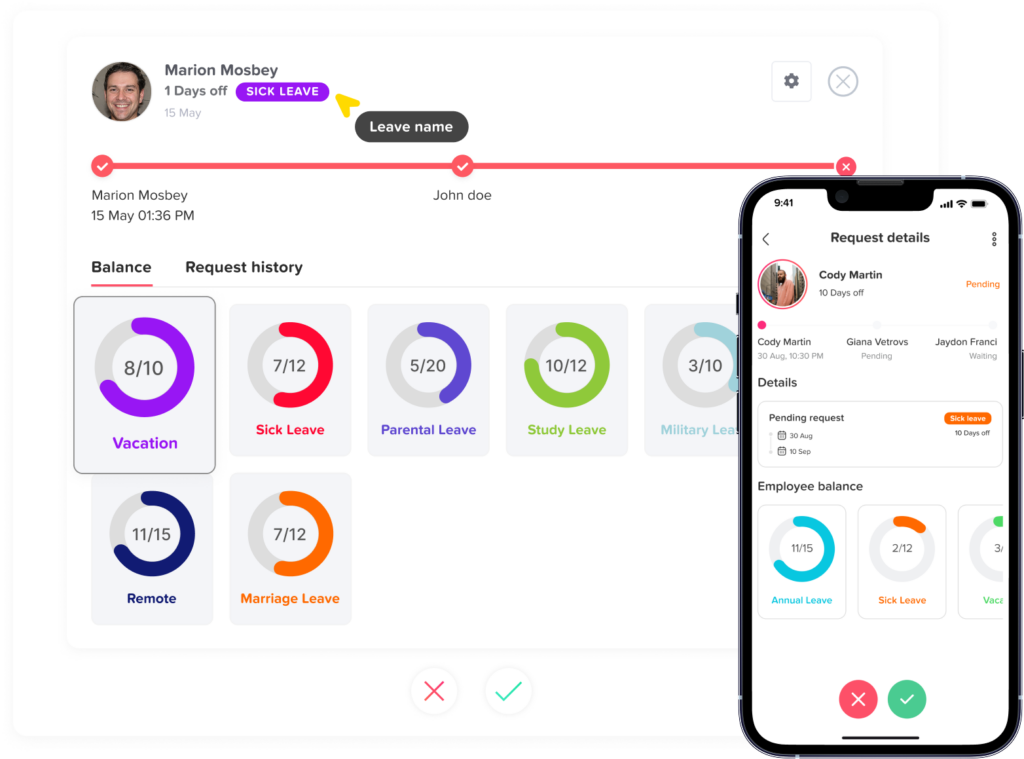
Accurate PTO tracking is essential for every company, but it becomes even more important when teams are distributed. Employees should be able to check their available balance without asking HR every time. Managers should also know whether an employee has enough balance before approving a request.
Manual PTO tracking can quickly become inaccurate, especially when HR is managing different leave policies, locations, public holidays, or accrual rules.
Accurate PTO tracking helps companies:
- Prevent employees from using more manage time off than allowed
- Reduce balance related questions
- Avoid payroll and compliance issues
- Give employees confidence in their available days
- Help managers approve requests faster
- Keep HR records organized
A leave management software like Day Off can automatically calculate leave balances, track used and remaining days, and update balances when requests are approved. This saves HR time and reduces the risk of human error.
Consider Time Zones and Work Schedules
Remote teams often include employees working across different time zones. Hybrid teams may also have flexible schedules, part time arrangements, or different working days. This makes leave management more complex than simply counting calendar days.
For example, one employee may work Monday to Friday, while another works a flexible schedule. A public holiday may apply to one location but not another. An employee in one country may be off while the rest of the team is working.
To manage this properly, companies should consider:
- Employee work schedules
- Local weekends
- Public holidays by location
- Time zones
- Part time or flexible work arrangements
- Different leave policies for different teams or countries
This helps prevent mistakes when calculating time off. It also makes the leave process fairer because each employee’s schedule and location are considered correctly.
Set Clear Approval Workflows
Remote and hybrid teams need a simple and consistent approval process. Employees should know who approves their requests, and managers should know when action is needed.
Without a clear approval workflow, requests can sit unanswered for days. This is especially common when managers are in different time zones or when approvals depend on more than one person.
A good approval workflow should answer these questions:
- Who receives the leave request?
- Is one approval enough, or are multiple approvals needed?
- What happens if the manager is unavailable?
- Can HR override or adjust requests when needed?
- How are employees notified when a request is approved or rejected?
Approval workflows help prevent delays and make the process more transparent. They also reduce confusion because everyone understands the steps.
With Day Off, companies can manage approval flows, assign approvers, and keep requests organized from submission to final decision.
Avoid Overlapping Leave Problems
Overlapping leave is one of the most common challenges for remote and hybrid teams. It may be fine for multiple employees to take manage time off at the same time, but it becomes a problem when too many people from the same team, role, or department are away together.
This can affect customer support, project delivery, daily operations, and team productivity.
To avoid overlapping leave issues, managers should:
Review the shared leave calendar before approving requests
Set clear rules for high demand vacation periods
Consider business needs and team coverage
Encourage employees to request leave early
Use reports to identify busy absence periods
Communicate clearly when a request cannot be approved
A leave management system gives managers the visibility they need before making approval decisions. Instead of approving requests blindly, they can see who is already scheduled to be away.
Plan Coverage Before Employees Go on Leave
For remote and hybrid teams, coverage planning should happen before the employee starts their manage time off. Since team members may not be in the same office, handovers need to be more intentional.
Before an employee goes on leave, managers should make sure:
Urgent tasks are reassigned
Project updates are documented
Clients or internal teams know who to contact
Access to important files is available
Deadlines are adjusted if needed
The employee sets an out of office message
Good coverage planning helps the employee fully disconnect during their manage time off. It also prevents coworkers from being surprised by missing information.
This is especially important for remote work because quick in person clarification is not possible. Documentation and planning become essential.
Respect Employee Time Off
manage time off is not only about tracking absences. It is also about respecting employees’ right to disconnect and recharge. Remote workers often struggle with boundaries because their work environment and home environment are the same. Hybrid employees may also feel pressure to stay available even when they are officially off.
Companies should encourage employees to take their approved leave without checking messages or joining meetings.
Managers can support this by:
Avoiding non urgent messages during manage time off
Reassigning responsibilities before leave begins
Encouraging employees to set out of office replies
Making sure team members know who to contact instead
Leading by example and taking manage time off themselves
When employees feel comfortable taking time off, they are more likely to return refreshed, motivated, and productive.
Use Leave Reports to Improve Planning
Leave reports help HR teams and managers understand absence patterns across the company. For remote and hybrid teams, these insights are valuable because managers may not always notice trends in daily work.
Reports can help answer questions such as:
Which months have the highest number of leave requests?
Are certain teams frequently understaffed?
Are employees using their PTO?
Are there too many unused leave balances?
Are sick leave patterns increasing?
Do certain locations have different absence trends?
These insights help companies improve workforce planning, adjust policies, and support employee wellbeing.
For example, if employees are not using their vacation days, managers may need to encourage better work life balance. If several people request leave during the same period every year, the company can plan coverage earlier.
Make Time Off Easy for Employees
A complicated leave process creates frustration. If employees have to search for forms, message multiple people, or wait too long for approval, they may avoid requesting time off or become dissatisfied with the process.
Remote and hybrid employees need a simple, accessible process that works from any location.
An employee friendly manage time off process should allow employees to:
Request leave easily
Check available balances
View approved and pending requests
See company holidays
Understand leave policies
Receive notifications about approval status
Use mobile access when needed
Day Off helps employees manage their manage time off from web, iOS, and Android, making it easier for remote and hybrid teams to submit and track requests wherever they work.
Keep Managers and HR Aligned
In remote and hybrid companies, managers and HR teams must stay aligned. Managers usually understand team workload and coverage needs, while HR manages policies, records, balances, and compliance. Both sides need access to accurate information.
When HR and managers work from different tools, mistakes can happen. A manager may approve a request without knowing the employee’s balance. HR may update a spreadsheet late. Employees may receive unclear answers.
A connected leave management system helps both sides work from the same data. Managers can focus on approvals and coverage, while HR can maintain accurate records and reports.
This improves communication and reduces unnecessary back and forth.
Standardize the Process Across the Company
Remote and hybrid teams often grow across different departments, locations, and work styles. Without a standardized process, each team may manage leave differently. One manager may approve requests through email, another through chat, and another through a spreadsheet.
This creates inconsistency and can feel unfair to employees.
A standardized time off process helps ensure:
All employees follow the same request method
Approvals are handled consistently
Leave balances are calculated correctly
HR records are accurate
Managers have the same visibility
Employees understand what to expect
Standardization does not mean every employee must have the same leave policy. Different locations or teams may have different rules. However, the process for requesting, approving, and tracking leave should be consistent.
Communicate Time Off Expectations Clearly
Communication is one of the most important parts of remote and hybrid work. Employees should know what is expected before, during, and after taking manage time off.
Companies should clearly explain:
How early employees should request vacation
What information should be included in a leave request
Whether employees need to prepare a handover
How urgent work will be covered
Whether employees are expected to be fully offline
How public holidays and company closures are handled
Clear communication reduces confusion and helps employees feel more confident when requesting manage time off.
Choose the Right Leave Management Software
The right leave management software can make time off management much easier for remote and hybrid teams. Instead of relying on manual updates, scattered messages, or disconnected calendars, companies can manage everything in one place.
When choosing a solution, look for features such as:
Easy leave requests and approvals
Accurate PTO balance tracking
Shared leave calendar
Custom leave types
Multiple policies
Team and location management
Public holiday support
Reports and exports
Mobile access
Notifications
Integrations with workplace tools
Day Off is built to help companies manage leave, vacations, PTO, and absences from one simple platform. It gives employees an easy way to request time off, gives managers better visibility into team availability, and helps HR teams keep records accurate without manual work.
With access from web, iOS, and Android, Day Off is especially useful for remote and hybrid teams that need flexibility and visibility across different locations.
Benefits of Better manage time off for Remote and Hybrid Teams
When manage time off is managed properly, the entire team benefits. Employees get a smoother experience, managers can plan with confidence, and HR teams spend less time on manual administration.
Better manage time off can help companies:
- Improve team planning
- Reduce scheduling conflicts
- Prevent overlapping absences
- Save HR time
- Improve employee trust
- Support work life balance
- Keep PTO records accurate
- Make approvals faster
- Increase visibility across remote and hybrid teams
- Build a healthier company culture
manage time off should not create confusion. It should be a simple, organized, and transparent process that supports both employees and the business.
Frequently Asked Questions
What is the best way to manage time off for remote teams?
The best way to manage time off for remote teams is to use a clear leave policy, a shared leave calendar, and a centralized leave management system. This helps employees request manage time off easily, gives managers visibility into availability, and helps HR track PTO balances accurately.
Why is time off management harder for hybrid teams?
manage time off is harder for hybrid teams because employees may work from different locations, follow different schedules, or split their time between home and the office. Without a clear system, it can be difficult to know who is available and who is away.
How can companies avoid overlapping leave requests?
Companies can avoid overlapping leave requests by using a shared leave calendar, setting clear approval rules, reviewing team coverage before approving requests, and encouraging employees to request leave early.
Should remote employees use the same leave policy as office employees?
Remote employees can follow the same general leave policy as office employees, but companies may need to consider differences such as time zones, public holidays, local laws, and flexible work schedules.
How does leave management software help remote and hybrid teams?
Leave management software helps remote and hybrid teams by keeping requests, approvals, balances, calendars, and reports in one place. It reduces manual work, improves visibility, and helps teams plan around employee absences more effectively.
Can Day Off help manage PTO for remote and hybrid teams?
Yes. Day Off helps remote and hybrid teams manage PTO, vacation requests, sick leave, approvals, leave balances, holidays, and shared calendars from one platform. It is available on web, iOS, and Android, making it easy for employees and managers to access from anywhere.
Final Thoughts
Manage time off for remote and hybrid teams requires more than a basic spreadsheet or an informal approval process. When employees work across different locations, schedules, and time zones, companies need clear policies, shared visibility, accurate tracking, and a reliable system for handling leave requests.
A well manage time off process helps teams stay organized, avoid staffing problems, and support employee wellbeing. It also gives managers and HR teams the information they need to make better decisions.
With a leave management software like Day Off, remote and hybrid teams can manage PTO, vacation requests, leave balances, approvals, and shared calendars in one place. This makes manage time off easier for employees, clearer for managers, and more efficient for HR.
For modern teams, manage time off properly is not just an administrative task. It is an important part of building a flexible, productive, and people focused workplace.