








A 9/80 work schedule gives employees an extra day off every two weeks without reducing their total scheduled hours. Instead of working ten standard eight-hour days, an employee typically works eight nine-hour days, one eight-hour day, and receives one additional day off during a two-week cycle.
The schedule itself is straightforward. PTO for a 9/80 work schedule can be more complicated.
Should an employee use eight or nine hours of PTO for a full day? What happens when they request leave on the eight-hour Friday? Does PTO continue accruing at the same rate? What if a holiday falls on the employee’s scheduled day off? And how does the unusual schedule affect overtime calculations?

These questions matter because applying a standard five-day, eight-hour PTO calculation to a 9/80 schedule can produce inaccurate balances.
This guide explains how PTO accrual and deductions can work for employees on a 9/80 schedule, with formulas and examples HR teams can use when designing their policies.
What Is a 9/80 Work Schedule?
A 9/80 work schedule is an alternative schedule in which an employee completes 80 working hours across nine workdays instead of ten.
A common schedule looks like this:
| Day | Week 1 | Week 2 |
|---|---|---|
| Monday | 9 hours | 9 hours |
| Tuesday | 9 hours | 9 hours |
| Wednesday | 9 hours | 9 hours |
| Thursday | 9 hours | 9 hours |
| Friday | 8 hours | Off |
| Total by Calendar Week | 44 hours | 36 hours |
Across the full two-week cycle:
(8 × 9 hours) + 8 hours = 80 hours
The employee therefore works the same 80 hours that a traditional employee might work over ten eight-hour days, but receives every other Friday off.
Some employers choose a different regular day off, but the underlying principle remains the same.
For federal employees, the U.S. Office of Personnel Management describes the similar 5/4-9 compressed schedule as eight nine-hour days plus one eight-hour day during an 80-hour biweekly period.
How Does PTO Work on a 9/80 Schedule?
The simplest principle is:
PTO used should generally reflect the working time the employee was scheduled to miss, subject to the employer’s written policy and applicable law.
That means an employee does not necessarily use the same amount of PTO every time they request a “day” off.
For example:
- A full nine-hour workday may require 9 hours of PTO.
- The employee’s eight-hour workday may require 8 hours of PTO.
- The employee’s regular 9/80 day off normally requires 0 hours of PTO because no work was scheduled.
- A three-hour absence may require 3 hours of PTO.
- Half of a nine-hour shift may require 4.5 hours, if the employer permits half-shift requests.
This is one reason tracking PTO in hours rather than generic days can be more accurate for alternative work schedules.
The schedule tells HR how much work the employee is actually missing.
Does a 9/80 Schedule Change How Much PTO an Employee Earns?
Not automatically.
A 9/80 schedule changes when the employee works their hours, but the employee may still work 80 hours during each two-week cycle.
If the company’s PTO benefit is based on employment status or an annual allowance, employees on a 9/80 schedule can usually remain under the same annual PTO entitlement as comparable employees working traditional schedules.
For example, suppose both employees receive:
120 hours of PTO per year
Employee A works five eight-hour days each week.
Employee B works a 9/80 schedule.
Both employees can still receive 120 PTO hours. Their deduction patterns are simply different because Employee B’s scheduled workdays are not all eight hours long.
The employer’s written PTO plan and applicable state or local law ultimately determine the benefit. Federal law does not generally require private employers to provide paid vacation. The U.S. Department of Labor explains that vacation, sick leave, and holiday pay are generally matters of agreement between the employer and employee under the FLSA.
PTO Accrual Examples for a 9/80 Work Schedule
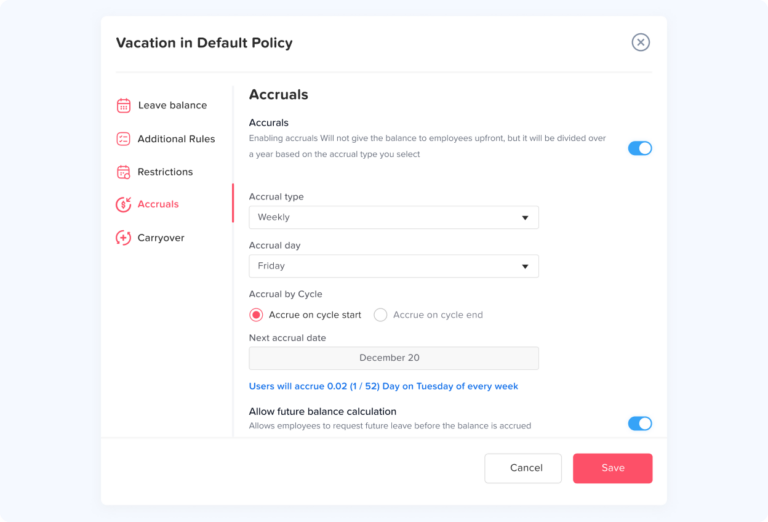
There are several ways an employer can accrue PTO for employees working a 9/80 schedule.
The correct method depends on how the company’s PTO policy is structured.
Example 1: Annual PTO Allowance
Suppose an employee receives:
120 PTO hours per year
The employee’s 9/80 schedule does not necessarily change that entitlement.
Their balance begins with or ultimately accrues to 120 hours, depending on whether the company uses a lump-sum or accrual model.
If the employee takes a nine-hour Monday off:
120 – 9 = 111 hours remaining
If they later take their eight-hour working Friday off:
111 – 8 = 103 hours remaining
The balance is reduced according to scheduled hours missed rather than assuming every day equals eight hours.
Example 2: Monthly PTO Accrual
Suppose an employee receives 120 PTO hours annually and the company accrues PTO monthly.
The calculation is:
120 ÷ 12 = 10 hours per month
The employee earns:
10 PTO hours each month
A 9/80 schedule does not normally require changing the monthly accrual simply because some workdays are nine hours.
Example 3: Biweekly PTO Accrual
Suppose the same 120-hour allowance accrues across 26 biweekly pay periods.
The calculation is:
120 ÷ 26 = approximately 4.615 hours per pay period
The company might display a rounded figure such as 4.62 hours, depending on its rounding rules and how the final accrual is reconciled.
The important point is that the 80-hour 9/80 schedule does not automatically require a different annual benefit.
Example 4: PTO Based on Hours Worked
Some employers calculate PTO according to actual hours worked.
For example:
1 PTO hour earned for every 40 hours worked
An employee who works the entire 80-hour 9/80 cycle earns:
80 ÷ 40 = 2 PTO hours
The calculation becomes more important when the employee takes leave.
Suppose during one cycle the employee:
- Works 71 hours
- Uses 9 hours of PTO
If the policy accrues PTO strictly from actual hours worked:
71 ÷ 40 = 1.775 PTO hours earned
If the employer’s policy treats paid leave as accrual-eligible time, the result could be different.
Employers should therefore define whether vacation, sick time, holidays, and other paid absences count toward PTO accrual.
Under the FLSA, paid vacation and holiday time generally do not count as hours worked for federal overtime calculations. That is separate from whether an employer chooses to count those hours for its own PTO accrual policy.
Comparing PTO Accrual Methods
| Accrual Method | Example | Effect of 9/80 Schedule |
|---|---|---|
| Annual lump sum | 120 hours per year | Usually no change |
| Monthly accrual | 10 hours per month | Usually no change |
| Biweekly accrual | About 4.615 hours per period | Usually no change |
| Hours worked | 1 hour per 40 hours worked | Depends on actual eligible hours |
| Days-based PTO | 15 days per year | Needs a clear definition of one PTO day |
The last method deserves particular attention.
Should PTO Be Tracked in Hours or Days for a 9/80 Schedule?
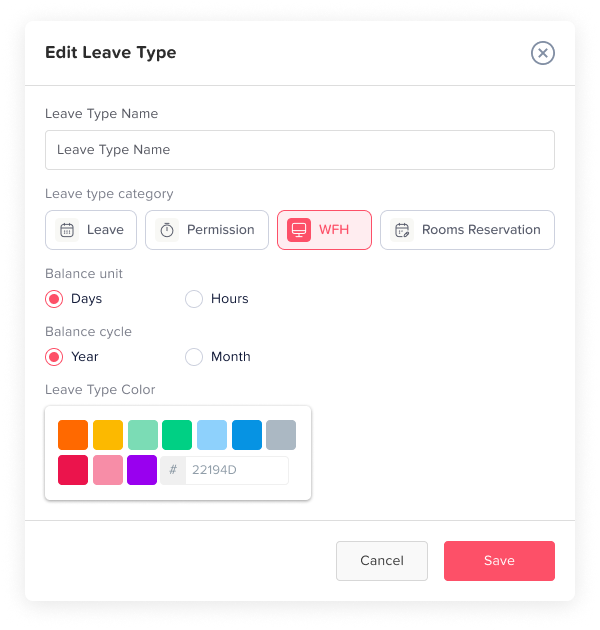
Tracking PTO in hours is often easier for a 9/80 schedule because the employee does not work the same number of hours every workday.
Consider a policy promising:
15 PTO days per year
What exactly is one PTO day?
If the organization defines one PTO day as eight hours:
15 × 8 = 120 PTO hours
An employee could then use:
- 9 hours for a nine-hour day
- 8 hours for the eight-hour day
- 4.5 hours for half of a nine-hour shift
The balance remains mathematically consistent.
Problems appear when the system simply deducts “1 day” regardless of whether the employee was scheduled for eight or nine hours.
That approach can make payroll, leave balances, reporting, and comparisons between employees harder to reconcile.
A clearer policy might state:
Full-time employees receive 120 hours of annual PTO. PTO is deducted according to the employee’s scheduled working hours during the approved absence.
That removes ambiguity around what a “day” means.
How Much PTO Should Be Deducted on a 9/80 Schedule?
The most practical method is to look at the employee’s scheduled hours for the requested period.
Here are common examples:
| PTO Request | Scheduled Time Missed | Typical PTO Deduction |
|---|---|---|
| Full Monday | 9 hours | 9 hours |
| Full Tuesday | 9 hours | 9 hours |
| Working Friday | 8 hours | 8 hours |
| Regular 9/80 Friday off | 0 hours | 0 hours |
| Half of a 9-hour shift | 4.5 hours | 4.5 hours |
| Two-hour appointment | 2 hours | 2 hours |
| Monday through Thursday | 36 hours | 36 hours |
| Monday through working Friday | 44 scheduled hours | 44 hours |
| Entire two-week 9/80 cycle | 80 hours | 80 hours |
These examples assume the employer’s policy allows hourly or partial-day PTO and deducts leave according to scheduled hours.
Example: Taking One Full 9-Hour Day Off
Maria works a 9/80 schedule and has:
64 PTO hours available
She requests Tuesday off.
Tuesday is scheduled for nine working hours.
Her new balance is:
64 – 9 = 55 hours
The company should not automatically deduct eight hours simply because eight hours is considered a traditional workday.
Maria was scheduled to work nine hours, so a nine-hour absence should generally be recorded as nine hours of PTO under a scheduled-hours policy.
Example: Taking the 8-Hour Friday Off
The employee’s working Friday is different.
Suppose Maria has 55 PTO hours remaining and requests her scheduled eight-hour Friday off.
The calculation becomes:
55 – 8 = 47 hours
This is why a leave system needs access to the employee’s actual work schedule.
A rule that always deducts nine hours would overcharge the employee. A rule that always deducts eight hours would undercharge leave taken on the employee’s longer days.
Example: Taking PTO on the Regular 9/80 Day Off
Suppose Maria’s next Friday is her scheduled 9/80 day off.
She requests vacation from Thursday through Friday.
Her schedule is:
Thursday: 9 hours
Friday: 0 scheduled hours
The PTO deduction should normally be:
9 + 0 = 9 hours
The regular day off should not consume PTO because the employee was not expected to work.
This principle is especially important for multi-day requests. Leave software should identify scheduled working days rather than simply counting every weekday between the start and end dates.
Example: Taking a Full Calendar Week Off
This scenario can surprise employees.
Imagine the employee requests Monday through Friday during the week containing their working Friday.
Their schedule is:
Monday: 9
Tuesday: 9
Wednesday: 9
Thursday: 9
Friday: 8
Total:
9 + 9 + 9 + 9 + 8 = 44 PTO hours
The employee may therefore use 44 PTO hours for that Monday-to-Friday absence under a scheduled-hours PTO policy.
During the following calendar week, when Friday is the employee’s regular day off, Monday through Friday would contain only:
9 + 9 + 9 + 9 = 36 scheduled hours
A full Monday-to-Friday absence during that week would therefore use 36 PTO hours.
Across the entire two-week schedule:
44 + 36 = 80 hours
The total still matches the employee’s 80 scheduled hours.
How Should Partial-Day PTO Work on a 9/80 Schedule?
Partial-day PTO should also follow scheduled hours whenever the company’s policy permits hourly leave.
Suppose an employee works from 8:00 a.m. until 6:00 p.m., with nine paid working hours after accounting for the unpaid meal period.
If the employee needs three hours off for an appointment:
PTO used = 3 hours
If the employee takes half of the nine working hours:
9 ÷ 2 = 4.5 PTO hours
Employers should avoid automatically defining every half-day as four hours when employees regularly work nine-hour shifts.
Otherwise, the employee may be paid for fewer hours than were scheduled or leave records may no longer match payroll.
What Happens When a Holiday Falls on a 9-Hour Day?
Holiday treatment should be clearly addressed in the company’s policy because the FLSA does not require private employers to provide paid holidays.
Suppose a company observes Monday as a paid holiday and the employee would normally work nine hours.
Scheduled-hours approach:
The employee receives nine holiday hours and uses no PTO.
Fixed eight-hour holiday approach:
The employee receives eight holiday hours. The policy must explain how the remaining scheduled hour is handled, such as through schedule adjustment or another approved method.
For comparison, federal employees on a qualifying compressed work schedule are generally excused for the number of non-overtime hours they would otherwise have worked on the holiday. OPM specifically gives the example that a holiday occurring on a nine-hour compressed workday can provide nine holiday hours. Private-sector employers should not assume those federal employee rules apply to them, but the example shows why holiday policies need to account for alternative schedules.
What If the Holiday Falls on the Employee’s 9/80 Day Off?
This is another policy question employers should decide before the situation occurs.
For a private employer, possible approaches include:
- No additional day because the employee was already scheduled off
- An observed holiday on another day
- A floating holiday
- Additional PTO or holiday hours
- Another method required by company policy, contract, collective bargaining agreement, or applicable law
Federal employees have specific “in lieu of” holiday rules when a federal holiday falls on a regular nonworkday, but those federal rules should not automatically be applied to private-sector employees.
The important HR lesson is simple: do not leave this situation undefined.
Employees on alternative schedules should be able to determine in advance what happens when a company holiday overlaps with their regular day off.
Does PTO Count Toward Overtime on a 9/80 Schedule?
This is where PTO calculations and payroll calculations need to be separated.
Under the federal Fair Labor Standards Act, covered nonexempt employees generally receive overtime for hours worked over 40 in a workweek.
A workweek is a fixed, regularly recurring period of 168 hours, or seven consecutive 24-hour periods. It can begin on any day and at any hour, but employers generally cannot average hours across two or more workweeks to avoid overtime.
Paid vacation generally is not considered hours worked for federal overtime purposes.
For example, an employee could receive:
- 32 hours of actual work
- 8 hours of PTO
The employee receives pay covering 40 hours, but only 32 are actual hours worked for the federal overtime calculation.
Company policies, union agreements, or state laws may provide more generous treatment.
Why the FLSA Workweek Matters for a 9/80 Schedule
Looking only at Monday through Sunday, a typical 9/80 pattern appears to produce:
Week 1: 44 hours
Week 2: 36 hours
Employers cannot simply say:
44 + 36 = 80, so there is no overtime.
Federal overtime rules generally do not permit averaging two workweeks together.
This is why many properly structured 9/80 arrangements establish a workweek boundary that falls partway through the employee’s eight-hour workday.
For example, four hours of the working Friday may fall into one defined workweek and the other four hours into the next.
The result can be:
Workweek 1: 40 scheduled hours
Workweek 2: 40 scheduled hours
The California Division of Labor Standards Enforcement has described this type of workweek structure in its guidance discussing 9/80 schedules. California also has its own alternative workweek and daily overtime requirements, so employers operating there need to follow the state’s additional rules.
Employers should have payroll or employment-law professionals review the setup before implementing a 9/80 schedule for nonexempt employees.
PTO Accrual and Overtime Are Different Calculations
One of the easiest mistakes to make is treating PTO calculations and overtime calculations as if they use the same rules.
They answer different questions.
PTO calculation asks:
How much leave has the employee earned and how much should be removed for this absence?
Overtime calculation asks:
How many qualifying hours did the employee actually work within the legally defined workweek?
For example, an employee might have a nine-hour PTO deduction on Monday while those nine paid leave hours do not count as nine hours worked toward the federal overtime threshold.
Leave management and payroll systems therefore need to preserve the difference between:
- Scheduled hours
- Hours worked
- PTO hours
- Holiday hours
- Overtime hours
- Regular days off
Common 9/80 PTO Mistakes
Deducting Eight Hours for Every PTO Day
If an employee misses a nine-hour shift, automatically deducting eight hours may leave one scheduled hour unaccounted for.
Deducting PTO on the Regular Day Off
The employee’s 9/80 day off is not normally a leave day. If no work was scheduled, PTO generally should not be deducted under a scheduled-hours approach.
Treating Every Friday the Same
One Friday may be an eight-hour workday while the next is a regular day off.
Leave calculations need to distinguish between them.
Using Days Without Defining What a Day Means
“15 PTO days” is ambiguous when employees work different shift lengths.
Expressing balances in hours can make the calculation easier to understand and audit.
Averaging Two Weeks for Overtime
An 80-hour biweekly schedule does not by itself eliminate federal overtime requirements. Each FLSA workweek generally stands alone.
Forgetting About Holidays
A holiday falling on a nine-hour workday or regular day off can create confusion if the policy only describes traditional eight-hour schedules.
What Should a 9/80 PTO Policy Include?
A clear policy should answer at least these questions:
- What is the employee’s official 9/80 schedule?
Identify the nine-hour days, eight-hour day, and regular day off. - Is PTO tracked in hours or days?
Hours are usually easier when daily schedules vary. - How much PTO is deducted for a full absence?
Explain whether deductions match scheduled working hours. - Can employees request partial-day PTO?
Specify minimum increments, such as 15 minutes, 30 minutes, or one hour. - How is PTO accrued?
State whether accrual is annual, monthly, biweekly, or based on hours worked. - Does paid leave count toward additional PTO accrual?
This is especially important for hours-worked accrual policies. - How are holidays handled?
Explain both holidays on working days and holidays falling on the regular 9/80 day off. - What is the official payroll workweek?
This is particularly important for nonexempt employees and overtime compliance. - How are schedule changes handled?
Explain what happens if an employee changes schedules after PTO has already been approved. - Which rule applies when state or local law provides greater protection?
PTO, vacation, sick leave, and overtime requirements can differ by jurisdiction.
Managing 9/80 PTO With Leave Management Software
Spreadsheets become difficult to maintain when employees have different working hours or alternating days off.
A request that simply says “Monday through Friday” is not enough. The system needs to know whether the employee is scheduled for:
- Nine hours
- Eight hours
- No work
- A different shift entirely
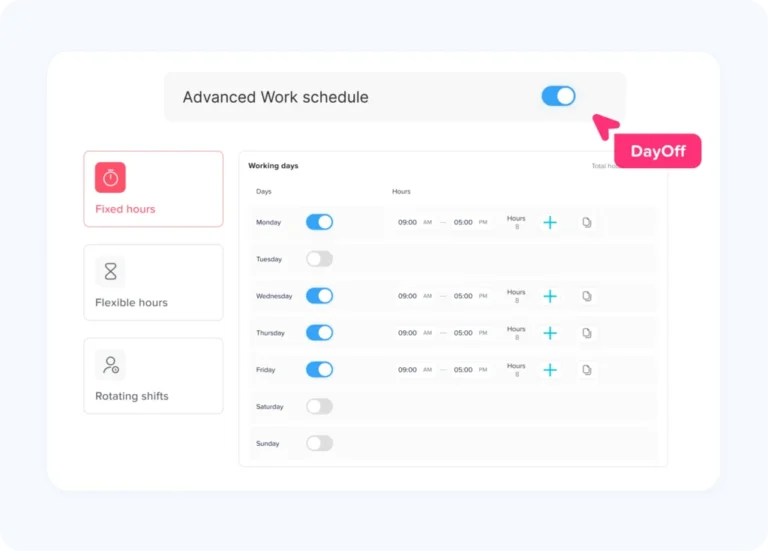
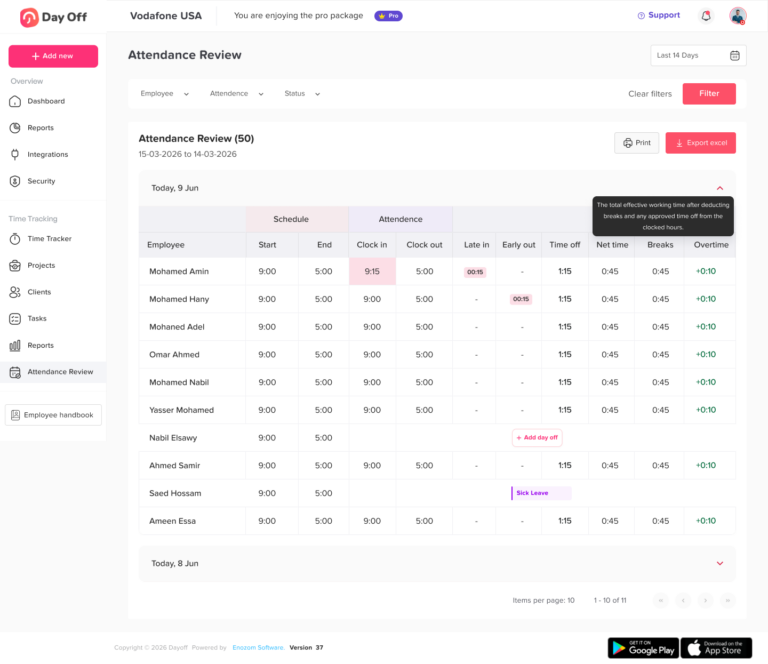
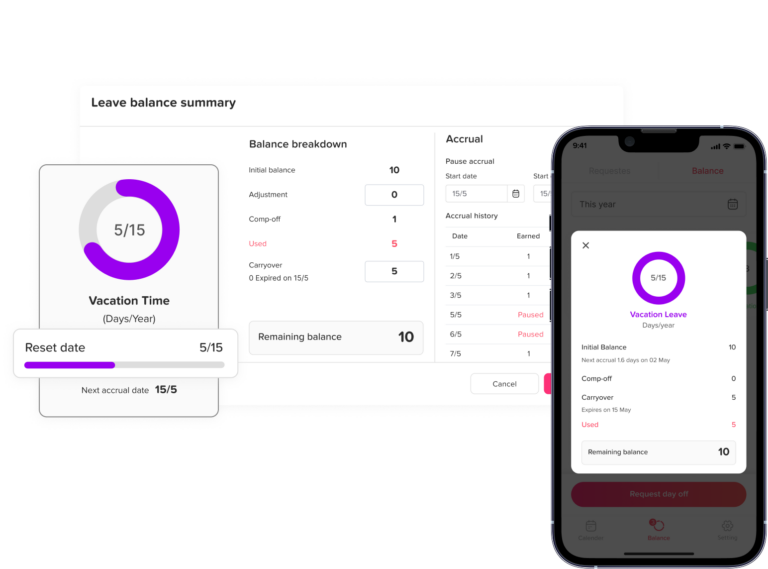
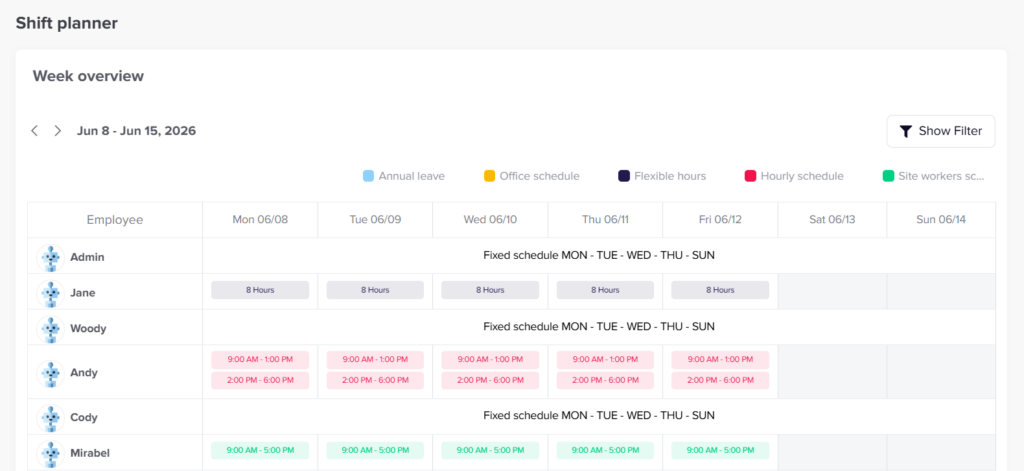
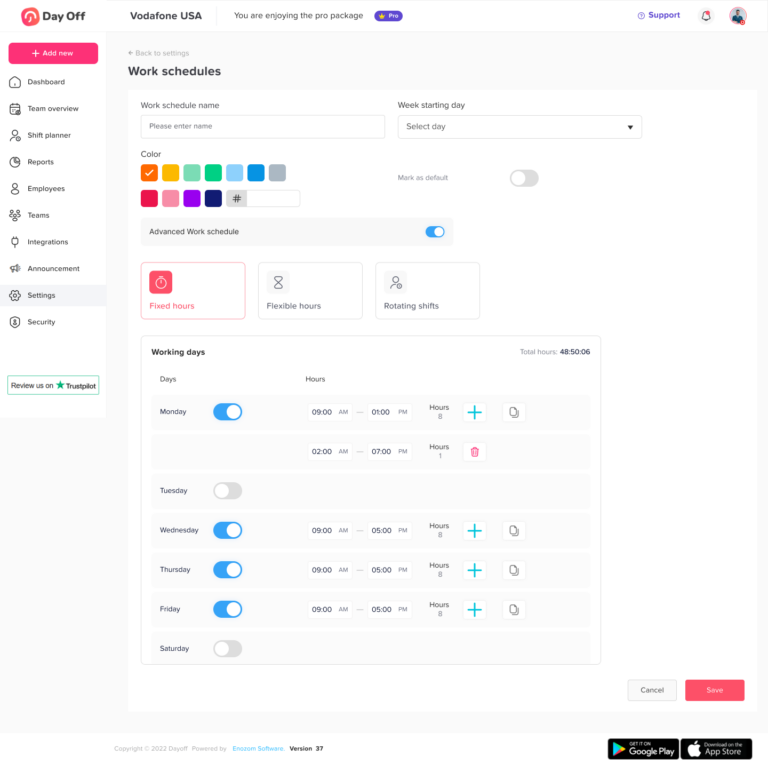
Day Off supports custom work schedules and uses employees’ assigned working days and hours when calculating leave requests. Organizations can create schedules for different employee groups instead of forcing everyone into the same Monday-to-Friday pattern.
This can help HR teams keep PTO balances aligned with the time employees were actually scheduled to work, particularly when managing alternative or rotating schedules.
It also keeps leave information connected with team availability, balances, approvals, and reporting rather than maintaining separate schedule and PTO spreadsheets.
Frequently Asked Questions About PTO and 9/80 Work Schedules
How does PTO work on a 9/80 schedule?
PTO on a 9/80 schedule should generally be based on the hours an employee was scheduled to work, according to the employer’s leave policy. If an employee takes a nine-hour workday off, the company may deduct nine hours of PTO. If the employee takes the scheduled eight-hour day off, the deduction may be eight hours. No PTO is normally needed for the employee’s regular 9/80 day off because no work was scheduled.
How many hours of PTO do you use on a 9/80 schedule?
The number of PTO hours usually depends on the scheduled shift. For a typical 9/80 schedule, a full absence on Monday through Thursday may require nine hours of PTO, while the eight-hour workday may require eight hours. A regular 9/80 day off would normally require zero PTO hours.
For example, if an employee takes Monday and Tuesday off and both are nine-hour workdays:
9 + 9 = 18 PTO hours
This method keeps the PTO deduction aligned with the employee’s actual scheduled working time.
Is a PTO day 8 or 9 hours on a 9/80 schedule?
It depends on how the employer defines and tracks PTO. If PTO is deducted according to scheduled hours, a full day of PTO on a nine-hour workday would equal nine hours, while the shorter workday would equal eight hours.
This is why employers with compressed schedules often find it clearer to maintain PTO balances in hours rather than simply in “days.” The PTO policy should clearly explain how a full day is calculated so employees know how much leave will be deducted before requesting time off.
Do you use PTO on your 9/80 Friday off?
Normally, no. If Friday is the employee’s regularly scheduled 9/80 day off, there are no scheduled working hours to replace with PTO.
For example, if an employee requests Thursday and their regular Friday off as vacation, only Thursday’s scheduled hours may need to be deducted. If Thursday is a nine-hour shift, the PTO deduction would be nine hours rather than 18 hours for both calendar days.
A leave system should therefore recognize scheduled nonworking days instead of deducting PTO for every weekday included in a request.
Normally, no. If Friday is the employee’s regularly scheduled 9/80 day off, there are no scheduled working hours to replace with PTO.
For example, if an employee requests Thursday and their regular Friday off as vacation, only Thursday’s scheduled hours may need to be deducted. If Thursday is a nine-hour shift, the PTO deduction would be nine hours rather than 18 hours for both calendar days.
A leave system should therefore recognize scheduled nonworking days instead of deducting PTO for every weekday included in a request.
It depends on which week of the two-week cycle the employee takes off.
In a common 9/80 schedule:
Working-Friday week:
Monday to Thursday = 36 hours
Friday = 8 hours
Total = 44 scheduled hours
Friday-off week:
Monday to Thursday = 36 hours
Friday = 0 hours
Total = 36 scheduled hours
Therefore, a Monday-to-Friday vacation could require either 44 or 36 PTO hours under a scheduled-hours policy. Across the entire two-week cycle, the employee has 80 scheduled working hours.
How does vacation work with a 9/80 schedule?
Vacation works much like other PTO, but the deduction should account for the employee’s scheduled working hours. An employee taking a nine-hour day off may use nine vacation hours, while their scheduled 9/80 day off should not normally reduce their vacation balance.
For multi-day vacations, employers should calculate the scheduled hours within the requested period rather than simply multiplying the number of weekdays by eight. This prevents employees from being charged for days they were not scheduled to work.
How does sick leave work on a 9/80 schedule?
If an employee is scheduled for nine hours and misses the entire shift because of illness, a scheduled-hours leave policy may deduct nine hours from the employee’s sick leave balance. An absence on the eight-hour workday may deduct eight hours.
The same principle can apply to partial-day sick leave. For example, if an employee misses three hours of a nine-hour shift, the employer may deduct three sick leave hours if its policy permits hourly leave.
Employers should also follow applicable federal, state, and local sick-leave requirements.
What happens if a holiday falls on a 9-hour workday?
For private-sector employers, holiday pay depends largely on company policy and applicable state or local requirements because federal law generally does not require private employers to provide paid holidays.
An employer could provide nine holiday hours when the employee was scheduled for nine hours, or it could use another clearly defined holiday-credit policy.
For federal employees on qualifying compressed work schedules, OPM states that an employee is normally excused and receives basic pay for the number of compressed-schedule hours they would otherwise have worked that day.
Private employers should clearly explain their own rule in the holiday policy.
What happens if a holiday falls on my 9/80 Friday off?
For private-sector employees, this depends on the employer’s holiday policy and any applicable law. A company might observe the holiday on another working day, provide a floating holiday, or follow another written policy.
Federal employees have separate rules. OPM provides an “in lieu of” holiday for eligible full-time federal employees when a federal holiday falls on a regular nonworkday, including employees using alternative work schedules.
Private companies should not automatically apply federal employee rules, but they should define this situation clearly so employees know what happens when a holiday overlaps with their regular day off.
Do you still work 40 hours a week on a 9/80 schedule?
A 9/80 schedule totals 80 scheduled hours across two weeks, but the FLSA overtime calculation for covered nonexempt employees is based on individual workweeks, not simply an 80-hour pay period.
Under federal law, a workweek is a fixed and regularly recurring period of 168 hours, or seven consecutive 24-hour periods. Covered nonexempt employees generally qualify for overtime after more than 40 hours worked within that workweek.
For this reason, employers using 9/80 schedules for nonexempt employees need to establish their workweek correctly rather than simply averaging 80 hours across two weeks.
Does a 9/80 schedule cause overtime?
It can if the schedule and workweek are not structured correctly.
A calendar view of a common 9/80 schedule may appear to have 44 hours in one week and 36 in the next. However, the FLSA generally does not allow an employer to average hours across two workweeks to avoid overtime. Each workweek stands on its own.
Many 9/80 arrangements therefore establish the workweek boundary during the employee’s eight-hour workday so that the schedule can be divided into two 40-hour FLSA workweeks.
Employers should review federal and applicable state overtime requirements before implementing the schedule.
Does PTO count toward the 40 hours for overtime?
Under the federal FLSA, paid vacation, holidays, and sick time generally do not count as hours actually worked when calculating whether a covered nonexempt employee has exceeded 40 hours for overtime purposes.
For example, an employee who works 36 hours and receives nine hours of PTO may be paid for 45 total hours, but only the hours actually worked generally count toward the federal 40-hour overtime threshold.
An employer, collective bargaining agreement, or state law may provide a more generous rule, so payroll policies should be checked separately.
How does PTO accrue on a 9/80 schedule?
The 9/80 schedule does not automatically change the employee’s PTO accrual rate. If a full-time employee receives 120 PTO hours per year, for example, the employer could continue providing the same 120-hour annual benefit even though the employee works longer days and receives every other Friday off.
The calculation depends on the company’s accrual method.
For example:
Annual: 120 hours per year
Monthly: 120 ÷ 12 = 10 hours per month
Biweekly: 120 ÷ 26 = approximately 4.615 hours per pay period
If PTO is earned according to hours worked, the employer should also define which hours are eligible for accrual.
Can you take half a day of PTO on a 9/80 schedule?
Yes, if the company’s PTO policy permits partial-day leave.
For an employee scheduled to work nine hours, half of the scheduled working time is:
9 ÷ 2 = 4.5 hours
The employee could therefore use 4.5 PTO hours for half of that shift if the company’s system and policy allow that increment.
Employers should define whether leave can be taken in increments such as 15 minutes, 30 minutes, one hour, half a shift, or another amount rather than automatically treating every half-day as four hours.
What happens if I take PTO on the 8-hour Friday of a 9/80 schedule?
If the Friday is the employee’s scheduled eight-hour workday, a full-day absence would generally require eight PTO hours under a scheduled-hours policy.
This day should be distinguished from the employee’s alternate Friday off:
Working Friday = 8 scheduled hours → 8 PTO hours
Regular Friday off = 0 scheduled hours → 0 PTO hours
Accurately identifying which Friday is being requested is important because automatically treating every Friday the same can result in incorrect leave balances.
Can employees switch their 9/80 day off to avoid using PTO?
That depends on the employer’s scheduling policy and applicable wage-and-hour rules. Some employers may allow schedule changes with manager approval, while others require employees to use PTO when they need time away from a scheduled workday.
For nonexempt employees, employers should be especially careful because changing workdays does not change the established FLSA workweek. The workweek is a fixed 168-hour period, and hours generally cannot simply be moved between workweeks to avoid overtime obligations.
Is a 9/80 schedule the same as having every other Friday off?
Not exactly. Having every other Friday off is a common result of a 9/80 schedule, but the defining feature is completing 80 scheduled hours across nine workdays in a two-week cycle.
A typical arrangement includes eight nine-hour days, one eight-hour day, and one nonworking day.
The regular day off does not have to be Friday in every organization. Employers can structure schedules differently as long as the arrangement complies with their policies and applicable wage-and-hour requirements.
Conclusion
PTO for a 9/80 work schedule works best when the leave policy follows the employee’s actual schedule rather than assuming every workday contains eight hours.
An employee may need nine PTO hours for a normal workday, eight hours for the shorter day, and zero hours for the regular 9/80 day off. The employee’s accrual rate, however, does not necessarily need to change if they continue working the same 80 hours during each two-week cycle.
The most important distinction is between PTO entitlement, scheduled hours, and hours actually worked. They serve different purposes and should not be mixed together.
A well-designed 9/80 PTO policy should clearly define accrual methods, hourly deductions, partial-day leave, holidays, regular days off, and the official workweek used for overtime purposes.
For organizations managing different schedules across employees, Day Off can help connect work schedules with leave requests and PTO balances so deductions reflect when employees are actually expected to work. That makes alternative schedules easier to manage without relying on manual calculations every time someone requests time off.