







Doctor appointments rarely fit neatly into a full day off. An employee may need 45 minutes for a checkup, two hours for a specialist appointment, half a day for medical tests, or recurring time away from work for treatment.
That raises a common HR question: should a doctor’s appointment be recorded as PTO, sick leave, or partial-day leave? There is no single answer for every workplace. In many cases, sick leave is the most appropriate option when the employer maintains a separate sick leave policy that covers medical appointments. If the company uses one combined PTO balance, the appointment may simply be recorded as PTO.

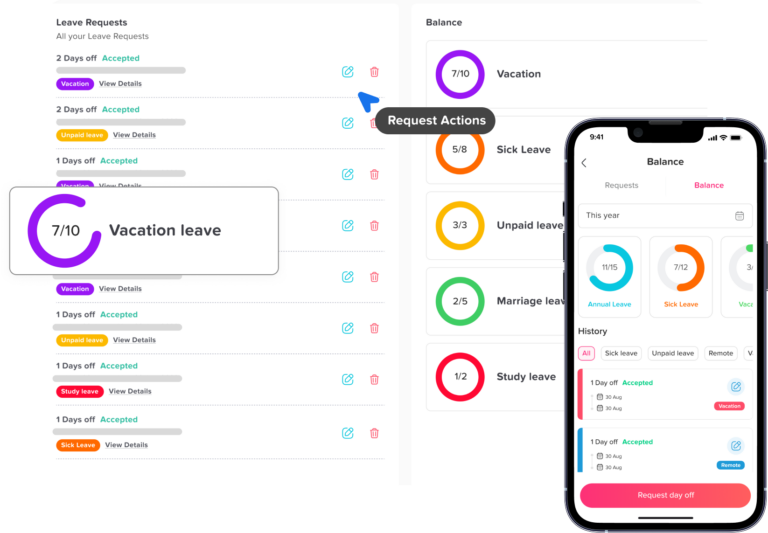
When only part of the scheduled workday is missed, the employer may allow the employee to use the relevant leave balance only for those missed hours rather than deducting an entire day.
The correct approach can also depend on federal, state, and local leave laws, the employee’s pay classification, the reason for the appointment, and whether protections such as the Family and Medical Leave Act (FMLA), Americans with Disabilities Act (ADA), or Pregnant Workers Fairness Act (PWFA) apply.
Should Employees Use Sick Leave for a Doctor Appointment?
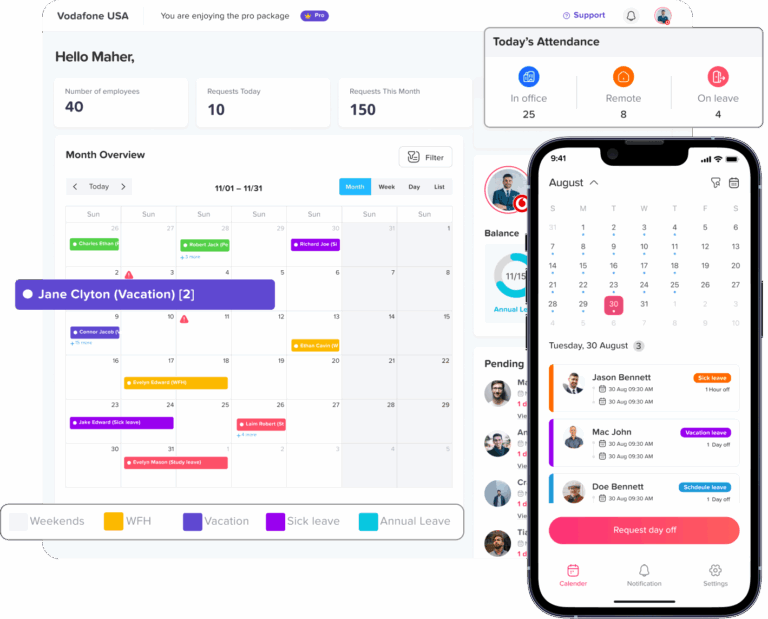
When an employer provides a separate sick leave balance, scheduled medical appointments are often treated as sick leave rather than vacation.
A sick leave policy might cover:
- Routine physical examinations
- Dental appointments
- Eye examinations
- Specialist visits
- Medical testing
- Mental health appointments
- Physical therapy
- Follow-up appointments
- Preventive care
- Treatment for an illness or injury
However, there is no general federal law requiring private employers to provide paid sick leave. The U.S. Department of Labor states that federal law does not generally require sick leave, although employees may have additional rights under laws such as the FMLA and under applicable state or local laws.
This means employers should not assume that one national rule determines whether a routine appointment must be paid. The company’s leave policy and the laws covering the employee’s work location both matter.
Example
An employee works from 9:00 a.m. to 5:00 p.m. and has a dentist appointment from 2:00 p.m. to 3:00 p.m. Including travel time, the employee misses two scheduled working hours.
If the company’s sick leave policy covers medical appointments and permits hourly leave, the employee could use two hours of sick leave, rather than taking an entire sick day.
That approach gives HR an accurate absence record without unnecessarily reducing the employee’s leave balance.
When Should a Doctor Appointment Be Recorded as PTO?
Some companies do not maintain separate vacation and sick leave balances. Instead, employees receive a single paid time off (PTO) balance that can be used for vacation, illness, appointments, personal matters, and other approved absences.
In this type of policy, using PTO for a doctor appointment is usually the simplest approach.
For example, if an employee has:
- 120 hours of general PTO
- No separate sick leave balance
- A three-hour medical appointment
the employer may deduct three hours from the employee’s PTO balance if the policy allows PTO to be used in hourly increments.
Employers should explain this clearly in their PTO policy. Employees should not have to guess whether an appointment should be submitted as vacation, personal leave, sick leave, or another category.
What Is Partial-Day Leave?
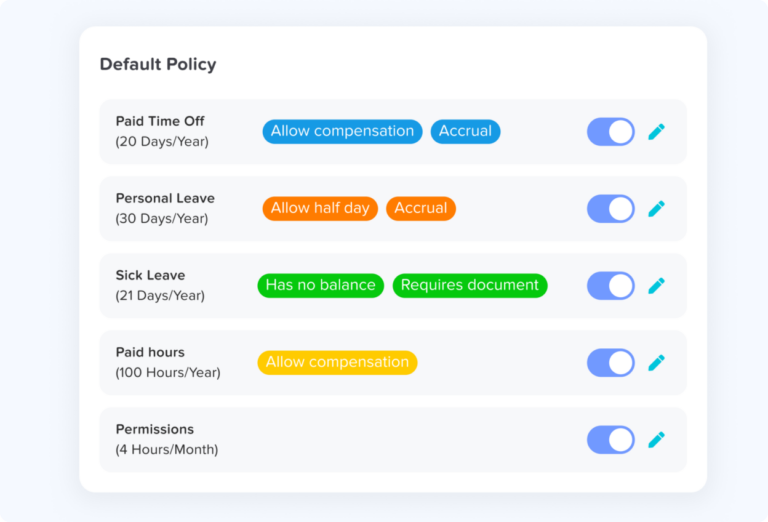
Partial-day leave describes an absence covering only part of an employee’s scheduled workday. It does not necessarily need to be a completely separate leave category.
For example, an employee might request:
- 1 hour of sick leave
- 2 hours of PTO
- A half-day medical absence
- 3 hours of intermittent FMLA leave
The important question is usually which leave balance or legal entitlement covers the missed time, rather than whether “partial-day leave” exists as its own policy.
A well-designed leave system should allow the employer to record the actual amount of scheduled working time missed whenever the applicable policy and law permit it.
| Type of Request | Main Consideration | Appropriate Response When Manager Is Away |
|---|---|---|
| Routine vacation months in advance | Staffing and policy | Another approver may review, or request may wait briefly |
| Vacation beginning soon | Timely decision and coverage | Escalate to backup or administrator |
| Ordinary personal PTO | Company policy | Follow backup approval process |
| Potential FMLA leave | Federal notice and eligibility requirements | Route promptly to HR or leave administrator |
| Disability-related leave | Possible ADA accommodation | Route to accommodation process |
| Emergency absence | Immediate operational response | Follow emergency call-out/leave procedure |
The table provides general examples. Applicable law and the employer’s policy should always be checked before determining the final leave treatment.
Should Employees Take a Full Day Off for a Doctor Appointment?
Usually, there is little operational reason to require a full day of leave when an employee only needs a small portion of the day away from work, unless the company’s policy or scheduling structure requires larger leave increments.
Consider an employee scheduled for eight hours who needs two hours for a medical appointment.
If the employee can work the remaining six hours, deducting eight hours of PTO may:
- Reduce the employee’s leave balance unnecessarily
- Discourage employees from scheduling preventive care
- Create inaccurate leave records
- Make PTO reporting less representative of actual absence time
Allowing leave to reflect the actual scheduled work time missed is often easier for employees and produces more accurate attendance data.
Employers should still define minimum leave increments. For example, a policy might permit requests in 30-minute, one-hour, half-day, or other reasonable increments based on operational needs and applicable laws.
Are Doctor Appointments Covered by FMLA?
A doctor appointment is not automatically covered by the FMLA simply because it involves medical care.
FMLA protection generally applies when an eligible employee of a covered employer needs leave for a qualifying family or medical reason, including the employee’s own serious health condition or certain serious health conditions of a spouse, child, or parent.
When medically necessary, qualifying FMLA leave can be taken intermittently or through a reduced work schedule. The Department of Labor specifically gives an example of an employee taking one or two hours of FMLA leave for doctor or therapy appointments related to a serious health condition.
Example: Recurring treatment
Suppose an employee has a qualifying chronic medical condition and must attend a two-hour treatment appointment every month.
If the employee meets the FMLA eligibility requirements and the condition qualifies, those appointments may be recorded as intermittent FMLA leave rather than treated like ordinary attendance violations.
Under current Department of Labor guidance, eligible employees generally must have worked for a covered employer for at least 12 months, completed at least 1,250 hours of service during the preceding 12 months, and work at a location meeting the FMLA employee-location requirement.
Can PTO or Sick Leave Be Used at the Same Time as FMLA?
Yes, in certain circumstances.
FMLA itself generally provides job-protected leave rather than guaranteed paid leave. An employee may use employer-provided paid leave while taking FMLA leave when the reason qualifies under the employer’s paid leave policy. Employers may also require employees to use applicable paid leave during FMLA leave.
For example:
An employee misses four hours for treatment related to an FMLA-qualifying condition.
The four hours could potentially be recorded as:
4 hours sick leave + 4 hours FMLA
The employee receives pay through the sick leave policy while the same four hours receive FMLA job protection.
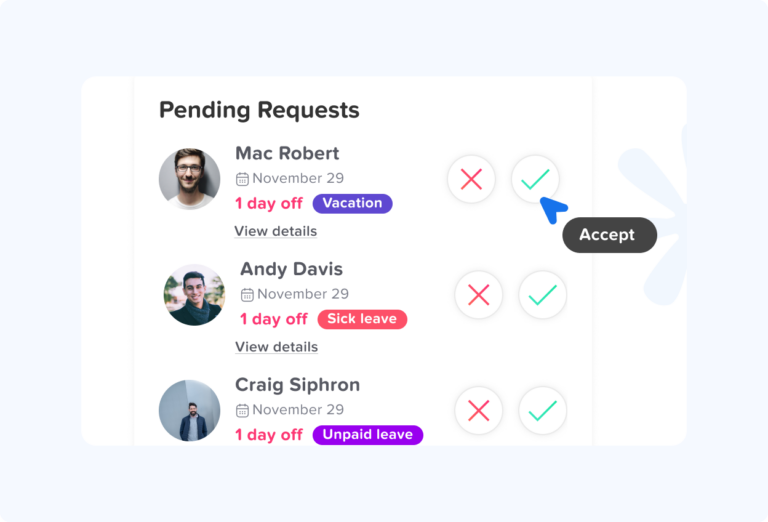
HR systems should therefore distinguish between how an absence is paid and why the absence is legally protected.
What About Disability-Related Doctor Appointments?
Medical appointments related to a disability can also raise obligations under the Americans with Disabilities Act.
The EEOC explains that leave may be a reasonable accommodation for an employee with a disability, including intermittent leave for medical treatment. A modified or adjusted schedule may also be appropriate depending on the circumstances.
For example, an employee may need:
- Physical therapy every Wednesday morning
- Regular treatment for a chronic condition
- Periodic psychiatric appointments
- Follow-up medical appointments after surgery
- A temporary modified starting time following treatment
Even when the employee has exhausted ordinary PTO or does not qualify for FMLA, an employer covered by the ADA may still need to consider unpaid leave or another reasonable accommodation unless doing so would create an undue hardship.
Employers should therefore avoid automatically denying a medical appointment request simply because the employee has no PTO remaining.
HR may first need to determine whether another workplace protection applies.
What About Prenatal and Pregnancy-Related Appointments?
Pregnancy-related medical appointments require particular care.
Under the Pregnant Workers Fairness Act, reasonable accommodations can include schedule changes and leave for health care appointments related to pregnancy, childbirth, or related medical conditions. Covered employers generally must provide reasonable accommodations unless doing so would cause an undue hardship.
Depending on the circumstances and the employee’s eligibility, FMLA protections may also apply.
Managers should therefore avoid treating every prenatal appointment as an ordinary discretionary PTO request without checking whether pregnancy-related workplace protections apply.
How Should Hourly Employees Record Doctor Appointments?
For an hourly employee, time spent away from work for a doctor appointment can generally be tracked based on the actual scheduled hours missed.
For example:
Normal schedule: 8:00 a.m. to 4:00 p.m.
Employee leaves: 1:00 p.m.
Employee returns: 3:00 p.m.
The employee has missed two scheduled working hours.
Depending on the policy, those two hours might be recorded as:
- 2 hours paid sick leave
- 2 hours PTO
- 2 hours protected medical leave
- 2 hours unpaid leave
Recording the actual absence instead of automatically deducting a full day generally provides a more accurate record of attendance and leave balances.
What About Salaried Exempt Employees?
Employers must be more careful when salary deductions are involved.
Under the federal salary-basis rules, deductions from an exempt employee’s salary for partial-day absences are generally restricted. However, the Department of Labor explains that an employer may reduce an exempt employee’s accrued leave balance for partial-day absences without violating the salary-basis requirement, provided the employee still receives the required salary.
For example, an exempt employee could potentially have two hours deducted from a PTO balance for a medical appointment while still receiving the employee’s normal salary.
There are separate rules for qualifying unpaid FMLA leave, so payroll and HR teams should make sure the employee’s pay classification and applicable leave protection are considered before reducing salary.
Can an Employer Require Employees to Use PTO for Doctor Appointments?
Possibly, depending on the employer’s policy and applicable law.
If the employer operates a single PTO bank, the policy may require employees to use PTO whenever they miss scheduled work for a personal medical appointment.
If separate sick leave exists, however, the policy should explain whether employees are expected to use sick leave before vacation or general PTO.
Protected leave adds another layer. For qualifying FMLA leave, an employer may require applicable employer-provided paid leave to run concurrently with the FMLA absence.
State and local sick leave laws may provide additional rules, so employers operating across several locations should avoid applying one policy without checking local requirements.
Can Employees Make Up the Hours Instead?
Some employers allow employees to adjust their schedule instead of using leave.
For example, an employee who leaves two hours early for an appointment might:
- Start two hours earlier
- Work later that day
- Adjust hours elsewhere in the workweek
- Use a flexible work schedule
Whether this is practical depends on the employee’s position, workplace rules, overtime requirements, coverage needs, and the employer’s scheduling policy.
Employers that allow schedule adjustments should apply the option consistently. Managers should not allow one employee to make up medical appointment time while automatically deducting PTO from another employee in comparable circumstances without a legitimate reason.
Can Employers Ask for a Doctor’s Note?
Employers may maintain reasonable documentation requirements in certain circumstances.
EEOC guidance states that employers can have policies requiring employees to provide a doctor’s note or other documentation to support the need for leave, provided those policies comply with applicable disability and employment laws.
However, employers should avoid collecting more medical information than necessary.
Documentation rules should also account for:
- FMLA certification requirements
- ADA confidentiality obligations
- State and local sick leave laws
- Pregnancy accommodation requirements
- The length and frequency of the absence
A one-hour routine appointment and a recurring medical leave arrangement may not require the same documentation process.
A Better Doctor Appointment Leave Policy
A good policy should answer the questions employees are likely to have before they submit a request.
Employers should clearly define:
Which Leave Type Employees Should Select
Explain whether routine medical appointments should be submitted as sick leave, PTO, personal leave, or another category.
Employees should not need to ask HR every time they schedule an appointment.
Whether Partial-Day Requests Are Allowed
If employees can take one, two, or three hours instead of a full day, state the minimum leave increment clearly.
How Much Notice Is Expected
Employees should give reasonable advance notice for appointments they know about in advance, subject to applicable law.
Emergency medical treatment should follow a separate call-out procedure.
Whether Schedule Adjustments Are Allowed
If employees can make up missed time rather than use PTO, explain who must approve the change and when the hours can be worked.
How Protected Medical Leave Is Handled
Managers should know when a request may need to be referred to HR for FMLA, ADA, PWFA, or another protected leave review.
What Documentation May Be Required
Clearly explain when documentation is necessary instead of asking for a doctor’s note for every short appointment.
How Medical Information Is Protected
Managers generally do not need detailed information about an employee’s diagnosis simply to manage routine scheduling.
Sample Doctor Appointment Leave Policy
Medical appointments: Employees who need time away from their normal work schedule for a medical, dental, mental health, therapy, or other health care appointment should submit a leave request as early as reasonably possible.
When available and permitted by applicable law, employees should use sick leave for qualifying medical appointments. Employees covered by a combined PTO policy may use their available PTO balance.
Employees who need only part of the workday should request leave for the scheduled working time they expect to miss rather than automatically requesting a full day, subject to the company’s minimum leave increment.
Medical absences that may qualify for FMLA, disability accommodation, pregnancy accommodation, or another legally protected leave will be reviewed separately in accordance with applicable law.
Examples of How Doctor Appointments Can Be Recorded
Example 1: Routine dentist appointment
Maria normally works eight hours and needs two hours for a scheduled dental appointment.
Possible record: 2 hours sick leave.
There is usually no reason to deduct an entire eight-hour day if the employer permits hourly sick leave.
Example 2: Company uses one PTO balance
Daniel’s company does not separate vacation and sick leave. He needs three hours for an annual physical and laboratory tests.
Possible record: 3 hours PTO.
Example 3: Recurring medical treatment
Sophie requires treatment every second Tuesday for a qualifying serious health condition and is eligible for FMLA.
Possible record: Intermittent FMLA for the hours missed, potentially running concurrently with applicable paid sick leave or PTO.
Example 4: Disability-related therapy
James requires recurring physical therapy connected to a disability.
The employer may need to consider intermittent leave or a modified schedule as a reasonable accommodation under the ADA rather than treating every appointment simply as an attendance problem.
Example 5: Prenatal appointment
An employee needs two hours for a prenatal health care appointment.
The request may involve protections under the PWFA, and potentially other applicable leave laws, rather than being treated solely as optional personal PTO.
Why Accurate Partial-Day Tracking Matters
Doctor appointments are a good example of why leave management should reflect an employee’s actual work schedule.
When every absence is automatically treated as a full day, companies can create inaccurate:
- PTO balances
- Sick leave balances
- Attendance records
- Staffing reports
- Payroll records
- Leave histories
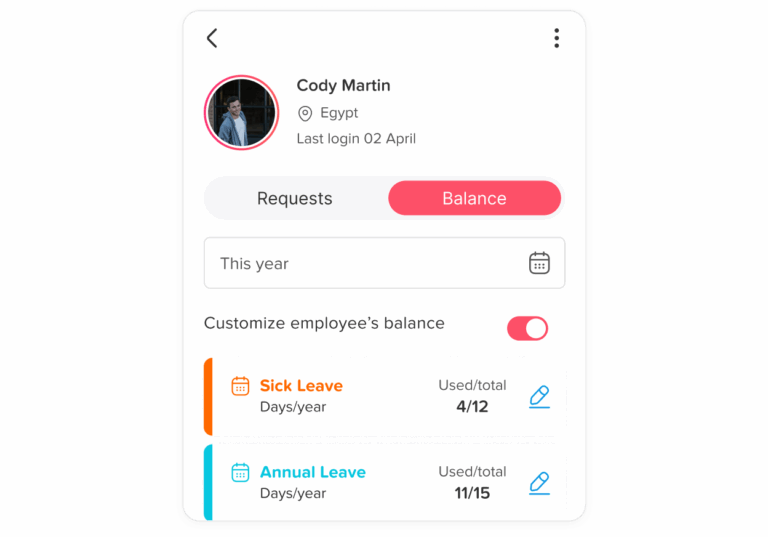
Tracking the scheduled hours actually missed gives HR a clearer picture of employee availability while preventing employees from losing more leave than the policy requires.
It also becomes particularly important for employees with flexible schedules, rotating shifts, part-time schedules, and recurring medical appointments.
Frequently Asked Questions
Can I use sick leave for a doctor’s appointment?
Yes, if your employer’s sick leave policy or an applicable state or local law allows sick leave to be used for medical appointments. Medical, dental, preventive care, therapy, and treatment appointments may qualify depending on the policy and jurisdiction. There is no general federal requirement for private employers to provide paid sick leave, so employees should also check their state and local rules.
Do I have to use PTO for a doctor’s appointment?
Not always. If your employer has a combined PTO bank, you may need to use PTO for time missed because of a medical appointment. If the company provides separate sick leave, the appointment may qualify for sick leave instead. Some employers also allow employees to adjust their working hours without using paid leave.
Can my employer make me use PTO for a doctor’s appointment?
An employer may have a policy requiring available PTO to be used for time away from work, subject to applicable federal, state, and local leave laws. If the absence qualifies for legally protected leave, additional rules may apply, so an employer should not treat every medical appointment as an ordinary PTO request.
Can my employer deny time off for a doctor’s appointment?
A routine doctor’s appointment is not automatically protected under federal law, so approval may depend on company policy. However, an employer may have legal obligations if the appointment relates to a qualifying serious health condition under the FMLA, a disability accommodation, pregnancy-related needs, or state or local protected sick leave.
Do I need to take a full day of PTO for a doctor’s appointment?
Not necessarily. If the employer allows PTO or sick leave to be used in hourly or partial-day increments, an employee who misses two hours may be able to use only two hours of leave.
Rules can also depend on location. For example, California’s paid sick leave guidance specifically states that an employer cannot require an employee with a three-hour medical appointment to use an entire day of paid sick leave, although employers may establish a permitted minimum increment.
Can I take half a day off for a doctor’s appointment?
Yes, if the employer’s leave policy permits half-day or partial-day requests. This can be useful when travel, waiting time, treatment, or recovery makes a one-hour request impractical but the employee does not need the entire day away from work.
For accurate leave tracking, employers can record the portion of the scheduled workday actually missed rather than automatically treating every appointment as a full-day absence.
Can I leave work early for a doctor’s appointment?
Usually, this depends on the employer’s attendance and leave policy. An employee may be able to leave early and use sick leave, PTO, partial-day leave, or an approved schedule adjustment for the remaining hours.
Employees should provide advance notice when the appointment is scheduled in advance, particularly when another employee needs to provide coverage.
Do I have to make up the hours for a doctor’s appointment?
There is no single rule that requires every employee to make up time missed for a medical appointment. Some employers allow employees to work earlier, stay later, or adjust their schedule instead of using PTO, while others require the missed hours to be recorded as paid or unpaid leave.
Workplace discussions show that making up one or two hours is a common alternative offered by flexible employers, but whether it is available depends on company policy and wage-and-hour requirements.
Can I use PTO for just one or two hours?
Possibly. Many PTO policies allow leave to be requested in hours instead of full days, making it possible to use PTO for a short medical appointment.
The employer should clearly define its minimum PTO increment, such as 30 minutes or one hour, so employees know exactly how much time to request.
Can my employer ask for a doctor’s note for an appointment?
Sometimes. Documentation requirements depend on the employer’s policy, the type and duration of leave, and applicable law.
Employers should also consider medical privacy requirements and any specific rules governing protected sick leave, FMLA leave, or disability accommodations. Some state sick-leave laws restrict when documentation can reasonably be required.
Are doctor’s appointments covered by FMLA?
Not every doctor’s appointment qualifies for FMLA leave. An appointment may be covered when it relates to an FMLA-qualifying serious health condition and the employee otherwise meets FMLA eligibility requirements.
This is particularly relevant for treatment, follow-up care, or recurring medical appointments that are medically necessary for a qualifying condition.
Can I use FMLA for recurring doctor’s appointments?
Potentially, yes. When medically necessary, eligible employees can use intermittent FMLA leave in separate periods rather than taking one continuous block of leave.
This can apply when an employee needs recurring treatment or medical appointments associated with a qualifying serious health condition.
Can I use sick leave for a dentist appointment?
Often, yes. Many sick leave policies include medical, dental, and vision examinations or treatment. Whether a specific appointment qualifies depends on the employer’s policy and any state or local sick-leave requirements.
Employers should clearly state whether dental and vision appointments fall under the same rules as other medical appointments.
Can I use sick leave for therapy or mental health appointments?
Often, yes. Mental health treatment should not automatically be treated differently from other health care appointments when it falls within the employer’s sick leave policy.
Recurring mental health treatment may also raise FMLA or disability accommodation considerations depending on the employee’s circumstances.
Are prenatal doctor’s appointments protected at work?
They may be. Pregnancy-related medical appointments can involve protections under the Pregnant Workers Fairness Act, and other protections such as FMLA may apply depending on the employee’s eligibility and circumstances.
Employers should therefore avoid automatically requiring an employee to use ordinary vacation time without first considering whether the appointment is connected to a protected pregnancy-related accommodation or leave right.
Can my employer require me to schedule doctor appointments outside working hours?
An employer can generally establish reasonable scheduling and attendance expectations, but requiring every medical appointment to occur outside working hours may create problems when protected leave or accommodation laws apply.
Some medical appointments cannot reasonably be scheduled outside an employee’s normal working hours. Employers should consider the circumstances, company policy, and applicable leave protections rather than applying an automatic rule.
What happens if I have no PTO left but need to go to a doctor’s appointment?
Having no PTO balance does not necessarily mean the employee must miss the appointment or that the absence can automatically be denied.
Depending on the circumstances, the employee may be able to use unpaid leave, adjust their schedule, use another available leave type, or receive legally protected leave or a reasonable accommodation. The appropriate option depends on the reason for the appointment and the laws that apply to the employee.
Conclusion
For most workplaces, the simplest rule is to match the leave type to the reason and the actual amount of work missed.
Use sick leave when a separate sick leave policy covers medical appointments. Use PTO when the organization maintains a combined leave balance. When an employee misses only part of the workday, allow partial-day leave where policy and law permit instead of automatically deducting a full day.
Employers should also recognize that some doctor appointments go beyond ordinary PTO administration. Recurring treatment, serious health conditions, disabilities, and pregnancy-related appointments can trigger protections under laws such as the FMLA, ADA, or PWFA.
A clear policy, accurate leave tracking, and consistent approval process make it easier for employees to attend necessary medical appointments without creating confusion for managers, HR, or payroll.