







Employees need time away from work for many reasons. Some want to take a vacation, attend an appointment, recover from an illness, celebrate a religious holiday, or observe a cultural event that is not included in the company’s standard holiday calendar.
Employers may support these needs through paid time off, floating holidays, personal days, vacation leave, sick leave, or a combination of different leave types.
Two benefits that are often confused are floating holidays and PTO. Both allow employees to take paid time away from work, but they are usually created for different purposes and may follow different rules.
Related reading: Emergency Time Off Policy: What Counts as an Emergency?

A floating holiday is generally a limited paid day that employees can use on a date they choose. PTO is normally a larger bank of paid hours or days that employees can use for vacations, personal needs, illness, emergencies, and other approved absences.
The exact treatment depends on the employer’s policy. A floating holiday may expire at the end of the year, require advance approval, or be limited to certain occasions. PTO may accrue throughout the year, carry over, and become subject to different payout requirements.
This guide explains the difference between floating holidays and PTO, provides policy examples, and shows employers how to track each benefit accurately.
What Is a Floating Holiday?
A floating holiday is a paid day off that an employee can use on a date that is not fixed by the employer’s standard holiday schedule.
Unlike Christmas Day, New Year’s Day, or another company holiday that occurs on a specific date, a floating holiday “floats.” The employee selects when to use it, subject to the company’s request and approval rules.
Employees may use floating holidays for:
- Religious observances
- Cultural celebrations
- Birthdays
- Family events
- Community events
- Personal milestones
- Holidays not included in the company calendar
- A replacement day when a public holiday falls on a non-working day
- Any personal reason allowed by the policy
For example, a company may observe ten fixed holidays and provide employees with two additional floating holidays. An employee could use those days for Eid al-Fitr, Diwali, Rosh Hashanah, Lunar New Year, a birthday, or another personally meaningful date.
A floating holiday is normally separate from regular vacation or PTO, although some employers include it within a combined paid leave bank.
What Is PTO?
Paid time off, commonly called PTO, is paid leave that employees can use when they are not working.
Depending on the policy, PTO may cover:
- Vacations
- Personal days
- Short-term illness
- Medical appointments
- Family responsibilities
- Emergencies
- Mental health days
- Other approved absences
Some employers maintain one combined PTO bank. Others separate vacation, sick leave, personal leave, and floating holidays into different balances.
The U.S. Department of Labor explains that federal law generally does not require private employers to pay employees for time not worked, including vacation and holidays. These benefits are usually determined by employer policy, employment agreements, collective bargaining agreements, and applicable state or local law.
Floating Holiday vs. PTO: The Main Difference
The main difference is usually the purpose and structure of the benefit.
A floating holiday is typically a small number of flexible paid days provided in addition to the company’s standard holidays.
PTO is generally a broader bank that employees can use for several types of planned or unplanned absence.
| Policy Area | Floating Holiday | PTO |
|---|---|---|
| Main purpose | Flexible holiday or personal observance | General paid absence |
| Typical amount | One to three days per year | Larger annual balance |
| Common uses | Religious, cultural, or personal dates | Vacation, illness, appointments, or personal needs |
| How it is provided | Often granted at once | May be frontloaded or accrued |
| Approval | Usually required | Usually required |
| Carryover | Often limited or unavailable | May carry over depending on policy |
| Expiration | May expire at year-end | Depends on policy and applicable law |
| Payout at termination | Depends on policy and legal classification | May be required in some jurisdictions |
| Balance tracking | Separate holiday balance | General PTO balance |
| Availability | May begin on January 1 or the eligibility date | May begin on the hire date or through accruals |
These are common policy structures, not universal legal rules. Employers must define how each benefit works in their organization.
How Floating Holidays Work
A company usually provides a fixed number of floating holidays at the beginning of a calendar year, benefit year, or employee anniversary year.
For example:
Eligible employees receive two floating holidays on January 1 each year.
The company then establishes rules covering:
- Eligibility
- Acceptable uses
- Request deadlines
- Manager approval
- Minimum staffing
- Partial-day use
- Carryover
- Expiration
- Treatment at termination
Floating Holiday Example
Assume an employee receives:
- Ten fixed company holidays
- Two floating holidays
- Fifteen vacation days
The employee may use one floating holiday for a religious observance in March and the second for a birthday in September. The employee’s regular vacation balance remains unchanged.
Restricted Floating Holiday
Some employers connect floating holidays to specific dates.
For example, the employee may choose one day from a list that includes:
- Martin Luther King Jr. Day
- Presidents’ Day
- Juneteenth
- Veterans Day
- The employee’s birthday
- A religious or cultural observance
This is more flexible than a fixed holiday but less flexible than a floating holiday that can be used for any personal reason.
Unrestricted Floating Holiday
An unrestricted floating holiday may be used on any approved workday.
For example:
Employees may use floating holidays for any personal, cultural, or religious occasion, subject to manager approval and minimum staffing requirements.
This approach is simple, but employers should still explain whether employees must provide a reason for the request. Requiring unnecessary personal or religious information may create privacy and consistency concerns.
How PTO Works
PTO can be provided through an accrual system or a frontloaded balance.
Accrued PTO
Employees earn PTO gradually.
For example:
- Annual PTO entitlement: 120 hours
- Monthly accrual: 10 hours
- Balance after three months: 30 hours, minus any time used
Frontloaded PTO
Employees receive the full annual balance at once.
For example:
Employees receive 120 PTO hours on January 1.
New hires may receive the full amount or a prorated balance based on their start date.
Unlimited PTO
Some employers do not maintain a fixed balance. Employees request time off according to policy, performance expectations, and staffing needs.
Floating holidays may still be useful under an unlimited PTO policy because they formally recognize specific personal, cultural, or religious occasions.
When Should an Employee Use a Floating Holiday?
A floating holiday may be the best option when:
- The absence is connected to a religious or cultural observance
- The employee wants to celebrate a holiday not included in the company calendar
- The company provides a replacement holiday
- The employee wants to preserve regular PTO for vacation
- The floating holiday will expire before the PTO balance
- The policy requires floating holidays to be used for specific events
Example
An employee has:
- Two floating holidays
- Eight vacation days
- Five sick days
The employee wants to take a day off for Diwali. If the policy permits it, the employee can use a floating holiday rather than deducting a vacation day.
When Should an Employee Use PTO?
PTO may be the appropriate balance when:
- The employee is taking a vacation
- The floating holiday balance has been used
- The request does not meet the floating holiday rules
- The employee needs several consecutive days
- The employee is taking a partial day and floating holidays are full-day only
- The employee is managing a personal appointment or emergency
- The floating holiday is not yet available
The employer’s policy should explain whether the employee or the system decides which balance is used first.
Floating Holiday vs. Fixed Holiday
A fixed holiday occurs on a date selected by the employer.
Examples include:
- New Year’s Day
- Independence Day
- Thanksgiving
- Christmas Day
A floating holiday is selected by the employee.
| Fixed Holiday | Floating Holiday |
|---|---|
| Date selected by the employer | Date selected by the employee |
| Often applies to most employees | Used individually |
| Business may close | Business may remain open |
| No request may be necessary | Request and approval are usually required |
| Same date for the workforce | Different dates for each employee |
Federal law does not require private employers to close their businesses or provide paid time off for federal holidays. California, for example, also does not generally require private employers to provide paid holidays or close on a holiday.
Floating Holiday vs. Personal Day
A personal day is also a flexible paid day off, so the distinction may be small.
A company may use the terms differently:
- A floating holiday is intended for cultural, religious, or holiday-related use.
- A personal day may be used for any private matter.
- A floating holiday may be granted because the company does not observe every holiday.
- A personal day may be part of the employee’s general leave package.
If both benefits are completely unrestricted, they may function in the same way. The employer should consider whether maintaining two separate balances adds value or creates unnecessary confusion.
Floating Holiday vs. Vacation Day
Vacation days are normally intended for rest, travel, and planned personal time. Employees may accumulate multiple vacation days and use them together.
Floating holidays are usually limited to one or two individual days.
For example, an employee may use:
- One floating holiday for a cultural celebration
- Five vacation days for a summer trip
The approval process may be similar, but the balances and expiration rules can differ.
Can a Floating Holiday Be Used for Any Reason?
Whether an employee can use a floating holiday for any reason depends on how the company defines the benefit in its policy.
Some employers provide complete flexibility, while others limit floating holidays to specific occasions or approved dates.
Fully Flexible Floating Holiday
Under a fully flexible policy, employees may use the day for any personal reason, such as:
- A birthday
- A family event
- A personal appointment
- A cultural celebration
- A religious observance
- A day of rest
The employee does not need to connect the request to a particular holiday, although normal notice and approval rules may still apply.
Floating Holiday for a Specific Occasion
Some companies allow employees to use floating holidays only for certain events, including:
- Religious holidays
- Cultural celebrations
- Birthdays
- Community events
- Personal observances
- Holidays not included in the company calendar
The policy should clearly define which occasions are eligible.
Floating Holiday Selected From an Approved List
An employer may provide a list of optional holidays and allow employees to choose which one they want to observe.
For example, the company may remain open on certain religious or cultural holidays while allowing employees to use a floating holiday on one of those dates.
This approach gives employees more choice while helping the employer maintain predictable staffing.
Floating Holiday as a Replacement Day
A floating holiday may also be granted when a fixed company holiday falls on an employee’s normal non-working day.
For example, if a public holiday falls on a Saturday and the employee does not normally work weekends, the company may provide a floating day that can be used later.
Why Clear Policy Language Matters
Employees should not have to guess whether a birthday, family event, religious observance, or ordinary personal day qualifies.
A clear floating holiday policy should explain:
- Which reasons are allowed
- Whether employees must choose from an approved list
- How much notice is required
- Whether manager approval is needed
- Whether the day can be used in partial-day increments
- Whether unused floating holidays expire
- Whether the benefit can be carried over
Clear rules help managers make consistent decisions and reduce confusion when employees submit requests.
Do Employees Need to Explain Why They Are Using a Floating Holiday?
Employers can generally require employees to select the correct leave type and follow the normal request process. However, they may not need detailed information about the employee’s personal beliefs or activities.
A practical request form may ask for:
- Requested date
- Full day or partial day
- Floating holiday balance
- Optional note
- Handover or coverage details
If the employee requests time off as a religious accommodation, the request may require a separate HR process. Floating holidays can support an inclusive holiday policy, but they do not automatically replace an employer’s responsibility to consider reasonable religious accommodations.
The EEOC identifies flexible scheduling, voluntary shift substitutions, and adjustments around religious observances as possible workplace accommodations under Title VII.
Is a Floating Holiday the Same as Religious Leave?
Not necessarily.
A floating holiday is a company-provided paid benefit. Religious accommodation is a legal process that may require the employer to consider a workplace adjustment when a sincerely held religious belief or observance conflicts with a work requirement.
A religious accommodation could include:
- A schedule change
- A voluntary shift swap
- Flexible working hours
- Use of a floating holiday
- Use of PTO
- Unpaid time off
- Another reasonable adjustment
Providing one floating holiday does not necessarily resolve every religious accommodation request. An employee may need more than one day, may have already used the benefit, or may need an adjustment that does not involve leave.
Employers should refer accommodation requests to HR and evaluate them individually.
Do Floating Holidays Expire?
They may, depending on the policy and applicable law.
Common approaches include:
- Floating holidays expire at the end of the calendar year.
- Unused days carry over for a limited period.
- Employees may carry over one day.
- The benefit expires on the employee’s anniversary date.
- Floating holidays remain available until used.
- The employer converts unused floating holidays into PTO.
The legal treatment may depend on how the benefit is structured. A day tied to a specific holiday or event may be treated differently from a flexible day that functions like earned vacation.
Employers should have their policy reviewed before applying a use-it-or-lose-it rule. In California, for example, earned vacation is treated as wages and cannot be forfeited, although employers may place a reasonable cap on future accrual.
Does PTO Expire?
PTO expiration rules also depend on the policy and jurisdiction.
A policy may:
- Allow all unused PTO to carry over
- Apply a carryover limit
- Stop accrual at a maximum balance
- Pay out unused hours
- Allow certain hours to expire where permitted
- Use different rules for vacation and statutory sick leave
Employers should not assume that floating holidays and PTO can use the same expiration rule. Each leave type should be reviewed separately.
Are Floating Holidays Paid Out When an Employee Leaves?
The answer depends on:
- The policy wording
- How the benefit is earned
- Whether it is tied to a specific event
- Whether it can be used for any purpose
- State or local wage law
- Employment agreements
- Collective bargaining agreements
A flexible floating holiday that functions like earned vacation may create different obligations than a holiday benefit that is only available on a specific date.
Employers should clearly state whether unused floating holidays are:
- Paid out
- Forfeited where lawful
- Converted to PTO
- Unavailable after separation
- Governed by local vacation-pay rules
Employees should not be promised forfeiture or payout treatment that conflicts with applicable law.
Is PTO Paid Out at Termination?
There is no single nationwide rule for private-sector vacation payout in the United States. State laws and employer policies can determine whether earned PTO must be paid when employment ends.
California requires payment of earned and unused vacation at termination because earned vacation is treated as wages.
Employers operating in multiple states should not apply one termination rule without reviewing the requirements in each employee location.
Do Floating Holidays Carry Over?
A floating holiday policy should directly answer this question.
Possible rules include:
Unused floating holidays do not carry over and expire on December 31, subject to applicable law.
Employees may carry over one unused floating holiday into the following year. The carried-over day must be used by March 31.
Floating holidays remain available until used, but employees cannot hold more than three days.
If carryover is not allowed, employees should receive reminders before the deadline so they have a reasonable opportunity to request the benefit.
Do Floating Holidays Accrue?
Floating holidays are often granted at once rather than accrued.
For example:
- Two days on January 1
- One day after 90 days of employment
- A prorated grant for midyear hires
- One day on the employee’s anniversary
However, employers can create an accrual system if they prefer.
For example:
Employees earn one-half floating holiday after six months and another one-half day after twelve months.
The policy should state whether employees must remain employed on the grant date to receive the benefit.
Are Floating Holidays Available to New Employees?
Employers may provide floating holidays:
- On the hire date
- After a waiting period
- At the beginning of the next calendar year
- On a prorated basis
- After completing probation
- Only to employees hired before a cutoff date
Proration Example
Assume employees receive two floating holidays per calendar year.
The company may provide:
| Hire Date | Floating Holiday Grant |
|---|---|
| January through June | 2 days |
| July through September | 1 day |
| October through December | 0 or 1 day, based on policy |
Another option is to provide both days to every eligible employee regardless of hire date. This is simpler but may create a larger benefit for employees hired late in the year.
Can Part-Time Employees Receive Floating Holidays?
Yes, if the employer’s policy includes them.
The benefit may be:
- The same number of days as full-time employees
- Prorated according to weekly hours
- Based on the employee’s scheduled hours on the leave date
- Limited to employees who meet a minimum weekly schedule
For example, a full-time employee working eight-hour days may receive eight paid hours for a floating holiday. A part-time employee scheduled for five hours on the approved date may receive five hours.
Using scheduled hours helps prevent an employee from receiving more paid leave than the time they would otherwise have worked.
Can Employees Take a Half-Day Floating Holiday?
The policy may allow:
- Full days only
- Half days
- Hourly increments
- The employee’s full scheduled shift
Allowing partial use provides flexibility, but it can make balances and expiration rules more complicated.
For example, an employee with one eight-hour floating holiday could use:
- Four hours for a morning observance
- Four hours on another approved date
The system must preserve the remaining balance accurately.
Does a Floating Holiday Count Toward Overtime?
Under the federal Fair Labor Standards Act, paid holiday, vacation, and sick time during which no work is performed generally does not need to be counted as hours worked when calculating overtime.
For example:
- Hours actually worked: 36
- Floating holiday hours: 8
- Total paid hours: 44
- Federal overtime hours based on work performed: generally 0
A company policy, employment agreement, collective bargaining agreement, or state law may provide a more generous rule.
Can Employees Work During a Floating Holiday?
If an employee performs work during approved floating holiday time, the employer may need to correct:
- The leave request
- The floating holiday balance
- The timesheet
- Paid working hours
- Overtime calculations
- Attendance records
For example, an employee who takes an eight-hour floating holiday but works for two hours may need the request reduced to six hours.
Managers should avoid expecting employees to remain available during paid leave unless the arrangement is clearly defined.
Should Floating Holidays Be Separate From PTO?
Keeping the balances separate can be useful when the company wants to:
- Encourage employees to observe personally meaningful holidays
- Preserve vacation balances
- Measure use of floating holidays
- Apply different expiration rules
- Offer a specific inclusive benefit
- Limit the benefit to one or two days
- Communicate the benefit clearly during recruitment
Combining floating holidays with PTO can be useful when the company wants:
- Fewer leave categories
- Simpler balance tracking
- Greater employee flexibility
- One approval process
- Less administrative work
The best structure depends on the purpose of the benefit.
If the main goal is to recognize cultural and religious diversity, keeping floating holidays separate may make the benefit more visible.
Floating Holiday Policy Example
The following sample should be adapted to the employer’s workforce and legal requirements.
Eligibility
Regular full-time employees receive two paid floating holidays each calendar year. Eligible part-time employees receive a prorated number of hours based on their standard weekly schedule.
Availability
Floating holidays are credited on January 1. New employees hired before July 1 receive two days. Employees hired from July 1 through September 30 receive one day. Employees hired after September 30 become eligible on January 1 of the following year.
Permitted Use
Employees may use floating holidays for religious observances, cultural celebrations, birthdays, personal milestones, or any other personal reason.
Requests
Employees should submit requests at least seven calendar days in advance whenever the need is foreseeable. Emergency and short-notice requests will be reviewed individually.
Approval
Approval depends on minimum staffing and operational needs. Managers should apply the same approval standards used for comparable PTO requests.
Increments
Floating holidays may be used in full-day or half-day increments.
Carryover
Unused floating holidays expire at the end of the calendar year and do not carry over, except where applicable law requires another treatment.
Termination
Unused floating holidays will be treated according to company policy and applicable state or local law.
Floating Holiday and PTO Policy Example
An employer that offers both benefits could use the following structure:
| Leave Benefit | Annual Amount | Common Use | Carryover |
|---|---|---|---|
| Floating holiday | 2 days | Cultural, religious, or personal dates | No carryover, where lawful |
| Vacation PTO | 15 days | Planned vacations and personal time | Up to 5 days |
| Sick leave | 5 days | Employee or family health needs | Based on applicable law |
This structure clearly identifies why each balance exists.
Common Floating Holiday Policy Problems
The Policy Does Not Define a Floating Holiday
Employees may think a floating holiday is the same as vacation, a personal day, or a fixed company holiday.
The policy should explain the benefit in plain language.
Employees Do Not Know Which Balance to Use
An employee may use PTO for a religious holiday and later discover that a floating holiday was available.
The request system should display each balance and explain its purpose.
Requests Are Approved Inconsistently
One manager may approve floating holidays for birthdays while another limits them to religious observances.
Managers should follow one written rule.
The Expiration Rule Is Hidden
Employees may lose unused days because they did not know the benefit expired.
Companies should communicate deadlines and send reminders.
The Benefit Is Not Prorated Clearly
New hires and part-time employees may receive different amounts without understanding why.
Eligibility and proration rules should be documented.
Floating Holidays Are Treated as a Replacement for Religious Accommodation
A floating holiday benefit can provide flexibility, but it should not be used to dismiss an employee’s request for a reasonable religious accommodation. HR should review accommodation requests separately.
The System Deducts PTO Instead
Incorrect leave-type selection can reduce the employee’s general PTO while leaving the floating holiday unused.
Employees and managers should verify the selected balance before approval.
The Company Does Not Review Local Law
A floating day may be treated as vacation-like earned leave in some circumstances. Employers should review the policy’s purpose, restrictions, earning method, expiration rules, and termination treatment with qualified professionals.
Floating Holiday Policy Checklist
A complete policy should answer:
- How many floating holidays are provided?
- Who is eligible?
- When are the days granted?
- Are new hires eligible immediately?
- Are part-time employees included?
- Are floating holidays prorated?
- What reasons qualify?
- Must employees disclose the reason?
- How far in advance must requests be submitted?
- Can requests be denied for staffing reasons?
- Can the benefit be used in hourly or half-day increments?
- Do unused days carry over?
- Do they expire?
- Are they paid out at termination?
- Can they be combined with regular PTO?
- Which balance is deducted first?
- What happens when an employee works during the leave?
- How does the policy interact with religious accommodations?
- How are schedule changes handled?
- Who can correct an incorrect deduction?
How Day Off Helps Track Floating Holidays and PTO
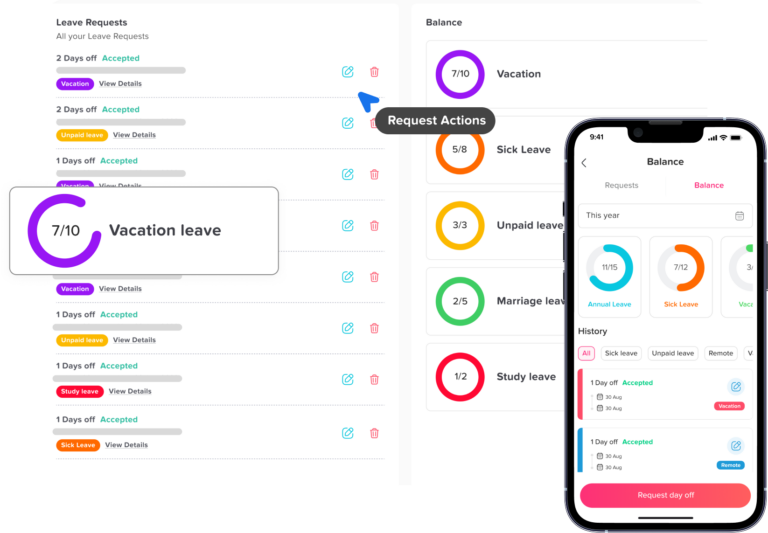
Managing floating holidays in spreadsheets can create confusion when employees also have vacation, sick leave, personal leave, and other balances.
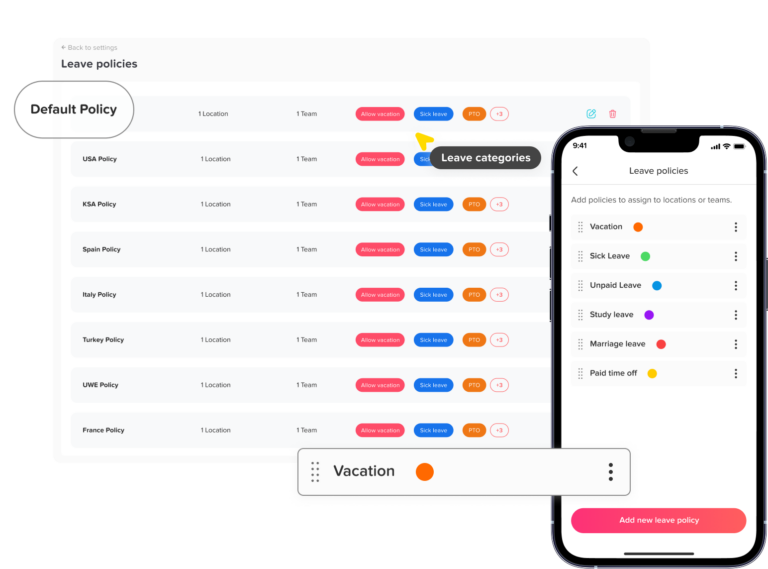
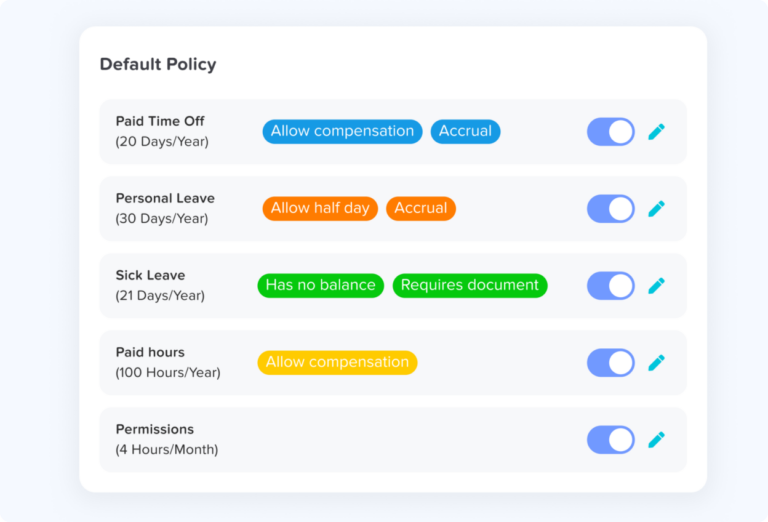
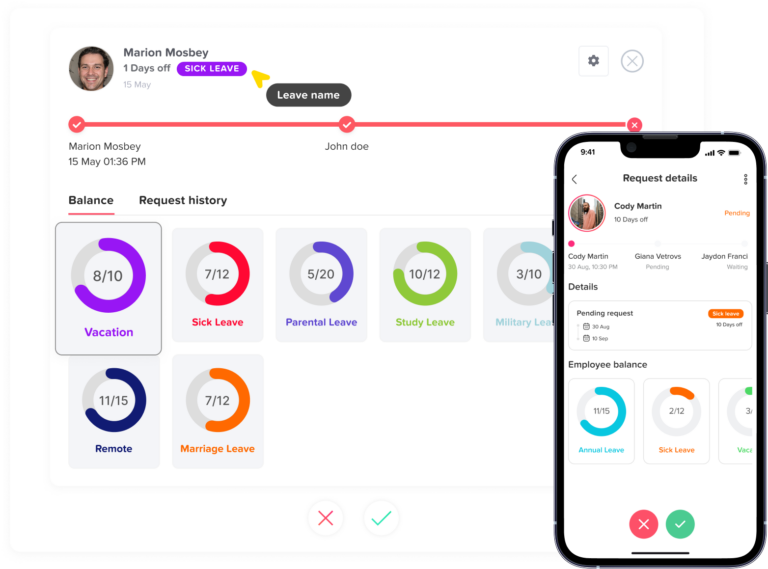
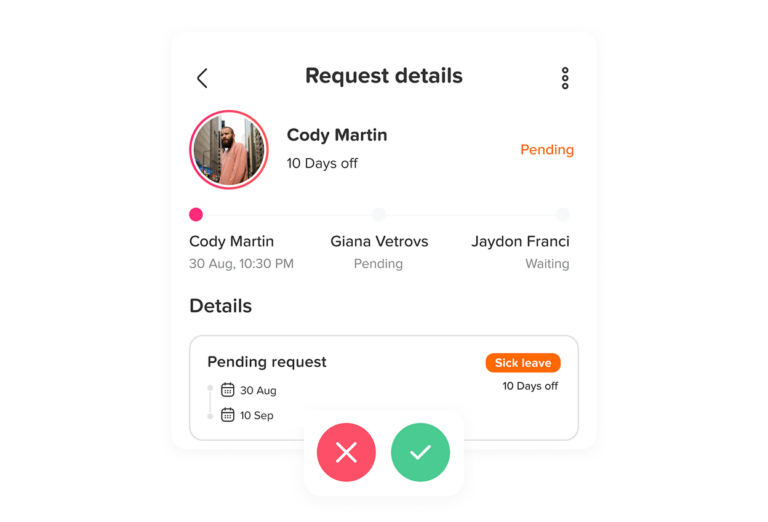
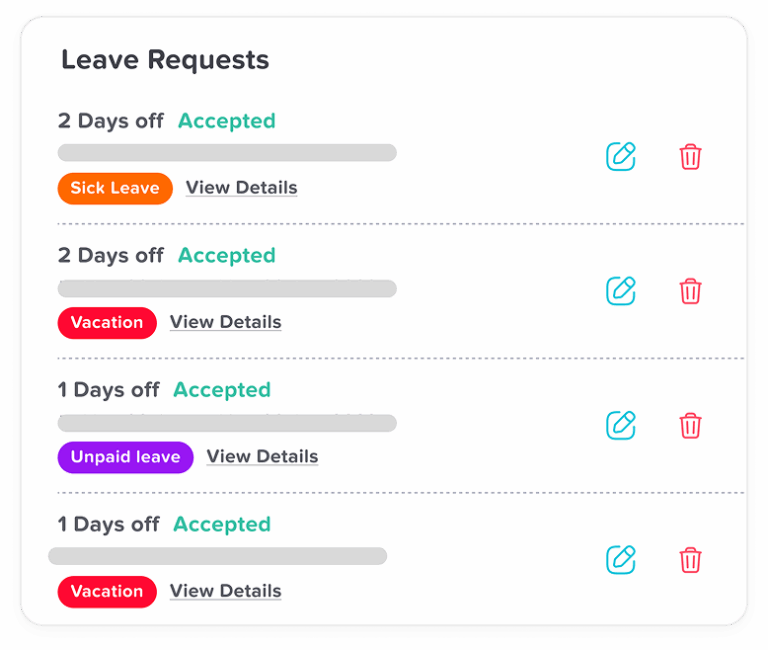
Day Off allows organizations to create multiple leave policies and include different leave types within each policy. Employers can therefore create a separate floating holiday balance rather than combining it with general PTO.
With Day Off, HR teams can:
- Create a floating holiday leave type
- Assign different policies to employee groups
- Set annual allowances
- Manage approval workflows
- Allow full-day or half-day requests
- Track balances separately
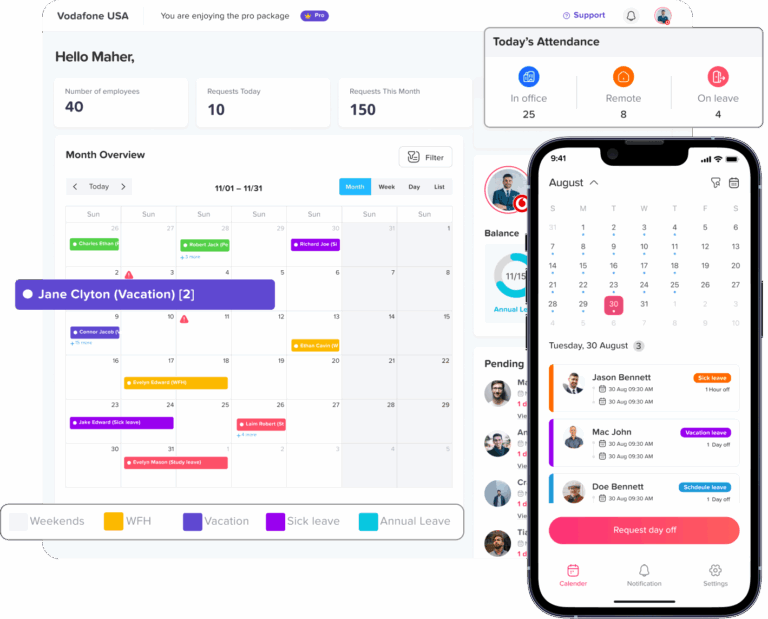
- View upcoming absences on a shared calendar
- Organize employees by team or location
- Review request and approval histories
- Export leave reports
- Track vacation, sick leave, personal leave, and floating holidays in one system
Employees can see which balances are available before submitting a request. This helps prevent regular PTO from being deducted when a floating holiday should be used.
Centralized tracking also gives managers a clearer view of team availability and overlapping requests.
Frequently Asked Questions About Floating Holidays and PTO
Can an employee use a floating holiday before it is added to their balance?
Usually not, unless the employer allows projected or advanced leave.
Some companies permit employees to request a floating holiday before the official grant date when they will become eligible before the requested absence. Other employers require the benefit to appear in the employee’s available balance first.
The policy should clearly state whether requests are based on the current balance or the projected balance on the requested date.
What happens when an employee cancels a floating holiday?
When an approved floating holiday is canceled before it is used, the hours should normally be restored to the employee’s balance.
HR should also update the shared leave calendar, employee schedule, coverage arrangements, request history, and payroll records when necessary. The cancellation should remain visible in the system for recordkeeping.
Can regular PTO be changed to a floating holiday after approval?
An employee may request a correction when regular PTO was selected by mistake but an eligible floating holiday was available.
Before changing the request, HR should confirm that:
- The absence qualified under the floating holiday policy
- The floating holiday was available on the absence date
- Payroll has not already processed the request incorrectly
- The employee’s regular PTO can be restored
The adjustment should appear clearly in the employee’s balance history.
What happens if an employee’s schedule changes after a floating holiday is approved?
The request should be reviewed against the employee’s updated schedule.
For example, if an eight-hour shift becomes a six-hour shift, the deduction may need to decrease. If the approved date becomes a non-working day, the request may need to be canceled or moved.
Floating holiday hours should generally cover only the working time the employee would otherwise have completed.
Can a floating holiday be used during a resignation notice period?
That depends on the employer’s policy and operational needs.
An employer may continue approving floating holidays during a notice period, require the employee to complete important handover duties, or limit new requests after notice is given.
Previously approved leave should be reviewed carefully rather than canceled automatically.
Does an employee receive floating holidays while on a leave of absence?
Eligibility may depend on whether the employee is considered active on the floating holiday grant date.
The policy should explain how the benefit applies to employees on parental leave, medical leave, military leave, unpaid leave, sabbatical leave, or another extended absence.
Employers should review applicable leave protections before withholding a benefit from someone on protected leave.
Can employees donate floating holidays to coworkers?
Only when the employer has a formal leave donation program that includes floating holidays.
The donation policy should define:
- Eligible donors and recipients
- Minimum and maximum donations
- Which leave types can be donated
- Approval procedures
- Payroll and tax treatment
- Whether a donation can be reversed
Some employers exclude floating holidays because they are granted for a specific year or purpose.
What happens to floating holidays when an employee transfers to another location?
The employer should determine whether the employee’s existing balance remains available under the new location’s leave policy.
Possible treatments include preserving the balance, converting it into another leave type, allowing it to be used before a deadline, or applying the new location’s allowance prospectively.
HR should document the transfer date and any balance adjustment to prevent duplicate grants or lost leave.
What happens if a floating holiday request remains pending after the requested date?
The request should be investigated and resolved promptly.
The employer should determine whether:
- The employee took the day off
- A manager gave informal approval
- The employee worked
- Another leave balance was deducted
- Payroll recorded the day as paid or unpaid
The request should then be approved, denied, canceled, or corrected so that the leave balance, attendance record, and payroll information remain accurate.
What happens if an employee is called back to work during a floating holiday?
The employee’s leave and work records should be corrected.
For example, if an employee was approved for eight floating holiday hours but worked for three hours, the employer may need to:
- Record and pay the three working hours
- Restore three hours to the floating holiday balance
- Record five hours of paid leave
- Review any overtime implications
- Update the employee’s timesheet
Employees should not lose floating holiday hours for time they actually worked.
Final Thoughts
Floating holidays and PTO both provide paid time away from work, but they are not necessarily interchangeable.
A floating holiday is usually a limited, flexible benefit that helps employees take time off for cultural, religious, holiday-related, or personal occasions. PTO is a broader leave balance that may cover vacations, illness, emergencies, appointments, and other absences.
The most effective policy clearly explains:
- Who receives floating holidays
- When they become available
- Which reasons qualify
- How requests are approved
- Whether days carry over or expire
- Whether unused days are paid at termination
- How floating holidays differ from regular PTO
- How religious accommodation requests are handled
Employers should also review the legal treatment of each leave type. A floating holiday that functions like earned vacation may be subject to different rules than a holiday tied to a specific event.
Using a leave management system such as Day Off helps companies keep floating holidays, vacation PTO, sick leave, and other balances separate while maintaining one clear request and approval process.