







An Employee Tracking Tool is no longer just a system for checking who is present and who is absent. For modern businesses, it has become a smarter way to understand employee availability in real time, manage PTO requests, track attendance, reduce scheduling confusion, and help managers make faster decisions with accurate information.

Today’s teams are not always sitting in the same office from 9 to 5. Some employees work remotely, some follow hybrid schedules, some work rotating shifts, and others may be in the field, on leave, or working flexible hours. Without a clear system, HR teams and managers often waste time asking the same questions: Who is working today? Who is on vacation? Who is late? Who is available for a shift? Who already has approved PTO?
A real time employee tracking tool solves this problem by bringing PTO, attendance, work schedules, and team availability into one organized system. Instead of depending on spreadsheets, emails, chat messages, or manual updates, businesses can see employee status clearly and act before small scheduling issues become bigger operational problems.
For companies that want better planning, fewer attendance mistakes, and smoother leave management, real time tracking is not just helpful. It is becoming essential.
What Is a Real Time Employee Tracking Tool?
A real time employee tracking tool is software that helps businesses monitor employee work status, attendance, leave requests, PTO balances, and availability as changes happen.
This does not mean spying on employees or tracking every movement. A good employee tracking system focuses on useful work related visibility, such as:
- Who is currently working
- Who is on approved leave
- Who is absent or late
- Who is scheduled for a shift
- Who has requested PTO
- Which teams may be short-staffed
- Which employees are available on a specific day
- How much PTO each employee has remaining
The goal is simple: give HR teams, managers, and employees one clear place to understand availability and leave status without confusion.
When used correctly, employee tracking software helps businesses plan better while also giving employees more transparency and control over their time off.
Why Manual Employee Tracking Creates Problems
Many businesses start with simple tools like spreadsheets, shared calendars, paper forms, or email approvals. These methods may work when the team is small, but they become difficult to manage as the company grows.
Manual tracking often creates hidden problems that are easy to ignore at first but costly later.
PTO Requests Get Lost
When employees request time off through email, chat, or verbal approval, requests can easily be missed. A manager may approve leave but forget to update the calendar. HR may not receive the final approval. Another employee may request the same period without knowing someone else is already away.
This creates overlapping absences and confusion during busy periods.
Attendance Records Become Inaccurate
When attendance is tracked manually, mistakes are common. Employees may forget to submit hours, managers may update records late, and HR may need to chase multiple people for missing information.
Inaccurate attendance records can affect payroll, compliance, overtime calculations, and workforce planning.
Managers Lack Real-Time Team Visibility
A manager should not need to open multiple files or ask HR every time they want to know who is available. Without real-time visibility, managers may schedule meetings when key employees are away, assign work to unavailable team members, or approve leave without realizing the team is already short-staffed.
Employees Keep Asking HR for Updates
When employees cannot see their PTO balance or request status, they keep asking HR questions like:
How many vacation days do I have left?
Was my request approved?
Who is off next week?
Can I take a half day?
These repeated questions take time away from more important HR work.
Reports Take Too Much Time
Manual reports usually require collecting data from different places, cleaning it, checking for mistakes, and formatting it. This slows down decision making and makes it harder to understand attendance trends, leave usage, and team availability.
The Main Benefits of Using an Employee Tracking Tool
A real time employee tracking tool gives businesses a more accurate and organized way to manage people, time, and availability. Here are the most important benefits.
Real Time Team Availability
One of the biggest advantages is knowing who is working, who is away, and who is scheduled at any moment.
This is especially important for teams that depend on coverage, such as customer support, healthcare, retail, hospitality, field service, software teams, and operations departments.
With real time availability, managers can quickly answer questions like:
- Do we have enough people working tomorrow?
- Can we approve another vacation request this week?
- Who is available to cover a shift?
- Which department has several people away at the same time?
- Is an employee absent, on sick leave, or working remotely?
This level of visibility helps managers plan with confidence instead of guessing.
Easier PTO and Leave Management
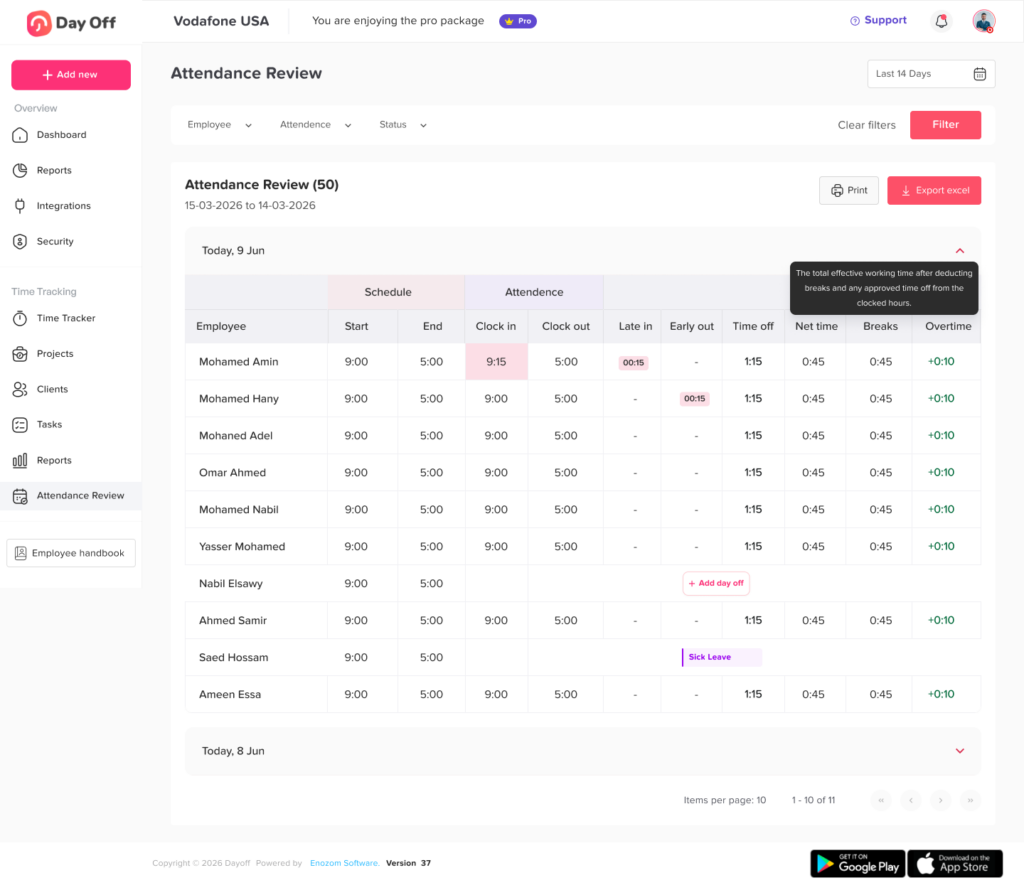
PTO tracking is one of the most common reasons companies start looking for an employee tracking tool. Managing vacation days, sick leave, unpaid leave, personal leave, maternity leave, and half days manually can become complicated quickly.
A good system helps employees submit leave requests easily and helps managers approve or reject them based on real availability.
Instead of long email chains, the process becomes simple:
- The employee submits a request
- The manager receives a notification
- The request is reviewed with team availability in mind
- The balance updates after approval
- The leave appears on the shared calendar
- HR has a clear record for future reporting
This makes PTO management faster, cleaner, and more transparent.
Better Attendance Tracking
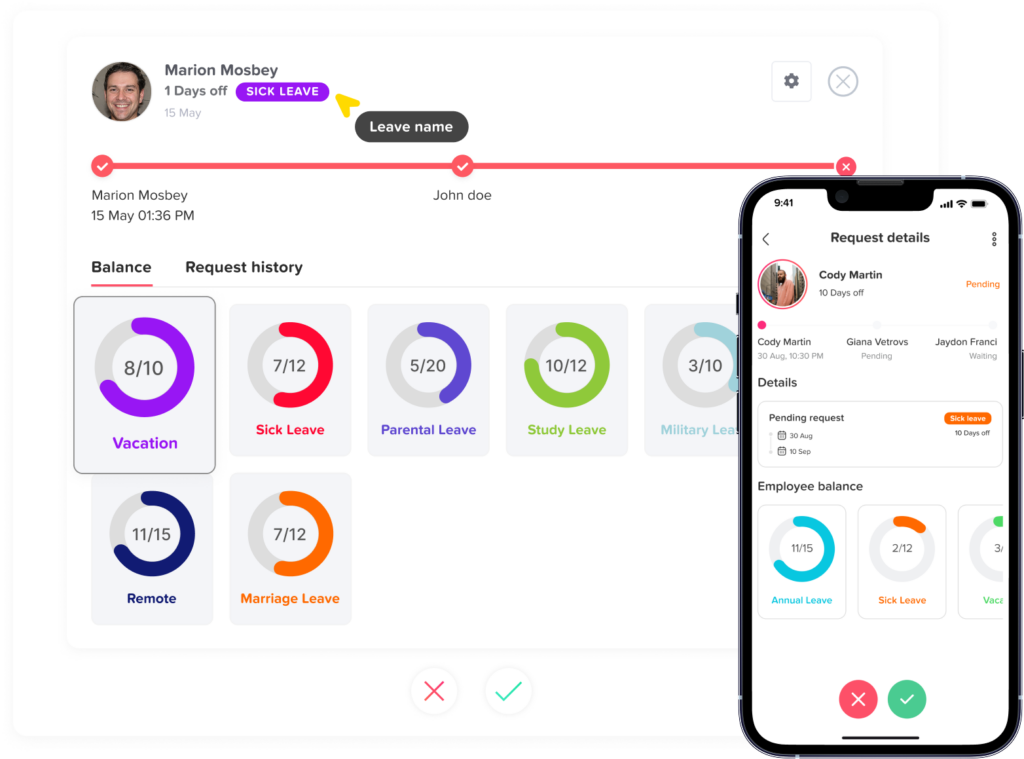
Attendance tracking is not only about knowing whether an employee arrived on time. It can also help companies understand work patterns, late arrivals, early departures, absences, overtime, and schedule compliance.
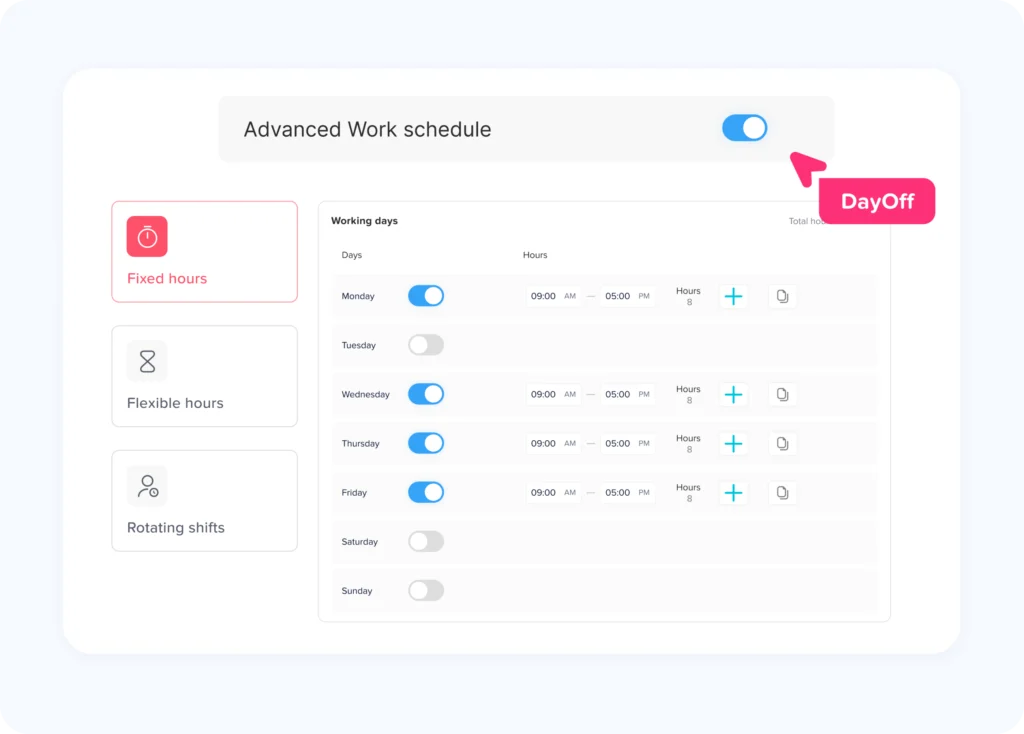
For teams with fixed hours, flexible hours, or rotating shifts, attendance tracking gives managers a clearer view of daily operations.
An employee tracking tool can help businesses track:
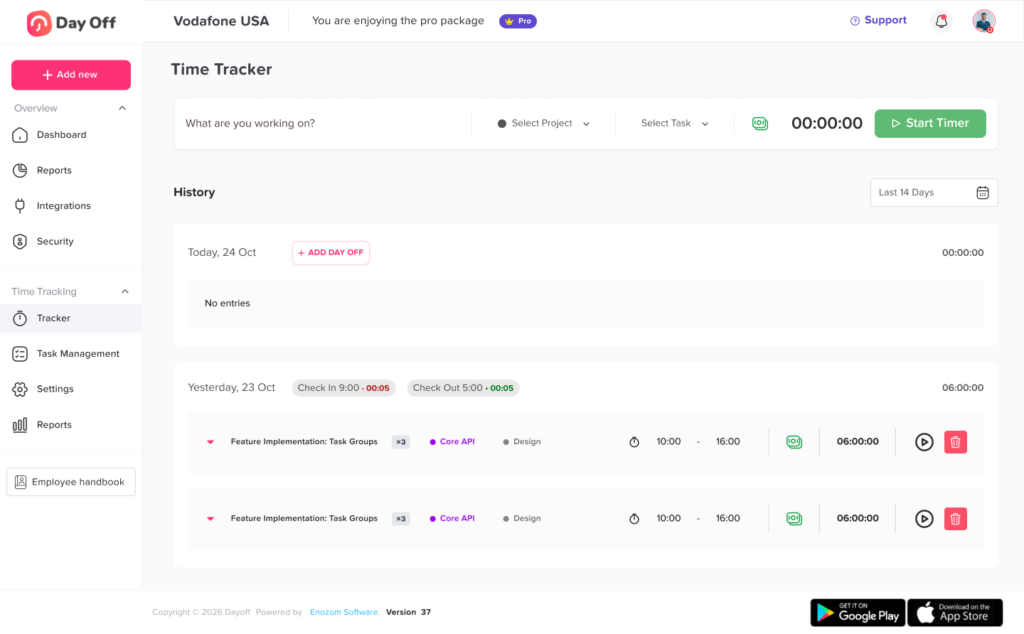
- Clock in and clock out records
- Late arrivals
- Early departures
- Missed shifts
- Remote attendance
- Overtime
- Work hours
- Breaks
- Absence trends
When attendance data is connected to PTO and leave records, managers can better understand whether someone was truly absent, on approved leave, working different hours, or scheduled off.
Fewer Scheduling Conflicts
Scheduling conflicts often happen when PTO, attendance, and work schedules are managed separately. A manager may create a shift schedule without checking approved leave. HR may approve PTO without seeing upcoming workload. Employees may not know when other team members are already away.
A real time employee tracking tool reduces these problems by connecting availability data in one place.
For example, if multiple employees from the same team request vacation during the same week, the manager can see the conflict before approving the requests. If an employee is assigned to a shift while already on approved leave, the issue can be noticed and fixed early.
This helps businesses avoid understaffing, missed deadlines, and last minute changes.
More Transparency for Employees
Employee tracking should not only benefit managers. It should also make work easier for employees.
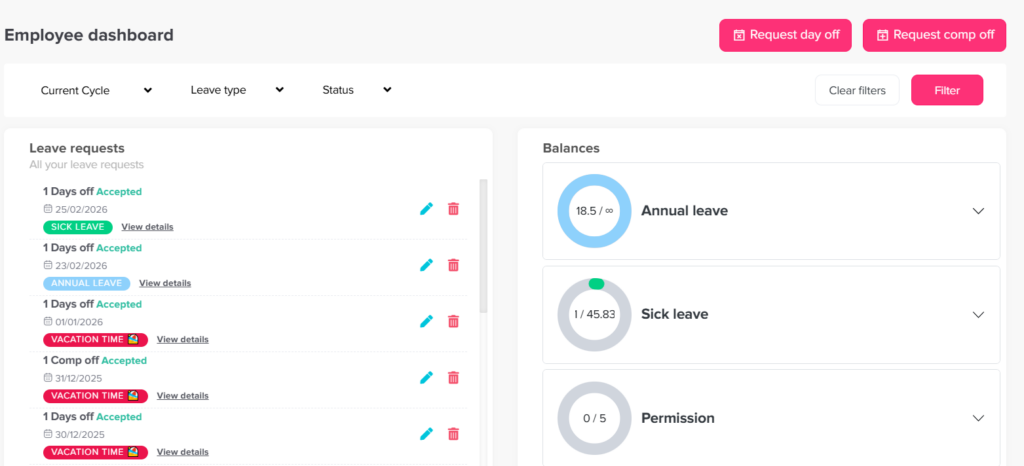
When employees can see their leave balances, request status, work schedule, and team calendar, they do not need to depend on HR for every update. They can plan their time off more responsibly and understand when the team may already be short on coverage.
Transparency also builds trust. Employees feel more confident when the rules are clear, balances are visible, and approvals follow a consistent process.
Faster HR Workflows
HR teams often spend many hours every month managing leave requests, updating balances, answering employee questions, checking attendance records, and preparing reports.
An employee tracking tool reduces repetitive manual work by organizing these tasks in one system.
This helps HR teams:
- Approve requests faster
- Keep accurate leave balances
- Avoid duplicate records
- Prepare reports more easily
- Track policy usage
- Maintain approval history
- Reduce back and forth communication
- Support managers with better data
Instead of spending time fixing errors, HR can focus on improving employee experience and workforce planning.
Better Planning for Remote and Hybrid Teams
Remote and hybrid work make employee visibility more important. When employees are not always in the office, managers need a clear way to understand availability without interrupting everyone with messages.
A real time employee tracking tool can show whether someone is working, off, on vacation, on sick leave, or unavailable. This helps teams plan meetings, deadlines, coverage, and project work more smoothly.
For hybrid teams, the system can also help managers understand attendance patterns, office days, remote days, and team availability across different locations.
Important Features to Look For in an Employee Tracking Tool
Not every tool offers the same value. Some systems focus only on time tracking, while others focus only on PTO. The best choice depends on your business needs, but for complete visibility, your tool should support PTO, attendance, and availability together.
PTO and Leave Request Management
Employees should be able to request time off easily, and managers should be able to approve or reject requests without confusion.
Look for features such as:
- Vacation leave
- Sick leave
- Unpaid leave
- Personal leave
- Half day leave
- Custom leave types
- Leave request notes
- Approval history
- Automatic balance updates
This helps your company manage different types of absences accurately.
Shared Team Calendar
A shared calendar is one of the most useful features for daily planning. It allows managers and employees to see upcoming time off, public holidays, approved leave, and team availability.
A good leave calendar should make it easy to filter by team, department, location, or employee. This is especially helpful for companies with multiple offices, branches, or remote teams.
Attendance and Work Hour Tracking
If your company needs to track attendance, look for a tool that supports clock in and clock out, work hours, late arrivals, early departures, overtime, and attendance reports.
This is useful for businesses that need accurate work records, especially when attendance affects payroll, shift coverage, or compliance.
Real Time Employee Status
The system should show real-time employee status clearly. Managers should be able to see whether employees are working, absent, on leave, scheduled, or unavailable.
This helps avoid unnecessary messages and makes daily coordination easier.
Approval Workflows
A strong approval workflow helps companies control who can approve leave requests. Some businesses only need one manager approval, while others may need two-level approvals involving a manager and HR.
Approval workflows help ensure that every request goes through the right process and that decisions are recorded clearly.
Automated PTO Balances
Manually calculating PTO balances can lead to mistakes. A good employee tracking tool should automatically update balances based on company policies, accrual rules, carryover settings, and approved leave.
This gives employees accurate information and reduces HR workload.
Reports and Analytics
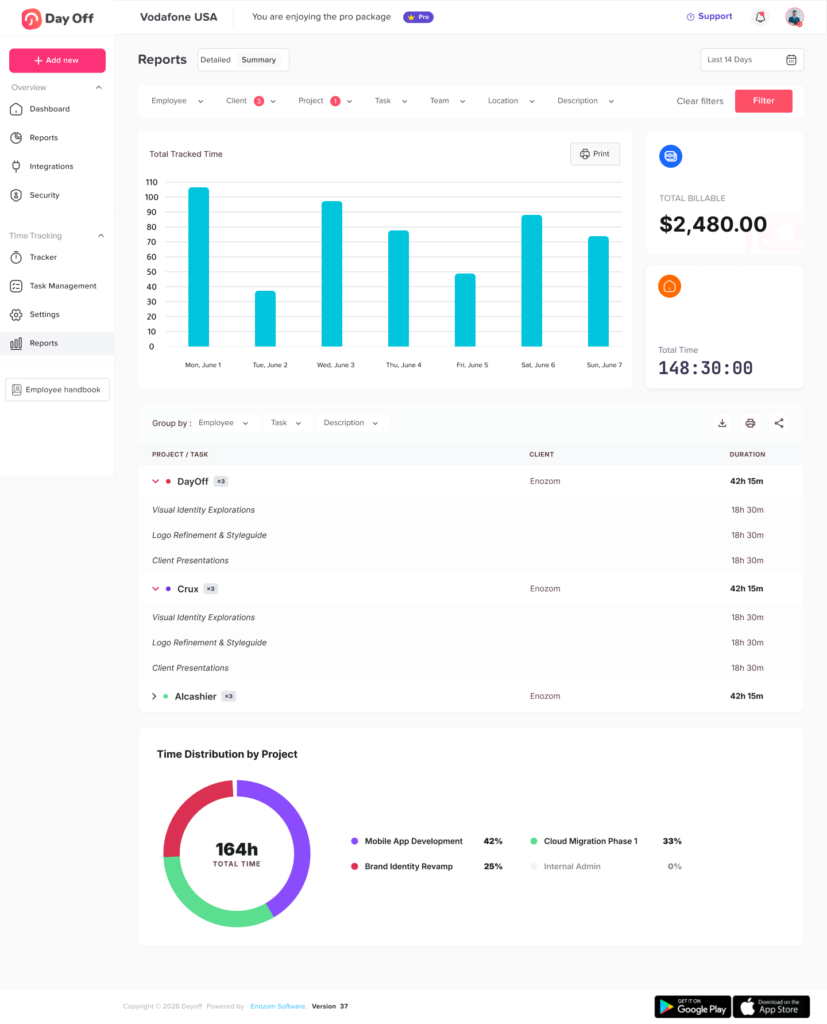
Reports help businesses understand attendance and leave trends over time.
Useful reports may include:
- PTO usage by employee
- Leave balance reports
- Absence reports
- Attendance reports
- Overtime reports
- Department availability reports
- Leave type reports
These insights help managers make better decisions and identify patterns before they become problems.
Mobile Access
Employees should be able to request time off, check balances, and view schedules from their phones. This is especially important for field teams, remote employees, shift workers, and employees who do not use a desktop computer every day.
A tool that works on web, iOS, and Android gives teams more flexibility and makes adoption easier.
Notifications and Reminders
Notifications keep everyone updated without manual follow-up. Managers should receive alerts when employees submit requests. Employees should be notified when requests are approved or rejected. HR should be able to stay informed when important changes happen.
This reduces delays and makes the process smoother.
Integrations With Work Tools
A strong employee tracking tool should connect with tools your team already uses, such as Slack, Microsoft Teams, Google Calendar, or Outlook Calendar.
Integrations help bring leave and availability updates into daily workflows, making it easier for employees and managers to stay informed.
Employee Tracking Tool vs. Manual Tracking
Manual tracking may seem simple, but it often becomes expensive in time, accuracy, and confusion. Here is how a real time employee tracking tool compares.
| Area | Manual Tracking | Employee Tracking Tool |
|---|---|---|
| PTO requests | Sent by email, chat, or paper | Submitted in one system |
| Approvals | Easy to miss or forget | Tracked with clear history |
| PTO balances | Updated by hand | Updated automatically |
| Team availability | Scattered across calendars and messages | Visible in real time |
| Attendance | Manually recorded | Tracked more accurately |
| Reports | Created manually | Generated more easily |
| Scheduling conflicts | Hard to notice early | Easier to prevent |
| Employee access | Employees ask HR for updates | Employees can check their own status |
| Mobile use | Limited | Available from phone or web |
How Day Off Helps Teams Track PTO, Attendance, and Availability
Day Off is a modern leave management and employee availability solution designed to help businesses manage PTO, leave requests, attendance, and team visibility in one place.
With Day Off, employees can request time off easily, managers can review requests quickly, and HR teams can keep leave records organized without depending on spreadsheets or scattered messages.
Day Off helps companies manage:
- Vacation leave
- Sick leave
- Unpaid leave
- Personal leave
- Half day leave
- Custom leave policies
- Employee leave balances
- Team calendars
- Approval workflows
- Attendance and availability
- Work schedules
- Reports and exports
Because Day Off is available on web, iOS, and Android, employees and managers can access the system from anywhere. This is especially useful for remote teams, hybrid teams, field employees, and businesses with multiple locations.
Day Off also supports integrations with workplace tools, helping teams keep PTO and availability updates connected to their daily workflow.
Why Real Time Tracking Improves Decision Making
Good workforce decisions depend on accurate information. If managers do not know who is available, they may approve too much leave, assign work incorrectly, or miss attendance issues.
Real-time tracking gives managers the information they need before making decisions.
For example:
- Before approving PTO, they can check team coverage
- Before assigning work, they can check employee availability
- Before creating schedules, they can check approved absences
- Before preparing payroll, HR can review attendance records
- Before planning a busy season, leaders can review leave trends
This makes planning more proactive and less reactive.
Employee Tracking Should Be Clear, Not Complicated
One mistake many businesses make is choosing software that feels too complex. A good employee tracking tool should make work easier, not harder.
Employees should not need long training to request leave. Managers should not need to search through complicated menus to approve requests. HR should not need to manually fix balances every week.
The best tools are simple enough for daily use but powerful enough to support company policies, reporting, and team growth.
When evaluating a system, ask:
- Can employees use it easily?
- Can managers approve requests quickly?
- Can HR customize policies?
- Can the system grow with the company?
- Can employees access it from mobile devices?
- Can it show availability clearly?
- Can it connect PTO and attendance data?
If the answer is yes, the tool is more likely to become part of the team’s routine.
Privacy and Trust: What Employee Tracking Should Not Be
The phrase “employee tracking” can sometimes sound uncomfortable because some people connect it with surveillance. That is why it is important to choose a tool that focuses on work availability, attendance records, PTO, and scheduling, not unnecessary monitoring.
A healthy employee tracking system should support transparency, not control. Employees should understand what is being tracked and why. The goal should be to improve planning, reduce mistakes, and make leave management easier for everyone.
Businesses should avoid tools that create distrust or make employees feel watched. Instead, they should use systems that clearly organize work-related information and help teams communicate better.
The Future of Employee Tracking Is About Visibility, Not Control
The future of employee tracking is not about watching employees more closely. It is about giving teams better visibility, better communication, and better planning tools.
Companies need to know who is available, who is on leave, who is scheduled, and where coverage gaps may appear. Employees need to understand their PTO balances, request status, and work schedules. HR needs clean records and reliable reports.
When all of this information is connected in real time, the workplace becomes more organized and less stressful.
Conclusion
A real time employee tracking tool helps businesses move away from scattered spreadsheets, missed emails, unclear approvals, and outdated attendance records. It brings PTO, attendance, and team availability into one system so managers can plan better, HR can work faster, and employees can stay informed.
For modern teams, visibility is not a luxury. It is the foundation of better workforce management.
With a solution like Day Off, companies can manage PTO requests, leave balances, attendance, work schedules, and employee availability from one easy to use platform available on web, iOS, and Android.
When businesses know who is working, who is away, and who is available, they can make better decisions every day.