







When an employee resigns or is given notice, an employer may decide that it is better for the employee to stay away from work until their employment officially ends. People commonly call this period garden leave, or sometimes gardening leave.
Garden leave can sound similar to paid time off, but the two are very different.
An employee on garden leave generally remains employed and continues through their notice period, but they may be instructed not to perform their normal duties, access company systems, contact clients, or attend the workplace. Depending on the employment contract and applicable law, the employee may continue receiving salary and benefits until their official termination date.

For HR teams, the arrangement creates several practical questions:
- Does PTO continue to accrue during garden leave?
- Can an employer require an employee to use PTO while on garden leave?
- What happens to unused vacation when employment ends?
- Should garden leave appear as PTO in the company leave calendar?
- How should HR calculate the employee’s final leave balance?
The answers depend heavily on the employee’s location, employment contract, company PTO policy, and applicable employment laws.
This guide explains how garden leave, pay, PTO accrual, benefits, and leave tracking generally work, and how tools such as Day Off can help HR teams maintain accurate employee leave records throughout the notice period.
What Is Garden Leave?
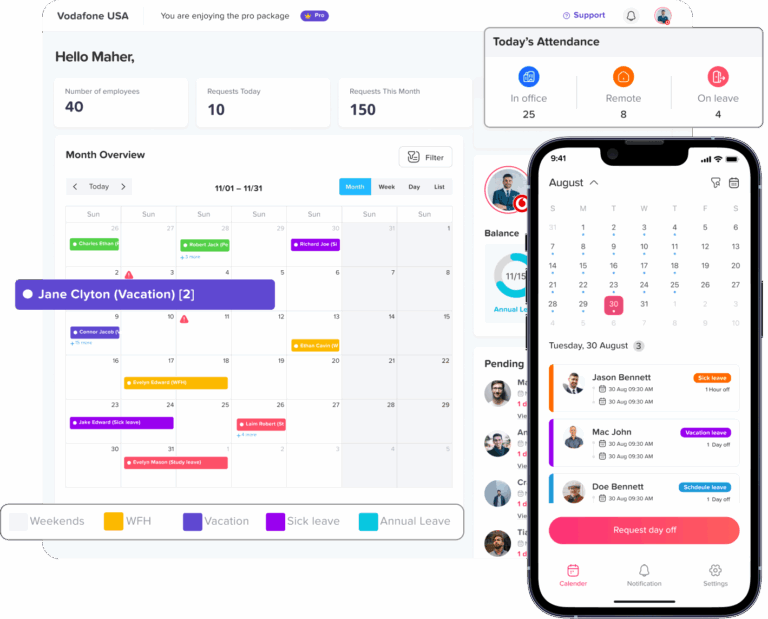
Garden leave is a period during an employee’s notice period when the employee remains employed but is instructed not to perform some or all of their normal work.
The employee has not yet officially left the company.
For example, imagine an employee resigns on September 1 and has a contractual notice period of eight weeks. The employer might decide that the employee should stop working immediately but remain employed until October 27.
From September 1 through October 27, the employee could be placed on garden leave.
During that period, the employer might:
Disable access to sensitive company systems.
Prevent the employee from contacting customers.
Reassign their responsibilities.
Ask them not to attend the workplace.
Require them to remain available if reasonably needed.
Continue paying salary and contractual benefits.
The employee’s termination date remains at the end of the notice period, rather than the date they stopped actively working.
In the UK, GOV.UK explains that an employer may ask an employee not to come to work, or to work from home or another location, during the notice period. During garden leave, the employee continues to receive the same pay and contractual benefits.
Why Do Companies Use Garden Leave?
Garden leave is particularly common when an employee has access to information or relationships that could create business risks immediately after departure.
An employer may use garden leave to reduce access to:
Confidential information.
Upcoming product plans.
Pricing information.
Customer accounts.
Sales pipelines.
Business strategies.
Proprietary technology.
Employee or payroll data.
It can also create distance between the employee and customers, suppliers, or colleagues before they join another organization.
Because the employee remains employed during this period, contractual obligations can generally continue until employment actually terminates. For example, Northern Ireland’s official employment guidance notes that contractual duties such as confidentiality can continue while an employee is on garden leave.
Don’t confuse garden leave with simply terminating someone’s employment early and paying them instead of notice.
Garden Leave vs. Payment in Lieu of Notice
Garden leave and payment in lieu of notice, often called PILON, can produce a similar outcome: the employee stops performing their normal work.
Legally and administratively, however, they are different.
Garden Leave
During garden leave:
The employee normally remains employed.
The notice period continues.
Salary continues according to the employment arrangement.
Contractual benefits usually continue according to the contract and applicable law.
The termination date occurs at the end of the notice period.
Payment in Lieu of Notice
With PILON:
Employment may end earlier.
The employee receives payment instead of working the notice period.
Benefits and other rights after termination depend on the contract and applicable law.
The employee is no longer necessarily employed throughout the original notice period.
UK HMRC guidance specifically distinguishes garden leave from PILON. When proper notice is given and the employee remains under the employment contract until the termination date, payments during that period are employment earnings rather than a substitute for notice.
This distinction matters for PTO accrual, benefits, payroll, and final leave calculations.
Is Garden Leave Paid?
In a typical garden leave arrangement, the employee continues receiving pay because they remain employed.
In the UK, official government guidance states that employees on garden leave receive the same pay and contractual benefits.
An employer therefore should not automatically treat garden leave as unpaid leave simply because the employee is no longer carrying out their normal responsibilities.
However, the exact treatment can depend on:
The employment contract.
The garden leave clause.
Collective bargaining agreements.
Local employment law.
The employee’s compensation structure.
Commission or bonus terms.
Benefits plan rules.
Variable compensation can require particular attention. Commissions, bonuses, equity awards, allowances, and other incentives may have separate rules concerning notice periods and termination.
HR teams should review the applicable agreements instead of assuming that every type of compensation follows the employee’s base salary.
Does PTO Accrue During Garden Leave?
This is one of the most important questions for HR teams.
The basic question is whether the employee continues accumulating annual leave or PTO while on garden leave.
Because garden leave generally occurs while the employment relationship is still active, leave entitlement may continue to build during the notice period, depending on the jurisdiction and the employer’s policy.
Garden Leave and Holiday Accrual in the UK
UK workers accrue statutory holiday entitlement while they are employed. Government guidance states that annual leave starts building from the beginning of employment and explains how entitlement should be calculated when someone leaves partway through a leave year.
Because an employee on garden leave has generally not yet reached their termination date, HR should take the entire employment period up to that date into account when determining statutory holiday entitlement.
For example:
An employee receives 24 days of annual contractual leave per year and works under a January to December leave year.
If their employment officially ends on September 30 rather than August 31, HR may need to calculate their entitlement through September rather than stopping accrual when the employee stopped actively performing work.
The exact calculation depends on the worker’s statutory entitlement, employment terms, working arrangement, and any enhanced contractual leave.
Garden Leave and PTO Accrual in the United States
The situation is different in the United States.
There is no general federal law requiring employers to provide paid vacation or PTO. The U.S. Department of Labor states that vacation benefits are generally determined by agreements between employers and employees rather than by the Fair Labor Standards Act.
Therefore, whether PTO continues accruing during garden leave in the U.S. may depend on:
State law.
The employer’s PTO policy.
The employment contract.
Whether the employee remains active on payroll.
The company’s accrual rules.
Applicable wage-payment laws.
Some states also regulate how employers must treat accrued vacation when employment ends.
For U.S. employees, employers should therefore avoid applying one company-wide assumption without checking the laws that apply in the employee’s state.
Is Garden Leave the Same as PTO?
No.
This distinction is important for both payroll and HR records.
Garden leave is part of the employment notice period. PTO is an employee leave entitlement.
An employee on garden leave is not automatically taking vacation just because they are not actively working.
Consider this example:
An employee has:
15 days of PTO remaining.
A six-week notice period.
Six weeks of garden leave.
It would be incorrect to automatically deduct 30 working days from the employee’s PTO balance simply because they were away from work for six weeks.
Employers should normally treat garden leave and PTO as separate HR concepts unless applicable law, contractual arrangements, and proper notices allow annual leave to be taken during that period.
Accurate classification matters because otherwise the organization could create errors in:
Employee balances.
Final payroll.
Accrual reports.
PTO payouts.
Compliance records.
Employee history.
Can Employees Take PTO During Garden Leave?
Potentially, but garden leave does not automatically convert into annual leave.
In the UK, workers may be able to use accrued holiday during their notice period. Employers may also require workers to take holiday, subject to applicable notice requirements and contractual rules.
For example, if an employee has eight unused vacation days when they begin garden leave, an employer may determine that some or all of those days should be taken before the termination date if the employment contract and legal requirements permit it.
HR must clearly distinguish between:
Garden leave days: The employee remains away from normal duties because of the notice arrangement.
Annual leave days: Days formally counted against the employee’s holiday entitlement.
Without this distinction, HR could accidentally deduct PTO that the employee never formally used.
What Happens to Unused PTO at the End of Garden Leave?
Once garden leave ends, employment normally terminates.
At that point, HR needs to calculate the employee’s final PTO or annual leave balance.
A simplified calculation might look like:
Accrued PTO + carried-over PTO – PTO already taken = remaining PTO balance
Additional factors may include:
Leave accrued during the notice period.
Company carryover policies.
Contractual leave above statutory minimums.
PTO taken during garden leave.
Negative leave balances.
Local payout laws.
Company-specific PTO rules.
UK Holiday Payout
In the UK, employers must pay workers for unused statutory holiday when employment ends. GOV.UK states that payment in lieu of statutory holiday is generally allowed when a worker is leaving their job.
The calculation should account for the proportion of the leave year during which the individual remained employed.
U.S. PTO Payout
In the United States, there is no single federal rule requiring all employers to provide or pay out vacation leave.
The Department of Labor confirms that the FLSA does not require vacation pay and that these benefits are generally governed by agreements between employers and employees. State rules can impose additional requirements.
Employers should therefore check:
State law.
Their written PTO policy.
Employment agreements.
Any applicable collective bargaining agreement.
Before calculating final PTO payments.
Example of PTO Accrual During Garden Leave
Suppose an employee receives 24 days of annual leave per year, with a leave year running from January through December.
Their employment officially ends on September 30.
For a simple monthly accrual example:
24 days ÷ 12 months = 2 days accrued per month
After nine months:
2 × 9 = 18 days accrued
If the employee had already used 12 days:
18 accrued – 12 used = 6 days remaining
The employee’s remaining balance would therefore be six days under this simplified example.
If the employee stopped actively working on August 15 but remained employed on garden leave through September 30, HR should not automatically treat August 15 as the termination date when calculating entitlement.
The correct calculation must follow the applicable policy and law through the actual employment end date.
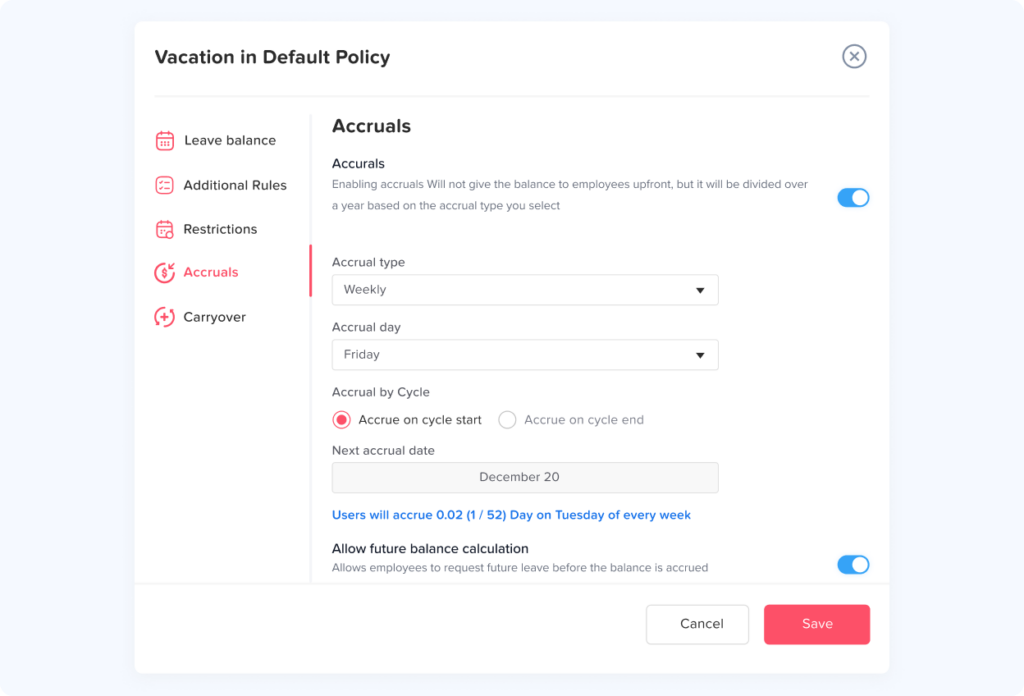
Real PTO calculations may be more complicated when organizations use daily, weekly, biweekly, semimonthly, monthly, annual, or hours-worked accrual systems.
How HR Should Track Garden Leave
Garden leave creates an unusual situation.
An employee is:
Still employed.
Often still being paid.
Not normally performing work.
Still approaching a future termination date.
Potentially continuing to accrue leave.
Possibly using annual leave during part of the notice period.
That makes accurate recordkeeping especially important.
Record the Actual Termination Date
Do not treat the employee’s last active working day as their termination date unless employment actually ends on that date.
Record separately:
Last active working day.
Start date of the garden leave.
Notice period.
Official termination date.
These dates affect payroll, benefits, PTO calculations, and employee records.
Keep Garden Leave Separate From PTO
Do not deduct PTO simply because an employee is not actively working.
If actual annual leave is taken during garden leave, record those days separately according to the company’s leave policy.
Continue the Correct Accrual Rules
Check whether the employee should continue accruing leave through their termination date.
The answer should be based on:
Applicable law.
Employment status.
PTO policy.
Contract terms.
Avoid manually freezing the employee’s balance simply because they have stopped coming to work.
Review Existing PTO Requests
Check for approved vacation scheduled during the notice period.
HR may need to determine whether the leave:
Remains approved.
Is cancelled.
Falls within garden leave.
Should still deduct from the employee’s balance.
Document any changes clearly.
Calculate the Final PTO Balance
Before payroll processes termination, reconcile:
Beginning balance.
PTO accrued.
Carryover.
PTO taken.
Manual adjustments.
PTO taken during the notice period.
Remaining PTO.
Required payout.
This creates a clear record for both HR and the employee.
How Day Off Helps Track PTO During Employee Notice Periods
Garden leave is not just a payroll issue. It is also a leave balance and recordkeeping issue.
When PTO information is scattered across spreadsheets, emails, calendars, and payroll systems, notice-period calculations can become unnecessarily difficult.
Day Off gives HR teams a central place to manage employee leave balances, policies, requests, schedules, and leave history.
Track Employee PTO Balances
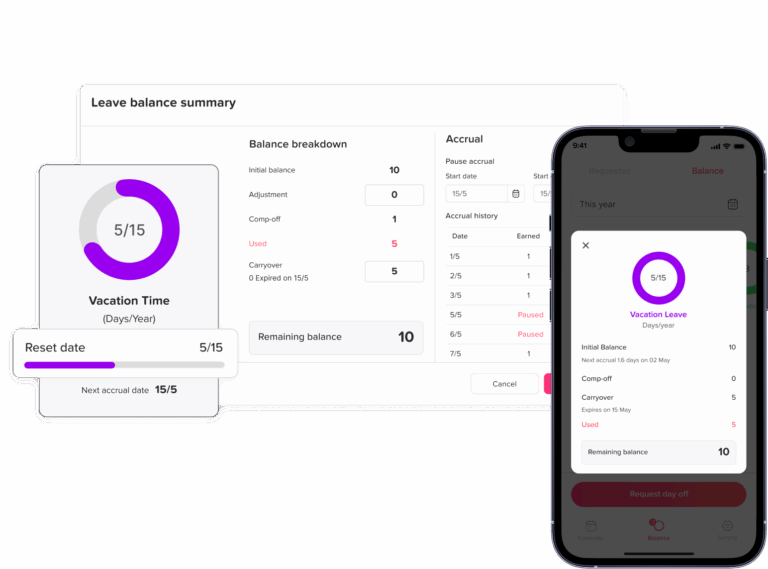
HR can review an employee’s available balance before and during their notice period instead of reconstructing the balance from spreadsheets.
This can help determine:
Leave accrued so far.
Leave already used.
The remaining balance.
Whether previous adjustments affected the balance.
Manage Different PTO Accrual Rules
Companies do not all accrue PTO in the same way.
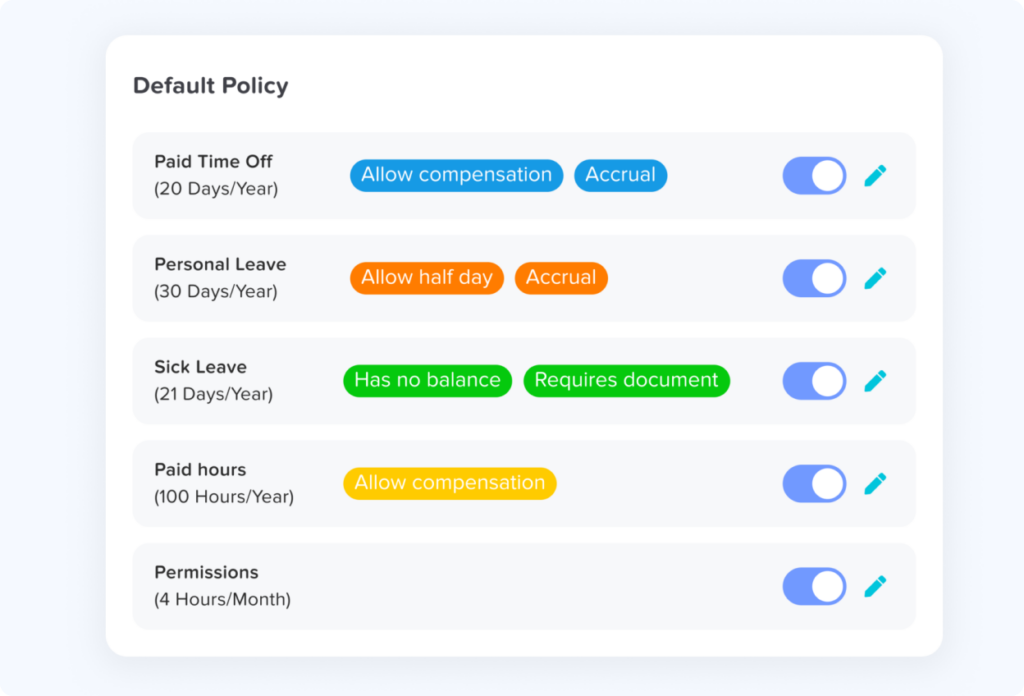
Day Off supports different accrual approaches, including schedules such as weekly, biweekly, semimonthly, monthly, annual, and hours-worked accruals.
This matters when an employee remains employed through a notice period and HR needs the balance to continue following the employee’s assigned policy.
Review Accrual History
Instead of looking only at the employee’s current balance, HR teams can use accrual and employee history information to understand how the balance reached its current amount.
That can be especially useful when reconciling a final PTO balance before termination.
Track Carryover Rules
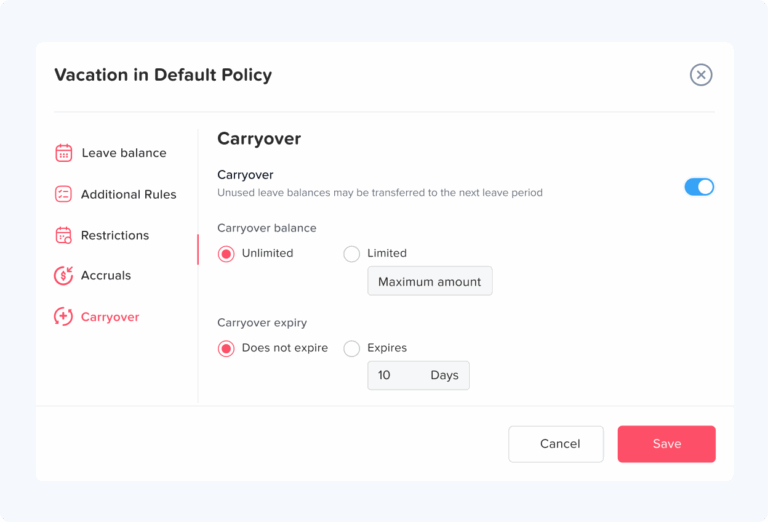
If an employee entered the current leave year with unused time from a previous year, that balance may affect their final entitlement.
Day Off can help teams manage carryover rules, limits, and expiration settings according to their leave policies.
Maintain Accurate Leave Records
Leave reports can give HR a clearer record of balances, usage, accruals, and adjustments.
This makes it easier to investigate questions such as:
Why does the employee have eight days remaining?
Was a previous request deducted correctly?
Did carryover contribute to the balance?
How much PTO accrued during the employee’s final months?
Were any manual adjustments made?
That history is especially valuable before you process final payroll.
Garden Leave Tracking Example
Consider an employee whose notice period runs from September 1 through October 31.
They stop actively working on September 5 and spend the rest of the notice period on garden leave.
At the start of September they have:
6 carried-over days.
10 days accrued during the year.
8 days already taken.
Their available balance is:
6 + 10 – 8 = 8 days
Suppose another four days accrue before their official termination date.
Their balance becomes:
8 + 4 = 12 days
If they formally use five days of annual leave during the notice period:
12 – 5 = 7 days remaining
HR would then determine how the remaining seven days should be handled at termination according to the applicable law and company policy.
The important point is that the calculation follows the employee’s actual employment timeline, not simply the date they stopped performing their usual work.
Common Garden Leave PTO Tracking Mistakes
Stopping PTO Accrual on the Last Working Day
The employee’s final active working day and termination date may be different.
Always determine which date controls leave accrual under the applicable rules.
Treating the Entire Garden Leave Period as Vacation
Garden leave should not automatically reduce an employee’s PTO balance.
Only record PTO when annual leave is actually being used under the applicable policy and legal requirements.
Ignoring Approved Leave During the Notice Period
HR should review existing PTO requests when an employee resigns or receives notice.
Forgetting Carryover
Carried-over leave may still form part of the employee’s available balance.
Calculating Final PTO Too Early
If PTO continues accruing until termination, calculating the balance when garden leave begins could understate the employee’s final entitlement.
Applying One Rule Across Every Location
This is particularly risky for international companies.
Garden leave, statutory holiday, PTO payout, notice periods, and accrual rules vary significantly between jurisdictions.
Garden Leave Checklist for HR
When placing an employee on garden leave, HR should confirm:
Garden leave start date
Official termination date
Notice period
Salary treatment
Benefits continuation
PTO accrual during the period
Current PTO balance
Existing approved leave
Whether PTO will be taken during notice
Final unused PTO treatment
Applicable local employment laws
Final payroll calculation
System and workplace access
Return of company property
Documentation of all balance adjustments
Keeping these details together helps prevent disputes and makes the employee’s final payroll easier to verify.
Frequently Asked Questions About Garden Leave
Can an employer ask an employee to return to work during garden leave?
Potentially, yes. Because the employee normally remains employed during garden leave, the employer may be able to require them to remain available or return to work if the employment contract or garden leave arrangement allows it. Employers should clearly communicate expectations about availability before the garden leave period begins.
Do health insurance and other employee benefits continue during garden leave?
Benefits may continue because the employment relationship has not yet ended. However, the treatment of health insurance, pension contributions, allowances, company vehicles, and other benefits depends on the employment contract, benefit plan terms, and applicable law. HR should confirm which benefits remain active through the official termination date.
Can bonuses or commissions be earned while an employee is on garden leave?
It depends on the terms of the bonus or commission plan. Some compensation arrangements require the employee to remain employed on a particular payment date, while others depend on sales completed or performance achieved before garden leave began. Employers should review the specific compensation agreement rather than treating bonuses and commissions the same as base salary.
Can an employee be contacted by clients or coworkers while on garden leave?
Employers often restrict business communication during garden leave, particularly when the purpose is to separate the departing employee from customers, confidential information, or ongoing projects. The exact restrictions should be explained in the employee’s garden leave instructions or employment agreement.
Can an employee be placed on garden leave without a garden leave clause in their contract?
This can become a legal issue and depends on the jurisdiction and employment agreement. Employers should review the contract carefully before requiring garden leave, particularly if preventing the employee from working could conflict with contractual obligations or established employment rights.
What happens if an employee becomes sick while on garden leave?
Sickness during garden leave can create overlapping absence and notice-period issues. The employer may need to record the sickness separately and apply its normal sick leave or statutory sick pay rules where applicable. HR should avoid automatically treating the period as ordinary garden leave without checking the relevant policy and local law.
Does garden leave affect an employee’s length of service?
Because the employee generally remains employed until the official termination date, the garden leave period may form part of their continuous service. This can be important when calculating benefits or employment rights that depend on service length. The exact treatment depends on local employment law.
When should company equipment be returned during garden leave?
There is no single universal date. Some employers collect laptops, phones, access cards, and other equipment as soon as garden leave starts, particularly when IT removes system access. Others require equipment to be returned on or shortly before the official termination date. The company should establish the return date clearly as part of the offboarding process.
Should garden leave appear on an employee’s attendance record?
Record garden leave separately from ordinary vacation, sickness, or unexcused absence. Creating a separate status or maintaining a clear HR record helps prevent garden leave days from being incorrectly counted against PTO balances or attendance metrics.
How should companies manage garden leave for employees working in different countries?
International employers should avoid using one garden leave process for every location. Notice requirements, annual leave rights, benefits, termination rules, and the enforceability of garden leave provisions can differ by country. HR teams should apply the relevant local employment rules while keeping consistent internal records for notice dates, balances, and employee status.
Conclusion
Garden leave is more than simply asking an employee to stay away from work during their notice period. Because the employee usually remains employed until the official termination date, HR teams still need to manage important details such as salary, benefits, PTO accrual, approved leave, final balances, and offboarding records.
The key is to keep garden leave, PTO, and the employee’s termination date clearly separated. Treating garden leave as ordinary vacation or stopping PTO accrual too early can lead to inaccurate balances and payroll calculations.
Employers should also remember that garden leave rules vary by country, state, employment contract, and company policy. Reviewing the applicable requirements before making payroll or PTO decisions can help prevent disputes and ensure a smoother exit process.
Using a leave management system such as Day Off can make this easier by keeping PTO balances, accruals, leave history, carryover rules, employee schedules, and reports in one place. With accurate records throughout the notice period, HR teams can calculate final balances more confidently and maintain a clear record of each employee’s leave before their employment ends.