







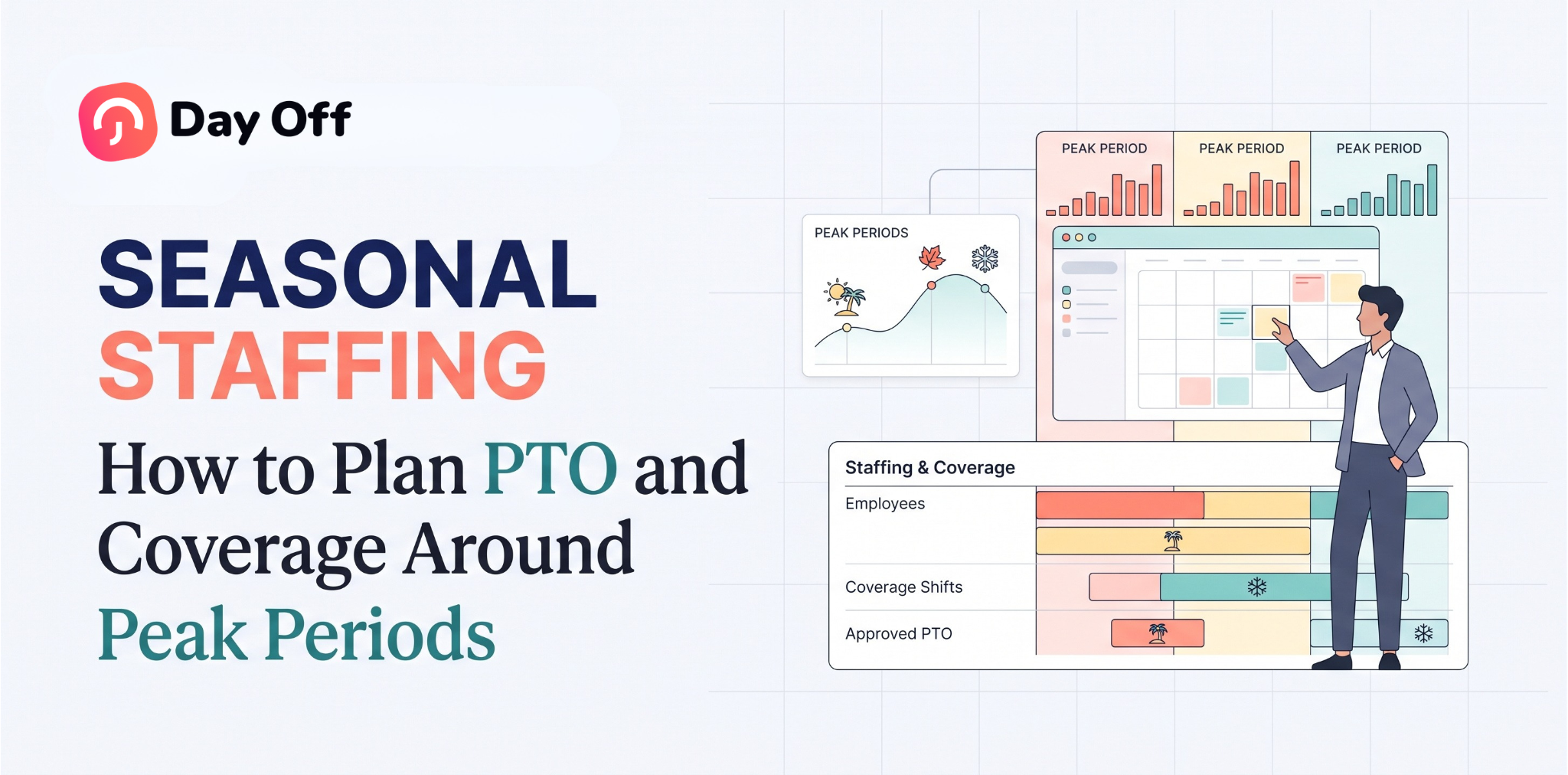
Every industry with a predictable busy season runs into the same conflict: the weeks employees most want off are often the same weeks the business can least afford to be short-staffed. Retail’s holiday quarter, hospitality’s summer season, accounting’s tax season, and e-commerce’s Black Friday-through-New Year’s stretch all create the same planning problem, just on different calendars.

This guide covers what seasonal staffing actually means, the problems it creates for PTO and coverage planning, whether blackout periods are legal, and practical ways to plan ahead so peak season doesn’t turn into a scramble.
What Seasonal Staffing and Peak Period Coverage Mean
Seasonal staffing refers to short-term hiring, typically six months or less, brought on to meet a predictable, recurring spike in business demand. What makes it different from ordinary part-time hiring is that the need is cyclical: it shows up on roughly the same calendar dates every year and winds down once the peak passes.
Peak period coverage is the broader planning challenge this creates: making sure enough people, seasonal or permanent, are scheduled and available during the window when the business needs them most.
Industries where this shows up most
- Retail, during the fall and winter holiday shopping season (October through December), the most commonly cited example of seasonal staffing by far.
- Hospitality and tourism, with peaks that vary by location, winter for ski destinations, summer for beach and travel destinations.
- E-commerce and logistics/warehousing, where “peak season” now often starts in October with early holiday promotions and runs through Black Friday to New Year’s.
- Accounting and tax firms, with a “busy season” from January through the April filing deadline, and often a second peak around year-end close and audits.
- Agriculture, tied to harvest timing, frequently relying on seasonal labor programs like the H-2A temporary agricultural visa for legal seasonal hiring.
- Postal and parcel delivery, which brings on seasonal drivers and sorters to handle the holiday shipping surge.
Is It Legal to Restrict PTO During Peak Periods?
In the US, employers generally can restrict or deny PTO during specific high-demand windows, commonly called blackout periods. Because there’s no federal law requiring paid vacation at all, employers that offer PTO have broad latitude to set rules around when it can be used, as long as those rules don’t interfere with legally protected leave.
A few things to get right:
- Blackout periods can’t override protected leave. Time off tied to FMLA, ADA accommodations, religious observance, jury duty, or state-specific protected leave (like voting leave) generally can’t be blocked by a blanket blackout policy, even during your busiest week.
- A blackout period isn’t the same as denying earned time off entirely. Restricting specific dates is generally fine; using blackout periods to effectively prevent someone from ever using their earned vacation is a different, riskier problem, especially in states with strict accrual and carryover rules.
- “Use it or lose it” policies interact with blackout periods. California, Colorado, Montana, and Nebraska all prohibit use-it-or-lose-it PTO policies, meaning earned time can’t simply expire. If your business is in one of these states, a blackout period that overlaps with an employee’s only realistic window to use expiring time off can create real exposure, carryover provisions or blackout exceptions matter more there than elsewhere.
- Union environments usually work differently. In unionized workplaces, vacation scheduling during peak periods is often governed by seniority-based bidding built into the collective bargaining agreement, rather than an employer-set blackout policy. Seniority-based systems are generally lawful, but they’re a different mechanism than a company blackout calendar and need to be bargained, not imposed.
- There’s no legal minimum for advance notice. Advance notice requirements for PTO requests are a matter of company policy, not law. Many employers use something in the range of one to four weeks for routine requests, with longer windows, sometimes up to 90 days, for extended holiday-season time off.
Best Practices for Planning Coverage
Choose a fair method for allocating peak-season time off
Three approaches show up repeatedly across employers dealing with this problem:
- First-come, first-served: simple and easy to defend as objective, though it can disadvantage employees who plan further ahead less naturally or who have less flexibility to request early.
- Seniority-based: standard in union settings, but can create friction with newer employees if it’s the only method used, especially since newer hires often have less flexibility in their personal lives to work around denials.
- Rotating priority: different employees or teams get priority for desirable time off in different years or seasons, specifically to avoid the same people losing out every single peak season. This tends to be viewed as the fairest long-term approach, since it prevents blackout periods from consistently falling on the same group of people.
Set a clear cutoff date for peak-period requests
Rather than handling requests case by case as the peak approaches, set a specific submission deadline for a specific date range. For example, requiring all time-off requests for the last two weeks of December to be submitted by mid-November gives you a real planning window instead of a last-minute scramble, and gives employees a clear, fair rule to plan around.
Cross-train before the peak hits, not during it
Cross-training permanent staff to flex across roles, so people who normally work one function can cover another during a surge, reduces how dependent you are on any single role being fully staffed. It also gives you more flexibility to approve time off in one area if you can shift coverage from another.
Communicate blackout policies early and in writing
If certain dates are off-limits for time off, that needs to be documented in your PTO policy and communicated well before the peak season starts, not discovered by an employee when their request gets denied. Employers that handle this well treat blackout dates as a known, published part of the policy, used sparingly rather than as a blanket default.
Consider incentives for working through the peak
Common approaches include discretionary holiday bonuses, retention bonuses paid specifically to staff who complete the full peak season, and shift differential pay for less desirable hours. Worth noting: federal law generally doesn’t require a pay premium for working a holiday, any holiday pay differential is a matter of company policy, not a legal mandate, so this is a lever you control rather than one you’re required to pull.
Forecast demand using your own historical data
The standard approach to workforce forecasting is looking at last year’s (and prior years’) attendance patterns, PTO request timing, and demand data to predict this year’s staffing needs and time-off crunch points before they happen, rather than reacting to them in real time.
How Day Off Can Help
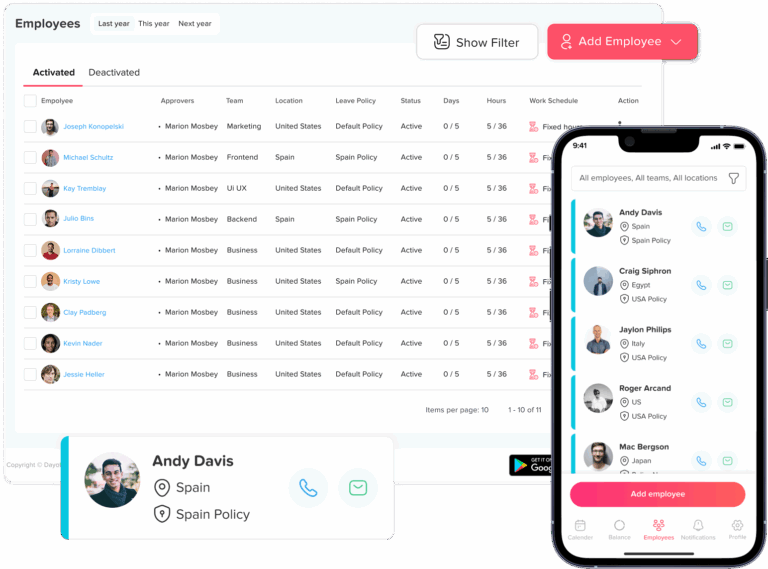
Day Off won’t automatically enforce a blackout calendar for you, and it won’t decide your allocation method for you either, but it gives you the visibility, workflow, and automation to run a peak-season plan well instead of piecing it together from spreadsheets, calendar invites, and Slack threads every year.
Requests come with context, not just a date range
When an employee submits a time-off request, the manager approving it sees the team calendar, that employee’s remaining balance, and any overlapping requests right in the approval notification. That overlap visibility is exactly what you need to catch two people requesting the same peak week before you’ve approved both, rather than realizing it after the second approval has already gone out.
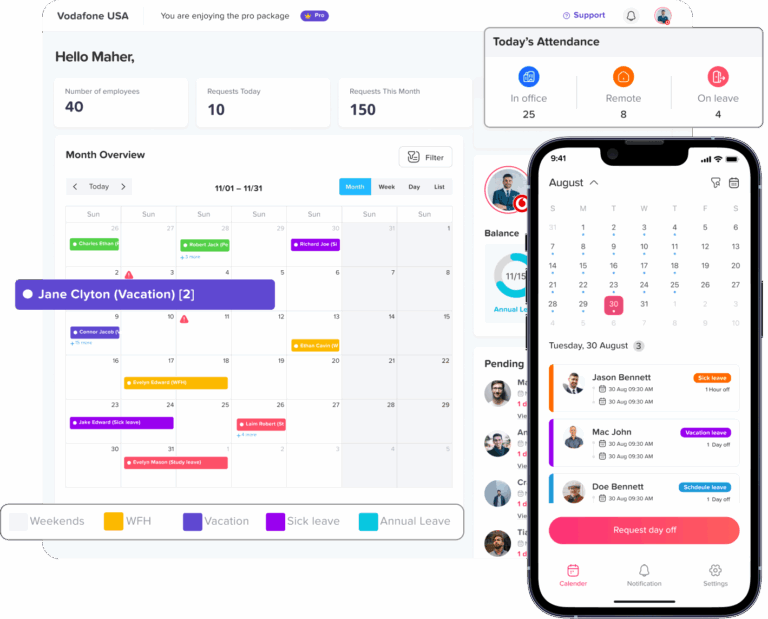
The team calendar shows the whole picture at once
Every approved and pending request sits on a single shared calendar, filterable by department or individual. If your busiest week is coming up and three people on the same team have requests pending, that’s visible immediately rather than discovered after the fact. For businesses running seasonal coverage across multiple departments or locations, filtering by team means you can check coverage for exactly the group that matters for a given peak, warehouse staff during a shipping surge, or front-of-house during a hospitality peak, without wading through the whole company’s calendar.
Approved time off syncs to the calendars your team already uses
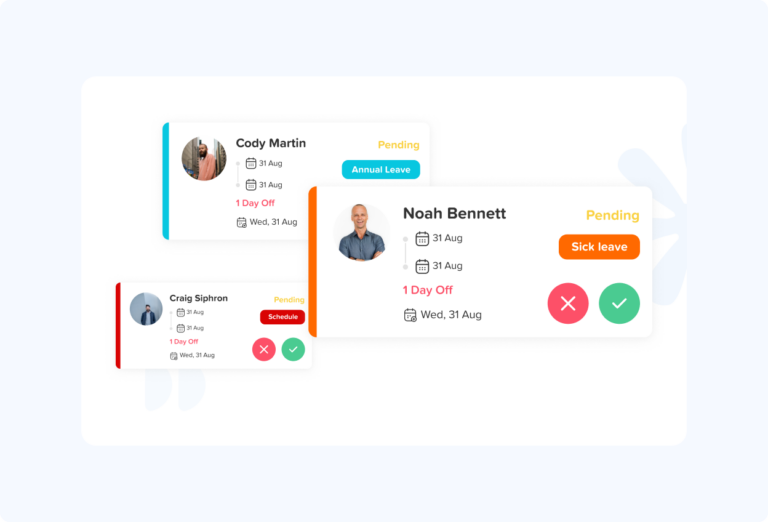
Approved leave automatically syncs to Google Calendar and Outlook, and leave requests and approvals can post directly into Slack or Microsoft Teams. During a peak period when schedules are moving fast and everyone needs an accurate picture of who’s actually in, this matters more than usual: a manager building next week’s coverage plan doesn’t have to cross-reference a separate PTO spreadsheet against the team’s calendar, because the calendar already reflects it.
Accrual and carryover policy is configured once and handled automatically
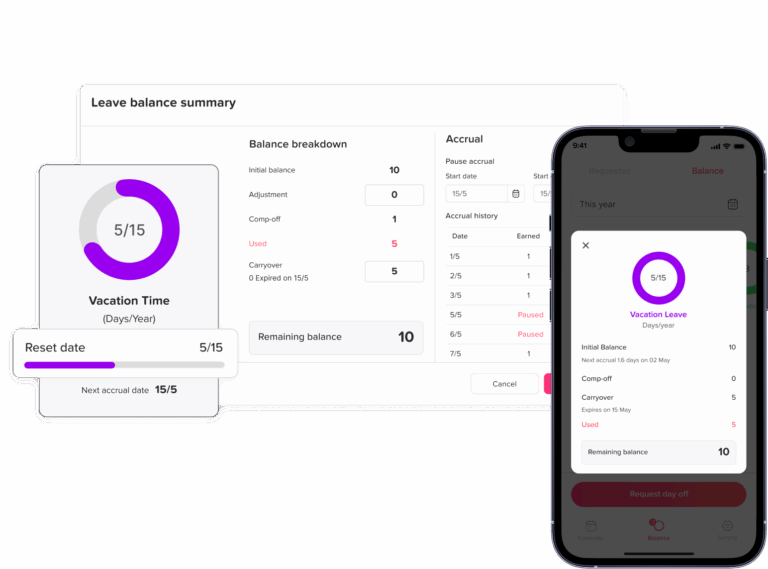
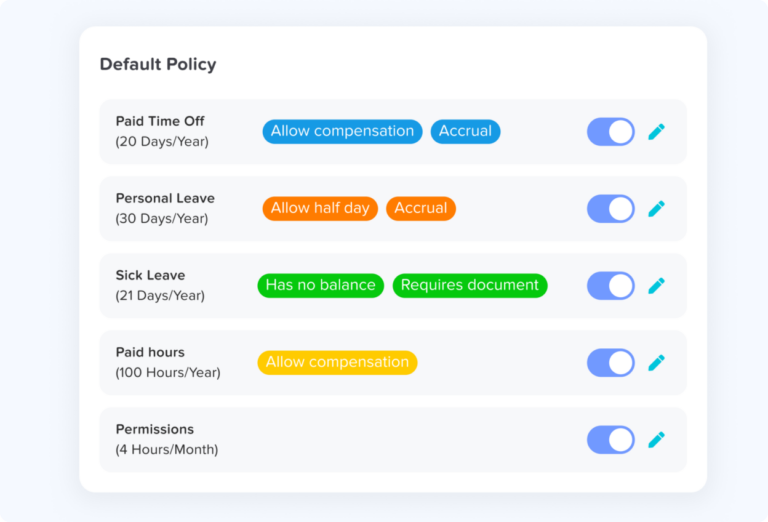
For businesses in states where use-it-or-lose-it PTO isn’t allowed, setting your carryover rules correctly in Day Off means expiring balances don’t collide with a blackout period by accident. You configure your annual allowance, accrual rate, and carryover rules once, and balances update automatically from there, rather than being manually recalculated by HR every time someone asks how many days they have left going into the holiday season.
Employees see their own balance and the team’s status before they even ask
Self-service visibility into remaining balance and who else is off reduces the number of requests that get submitted blind, without an employee realizing three teammates already have that week off. Going into a known peak period, that alone can cut down on a lot of the back-and-forth that normally happens between HR and employees trying to figure out if a request is even realistic.
It scales from a single small team to a distributed, multi-department operation
Day Off is built to work for a five-person team and a 500-person company with employees across multiple countries without changing how it’s used. For a seasonal operation, that matters because peak-season coverage planning often looks completely different by department or location, retail floor staff versus warehouse staff, or a hospitality property running peak season in one region while another is in its off-season, and the same system needs to handle both without extra setup.
Where it stops, and what to pair it with
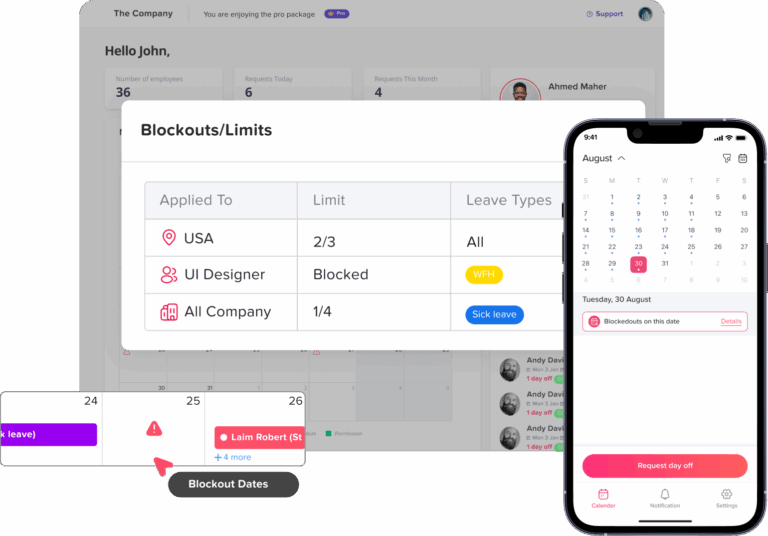
Day Off doesn’t have a dedicated blackout-date toggle that automatically rejects requests inside a defined window, and it isn’t a shift-scheduling or workforce-forecasting tool. If your business needs hard demand forecasting based on historical sales or foot-traffic data, or automatic shift assignment across a large hourly workforce, that’s a separate layer worth pairing with it. What Day Off is well suited for is the PTO and leave side of the equation specifically: making sure requests, approvals, balances, and calendar visibility are accurate and centralized, so whatever allocation method or blackout policy you choose is actually enforceable by a manager who can see the full picture, rather than one working from partial information.
Frequently Asked Questions About Seasonal Staffing and PTO Planning
Are seasonal employees classified differently from part-time or temporary employees for tax and legal purposes?
Seasonal work is generally treated as a category of temporary employment rather than a distinct legal classification in most jurisdictions, but it can affect specific things like unemployment insurance eligibility, benefits eligibility thresholds under the ACA (which uses hours-worked measurement periods), and, for agricultural seasonal labor specifically, visa program requirements like the H-2A program. It’s worth checking with an employment attorney or your payroll provider on how your state and industry define it, since the practical rules vary more than the term itself suggests.
Can a business require seasonal employees to work every day during the peak, with no time off at all?
Generally, yes, as long as employees still receive legally required rest breaks, meal periods, and don’t exceed any state-specific maximum consecutive workday rules. Since seasonal roles are short-term by design, many employers don’t offer PTO accrual during that period at all, which sidesteps the blackout question entirely for that group, though the expectation should be set clearly at hiring.
How does peak-season staffing planning differ for a multi-location business versus a single site?
A multi-location business often has peaks that don’t line up perfectly across sites, a ski resort’s winter peak and a beach resort’s summer peak under the same company, for example, so blackout dates and coverage plans usually need to be set per location or region rather than as one company-wide policy. Centralized visibility into who’s off where becomes more important, not less, as the number of locations grows.
Should part-time employees be included in peak-season coverage planning, or just full-time staff?
Part-time staff should absolutely be included, and in many peak-season environments (retail, hospitality) they make up a large share of the workforce providing that coverage. Excluding them from formal coverage planning, while still expecting them to pick up peak-season shifts informally, is a common source of scheduling gaps and last-minute scrambling.
What’s the difference between workforce forecasting and simple headcount planning?
Headcount planning generally asks how many people you need to hire in total; workforce forecasting is more granular, using historical demand data (sales volume, foot traffic, ticket volume) to predict not just how many people, but when and where they’re needed, down to specific weeks or shifts. Peak-season coverage planning depends much more on the forecasting side, since the total headcount number alone doesn’t tell you whether Tuesday of peak week is adequately staffed.
Do international teams need a different approach to peak-season PTO planning?
Yes, in a few important ways: PTO entitlements, notice requirements, and blackout-period legality vary significantly by country, some countries have statutory minimum vacation guarantees or works council requirements around scheduling that the US doesn’t have. A blackout policy that’s fine under US law may not be enforceable, or may need employee representative consultation, in parts of Europe. Multi-country employers generally need country-specific versions of a peak-season PTO policy rather than one global rule.
How should a business handle a peak-season time-off request from an employee who didn’t know about the blackout policy?
This is usually a sign the policy wasn’t communicated well enough, not a reason to make an exception on the spot, though many employers do make a one-time exception while immediately fixing the communication gap for next time (onboarding materials, a posted policy, a reminder email ahead of the season). Consistently exempting people who claim they didn’t know undermines the policy for everyone who followed it.
Is it worth using temporary staffing agencies instead of hiring seasonal employees directly?
Staffing agencies can fill roles faster and shift the administrative burden of onboarding and payroll to the agency, which is useful for a short, unpredictable peak, but it typically costs more per hour than direct seasonal hiring and gives you less control over training and quality. Many businesses use a mix: a core of directly hired seasonal staff for the full peak, supplemented by agency staff for the highest-demand days within it.
Can rotating blackout priority be applied fairly if some employees have worked for the company much longer than others?
Yes, but it usually needs a defined system rather than an ad hoc one, some employers weight the rotation so tenure earns a small priority boost within the rotation rather than overriding it completely, so long-tenured staff aren’t stuck in the same rotation slot as a new hire indefinitely, while newer employees still get a fair shot at desirable peak-season time off within a reasonable number of years.
What happens if a seasonal employee needs to take legally protected leave during the peak they were hired for?
Protected leave, FMLA (if the employee qualifies, which seasonal hires often don’t meet the hours/tenure threshold for), workers’ compensation, or short-term disability, still applies regardless of the business’s peak-season needs. This is one of the more disruptive scenarios in seasonal planning precisely because it’s unplanned and falls outside the blackout framework entirely, which is part of why cross-training and a buffer in seasonal headcount planning matter.
Final Thoughts
Seasonal staffing problems are rarely a surprise. The same peak weeks come around every year, and the conflict between employee time-off demand and business demand is entirely predictable. The employers who handle it well aren’t the ones with the strictest blackout policy, they’re the ones who set clear rules early, allocate time off fairly across years rather than always favoring the same group, and have real visibility into requests and coverage well before the peak actually arrives.
