







Employees sometimes face serious medical conditions, family emergencies, or major disasters after exhausting their available paid time off. A PTO donation policy gives coworkers a structured way to donate unused leave so an eligible employee can remain on paid status during an extended absence.
A leave-sharing program can provide meaningful financial support without requiring coworkers to exchange money directly. However, the program must be designed carefully. Employers need clear rules for donor eligibility, recipient approval, tax treatment, privacy, payroll calculations, state leave laws, unused donations, and recordkeeping.

The Internal Revenue Service recognizes certain employer-sponsored leave-sharing arrangements for medical emergencies and major disasters. Under qualifying arrangements, the recipient generally receives taxable wages, while the donor is not treated as receiving wages for the donated leave. These special rules do not automatically apply to every informal transfer of PTO, so employers should involve payroll, tax, benefits, and employment-law professionals before launching a program.
This guide explains how PTO donation works, the different ways a leave-sharing program can be structured, what a written policy should include, and how HR can manage donations fairly and consistently.
What Is a PTO Donation Policy?
A PTO donation policy is a written workplace policy that allows employees to voluntarily transfer eligible paid leave to another employee or to a shared leave bank.
The recipient can then use the donated balance for an approved absence after meeting the program’s eligibility rules.
Depending on the policy, employees may be permitted to donate:
- Vacation leave
- General PTO
- Annual leave
- Personal days
- Floating holidays
- Paid sick leave where permitted
- Employer-granted emergency leave
The employer determines which balances are eligible, subject to applicable federal, state, local, contractual, and tax requirements.
A PTO donation program should be administered by the employer. Employees should not privately exchange leave, sell balances to coworkers, or agree to transfer time outside the approved system. Employer administration helps ensure that payroll taxes, balances, documentation, privacy, and approvals are handled consistently.
Is a PTO Donation Policy Required?
There is no general federal requirement for private employers to provide vacation, PTO, or paid sick leave. These benefits are usually established through employer policies, employment agreements, collective bargaining agreements, or state and local laws.
A private employer is therefore generally not required under federal law to create a leave-sharing program.
However, when an employer voluntarily offers PTO donation, the program must still comply with:
- Applicable wage and hour laws
- State and local paid sick leave requirements
- Vacation payout and vesting rules
- Payroll tax requirements
- FMLA obligations
- Disability accommodation requirements
- Medical privacy obligations
- Employment agreements
- Collective bargaining agreements
- The employer’s own written policies
The program should not be treated as an informal favor between coworkers. Once the employer establishes a written benefit, inconsistent administration can create payroll disputes, employee-relations problems, or claims that employees were treated differently.
What Is a Leave-Sharing Program?
A leave-sharing program is the broader system through which donated leave is collected, approved, distributed, used, and recorded.
There are two common models.
Direct employee-to-employee donation
Under a direct transfer program, an employee donates leave for an identified coworker who has been approved as a recipient.
For example, an employee may donate eight vacation hours to a colleague who has exhausted available leave while caring for a seriously ill family member.
A direct-transfer model is easy for employees to understand, but it can create privacy and fairness concerns. The recipient may feel pressured to share personal medical details, while popular employees may receive more donations than employees with smaller social networks.
Employer-managed leave bank
Under a leave bank, employees contribute hours to a central pool. Approved recipients receive leave from that pool according to written eligibility and distribution rules.
The federal Voluntary Leave Bank Program provides one operational example. Under that program, a board reviews recipient applications, monitors the bank, determines how much leave an approved employee may receive, and returns unused leave to the bank. Private employers are not required to copy federal rules, but the structure demonstrates the value of centralized administration.
A leave bank can provide:
- Greater recipient privacy
- More consistent approval decisions
- Less pressure on individual donors
- Clearer control over available hours
- More equitable distribution
- Easier program-wide reporting
However, a bank requires more administration. HR must track the total balance, approval decisions, usage, returned leave, expired leave, and any remaining balance when the program closes.
Medical Emergency Leave-Sharing Plans
The IRS recognizes employer-sponsored leave-sharing plans for medical emergencies.
Under the federal tax guidance summarized in IRS Publication 15-A, payments made to a recipient under a qualifying medical emergency leave-sharing plan are treated as wages to the recipient. The transferred leave is not included in the donor’s wages.
A medical emergency is generally understood as a medical condition affecting the employee or a family member that requires a prolonged absence and causes a substantial loss of income because the employee has exhausted available paid leave.
The federal Voluntary Leave Bank Program uses a similar definition and requires an approved recipient to face at least 24 work hours of unpaid absence for a full-time employee. That 24-hour threshold applies to the federal program and is not automatically a rule for private employers, but it may be a useful reference when defining a meaningful absence.
A private employer’s medical emergency program should clearly define:
- Which medical situations qualify
- Which family relationships are covered
- Whether intermittent absences qualify
- How much paid leave the employee must exhaust
- What documentation is required
- Who reviews the application
- How much donated leave the employee may receive
- When eligibility ends
The definition should be specific enough to support consistent decisions but flexible enough to address different medical circumstances.
Major Disaster Leave-Sharing Plans
The IRS also provides guidance for leave-sharing programs created for employees affected by certain major disasters declared by the President.
Notice 2006-59 describes a qualifying major disaster leave-sharing plan as a written employer-sponsored plan that allows employees to contribute accrued leave to a central bank. The leave can then be used by employees who experience severe hardship that requires an absence from work.
A qualifying major disaster plan must meet several requirements, including:
- Donations must be made through a written employer plan.
- Donors generally cannot direct the leave to one named recipient.
- Annual donations are generally limited to the amount the employee normally accrues during the year.
- Recipients must use the leave for purposes connected to the disaster.
- Recipients receive paid leave at their normal compensation rate.
- The employer must establish a reasonable donation and usage period.
- Donated leave cannot generally be converted into cash.
- The employer must make a reasonable determination of each recipient’s need.
- Unused leave generally must be returned proportionally to eligible donors.
Employees donating through a qualifying major disaster program do not include the deposited leave in their income or wages. They also cannot claim the donation as a charitable contribution, expense, or loss deduction.
PTO Donation Tax Treatment
Tax treatment is one of the most important reasons to establish a formal PTO donation policy rather than approving informal transfers.
Tax treatment for the donor
Under qualifying medical emergency and major disaster leave-sharing programs, the donated leave is generally not included in the donor’s wages.
The donor also does not receive a charitable deduction for the donated PTO. The donation is an employer-administered transfer of a workplace benefit, not a direct charitable contribution.
Tax treatment for the recipient
Amounts paid to the recipient are generally treated as the recipient’s wages. They are included in gross income and are normally subject to:
- Federal income tax withholding
- Social Security tax
- Medicare tax
- Federal unemployment tax
The recipient receives pay through the employer’s normal payroll process rather than receiving leave as a tax-free gift from the donor.
Programs that do not meet IRS requirements
An informal program or a broadly designed hardship plan may not automatically receive the same federal tax treatment.
Employers considering donations for reasons beyond medical emergencies or qualifying major disasters should obtain specific tax advice. The policy design, eligible reasons, approval process, and method of transferring value can affect whether the donor or recipient has taxable income.
Can Employees Donate Paid Sick Leave?
The answer depends on the employer’s policy and applicable state or local law.
Some jurisdictions allow shared sick leave when the employer establishes the program in writing. Washington, for example, permits employers to allow employees to donate or receive accrued or frontloaded paid sick leave, but the option must be included in the employer’s written paid sick leave policy.
Other jurisdictions may restrict how statutory sick leave is earned, used, reinstated, transferred, or recorded.
An employer should not automatically combine legally required sick leave with optional vacation or PTO donations. HR may need to track:
- Statutory sick leave
- Employer-provided sick leave above the legal minimum
- General PTO
- Vacation leave
- Donated leave
as separate balances.
This prevents the donation program from reducing rights employees are guaranteed under state or local law.
State Vacation Laws and Donated PTO
Vacation and PTO balances can be treated differently from sick leave.
California provides an important example. When an employer offers vacation, earned vacation is treated as wages that vest as the employee performs work. Earned vacation generally cannot be forfeited, although an employer may impose a reasonable accrual cap.
A voluntary donation may be different from an employer-imposed forfeiture, but a California employer should still review:
- Whether the employee can legally surrender the vested value
- How consent must be documented
- Whether donated leave can be returned
- What happens at separation
- Whether a combined PTO plan contains statutory sick leave
- How the transaction appears on wage and leave records
Employers operating in multiple states should complete a location-specific review before allowing donations from one balance type or applying the same program nationally.
PTO Donation and FMLA Leave
A leave-sharing program does not replace the Family and Medical Leave Act.
The FMLA generally provides eligible employees of covered employers with unpaid, job-protected leave for qualifying family and medical reasons. An employee may elect, or an employer may require, the use of qualifying employer-provided paid leave at the same time as FMLA leave, provided the employer’s normal leave rules are followed.
Donated PTO may therefore run concurrently with FMLA leave when:
- The absence qualifies for FMLA protection.
- The employee is eligible for FMLA.
- The employer is covered by the FMLA.
- The donated leave can be used for that reason under the employer’s policy.
- The employer properly designates the absence as FMLA leave.
The donated balance provides pay. The FMLA provides job protection, benefit-continuation rights, and reinstatement protections.
HR should track the two entitlements separately. Receiving 80 donated PTO hours does not give an employee 80 additional hours of FMLA leave.
Protecting Employee Medical Privacy
Medical emergency leave-sharing programs often require documentation. Employers should collect only the information needed to determine eligibility and administer the program.
Medical certification and related information should not be placed in a regular personnel file. The Department of Labor requires FMLA medical certifications and related records to be maintained as confidential medical records, while the Equal Employment Opportunity Commission states that employee medical information generally must be kept confidential and stored separately.
Coworkers do not need to know the employee’s diagnosis.
When requesting donations, the employer may use neutral wording such as:
An employee has been approved to receive donated leave because of a qualifying medical emergency.
The employer should obtain the recipient’s permission before sharing the employee’s name. Even with permission, HR should avoid publishing unnecessary medical details.
Managers should receive only the operational information they need, such as the expected absence, work restrictions, or scheduling requirements.
What Should a PTO Donation Policy Include?
A complete policy should answer each of the following questions before donations begin.
Purpose of the Program
The opening section should explain why the program exists.
Example:
The employee leave-sharing program allows eligible employees to voluntarily donate accrued PTO to support coworkers who experience an approved medical emergency or other qualifying event after exhausting available paid leave.
This section should also clarify that the program does not create a guaranteed right to receive donated leave.
Approval may depend on:
- Recipient eligibility
- Available donated hours
- Supporting documentation
- Payroll and policy requirements
- The expected duration of the absence
Eligible Donors
Define which employees may donate.
Possible requirements include:
- Active employment status
- Completion of a waiting period
- Enrollment in an eligible PTO policy
- No pending separation date
- No current leave-related investigation
- A minimum available balance
- Written voluntary consent
The program should not pressure employees to donate.
Managers should not ask direct reports to contribute, track which employees declined, or treat donation participation as a measure of teamwork or loyalty.
Eligible Leave Balances
List the specific balances that employees may donate.
For example:
| Leave Balance | Donation Status |
|---|---|
| Accrued vacation | Eligible |
| General PTO | Eligible |
| Statutory sick leave | Subject to local law |
| Employer-provided sick leave above the legal minimum | Eligible where permitted |
| Floating holidays | Eligible only when included in the policy |
| Compensatory time | Not eligible |
| Future unearned PTO | Not eligible |
| Previously donated leave | Not eligible for redonation |
Avoid using broad wording such as “employees may donate unused time.” HR must know exactly which balance should be reduced.
Minimum Remaining Balance
A donation should not leave the donor without enough time for their own foreseeable needs.
The policy may require donors to retain a minimum balance, such as:
- 16 hours
- 24 hours
- 40 hours
- One normal workweek
- A percentage of the annual entitlement
The appropriate minimum depends on the company’s workforce, PTO structure, and applicable law.
For example, an employee with 30 hours available may be prohibited from donating 20 hours if the policy requires every donor to retain at least 16 hours.
Minimum and Maximum Donation
Define the smallest and largest permitted donation.
Example:
- Minimum donation: four hours
- Maximum donation per request: 40 hours
- Maximum donation per year: 80 hours
- Donations must be made in full-hour increments
Donation limits can prevent accidental depletion of the donor’s balance and make payroll administration easier.
The federal leave bank model limits annual contributions using formulas linked to the employee’s normal accrual, but private employers are not required to adopt the same limits.
Eligible Recipients
Define which employees may receive donated leave.
Possible eligibility requirements include:
- Active employee status
- Completion of a service waiting period
- A qualifying medical emergency or disaster-related hardship
- Exhaustion of available paid leave
- An expected unpaid absence
- Required medical or supporting documentation
- Compliance with normal notice and call-in procedures
- Approval by HR or a leave committee
The policy should state whether employees must exhaust:
- Vacation
- Sick leave
- General PTO
- Floating holidays
- Comp time
- Other available paid leave
before using donated time.
Qualifying Reasons
The policy should contain a clear definition of an eligible event.
Examples may include:
- The employee’s serious medical condition
- A covered family member’s serious medical condition
- Recovery from surgery
- Ongoing medical treatment
- Caregiving during a prolonged illness
- A qualifying major disaster
- Another narrowly defined emergency approved by the employer
Avoid an unlimited category such as “personal hardship” without further criteria. Vague wording can lead to inconsistent decisions and may not align with IRS tax guidance.
Application and Documentation
Recipients should submit a written application.
The application may request:
- Employee name
- Type of qualifying event
- Expected start and end dates
- Estimated number of work hours missed
- Current available leave balance
- Other paid benefits available
- Requested amount of donated leave
- Supporting certification
- Employee authorization to process the request
Medical documentation should confirm the need for leave without requiring unnecessary diagnosis details. Under FMLA rules, a medical certification does not always need to identify a diagnosis, but it should provide sufficient facts to support the need for leave.
Approval Authority
State who approves recipient applications and donor requests.
Possible decision-makers include:
- HR
- Payroll
- A benefits administrator
- A leave-sharing committee
- A leave bank board
- A designated senior manager
The recipient’s direct manager should not be the only person making eligibility decisions when medical information or sensitive personal circumstances are involved.
A structured approval process supports consistency and protects confidentiality.
Converting Donated Leave
The policy must explain how donated leave is converted when the donor and recipient have different pay rates.
Hour-for-hour method
Under an hour-for-hour system, eight donated hours become eight recipient hours regardless of pay-rate differences.
Example:
- Donor hourly rate: $30
- Donated balance: 8 hours
- Recipient hourly rate: $20
- Recipient receives: 8 hours
This method is simple, but the employer pays $160 to the recipient even though the donated hours represented $240 at the donor’s rate.
Dollar-value conversion method
Under a dollar-value method, the employer converts the donor’s hours into a monetary value and then converts that value into hours at the recipient’s rate.
Example:
- Donor hourly rate: $30
- Donated balance: 8 hours
- Donation value: $240
- Recipient hourly rate: $20
- Recipient receives: 12 hours
A dollar-value system may create more complicated payroll, tax, wage, accounting, and discrimination questions.
The employer should select one method after obtaining appropriate payroll, tax, and legal advice. The written policy should prevent managers from choosing a conversion method case by case.
Using Donated Leave
Explain how and when the recipient may use the balance.
The policy should address:
- Whether donated leave can be used intermittently
- Whether it can cover partial days
- Whether it may be used retroactively
- Whether it can replace unpaid leave already taken
- Whether it can reduce a negative leave balance
- Whether it can be used during a reduced work schedule
- How holidays affect the calculation
- Whether the recipient continues accruing regular PTO
For qualifying major disaster plans, IRS guidance allows donated leave to replace unpaid leave connected to the disaster or eliminate a negative balance created by advanced disaster-related leave.
Overtime Treatment
Paid leave is generally not treated as hours worked for federal overtime calculations. Therefore, donated PTO hours would ordinarily not increase the employee’s hours worked when determining whether the employee exceeded 40 work hours under the FLSA.
Example:
- Hours actually worked: 36
- Donated PTO used: 8
- Total paid hours: 44
- Federal overtime hours based solely on these facts: 0
State law, contracts, or employer policy may provide a more generous calculation.
Unused Donated Leave
The policy should explain what happens when:
- The recipient returns to work early
- The medical emergency ends
- The employee separates
- The requested absence is cancelled
- The program receives more leave than needed
- A disaster leave bank closes
- Donated time remains unused at year-end
Possible treatments include:
- Returning leave proportionally to donors
- Returning leave to the central bank
- Retaining leave for future approved recipients
- Cancelling unused transferred hours where legally permitted
Under the federal direct-transfer example, unused donated leave is returned to donors when the medical emergency ends. Under the federal leave bank model, unused leave returns to the bank. A qualifying major disaster plan generally returns unused leave proportionally to eligible donors.
The employer should not improvise after donations have already been made.
Revoking a Donation
State whether a donor may cancel a donation.
A common approach is:
- The donor may withdraw the request before HR processes it.
- The donation becomes irrevocable once transferred.
- Used donated leave cannot be restored.
- Unused leave is handled according to the policy’s return rules.
The donation form should clearly explain when the donor loses control of the transferred balance.
Separation From Employment
Define what happens when the donor or recipient leaves the company.
Questions to address include:
- Is a pending donation cancelled when the donor resigns?
- Can a former employee receive donated leave?
- Is unused donated leave included in a final PTO payout?
- Does the original donor recover unused leave?
- Is donated leave transferred to a central bank?
- What happens when state law treats vacation as vested wages?
The policy cannot override applicable payout or vesting laws. Employers should review each state before excluding donated balances from final pay.
Privacy and Communication
Explain how the employer will notify employees about an approved need without revealing confidential information.
Example:
HR is accepting voluntary leave donations for an employee approved under the company’s medical emergency leave-sharing program. Employees who wish to donate may submit the leave donation form by Friday.
The communication should not include:
- The diagnosis
- Treatment details
- Family medical history
- Medical records
- Information unnecessary to the donation request
No Retaliation or Preferential Treatment
Employees should not experience retaliation for:
- Requesting donated leave
- Receiving donated leave
- Donating leave
- Declining to donate
- Asking questions about the program
Donations should not influence:
- Performance ratings
- Promotion decisions
- Scheduling
- Compensation
- Manager relationships
- Recognition programs
The policy should make clear that participation is voluntary.
PTO Donation Process
A structured process can reduce errors and protect both donors and recipients.
| Step | Recommended Action |
|---|---|
| 1. Recipient application | Employee submits a written request and required documentation |
| 2. Eligibility review | HR verifies the qualifying event, available leave, and expected unpaid absence |
| 3. Approval decision | HR or the leave committee approves or denies the request in writing |
| 4. Donation announcement | HR requests voluntary donations without disclosing private details |
| 5. Donor application | Donor identifies the leave type and number of hours |
| 6. Balance validation | HR confirms the donor has sufficient eligible leave |
| 7. Payroll conversion | Payroll applies the written hour or value conversion method |
| 8. Balance transfer | Donor balance is reduced and recipient balance is increased |
| 9. Leave usage | Recipient uses donated leave only for the approved purpose |
| 10. Ongoing review | HR monitors eligibility, usage, and remaining need |
| 11. Program closure | Unused leave is returned or retained according to the policy |
| 12. Audit | HR reconciles donor, recipient, payroll, and leave-bank records |
Sample PTO Donation Policy
Employee Leave-Sharing Program
The company maintains a voluntary leave-sharing program to assist eligible employees who experience an approved medical emergency or other qualifying event and who have exhausted their available paid leave.
Active employees may voluntarily donate accrued [vacation/general PTO] in full-hour increments. Employees must retain at least [minimum balance] after the donation. The minimum donation is [number] hours, and the maximum annual donation is [number] hours.
Employees requesting donated leave must submit a written application and any documentation reasonably required to confirm program eligibility. Medical information will be maintained confidentially and separately from regular personnel records.
To qualify, the employee must experience an approved event expected to result in a prolonged absence and a substantial loss of income after available paid leave is exhausted. Approval of an application does not guarantee that sufficient donated leave will be available.
Donated leave will be converted according to the company’s approved [hour-for-hour or dollar-value] method. Payments made through donated leave will be processed as wages to the recipient through normal payroll.
Donations are voluntary. No employee or manager may pressure another employee to donate. An employee’s decision to donate or decline will not affect employment decisions.
A donation may be cancelled before HR processes the transfer. After processing, the donation is irrevocable except when unused leave must be returned under this policy.
Donated leave may be used only for the approved absence. It cannot be exchanged for cash, transferred to another employee, or used for another purpose.
When the qualifying event ends, unused donated leave will be [returned proportionally to donors/returned to the leave bank/handled according to the applicable program rules].
The company may amend, suspend, or discontinue the program, subject to applicable law and the proper treatment of balances already donated or approved.
The sample should be reviewed and adapted before publication or implementation.
PTO Donation Policy Checklist
| Policy Area | What to Define |
|---|---|
| Program purpose | Medical emergency, major disaster, or another narrowly defined event |
| Eligible donors | Employment status, waiting period, and policy enrollment |
| Eligible balances | Vacation, PTO, sick leave, floating holidays, or other balances |
| Minimum donor balance | Hours the employee must retain |
| Donation limits | Minimum, maximum, annual limit, and permitted increments |
| Recipient eligibility | Service, employment status, and exhaustion requirements |
| Family definition | Covered family relationships |
| Documentation | Application, certification, and supporting records |
| Approval authority | HR, payroll, committee, or leave bank board |
| Conversion method | Hour-for-hour or dollar-value conversion |
| Payroll treatment | Recipient wages, withholding, and reporting |
| Leave usage | Full days, partial days, intermittent use, and retroactive use |
| FMLA coordination | Whether donated PTO runs concurrently with protected leave |
| Overtime calculation | Whether paid leave counts under any more generous policy |
| Privacy | Medical record storage and employee communications |
| Revocation | When a donor may withdraw a request |
| Unused leave | Return to donors, return to bank, or another lawful treatment |
| Separation | Donor and recipient termination rules |
| Recordkeeping | Donor, recipient, approval, payroll, and adjustment records |
| Auditing | Frequency and responsible administrator |
Common PTO Donation Mistakes
Creating the program after an emergency begins
A company may feel pressure to help an employee immediately. However, creating rules after donations have started can lead to inconsistent tax, balance, and payroll treatment.
Establish the policy before collecting leave.
Allowing private transfers
Employees should not transfer balances through emails or verbal agreements. Every donation should be approved and processed through HR or payroll.
Using vague hardship criteria
A policy that allows donations for any hardship may produce inconsistent decisions and may not fit the IRS guidance for medical emergency or major disaster plans.
Requiring employees to share medical details
Coworkers do not need the recipient’s diagnosis. HR should protect the recipient’s identity and medical information.
Failing to separate statutory sick leave
A combined PTO balance may contain legally protected sick leave. Employers should identify which portion may be donated under applicable law.
Forgetting pay-rate differences
An hour donated by a highly paid employee may have a different financial value from an hour used by another employee. The policy must define the conversion method.
Letting recipients cash out donated leave
Qualifying major disaster plans generally cannot allow recipients to convert donated leave to cash. Other program types should also define whether donated balances are excluded from payouts.
Treating donated PTO as additional protected leave
Donated PTO provides compensation. It does not independently extend FMLA, state family leave, disability accommodation leave, or another job-protected entitlement.
Failing to close the recipient’s case
HR should review when the qualifying emergency ends and stop donated-leave usage when the employee is no longer eligible.
How Day Off Can Help Track a Leave-Sharing Program
A leave donation program needs clear source balances, recipient balances, approvals, policy assignments, and reporting.
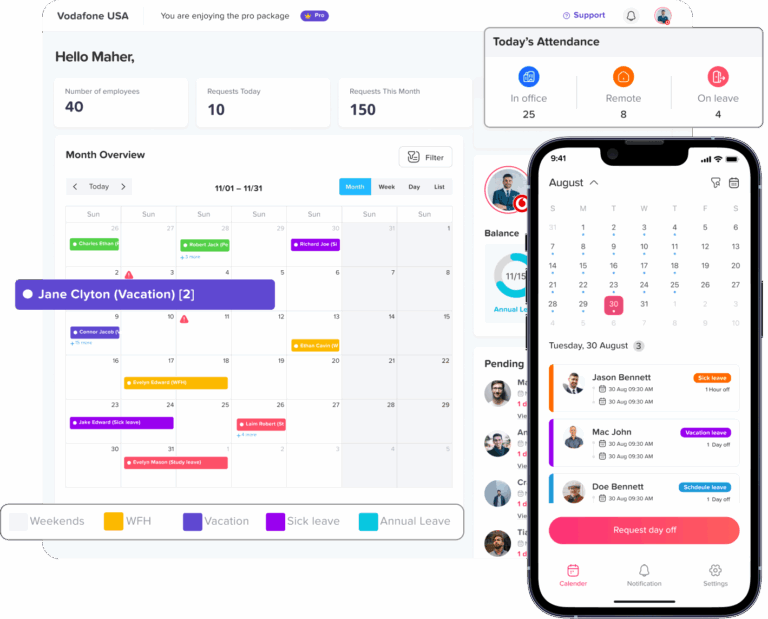
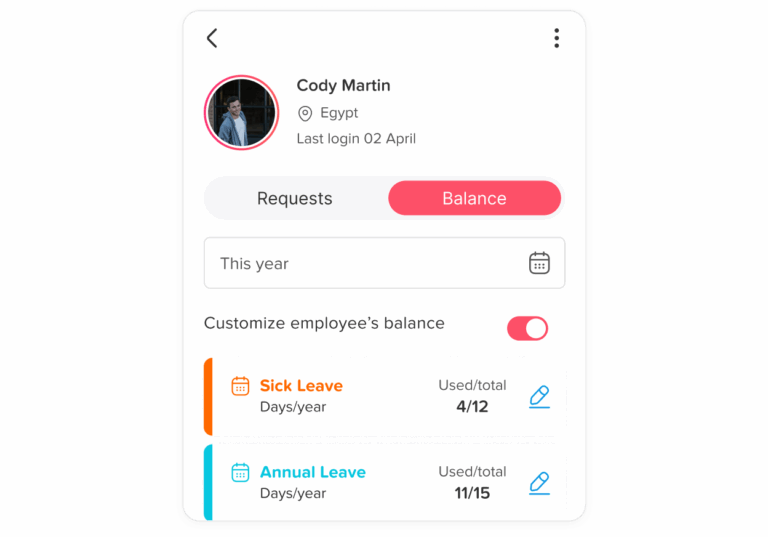
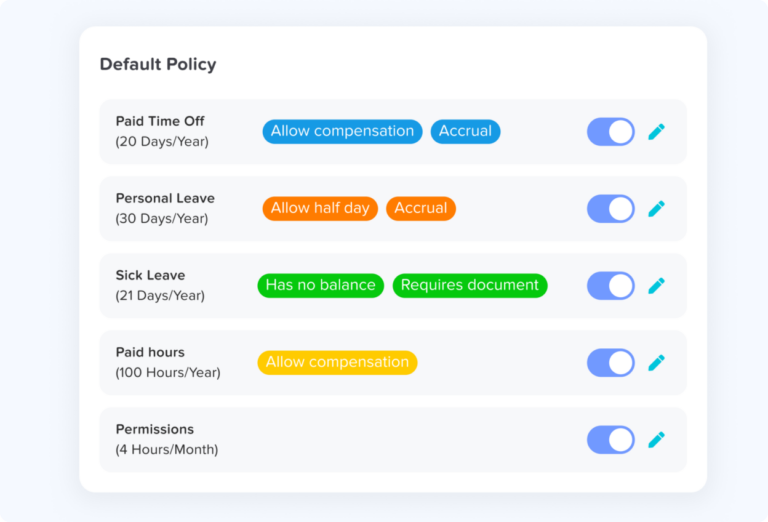
Day Off allows organizations to create multiple leave policies, include custom leave types, and assign policies by location, team, or individual employee.
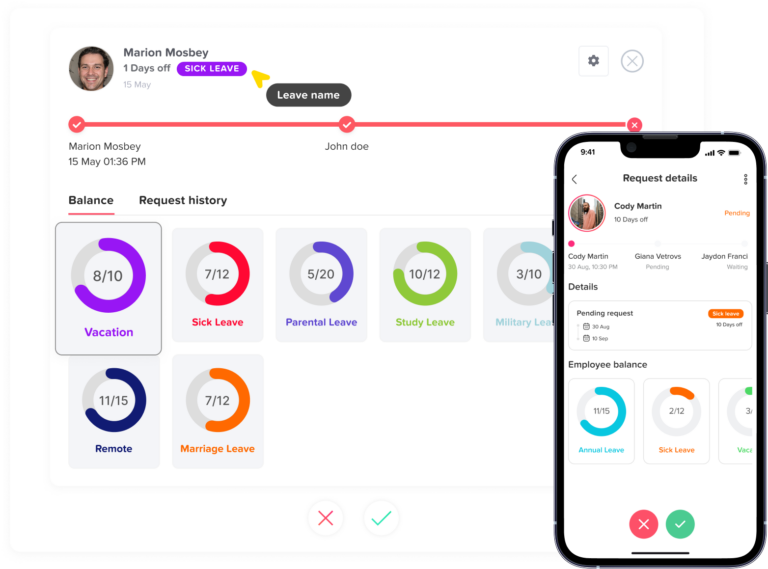
An employer could create a dedicated administrative leave type such as Donated PTO or Emergency Leave Bank and use documented balance adjustments to record approved transfers. HR should still maintain the formal donation application, tax review, conversion calculation, and medical documentation outside ordinary employee-visible records unless a dedicated workflow has been configured.
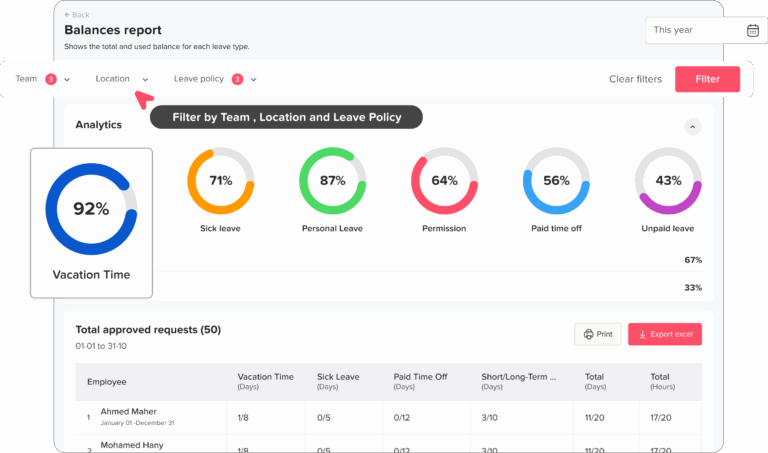
Day Off’s balance and total reports can help administrators review allocated, used, and remaining leave by employee and leave type.
For an accurate audit trail, each adjustment should identify:
- Donor
- Recipient or leave bank
- Original leave type
- Donated hours
- Conversion method
- Recipient hours added
- Approval date
- Payroll period
- Reason for the transaction
- Treatment of unused leave
Frequently Asked Questions About PTO Donation Policies
What is a PTO donation policy?
A PTO donation policy is a written workplace policy that allows employees to voluntarily transfer eligible paid leave to an approved coworker or an employer-managed leave bank. The recipient can use the donated leave for a qualifying medical emergency, major disaster, or another event specifically covered by the policy.
How does a PTO donation program work?
The recipient usually submits an application and supporting documentation to HR. After confirming eligibility, the employer invites voluntary donations or distributes leave from a central bank. HR or payroll then reduces the donor’s eligible balance, adds the approved amount to the recipient’s balance, and processes the recipient’s paid leave through normal payroll.
Is donated PTO taxable to the recipient?
Under a qualifying medical emergency or major disaster leave-sharing plan, payments made through donated leave are generally treated as taxable wages to the recipient. Normal payroll deductions and tax withholding usually apply.
The donated hours are generally not treated as taxable wages to the donor under a qualifying arrangement.
Can employees claim a tax deduction for donated PTO?
No. Donating PTO through an employer-sponsored leave-sharing plan is generally not treated as a charitable contribution. The donor normally cannot claim the value of the donated leave as a charitable deduction, business expense, or personal loss.
Can an employer require employees to donate PTO?
A PTO donation program should be voluntary. Employers and managers should not pressure employees to donate, publish the names of employees who declined, or treat participation as a condition of employment, promotion, scheduling, or favorable treatment.
Which types of leave can employees donate?
The answer depends on the written policy and applicable law. Employers may permit donations from balances such as:
- Accrued vacation
- General PTO
- Annual leave
- Personal leave
- Floating holidays
- Employer-provided sick leave above a statutory minimum
Statutory sick leave, compensatory time, unearned future PTO, and previously donated leave may be restricted or ineligible. The policy should identify each eligible balance clearly.
Can employees donate sick leave?
Employees may be allowed to donate sick leave where state or local law permits it and the employer’s written policy includes the option.
Employers should distinguish legally required sick leave from additional employer-provided sick leave. A donation program should not reduce or interfere with statutory rights.
Must recipients use all of their own PTO first?
Many PTO donation policies require recipients to exhaust their available vacation, sick leave, general PTO, or other paid balances before using donated leave.
The policy should state exactly which balances must be exhausted and whether exceptions are permitted for protected or restricted leave balances.
Who can receive donated PTO?
Eligibility requirements vary by employer. A recipient may need to:
- Be actively employed
- Complete a waiting period
- Experience a qualifying medical emergency or disaster
- Exhaust available paid leave
- Expect a substantial unpaid absence
- Submit supporting documentation
- Follow normal notice and call-in procedures
Approval does not necessarily guarantee that enough donated leave will be available.
Can employees donate PTO to a specific coworker?
Some medical emergency leave-sharing programs allow direct donations to an identified employee. However, employer-managed leave banks may require donations to enter a central pool.
Under certain qualifying major disaster plans, employees generally cannot direct their donation to a named recipient. The program structure should be reviewed before donations are collected.
Can a manager ask employees to donate PTO to a coworker?
Managers should not personally pressure direct reports to donate. A better approach is for HR to send a neutral company or team communication explaining that voluntary donations are being accepted for an approved recipient or leave bank.
The message should not reveal unnecessary medical or personal information.
How much PTO should an employee be allowed to donate?
Employers commonly establish:
- A minimum donation amount
- A maximum donation per request
- An annual donation limit
- A required remaining balance
- Permitted donation increments
For example, a policy might require donations in four-hour increments and require the donor to retain at least 16 or 40 hours for personal use.
Can an employee donate PTO they have not earned yet?
Usually not. Most programs permit employees to donate only accrued and available leave.
Allowing employees to donate future or unearned PTO could create negative balances, payroll problems, or disputes if the employee leaves before earning the donated time.
What happens if the donor and recipient have different pay rates?
Employers generally choose one consistent conversion method.
Under an hour-for-hour method, eight donated hours become eight recipient hours regardless of pay-rate differences.
Under a dollar-value method, the employer converts the donor’s hours into a monetary value and then converts that value into recipient hours. This method is more complicated and should be reviewed by payroll, tax, and legal professionals.
Can donated PTO be paid out in cash?
Most leave-sharing programs should prohibit recipients from converting donated leave into cash.
Qualifying major disaster plans generally cannot allow recipients to cash out donated leave. Employers should also define whether unused donated balances are excluded from termination payouts or other PTO cash-out programs.
Conclusion
A PTO donation policy can give employees meaningful support during a serious medical emergency or major disaster. It can also strengthen workplace trust by allowing coworkers to assist one another through an employer-managed process.
However, compassion alone is not enough to administer the program correctly.
Employers need a written leave-sharing policy that defines eligible donors, qualifying recipients, approved leave types, donation limits, documentation, tax treatment, privacy, conversion methods, FMLA coordination, unused balances, and recordkeeping.
The most reliable programs are voluntary, confidential, consistent, and easy to audit. HR should preserve every donation request, approval, balance adjustment, payroll transaction, and return of unused leave.
Day Off can help centralize leave policies, custom leave types, balances, approvals, and reports while the employer applies its legally reviewed donation and payroll procedures. A structured system makes it easier to support employees without losing control of leave balances or creating inconsistent records.