







Every leave balance in your company is measured against a clock, and that clock is your leave year, the 12-month period during which an employee’s leave entitlement is granted, accrued, used, carried over, or reset.
For many companies, the leave year is something they inherit rather than something they deliberately choose. Someone may have created a spreadsheet years ago, selected 1 January as the reset date, and the company simply continued using the same setup as it grew, even when its hiring patterns, workforce size, or business needs changed.
That can work for a while, but eventually the problems become obvious. HR teams start spending more time answering questions about remaining balances, managers struggle with employees taking large amounts of leave before the expiry date, and employees become unsure about exactly when their entitlement resets or whether unused days will carry forward.

Choosing the leave year deliberately can remove much of this confusion. It can make leave calculations easier, improve reporting, help managers plan staffing, and give employees a much clearer understanding of how their entitlement works.
The important thing to remember is that there is no single leave year that is automatically right for every company or every type of leave. A company may use a calendar year for vacation, an anniversary-based year for sick leave, and a rolling 12-month period for certain statutory leave.
What is a leave year?
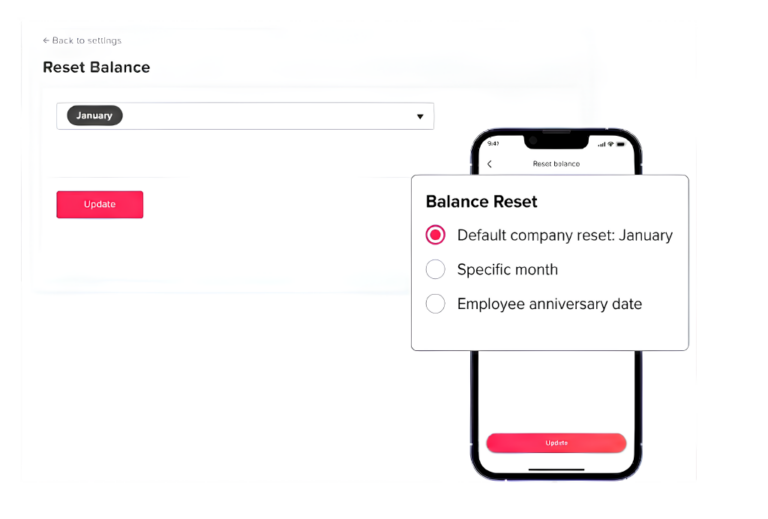
A leave year is the 12-month period an employer uses to calculate and manage a particular type of leave. It establishes the period over which entitlement is granted or accrued, balances are tracked, and unused days are either carried forward, expire, or are otherwise handled according to company policy and applicable law.
In simple terms, a leave year answers three important questions: When does an employee receive or start earning their leave, when does their balance reset, and what happens to unused leave when the period ends?
For example
Imagine that a company provides employees with 25 vacation days per year and uses a calendar leave year. An employee’s leave year would run from 1 January through 31 December, and their entitlement would be measured against that period. Depending on the company’s policy, the employee might receive the full allowance at the beginning of the year or accrue it gradually throughout the year.
At the end of the period, any remaining balance would then be handled according to the company’s carryover or expiry rules and the laws that apply to that employee. The next leave year would begin on 1 January, starting a new cycle.
A leave year therefore provides the basic structure behind an employee’s leave balance, even though employees may not always see the calculations
A leave year is not necessarily a calendar year
One of the most common assumptions about leave management is that the leave year must run from 1 January to 31 December, but there is no universal rule that requires every employer to use the calendar year for every type of leave.
Depending on the company’s policy, employment contracts, operational needs, and local employment laws, a leave year can begin on many different dates. Some companies choose the start of their financial year, while others use the employee’s joining date or another 12-month period that works better for a particular type of leave.
Common approaches include:
- 1 January to 31 December, which is the standard calendar-year approach used by many organizations.
- 1 April to 31 March, which can be useful for companies that align their leave cycle with their financial or planning year.
- 1 July to 30 June, which is another possible fixed 12-month cycle used by some organizations.
- Employee hire date to the day before the next anniversary, which creates an individual anniversary-based leave year.
- A rolling 12-month period, where entitlement is measured continuously rather than resetting for everyone on one fixed date.
The best choice depends on what makes sense for the company and, most importantly, what is legally permitted for the particular type of leave being managed.
Why does the leave year matter?
The leave year may look like a small administrative setting, but it affects much more than the number displayed next to an employee’s vacation balance. It influences entitlement calculations, reporting, workforce planning, employee communication, and the amount of administrative work required from HR.
It determines when entitlement is available
Some companies provide employees with their full annual leave allowance at the beginning of the leave year, while others allow employees to earn leave gradually throughout the year through monthly or hourly accrual.
The leave year provides the period over which this entitlement is measured, so the reset date can directly affect how much leave an employee has available at any particular point in time.
It determines when balances reset
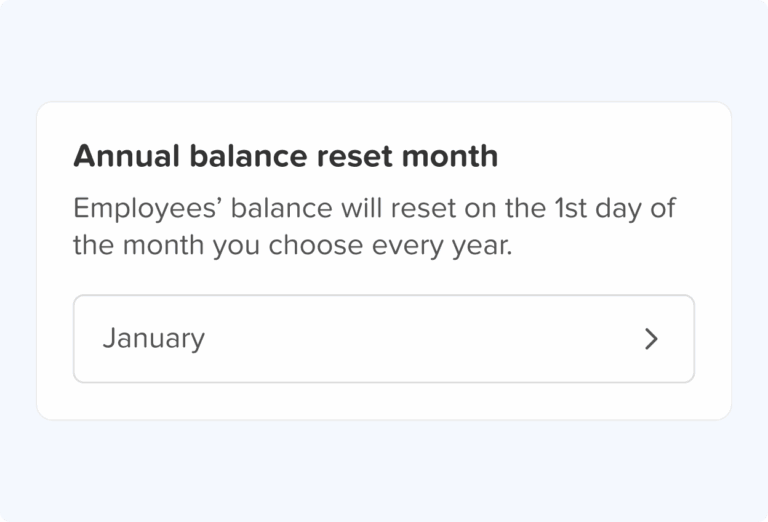
When the leave year comes to an end, the company needs to know what happens to any unused entitlement. Depending on the leave type and applicable law, unused days may be carried into the next leave year, carried over only up to a certain limit, expire, or be handled through another permitted arrangement.
This is why the reset date and the carryover policy need to be considered together rather than as two completely separate decisions.
It affects reporting
Most HR and leave reports are built around the leave year, which means the choice of period affects how the company measures vacation usage, remaining entitlement, accrual, carryover, and potential leave liability.
When every employee follows the same fixed leave year, company-wide reporting is usually easier because everyone is being measured against the same period. When employees have different anniversary years, the reports can still be accurate, but they require more individual calculations.
It affects workforce planning
Leave management is also a workforce-planning issue because the timing of a leave-year reset can influence when employees decide to take their remaining days.
If a company uses a 31 December expiry date and employees are encouraged to use their remaining entitlement before it expires, many employees may request time off during the final weeks of the year, potentially creating staffing problems at exactly the same time.
Choosing a reset date that works with the company’s seasonal workload can therefore be a practical business decision, not simply an HR preference.
Who decides when the leave year starts?
The answer depends on the country, the type of leave, and the applicable employment rules, but in many situations the employer can choose the leave year as long as the arrangement complies with local law and is clearly communicated to employees.
The company’s employment contracts, employee handbook, leave policy, payroll processes, and HR software should all reflect the same rules so that employees and managers are not receiving conflicting information from different sources.
United Kingdom
Under the Working Time Regulations 1998, workers are generally entitled to 5.6 weeks of paid annual leave, which is equivalent to 28 days for someone working five days a week. The rules also allow employers to define the leave year through the applicable employment terms.
Where the contract does not specify a leave year, the regulations provide a default arrangement based on the worker’s start-date anniversary. This makes it important for UK employers to check their employment contracts and policies rather than assuming that every employee automatically follows a 1 January to 31 December leave year.
United States
There is no general federal requirement under the Fair Labor Standards Act for private employers to provide paid vacation, so vacation policies are generally established by employers, subject to applicable state and local requirements.
However, this does not mean that every type of leave can simply follow the company’s vacation policy. Statutory programs can have their own rules about eligibility, accrual, usage, and measurement periods, and those rules can vary considerably between states.
This means a US company may reasonably use a calendar year for vacation while using a different measurement period for sick leave or statutory family and medical leave.
European Union
EU rules establish minimum requirements for paid annual leave, including a minimum of four weeks under the Working Time Directive. Individual member states then determine many of the practical details around entitlement, carryover, and expiry.
For employers operating across multiple European countries, this means the same internal leave structure may need to be adapted to meet the requirements of each country rather than applying one identical rule everywhere.
The two most common leave-year models
For annual vacation, two approaches are especially common: a fixed leave year, such as the calendar year, and an anniversary-based leave year, where each employee’s leave cycle follows their individual employment anniversary.
Neither approach is automatically better than the other. The right choice depends on the size of the organization, hiring patterns, reporting requirements, operational seasonality, and the type of leave being managed.
Model 1: Calendar or fixed leave year
With a fixed leave year, every employee follows the same reset date regardless of when they joined the company.
The most familiar example is:
1 January → 31 December
However, the company could choose another fixed period, such as 1 April through 31 March, if that better matches its financial year or operational planning cycle.
The defining feature is that the reset date remains the same for everyone.
Advantages of a calendar leave year
Easier administration
A fixed leave year gives HR one main reset date to manage for the entire organization. Instead of maintaining hundreds of individual anniversary dates, the HR team can prepare for one annual process covering the whole workforce.
Cleaner reporting
Company-wide reporting is generally easier when every employee is measured against the same 12-month period. Management can compare vacation usage, remaining balances, and annual leave trends without having to account for different individual reset dates.
Easier communication
A shared reset date is also simple for employees to understand. If the company tells employees that the leave year runs from 1 January to 31 December, everyone immediately knows when the annual cycle starts and ends.
Easier annual planning
A fixed leave year can also fit naturally with annual budgeting, workforce planning, financial reporting, and business planning, especially when those processes already operate on a calendar or fiscal year.
Disadvantages of a calendar leave year
New employees may need prorating
When someone joins partway through the leave year, the company may need to calculate a partial entitlement for the remaining months of that year rather than giving the employee a full annual allowance immediately.
This is manageable, but it creates an additional calculation that needs to be handled correctly and communicated clearly.
Leave can cluster around the year end
If unused vacation expires at the end of the leave year, employees may try to use their remaining days before the deadline. When hundreds of employees do this at roughly the same time, HR and managers can face a significant increase in leave requests.
Coverage can become difficult
The year-end rush can be particularly challenging for businesses that have a busy season toward the end of the year. A retailer, for example, may not want a large percentage of its workforce taking vacation during its busiest trading period.
Model 2: Anniversary leave year
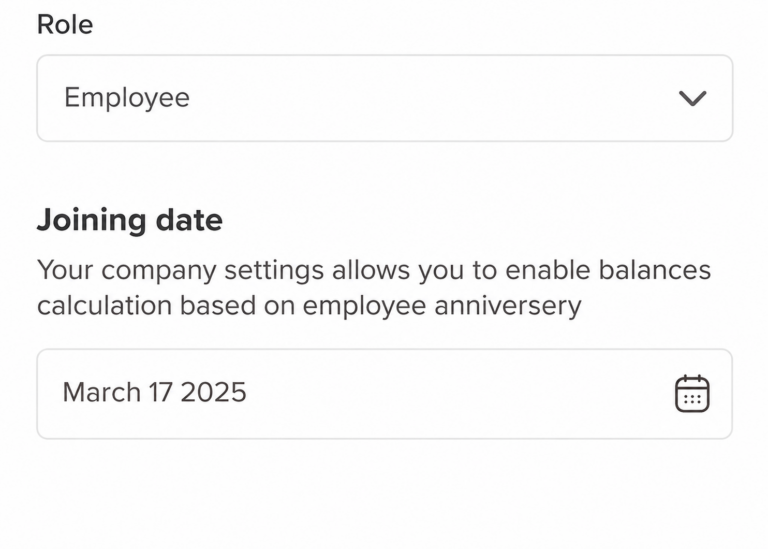
An anniversary leave year starts on an employee’s joining date and continues for the following 12 months.
For example, if an employee joins on 15 May, their leave year might run from 15 May through 14 May of the following year, with their balance resetting when their new leave year begins.
This approach gives each employee an individual leave cycle rather than putting the entire company onto one shared annual cycle.
Advantages of an anniversary leave year
It works naturally with individual employment dates
Because the leave year follows the employee’s joining date, the system can calculate each employee’s entitlement based on their own cycle rather than requiring everyone to follow the same organizational reset date.
It can simplify some new-hire calculations
Depending on the company’s policy, employees may receive their annual entitlement at the beginning of their individual leave year instead of joining partway through a company-wide cycle and immediately requiring a prorated calculation.
Leave demand can be spread throughout the year
Because employees have different reset dates, there is less reason for everyone to use their remaining leave at the same time. This can help reduce the large year-end rush associated with some fixed-year systems.
It can work well with tenure-based benefits
If vacation entitlement increases based on years of service, an anniversary-based approach can fit naturally with those milestones because the employee’s leave cycle already follows their employment anniversary.
Disadvantages of an anniversary leave year
Reporting becomes more complicated
When employees are all at different points in their leave cycles, company-wide reporting requires more careful calculations. An employee who joined two months ago may be in a completely different part of their leave year from someone who joined ten years ago.
Managers have more dates to track
Instead of preparing for one annual reset, the company has many individual reset dates spread throughout the year. Without good software, maintaining these dates manually can quickly become difficult.
Employee balances can be harder to compare
Two employees in the same department can have very different balances simply because they are at different points in their leave years. This is not necessarily a problem, but the system and policy need to make the reason clear.
Calendar year vs. anniversary year
| Aspect | Calendar / fixed year | Anniversary year |
|---|---|---|
| Reset date | Same for everyone | Different for each employee |
| New-hire handling | Usually requires prorating | Can provide a full personal-year allowance |
| Leave demand | Can cluster around year end | More evenly distributed |
| Reporting | Generally simpler | More complex |
| Administration | One main reset date | Multiple reset dates |
| Carryover processing | Usually one main annual cycle | Spread throughout the year |
| Best suited to | Centralized planning and reporting | Organizations hiring continuously |
The third option: rolling 12-month periods
Not every type of leave fits naturally into a fixed annual cycle. Some leave programs instead use a rolling 12-month period, where the relevant period moves continuously rather than resetting for everyone on a particular date.
A rolling period is different from a calendar year because it looks at a constantly changing window.
For example, a calendar-year calculation might ask:
- How much leave has this employee used since 1 January?
A rolling 12-month calculation might instead ask:
- How much leave has this employee used during the previous 12 months?
That difference can be important when determining eligibility or calculating how much statutory leave remains available.
Rolling periods can be more complicated for employees to understand, which is why the HR system should clearly display the relevant dates and calculations rather than leaving employees to work them out themselves.
One company can have several leave years
One of the most important concepts in modern leave management is that a company does not necessarily need one universal leave year for every type of leave.
Different leave categories exist for different reasons and can be subject to different company policies or legal requirements. As a result, it can make more sense for each leave type to have its own measurement period.
For example, a company might use:
| Leave type | Possible leave year |
|---|---|
| Vacation | Calendar year |
| Sick leave | Anniversary year |
| Personal days | Calendar year |
| Study leave | Fiscal year |
| Parental leave | Statutory or rolling period |
| Unpaid leave | Applicable policy or statutory period |
This is not necessarily inconsistent. In fact, it can be a more accurate way of managing leave because each category follows the rules that actually apply to it.
The goal should not be to make every leave type use the same clock simply because that looks simpler. The goal should be to create a leave structure that is legally compliant, understandable, and practical to administer.
Vacation leave usually benefits from a fixed year
Vacation is often the easiest leave type to manage using a fixed annual cycle because companies need to plan employee availability, project schedules, staffing levels, and annual leave usage across the organization.
For example, a company might choose:
Vacation year: 1 January – 31 December
Employees then use their vacation entitlement throughout that period, subject to the company’s accrual, approval, carryover, and expiry rules.
A fixed vacation year can also make it easier for managers to see upcoming periods where many employees are likely to request time off, particularly if the company has clear rules around unused vacation.
Sick leave may need a different approach
Sick leave is different from vacation because employees generally cannot plan when they will become sick or need time away from work.
Depending on the jurisdiction and the company’s policy, sick leave may therefore use a different measurement period from vacation. In some cases, an anniversary-based year or another 12-month period can be appropriate.
The exact rules depend heavily on local law, so employers should avoid assuming that the rules governing vacation automatically apply to sick leave.
This is particularly important for companies operating in multiple US states, where statutory sick-leave requirements can vary between jurisdictions.
Parental and family leave may use another clock
Parental, family, medical, and other statutory leave programs can have their own eligibility rules and measurement periods.
Depending on the applicable law, the relevant period may be based on a calendar year, a fixed 12-month period, an employee anniversary year, a forward-looking period, or a rolling backward-looking period.
For this reason, employers should not assume that the company’s vacation year automatically determines how statutory family or medical leave is measured.
Example: FMLA in the United States
Under the Family and Medical Leave Act, employers can choose from several methods for defining the 12-month period used to measure an employee’s FMLA entitlement.
These methods include the calendar year, another fixed 12-month period such as a fiscal year or anniversary year, a 12-month period measured forward from the first day of FMLA leave, and a rolling 12-month period measured backward from the date an employee uses FMLA leave.
The selected method must be applied consistently and in accordance with the applicable requirements.
This is a good example of why a company’s vacation year and its statutory leave measurement period can be completely different without creating an inconsistent leave policy.
Example: California paid sick leave
California’s paid sick leave rules operate separately from an employer’s vacation policy, and the applicable requirements can allow employers to use a designated 12-month period for certain calculations.
This means a California employer can potentially have a vacation year based on the calendar year while using a different annual period for sick leave, provided the setup complies with the applicable rules.
California also treats earned vacation differently from statutory sick leave in important ways. Earned vacation is generally treated as wages, which means traditional “use-it-or-lose-it” rules cannot simply be applied to earned vacation in the same way they might be applied to certain other leave categories.
This is an important reminder that leave policies should be designed by leave type and jurisdiction, rather than assuming every form of time off follows the same rules.
Why “one reset date for everything” can cause problems
Using one reset date for every leave category may appear to be the simplest approach, but it can create unnecessary complications when different types of leave are governed by different rules.
Imagine a company with 200 employees offering vacation, sick leave, personal days, volunteer leave, and parental leave. If every category is forced into a 1 January to 31 December cycle, HR may have to create exceptions whenever the legal or policy requirements for one category do not fit the standard annual model.
Over time, that can lead to manual calculations, additional spreadsheets, confusing employee balances, reporting difficulties, and a greater risk of mistakes.
A better question is not:
- “What leave year does our company use?”
It is:
- “What measurement period should each type of leave use?”
Once that question is answered, the overall leave policy usually becomes much easier to structure.
What to consider before choosing a leave year
Choosing a leave year should not be an arbitrary administrative decision. A good leave-year structure should reflect the company’s legal obligations, workforce, operational calendar, and approach to employee benefits.
Check the legal requirements first
Start by identifying the legal rules that apply to every leave type and every country or state where employees are located.
Some statutory leave programs may require a particular calculation method, while others may allow the employer to choose between several options.
The HR system should be configured only after these requirements are understood.
Check your employment contracts
If existing employment contracts already specify the leave year, changing it may involve more than changing a setting in your HR software.
The company may need to follow its normal process for making contractual changes, communicate the new arrangement to employees, and ensure that the transition does not accidentally reduce an employee’s lawful entitlement.
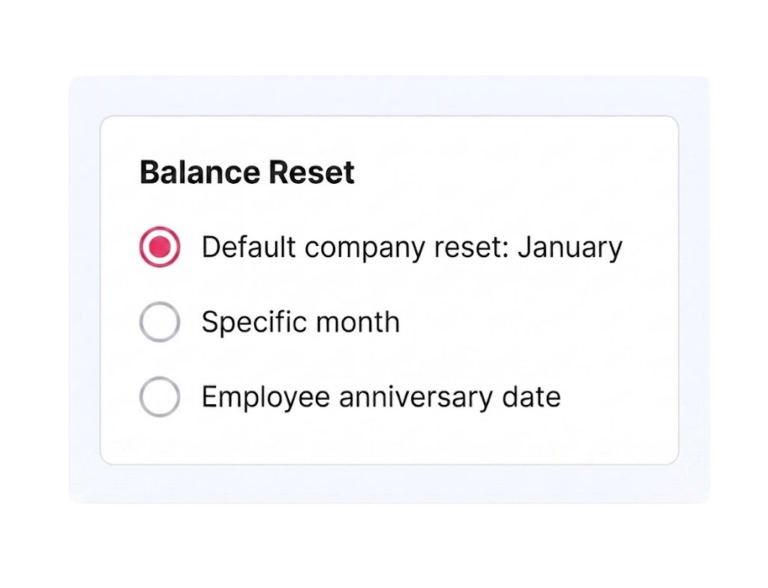
Look at your hiring pattern
Think about when and how your company hires.
If employees join continuously throughout the year, an anniversary-based leave year may reduce some of the complexity associated with employees joining halfway through a fixed annual cycle.
If most employees join at the same time each year, a fixed leave year may be easier to administer and explain.
Look at your busiest periods
Your business calendar should play a role in the decision.
If your company is busiest in November and December, for example, having vacation expire on 31 December could encourage employees to request time off when the business needs them most.
Changing the leave-year end date can sometimes help distribute demand more effectively across the year.
Think about reporting requirements
Ask what your HR, finance, and management teams need to report.
If management wants a simple annual vacation report covering exactly the same period for every employee, a fixed leave year will usually be easier.
If individual employee cycles are more useful for your organization, an anniversary-based approach may make more sense despite the additional reporting complexity.
Decide on carryover rules
The reset date is only one part of the policy. You also need clear rules explaining what happens to unused entitlement when the leave year ends.
Consider whether unused days can be carried forward, whether there is a maximum carryover amount, whether carried-over days eventually expire, whether any payment is required or permitted, and whether statutory and contractual leave need different treatment.
Document everything
The leave year should be clearly documented in the company’s employment contracts, employee handbook, internal policies, HR system, and payroll processes where relevant.
These sources should agree with each other. If the employee handbook says the leave year ends on 31 December but the HR system resets balances on 30 June, employees and managers will naturally become confused.
Changing your company’s leave year
Companies sometimes discover that their original leave-year setup no longer makes sense as the organization grows.
A small business may have started with a simple calendar-year policy when it had ten employees, but that same structure may become less practical after the company grows to hundreds of employees across multiple countries.
A company may also want to change its leave year because its financial year has changed, its hiring patterns have changed, or its current reset date creates staffing problems.
Changing the leave year can be done, but it needs to be planned carefully.
Why a transition period matters
Imagine a company currently uses:
1 January – 31 December
but wants to move to:
1 April – 31 March
There is now a three-month transition period that needs to be accounted for.
The company must decide how entitlement will work during those additional months, whether a prorated allowance is needed, and how existing balances should move from the old leave year into the new one.
The exact approach depends on the company’s policy, employment contracts, and applicable law.
Don’t change the software first
One common mistake is to change the leave settings in an HR system before deciding exactly how the policy transition will work.
A better approach is to:
- Confirm the legal requirements that apply to the change.
- Review employment contracts and existing leave policies.
- Decide how the transition period will be handled.
- Calculate any required prorated entitlement.
- Communicate the change clearly to employees and managers.
- Update policies and contracts where necessary.
- Configure the HR system to match the approved policy.
- Review employee balances carefully before the new leave year begins.
The software should reflect the policy; it should not be responsible for deciding what the policy means.
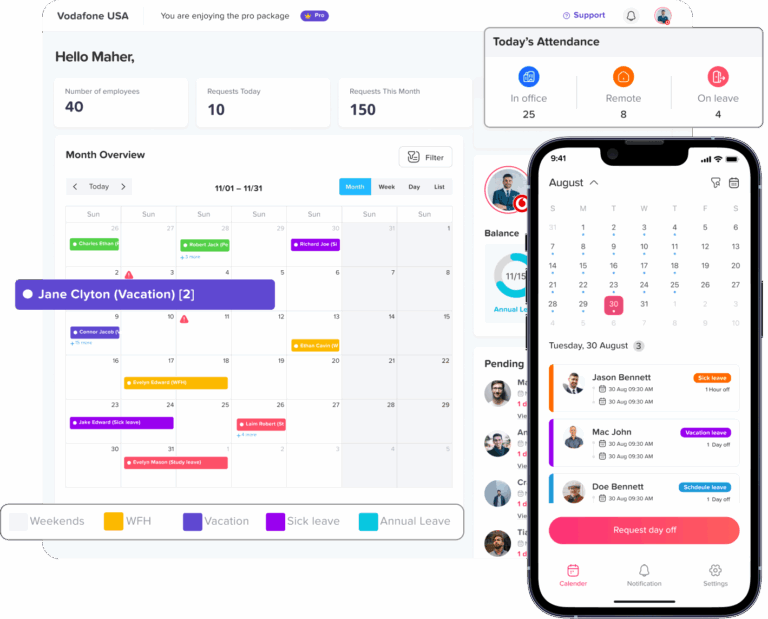
How Day Off handles different leave years
Day Off treats the leave year as a property of the leave type, rather than assuming that every type of leave in a company needs to share the same reset date.
This approach allows companies to build a leave policy around how their organization actually operates instead of forcing every leave category into one global annual cycle.
Separate reset dates for each leave type
Vacation can be configured to reset on a fixed date such as 1 January, while sick leave can use an employee’s joining-date anniversary. Personal days, study leave, volunteer leave, and other categories can have their own settings where appropriate.
Automatic anniversary calculations
For anniversary-based leave types, reset dates can follow each employee’s joining date automatically. This removes the need for HR teams to maintain a separate calendar of employee anniversaries and manually check when each person’s entitlement needs to reset.
Different carryover rules
Each leave type can have its own carryover rules, allowing a company to create a capped vacation carryover policy while handling sick leave or other categories differently according to the applicable rules.
Accrual or upfront entitlement
Companies can choose whether employees receive their annual allowance at the beginning of the leave year or accrue entitlement gradually throughout the year, depending on how the company’s actual leave policy is structured.
Public holiday calendars
For companies with employees in multiple countries, public holidays can also vary by location. Using location-specific holiday calendars helps ensure that employees receive the correct holiday schedule without requiring HR teams to maintain separate manual lists.
Employees can see their own balances
Giving employees access to their current balances and relevant leave information reduces the number of routine questions sent to HR. Instead of asking how many days they have remaining or when their balance resets, employees can check the information themselves.
This becomes particularly valuable toward the end of a leave year, when HR teams often receive a large number of similar questions from employees trying to understand their remaining entitlement.
A practical example
Consider a company with 100 employees working across three countries.
The company decides to use a calendar year for vacation, an employee anniversary year for sick leave, a calendar year for personal days, and the applicable statutory measurement period for parental leave. Public holidays are then determined according to each employee’s location.
At first, this may sound complicated because there are several different dates involved.
In practice, however, the logic is quite simple: each leave type follows the measurement period that makes sense for its purpose and the rules that apply to it.
Employees do not need to understand every calculation happening behind the scenes. A good leave-management system should present the relevant balance, entitlement, and reset information clearly so that employees can understand their own situation without needing to calculate it manually.
The complexity should live in the configuration, not in the employee’s head.
A practical checklist for HR teams
Before finalizing your leave-year setup, make sure you can answer the following questions clearly:
- What is the leave year for each type of leave?
- Is the chosen period legally permitted in every location where we operate?
- Is the leave year documented in employment contracts where required?
- Does the employee handbook match the contracts?
- When does entitlement become available?
- Is entitlement granted upfront or accrued over time?
- When does each balance reset?
- What happens to unused leave?
- Is there a carryover limit?
- Are there different rules for different countries or states?
- How are new employees handled?
- What happens when an employee changes location or employment terms?
- Can employees easily see their balances and reset dates?
- Can managers understand upcoming leave and its impact on staffing?
- Can HR produce accurate reports on leave usage, accrual, and liability?
If these questions have clear answers, your leave system is much less likely to create confusion or unexpected problems later.
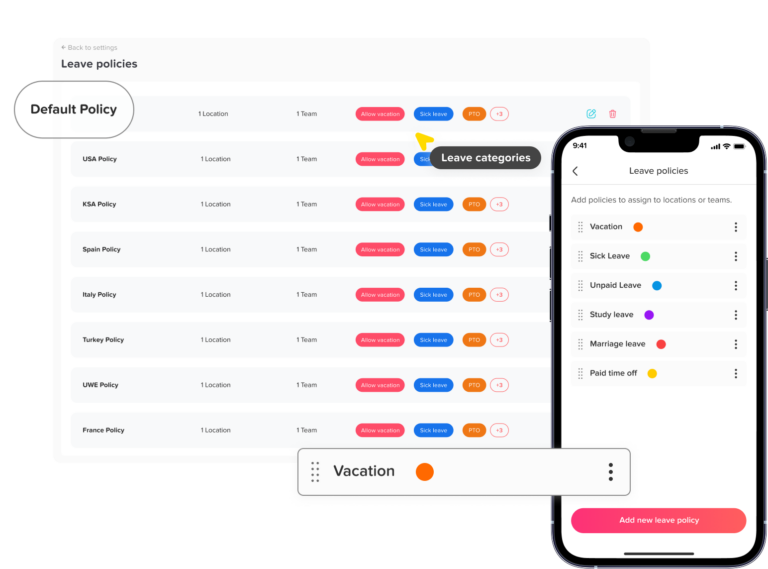
The best leave year is the one that fits your policy
There is no universal “best” leave year.
A calendar year may be ideal for a company that values simple reporting, centralized planning, and one annual reset date, while an anniversary-based year may work better for an organization that hires employees continuously throughout the year and wants to spread leave demand more evenly.
A rolling 12-month period may make sense for a statutory leave program even though it would be unnecessary for vacation.
The most important question is therefore not simply when your company’s leave year starts. The more useful question is whether each leave type is using the right measurement period for its purpose, your workforce, and the laws that apply to your employees.
Start by checking the legal requirements. Then review your employment contracts, hiring patterns, business seasonality, reporting needs, and carryover rules before deciding how each leave type should work.
Finally, make sure your HR software can support the policy without forcing every type of leave into one global reset date.
When those pieces line up, leave management becomes much easier. Employees know what they have, managers know what to expect, HR spends less time correcting balances, and the end of the leave year becomes a predictable administrative process instead of an annual scramble.
FAQ
What is a leave year?
A leave year is the 12-month period an employer uses to grant, accrue, track, and reset a particular type of leave entitlement. It determines when balances are measured, when new entitlement becomes available, and what happens to unused leave when the period ends.
Does a leave year have to start on 1 January?
No. Depending on the leave type and applicable law, an employer may use another fixed date, a fiscal year, an employee’s anniversary date, or another permitted 12-month measurement period.
The important thing is that the chosen approach is legally compliant, consistently applied, and clearly documented for employees.
Can different leave types have different leave years?
Yes. A company can use a calendar year for vacation, an anniversary year for sick leave, and a different statutory or rolling measurement period for parental or family leave, provided each arrangement follows the applicable rules.
Different leave types often have different purposes and legal requirements, so using different measurement periods can actually make the overall leave policy easier to manage.
What happens to unused leave at the end of the leave year?
The answer depends on the leave type, company policy, employment contract, and applicable law.
Unused leave may be carried into the next period, carried over only up to a specified limit, expire, or be handled through another legally permitted arrangement. Some jurisdictions place strict limits on when earned vacation can be forfeited, so employers should not assume that an expiry rule is automatically valid.
What is the default leave year in the UK if the contract doesn’t say?
Under the Working Time Regulations 1998, where the leave year has not otherwise been specified, the default arrangement is generally based on the worker’s start-date anniversary.
Employers should still check the actual contractual terms and current legal requirements before determining which leave year applies to an individual employee.
Can I change my company’s leave year?
Yes, but changing the leave year should be treated as a planned policy change rather than simply a software setting.
You may need a transitional period with prorated entitlement, and if the leave year is included in employment contracts, the company may need to follow its normal process for contractual changes and employee communication.
Is a calendar year or anniversary year better?
Neither is automatically better.
A calendar year is usually easier for company-wide reporting, centralized planning, and annual administration, while an anniversary year can work well for organizations that hire throughout the year and want individual leave cycles that follow employees’ joining dates.
The right choice depends on your workforce, business calendar, reporting requirements, and the type of leave being managed.
Does the leave year have to match the financial year?
No. The financial year, payroll year, calendar year, and leave year are separate concepts.
A company can align them if doing so makes administration and reporting easier, but there is generally no reason to assume that all four periods must be identical.
Should vacation and sick leave use the same leave year?
Not necessarily.
Vacation and sick leave serve different purposes and can be subject to different legal requirements, so using the same measurement period for both is not always the best approach.
It is often better to decide on the appropriate leave year for each category separately and then make sure the HR system can manage those differences automatically.
What should HR do before choosing a leave year?
Start by checking the legal requirements for each leave type and each country or state where employees are located. Then review employment contracts, hiring patterns, business seasonality, carryover rules, reporting requirements, and the capabilities of your leave-management system.
The goal is to create a leave structure that is legally compliant, easy for employees to understand, practical for managers, and simple for HR to administer.
Conclsuion
Choosing the right leave year can make a big difference in how easily a company manages employee time off. While a calendar year may be the simplest option for vacation, an anniversary-based or rolling 12-month period can be more suitable for other types of leave. The important thing is to choose a structure that fits your company’s workforce, business needs, and local legal requirements.
Before setting or changing a leave year, review your employment contracts, carryover rules, hiring patterns, and busy periods, and make sure every leave type is configured correctly. With clear policies and the right leave-management system, employees can easily understand their balances, managers can plan coverage more effectively, and HR teams can spend less time dealing with manual calculations and end-of-year confusion.