







Public holidays should be simple. An employee either works or takes the day off.
For payroll teams, however, things are rarely that straightforward.
Does an employee still get paid if they do not work on a public holiday? If they do work, should they receive their normal rate, time and a half, double pay, or another day off? And what happens when your employees work in different countries where completely different rules apply?

The answer depends heavily on where the employee works.
In some countries, paid public holidays are a legal entitlement. In others, employers are free to decide whether the day is paid. Some countries require extra compensation for employees who work on a holiday, while others leave holiday premium pay entirely to employment contracts or company policy.
That makes accurate time and attendance records essential.
This guide explains the main holiday pay rules in the United States, United Kingdom, Canada, Germany, France, Spain, and the UAE, along with practical steps for tracking hours worked on public holidays and preparing accurate payroll.
What Is Holiday Pay?
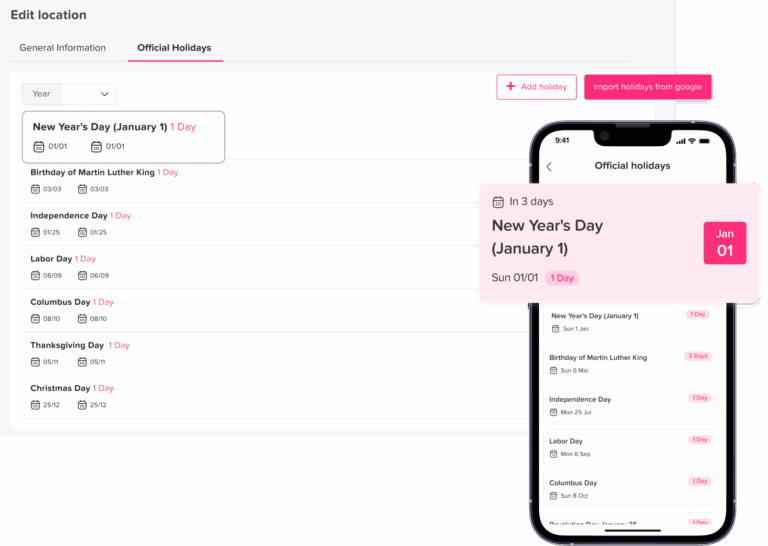
The term holiday pay can describe several different things, so it is important to distinguish between them.
Paid Public Holiday
An employee does not work because it is a recognized public holiday but still receives their normal pay.
For example, an eligible employee may stay home on Christmas Day and receive the same pay they would have earned if it had been a normal working day.
Holiday Premium Pay
An employee works on a public holiday and receives a higher rate for those hours.
Depending on the country, employment contract, or company policy, this could mean:
- Time and a half
- Double pay
- Another premium rate
Substitute Day Off
Instead of, or sometimes in addition to, extra pay, an employee who works on a public holiday may receive another paid day off later.
This is sometimes called a substitute holiday, compensatory day, or day in lieu.
The important point is that these benefits are not treated the same way everywhere.
A company with employees in New York, Toronto, Berlin, and Dubai may need four different approaches to the same public holiday situation.
Holiday Pay Rules by Country: Quick Comparison
Here is a simple overview of the rules covered in this guide.
| Country | Is a Public Holiday Paid if the Employee Does Not Work? | What Happens if the Employee Works? |
|---|---|---|
| United States | No federal requirement | No federal holiday premium requirement. Company policy or contract applies |
| United Kingdom | Bank holidays do not automatically have to be additional paid leave | No statutory premium. Employment contract determines extra pay |
| Canada, Ontario | Eligible employees receive public holiday pay | Generally 1.5x premium pay plus holiday pay, or regular wages plus a substitute day |
| Germany | Normal pay continues for qualifying hours lost because of the holiday | Substitute rest day generally required. Premiums often depend on agreements |
| France | Eligible employees generally retain pay for public holidays | 1 May has special double-pay rules. Other holidays depend on agreements |
| Spain | Up to 14 paid public holidays each year | Compensatory rest or additional pay may apply |
| UAE | Official public holidays are paid | Substitute day off or normal wage plus at least 50% |
The table is useful for comparison, but businesses should not build payroll rules from the table alone. Eligibility conditions, regional differences, contracts, and sector-specific rules can change the outcome.
United States: Holiday Pay Is Usually a Company Benefit
The United States takes a very different approach from many European countries.
Under the Fair Labor Standards Act (FLSA), employers are not generally required to pay employees for time they do not work, including federal holidays.
Holiday benefits are therefore usually determined by:
- Company policy
- Employment contracts
- Collective bargaining agreements
- Certain state or local rules
- Rules applying to specific federal contracts
This means an employer may choose to make holidays such as Thanksgiving, Christmas Day, or Independence Day paid days off, but federal law does not generally require it.
What if an Employee Works on a Public Holiday?
The FLSA also does not require an employer to pay time and a half simply because an employee works on a federal holiday.
An employer can choose to offer:
- Normal pay
- Time and a half
- Double pay
- Another day off
- Another company-defined benefit
The company’s policy or contract determines what applies.
Holiday Pay and Overtime in the US
One common payroll mistake is automatically treating paid holiday hours as hours worked for overtime.
Under the FLSA, overtime is generally based on hours actually worked over 40 in a workweek.
For example, suppose an employee receives eight paid holiday hours on Monday but does not work that day. They then physically work 36 hours during the rest of the week.
They may receive pay covering 44 hours, but only 36 of those hours were actually worked.
The paid holiday hours therefore do not generally create federal overtime by themselves.
A company policy or collective agreement can, however, provide more generous rules.
United Kingdom: Bank Holidays Are Not Automatically Extra Paid Leave
The UK also gives employers considerable flexibility.
Workers are generally entitled to 5.6 weeks of statutory paid annual leave each year.
For an employee working five days per week, that normally equals 28 days.
However, an employer can choose to include bank holidays within those 28 days.
This means UK law does not automatically give workers bank holidays as additional paid days off on top of their statutory annual leave entitlement.
What if Someone Works on a Bank Holiday?
There is also no automatic statutory right to additional pay simply because an employee works on a bank holiday.
For example, an employee working on Christmas Day does not automatically have a legal right to double pay.
The answer normally depends on:
- The employment contract
- The employer’s holiday policy
- A collective agreement
Companies should therefore make their bank holiday policy clear before employees are scheduled to work.
Canada: Public Holiday Rules Depend on the Province
Canada is more complicated because holiday pay rules differ between provinces and territories.
Federally regulated employers also follow separate federal rules.
Ontario provides a useful example of how statutory holiday pay can work.
Ontario recognizes nine public holidays covered by its employment standards framework:
- New Year’s Day
- Family Day
- Good Friday
- Victoria Day
- Canada Day
- Labour Day
- Thanksgiving Day
- Christmas Day
- Boxing Day
How Ontario Public Holiday Pay Is Calculated
Eligible employees who take the holiday off receive public holiday pay.
The calculation generally uses:
Regular wages earned during the four workweeks before the holiday + vacation pay payable for that period ÷ 20
Eligibility also depends on employee attendance around the holiday.
Employees may lose their entitlement if they fail, without reasonable cause, to work:
- Their last regularly scheduled shift before the holiday
- Their first regularly scheduled shift after the holiday
This is why attendance records around a public holiday can be just as important as the holiday itself.
What if an Employee Works on the Holiday?
An employee who agrees in writing to work on a public holiday may generally receive either:
Option 1: Regular wages for the hours worked plus a substitute paid day off.
Option 2: Public holiday pay plus premium pay of 1.5 times the regular rate for hours worked.
When a substitute day is used, timing rules apply. It generally must be taken within three months, or within 12 months when the employee agrees in writing.
Other Canadian provinces and territories have their own holiday lists, calculations, and eligibility requirements, so employers should avoid applying Ontario’s rules automatically across Canada.
Germany: Public Holidays Are Paid, but Working Them Is Restricted
Germany generally protects employees from losing normal wages when work is cancelled because a public holiday falls on a day they would normally work.
Under the Continued Remuneration Act, employees generally continue receiving their normal pay for qualifying working hours lost because of the public holiday.
However, attendance around the holiday matters.
An employee who is absent without justification immediately before or after the holiday may lose their entitlement to holiday pay.
What if Someone Works on a Public Holiday?
Working on Sundays and public holidays is generally restricted in Germany, although important exceptions exist.
Industries that may need employees to work include:
- Healthcare
- Hospitality
- Emergency services
- Transport
- Certain continuous operations
When an employee works on a qualifying public holiday that falls on a weekday, a substitute rest day is generally required, usually within eight weeks.
German law does not establish one universal statutory public holiday premium.
Extra pay often comes from:
- Collective bargaining agreements
- Employment contracts
- Company policies
Public holiday supplements can also receive favorable tax treatment within specified limits.
Another important complication is location.
Germany’s public holidays can differ by federal state, so an employee in Bavaria may have a holiday that an employee elsewhere in Germany does not.
For multi-location teams, assigning the correct holiday calendar is therefore essential.
France: 1 May Has Special Rules
France has 11 national public holidays, with additional holidays in some locations, including Alsace-Moselle.
Employees with the required service generally retain their normal pay when eligible public holidays are not worked.
But one date receives particularly strong protection.
1 May, Labour Day
1 May is treated differently from other French public holidays.
It is generally a mandatory non-working paid holiday.
In industries where work cannot reasonably stop, such as certain healthcare or transport services, employees may still work.
When they do, they must receive double pay.
Other French Public Holidays
The rules are less uniform for the remaining holidays.
Whether employees:
- Work
- Receive additional pay
- Receive another benefit
may depend on the applicable collective agreement or company rules.
Employers therefore need to check both national law and the agreements that apply to their workforce.
Spain: Up to 14 Paid Public Holidays
Employees in Spain can receive up to 14 paid public holidays each year.
The final calendar can include:
- National holidays
- Regional holidays
- Local holidays
Up to two may be local holidays.
These public holidays are paid and generally cannot simply be treated as ordinary days that employees must make up later.
What if an Employee Works on a Public Holiday?
When business needs require an employee to work on a public holiday, compensatory rest or additional pay may apply.
A premium of at least 75% above normal pay is commonly relevant under Spanish rules, although collective bargaining agreements can establish different or more favorable arrangements.
This makes it particularly important to know:
- Whether the date was a public holiday for that specific employee’s location
- Whether the employee actually worked
- How many hours they worked
- What collective agreement or employment terms apply
- Whether compensatory rest is owed
UAE: Paid Public Holidays With Additional Protection for Holiday Work
Employees in the UAE private sector are entitled to official public holidays with full pay under Federal Decree-Law No. 33 of 2021.
If an employee is required to work during an official public holiday, the employer must provide additional compensation.
The employee should generally receive either:
- A substitute day off, or
- Their normal wage for the day plus an increase of at least 50%
For payroll teams, the key is ensuring that holiday work is clearly distinguished from ordinary working days so the correct compensation can be applied.
Why Accurate Public Holiday Time Tracking Matters
Holiday payroll problems often start with a simple question:
Did this employee actually work on the holiday?
If the business cannot answer that confidently, everything that follows becomes harder.
Pay the Correct Holiday Premium
A payroll system cannot reliably calculate time and a half, double pay, or another premium unless it knows exactly how many qualifying hours were worked.
An employee who worked three hours on a holiday should not automatically be treated the same as someone who worked an eight-hour shift.
Keep Track of Substitute Days
In several jurisdictions, working on a public holiday can create an entitlement to another day off.
Those days may also have deadlines.
Without a clear record, businesses can easily lose track of:
- Who earned a substitute day
- When it was earned
- Whether it was used
- When the entitlement expires
Apply Eligibility Rules Correctly
Some holiday pay rules depend on employee attendance around the public holiday.
Ontario’s rules concerning the scheduled shifts before and after a holiday and Germany’s rules around unjustified absences are examples.
A holiday calendar alone cannot answer those questions. Attendance records are also needed.
Avoid Overtime Errors
Holiday pay and overtime are not always calculated using the same rules.
Payroll may need to distinguish between:
- Hours actually worked
- Paid holiday hours not worked
- Holiday premium hours
- Regular hours
- Overtime hours
Mixing these categories can result in incorrect payroll.
Manage Multi-Country Teams
A date that is a public holiday for one employee may be an ordinary working day for another.
For example, a holiday in Berlin does not automatically apply to employees in Madrid, Toronto, or Dubai.
The problem becomes even more complicated when holidays vary within the same country by state, province, region, or locality.
Maintain Better Audit Records
If payroll calculations are questioned later, employers should be able to show what happened.
Useful records include:
- The applicable holiday calendar
- Employee work schedule
- Actual clock-in time
- Actual clock-out time
- Total hours worked
- Overtime
- Holiday premium applied
- Substitute day granted
A clear record is much easier to defend than a spreadsheet reconstructed months later.
How to Track Hours Worked on Public Holidays
A good holiday pay process connects holidays, schedules, attendance, payroll, and time off instead of treating them as separate systems.
Here is a practical six-step process.
Assign the Correct Public Holiday Calendar
Start with the employee’s actual work location.
Include all relevant:
- National holidays
- State or provincial holidays
- Regional holidays
- Local holidays
Review calendars every year because some holidays, including Easter-related dates and Eid, can move.
For international teams, avoid using one company-wide holiday calendar unless every employee genuinely follows the same holidays.
Define Your Holiday Pay Policy
Employees should know what happens before a public holiday arrives.
Your policy should explain:
- Which holidays the company observes
- Which employees are eligible for holiday pay
- Whether the holiday is paid when not worked
- What employees receive if they work
- Whether a premium rate applies
- Whether a substitute day is available
- How substitute days are requested
- How overtime interacts with holiday work
In countries where contracts or collective agreements determine holiday benefits, make sure the policy matches those obligations.
Plan Holiday Coverage in Advance
If the business needs to remain open, determine who will work before the holiday arrives.
This is particularly important where employee agreement may be required.
Advance scheduling also gives payroll and HR time to understand:
- Who is expected to work
- Which employees will take the holiday
- What compensation each employee should receive
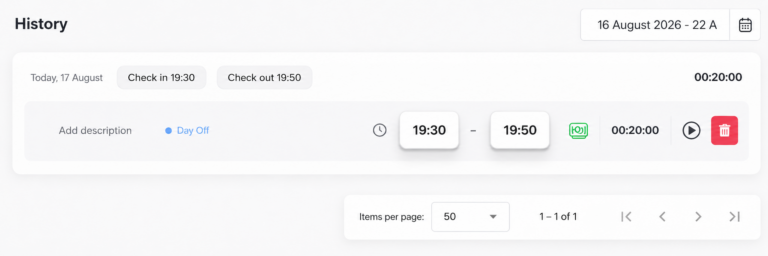
Record the Hours Actually Worked
A scheduled shift tells you what was supposed to happen.
A time record tells you what actually happened.
If an employee was scheduled for eight hours but worked five, payroll may need those five actual hours when calculating the holiday premium.
Employees working on public holidays should therefore record their real:
- Clock-in time
- Clock-out time
- Breaks where applicable
- Total hours
Track Substitute Days Properly
Do not leave compensatory days in an email, spreadsheet note, or manager’s memory.
When employees earn a substitute day, record it as an entitlement that can be monitored.
The business should know:
- When the day was earned
- When it must be used
- Whether the employee has requested it
- Whether it has been approved
- Whether it remains outstanding
This becomes especially important when local law sets a deadline.
Send Clean Records to Payroll
Payroll should be able to distinguish between different categories of time.
For example:
| Time Type | Example |
|---|---|
| Regular hours | Normal weekday work |
| Public holiday not worked | Paid holiday entitlement |
| Public holiday hours worked | Actual hours recorded on the holiday |
| Holiday premium | Additional rate applied to qualifying hours |
| Overtime | Hours qualifying under overtime rules |
| Substitute day | Compensatory leave earned for holiday work |
Separating these records reduces the risk of applying the wrong rate.
How Day Off Helps Manage Holiday Pay and Working Hours
Managing public holidays becomes much harder when holiday calendars, employee schedules, time tracking, and leave are stored in different places.
Day Off brings these records together so HR teams and managers can understand both sides of the holiday:
Who was supposed to be off, and who actually worked?
Public Holiday Calendars for 180+ Countries
Teams can add public holiday calendars based on employee locations, making it easier to manage employees across different countries and regions.
A team in Toronto does not need to follow the same holiday calendar as employees in Berlin, Paris, or Dubai.
Record Actual Holiday Hours
Employees who work on a public holiday can clock in and clock out using Day Off Time Tracker.
Instead of relying on the scheduled shift, managers have a record of the actual time worked.
That gives payroll a clearer basis for calculating holiday compensation.
Match Attendance With Work Schedules
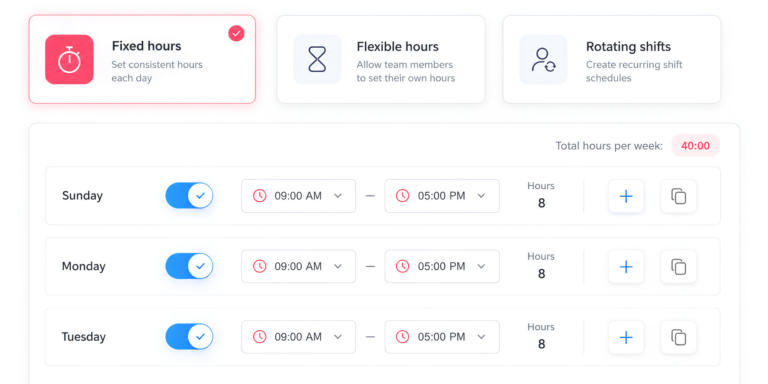
Employees can be assigned fixed, flexible, or rotating schedules.
Attendance can then be compared against the employee’s expected hours to identify:
- Worked hours
- Overtime
- Late time
- Missed attendance
See Holidays and Attendance Together
Because public holidays and attendance records are connected, managers can more easily determine whether an employee:
- Took the public holiday off
- Worked the holiday
- Recorded only part of a shift
- Has an unexplained attendance gap
Manage Substitute and Compensatory Days
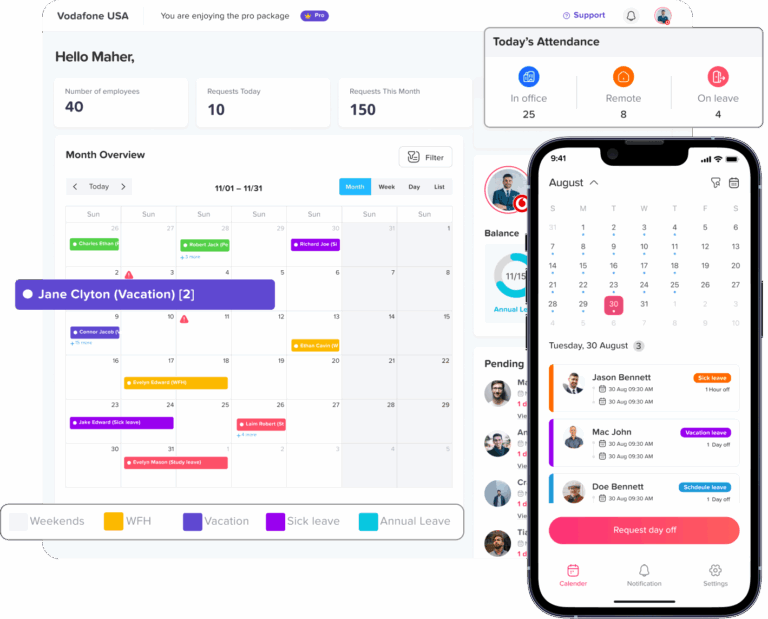
Businesses that provide substitute holidays can manage them through a dedicated leave policy.
Employees can then request the compensatory day through the same leave system used for other absences.
This makes it easier to see which days have been used and which remain available.
Keep Attendance Records Ready for Payroll
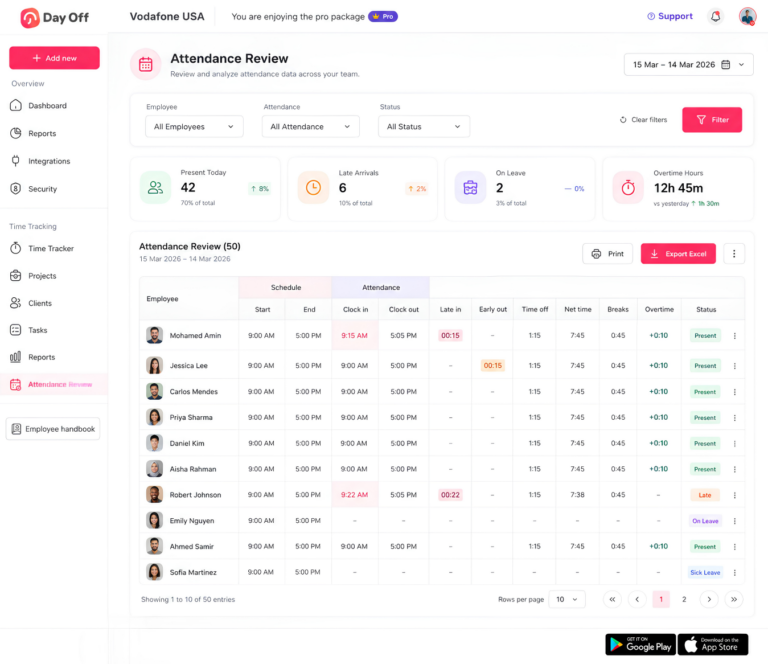
Attendance records can be exported with information including:
- Clock-in time
- Clock-out time
- Total hours worked
- Overtime
- Late time
- Absence information
Payroll can then apply the appropriate holiday pay rules based on the employee’s country, contract, and policy.
Instead of reconstructing what happened after every public holiday, businesses have one clearer record of who worked, how long they worked, and who took the holiday off.
Frequently Asked Questions About Holiday Pay
Is Holiday Pay the Same as Vacation Pay?
Not necessarily.
Public holiday pay generally relates to recognized public or statutory holidays, while vacation pay relates to an employee’s annual leave entitlement.
The terminology can vary between countries, which is why employers should clearly separate public holidays, annual leave, and compensatory days in their policies and records.
Are Employers Required to Pay Employees for Public Holidays?
It depends on the country.
The United States does not generally require private employers to pay employees for federal holidays that are not worked.
In the UK, bank holidays can be included within statutory annual leave rather than provided as additional paid leave.
Countries including Germany, France, Spain, and the UAE have different statutory protections for qualifying public holidays.
Canada’s rules depend on the relevant province, territory, or federal employment framework.
Do Employees Automatically Receive Extra Pay for Working on a Public Holiday?
No.
Some jurisdictions require additional compensation in certain situations, while others leave it to employment contracts, collective agreements, or company policy.
For example, France requires double pay for qualifying work on 1 May, while the US has no general federal requirement to pay a premium simply because someone worked on a holiday.
What Is Holiday Premium Pay?
Holiday premium pay is additional compensation for hours worked during a public holiday.
For example, a company or law might require an employee’s normal hourly wage plus an additional percentage.
The applicable rate depends on the employee’s jurisdiction and any contract or collective agreement that applies.
What Is a Substitute Holiday?
A substitute holiday is another paid day off provided because an employee worked on a public holiday.
Depending on the applicable rules, it may be provided instead of additional pay or alongside other compensation.
Some jurisdictions also specify how soon the substitute day must be taken.
Do Public Holiday Hours Count Toward Overtime in the United States?
Paid holiday hours that an employee does not actually work generally do not count toward the FLSA’s 40-hour threshold for federal overtime.
For example, receiving eight hours of holiday pay does not necessarily mean those eight hours count as hours worked.
An employer’s own policy or collective agreement may provide more generous rules.
Can Holiday Pay Rules Be Different Within the Same Country?
Yes.
This is particularly important for businesses with employees in multiple locations.
Canadian rules vary by province and territory. German public holidays can vary by federal state. Spain’s calendar combines national, regional, and local holidays.
Employers should therefore assign holiday rules based on the employee’s actual location rather than assuming one national calendar applies to everyone.
What Records Should Employers Keep for Employees Who Work on Public Holidays?
Useful records include:
- The employee’s assigned holiday calendar
- Their normal work schedule
- Actual start and finish times
- Total hours worked
- Overtime hours
- Holiday premium applied
- Substitute days earned
- Substitute days taken
Keeping these records together can make both payroll processing and later audits easier.
How Should Businesses Handle Public Holidays for International Teams?
Start by assigning each employee the appropriate holiday calendar for their work location.
Then apply the relevant local rules for:
- Paid holidays
- Holiday work
- Premium pay
- Overtime
- Substitute rest days
A holiday in one country should not automatically be treated as a holiday for the entire company.
How Can Time Tracking Software Help With Holiday Pay?
Time tracking software can create a record of the hours an employee actually worked on a public holiday instead of relying solely on scheduled hours.
When time tracking is connected with employee schedules, public holiday calendars, attendance, and leave records, payroll has a clearer picture of what happened and which rules may need to be applied.
Day Off Time Tracker combines these records with leave and public holiday management, helping teams keep holiday attendance information in one place.
Conclusion
Holiday pay rules can look simple until employees start working across different countries, regions, schedules, and public holiday calendars.
There is no universal rule saying that every employee who works on a public holiday receives double pay. There is also no universal rule saying every public holiday must be a paid day off.
The correct answer depends on where the employee works and which employment rules apply.
What employers can control is the quality of their records.
For every public holiday, you should be able to answer:
- Was this a public holiday for this employee?
- Was the employee scheduled to work?
- Did they actually work, and for how long?
- What pay or substitute time are they entitled to?
When public holidays, work schedules, time tracking, and leave records are connected, those questions become much easier to answer.
Day Off brings these areas together so HR teams can manage local holiday calendars, record actual working hours, track time off, and prepare clearer attendance data for payroll.
Ready to simplify public holiday tracking? Start using Day Off Time Tracker and keep holiday calendars, working hours, and leave in one place.