







An approved PTO Request may appear final, but workplace plans do not always remain unchanged. An employee may need to move a vacation, return earlier than expected, extend an absence, or cancel the time off completely. An employer may also face an unexpected staffing emergency that makes the original arrangement difficult to maintain.

In many situations, an approved PTO request can be changed or cancelled. However, approval should not be treated as something that can be reversed casually. The correct response depends on who is requesting the change, why the leave was approved, whether the absence is legally protected, how close the change is to the leave date, and what the company’s written policy says.
A clear process protects both sides. Employees need confidence that approved time off will be respected, especially when they have made travel, childcare, or family arrangements. Employers need a practical way to respond when circumstances genuinely change.
This guide explains when approved PTO can be modified, how cancellations should be handled, what happens to the employee’s balance, and which rules should be included in a PTO cancellation policy.
Important note: This article provides general workplace guidance and is not legal advice. Leave laws vary by country, state, locality, contract, industry, and type of absence.
Can an Approved PTO Request Be Changed or Cancelled?
Yes, an approved PTO request can often be changed or cancelled, but the change normally requires a documented process.
For ordinary vacation or personal PTO, the employer’s policy, employment agreement, collective bargaining agreement, and applicable local law usually determine what is permitted. In the United States, federal wage law does not generally require employers to provide paid vacation. Vacation benefits are normally created and governed by agreements or employer policies.
That does not mean an employer should reverse an approval without considering the consequences. Once time off has been approved, the employee may reasonably rely on that decision. Cancelling it at the last minute can create financial loss, staffing resentment, burnout, and a loss of trust.
The safest approach is to distinguish among four situations:
- The employee wants to cancel the entire request.
- The employee wants to change some of the approved dates.
- The employee wants to extend the leave.
- The employer wants to change or withdraw the approval.
Each situation requires a slightly different process.
Changing PTO Is Different From Cancelling PTO
A change does not always mean the original request disappears.
An employee might change:
- The start date
- The return date
- The number of hours requested
- A full day into a partial day
- A partial day into a full day
- The leave type used
- One part of a multi-day request
A cancellation removes all or part of the approved absence.
For example, an employee who originally requested Monday through Friday may decide to return on Thursday. The Thursday and Friday portion should be cancelled, while Monday through Wednesday remains approved.
An extension is different again. If an employee wants to add the following Monday, the additional date should usually be treated as a new approval decision. Approval of the original period does not automatically guarantee approval of extra days.
| Requested Update | Recommended Treatment | Balance Impact |
|---|---|---|
| Cancel the entire absence | Submit a cancellation request | Restore all unused approved hours |
| Shorten the absence | Cancel only the dates or hours no longer needed | Restore the removed hours |
| Move the absence | Cancel or amend the original dates and approve the replacement dates | Recalculate based on the new schedule |
| Extend the absence | Keep the original approval and submit the additional time for approval | Deduct extra hours only after approval |
| Change the leave type | Review eligibility and documentation requirements | Move the deduction between applicable balances |
| Return early after leave begins | Record the actual return and correct the timesheet | Restore hours not used, subject to policy |
Can an Employee Cancel an Approved PTO Request?
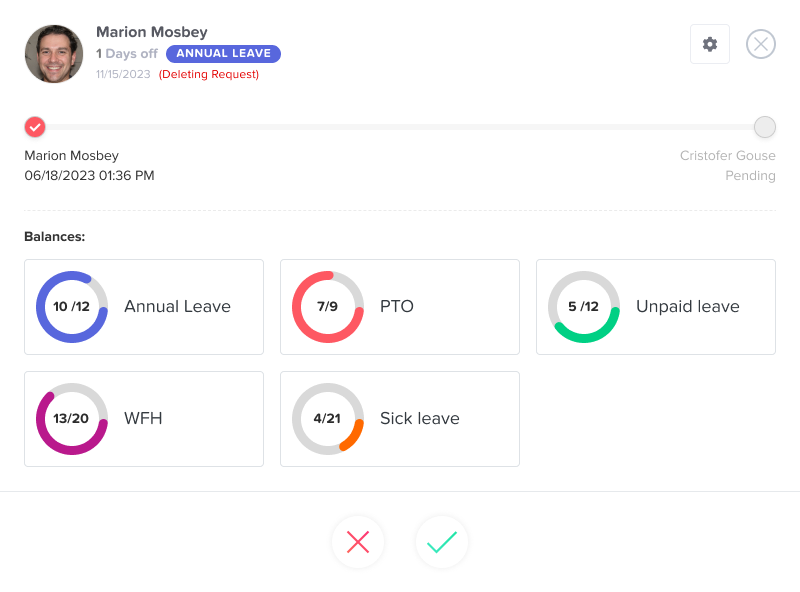
Employees can usually ask to cancel approved PTO before the absence begins. Whether the cancellation is automatic or requires manager approval depends on company policy.
Some employers allow employees to withdraw a request directly when:
- The leave has not started
- Payroll has not been finalized
- No replacement worker has been scheduled
- The cancellation does not create another scheduling issue
- The employee is returning to their normal work schedule
Other organizations require a manager to approve the cancellation. This may be necessary when schedules have already been changed, shifts have been reassigned, clients have been notified, or temporary coverage has been arranged.
Why would an employee cancel approved PTO?
Common reasons include:
- Travel plans were cancelled
- A medical appointment was moved
- A family event was rescheduled
- The employee no longer needs the full absence
- The employee wants to preserve their PTO balance
- A project or personal priority changed
- The employee recovered earlier than expected
- The employee wants to work instead of taking unpaid time
The employee should submit the cancellation as early as possible and should not assume they can simply report to work. A manager may have already reassigned the employee’s duties, changed access permissions, scheduled another employee, or approved overlapping leave based on the original absence.
Should the employee provide a reason?
For ordinary vacation, employers usually do not need a detailed personal explanation. A simple statement that the leave is no longer required may be enough.
The process may be different when the request involves:
- Sick leave
- Medical leave
- Disability related leave
- Parental leave
- Bereavement leave
- Military leave
- Leave supported by a medical document
- Leave required by law
HR may need to confirm whether the employee is medically able to return, whether a fitness for duty document is permitted or required, or whether another protected-leave process applies.
Employers should avoid requesting unnecessary medical details. Health related information should be handled confidentially and separately from general attendance records.
Can an Employee Change the Dates of Approved PTO?
An employee can request different dates, but the replacement dates should normally be reviewed again.
The company originally approved the request based on factors such as:
- Expected workload
- Team coverage
- The number of other employees absent
- Project deadlines
- Seasonal demand
- Required skills
- Minimum staffing levels
- Blackout periods
- Notice requirements
Those conditions may be different for the new dates.
For example, moving a vacation from a quiet week in April to the final week of the financial year can create a very different operational impact. The employee should not assume that approval transfers automatically.
A good system should preserve the original approval until the new dates are accepted. Otherwise, the employee could lose the original leave without securing the replacement period.
Recommended date change process
- The employee selects the approved request.
- The employee submits the proposed new dates.
- The original dates remain approved while the change is pending.
- The manager reviews coverage for the new period.
- If approved, the system replaces the old dates and updates the balance.
- If rejected, the original approval remains active unless the employee separately cancels it.
- Everyone affected receives an updated notification.
This process prevents confusion and protects the employee from unintentionally giving up previously approved leave.
Can an Employee Extend Approved PTO?
Employees may request an extension before or during their leave, but the extra time is not automatically covered by the original approval.
An extension could be caused by:
- Travel disruption
- Illness during vacation
- A family emergency
- A delayed medical recovery
- Transportation cancellation
- Severe weather
- An unexpected personal event
For an ordinary vacation extension, the manager can review the additional dates under the normal approval process. The employee’s available balance, team coverage, notice requirements, and scheduling rules should all be considered.
When the extension is related to illness, disability, family care, or another protected reason, HR should determine whether the request may fall under a separate legal entitlement.
In the United States, eligible employees of covered employers may receive job-protected leave for qualifying family and medical reasons under the Family and Medical Leave Act. FMLA leave may be unpaid or may run at the same time as employer-provided paid leave.
A medical extension may also need to be evaluated as a reasonable accommodation under the Americans with Disabilities Act. The Equal Employment Opportunity Commission explains that an employer may need to consider unpaid leave as an accommodation unless doing so would create an undue hardship.
Managers should therefore avoid rejecting a medical extension as an ordinary vacation request without first involving HR.
Can an Employer Cancel an Approved PTO Request?
An employer may sometimes be able to cancel or change ordinary approved vacation, depending on company policy, employment agreements, collective bargaining rules, and applicable law.
However, the fact that a company can make a change does not mean cancellation is the best or lowest-risk decision.
Approved PTO should normally be cancelled by the employer only when there is a serious and unexpected business need, such as:
- A genuine operational emergency
- A critical safety issue
- An unexpected loss of essential staff
- A major system failure
- A public emergency
- An urgent regulatory obligation
- An unforeseen event that threatens business continuity
- A situation in which no reasonable coverage alternative is available
Routine poor planning should not be treated as an emergency.
Reasons such as forgetting to schedule coverage, accepting too many requests, delaying recruitment, or failing to prepare for a predictable busy season are weak grounds for reversing approved leave.
Questions employers should ask first
Before cancelling approved PTO, the employer should review:
- Is the leave ordinary vacation or legally protected?
- Is the employee covered by a contract or collective bargaining agreement?
- Is cancellation permitted under the written PTO policy?
- How much notice can be provided?
- Has the employee made non-refundable arrangements?
- Can another employee cover the work?
- Can the deadline be moved?
- Can the employee work remotely for a limited period voluntarily?
- Can the leave be shortened rather than cancelled?
- Can a manager, contractor, or temporary worker provide coverage?
- Have similar situations been handled consistently?
- Could the decision appear discriminatory or retaliatory?
A cancellation should be the last practical option, not the first response to inconvenience.
Is Approved PTO Guaranteed?
Approved PTO is not always an absolute guarantee that the dates can never change. Its strength depends on the source of the entitlement.
Ordinary vacation granted under a discretionary employer policy may be more flexible than leave protected by law, contract, or a collective bargaining agreement.
The following distinction is important:
| Type of Leave | Can It Usually Be Changed? | Main Consideration |
|---|---|---|
| Ordinary vacation or personal PTO | Possibly, subject to policy and law | Business need, fairness, notice, and employee reliance |
| Contractual vacation | Only within the contract terms | Employment agreement |
| Union or collectively bargained leave | Only within negotiated rules | Collective bargaining agreement |
| FMLA covered leave | Not treated like ordinary discretionary vacation | Federal job protection requirements |
| Disability related leave | Requires an individualized review | ADA reasonable accommodation obligations |
| Statutory paid sick leave | Depends on the relevant state or local law | Protected use and anti-retaliation rules |
| Military leave | Subject to specific legal protections | USERRA or applicable military leave law |
| Parental or family leave | Depends on the governing program | National, state, or local leave entitlement |
When Approved PTO Should Not Be Cancelled as Ordinary Vacation
Certain absences require additional review before any cancellation decision is made.
The absence qualifies for protected family or medical leave
FMLA provides eligible employees of covered employers with job protected leave for qualifying reasons. Employers are prohibited from interfering with FMLA rights or retaliating against employees for exercising those rights.
An employer should not cancel qualifying FMLA leave simply because staffing has become inconvenient.
Paid PTO may run concurrently with FMLA leave when the relevant requirements are met, but the legal protection comes from FMLA, not from the PTO approval alone.
The leave is a reasonable accommodation
Leave may be a reasonable accommodation for an employee with a qualifying disability. An employer may need to modify its normal leave rules unless the accommodation would create an undue hardship.
The EEOC also states that an employee should not be penalized for using leave as a reasonable accommodation.
A manager should not independently withdraw disability-related leave without involving HR or the person responsible for accommodation requests.
The employee is using protected sick leave
Many jurisdictions regulate how employees may use paid sick leave and prohibit retaliation for lawful use.
Rules may address:
- Valid reasons for taking leave
- Required notice
- Documentation
- Minimum increments
- Family members covered
- Reinstatement of unused leave
- Recordkeeping
- Retaliation and attendance penalties
A company’s normal vacation-cancellation rule may not be appropriate for protected sick leave.
A contract or collective bargaining agreement applies
Employment contracts and collective bargaining agreements may establish:
- Minimum notice before cancellation
- Seniority rules
- Reimbursement rights
- Limits on management changes
- Emergency exceptions
- Grievance procedures
- Premium pay if an employee is recalled
- Requirements for rescheduling the leave
The organization should follow the applicable agreement rather than relying only on the general employee handbook.
The decision could be discriminatory or retaliatory
An employer should apply its cancellation standards consistently.
For example, cancelling the approved leave of one employee while protecting identical requests from others could create risk when the difference appears connected to:
- Disability
- Pregnancy
- Religion
- Race
- National origin
- Age
- Sex
- Protected complaints
- Family or medical leave
- Another legally protected characteristic or activity
Every decision should have a legitimate, documented, and consistently applied reason.
What Happens to the Employee’s PTO Balance After Cancellation?
When approved PTO is cancelled before it is used, the associated hours should generally return to the employee’s available balance.
The exact update depends on timing.
Cancellation before the leave begins
The system should release all reserved hours and restore them to the available balance.
Partial cancellation
Only the unused dates or hours should be restored.
Cancellation after payroll processing
A payroll or timesheet correction may be required. The company should avoid simply changing the balance without correcting the related attendance and payroll records.
Early return from leave
The employee’s actual return date should be recorded. Hours worked should not also remain recorded as PTO for the same period unless a lawful and clearly defined policy requires a particular treatment.
Change to another leave type
If vacation is replaced by sick leave, bereavement leave, or another eligible category, the original vacation deduction should be reversed and the correct leave balance should be charged.
Cancellation close to a balance reset
Care is needed when the request crosses:
- The end of a leave year
- An employee anniversary
- A carryover deadline
- An expiry date
- A policy reset
- A termination date
- A change in employment status
The system should restore the time according to the policy rules that would have applied if the leave had never been used. It should not automatically create extra entitlement or cause earned time to disappear.
Some jurisdictions treat earned vacation as a vested benefit or as wages. California, for example, treats earned vacation as wages that cannot be forfeited. Cancelling approved dates would not permit an employer to erase the employee’s earned balance.
| Situation | Original Record | Correct Balance Action |
|---|---|---|
| Five-day vacation cancelled before it starts | Five approved days | Restore all five days |
| Employee returns two days early | Five approved days, three taken | Deduct three and restore two |
| Vacation converted to eligible sick leave | Vacation was originally deducted | Restore vacation and deduct the correct sick leave amount |
| Employee moves a request to a new leave year | Original dates cancelled and new dates approved | Apply reset and carryover rules carefully |
| Payroll was already finalized | PTO appears on completed timesheet | Create a documented correction rather than deleting history |
Should Employers Reimburse Employees When PTO Is Cancelled?
There is no single rule that applies to every workplace or jurisdiction. Reimbursement may depend on:
- Local law
- An employment contract
- A collective bargaining agreement
- Company policy
- A written promise
- The reason for cancellation
- The expenses involved
Even where reimbursement is not legally required, it may be a sensible business decision when the employer initiated a late cancellation.
Potential expenses include:
- Non refundable flights
- Hotel cancellation fees
- Visa fees
- Event tickets
- Childcare arrangements
- Tour bookings
- Transportation costs
- Fees for changing reservations
A fair policy might reimburse reasonable, documented, non-refundable costs when:
- The company cancelled the leave
- The employee had already received written approval
- The employee booked the expense after approval
- The employee attempted to reduce the loss
- The expense falls within a defined limit
The organization can require receipts and exclude unusually expensive or unrelated purchases.
Reimbursement does not remove the disruption caused by cancellation, but it prevents the employee from personally funding a business emergency.
Should Employees Be Required to Work During Approved PTO?
Employees should generally be allowed to disconnect during approved vacation unless an emergency-contact arrangement was clearly agreed upon in advance.
Managers should avoid:
- Requiring employees to check messages continuously
- Assigning routine tasks during leave
- Scheduling mandatory meetings
- Expecting immediate responses
- Treating an employee as both working and absent
- Deducting a full PTO day while requiring substantial work
When a genuine emergency occurs, the employer and employee should agree on how the time will be recorded.
Possible approaches include:
- Restoring part or all of the PTO used
- Recording the day as worked
- Moving the unused leave to another date
- Paying for compensable working time where required
- Providing an alternative uninterrupted day off
The correct solution depends on the employee’s classification, local wage rules, company policy, and the amount of work performed.
Managers should not create an informal system where employees appear to be on vacation but remain fully responsible for their normal duties. This produces inaccurate balances, unclear pay records, and ineffective rest.
How Should a Change or Cancellation Be Processed?
A reliable PTO process should maintain one clear record from the original request through the final outcome.
Step 1: Submit the change through the official system
Employees and managers should avoid relying only on verbal discussions, private messages, or email chains.
The request should show:
- The original dates
- The proposed change
- Who initiated the update
- The date and time of submission
- Any reason required by policy
- Any supporting document
- The current approval status
Step 2: Keep the original approval active while a change is pending
When an employee asks to move approved dates, the original request should not disappear immediately.
Keeping it active prevents the employee from losing approved leave if the replacement dates are rejected.
Step 3: Route the update to the correct approver
Depending on the organization, approval may come from:
- The direct manager
- A department manager
- HR
- A second-level approver
- A project owner
- A location manager
- Payroll
- A designated backup approver
Protected or medical leave should be routed to HR rather than handled entirely by a line manager.
Step 4: Recheck availability and staffing
The approver should review the proposed dates against:
- Other approved absences
- Pending requests
- Team coverage
- Work schedules
- Deadlines
- Shift requirements
- Seasonal demand
- Blackout dates
- Minimum staffing rules
Step 5: Recalculate the employee’s balance
The system should calculate the actual scheduled hours affected.
For example, cancelling one day does not always mean restoring eight hours. The employee may have been scheduled for:
- Four hours
- Six hours
- Ten hours
- Twelve hours
- A rotating shift
- No work on that day
Using scheduled working time is more accurate than applying a default day length to every employee.
Step 6: Update connected records
The change may need to update:
- The shared leave calendar
- The employee’s work schedule
- Shift planning
- Attendance records
- Timesheets
- Payroll exports
- Manager dashboards
- Team notifications
- Calendar integrations
A request should not show as cancelled in one system while remaining approved in payroll or the team calendar.
Step 7: Notify everyone affected
The employee should receive written confirmation showing:
- Whether the change was approved
- The final dates
- The final number of hours
- The leave type
- The updated balance
- Any remaining action
Managers, schedulers, payroll administrators, and relevant team members should receive only the information they need.
Step 8: Preserve the audit trail
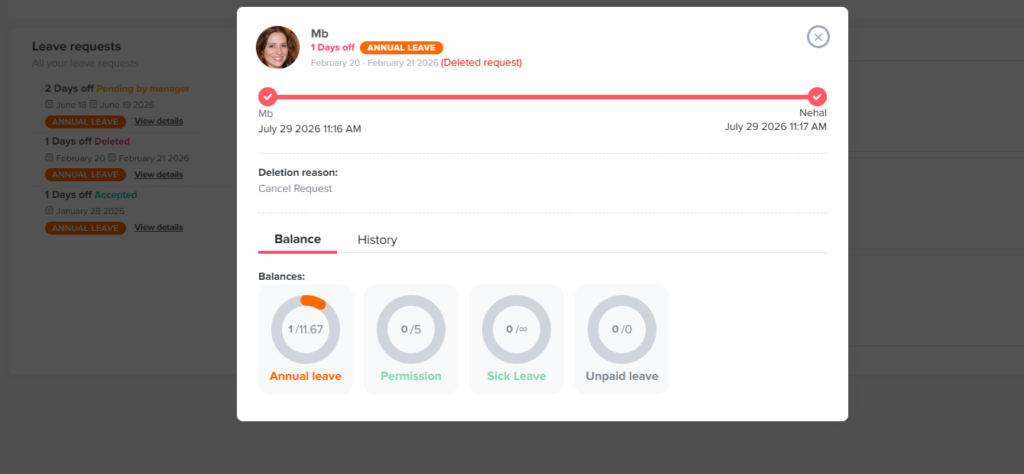
Do not delete the original request without history.
The record should show:
- Original submission
- Original approval
- Change request
- Who made the change
- Approval or rejection
- Balance adjustment
- Payroll correction
- Notifications sent
An audit trail helps resolve disputes and supports accurate reporting.
What Should Be Included in a PTO Cancellation Policy?
A written policy should explain the rules before a conflict happens.
It should cover the following areas.
Employee initiated cancellations
State:
- How an employee submits a cancellation
- Whether manager approval is required
- The minimum notice expected
- What happens after payroll is processed
- Whether the employee may return to work immediately
- How cancelled hours are restored
Date changes and extensions
Clarify:
- Whether changed dates require a new approval
- Whether the original request remains valid while the change is pending
- How extensions are reviewed
- What happens when the employee does not have enough balance
- How emergency extensions should be reported
Employer-initiated cancellations
Define:
- Who has authority to cancel approved PTO
- Which circumstances qualify as an emergency
- Which alternatives must be considered first
- How much notice should be given
- Whether HR approval is required
- How affected employees will be compensated or rescheduled
- Whether non-refundable expenses may be reimbursed
Protected leave
Explain that requests involving medical conditions, disability, family care, military service, pregnancy, statutory sick leave, or another protected reason must be referred to HR.
Balance corrections
Specify:
- When unused hours return
- How partial cancellations are calculated
- How corrections are handled after payroll
- How reset, carryover, and expiry rules apply
- Who may manually adjust balances
Documentation and records
Confirm that the organization will retain:
- Request history
- Approval history
- Changes and cancellations
- Balance adjustments
- Payroll corrections
- Required documents
- Relevant communications
Common Mistakes When Changing Approved PTO
Deleting the original request
Deleting the record removes evidence of what was approved and makes it difficult to understand later balance changes.
Use a cancellation status and retain the history instead.
Cancelling leave because of predictable demand
A yearly busy season is not unexpected. Employers should use notice periods, blackout rules, capacity limits, and advance workforce planning rather than repeatedly reversing approvals.
Treating protected leave as ordinary vacation
The fact that paid PTO is being used does not necessarily mean the absence is discretionary. The underlying reason may trigger legal protections.
Failing to restore the balance
When unused leave is cancelled, the hours should not remain deducted without a valid policy or legal basis.
Changing the request verbally
A verbal agreement can leave the calendar, payroll system, and PTO balance unchanged.
Every update should be entered into the official system.
Charging PTO and recording work for the same hours
When an employee returns early or works during leave, the company should review the actual time worked and correct the PTO record.
Applying different rules to similar employees
Inconsistent treatment creates resentment and may create discrimination or retaliation concerns.
Cancelling leave without considering employee costs
Late cancellation can leave the employee responsible for substantial travel or childcare expenses. Employers should consider reimbursement and alternative dates.
Removing approval without notifying the employee
A status change inside a system is not enough. The employee should receive direct confirmation of the final decision.
How PTO Software Helps Manage Changes and Cancellations
Manual PTO tracking makes changes difficult to control. A request may be approved in an email, entered differently in a spreadsheet, and still appear on a shared calendar after it has been cancelled.
A centralized PTO system can help organizations:
- Keep the original request and approval history
- Route changes to the correct approver
- Restore unused hours automatically
- Recalculate requests using employee schedules
- Notify managers and employees
- Update shared leave calendars
- Track pending and cancelled requests
- Export accurate information for payroll
- Apply team, location, and department rules
- Maintain a reliable audit trail
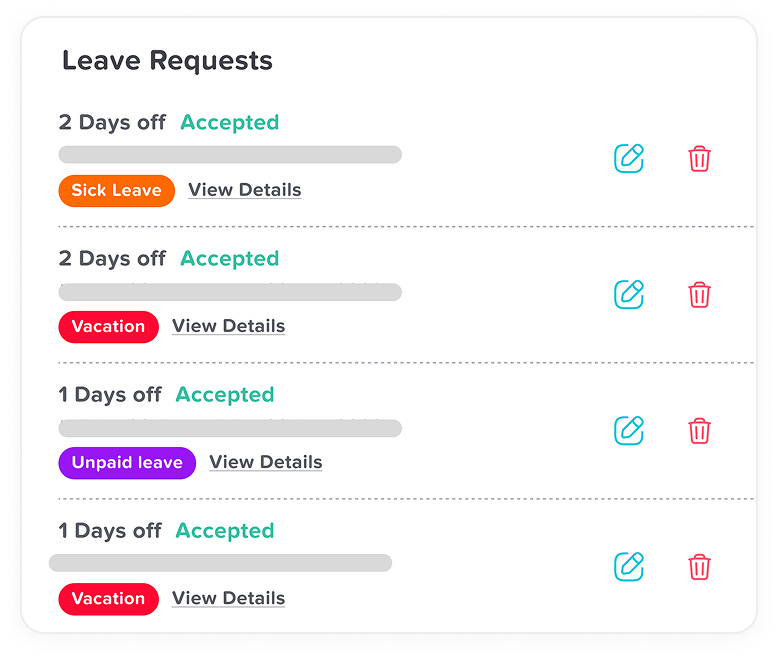
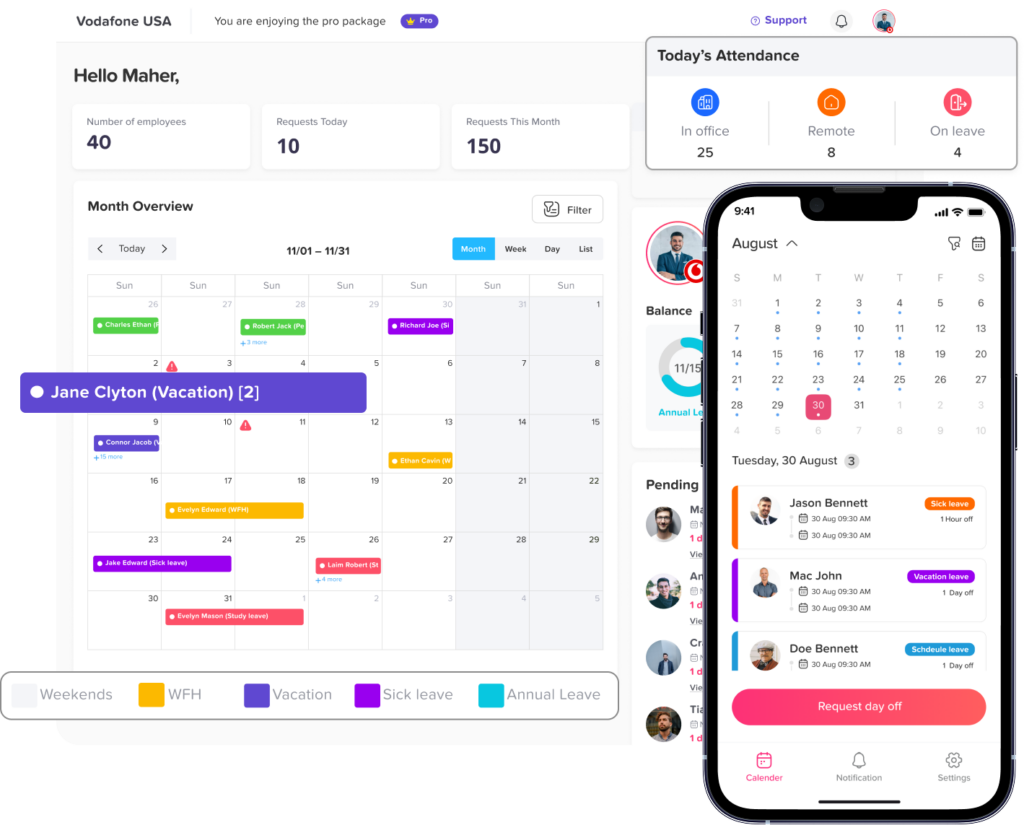
A leave management platform such as Day Off can provide one central place for requests, approvals, balances, schedules, calendars, and reports. The goal is not merely to record absence dates. It is to ensure that every update is visible, approved, and reflected consistently across the organization.
Frequently Asked Questions
Can I cancel PTO after my manager approves it?
You can usually ask to cancel approved PTO, but the company may require manager confirmation. Submit the cancellation through the official leave system and wait for written approval before assuming you are scheduled to work.
Can my employer cancel an approved vacation?
An employer may sometimes cancel ordinary approved vacation when permitted by policy, contract, and applicable law. However, the employer should have a significant business reason, consider alternatives, provide reasonable notice, and confirm that the leave is not legally protected.
Is approved PTO legally guaranteed?
Not always. Ordinary PTO is often governed by employer policy or an agreement. Leave protected by family, medical, disability, military, sick-leave, or other laws may have stronger protections.
What happens to my PTO balance if I cancel a request?
Unused approved hours should generally return to your available balance. If payroll or timesheets have already been processed, the restoration may require a formal correction.
Can I change approved PTO to different dates?
You may request new dates, but they usually require another availability and staffing review. The original approval should ideally remain active until the new dates are accepted.
Can I extend my PTO while I am already away?
You may request an extension, but the extra days are not automatically approved. Contact your manager as soon as possible. If the extension is related to illness, disability, or a family emergency, HR may need to evaluate whether protected leave applies.
Does my employer have to reimburse my travel costs after cancelling PTO?
The answer depends on local law, contracts, collective bargaining rules, and company policy. Even when reimbursement is not legally required, employers may choose to repay reasonable, documented, non-refundable expenses caused by an employer-initiated cancellation.
Can my employer require me to work while I am on PTO?
An employer may contact an employee during an emergency, but routine work during PTO should be avoided. If the employee performs work, the organization should review whether the time must be paid, whether PTO should be restored, and how the time should be recorded.
Can my employer cancel medical leave because the team is short-staffed?
Medical leave may be protected by laws such as FMLA, the ADA, state leave laws, or another applicable requirement. Employers should refer the matter to HR and complete the required legal review rather than treating it as an ordinary vacation cancellation.
Can an employee return early from approved PTO?
Yes, but the employee should notify the manager before returning. The company may need to restore unused PTO, update the schedule, cancel replacement coverage, and correct attendance or payroll records.
Should cancelled requests remain in the system?
Yes. The request should be marked as cancelled rather than permanently deleted. Keeping the record provides an audit trail and explains changes to balances, schedules, and payroll.
Conclusion
An approved PTO request can often be changed or cancelled, but the process should be controlled, documented, and fair.
Employee initiated changes should be submitted through the official leave system, reviewed against current staffing needs, and reflected accurately in balances, schedules, calendars, and payroll. When an employer wants to withdraw approval, the organization should first confirm that the leave is not legally protected, consider every reasonable coverage alternative, provide as much notice as possible, and address any financial loss caused by the cancellation.
The most effective PTO policies do not treat approval as meaningless, nor do they make every request impossible to change. They create a practical middle ground: approved leave is respected, genuine changes can be managed, protected rights are preserved, and every decision leaves a clear record.
With a written cancellation policy and a centralized PTO tracking process, employers can respond to changing circumstances without creating unnecessary disputes, inaccurate balances, or a loss of employee trust.