







Using PTO during your two weeks’ notice may sound like a simple way to use your remaining vacation days before leaving a job. However, submitting a resignation does not automatically give an employee the right to take the rest of the notice period as paid time off.
In many U.S. workplaces, an employee may use PTO after resigning only when the employer approves the request or when the company’s policy, employment contract, or collective bargaining agreement already allows it. An employer may deny an ordinary vacation request because the employee is expected to complete assignments, transfer responsibilities, train a replacement, or support an orderly handover.

The situation becomes more complicated when the PTO was approved before the resignation, the employee becomes sick during the notice period, or state law requires unused vacation to be paid when employment ends.
This guide explains whether employees can take PTO during a notice period, when an employer can deny or cancel the request, how unused balances should be handled, and what HR teams should include in their resignation and PTO policies.
Can You Use PTO During Your Two Weeks’ Notice?
You may be able to use PTO during your two weeks’ notice, but approval usually depends on the employer’s written policy and normal leave-request process.
Federal law does not generally require private employers to provide paid vacation or pay employees for ordinary vacation time. The Fair Labor Standards Act does not require payment for time not worked, including vacation, sick leave, or holidays. These benefits are generally created through employer policies, agreements, or contracts.
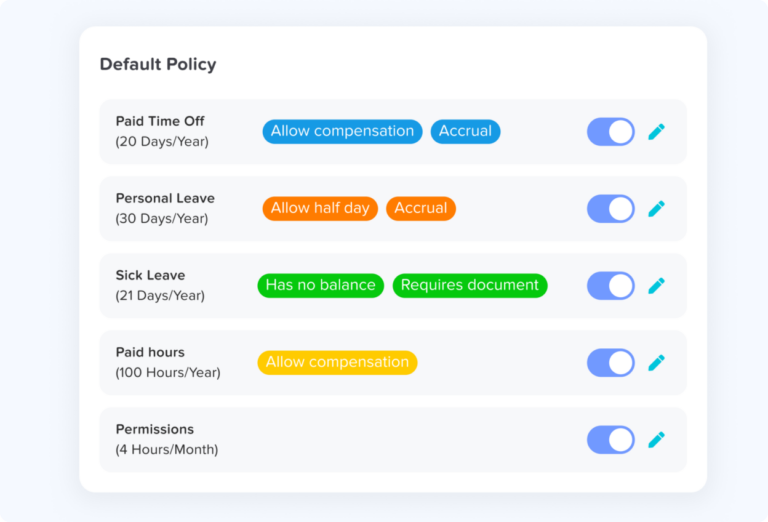
Because ordinary PTO is usually policy-based, employers may establish rules covering:
- How far in advance PTO must be requested
- Whether requests require manager approval
- Whether employees may take vacation after resigning
- Whether previously approved PTO remains valid
- Whether employees must work during the notice period
- How unused PTO is treated at termination
- Whether a minimum resignation notice is required for certain benefits
An employee should not assume that giving two weeks’ notice automatically turns the employee’s remaining balance into two weeks away from work.
The basic answer
An employee can normally use PTO during the notice period when:
- The employer approves the request
- The PTO was already approved and remains valid
- The company’s policy expressly permits PTO during notice
- A contract or collective bargaining agreement provides that right
- The absence qualifies under a separate paid-leave or protected-leave law
An employer may deny ordinary PTO when:
- The policy restricts vacation during a resignation period
- The request was submitted after the resignation
- The team needs the employee to complete a handover
- Staffing requirements cannot support the absence
- The employee failed to follow the normal request process
- The requested time exceeds the available balance
However, employers should not treat legally protected leave as ordinary discretionary vacation.
PTO During a Notice Period: Common Scenarios
The correct response depends heavily on when the PTO request was submitted and why the employee needs the time off.
| Scenario | Likely Treatment | Recommended Action |
|---|---|---|
| Employee requests vacation after resigning | Employer may approve or deny it under the normal PTO policy | Submit the request and wait for written approval |
| Vacation was approved before the resignation | Approval may remain valid, but the employer may review the circumstances | Confirm the approved dates in writing |
| Employee wants to use PTO for the entire notice period | Not automatically permitted | Ask whether the employer will approve the absence or change the final workday |
| Employee becomes sick during the notice period | Sick-leave or protected-leave rules may apply | Notify the employer and follow the applicable leave procedure |
| Employer ends active work immediately after resignation | Employment and pay treatment depend on policy, contract, and law | Confirm the official termination date and final-pay arrangements |
| Employee has unused PTO on the final day | Payout depends on state law and company policy | Review state requirements before processing final pay |
Can You Submit a PTO Request After Resigning?
Yes, an employee can submit a PTO request after giving notice. The employer is not necessarily required to approve an ordinary vacation request simply because the employee has a sufficient balance.
A PTO balance shows how much time an employee may be eligible to use. It does not always mean the employee can select any dates without approval.
Managers may need the departing employee to:
- Document active projects
- Transfer account access
- Update customer records
- Complete financial or compliance tasks
- Return company equipment
- Train another employee
- Introduce clients to a new contact
- Prepare a formal handover document
- Resolve outstanding approvals
The employer should apply the same written approval standards used for other PTO requests, while recognizing that a resignation creates additional scheduling and handover considerations.
Example
An employee gives notice on Monday and lists the following Friday as the final day of employment. The employee then requests the final five working days as PTO.
The employer could:
- Approve the PTO and keep the original termination date.
- Approve only part of the request.
- Deny the request and require the employee to work.
- Agree to an earlier termination date.
- Follow a company policy that restricts vacation during notice periods.
The employee should receive a clear written answer. Silence should not be treated as approval.
Can You Use PTO for Your Entire Two Weeks’ Notice?
You can ask, but an employer may not allow you to replace the full notice period with PTO.
A notice period is normally intended to give the employer time to prepare for the employee’s departure. Using PTO for the complete period may prevent the employee from completing the work the notice was meant to support.
Some employers may allow it when:
- The employee has already completed the handover
- The position does not require transition work
- The employee has no active assignments
- The employer does not want the employee to continue working
- The policy expressly permits terminal vacation
- The employee and employer agree to an earlier final working day
Other employers may require employees to remain actively at work to be considered as having provided the expected notice.
The employee should ask two separate questions:
- Will the PTO request be approved?
- What will be considered the official final day of employment?
These are not always the same date.
Does PTO Extend Your Employment Termination Date?
PTO does not automatically extend the employment relationship.
For example, an employee cannot necessarily state that Friday is the last working day, use five vacation days the following week, and assume the termination date has moved to the next Friday.
The official final date should be agreed upon and documented by the employer.
That date can affect:
- Final wages
- Benefits coverage
- PTO accrual
- Insurance eligibility
- Retirement contributions
- Access to company systems
- Equipment-return deadlines
- Payroll reporting
- Unemployment documentation
- The employee’s service record
A clear resignation acceptance should identify both:
- The employee’s final active working day
- The official employment termination date
In many companies, these dates are the same. When they are different, HR and payroll should record the distinction carefully.
What Happens if PTO Was Approved Before You Resigned?
Previously approved PTO may remain valid after an employee submits a resignation, but the employee should confirm the approval rather than assume nothing has changed.
For ordinary vacation, the company’s policy should explain whether an employer may reconsider approved leave after receiving a resignation.
Employers should be cautious about cancelling previously approved PTO without a valid reason. The employee may already have:
- Purchased flights
- Booked accommodation
- Arranged childcare
- Scheduled a family event
- Paid non-refundable fees
- Made medical or personal commitments
A fair process should consider:
- When the PTO was approved
- Whether the employee made financial commitments
- How much notice the employee provided
- Whether the handover can be completed before the absence
- Whether another employee can provide coverage
- Whether the leave is ordinary vacation or legally protected
- Whether similar requests have been handled consistently
Can an employer cancel approved PTO after resignation?
An employer may be able to cancel ordinary vacation when the policy permits it and no law, contract, or protected-leave rule prevents the change.
However, cancellation should not be automatic simply because the employee resigned. Employers should consider alternatives, such as:
- Moving the handover deadline
- Approving part of the leave
- Reassigning specific tasks
- Completing transition work before the vacation
- Allowing a limited remote handover
- Agreeing to an earlier termination date
Any cancellation should be communicated directly and recorded in the PTO system.
Can an Employer Deny PTO During the Notice Period?
An employer can often deny an ordinary PTO request during a notice period when the decision follows the company’s policy and applicable law.
Federal law generally leaves voluntary vacation benefits to agreements between employers and employees. This means ordinary vacation approval is usually controlled by the organization’s policy rather than by a general federal entitlement to use vacation on chosen dates.
A denial may be reasonable when:
- The request violates the notice requirement
- Critical handover work remains incomplete
- The employee is responsible for time-sensitive tasks
- Another employee is already absent
- The request covers the entire notice period
- The policy prohibits vacation during resignation notice
- The employee does not have enough available PTO
The employer should give the employee a clear reason and apply the policy consistently.
Selective enforcement may create fairness concerns. For example, a company should avoid approving notice-period PTO for some employees while denying equivalent requests from others without a legitimate business reason.
Is Sick Leave Different From Vacation During Two Weeks’ Notice?
Yes. Sick leave, family leave, and medical leave should not automatically be treated like ordinary vacation.
An employee may become ill, require medical treatment, or need to care for a qualifying family member after submitting a resignation. The employer should review whether federal, state, or local leave protections apply.
Eligible employees of covered employers may have job-protected leave rights under the Family and Medical Leave Act for qualifying family and medical reasons. FMLA leave is generally unpaid, but an employee may elect, or an employer may require, the use of accrued paid vacation, sick leave, or family leave during an FMLA-covered absence when the applicable requirements are met.
Employees do not always have to use the term “FMLA” when requesting leave. They must provide enough information for the employer to recognize that the absence may qualify.
Employers should also review:
- State and local paid sick-leave laws
- Disability accommodation requirements
- Pregnancy-related leave protections
- Family and medical leave programs
- Military leave
- Domestic violence or safety leave
- Collective bargaining provisions
A manager should involve HR when an employee says the absence is related to a medical condition, treatment, hospitalization, pregnancy, disability, or family-care need.
What if You Become Sick After Giving Notice?
An employee should report the illness according to the company’s normal call-in and leave procedures.
Giving notice does not automatically eliminate an employee’s ability to use a valid sick-leave benefit. However, the employee may still need to:
- Notify the correct manager
- Follow normal call-in deadlines
- Submit the request through the approved system
- Provide documentation when lawfully required
- Explain that the absence may continue beyond one day
- Keep the employer informed about the expected return
Employers should not assume that every illness during a notice period is an attempt to avoid working. The request should be evaluated using the same policy and legal standards that apply to other employees.
Will You Be Paid for Unused PTO When You Quit?
There is no single federal rule requiring every private employer to pay unused vacation when an employee resigns. The result depends on state law, the employer’s written policy, employment agreements, and how the leave benefit is classified.
Some states treat earned vacation as wages that must be paid when employment ends. Other states allow the employer’s written policy to determine whether unused vacation is paid.
Examples of state approaches
| State | General Approach to Earned Vacation at Separation |
|---|---|
| California | Earned and accrued vacation is treated as wages and must generally be paid at the employee’s final rate when employment ends |
| Colorado | Earned and determinable vacation must generally be paid when employment ends |
| Illinois | Earned vacation may be final compensation, and an employer cannot withhold it merely because an employee failed to provide notice |
| New York | Payment for unused vacation generally depends on the employer’s vacation or resignation policy |
| Massachusetts | Vacation promised through an employment agreement is treated as wages, and accumulated unused vacation is generally payable at separation |
California’s labor agency states that earned vacation is considered wages and that earned, accrued, and unused vacation must generally be paid when employment ends.
Colorado guidance states that unused earned vacation must be paid at separation when it is earned and determinable.
Illinois guidance states that an employer cannot withhold earned vacation or final compensation because an employee failed to give notice of termination.
New York’s Department of Labor explains that whether accrued vacation must be paid when an employee resigns or is discharged depends on the employer’s vacation or resignation policy.
Massachusetts guidance treats vacation promised through an oral or written employment agreement as wages and generally requires payment of accumulated unused vacation when employment ends.
These examples show why employers should not use one nationwide payout rule without checking the law in every state where employees work.
Can an Employer Refuse to Pay PTO Because You Did Not Work the Full Notice?
The answer depends on state law and the employer’s policy.
A company policy may state that employees must provide and work a specified notice period to qualify for a discretionary payout. However, that condition may not be enforceable when state law treats earned vacation as wages or prohibits forfeiture.
For example, Illinois guidance specifically states that earned vacation or final compensation cannot be withheld merely because an employee failed to provide notice. California treats earned vacation as wages that cannot simply be forfeited when employment ends.
Employers should review state requirements before applying policies such as:
- “Employees who use PTO during notice lose their payout.”
- “Employees must work every day of the notice period.”
- “No PTO is paid if the employee gives less than two weeks’ notice.”
- “Approved vacation is forfeited when an employee resigns.”
A handbook cannot override a state wage law.
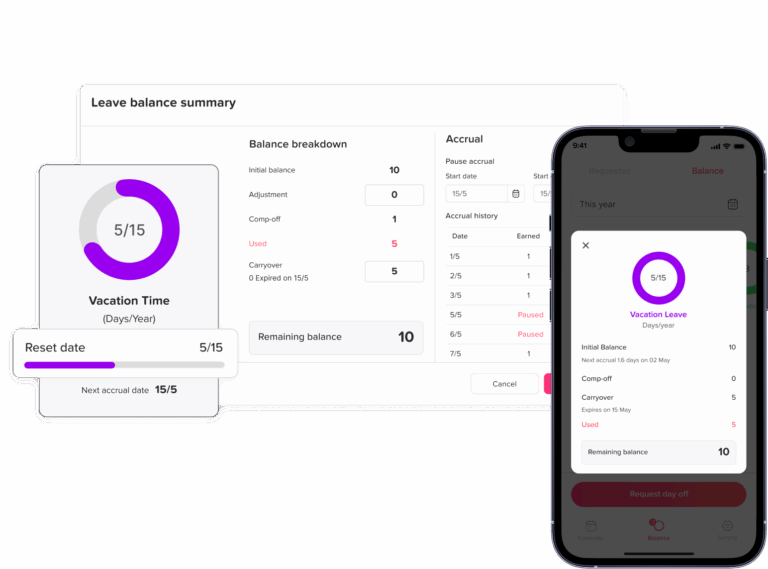
Can You Accrue More PTO During Your Notice Period?
Possibly. Accrual depends on how the employer’s PTO policy is designed.
An employee may continue earning PTO during the notice period when:
- The employee remains actively employed
- Accrual is based on completed pay periods
- Accrual is based on calendar service
- Paid PTO hours count as eligible time under the policy
- No policy stops accrual after resignation
Accrual may stop or decrease when:
- The policy stops accrual after notice is submitted
- Accrual is based only on hours worked
- The employee is placed on unpaid leave
- The employee reaches the accrual cap
- The employment termination date arrives before the next accrual date
The policy should state clearly whether employees continue accruing leave after submitting a resignation. HR should avoid making a retroactive manual change that is not supported by the written policy.
PTO During Notice for Hourly Employees
Hourly, nonexempt employees are generally paid for time worked and for any paid leave provided under the employer’s policy.
PTO hours are generally not treated as hours worked when calculating federal overtime. For example, if an employee works 32 hours and uses eight hours of vacation in the same workweek, the eight vacation hours do not generally have to be counted as hours worked for federal overtime purposes. State rules or employer policies may provide additional benefits.
When an hourly employee takes approved PTO during the notice period, payroll should verify:
- The scheduled hours missed
- The employee’s available balance
- The correct hourly rate
- Whether overtime is affected
- Whether the request crosses pay periods
- Whether unused PTO must be paid separately at termination
The employee should not be charged a standard eight-hour day when the missed scheduled shift was four, six, ten, or twelve hours.
PTO During Notice for Salaried Exempt Employees
PTO balances and salary payments are related but separate issues for salaried exempt employees.
Federal salary-basis guidance generally allows an employer to deduct time from an exempt employee’s accrued PTO bank for full or partial-day absences without necessarily violating the salary-basis requirement. However, deductions from the employee’s actual salary for partial-day personal absences are generally restricted, with limited exceptions.
The employee’s terminal week of employment may also be treated differently under the federal salary-basis rules. Employers should coordinate PTO deductions, final salary, and the official termination date with payroll rather than treating the employee like an hourly worker without reviewing the applicable rules.
Can an Employer End Employment Before the Two Weeks Are Complete?
An employer may decide that the employee will not continue actively working through the proposed notice period, depending on the employment agreement, company policy, applicable law, and the reason for the decision.
When this happens, HR should confirm:
- Whether the resignation or employer decision sets the termination date
- Whether the remaining notice period will be paid
- Whether approved PTO will be used
- Whether unused PTO must be paid out
- When benefits will end
- When final wages are due
- Whether the employee must return equipment immediately
Employers should also ensure that the decision is not based on retaliation for protected activity or the employee’s use of legally protected leave.
Final-pay timing varies by state. California, for example, generally requires employees who provide at least 72 hours’ notice and quit on the stated date to receive all wages due, including accrued vacation, at the time of quitting.
Should Employees Save PTO for Their Notice Period?
Employees should not plan on using PTO during the notice period unless the policy clearly permits it or the employer has approved the dates.
Saving PTO may still be valuable when:
- State law requires a payout
- The company voluntarily pays unused PTO
- The employee needs a legitimate sick or personal day
- The employer approves previously planned vacation
- The notice period overlaps a public holiday or scheduled absence
Before resigning, employees should review:
- The PTO policy
- The resignation policy
- The employee handbook
- The latest balance statement
- Approved future requests
- Carryover and expiry rules
- The state’s vacation payout requirements
- Any employment or collective bargaining agreement
Employees should save screenshots or copies of their current PTO balance and approved requests where permitted. They should not remove confidential company information.
What Employees Should Do Before Requesting PTO During Notice
Read the policy before submitting the resignation
Look for sections covering:
- Resignation notice
- Vacation during notice
- PTO payout
- Approved future leave
- Sick leave
- Final pay
- Benefits termination
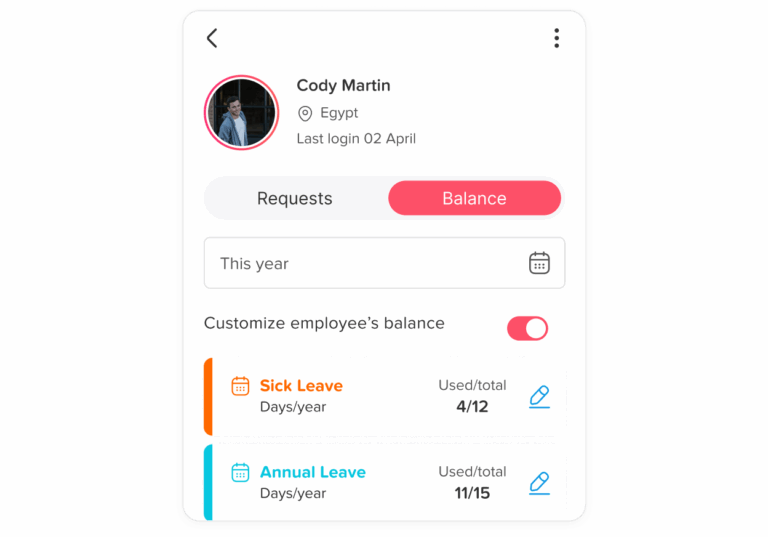
Confirm your balance
Check whether the balance shown is:
- Accrued
- Available
- Projected
- Pending
- Carried over
- Subject to expiry
Projected PTO may include time the employee has not yet earned.
Submit the request through the official system
Do not rely only on a verbal conversation. Use the company’s normal PTO request process.
Explain the dates clearly
The request should identify:
- The requested PTO dates
- The proposed final working day
- The proposed termination date
- Whether the PTO was previously approved
- Whether the request affects handover work
Do not assume approval
Continue reporting to work until the request is approved or the employer confirms a different arrangement.
Complete the handover early
A complete transition plan may make approval more practical.
Obtain written confirmation
Ask HR to confirm:
- Approved PTO dates
- Final active working day
- Official termination date
- Remaining balance
- Expected PTO payout
- Final-pay date
What Employers Should Include in a PTO and Resignation Policy
A clear policy should address PTO use before disagreements arise.
The policy should explain:
- Whether employees may request vacation during notice
- Whether approved PTO remains valid after resignation
- Who can approve an exception
- Whether the employee must actively work the notice period
- How sick and protected leave will be handled
- Whether PTO continues to accrue
- How the official termination date is determined
- Whether unused PTO will be paid
- Which state-law exceptions apply
- How final balances will be calculated
- How cancellations and changes are recorded
Policies should avoid broad language suggesting that all PTO is automatically forfeited after resignation. Such a provision may conflict with state wage laws.
Sample PTO During Notice Policy
Employees may submit paid time off requests during a resignation notice period through the company’s normal leave-request process. Approval is not automatic and will depend on operational requirements, transition responsibilities, available balances, and previously approved absences.
PTO approved before an employee submits a resignation will be reviewed but will not be cancelled without a documented business reason and approval from Human Resources.
Employees are expected to remain available to complete reasonable transition and handover responsibilities unless the company approves another arrangement in writing.
The employee’s final active working day and official termination date will be confirmed by Human Resources. Approved PTO does not automatically extend the termination date.
Unused PTO will be handled according to applicable state law, the employee’s agreement, and the company’s written policy. Legally protected sick, family, medical, disability, military, or other leave will be administered separately from ordinary vacation requests.
The policy should be reviewed for every jurisdiction in which the organization employs workers.
How PTO Software Helps During Employee Offboarding
Resignations can create balance and payroll errors when PTO requests are stored across spreadsheets, emails, calendars, and separate payroll systems.
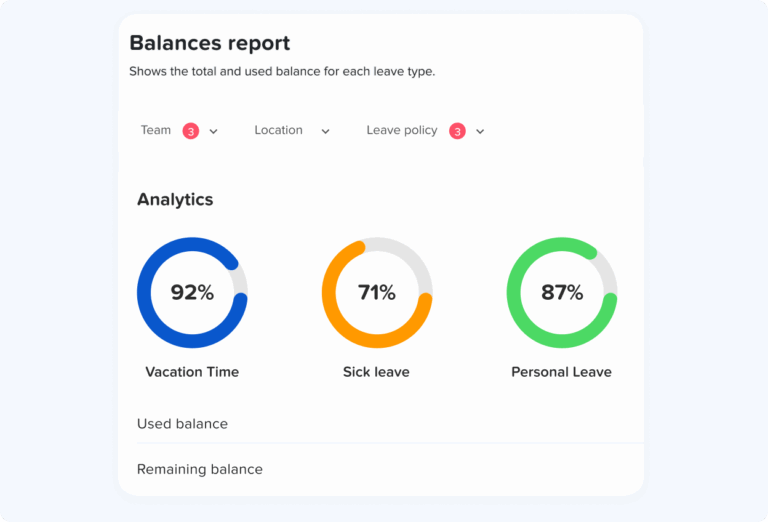
A centralized PTO management system can help HR teams:
- See approved and pending requests
- Confirm current and projected balances
- Cancel future requests without deleting history
- Restore unused hours correctly
- Route requests to the right approver
- Record the employee’s final scheduled days
- Export accurate leave information
- Preserve approval and adjustment history
- Deactivate employees without losing records
- Reconcile leave before processing final payroll
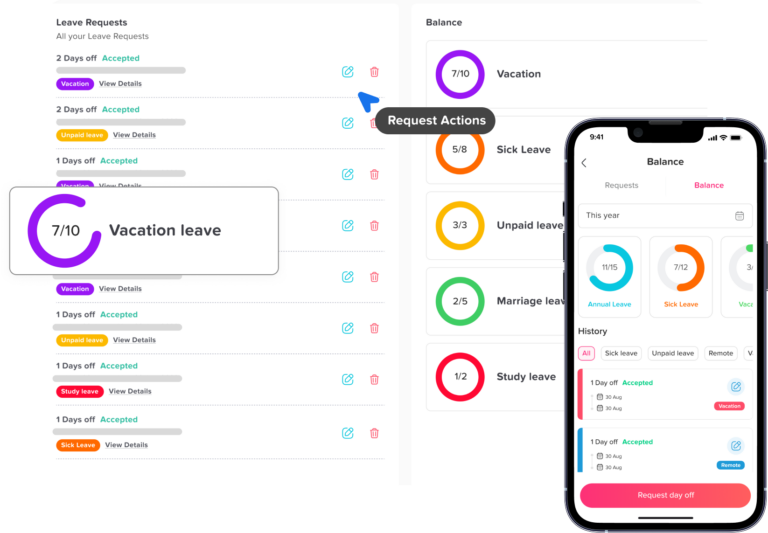
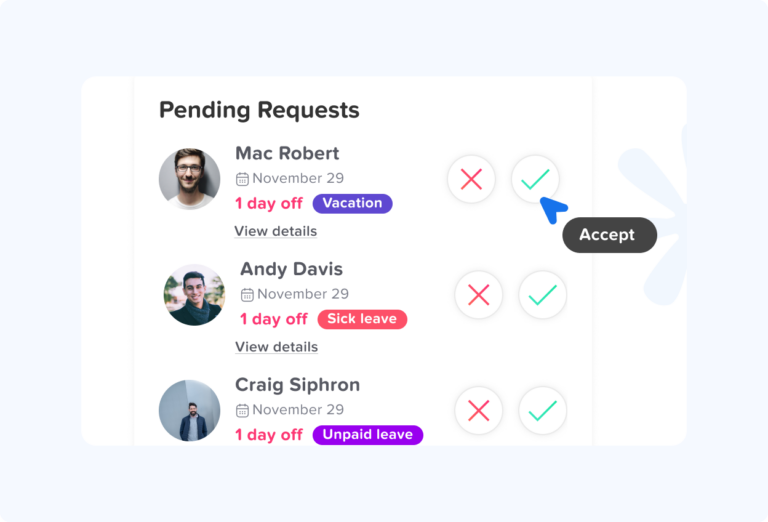
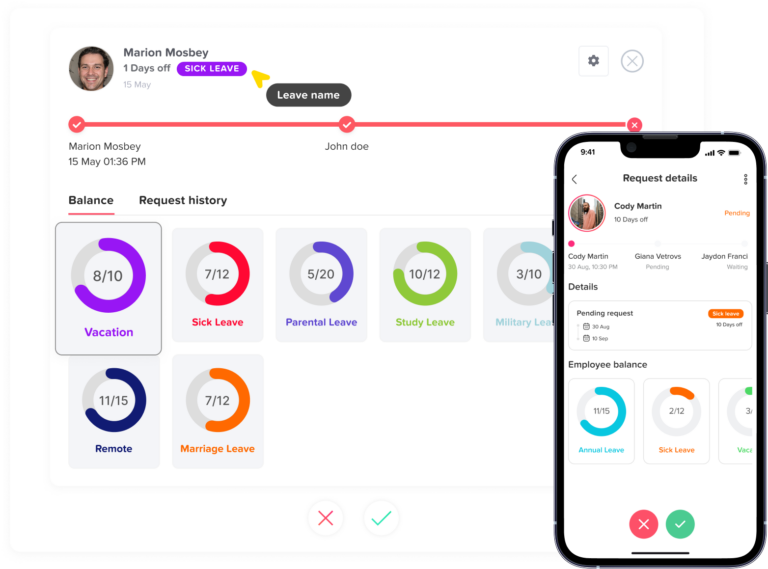
With a platform such as Day Off, HR teams can manage requests, approvals, balances, work schedules, and leave records in one place. This makes it easier to determine how much PTO was actually used, what remains available, and which records need to be sent to payroll when an employee leaves.
Common Mistakes to Avoid
Assuming the PTO balance guarantees approval
Having enough hours does not necessarily allow an employee to choose any dates without manager approval.
Using PTO without written confirmation
An unapproved absence may be handled under the attendance policy rather than as paid vacation.
Automatically cancelling previously approved vacation
Employers should review the facts, employee commitments, policy, and legal protections before reversing approval.
Treating sick leave as ordinary vacation
Medical and family-related absences may be governed by FMLA, disability rules, or state paid-leave laws.
Changing the termination date without telling payroll
This can affect final wages, benefits, accruals, and system access.
Withholding earned PTO without checking state law
State law may require payout even when an employee does not provide or work a full notice period.
Deleting leave history
The employer should preserve the original request, approval, cancellation, balance adjustment, and payroll correction.
Allowing projected PTO to be used without review
Projected leave may not be fully earned by the termination date.
Frequently Asked Questions
Can I take PTO after giving two weeks’ notice?
You can request PTO after submitting your resignation, but your employer may approve or deny the request under its normal leave policy. Federal law does not generally require private employers to provide paid vacation or approve ordinary vacation on specific dates, so the company’s written policy usually controls.
Can my employer deny PTO during my two weeks’ notice?
Yes, an employer can often deny ordinary vacation during a notice period, particularly when the employee is needed to complete assignments, transfer responsibilities, train a replacement, or support the handover process. The employer should apply its policy consistently and distinguish ordinary vacation from legally protected leave.
Can I use all my PTO before quitting?
Having enough PTO in your balance does not automatically give you the right to use all of it before leaving. You still need to follow the company’s request and approval process. When the request covers most or all of the notice period, the employer may deny it because the employee would not be available to complete the expected transition.
Can my employer cancel previously approved PTO after I resign?
Your employer may be able to cancel ordinary vacation that was approved before your resignation when its policy allows changes to approved leave. However, the employer should consider when the request was approved, whether you made non-refundable arrangements, whether the work can be reassigned, and whether the absence is protected by law or an employment agreement.
Does PTO count toward a two weeks’ notice?
It depends on the employer’s resignation policy. Some employers count approved PTO as part of the notice period, while others require employees to remain actively at work to satisfy a two-week notice requirement. Ask HR to confirm whether your approved PTO counts and what date will be recorded as your final working day.
Can I use PTO instead of working my notice period?
Only when your employer approves the arrangement or the applicable policy, contract, or collective bargaining agreement allows it. Submitting a PTO request does not remove your obligation to report to work while the request is pending.
Does taking PTO extend my last day of employment?
Not automatically. Your final working day and official termination date are determined by the resignation notice and the employer’s written confirmation. Taking PTO does not allow you to move your termination date unless the employer agrees to the change.
For example, if your resignation states that June 19 is your final day, you generally cannot add five PTO days afterward and assume that your employment now ends on June 26.
What happens to unused PTO when you quit?
Unused PTO may be paid out, forfeited, or handled according to the employer’s written policy, depending on the state in which you work. Federal law does not require a universal payout of unused vacation, but some states treat earned vacation as wages that must be paid when employment ends. California generally requires earned and unused vacation to be paid, while Illinois requires payment of earned vacation according to the applicable employment policy or agreement.
Can my employer refuse to pay unused PTO if I do not work my full notice?
The answer depends on state law and the employer’s written policy. Some employers make PTO payout conditional on providing or working a required notice period. However, that condition may not be enforceable in states where earned vacation is treated as wages.
For example, Illinois states that an employer cannot withhold earned vacation or other final compensation simply because an employee failed to provide notice.
Is unused PTO paid with my final paycheck?
Unused PTO may be included with final wages when state law or company policy requires a payout. The payment deadline varies by state. In California, earned and unused vacation is treated as wages and must generally be included in final pay. In Illinois, required vacation pay and other final compensation must generally be paid by the next regularly scheduled payday.
Conclusion
Using PTO during your two weeks’ notice may be possible, but it is not automatically guaranteed. Employees should review the company’s PTO and resignation policies, submit the request through the normal approval process, and confirm their final working day and termination date in writing.
Employers should handle these requests consistently, avoid treating protected leave like ordinary vacation, and check state payout rules before deciding what happens to unused PTO. Clear policies and accurate leave records can prevent confusion and make the offboarding process smoother for employees, managers, HR, and payroll.