

knowledge-base-bg

Day Off vs Personio: Leave Management for Growing European Teams

Table of Contents

Illustration Business Blog Banner Day Off vs Personio: Leave Management for Growing European Teams

Day Off vs Personio is the comparison every European HR team needs to make. If you’re building a team in Germany, the UK, Spain, the Netherlands, or anywhere else in Europe, you’ve almost certainly encountered Personio. It’s become the default HR platform recommendation for European scale-ups, well-funded, well-marketed, and genuinely comprehensive. If someone asks “what HR software should we use?”, Personio is usually the first name in the room. 

But comprehensive comes at a cost, in euros, in implementation time, and in complexity. And for a lot of European teams, the question isn’t “is Personio good?” It’s “do we actually need everything Personio does, or do we just need excellent leave management?” 

Leave approval process management tool - Day Off

That’s where Day Off enters the picture. A dedicated leave management tool used by over 50,000 companies globally, built to do one job, managing time off. exceptionally well. 

This article is an honest, feature-by-feature comparison. Real pricing, European compliance considerations, and a clear verdict for who each tool is actually built for. No affiliate arrangements, no sponsored conclusions. 

What is Personio?
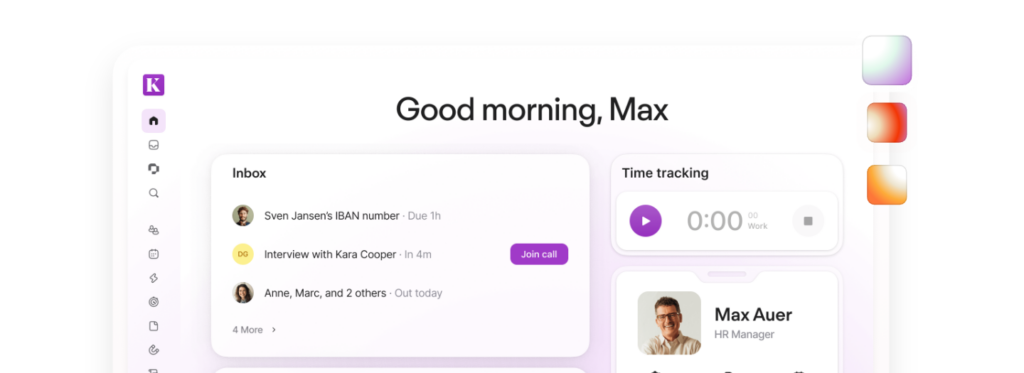
Personio HR platform dashboard - Day Off vs Personio comparison

Personio is a Munich-based HR software company founded in 2015. It’s grown to become Europe’s leading HR platform for SMEs, serving over 10,000 companies across more than 40 countries. In 2022 it reached unicorn status with a valuation of $8.5 billion, making it one of Europe’s most prominent HR technology companies. 

The platform covers the full employee lifecycle: recruiting, onboarding, HR administration, leave management, performance management, payroll (in select markets), and offboarding. It’s built specifically for the European HR and compliance context, GDPR compliance, works council documentation, European public holiday structures, and multi-country employment law are all native to the platform. 

Personio’s target customer is a growing European company, typically between 10 and 2,000 employees, that wants to centralise all its HR operations in one place and move off manual processes and spreadsheets. 

What is Day Off?
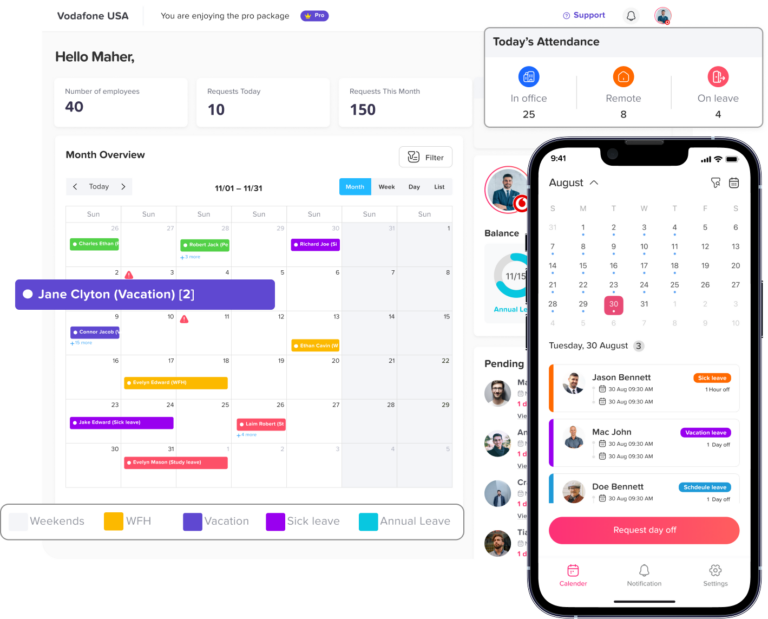
Dash b C 1 Day Off vs Personio: Leave Management for Growing European Teams

Day Off is a dedicated leave management application used by over 50,000 companies across 100+ countries. It launched with a singular focus: make it easy for any team, regardless of size, location, or technical sophistication, to track, request, and approve employee leave without administrative overhead. 

Day Off doesn’t do recruiting, performance management, or payroll. What it does, annual leave, sick leave, public holidays, approval workflows, accrual calculations, carryover rules, team calendars, and integrations with Slack, Teams, Google Calendar, and Outlook, it does with a depth and polish that full HR platforms rarely match for this specific use case. 

It’s used by startups with 3 employees and enterprises with 3,000. It supports public holiday calendars for over 100 countries, allows different leave policies per location, and has a free plan for teams of up to 10 people. For European teams, it handles the public holiday structures of every EU member state as well as the UK, Switzerland, and Norway.

Pricing: the most important difference

Personio does not publish its pricing publicly. Like most enterprise-leaning SaaS platforms, it uses a custom quote model, you request a demo, speak to a sales representative, and receive a proposal based on your company size and the modules you need. 

Based on widely reported figures from users, review platforms, and industry analysts:

  • Personio typically starts at around €3–6 per employee per month for its Core HR package 
  • Additional modules (Recruiting, Performance, Payroll) are priced separately on top 
  • Most companies with 50+ employees and multiple modules report paying €8–15+ per employee per month 
  • A minimum contract value and annual billing are standard 
  • Implementation fees apply for larger or more complex setups 

For a 30-person European company using Core HR plus leave management: expect to pay in the range of €90–180/month minimum, often significantly more depending on the modules selected and the outcome of negotiations. 

Day Off pricing

Plan Cost What’s included
Free $0 /month Up to 10 employees, calendar view, customisable leave types, one-step approval, basic reports

Minimum Pro charge: $20/month (~€18/month). 

For a 30-person team on Day Off Pro: approximately $60/month (~€55/month). That’s for a tool entirely focused on leave, no recruiting, no performance management, no payroll. 

The honest pricing comparison

Team size Day Off Pro Personio Core
10 people $20/month ~€18 €30–60/month est.
30 people $60/month ~€55 €90–180/month est.
50 people $100/month ~€92 €150–300/month est.
100 people $200/month ~€184 €300–600/month est.

The cost difference widens significantly when Personio modules beyond Core HR are added. For teams that primarily need leave management, Day Off can represent a saving of 60–80% versus Personio’s full suite. 

Leave management: feature-by-feature

Both tools include leave management. Here’s a direct comparison of that specific capability, which, for many European teams, is the primary reason they’re evaluating HR software in the first place. 

Leave management feature Personio Day Off
Holiday request & approval
Team absence calendar
Multiple leave types
Sick leave tracking
Public holiday calendars ✅ European-focused ✅ 100+ countries
Leave accrual ✅ Full accrual engine
Carryover rules ✅ Fully configurable
Multi-approver workflows
Backup approver routing ✅ Auto-routes when approver is on leave
Blackout / block-out dates
Sub-team leave policies
Hours-based leave tracking
Multi-country leave policies
Slack integration ✅ via marketplace ✅ Native, bidirectional
Microsoft Teams integration ✅ via marketplace ✅ Native
Google Calendar sync
Outlook sync
Mobile app ✅ iOS & Android ✅ iOS & Android
Employee self-service
Leave reporting & export ✅ Advanced ✅ Standard + CSV export
Free plan ✅ Up to 10 users

What the table shows: Both tools cover leave management competently. Personio goes slightly deeper on leave analytics for enterprise customers; Day Off goes slightly deeper on Slack/Teams integration (native vs. marketplace) and has a faster, more streamlined approval experience for teams that don’t need the full HR suite around it. For most European SMEs, both tools cover the leave management job adequately, the real decision is whether you want to pay for the rest of Personio’s platform alongside it. 

Full platform comparison

Here’s the complete picture for teams evaluating both tools across all HR functions: 

Feature area Personio Day Off
Leave management✅ Included✅ Core focus
Employee database / profiles✅ Full HRIS❌ Not included
Document management✅ GDPR-compliant storage❌ Not included
Recruiting / ATS✅ Full ATS module❌ Not included
Onboarding workflows✅ Digital onboarding❌ Not included
Performance management✅ Reviews, OKRs, feedback❌ Not included
Payroll✅ Germany, Austria, Spain❌ Not included
Compensation management❌ Not included
Works council documentation✅ Germany-specific❌ Not included
Reporting & HR analytics✅ Advanced✅ Leave-focused
GDPR compliance✅ EU-hosted, ISO 27001✅ GDPR compliant
Multi-country support✅ 40+ countries✅ 100+ countries for leave
API access
Integrations marketplace✅ 100+ integrations✅ Slack, Teams, Calendar, Outlook
Custom workflows✅ Advanced✅ Leave workflows only
Free plan❌ Custom quote only✅ Up to 10 users
Pricing transparency❌ Custom quote✅ Public pricing
Setup timeWeeksUnder 10 minutes
Target company size10–2,000 employees1–unlimited
HeadquartersMunich, GermanyGlobal

European compliance: how each tool handles it

For European companies, compliance isn’t a nice-to-have, it’s a legal requirement. Here’s how each tool approaches the key European HR compliance considerations. 

GDPR and data protection

Personio is hosted in EU-based data centres and holds ISO 27001 certification. It was built from the ground up for the European regulatory environment, GDPR consent management, right-to-erasure workflows, and data processing agreements are native to the platform. For companies in Germany or other countries with strict data protection requirements, Personio’s EU-based infrastructure is a significant advantage. 

Day Off is fully GDPR compliant, with role-based access controls ensuring employees can only view their own data. It handles the core data protection requirements that most companies actually need day-to-day: lawful processing, access controls, and data subject rights. For organisations without a hard EU data residency requirement, which is the majority, Day Off’s compliance posture is sufficient. Personio holds ISO 27001 certification and uses exclusively EU-based infrastructure, which is a meaningful advantage for heavily regulated industries or German companies under strict data protection audits.

Works council and co-determination (Germany)

Day Off takes a pragmatic approach: rather than building works council workflows into the product, it keeps the platform simple and lightweight enough that implementation rarely triggers formal Betriebsrat consultation at all, a notable contrast with enterprise HRMS platforms whose scope and data reach routinely require it. For smaller German companies or those without a works council, this is a genuine advantage. Larger German companies with an active Betriebsrat will find Personio’s dedicated support for that process more appropriate.

Multi-country leave laws

Day Off supports public holiday calendars for 100+ countries with regional granularity (Bavarian vs Berlin holidays, for example), and allows distinct leave policies per location, giving distributed teams a clean, accurate foundation for leave management globally. It handles the practical side of multi-country operations well. What it doesn’t do is provide built-in legal guidance or compliance checks for local employment law nuances. For companies that want the software to flag when a policy might conflict with national law, Personio’s European legal depth is more reassuring. For companies that have their own HR or legal function handling compliance, Day Off’s configuration flexibility is often all they need.

Public holiday accuracy

Both tools maintain accurate European public holiday calendars. Day Off supports regional variations (e.g. Bavarian public holidays differ from Berlin’s in Germany), as does Personio. Both handle the UK’s separation from EU public holiday structures correctly. 

Ease of use and implementation

This is one of the most significant practical differences between the two tools. 

Personio

is a comprehensive HR platform, and implementing it comprehensively takes time. Most companies report a 4–12 week implementation process, which involves: configuring the employee database, importing historical HR data, setting up document templates, training HR administrators, configuring approval workflows, and (for payroll) connecting payroll infrastructure. Personio provides dedicated onboarding support, but implementation is a project, not a morning task.

For a growing European company that needs to replace multiple disconnected systems, this investment is justified. For a team that primarily needs leave management, it’s a significant overhead. 

Day Off

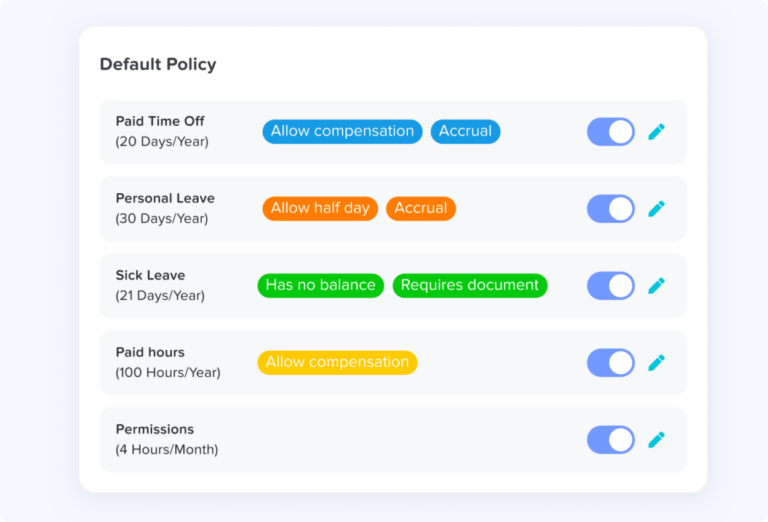
Policy leave types 4 Day Off vs Personio: Leave Management for Growing European Teams

Is operational in under 10 minutes. The setup sequence, create company, add leave types, set public holiday calendars, configure approval rules, and invite employees, requires no technical knowledge and no dedicated implementation support. Employees receive an invitation email, create their account in two minutes, and can submit their first leave request immediately.

Setup time comparison: Personio: 4 to 12 weeks. Day Off: under 10 minutes. 

This isn’t a criticism of Personio, complexity and comprehensiveness go hand in hand. But it’s a meaningful practical difference for teams evaluating their options.

Integrations: connecting to your existing tools

Personio

Has an extensive marketplace of 100+ integrations, covering payroll providers, HRIS tools, communication platforms, and productivity software. For a company using Personio as its primary HR system, these integrations allow it to sit at the centre of the HR technology stack and push/pull data to surrounding tools.

Key Personio integrations relevant to leave management include Microsoft Outlook (calendar sync), and various Slack apps via third-party connectors. Direct native Slack integration, where employees can request leave and receive approvals without leaving Slack, is available via marketplace apps rather than a built-in feature.

Day Off

Focuses its integration effort on the daily communication tools where leave decisions happen: 

  • Slack: Native, bidirectional. Employees submit leave requests in Slack, managers receive and action approval notifications in Slack, and the team’s absence calendar is visible in-channel. No third-party app required. 
  • Microsoft Teams: Native integration for the same request/approval workflow. 
  • Google Calendar: Approved leave syncs automatically to the team’s shared Google Calendar. 
  • Microsoft Outlook: Approved leave syncs to Outlook calendars. 
  • API: Available for custom integrations. 

For remote and hybrid European teams where Slack or Teams is the operational hub, Day Off’s native integration means leave management happens inside the tool your team already lives in, reducing friction and increasing adoption significantly.

What real users say

Personio on G2

Personio carries strong ratings on G2 with a significant review base. Users consistently praise its comprehensiveness and European HR compliance: 

“Personio covers everything we need as a growing European company, from recruiting through to offboarding. The leave management module integrates seamlessly with the rest of the platform, and the GDPR compliance gives our legal team peace of mind.” 

“Implementation took longer than expected, but the onboarding team was helpful. Now that we’re up and running, it’s become the central source of truth for all our HR data.” 

Common criticisms focus on pricing (frequently described as expensive for smaller teams), implementation complexity, and a learning curve for employees who find the interface less intuitive than simpler tools. 

Day Off on G2 (4.5/5)

Day Off users highlight speed, simplicity, and the quality of the leave-specific experience: 

“Using this platform not only helped supervisors and employees but also made tracking easy for our payroll team in completing their data in making salary computations with fewer mistakes. It is packed with great features that are easy to use and navigate.”, Chloe Nicole L., Talent Acquisition Sourcer, Enterprise (G2) 

“I found Day Off an easy to use, reliable and effective platform to track both my client’s project schedules as well as my personal days off. It really helped with time management, reduced my workload, and made my daily work smoother and more efficient.”, Ahmad A., Graphic Designer, Small Business (G2) 

The primary criticism of Day Off in reviews is scope, it doesn’t do the broader HR functions that some teams want from a single platform.

How Day Off handles leave management for European teams

For European teams choosing Day Off for their leave management, here’s exactly what the experience looks like from setup through to daily use. 

Setting up for a European team

Step 1: Create your company and set your leave year

Log in to Day Off, create your company profile, and set your leave year start date. In most European countries, this is 1 January, but if your company runs a different fiscal year, configure accordingly. 

Step 2: Add your leave types

Under Settings → Leave Types, create each category of leave your company offers. For a typical European company this includes: Annual Leave (with the correct statutory entitlement for your country), Sick Leave (self-certified or requiring documentation depending on your policy), Unpaid Leave, and any additional types (parental leave, volunteer days, etc.). Set the annual entitlement, whether days carry over, and the approval requirement for each type. 

Step 3: Add your public holiday calendars

Under Settings → Public Holidays, select your country and region. Day Off supports country-level and regional calendars across all EU member states, the UK, Switzerland, Norway, and 100+ countries globally. If your team spans multiple countries, engineers in Germany, sales in Spain, customer support in Poland, add a calendar for each country. Public holidays are automatically excluded from leave calculations for each employee based on their assigned calendar. 

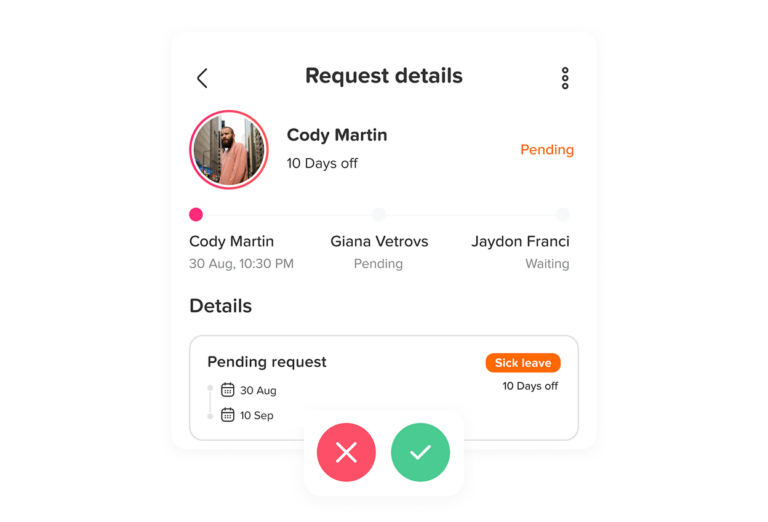
Step 4: Configure your approval workflow
actions 1 Day Off vs Personio: Leave Management for Growing European Teams

Under each team or sub-team, assign a primary approver and a backup approver. Set any blackout periods, product launches, quarter-end periods, peak trading weeks, during which leave requests are automatically flagged. Configure multi-level approval if your company requires manager plus HR sign-off for extended absences.

Step 5: Connect your integrations

In Settings → Integrations, connect Slack, Microsoft Teams, Google Calendar, or Outlook. For most European tech companies running on Slack, the integration means employees never need to visit the Day Off web app, they submit requests in Slack, receive decisions in Slack, and see team availability in their shared calendar. 

Step 6: Invite your team

Send email invitations to your employees. They receive a link, create an account in under two minutes, and can immediately see their leave balance, submit requests, and view the team calendar. For employees joining mid-year, enter their opening balance (prorated from their start date) before sending the invitation. 

Total setup time: under 10 minutes for most European teams. 

The day-to-day experience

For employees:

Open Day Off on web or mobile (iOS and Android), tap New Request, select leave type and dates, add an optional note, and submit. If you’re in Slack, use the /dayoff command directly. The system automatically checks your balance, flags any conflicts with existing approved leave, and excludes public holidays from the day count. You receive a notification as soon as your manager decides.

For managers:

Receive an instant notification by email and in Slack or Teams when a request comes in. Review the request, the notification shows the dates, leave type, employee’s remaining balance, and who else on the team is off during that period. Approve or decline with one click, directly from the notification. Add a note if declining. Done.

For HR and finance teams:

Access the Reports section to see leave taken, leave remaining, leave by type, and leave trends, by employee, team, or company. Export to CSV for payroll integration or compliance reporting. At year-end, run the annual leave reconciliation report to identify unused balances, carryover amounts, and any employees who haven’t taken their statutory minimum.

Who Personio is built for

Personio is the right choice when: 

You need a single platform for your entire HR operation

If you’re managing recruiting, onboarding, employee records, performance reviews, payroll, and offboarding, and you want one system with one source of truth, Personio is built for exactly this. The consolidation value is real.

You’re a European company with complex compliance requirements

Personio’s EU-hosted infrastructure, ISO 27001 certification, works council features, and European employment law expertise make it particularly well-suited to companies in Germany, Austria, and other countries with stringent HR compliance environments.

You’re scaling rapidly and need HR infrastructure that scales with you

Personio is designed to grow from 20 employees to 200 and beyond without outgrowing the platform. If you’re planning significant headcount growth, investing in Personio now means you won’t need to migrate again in two years.

You have dedicated HR resources to implement and manage the platform

Personio’s value is maximised when it’s implemented thoroughly and maintained by someone who understands HR operations. A company with a full-time HR manager or HR team will get significantly more from Personio than one where HR is a part-time responsibility.ctetur adipiscing elit. Ut elit tellus, luctus nec ullamcorper mattis, pulvinar dapibus leo.

You need payroll in Germany, Austria, or Spain

Personio’s payroll module is available in select European markets and integrates directly with the HR data in the platform. For companies that want to consolidate payroll and HR in one tool, this is a meaningful differentiator.

Who Day Off is built for

Day Off is the right choice when: 

Leave management is your primary, or only, HR software need

If you’ve outgrown a spreadsheet or shared calendar for leave tracking but don’t yet need (or want to pay for) a full HR platform, Day Off gives you an excellent leave management experience at a fraction of the cost.

You’re cost-conscious and want transparent pricing

Day Off’s pricing is public, per-seat, and starts free. There’s no sales process, no custom quote, and no minimum contract value. For budget-conscious founders and finance teams, this predictability matters.

You have a small team that needs to move fast

Day Off is operational in under 10 minutes. If you need to solve the leave management problem today, not after a four-week implementation, Day Off is the answer.

Your team is distributed across multiple countries with different public holiday calendars

Day Off supports public holiday calendars for 100+ countries, with regional variations, and allows different leave policies per location. For a European scale-up with employees in five different countries, this handles the complexity simply and correctly.

Your team operates primarily in Slack or Microsoft Teams

Day Off’s native integration means leave management lives where your team already works. No separate app to log into, no new habit to build. Employees submit requests and receive decisions without leaving their communication tool.

You want to start free and upgrade only when you need to

Day Off’s free plan supports up to 10 users indefinitely, not a time-limited trial. For early-stage teams and startups, this means professional leave management at zero cost until the team grows past 10 people.

The honest verdict

Personio and Day Off are both excellent tools, they’re just solving fundamentally different problems for fundamentally different customers. 

Personio

Is a full HR operating system for growing European companies. If you need to manage the entire employee lifecycle, from job posting through to departure, in a single, GDPR-compliant, EU-hosted platform, Personio is one of the best options available for European SMEs. The price is real, the implementation takes time, and the complexity requires HR resource to manage well. But for the right company at the right stage, it’s worth it.

Day Off

Is the best-in-class answer to one specific question: “How do we track and approve leave properly, without spreadsheets, without Slack message chaos, and without paying for a platform we don’t need yet?” It’s faster to set up, cheaper to run, simpler for employees to use, and more focused on the leave management job than any full HR platform can afford to be. For European teams that primarily need leave management, particularly startups, remote teams, and companies with employees in multiple countries, it’s the more pragmatic choice.

The question to ask yourself:

Are you solving a leave management problem or an HR operations problem? If it’s the former, Day Off. If it’s the latter, Personio. 

And if you’re not sure, Day Off has a free plan. Try it today and see whether leave management alone solves your pain. If you outgrow it and need the full HR suite, Personio will still be there.

Quick summary: Day Off vs Personio

Category Day Off Personio
Best forLeave-focused teams, startups, remote & globalGrowing European companies needing full HR
PricingFree up to 10 users; $2/seat/month ProCustom quote; est. €3–15+/employee/month
Pricing transparency✅ Fully public❌ Request a quote
Leave management✅ Excellent — core focus✅ Good — part of broader platform
Full HR platform❌ Leave only✅ Full HRIS + recruiting + payroll
EU data residency❌ Not exclusively EU✅ EU-hosted
ISO 27001 certified
Works council support✅ Germany-focused
100+ country public holidays✅ European-focused
Native Slack integration❌ Via marketplace
Native Teams integration❌ Via marketplace
Free plan✅ Forever, up to 10 users
Setup timeUnder 10 minutes4–12 weeks
Target sizeAny, 1 to 10,000+10–2,000 employees
G2 rating4.5/54.3/5, large review base

Frequently asked questions

Is Personio free?

No. Personio does not offer a free plan. Pricing is provided on request and is based on company size and the modules selected. A minimum contract value and annual billing typically apply. Day Off offers a free plan for teams of up to 10 people with no time limit.

How much does Personio cost?

Personio does not publish pricing publicly. Based on widely reported user experiences, the Core HR plan typically starts around €3–6 per employee per month, with additional modules (Recruiting, Performance, Payroll) priced separately. Total cost for a 50-person company using multiple modules is commonly reported at €8–15+ per employee per month. Contact Personio directly for a current quote.Lorem ipsum dolor sit amet, consectetur adipiscing elit. Ut elit tellus, luctus nec ullamcorper mattis, pulvinar dapibus leo.

Is Day Off available in Europe?

Yes. Day Off is used across Europe and supports public holiday calendars for every EU member state, the UK, Switzerland, Norway, and 100+ countries globally. It handles multi-country public holiday complexity, allows different leave policies per location, and is available in multiple European languages.

Is Day Off GDPR compliant?

Yes. Day Off is GDPR compliant and enforces role-based access controls so employees see only their own leave data. Note that Day Off’s infrastructure is not exclusively EU-based. Companies with strict EU data residency requirements may prefer Personio, which is EU-hosted.

Can Day Off replace Personio completely?

For the leave management portion of Personio’s functionality, yes. Day Off provides a more focused and in many cases more capable leave management experience than Personio’s leave module. However, Day Off does not replace Personio’s employee database, document management, recruiting, performance management, or payroll features. If your company actively uses those Personio features, you would need to retain Personio or find separate tools for each function.

Which is better for a German company?

It depends on your needs. For German companies with a works council, complex co-determination requirements, or a need for German payroll, Personio is the stronger choice, it was built specifically for the German HR context. For German companies that primarily need leave management without the full HR platform, Day Off handles German public holidays (including regional variations for each Bundesland), German leave law (Bundesurlaubsgesetz minimum entitlements), and multi-location policies, at significantly lower cost and with faster setup.

Does Day Off support works council requirements in Germany?

Day Off does not have specific works council (Betriebsrat) features. For German companies with a works council that requires consultation on HR software implementation, Personio’s experience navigating this process is a meaningful advantage. Day Off is more appropriate for German companies without a works council or where the works council has already approved a leave management tool.

How long does Personio implementation take?

Most companies report a Personio implementation taking between 4 and 12 weeks, depending on company size, data complexity, and the modules being implemented. Personio provides dedicated onboarding support. Day Off requires under 10 minutes to set up.

Can I use Day Off and Personio together?

Yes. Some European companies use Personio for their core HR database, performance management, and recruiting, and Day Off for the leave management workflow, because the approval experience, Slack/Teams integration, and multi-country support are stronger. This is a more complex setup but means each tool is doing what it does best.

What happens to my Personio leave data if I switch to Day Off?

You would export current leave balances from Personio as a CSV, use those to configure opening balances in Day Off, and go live from a chosen date. Historical leave records remain in Personio, which you would archive. Day Off’s support team can assist with the migration configuration.

Final thoughts

Most European teams searching for a “Personio alternative” aren’t looking to downgrade, they’re looking for the right tool for where they actually are, not where they plan to be in three years.

Personio is exceptional if you need a full HR operating system and have the budget, the HR team, and the implementation runway to do it properly. For the right company, it’s the right call.

But if leave management is the immediate pain, the missed requests, the balance disputes, the manager who approves things over Slack and forgets to update the record, then paying for a full HR platform to solve that one problem is like buying a truck when you need a bicycle.

Leave approval process management tool - Day Off

Day Off is the bicycle. It does one job, it does it better than anything else at its price point, and it takes ten minutes to set up. For European teams at the early and growth stages, distributed across countries, working in Slack, watching their spend, that’s usually the right answer.

Try it free. If you grow into needing Personio, you’ll know.