







Employee timesheet software helps HR teams track employee work hours, attendance, breaks, overtime, late arrivals, missed shifts, and payroll-related time records in one organized system. Instead of relying on paper timesheets, spreadsheets, manual notes, or chat messages, businesses can use digital timesheets to record work time more accurately and manage employee attendance with less manual effort.
For HR teams, timesheets are not just about knowing when employees start and finish work. They affect payroll accuracy, labor costs, overtime tracking, project planning, employee accountability, attendance reports, and compliance with internal company policies. When timesheet data is inaccurate or incomplete, payroll mistakes become more likely, managers lose visibility, and employees may become frustrated with incorrect work-hour records.

As teams grow, manual timesheet tracking becomes harder to manage. A small team may be able to update a spreadsheet every week, but once the business adds remote employees, flexible schedules, rotating shifts, part-time workers, multiple locations, or different PTO policies, manual tracking can quickly become messy.
This is where employee timesheet software becomes valuable. It gives HR teams a clearer way to track time, review attendance, approve records, connect working hours with PTO, and prepare more reliable reports.
In this article, we will explain what employee timesheet software is, why HR teams need it, what features to look for, how it supports payroll and attendance, and how a system like Day Off can help businesses manage time tracking and leave management together.
What Is Employee Timesheet Software?
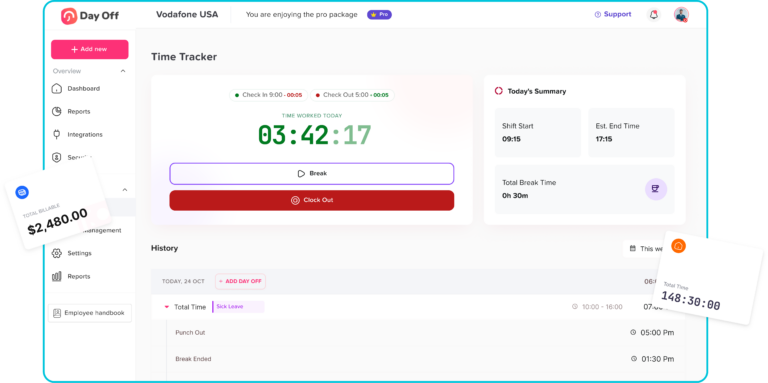
Employee timesheet software is a digital tool that records how much time employees spend working. It can track clock-in and clock-out times, total work hours, break times, overtime, late arrivals, absences, and approved time off.
Depending on the system, employees may record their time through a web browser, mobile app, tablet kiosk, or desktop system. Some businesses use timesheet software mainly for payroll, while others use it to manage attendance, projects, shifts, productivity, and workforce planning.
A basic timesheet system usually answers questions like:
- When did the employee start work?
- When did the employee finish work?
- How many hours did they work?
- Did they take breaks?
- Were they late?
- Did they work overtime?
- Were they absent?
- Was the absence approved PTO?
- Has the manager approved the timesheet?
A strong timesheet system does more than collect numbers. It helps HR teams understand employee availability, attendance behavior, work-hour trends, and payroll readiness.
Why HR Teams Need Employee Timesheet Software
HR teams are responsible for keeping employee time records organized and accurate. When timesheets are handled manually, HR may spend hours checking spreadsheets, asking managers for updates, correcting missing entries, and preparing payroll files.
Employee timesheet software helps reduce this workload by creating a more structured process.
It Improves Payroll Accuracy
Payroll depends on accurate work-hour records. If an employee’s hours are wrong, payroll may be wrong too. This can lead to underpayment, overpayment, payroll delays, and employee complaints.
Timesheet software helps HR teams reduce payroll mistakes by keeping time records in one place. Managers can review and approve timesheets before payroll is processed, and HR can export or use the data more easily.
It Gives Managers Better Visibility
Managers need to know who worked, who was absent, who arrived late, and who worked extra hours. Without a clear timesheet system, this information may be spread across different tools.
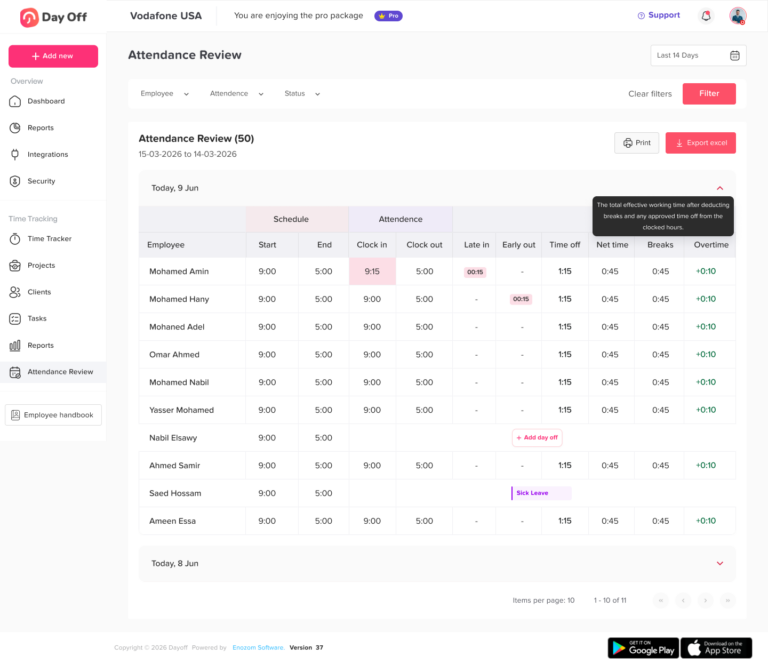
A digital timesheet gives managers a clearer view of daily and weekly attendance. This helps them manage workloads, spot attendance issues, and plan coverage more effectively.
It Reduces Manual Admin Work
Manual timesheets require constant updates. HR teams may need to collect employee entries, check formulas, follow up on missing hours, and fix mistakes.
Timesheet software reduces much of this manual work by recording time digitally and organizing it automatically. This saves time and allows HR teams to focus on higher-value tasks.
It Supports Better Attendance Tracking
Timesheet software helps HR teams track attendance patterns over time. For example, HR can see whether certain employees are frequently late, whether overtime is increasing, or whether absences are affecting a specific team.
This information helps companies take action before small attendance issues become bigger operational problems.
It Connects Time Tracking with PTO
One of the biggest benefits of modern timesheet software is the ability to connect work hours with PTO and leave management. If an employee does not work because they are on approved leave, the system should show that clearly.
This helps HR teams avoid confusion between unapproved absences and approved PTO.
Manual Timesheets vs Employee Timesheet Software
Many businesses still use manual timesheets because they seem simple and low cost. But as the team grows, manual tracking often creates hidden costs through errors, delays, and wasted time.
| Area | Manual Timesheets | Employee Timesheet Software |
|---|---|---|
| Accuracy | Easy to make mistakes | More accurate digital records |
| Payroll prep | Requires manual review | Easier to prepare and export data |
| Approval process | Often handled by email or messages | Manager approvals can be organized |
| Visibility | Limited and often outdated | Real-time or near real-time visibility |
| PTO connection | Usually tracked separately | Can connect leave and attendance |
| Reporting | Manual calculations needed | Reports can be generated faster |
| Employee access | Employees may not see records easily | Employees can review their own time |
| Scalability | Harder as the team grows | Better for growing teams |
Manual timesheets may work for a very small team, but employee timesheet software is usually better for businesses that need accuracy, visibility, and a more reliable HR process.
Common Problems Employee Timesheet Software Solves
Timesheet problems are common in companies that use spreadsheets, paper forms, or manual updates. The bigger the team, the more difficult it becomes to keep everything accurate.
Missing Timesheet Entries
Employees may forget to submit their hours, forget to clock in, or leave gaps in their timesheets. HR then has to follow up manually, which delays payroll preparation.
Timesheet software can reduce missing records by giving employees a clear system to record time and managers a way to review incomplete entries.
Incorrect Work Hours
Manual entries can lead to wrong start times, wrong end times, incorrect totals, or broken spreadsheet formulas. Even small errors can affect payroll.
Digital timesheets help reduce these mistakes by calculating work hours more consistently.
Unclear Overtime
Overtime can be difficult to track manually, especially when employees work different schedules. HR needs to know when employees exceed expected hours and whether overtime requires approval.
Timesheet software can help managers review extra hours before they become payroll surprises.
Late Arrivals and Early Departures
Without a timesheet system, late arrivals and early departures may not be recorded consistently. This makes it difficult to identify attendance trends.
A digital system helps managers see when employees start and finish work, making attendance tracking clearer.
Approved Leave vs Absence Confusion
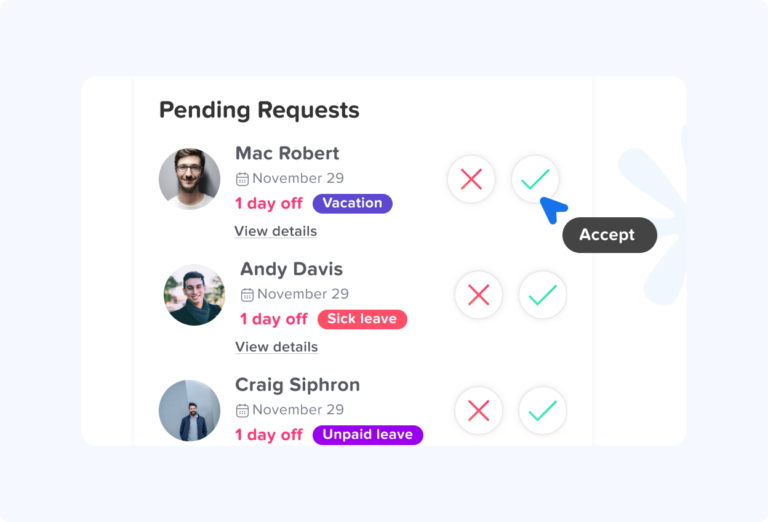
If PTO is tracked in one system and timesheets are tracked somewhere else, managers may not know whether an employee was absent without approval or away on approved leave.
Connecting timesheets with PTO helps clarify employee availability.
Difficult Payroll Reviews
Before payroll, HR teams often need to check hours, absences, overtime, and approvals. If records are scattered, this process can take too long.
Timesheet software helps organize records so HR can review them more efficiently.
Key Features to Look for in Employee Timesheet Software
Not all timesheet systems are the same. HR teams should choose software that supports the way their company actually works.
Clock In and Clock Out
The system should allow employees to record when they start and end work. This is one of the most important features for tracking attendance and total work hours.
For flexible and remote teams, employees should be able to clock in from a suitable device, such as a web app or mobile app.
Break Tracking
Break tracking helps businesses understand actual working time more accurately. Depending on the company’s policy, breaks may be paid or unpaid.
A good system should make it easy to record breaks and calculate total work hours correctly.
Timesheet Approval
Managers should be able to review and approve employee timesheets before payroll. This creates a clear approval workflow and reduces the chance of unverified hours being used for payroll.
Approval features are especially useful for teams with hourly employees, part-time employees, contractors, or shift-based workers.
Overtime Tracking
Overtime tracking helps HR and managers understand when employees are working beyond expected hours. This is important for labor cost control, payroll accuracy, and workload planning.
The system should make overtime visible so managers can review it before payroll.
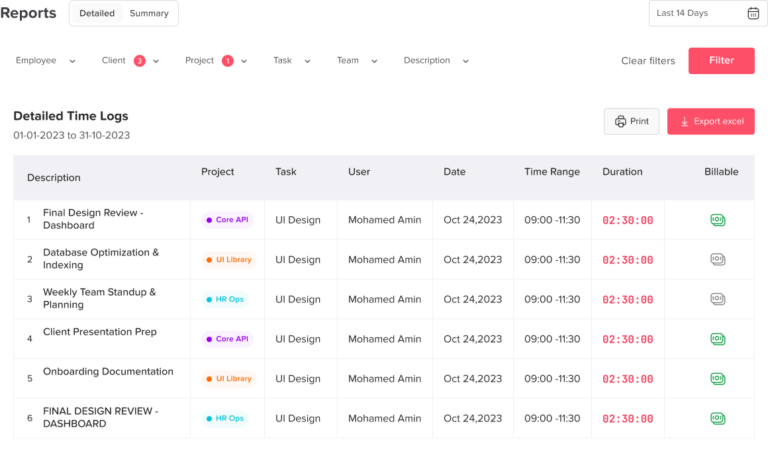
Late Time and Attendance Tracking
Timesheet software should help track late arrivals, early departures, missed shifts, and absences. These details give HR teams a better view of attendance behavior.
This is especially useful for businesses that operate with fixed schedules or rotating shifts.
PTO and Leave Integration
Employee time tracking should work together with PTO tracking. If an employee is on vacation, sick leave, unpaid leave, or another approved absence, the timesheet should reflect that.
This helps avoid confusion and makes employee availability easier to understand.
Work Schedule Support
Employees may work different types of schedules. Some teams use fixed hours, some use flexible hours, and others use rotating shifts.
The best timesheet software should support different schedule types so HR can compare expected hours with actual hours.
Reporting and Exporting
HR teams need reports for payroll, attendance reviews, workforce planning, and management decisions. Timesheet software should provide clear reports that can be exported when needed.
Useful reports may include:
- Total hours worked
- Overtime hours
- Late time
- Absences
- Approved PTO
- Missed punches
- Attendance summaries
- Employee-level timesheets
- Team-level reports
Employee Self-Service
Employees should be able to view their own time records, check their attendance, and understand their work hours. This reduces questions to HR and improves transparency.
Manager Dashboard
Managers need a simple dashboard that shows team attendance, pending approvals, missing entries, and time off information. A clear dashboard helps managers act quickly without needing to search through spreadsheets.
Types of Employee Timesheet Software
Different businesses need different time tracking methods. Before choosing a system, HR teams should understand which type fits their workforce.
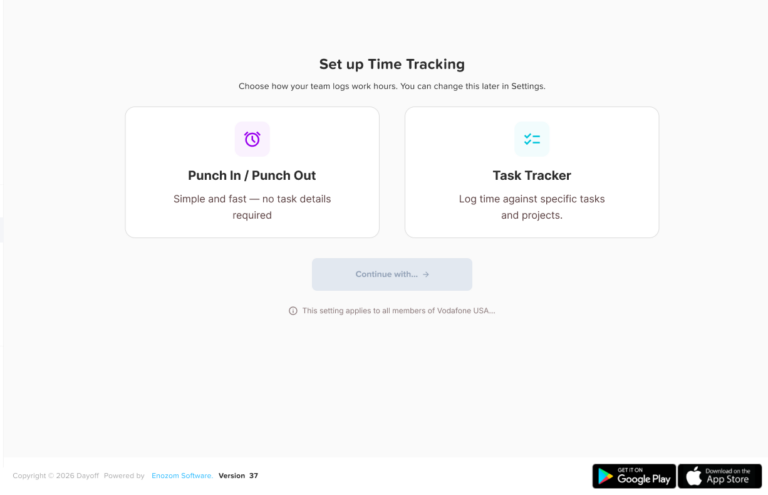
Web-Based Timesheet Software
Web-based timesheet software allows employees to record time through an online platform. This is useful for office teams, remote teams, hybrid teams, and businesses that want easy access without installing complex systems.
Mobile Timesheet Software
Mobile timesheet software allows employees to track time from their phones. This is useful for field teams, remote employees, consultants, sales teams, and employees who do not always work from a desk.
Kiosk Timesheet Software
A kiosk setup allows employees to clock in and out from a shared device, such as a tablet at the workplace. This may be useful for retail, restaurants, warehouses, clinics, and on-site teams.
Project-Based Timesheet Software
Project-based timesheets allow employees to track time against specific tasks, clients, or projects. This is useful for agencies, software teams, consultants, and professional services companies.
Attendance-Focused Timesheet Software
Attendance-focused software is mainly used to track employee presence, late arrivals, absences, shift coverage, and work hours. This is useful for HR teams that need stronger workforce visibility.
How Employee Timesheet Software Supports Payroll
How Employee Timesheet Software Supports Payroll
A good timesheet process helps HR teams:
- Confirm total hours worked
- Review overtime
- Check approved leave
- Identify missing entries
- Confirm manager approvals
- Export payroll-ready reports
- Reduce manual calculations
- Avoid last-minute corrections
Before payroll, managers should review timesheets and approve them. HR should then check for missing data, unusual overtime, unapproved absences, and any conflicts between PTO and attendance records.
This process helps payroll teams work from cleaner data.
How Timesheet Software Connects Attendance and PTO
Timesheets and PTO are closely connected. If an employee is not working, HR needs to know why.
The employee may be:
- On approved vacation
- On sick leave
- Taking unpaid leave
- Working a half day
- Absent without approval
- Late to work
- Working a flexible schedule
- On a public holiday
- Missing a clock-in entry
If attendance and PTO are tracked separately, HR may not have a clear answer. This can affect payroll, reports, and employee records.
A connected system helps managers see the difference between approved leave and attendance issues. For example, if an employee has no clock-in record on Monday, the system should help clarify whether the employee was on approved PTO or simply missed work.
This makes timesheet review more accurate and reduces confusion.
What HR Teams Should Track in Timesheets
HR teams should decide what information matters before implementing timesheet software. Tracking too little can create gaps, while tracking too much can make the process confusing for employees.
Here are the main items most HR teams should track:
| Timesheet Item | Why It Matters |
|---|---|
| Clock-in time | Shows when work started |
| Clock-out time | Shows when work ended |
| Total hours | Helps calculate work time |
| Breaks | Improves accuracy of paid and unpaid time |
| Overtime | Helps control labor costs |
| Late time | Supports attendance management |
| Absences | Helps identify missing workdays |
| PTO | Explains approved time away |
| Public holidays | Helps separate holidays from working days |
| Manager approval | Confirms records were reviewed |
| Notes or corrections | Helps explain exceptions |
The right tracking setup depends on the company’s policy, workforce type, and payroll process.
Employee Timesheet Software for Remote and Hybrid Teams
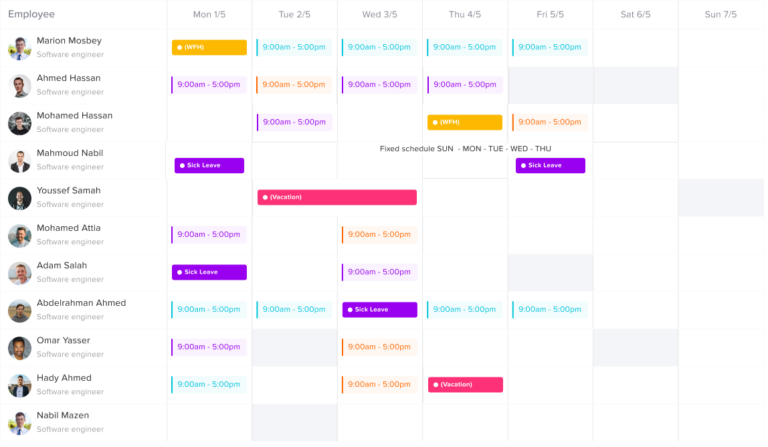
Remote and hybrid teams need reliable timesheet tools because managers cannot always see who is working in person. Timesheet software gives managers a clearer way to track work hours without relying on manual messages.
For remote teams, timesheet software can help answer:
- Who is working today?
- When did each employee start?
- How many hours were worked?
- Is anyone absent?
- Did someone forget to submit time?
- Is the employee on PTO?
- Are working hours different across time zones?
For hybrid teams, timesheet software helps manage both office days and remote workdays. It gives HR teams one place to review attendance instead of collecting updates from multiple managers.
The goal is not to micromanage employees. The goal is to create accurate records, support payroll, and improve team planning.
Employee Timesheet Software for Small Businesses
Small businesses often start with spreadsheets because they are simple and familiar. But as the business grows, spreadsheets can create problems.
Small businesses may need timesheet software when:
- Payroll takes too long to prepare
- Employees forget to submit hours
- Managers approve hours through messages
- PTO and attendance are tracked separately
- Overtime is hard to monitor
- The team works flexible hours
- The company has part-time or hourly employees
- HR needs better reports
- Manual errors are becoming common
For small businesses, the best employee timesheet software should be simple, affordable, easy to set up, and connected to the company’s time-off process.
How to Choose the Right Employee Timesheet Software
Choosing the right timesheet software is not only about features. HR teams should look for a system that fits the company’s daily workflow.
Understand Your Current Time Tracking Problems
Before choosing software, list the problems you want to solve. Are payroll errors common? Are timesheets submitted late? Are managers missing approvals? Is PTO tracked separately? Are overtime records unclear?
A clear problem list helps you choose software that actually solves your needs.
Consider Your Work Schedules
Your timesheet system should support your schedule types. A company with fixed office hours may need different features than a business with flexible hours or rotating shifts.
Look for software that can support:
- Fixed schedules
- Flexible schedules
- Rotating shifts
- Part-time schedules
- Remote work
- Hybrid work
- Multi-location teams
Check the Approval Workflow
Timesheet approvals should be easy for managers. If approvals are complicated, managers may delay reviews and HR may still need to follow up manually.
The system should show pending approvals clearly and make it easy to approve or correct timesheets.
Look for PTO Integration
If the system tracks hours but does not connect with PTO, HR may still need to compare separate records manually.
A better system should connect work hours, approved leave, holidays, and employee availability.
Review Reporting Options
Reports should be easy to understand and useful for payroll, HR, and managers. Look for reports that show attendance, hours worked, late time, overtime, and PTO.
Make Sure Employees Can Use It Easily
A timesheet system only works if employees actually use it. The interface should be simple, clear, and accessible from the devices your team uses.
Think About Scalability
Choose a system that can grow with your company. Even if your team is small today, you may later need more locations, more policies, more managers, or more detailed reports.
Best Practices for Implementing Employee Timesheet Software
Implementing timesheet software should be simple, but HR teams still need a clear rollout plan.
Create a Clear Time Tracking Policy
Employees should know when to clock in, when to clock out, how to record breaks, what to do if they forget to track time, and when timesheets must be submitted.
A clear policy reduces confusion and makes the system easier to adopt.
Train Managers First
Managers are responsible for reviewing timesheets and solving attendance issues. Train them before rolling the system out to employees.
They should know how to approve timesheets, review exceptions, handle missed entries, and check PTO records.
Explain the Purpose to Employees
Employees may worry that timesheet software is only about monitoring them. HR should explain that the goal is accurate payroll, clear attendance records, fair PTO tracking, and better planning.
When employees understand the reason, adoption is usually easier.
Start with a Pilot Team
If the company is large, start with one team or department. This helps HR test the process, collect feedback, and fix issues before rolling it out company-wide.
Review Timesheets Regularly
Do not wait until payroll day to check timesheets. Managers should review time records regularly so mistakes can be fixed early.
Keep PTO and Timesheets Connected
Make sure approved PTO, public holidays, and absences are reflected in timesheet reviews. This gives HR a complete view of employee time.
Mistakes to Avoid When Using Timesheet Software
Employee timesheet software can improve HR operations, but only if it is used correctly.
Choosing Software That Is Too Complicated
If the system is difficult to use, employees may avoid it and managers may delay approvals. Choose software that is simple enough for daily use.
Ignoring PTO and Leave Management
Tracking only clock-in and clock-out times is not enough. HR teams also need to understand approved leave, sick days, unpaid leave, and holidays.
Not Setting Approval Deadlines
Without deadlines, managers may forget to approve timesheets on time. This can delay payroll and create extra work for HR.
Not Reviewing Reports
Timesheet reports can reveal useful trends, such as frequent overtime, repeated late arrivals, or staffing issues. HR teams should review reports regularly.
Allowing Too Many Manual Corrections
Manual corrections are sometimes necessary, but too many corrections may mean employees are not using the system properly or the policy is unclear.
How Day Off Helps with Timesheets, Attendance, and PTO
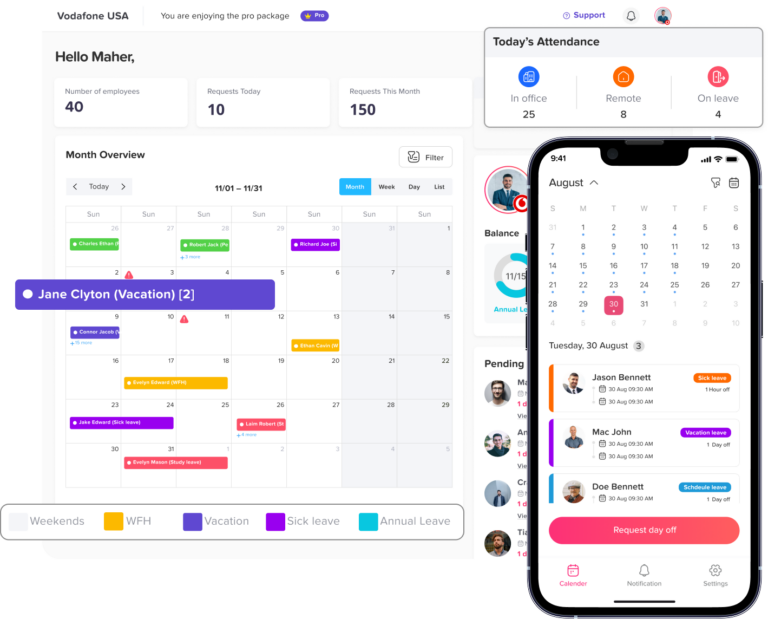
Day Off helps teams manage time tracking, attendance, PTO, leave requests, work schedules, and employee availability in one place. Instead of using one system for timesheets and another system for time off, businesses can connect employee work hours with approved leave.
With Day Off, teams can manage clock-in and clock-out records, track attendance, review employee availability, and connect time tracking with PTO. This helps HR teams understand not only how many hours employees worked, but also who was on leave, who was absent, and who followed their work schedule.
Day Off is useful for businesses that want to manage:
- Employee timesheets
- Work hours
- Attendance
- PTO requests
- Sick leave
- Vacation days
- Public holidays
- Work schedules
- Late time
- Overtime
- Employee availability
- Reports for payroll preparation
This gives HR teams and managers a clearer view of employee time without depending on scattered spreadsheets, manual updates, or separate tools.
FAQ
What is employee timesheet software?
Employee timesheet software is a digital tool that helps businesses track employee work hours, clock-in and clock-out times, breaks, overtime, attendance, and timesheet approvals.
Why do HR teams need timesheet software?
HR teams need timesheet software to improve payroll accuracy, reduce manual work, track attendance, manage overtime, and keep employee time records organized.
Can employee timesheet software help with payroll?
Yes. Employee timesheet software can help payroll by providing accurate records of hours worked, overtime, absences, and approved time off.
What should be included in an employee timesheet?
An employee timesheet should usually include clock-in time, clock-out time, total hours worked, breaks, overtime, absences, PTO, and manager approval.
Is timesheet software useful for remote teams?
Yes. Timesheet software is useful for remote teams because it helps managers and HR teams track work hours and attendance even when employees are not working from the same office.
How does PTO connect with timesheets?
PTO connects with timesheets because approved time off explains why an employee did not work during certain hours or days. This helps HR avoid confusing approved leave with unapproved absence.
What is the best employee timesheet software for small businesses?
The best employee timesheet software for small businesses should be easy to use, affordable, accurate, and able to connect time tracking with PTO, attendance, schedules, and reports.
How does Day Off help with employee timesheets?
Day Off helps teams track employee work hours, attendance, PTO, leave requests, schedules, late time, overtime, and availability in one place. This makes timesheet management easier for HR teams and managers.
Final Thoughts
Employee timesheet software is an important tool for HR teams that want better accuracy, clearer attendance records, and a smoother payroll process. It helps businesses track work hours, review overtime, manage late arrivals, connect attendance with PTO, and reduce manual work.
Manual timesheets may seem simple at first, but they can become difficult to manage as the team grows. Missing entries, incorrect hours, unclear approvals, and disconnected PTO records can create problems for HR, payroll, managers, and employees.
The best employee timesheet software should be easy to use, accurate, connected to leave management, and flexible enough to support different schedules and work styles.
For companies that want to manage timesheets and PTO together, Day Off helps bring time tracking, attendance, leave requests, public holidays, schedules, and team availability into one organized system.