







Managing employee time off may seem simple at first. An employee asks for a vacation day, a manager approves it, and HR updates the balance. But as a company grows, PTO management becomes much more complicated. Different leave types, approval workflows, employee balances, holidays, remote teams, and overlapping requests can quickly turn a basic HR task into a time consuming process, here comes the leave tracking app.

This is where a leave tracking app makes a major difference.
A leave tracking app helps businesses manage paid time off, vacation days, sick leave, personal leave, holidays, and other absences in one organized system. Instead of relying on spreadsheets, emails, paper forms, or chat messages, companies can handle requests, approvals, balances, and reports from a single platform.
For HR teams, managers, and employees, this means less confusion, fewer manual updates, and a smoother PTO management process.
What is PTO management?
PTO management is the process of tracking, approving, and organizing paid time off for employees. PTO stands for Paid Time Off, and it usually includes leave that employees can take while still receiving their normal pay.
Depending on the company’s policy, PTO may include:
- Vacation days
- Sick leave
- Personal days
- Emergency leave
- Public holidays
- Parental leave
- Bereavement leave
- Unpaid leave
- Compensatory time off
- Custom leave types
Good PTO management helps companies know who is off, when they are off, how many days they have used, and how many days remain in their balance. It also helps employees plan their time away from work without constantly asking HR for updates.
When PTO is managed manually, mistakes can happen easily. A spreadsheet may not be updated on time. A manager may miss an email. An employee may request leave without knowing that other team members are already off. Over time, these small issues can affect productivity, planning, and employee satisfaction.
Why manual PTO tracking becomes difficult
Many businesses start by tracking leave manually. For very small teams, this may work for a while. A simple spreadsheet or shared calendar might be enough when there are only a few employees and very few requests.
However, manual PTO tracking becomes harder as the team grows.
HR teams may need to update balances by hand, check company policies, review holidays, follow up with managers, and answer repeated employee questions. Managers may struggle to see team availability before approving leave. Employees may not know how many days they have left or whether their request has been approved.
Manual PTO tracking often leads to problems such as:
- Incorrect leave balances
- Delayed approvals
- Missed requests
- Duplicate or overlapping leave
- Lack of visibility into team availability
- Confusion around company policies
- Too many back-and-forth messages
- Extra administrative work for HR
- Difficulty preparing reports
These issues are not always caused by poor management. In many cases, they happen because the company is using a process that is no longer suitable for its size or needs.
A leave tracking app solves this by replacing scattered manual steps with a clear digital workflow.
How a leave tracking app simplifies PTO requests
One of the biggest benefits of a leave tracking app is that it makes requesting time off simple for employees.
Instead of sending an email, filling out a paper form, or messaging a manager, employees can submit their request directly through the app. They choose the leave type, select the dates, add any required notes, and send the request for approval.
This creates a clear and consistent process for everyone.
Employees no longer need to wonder who to contact, what format to use, or whether their request was received. The system records the request and sends it to the correct approver automatically.
For HR teams, this means fewer missing requests and fewer manual follow-ups. For managers, it means all requests are organized in one place. For employees, it creates a smoother and more transparent experience.
Faster and clearer approval workflows
Approving PTO manually can be slow, especially when requests are handled through email or chat. A manager may miss a message, forget to respond, or approve a request without checking team availability.
A leave tracking app makes approvals faster and more structured.
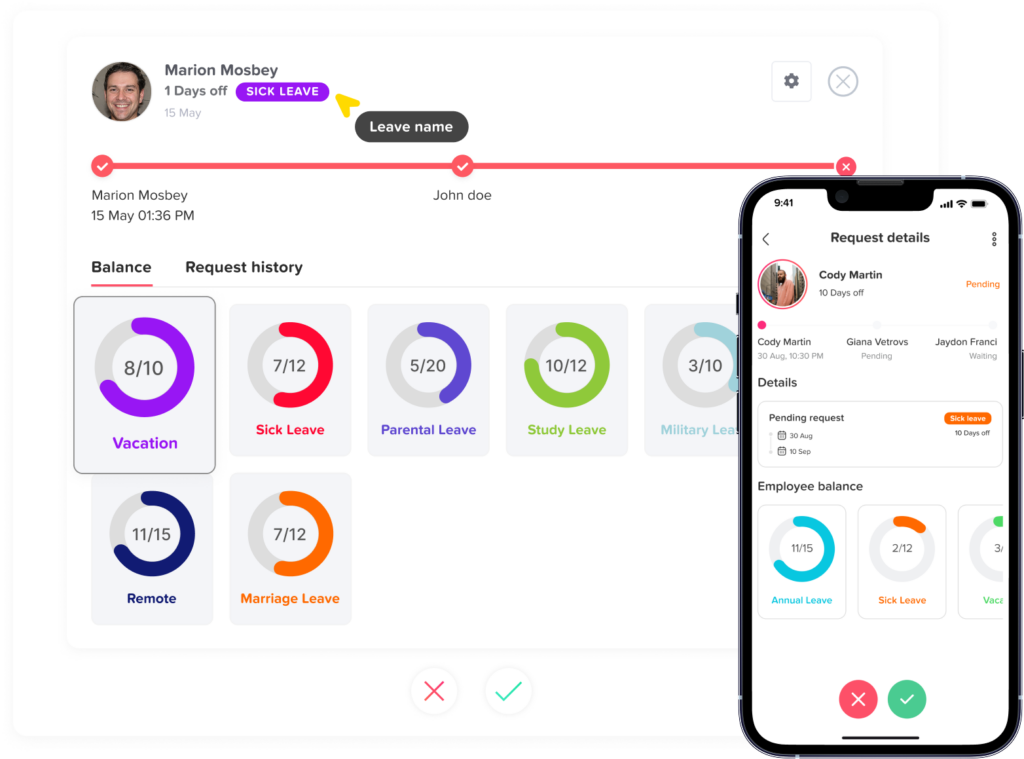
Managers can review pending requests, check the employee’s balance, see the requested dates, and approve or reject the request from the app. Some systems also allow companies to set custom approval workflows, such as one-level or two-level approval.
This is especially useful for companies with multiple departments, locations, or managers. Each employee’s request can be sent to the right person automatically, reducing confusion and delays.
A clear approval workflow helps businesses keep PTO decisions consistent, fair, and easy to track.
Accurate leave balances without manual calculations
Leave balance errors are one of the most common problems in PTO management.
When HR teams use spreadsheets, they often need to calculate balances manually. They may have to subtract approved days, add new accruals, apply carryover rules, adjust for holidays, and update each employee’s record.
This takes time and creates room for mistakes.
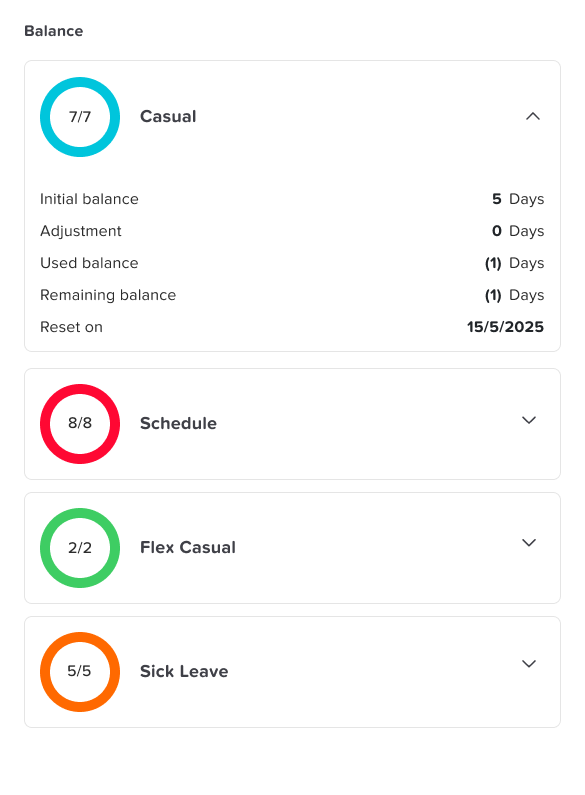
A leave tracking app helps keep balances accurate by updating them automatically. When a request is approved, the system deducts the correct amount from the employee’s balance. When new leave is earned, the balance can be updated based on the company’s policy.
This is helpful for employees because they can check their available balance before requesting time off. It is also helpful for HR because they no longer need to answer the same balance questions again and again.
Instead of asking, “How many vacation days do I have left?” employees can simply open the app and check their balance themselves.
Better visibility into team availability
One of the most important parts of PTO management is knowing who is available and who is away.
Without a clear leave calendar, managers may approve multiple requests for the same period without realizing it. This can lead to staffing shortages, missed deadlines, or pressure on the employees who remain at work.
A leave tracking app usually includes a shared calendar where managers and teams can see approved time off, pending requests, public holidays, and upcoming absences.
This makes workforce planning easier.
Before approving a request, managers can check whether other employees are already off during the same period. They can also plan ahead for busy seasons, important projects, or high-demand periods.
For employees, visibility into team availability can help them choose better dates for their time off. For managers, it creates a more informed approval process. For the business, it helps maintain coverage without blocking employees from taking the leave they need.
Reducing overlapping leave requests
Overlapping leave is not always a problem, but it can become one if too many employees from the same team are away at the same time.
A leave tracking app helps reduce this risk by giving managers a clear view of current and upcoming absences. Instead of approving requests blindly, they can see the bigger picture before making a decision.
Some companies also use rules or blockout dates to manage busy periods. For example, a business may limit leave requests during end-of-year reporting, major product launches, holiday seasons, or peak customer demand.
With a leave tracking app, these rules can be easier to apply and communicate. Employees can understand when leave is available, and managers can make decisions based on real availability rather than guesswork.
Supporting different leave types and policies
Not all leave is the same. Vacation days, sick leave, unpaid leave, personal leave, and other time off types may follow different rules.
For example, vacation days may accrue monthly, while sick leave may be granted annually. Some leave types may allow carryover, while others may expire at the end of the year. Some employees may follow one policy, while employees in another location may follow a different policy.
Managing all of this manually can become complicated.
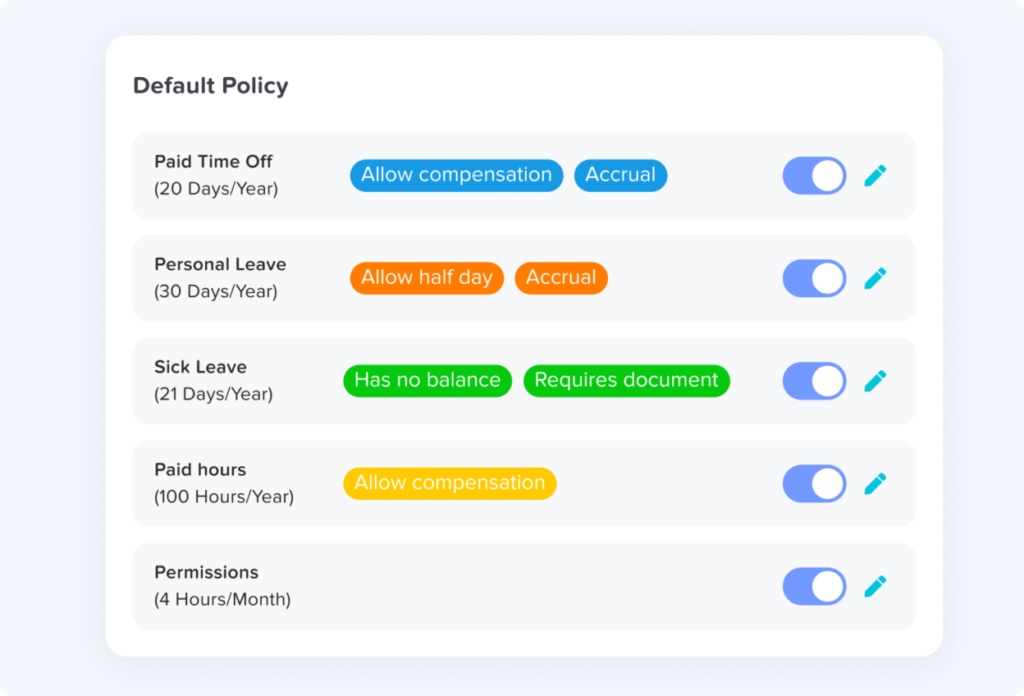
A leave tracking app helps companies organize multiple leave types and policies in one place. HR can define the rules for each leave type, assign policies to employees, and manage balances more consistently.
This is especially useful for companies with:
- Multiple departments
- Different employee groups
- Remote or hybrid teams
- Multiple office locations
- Different country or state requirements
- Full-time and part-time employees
- Custom leave policies
Instead of forcing every employee into the same manual structure, a leave tracking app gives companies more flexibility.
Easier PTO tracking for remote and hybrid teams
Remote and hybrid work have made visibility even more important.
When employees work from different locations or time zones, it is not always obvious who is working, who is on leave, and who is unavailable. A leave tracking app helps solve this by giving everyone access to the same updated information.
Employees can request leave from anywhere. Managers can approve requests without being in the office. HR can track time off across teams and locations from one system.
This makes PTO management easier for modern workplaces where employees are not always working in the same physical space.
A digital leave tracking system helps companies stay organized, even when teams are distributed.
Less administrative work for HR
Manual PTO tracking can take a lot of HR time.
HR teams often spend hours updating spreadsheets, checking balances, answering employee questions, reminding managers to approve requests, and preparing reports. These tasks are necessary, but they are repetitive.
A leave tracking app reduces this workload by automating many of the routine steps.
Employees can submit requests on their own. Managers can approve them directly. Balances update automatically. Reports can be generated faster. Leave history is stored in the system.
This allows HR teams to spend less time on manual administration and more time on higher-value work, such as improving policies, supporting employees, and building a better workplace experience.
Better reporting and record keeping
PTO data is important for planning and decision making.
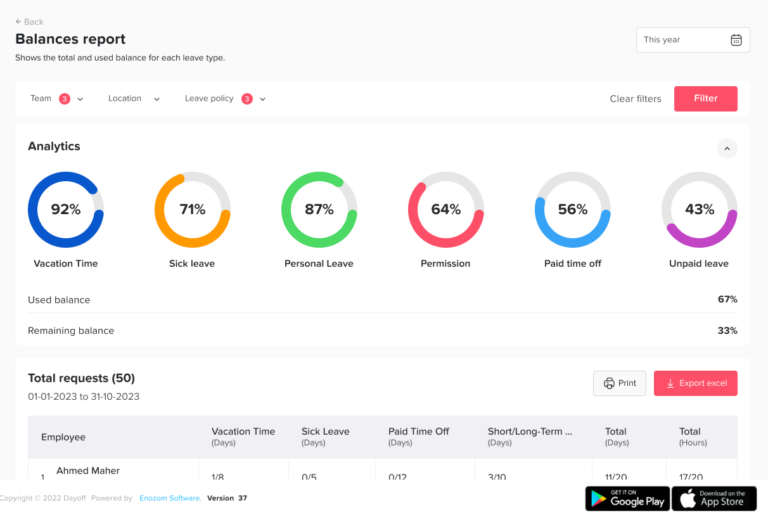
Companies may need to know how much leave employees have used, how many days remain, which teams have the highest absence rates, or how much unused PTO is still available. These details are difficult to collect when records are spread across spreadsheets, emails, and calendars.
A leave tracking app keeps PTO records in one place.
HR teams can access reports more easily and review important information such as:
- Employee leave balances
- Approved and pending requests
- Leave history
- Time off by department
- Time off by leave type
- Upcoming absences
- Unused PTO
- Leave trends over time
These reports help companies make better decisions. They can identify patterns, plan staffing needs, and make sure policies are being followed.
Good reporting also helps with compliance and internal record keeping.
Improving employee experience
PTO management is not only an HR task. It directly affects the employee experience.
Employees want to know how much time off they have, how to request leave, when their request will be approved, and whether their balance is correct. When the process is slow or unclear, employees can become frustrated.
A leave tracking app makes the experience easier and more transparent.
Employees can:
- Check their leave balance anytime
- Submit requests quickly
- Track the status of their requests
- View upcoming holidays
- See their leave history
- Plan time off with more confidence
This creates a better experience because employees feel informed and in control. They do not need to chase HR or managers for basic information.
A smooth PTO process also shows employees that the company respects their time and values clear communication.
Helping managers make better decisions
Managers play an important role in PTO management. They need to approve time off while also making sure the team has enough coverage.
Without the right tools, managers may not have enough information to make good decisions. They may approve a request without seeing that another key employee is already away. They may reject a request because they are unsure about staffing. They may need to ask HR for balance details before responding.
A leave tracking app gives managers the information they need in one place.
They can see:
- The employee’s requested dates
- The employee’s available balance
- Other team members who are off
- Pending requests
- Public holidays
- Leave history
This helps managers approve requests more confidently and fairly.
Making PTO policies easier to follow
Even the best PTO policy can fail if it is difficult to apply.
Employees may not understand the rules. Managers may apply them differently. HR may need to remind everyone how leave works. Over time, this can create inconsistency.
A leave tracking app helps turn PTO policies into a clear process. The system can reflect the company’s rules, such as who approves requests, how leave accrues, which leave types are available, and how balances are calculated.
This makes it easier for employees and managers to follow the policy correctly.
Instead of relying only on documents or verbal explanations, the leave tracking app helps apply the policy in daily work.
Reducing mistakes and improving accuracy
PTO mistakes can create real problems.
An employee may take more days than they have available. A balance may be updated incorrectly. A holiday may be counted as a leave day by mistake. A request may be approved but never recorded.
These errors can affect payroll, employee trust, and HR records.
A leave tracking app reduces mistakes by automating calculations and keeping all leave data in one system. Approved requests, balances, holidays, and leave history are easier to manage and review.
While no system can replace good HR oversight, a leave tracking app greatly reduces the risk of manual errors.
Saving time across the whole company
The time saved by a leave tracking app is not limited to HR.
Employees save time because they do not need to ask basic questions or wait for manual updates. Managers save time because they can review requests quickly and see team availability immediately. HR saves time because balances, records, and reports are easier to manage.
Over time, this creates a more efficient workplace.
Instead of spending time on repeated administrative tasks, everyone can focus on their actual work.
Why businesses should use a leave tracking app
A leave tracking app is useful for businesses that want a simpler, more accurate, and more transparent way to manage PTO.
It helps companies move away from manual tracking and toward a system that is easier to manage as the team grows.
The main benefits include:
- Faster leave requests
- Easier approvals
- Accurate PTO balances
- Better team visibility
- Fewer overlapping absences
- Less HR admin work
- Clearer policies
- Better reporting
- Improved employee experience
- More organized records
For growing teams, these benefits can make a major difference.
PTO management should not depend on scattered emails, outdated spreadsheets, or manual calculations. A leave tracking app gives companies a better way to manage employee time off with less effort and more accuracy.
FAQ
What is a leave tracking app?
A leave tracking app is a digital tool that helps companies manage employee time off. It allows employees to request leave, managers to approve or reject requests, and HR teams to track balances, policies, holidays, and reports in one place.
Instead of using spreadsheets, emails, or paper forms, a leave tracking app keeps the entire PTO management process organized and easier to follow.
How does a leave tracking app make PTO management easier?
A leave tracking app makes PTO management easier by automating many manual tasks. Employees can submit requests directly through the app, managers can approve them faster, and HR teams can track balances without updating spreadsheets by hand.
It also gives everyone better visibility into who is off, who is available, and how much PTO each employee has remaining.
Can a leave tracking app help reduce HR workload?
Yes. A leave tracking app can significantly reduce HR workload by automating leave requests, approvals, balance updates, and reports. HR teams no longer need to spend as much time answering balance questions, following up on pending requests, or manually updating records.
This allows HR to focus more on people, policies, and employee experience instead of repetitive administrative tasks.
Does a leave tracking app help prevent overlapping leave requests?
Yes. A leave tracking app helps prevent overlapping leave requests by showing approved time off, pending requests, holidays, and team availability in a shared calendar.
Before approving a request, managers can check whether other employees are already away during the same period. This helps maintain team coverage and reduces scheduling conflicts.
Can employees check their PTO balance in a leave tracking app?
Yes. Most leave tracking apps allow employees to check their PTO balance at any time. They can see how many days they have available, how many days they have already used, and how many days remain.
This helps employees plan their time off better and reduces the need to ask HR for balance updates.
Is a leave tracking app useful for small businesses?
Yes. A leave tracking app is useful for small businesses because it creates a simple and organized way to manage employee time off from the beginning.
Even if the team is small, manual tracking can still lead to missed requests, balance errors, and confusion. Using a leave tracking app early helps the business build a clear PTO process that can grow with the team.
Is a leave tracking app only for large companies?
No. Leave tracking apps are useful for companies of many sizes. Small teams can use them to stay organized, while growing and larger companies can use them to manage multiple teams, departments, locations, leave types, and approval workflows.
The main benefit is that the process becomes clearer and easier for employees, managers, and HR teams.
What types of leave can be managed in a leave tracking app?
A leave tracking app can usually manage different types of leave, including vacation days, sick leave, personal leave, unpaid leave, emergency leave, parental leave, bereavement leave, public holidays, and custom leave types.
This helps companies apply different rules for different leave categories while keeping everything in one system.
Can a leave tracking app improve employee experience?
Yes. A leave tracking app improves employee experience by making the PTO process faster, clearer, and more transparent.
Employees can request leave easily, check their balances, view request status, and plan time off without waiting for manual updates. This gives employees more confidence and reduces frustration around time off management.
Why should companies stop using spreadsheets for PTO tracking?
Companies should stop relying on spreadsheets for PTO tracking because spreadsheets are easy to forget, miscalculate, or update incorrectly. They also do not provide a smooth approval workflow, automatic balance updates, or clear visibility into team availability.
A leave tracking app gives companies a more reliable and scalable way to manage PTO, especially as the team grows.
Final thoughts
Managing PTO properly is essential for every business. Employees need time off to rest, recover, and handle personal responsibilities. Managers need visibility to keep work running smoothly. HR teams need accurate records and clear processes.
A leave tracking app brings all of these needs together.
It simplifies requests, speeds up approvals, keeps balances accurate, prevents confusion, and gives everyone better visibility. Instead of turning PTO management into a manual burden, it creates a smoother process for employees, managers, and HR teams.
For any company that wants to save time, reduce errors, and improve the way it manages employee leave, using a leave tracking app is one of the easiest and most effective steps to take.