








An employee arrives for work, starts helping customers, and realizes hours later that they forgot to clock in. Another employee finishes a busy shift but leaves without clocking out. These situations are known as missed punches, and a missed punch policy helps HR handle one of the most common problems in employee time tracking.
A missed punch may appear to be a small administrative mistake, but leaving it unresolved can affect payroll, overtime calculations, attendance records, manager approvals, and employee trust.

A clear missed punch policy explains what employees should do after forgetting to clock in or out, how managers should verify the correct time, and how repeated errors will be handled. In addition, most importantly, it helps ensure that employees are paid accurately for the time they actually worked.
This guide explains how businesses can create a fair and practical missed punch policy without turning occasional mistakes into payroll disputes.
What Is a Missed Punch?
A missed punch occurs when an employee fails to record one of the time entries required during the workday.
Common examples include:
- Forgetting to clock in at the beginning of a shift
- Forgetting to clock out at the end of a shift
- Failing to record the beginning or end of a meal break
- Clocking in but not clocking out
- Clocking out for a break but forgetting to clock back in
- Recording time under the wrong location, shift, or job
- Experiencing a technical problem with the time clock
- Attempting to punch in when the device, app, or internet connection is unavailable
A missed punch does not necessarily mean the employee did not work. It means that the timekeeping record is incomplete and must also be reviewed.
That distinction is important. A company should treat a missed punch as a record-correction issue first and a possible performance issue second.
Why Every Business Needs a Missed Punch Policy
Without a written policy, employees and managers may handle each missed punch differently.
One manager may also immediately correct an employee’s timesheet. Another may wait until payroll closes. A third may automatically enter the scheduled shift without checking what happened.
Inconsistent handling can create several problems.
Inaccurate employee pay
An incomplete timesheet can cause employees to be underpaid or overpaid. A missing clock-in may remove several hours from the employee’s record, while a missing clock-out may make the shift appear much longer than it actually was.
Incorrect overtime calculations
A single unrecorded shift can change whether a nonexempt employee crossed an overtime threshold during the workweek.
Under the U.S. Fair Labor Standards Act, covered nonexempt employees generally must receive overtime pay for hours worked beyond 40 in a workweek. Overtime earned in a workweek cannot simply be ignored because it was not recorded correctly or was not authorized in advance. yed payroll processing
Payroll teams may need to contact employees and managers individually before calculating wages. When corrections arrive after the payroll deadline, the company may also need to process adjustments.
Weak attendance records
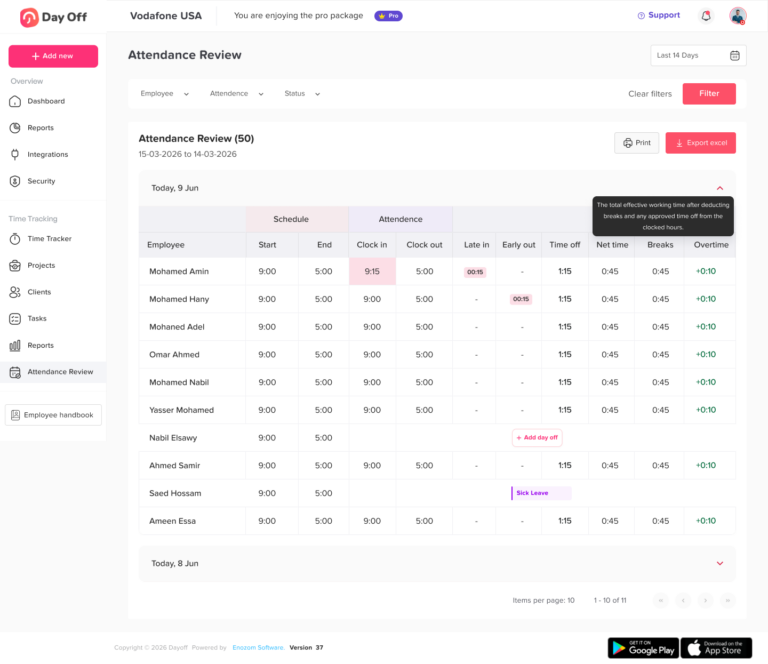
Missed punches can make employees appear late, absent, or present for the wrong number of hours. This reduces the value of attendance reports and makes workforce planning more difficult.
Unequal treatment
If managers make decisions without a shared policy, similar mistakes may receive different responses. One employee may receive a warning while another employee’s repeated missed punches are ignored.
A written missed punch policy creates a consistent process that employees, managers, HR teams, and payroll administrators can also follow.
Are Employers Required to Correct Missed Punches?
Employment laws differ by country, state, province, and local jurisdiction. Employers should also review the rules that apply to their workforce.
In the United States, the Fair Labor Standards Act requires covered employers to maintain accurate records of the hours worked by nonexempt employees. Required records generally include the hours worked each day and the total hours worked during each workweek. s may also use a time clock, an online timesheet, a mobile application, a designated timekeeper, or employee-entered records. The method is flexible, but the final records must be complete and accurate. ds to an important rule:
A missed time punch is not proof that an employee performed no work.
When an employee reports that they worked during a period missing from the timesheet, the employer should investigate and correct the record based on the available information.
The U.S. Department of Labor also explains that work that an employer allows or permits an employee to perform can be compensable even when the work was not requested. This can also include an employee continuing to work after a shift to finish a task. s can require employees to follow clock-in procedures and can address repeated failures through appropriate disciplinary processes. However, correcting employee behavior and paying for work performed should be treated as separate issues.
What Should a Missed Punch Policy Include?
An effective missed punch policy should answer the following questions:
- What counts as a missed punch?
- How should employees report the error?
- How quickly must the error be reported?
- What information must the employee provide?
- Who reviews and approves the correction?
- What evidence may be used to confirm the working time?
- What happens when payroll has already been processed?
- How are repeated missed punches handled?
- How are system failures handled?
- How are corrections documented?
The policy should also be clear enough for an employee to understand without contacting HR every time an error occurs.
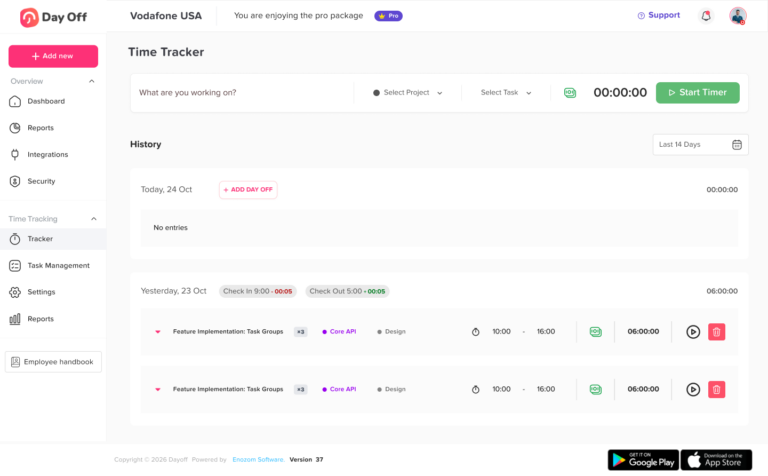
How Employees Should Report a Missed Punch
Employees should be instructed to report a forgotten clock-in or clock-out as soon as they notice it.
A missed punch request should normally include:
- The date of the missed punch
- The type of punch that is missing
- The correct clock-in or clock-out time
- The employee’s scheduled shift
- The reason the punch was missed
- Any break time taken
- The work location or job assignment
- A brief explanation of how the correct time can be confirmed
For example:
I forgot to clock in on July 13. I started work at 8:55 a.m. and took my normal lunch break from 1:00 p.m. to 1:30 p.m. My supervisor was present when I arrived.
Employees should submit the correction through the company’s time-tracking system whenever possible. This is more reliable than sending requests through verbal conversations, personal messages, or scattered email threads.
How Quickly Should Employees Report Missed Punches?
The best rule is to require employees to report a missed punch as soon as they become aware of it.
A company may also establish a clear internal deadline, such as:
- Before the end of the same shift
- Before the start of the next scheduled shift
- Within one business day
- Before the weekly timesheet approval deadline
- Before the payroll cutoff
The deadline should encourage prompt reporting without suggesting that hours will automatically go unpaid when an employee reports the problem late.
Late reporting may also justify coaching or another response under the company’s attendance or timekeeping policy. It should not automatically remove hours that the employee actually worked.
How Managers Should Verify a Missed Punch
Managers should review correction requests promptly and objectively.
Additionally, the goal is not to demand perfect proof of every minute. The goal is to create the most accurate record reasonably possible from the available facts.
Managers may consider:
- The employee’s published work schedule
- The employee’s usual working pattern
- Supervisor observations
- Building or office access records
- Point-of-sale login records
- Computer or system login activity
- Assigned task records
- Customer service records
- Delivery or route information
- Messages sent during the shift
- Statements from colleagues
- Break records
- Security records, where legally and appropriately used
These records should support the investigation, but businesses should avoid excessive monitoring or using information in ways that conflict with privacy laws or company policies.
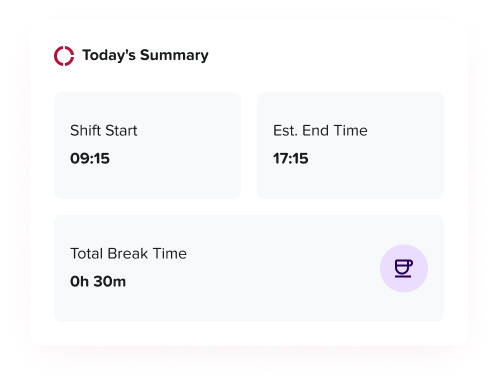
A published schedule may be a useful starting point, but it should not automatically replace the actual working time.
The U.S. Department of Labor allows employers with genuinely fixed schedules to record the regular schedule when it was followed. When an employee works for a longer or shorter period than the schedule, the employer must record the hours actually worked. r Step-by-Step Process for Handling Missed Punches
Step 1: Identify the incomplete time entry
A time-tracking system or manager notices that an expected clock-in, clock-out, or break entry is missing.
The system should flag the record as incomplete rather than silently calculating hours from unreliable information.
Step 2: Notify the employee
The employee should receive a clear notification showing:
- The affected date
- The missing punch
- The deadline for submitting a correction
- Where to submit the correct information
In addition, employees should not have to discover missing punches only after receiving an incorrect paycheck.
Step 3: Collect the employee’s correction
The employee submits the correct time and an explanation.
The process should be simple. Requiring a long paper form for every honest mistake may also delay corrections and increase administrative work.
Step 4: Review the available evidence
The manager compares the employee’s request with the schedule and other relevant records.
Minor differences should be handled reasonably. Managers should focus on creating an accurate time record rather than punishing an employee for being unable to remember an exact minute several days later.
Step 5: Approve or adjust the correction
The manager approves the requested time or enters a different time supported by the available information.
When the manager changes the time requested by the employee, the reason should be documented.
Step 6: Allow the employee to review the correction
Employees should be able to see the final time entry and raise a concern if they believe it remains incorrect.
Step 7: Preserve the audit trail
The system should retain:
- The original incomplete entry
- The correction requested by the employee
- The person who approved or changed it
- The date and time of the change
- Any explanation or supporting notes
- The final approved time
An audit trail helps HR and payroll teams understand how the record was changed without deleting its history.
Step 8: Include the corrected time in payroll
The approved hours should be included in the correct pay calculation.
When a correction is submitted after payroll has been finalized, the payroll or HR team should follow the applicable wage-payment rules and the company’s correction process. Local laws may also establish specific deadlines for correcting underpayments.
Missed Punch Examples and Recommended Actions
| Situation | Recommended Response |
|---|---|
| Employee forgot to clock in but immediately notified the manager | Confirm the arrival time, correct the record, and remind the employee of the procedure. |
| Employee forgot to clock out at the end of a normal shift | Verify the departure time and update the timesheet. |
| Employee forgot to record the end of a meal break | Confirm the actual return time instead of automatically applying a standard break. |
| Time clock application was unavailable | Use the documented backup process and do not treat the incident as employee misconduct. |
| Employee reports the error after timesheet approval | Reopen or adjust the record and follow the payroll correction process. |
| Employee repeatedly forgets to punch | Continue correcting and paying actual hours while using coaching or progressive discipline. |
| Manager cannot verify the exact minute | Make a reasonable, documented determination based on the employee’s statement and available records. |
| Employee worked unauthorized overtime | Record and pay compensable time, then address the policy violation separately. |
| Employee clocked in early but performed no work | Review whether any work occurred before counting the period as working time. |
| Employee clocked in early and began working | Record the compensable working time, subject to applicable law. |
Should Employers Automatically Use the Scheduled Shift?
Automatically replacing every missed punch with the employee’s scheduled time may be convenient, but it can produce inaccurate records.
For example, an employee scheduled from 9:00 a.m. to 5:00 p.m. may have:
- Arrived at 9:10 a.m.
- Started early at 8:50 a.m.
- Left early with manager approval
- Worked late to help a customer
- Taken a longer or shorter unpaid break
- Worked through a normally scheduled meal period
The schedule should also be used as supporting information, not as unquestionable proof.
When the employee confirms that the schedule was worked exactly and the manager has no conflicting information, using the scheduled hours may be reasonable. Any known difference should be recorded.
How to Handle Repeated Missed Punches Fairly
Occasional mistakes happen. Repeated missed punches may also indicate that an employee needs additional training, reminders, technical support, or a clearer process.
A fair response should consider:
- How frequently the errors occur
- Whether the employee received proper training
- Whether the time clock is easy to access
- Whether technical failures contributed to the problem
- Whether the rule is enforced consistently
- Whether the employee reports mistakes honestly and promptly
- Whether the behavior appears accidental or intentional
- Whether similar employees receive similar treatment
A progressive response may include:
- A reminder about the timekeeping procedure
- Additional training
- A documented coaching conversation
- A written warning for continued noncompliance
- Further action under the company’s normal disciplinary process
Discipline should also focus on failing to follow the timekeeping procedure. It should not take the form of deleting worked hours or refusing to correct the employee’s pay.
Avoid Automatic Pay Deductions for Missed Punches
Employers should be cautious about charging employees a fee, deducting a fixed amount, or automatically reducing paid time because of a missed punch.
Wage-deduction rules differ significantly between jurisdictions. Deductions may be restricted, may require written authorization, or may not be allowed when they reduce pay below applicable minimum wage or overtime requirements.
A safer policy is to:
- Correct the time record
- Pay for verified work performed
- Document the missed punch
- Address repeated behavior through the normal disciplinary process
- Review deductions with qualified local legal or payroll professionals before using them
What if an Employee Works Overtime Without Approval?
A missed clock-out may reveal that an employee worked longer than scheduled without receiving prior approval.
The company may enforce a rule requiring employees to obtain authorization before working overtime. However, under U.S. federal guidance, an advance-approval rule generally does not remove the obligation to pay for compensable overtime that the employer required or permitted the employee to work. opriate response is to separate the two issues:
Payroll issue:
Record and pay the compensable working time.
Performance issue:
Review why the employee worked without authorization and apply the overtime-approval policy consistently.
Managers should also be trained not to encourage employees to work before clocking in, after clocking out, or during unpaid breaks.
What if the Time Clock or App Fails?
Employees should not be penalized for missed punches caused by a system failure.
Every company should have a backup procedure for situations such as:
- Internet outages
- Mobile application errors
- Device battery failure
- Broken biometric readers
- Server downtime
- Forgotten passwords
- Location permission problems
- Employees working at temporary locations
The backup process may allow employees to:
- Submit a manual time entry
- Use a web-based timesheet
- Contact a designated manager
- Record the time on an approved backup form
- Submit the correction when the system returns
The policy should also explain who is responsible for documenting widespread outages. Requiring every employee to prove the same known technical failure creates unnecessary work.
Missed Punches for Remote and Mobile Employees
Remote and mobile employees may not use a physical workplace time clock. They may also track time through a browser, mobile application, tablet, or shared device.
A missed punch policy for remote workers should clarify:
- Which activities mark the beginning of compensable work
- Whether employees must clock out during meal periods
- How to report work performed while the system is unavailable
- How travel or work between locations is recorded
- Whether location data is collected
- How privacy is protected
- Who approves time corrections
- How employees working across time zones should enter their hours
Remote workers should also be told not to perform off-the-clock tasks such as responding to messages, joining meetings, completing reports, or helping customers after clocking out.
Sample Missed Punch Policy Template
Purpose
The purpose of this policy is to ensure that employee working time is recorded accurately and that incomplete time entries are corrected promptly.
Employee responsibility
Employees are responsible for recording their work time according to the company’s timekeeping procedures. This includes clocking in at the beginning of work, recording required meal periods, and clocking out after completing work.
Moreover, employees must not clock in or out for another employee.
Reporting a missed punch
Employees who forget to clock in, clock out, or record a required break must submit a time correction as soon as they notice the error.
The correction request must include:
- Date of the missed punch
- Correct time
- Type of missing entry
- Reason for the correction
- Any relevant break information
Whenever possible, corrections should be submitted before the timesheet approval or payroll deadline.
Manager review
The employee’s manager will review the correction request using the employee’s schedule and other reasonably available information.
Managers must not delete or reduce hours that the employee performed merely because the employee failed to record the time correctly.
Approval and documentation
All changes must identify who submitted, reviewed, and approved the correction. The original entry and correction history should also remain available for audit and payroll review.
System problems
Employees will not be disciplined for a missed punch caused by a verified system or equipment failure. Employees should also follow the company’s backup time-reporting procedure.
Repeated missed punches
Repeated failure to follow timekeeping procedures may lead to coaching or corrective action. Any action will also be applied consistently and separately from the company’s responsibility to maintain accurate working-time and payroll records.
Questions and disputes
Employees who believe their time record is incorrect should report the concern to their manager, HR representative, or payroll contact promptly. Also, employees will not be retaliated against for raising a good-faith concern regarding their working time or pay.
How Time Tracking Software Reduces Missed Punches
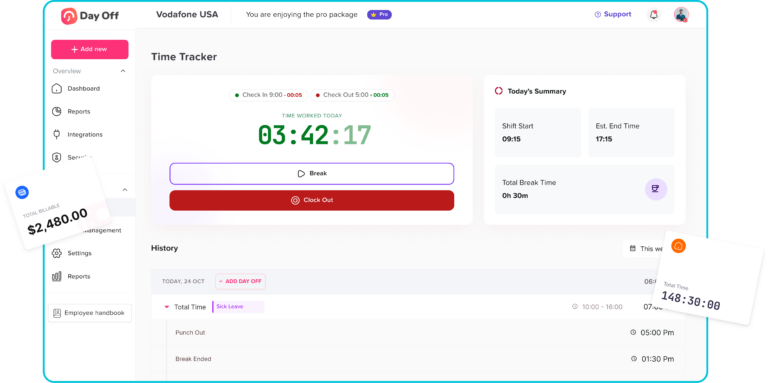
A manual spreadsheet cannot automatically identify that an employee forgot to clock out. Modern time-tracking software can detect incomplete entries before they reach payroll.
Useful features include:
Missing-punch alerts
The system can notify employees and managers when an expected time entry is missing.
Real-time attendance visibility
Managers can also see who is clocked in, late, absent, or missing a required entry.
Employee correction requests
Employees can also submit the correct time and an explanation directly through the system.
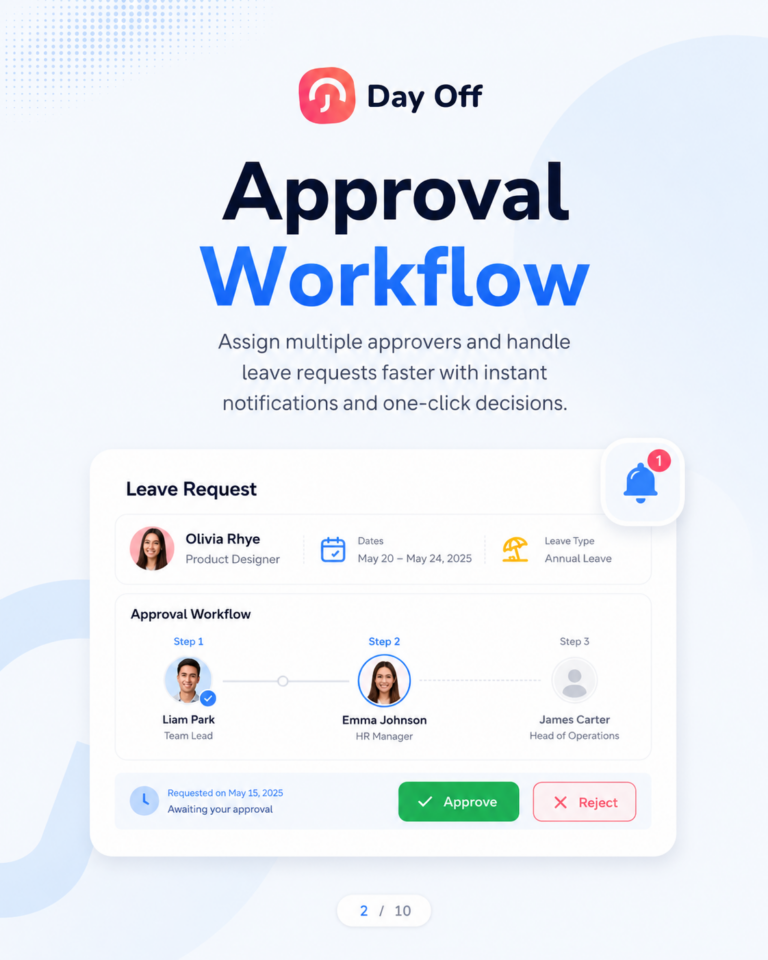
Approval workflows
Corrections can be routed to the appropriate manager before reaching payroll.
Audit history
Additionally, the system records the original entry, the correction, the approver, and the date of each change.
Work schedules
Connecting time records to assigned schedules makes unusual or incomplete entries easier to identify.
PTO and attendance connection
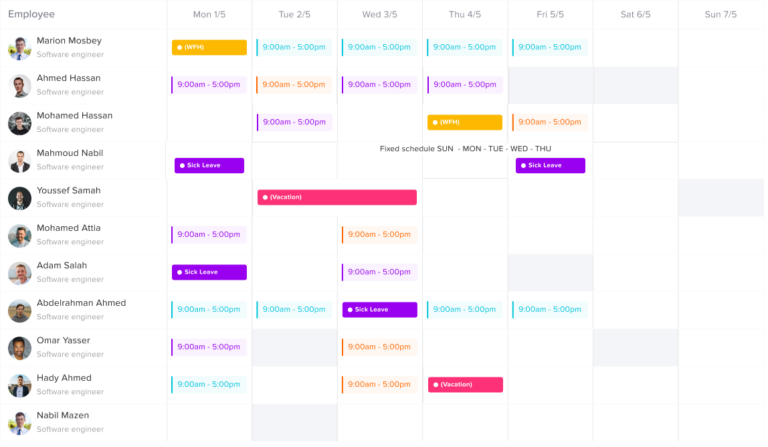
An apparent absence may also already be explained by approved vacation, sick leave, or another type of time off.
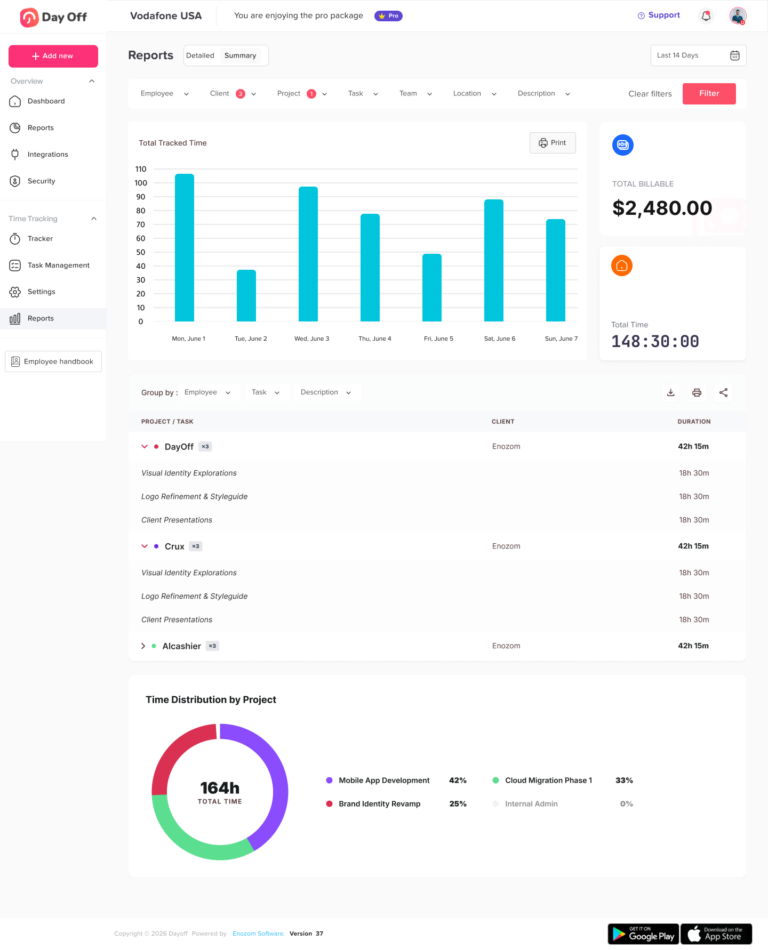
Reports
HR teams can also identify patterns such as frequent missed clock-outs, departments with high correction rates, or locations experiencing repeated device problems.
Managing Missed Punches With Day Off
Day Off helps companies bring employee time tracking, attendance, work schedules, and leave management into one organized system.
Instead of checking separate spreadsheets, messages, and leave calendars, managers can review employee availability and working-time information with better context.
For example
When an employee has no clock-in record, the manager can determine whether the employee:
- Had approved PTO
- Was scheduled to work
- Was assigned a different shift
- Had an incomplete time entry
- Needs a timesheet correction
- Was absent without a recorded leave request
Combining attendance and time-off information helps reduce confusion between a missed punch and an approved absence.
Day Off also helps employees and managers manage requests from web and mobile devices, making it easier to keep records updated across office, remote, and distributed teams.
How to Introduce a New Missed Punch Policy
Publishing the policy is not enough. Moreover, employees and managers need to understand how it works.
Review current timekeeping problems
Identify how many corrections occur, which types are most common, and where delays happen.
Confirm legal and payroll requirements
Review federal, state, local, and country-specific rules. Consider applicable collective bargaining agreements and employment contracts.
Configure the time-tracking system
Set up missing-punch notifications, approval responsibilities, correction permissions, payroll deadlines, and audit records.
Train managers
Managers should understand that they must correct genuine working time even when an employee broke a procedural rule.
Train employees
Show employees exactly how to clock in, take breaks, clock out, and submit corrections.
Provide a backup process
Explain what employees should do during device, application, or network failures.
Monitor the policy
Review whether missed punches decrease after training. A high correction rate may also point to confusing schedules, inaccessible devices, unreliable software, or unrealistic procedures.
Missed Punch Policy Checklist
Before introducing the policy, confirm that it:
- Defines all types of missed punches
- Explains how employees submit corrections
- Establishes a reasonable reporting deadline
- Identifies the responsible approver
- Requires review of actual hours worked
- Prevents automatic deletion of working time
- Preserves the original time record
- Documents every correction
- Includes a process for payroll adjustments
- Addresses technical failures
- Covers remote and mobile employees
- Separates pay corrections from discipline
- Prohibits off-the-clock work
- Applies rules consistently
- Complies with applicable local laws

Frequently Asked Questions About Missed Punch Policies
What happens if an employee forgets to clock in?
The employee should notify the manager and submit the correct starting time as soon as possible. The manager should also verify the information and correct the employee’s time record.
The employee should generally be paid for compensable work performed even though the original clock-in was missing.
Can an employer refuse to pay an employee who forgot to clock in?
A company should not assume that no work occurred simply because the employee forgot to record a punch. Employers must also review the situation and maintain accurate records of compensable hours worked.
The employee may be coached or disciplined for failing to follow the timekeeping procedure, but that issue should be handled separately from accurate wage payment.
Can a manager automatically enter the employee’s scheduled hours?
The schedule may be used when the employee confirms that it accurately reflects the shift and there is no conflicting information. If the employee arrived late, stayed late, worked through a break, or followed a different schedule, the record should also reflect the actual time worked.
What happens if an employee forgets to clock out?
The employee should report the actual departure time. The manager should review the schedule and any available supporting information before correcting the timesheet.
Moreover, the company should not leave the shift open indefinitely or automatically select an arbitrary clock-out time.
How many missed punches should an employee be allowed?
There is no universal number that works for every business. Companies should also consider the frequency, circumstances, training provided, system reliability, and consistency of enforcement.
A progressive process is usually more reasonable than imposing immediate severe consequences for an occasional honest mistake.
Can an employee be written up for forgetting to clock out?
Yes, a company may generally enforce reasonable timekeeping procedures, subject to applicable employment laws, contracts, and company policies.
However, the employee’s time should still be corrected to reflect compensable work performed.
Can an employer deduct money for a missed punch?
Wage-deduction laws vary by jurisdiction. Automatic fines or deductions may also be restricted and can create minimum-wage, overtime, authorization, or wage-payment issues.
Employers should obtain jurisdiction-specific advice before using deductions and should normally address repeated mistakes through the company’s disciplinary process.
What if the employee and manager disagree about the correct time?
Both parties should review the schedule, system activity, workplace records, messages, witnesses, and other relevant information.
The company should also document how it reached the final decision and give the employee a process for raising a payroll or HR concern.
Should employees sign timesheet corrections?
An employee acknowledgment can help confirm that the employee reviewed the correction, but the process should not be used to pressure employees into approving a record they believe is inaccurate.
Electronic acknowledgment is often easier to document than paper signatures.
How long should employers keep time correction records?
Retention requirements depend on jurisdiction.
Under the U.S. Fair Labor Standards Act, covered employers generally must retain payroll records for at least three years. Records used to calculate wages, including time cards and work schedules, generally should be retained for two years. State or local laws may also require longer retention. Thoughts
Conclusion
A missed punch may seem like a small timekeeping error, but without a clear process, it can lead to inaccurate payroll, overtime mistakes, delayed approvals, and employee frustration. A fair missed punch policy gives employees a simple way to report forgotten clock-ins and clock-outs while helping managers review and correct records consistently.
Moreover, the most important principle is to separate timekeeping mistakes from wage payment. Employees should be paid accurately for all compensable hours worked, even when they fail to record a punch correctly. Repeated mistakes can still be addressed through training, reminders, or a consistent disciplinary process.
Using a time and attendance platform such as Day Off can also make this process easier by connecting work schedules, attendance records, timesheets, and approved leave in one place. With automated alerts, correction workflows, and clear audit records, businesses can identify missing punches earlier, reduce payroll errors, and manage employee time more fairly.