








Managing employee time off should not feel like detective work. Yet for many HR teams, managers, and business owners, leave tracking still depends on searching through emails, scrolling through chat messages, checking spreadsheets, and asking employees to resend leave requests that were already submitted somewhere.

An employee sends a vacation request by email. Another asks for sick leave in a chat. A manager approves time off in a private message. HR updates a spreadsheet later, but the team calendar is not updated. A few days later, someone asks, “Who approved this?” or “How many days does this employee have left?”
This is exactly where leave management starts to become messy.
When leave requests are spread across emails, chats, spreadsheets, and verbal conversations, companies lose visibility, accuracy, and control. What seems like a simple request can turn into a long back-and-forth process that wastes time and creates confusion for everyone involved.
A better approach is to centralize leave requests, approvals, balances, calendars, and reports in one place. With a leave management system like Day Off, employees know where to request time off, managers know where to approve it, and HR teams know where to find accurate records at any time.
Why Email and Chat Are Not Enough for Leave Management
Emails and chat apps are great for communication. They help teams move quickly, share updates, and stay connected. But they are not built to manage employee leave properly.
A leave request is not just a message. It is part of a process that includes:
- Checking the employee’s available balance
- Reviewing the requested dates
- Making sure there is enough team coverage
- Getting manager approval
- Updating the employee’s leave balance
- Adding the absence to the calendar
- Keeping a record for HR and reporting
Email and chat tools do not handle all of this automatically.
When leave requests are managed through scattered conversations, important details can easily be missed. A manager may approve a request in chat, but HR may never see it. An employee may think their leave is confirmed, but the calendar may not be updated. A spreadsheet may show one balance while the employee expects another.
This creates confusion for everyone.
The Problem With Chasing Leave Requests
Chasing leave requests means HR or managers have to keep looking for information manually. Instead of having everything organized in one place, they need to search through different channels to understand what happened.
This often includes:
- Searching inboxes for old leave emails
- Scrolling through chat messages to find approvals
- Asking managers to confirm decisions
- Asking employees to resend request details
- Checking spreadsheets for balance updates
- Reviewing calendars to check who is off
- Correcting records when something was missed
This process wastes time and increases the chance of mistakes.
The bigger the team becomes, the harder it gets. More employees mean more leave requests. More managers mean more approval paths. More teams mean more scheduling conflicts. More policies mean more manual calculations.
A process that worked for 10 employees can become a serious problem when the company grows to 30, 50, or 100 employees.
How Scattered Leave Requests Affect HR Teams
HR teams are often the ones who suffer most from manual leave tracking. They are expected to keep accurate records, answer employee questions, support managers, prepare reports, and make sure policies are followed.
When leave requests are spread across emails and chats, HR has to spend too much time on repetitive admin work.
Common HR challenges include:
- Tracking which requests are approved, rejected, or still pending
- Updating leave balances manually
- Fixing errors in spreadsheets
- Answering repeated questions about PTO balances
- Following up with managers for approval updates
- Checking whether employees have enough balance
- Preparing reports from scattered information
- Managing overlapping leave requests without clear visibility
This takes time away from more valuable HR work, such as employee engagement, policy improvement, onboarding, retention, and workforce planning.
A proper leave management system reduces this manual workload by keeping requests, approvals, balances, and reports in one place.
How Scattered Leave Requests Affect Employees
Employees also feel the frustration of an unclear leave process.
When there is no single system for requesting time off, employees may not know exactly what to do. Should they email HR? Message their manager? Add the request to a calendar? Fill out a form? Send a reminder later?
This uncertainty can lead to:
- Delayed approvals
- Missed requests
- Confusion about leave status
- Repeated follow-ups
- Unclear remaining balances
- Miscommunication with managers
- Frustration when requests are not recorded properly
Employees should not have to chase their own leave requests. They should be able to submit a request, see its status, and check their balance without asking HR every time.
A clear leave request process improves the employee experience because it gives people confidence that their requests are visible, recorded, and handled properly.
How Scattered Leave Requests Affect Managers
Managers need visibility before approving time off. They need to know whether the team can handle an employee’s absence, whether other people are already off, and whether the request affects important deadlines.
When leave requests come through emails or chats, managers may not have the full picture.
They may approve a request without knowing:
- Another team member is already on vacation
- A public holiday falls during the same period
- A deadline is approaching
- The employee has insufficient balance
- Another request is still pending
- The team will not have enough coverage
This can lead to scheduling problems, overlapping absences, and last-minute workload pressure.
With a centralized leave management system, managers can review all the information they need before making a decision.
They can see:
- Requested dates
- Employee leave balance
- Pending requests
- Approved leave
- Team availability
- Public holidays
- Leave history
- Notes or reasons attached to the request
This makes approvals faster, fairer, and more informed.
Common Problems Caused by Email and Chat Based Leave Tracking
Managing leave manually may look simple on the surface, but it often creates hidden problems that affect the entire company.
Some of the most common problems include:
- Leave requests getting buried in long email threads
- Approvals happening in private chats that HR cannot access
- Employees forgetting to send formal requests
- Managers forgetting to respond
- HR missing approved leave
- Leave balances becoming inaccurate
- Calendars not being updated
- Overlapping vacations going unnoticed
- Reports taking too long to prepare
- Employees asking the same balance questions repeatedly
These issues may seem small at first, but they can create bigger problems over time.
For example, if an approved vacation is not added to the calendar, the team may not plan for the employee’s absence. If a sick leave request is not recorded, the employee’s balance may become incorrect. If a manager approves time off without checking availability, the team may become understaffed.
A better system helps prevent these problems before they happen.
Why Leave Balances Should Be Easy to Track
Leave balances are one of the most important parts of PTO management. Employees need to know how many days they have left, and HR needs to make sure those balances are accurate.
When balances are updated manually, mistakes are common.
Errors can happen when:
- HR forgets to deduct approved leave
- A request is entered with the wrong dates
- Public holidays are not considered
- Half days are recorded incorrectly
- Carryover days are not added properly
- Different leave types are mixed together
- Spreadsheet formulas break
- Multiple people edit the same file
These mistakes create confusion and lead to more questions from employees.
A centralized leave tracking system keeps balances clearer and more reliable. Employees can check their available time off without sending messages to HR, and HR can trust that approved leave is properly reflected in the system.
Why a Shared Leave Calendar Matters
A shared leave calendar is essential for team planning. It helps managers and employees see who is off, who is available, and where potential scheduling conflicts may happen.
Without a shared calendar, companies often rely on memory, messages, or manual updates. This makes it easy to miss important information.
A shared leave calendar helps teams:
- Avoid overlapping leave requests
- Plan projects more effectively
- Manage team coverage
- Prepare for busy periods
- Reduce last-minute surprises
- Improve transparency
- Coordinate across departments
- See public holidays and absences together
When the calendar is connected to the leave approval process, it becomes even more useful. Once a request is approved, the absence appears automatically, so the team always has updated visibility.
Why Approval Records Are Important
Leave approvals should be easy to track and verify. If there is ever a question about a request, HR should be able to see what happened clearly.
A proper leave record should show:
- Who requested the leave
- What type of leave was requested
- Which dates were selected
- When the request was submitted
- Who approved or rejected it
- Whether the request is pending, approved, or declined
- Any notes added by the employee or manager
- The employee’s leave history
Emails and chats make this difficult because information can be scattered, deleted, hidden, or hard to search.
A centralized leave system keeps approval records organized. This gives HR, managers, and employees a clear source of truth.
Signs Your Company Needs a Better Leave Management Process
Many companies wait too long before replacing manual leave tracking. But the signs are usually clear.
Your company may need a better system if:
- HR spends too much time updating spreadsheets
- Employees often ask how many PTO days they have left
- Managers approve leave through chat messages
- Requests are sometimes missed or delayed
- There is no clear view of who is off
- Leave balances are not always accurate
- Multiple people request the same dates without visibility
- Reports take too much time to prepare
- Employees are unsure where to submit requests
- Approved leave is not always added to the calendar
- HR has to follow up repeatedly with managers
If these problems sound familiar, your leave process is probably too manual.
Moving to a dedicated leave management system can save time, reduce errors, and make the process easier for everyone.
How Day Off Helps You Stop Chasing Leave Requests
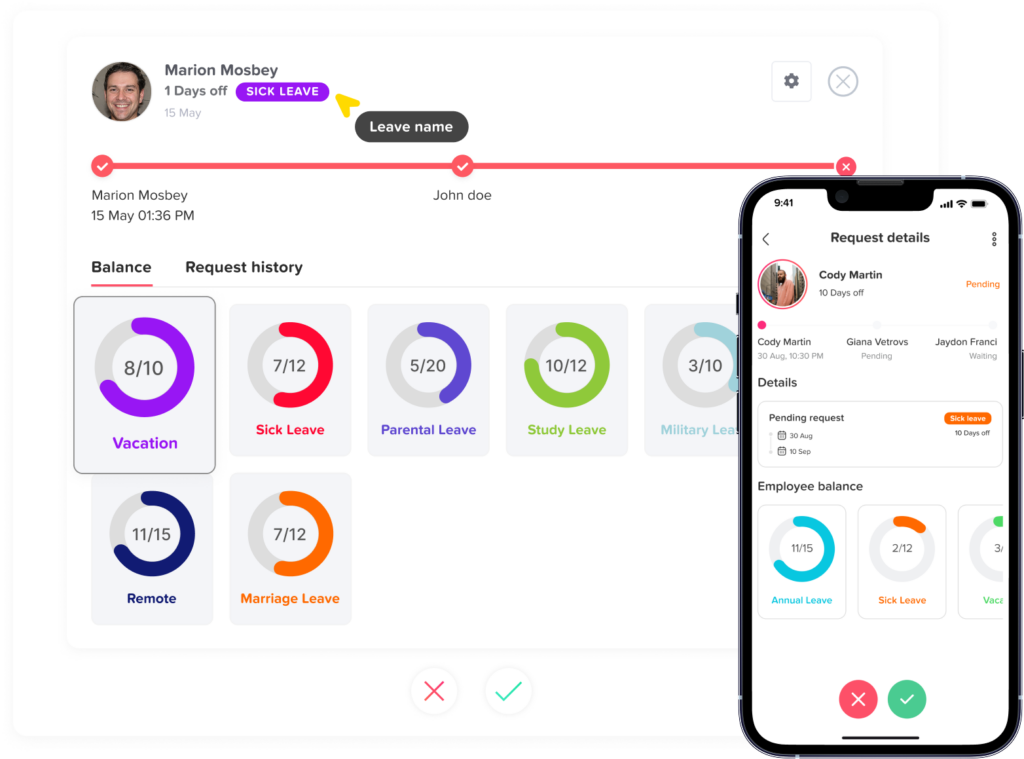
Day Off helps companies move away from scattered leave requests and manage employee time off in one simple platform.
Instead of relying on emails, chats, spreadsheets, and manual updates, Day Off gives teams one place to manage the entire leave process.
With Day Off, employees can:
- Submit leave requests easily
- Choose the correct leave type
- View their available balance
- Track request status
- See whether a request is pending, approved, or rejected
- Use the web, iOS, or Android app
Managers can:
- Review leave requests in one place
- Approve or reject requests faster
- Check team availability
- View overlapping absences
- Make better staffing decisions
- Keep approvals organized
HR teams can:
- Manage leave policies
- Track PTO balances
- Create custom leave types
- View reports
- Export data when needed
- Monitor team calendars
- Reduce manual admin work
- Keep accurate leave records
This creates a smoother process for the entire company.
Build a Leave Process Your Team Can Trust
A good leave process should be simple, clear, and reliable.
Employees should know exactly where to request time off. Managers should have enough information to make fair decisions. HR should have accurate records without chasing messages or updating spreadsheets manually.
The right process helps companies:
- Save time
- Reduce errors
- Improve visibility
- Avoid scheduling conflicts
- Support better planning
- Improve employee satisfaction
- Keep leave records organized
With Day Off, companies can replace scattered leave requests with a centralized PTO tracking process that is easier to manage and easier to trust.
Final Thoughts
Chasing leave requests across emails and chats may feel normal, but it creates unnecessary work for HR, confusion for employees, and visibility problems for managers.
As teams grow, this manual approach becomes harder to manage. Requests get missed, balances become inaccurate, calendars fall out of date, and HR spends too much time fixing avoidable problems.
A modern leave management system like Day Off helps companies organize the entire process in one place. Employees can request leave easily, managers can approve requests with better visibility, and HR can track balances, calendars, policies, and reports without the usual back-and-forth.
Stop searching through inboxes.
Stop scrolling through chat messages.
Stop guessing who approved what.
With Day Off, your team can manage time off with clarity, accuracy, and confidence.