







Employees usually request vacation days, personal leave, and planned appointments in advance. Emergencies are different. A sudden illness, hospital visit, family crisis, fire, accident, or unexpected caregiving problem may prevent an employee from following the normal time off approval process.
When a company does not have a clear emergency time off policy, managers may make inconsistent decisions. One employee’s request may be approved immediately, while another employee in a similar situation may receive an attendance warning. HR may also discover later that an absence should have been reviewed under a protected leave or accommodation process.

An emergency time off policy explains what employees should do when an urgent and unexpected situation requires them to miss work, arrive late, or leave before the end of a shift. It should define the notification process, available paid and unpaid leave options, documentation rules, manager responsibilities, and situations that must be escalated to HR.
This guide explains what usually counts as an emergency, what may not qualify, how employers should review requests, and how to create a fair emergency leave policy.
What Is an Emergency Time Off Policy?
An emergency time off policy is a workplace policy for handling unexpected situations that require an employee to be away from work with little or no advance notice.
Emergency time off may cover:
- A full-day absence
- Part of a scheduled shift
- A late arrival
- An early departure
- Several consecutive days
- An immediate need to work remotely, when possible
- A temporary schedule adjustment
- Paid or unpaid leave
“Emergency leave” is not one universal category under federal employment law. Whether the time is paid and whether the absence is protected depend on the circumstances, the employer’s policy, employment agreements, and applicable federal, state, or local laws.
Under the federal Fair Labor Standards Act, employers are generally not required to pay employees for time they do not work, including personal leave, vacation, or ordinary sick leave. These benefits are typically established through employer policies or agreements.
However, an emergency may also qualify under a separate law or workplace process, such as:
- The Family and Medical Leave Act
- The Americans with Disabilities Act
- The Pregnant Workers Fairness Act
- Military leave protections
- State or local paid sick leave laws
- Workplace injury reporting protections
- An employment or collective bargaining agreement
For this reason, managers should not assume that every emergency absence is simply an ordinary PTO request.
What Counts as an Emergency at Work?
Companies should avoid defining an emergency so narrowly that employees cannot respond to genuine crises. At the same time, the policy should distinguish emergencies from events that could reasonably have been planned in advance.
A practical emergency definition may include four characteristics.
The Situation Was Unexpected
The employee could not reasonably predict the event far enough in advance to use the company’s normal PTO request process.
The Situation Requires Prompt Action
The employee needs to respond immediately or within a short period. Waiting until after the shift could significantly worsen the situation or leave a person, home, or important responsibility without necessary attention.
The Employee’s Presence Is Reasonably Necessary
The employee may need to obtain medical care, care for a dependent, protect their home, communicate with emergency services, or handle another urgent responsibility.
Normal Advance Notice Was Not Practical
The employee may still be able to contact the manager before the shift, but they could not submit the request days or weeks in advance.
A sample definition might state:
An emergency is an unexpected and urgent situation that requires the employee’s immediate attention and makes it impractical to follow the company’s normal advance leave request process.
The policy should allow HR and managers to consider the facts rather than relying only on a fixed list.
Examples of Situations That May Count as an Emergency
Sudden Personal Illness or Injury
An employee may wake up with severe symptoms, experience an accident, or require urgent medical treatment.
Examples include:
- A serious fall
- Sudden breathing difficulty
- Severe pain
- An unexpected hospital visit
- A significant injury
- An acute mental health crisis
- A medical reaction that makes working unsafe
The employer should avoid demanding an immediate diagnosis. The initial priority is determining that the employee cannot safely work and whether HR needs to begin a medical leave or accommodation review.
A Family Member’s Medical Emergency
An employee may need to accompany a child, spouse, parent, or other dependent to a hospital or provide immediate care.
Examples include:
- A child is injured at school
- A parent is taken to the emergency room
- A spouse experiences a serious medical episode
- A family member needs urgent transportation or supervision
- A caregiver becomes unexpectedly unavailable during a medical crisis
Some family medical emergencies may qualify for FMLA leave when the employer and employee are covered, the employee is eligible, and the family member has a qualifying serious health condition. When the need is unforeseeable, the employee must generally provide notice as soon as practical and normally follow the employer’s usual notification procedures unless unusual circumstances prevent it.
Death or Critical Condition of a Family Member
A death in the family, notification that a relative is critically ill, or the need to make immediate arrangements may justify emergency leave.
The initial absence may later be recorded under:
- Bereavement leave
- PTO
- Personal leave
- Unpaid leave
- Another company-provided leave type
The company’s bereavement policy should explain which relationships are covered, how many days are available, and whether additional travel or personal time may be requested.
Unexpected Childcare or Dependent-Care Breakdown
An employee may need time away when a child or dependent suddenly cannot be left safely without care.
Examples include:
- A child becomes sick during the school day
- A daycare closes unexpectedly
- A regular caregiver has an emergency
- An elderly dependent cannot safely remain alone
- A dependent’s transportation or support arrangement fails unexpectedly
Not every childcare disruption is legally protected, but it may qualify under the employer’s emergency, sick leave, personal leave, or flexible work policy. HR should also consider whether the circumstances involve a potentially protected medical or disability-related need.
Home Fire, Flood, Burglary, or Major Property Emergency
An employee may need to leave work or miss a shift because their home is unsafe or requires immediate action.
Examples include:
- A house fire
- Major flooding
- A burst pipe causing serious damage
- A gas leak
- A burglary
- An electrical emergency
- Emergency evacuation
- A dangerous structural problem
Routine maintenance appointments would not usually be treated the same way as a sudden event that threatens safety or causes major property damage.
Natural Disaster or Government Evacuation
Severe weather, wildfire, flooding, earthquake, or another disaster may make it unsafe or impossible for employees to work or travel.
The company should have a separate severe weather and workplace closure process that explains:
- Who decides whether a location closes
- Whether remote work is possible
- How hourly and salaried employees are treated
- Whether employees must use PTO
- How employees report individual emergencies
- What happens when schools or public transportation close
- How evacuation orders are handled
Workplace Injury or Illness
An employee who is injured at work may need immediate medical treatment or time away.
The emergency absence should not be handled only as ordinary PTO. The employer should follow its incident-reporting, safety, recordkeeping, and workers’ compensation procedures.
OSHA requires employers to maintain a reasonable process for employees to report work-related injuries and illnesses and prohibits retaliation for reporting them. A reporting procedure is not reasonable if it would discourage a reasonable employee from accurately reporting an injury or illness.
Urgent Pregnancy-Related Medical Need
A sudden pregnancy-related limitation, medical appointment, complication, or need to stop working may require immediate leave or another accommodation.
The Pregnant Workers Fairness Act requires covered employers to provide reasonable accommodations for known limitations related to pregnancy, childbirth, or related medical conditions unless doing so causes undue hardship. Leave may be a reasonable accommodation, but employers generally should not require leave when another effective reasonable accommodation would allow the employee to continue working.
Managers should refer these requests to HR rather than applying ordinary attendance points automatically.
Disability-Related Emergency
An unexpected absence may relate to an employee’s disability, even if the employee did not previously request an accommodation.
Under the ADA, unpaid leave may be a reasonable accommodation for a qualified employee unless it would cause an undue hardship. An employer does not necessarily have to provide more paid leave than it offers other employees, but it may need to consider unpaid leave or another workplace adjustment.
Emergency Military or Disaster-Response Service
An employee may receive an urgent call to qualifying military or disaster-response service.
USERRA protects employment and reemployment rights for eligible individuals who leave civilian employment for uniformed service, including certain service in the National Disaster Medical System. Separate rules apply to notice, benefits, service credit, and reemployment.
These situations should be sent to HR rather than processed as ordinary personal leave.
Emergency Time Off Examples
| Situation | Is It Potentially an Emergency? | Possible Treatment |
|---|---|---|
| Employee wakes up with severe symptoms and needs urgent care | Yes | Sick leave, PTO, unpaid leave, or protected-leave review |
| Employee’s child is taken to the hospital | Yes | Emergency leave with possible FMLA or sick leave review |
| Employee’s home has a major fire | Yes | Emergency PTO, personal leave, or unpaid leave |
| Daycare closes without warning | Possibly | Emergency or personal leave based on policy |
| Employee receives notice of a family death | Yes | Bereavement leave, PTO, or personal leave |
| Employee has a routine appointment booked several weeks earlier | Usually planned leave | Normal advance PTO or appointment request |
| Employee’s car will not start | Depends | Late arrival, emergency leave, remote work, or another attendance arrangement |
| Employee forgot about a personal appointment | Usually not an emergency | Normal PTO rules or manager discretion |
| Employee’s pet requires urgent veterinary treatment | Depends on policy | Personal PTO, flexible time, or unpaid leave |
| Employee is called for urgent military service | Separate protected process | Refer to HR for USERRA review |
| Employee is injured while working | Yes, but not ordinary PTO only | Safety, incident reporting, workers’ compensation, and leave review |
| Employee needs immediate pregnancy-related medical care | Yes | HR accommodation and protected-leave review |
This table provides general examples. The final treatment depends on the facts, company policy, employee location, available balances, and applicable laws.
What May Not Count as an Emergency?
A request does not necessarily qualify as emergency leave merely because it was submitted at the last minute.
Examples that may be handled through the normal PTO process include:
- A planned medical appointment
- A scheduled school event
- A known home repair appointment
- A vacation reservation
- A routine vehicle service
- A personal event known well in advance
- A previously scheduled court or government appointment
- A non-urgent errand
- A request the employee forgot to submit
This does not mean the request must be rejected. A manager may still approve PTO, unpaid leave, a schedule adjustment, or remote work.
The distinction is that the employee had a reasonable opportunity to provide advance notice.
What About Car Trouble or Transportation Problems?
Employees commonly ask whether car trouble counts as an emergency.
It may, particularly when the problem is sudden and the employee has no safe or reasonable way to reach work. However, the policy should avoid guaranteeing that every transportation problem automatically results in approved emergency leave.
The manager may consider:
- Whether the employee notified the company promptly
- Whether the employee can arrive later
- Whether remote work is possible
- Whether another transportation option is reasonably available
- Whether the employee has an available PTO or personal balance
- Whether transportation problems are becoming a repeated pattern
The same standard should be applied consistently without requiring employees to take unsafe or unreasonable actions.
Does a Pet Emergency Count as Emergency Leave?
A pet emergency may be a genuine personal emergency, but it is not usually treated the same as legally protected family or medical leave under federal law.
An employer may allow employees to use:
- Personal PTO
- Vacation time
- Flexible time
- Unpaid personal leave
- A dedicated pet bereavement or pet-care benefit, if offered
The policy can give managers discretion to approve sudden veterinary emergencies without defining pets as covered family members under every leave policy.
Is Emergency Time Off Paid?
Emergency leave may be paid, unpaid, or partially paid.
The company may allow employees to use:
- General PTO
- Paid sick leave
- Personal days
- Vacation time
- Bereavement leave
- A dedicated emergency leave balance
- Compensatory time, when applicable
- Unpaid leave after paid balances are exhausted
Federal law generally does not require private employers to provide ordinary paid sick or personal leave. Payment is often controlled by company policy, contracts, and state or local law.
An absence may still be legally protected even when it is unpaid. For example, qualifying FMLA leave is generally unpaid, although available paid leave may sometimes run concurrently with it.
Employers should therefore separate these questions:
- Is the employee permitted to be absent?
- Is the absence protected?
- Will the time be paid?
- Which balance should be deducted?
- Does an attendance consequence apply?
Emergency Leave vs. Sick Leave
Sick leave normally covers the employee’s illness, medical care, and sometimes care for an eligible family member.
Emergency leave is broader and may include:
- A family crisis
- A home emergency
- A natural disaster
- An urgent dependent-care problem
- Another sudden personal event
A medical emergency may qualify under both categories. In that case, the company should use the leave type required by law or most appropriate under the policy rather than recording the same hours twice.
Emergency Leave vs. PTO
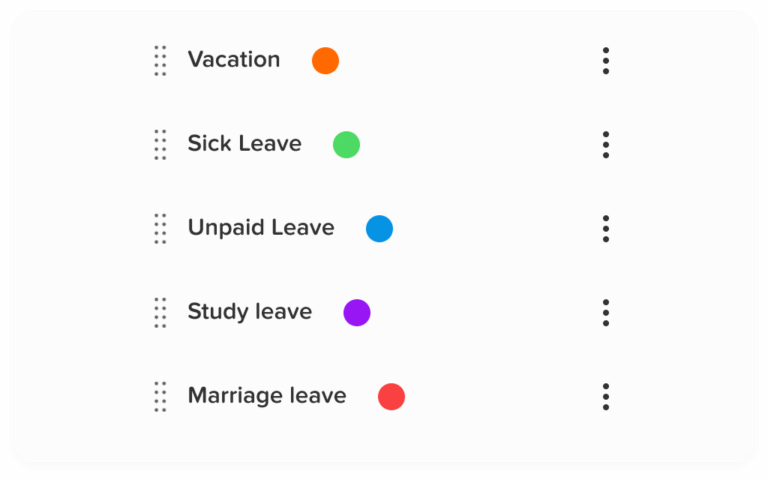
PTO is a balance of paid hours or days that employees can use under the company’s policy.
Emergency leave describes the reason and timing of the absence. It does not necessarily identify how the employee will be paid.
For example, an employee may take emergency time off and use:
- Eight hours of PTO
- Four hours of sick leave and four unpaid hours
- A dedicated emergency leave day
- Unpaid protected leave
- No balance if the company provides a separate paid emergency benefit
Emergency Leave vs. FMLA
Not every emergency qualifies for FMLA.
FMLA may apply when the employer is covered, the employee meets eligibility requirements, and the reason for leave qualifies under the law. Covered reasons include certain serious health conditions affecting the employee or eligible family members and other specified family or military circumstances.
A flooded apartment, vehicle breakdown, or ordinary childcare problem would not become FMLA leave merely because it was unexpected.
However, a sudden hospitalization, serious medical condition, or urgent need to care for a qualifying family member may require FMLA review.
Employees do not need to use the term “FMLA” when first reporting an absence. They must provide enough information for the employer to recognize that the leave may qualify. When the need is unexpected, notice should be provided as soon as practical.
How Much Notice Should Employees Give?
Emergency leave usually cannot be requested far in advance, but employees should notify the employer as soon as reasonably possible.
The policy should tell employees:
- Who to contact
- Which communication methods are accepted
- Whether a phone call is required
- Whether text, email, or an app is allowed
- What to do when the direct manager is unavailable
- Whether employees must contact HR
- When a formal leave request must be submitted
- How to provide updates for a continuing absence
For unforeseeable FMLA leave, employees generally must give notice as soon as practical and follow the employer’s usual procedures unless unusual circumstances prevent compliance.
A practical policy may state:
Employees should notify their manager before the scheduled shift whenever possible. If the emergency prevents immediate contact, the employee or a representative should provide notice as soon as reasonably possible.
The policy should not automatically classify an absence as a no-call, no-show when the employee was hospitalized, incapacitated, or otherwise genuinely unable to communicate.
What Information Should Employees Provide?
Employees should provide enough information for the employer to understand:
- That they cannot work or must leave
- Whether the situation is personal, medical, or family-related
- The expected duration, when known
- Whether they can provide an update later
- Whether urgent work must be reassigned
- Whether HR may need to contact them about a leave process
A simple notification may be:
I am dealing with an unexpected family emergency and cannot work today. I will update you by tomorrow morning if I need additional time.
For a medical situation:
I need urgent medical care and cannot work my scheduled shift today. I will submit the required leave request as soon as I am able.
Employees should not be required to share unnecessary private medical or family details with their direct manager. Managers should send potentially protected situations to HR.
Can Employers Ask for Documentation?
Employers may request reasonable documentation when permitted by policy and applicable law, particularly when:
- The absence continues for several days
- Paid sick leave rules allow documentation
- FMLA certification is required
- A workplace accommodation is requested
- The employee requests bereavement leave
- The company needs evidence of an emergency closure or evacuation
- There is a repeated pattern of questionable requests
Documentation should be proportionate to the situation.
An employee who leaves for a few hours because a child was unexpectedly taken to urgent care should not necessarily be expected to provide extensive evidence immediately.
The policy should explain:
- When documents may be requested
- Who receives them
- The deadline for submitting them
- How confidential information is stored
- What happens when documents are not reasonably available
Medical documentation should be handled by HR or another authorized function rather than circulated among operational managers.
Can an Employer Deny Emergency Time Off?
An employer may deny a request that is not protected and does not meet the company’s policy. For example, the employee may be requesting emergency treatment for an event that was actually planned well in advance.
However, managers should not deny a request until they consider:
- Whether the employee is currently unsafe or unable to work
- Whether the situation may qualify as protected leave
- Whether an accommodation may apply
- Whether state or local sick leave rules apply
- Whether the employee followed the notification procedure
- Whether an emergency prevented normal compliance
- Whether PTO, unpaid leave, remote work, or a schedule adjustment is available
- Whether similar situations have been handled consistently
A manager should not attempt to make an employee remain at work during a genuine medical or safety emergency merely because coverage is difficult.
Can Employees Receive Attendance Points for Emergency Leave?
It depends on the company’s policy and whether the absence is protected.
A company may distinguish between:
- Approved emergency leave
- Paid but unexcused PTO
- Failure to follow the call-in procedure
- No-call, no-show
- Protected medical or family leave
- An approved workplace accommodation
Managers should not assign points before HR determines whether the absence may be protected.
Using PTO does not automatically decide whether attendance points apply. Payment and attendance status are separate decisions.
How Managers Should Handle an Emergency Leave Request
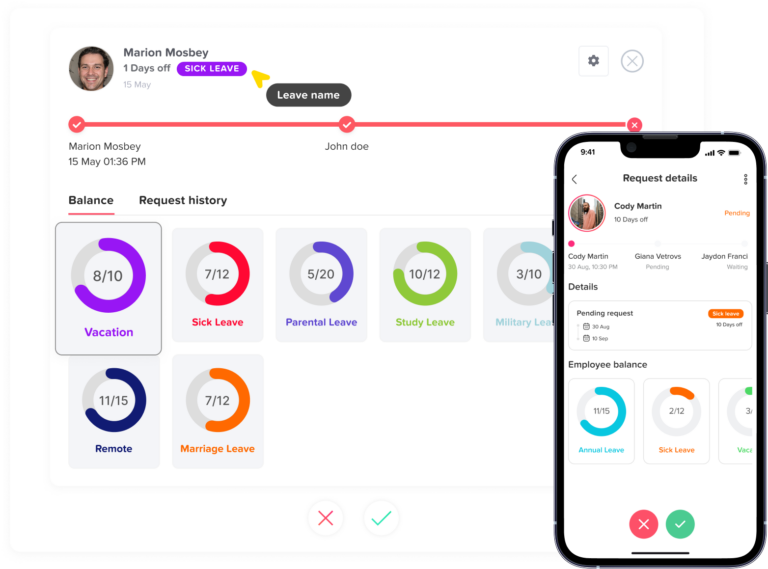
Step 1: Confirm Immediate Safety
Determine whether the employee needs emergency services, immediate medical assistance, or a safe way to leave the workplace.
Managers should not attempt to investigate the full situation while an urgent safety concern is still occurring.
Step 2: Record the Notification
Record:
- Employee name
- Date and time of notice
- Scheduled shift
- Expected absence
- Communication method
- Basic reason category
- When the employee expects to provide an update
Avoid recording unnecessary personal details.
Step 3: Arrange Immediate Coverage
The manager may need to:
- Contact an available backup
- Reassign essential work
- Adjust a shift
- Postpone non-urgent tasks
- Approve temporary remote work
- Notify affected clients or team members
The employee experiencing the emergency should not be solely responsible for solving the staffing problem before being allowed to leave.
Step 4: Notify HR When Necessary
Escalate situations involving:
- Hospitalization
- A serious health condition
- Multiple days of absence
- Disability
- Pregnancy
- Workplace injury
- Military service
- Repeated intermittent medical leave
- A request for accommodation
- A possible protected family or sick leave reason
Step 5: Determine the Correct Leave Type
The absence may be recorded as:
- Sick leave
- Emergency leave
- Bereavement leave
- General PTO
- Personal leave
- Unpaid leave
- FMLA leave
- Accommodation leave
- Military leave
- Workplace injury leave
Step 6: Confirm Payment and Balance Treatment
Check:
- Available PTO balance
- Available sick leave
- Whether negative balances are permitted
- Whether the employee can use partial paid leave
- Whether unpaid time is necessary
- Whether the pay period has already closed
Step 7: Follow Up Without Intruding
Ask when the employee expects to update the company, but avoid requiring detailed personal information that is not necessary.
Step 8: Correct Attendance and Payroll Records
Ensure that:
- The leave request matches the schedule
- The correct number of hours is deducted
- The absence is not duplicated
- Protected leave is not given attendance points
- Payroll receives any necessary adjustment
- The team calendar reflects approved time away
Emergency Time Off Decision Examples
| Emergency Request | Questions to Review | Possible Response |
|---|---|---|
| Employee is taken to the hospital | Is the employee safe? Could FMLA or an accommodation apply? | Approve the immediate absence and refer the case to HR |
| Child becomes sick at school | Is immediate care required? Does sick leave cover family care? | Allow the employee to leave and confirm the leave type later |
| Home is flooding | Is immediate action necessary? Can the employee work remotely later? | Approve emergency PTO, personal leave, or unpaid time |
| Car will not start | Can the employee arrive late or work remotely? Is this a repeated issue? | Approve lateness, PTO, a schedule change, or unpaid time |
| Employee forgot a planned appointment | Was advance notice reasonably possible? | Apply the normal PTO or attendance rules |
| Manager receives notice after the shift begins | Was earlier communication possible? Did the emergency prevent it? | Review the circumstances before assigning a no-call, no-show |
| Employee needs several days after a hospitalization | Could protected medical leave apply? | Refer the employee to HR and begin the appropriate leave process |
| Employee leaves after reporting a workplace injury | Was the incident recorded and was medical care arranged? | Follow safety and workers’ compensation procedures |
How to Handle Repeated Emergency Absences
Frequent emergency requests do not automatically mean the employee is misusing the policy.
A repeated pattern may indicate:
- An ongoing medical condition
- A disability-related need
- Intermittent FMLA leave
- Pregnancy-related limitations
- Caregiving responsibilities
- Unstable childcare
- Transportation difficulties
- A recurring home or family crisis
- Confusion about the normal PTO process
- Possible policy misuse
Managers should review patterns with HR rather than accusing employees of dishonesty.
A fair process includes:
- Confirming the dates and reasons recorded
- Checking whether the employee followed the reporting procedure
- Reviewing whether protected leave may apply
- Discussing available support or schedule options
- Correcting any unclear policy expectations
- Addressing misuse only when supported by reliable information
The company should apply the same review standard across employees, departments, and managers.
What Should an Emergency Time Off Policy Include?
A complete policy should define:
Scope
Identify which employees are covered and whether rules differ for hourly, salaried, full-time, part-time, temporary, or remote employees.
Definition of an Emergency
Explain that the event must generally be unexpected, urgent, and require prompt attention.
Examples
Give practical examples without presenting the list as exhaustive.
Notification Procedure
State who employees must contact and how quickly they should communicate.
Backup Communication
Explain what to do when the manager is unavailable or the employee cannot make contact personally.
Available Leave Types
Identify whether employees can use PTO, sick leave, personal leave, bereavement leave, or unpaid time.
Payment Rules
Explain whether emergency time is automatically paid or depends on an available balance.
Documentation
State when reasonable evidence may be requested and how confidential information will be handled.
Protected Leave Review
Require managers to refer potentially protected medical, family, pregnancy, disability, military, or workplace injury situations to HR.
Attendance Treatment
Explain whether approved emergency leave is excused and when notification failures may be reviewed separately.
Follow-Up Requirements
Tell employees when they must update the manager and submit the formal leave request.
Abuse and Consistency
Explain that misuse may be addressed while emphasizing that decisions will be based on facts and applied consistently.
Sample Emergency Time Off Policy
Purpose
The company recognizes that employees may experience unexpected situations that require immediate time away from work. This policy establishes a fair process for reporting and managing emergency absences.Lorem ipsum dolor sit amet, consectetur adipiscing elit. Ut elit tellus, luctus nec ullamcorper mattis, pulvinar dapibus leo.
Definition
Emergency time off may be requested when an unexpected and urgent personal, medical, family, safety, caregiving, or property-related situation requires the employee’s immediate attention and makes normal advance notice impractical.
Examples may include a sudden illness or injury, family medical emergency, death in the family, urgent dependent-care issue, home fire or flood, evacuation, or another comparable event.
Employee Notification
Employees must notify their manager before the scheduled shift or as soon as reasonably possible. Notice may be provided through the company’s approved phone, email, messaging, or leave management system.
When the employee cannot personally make contact because of the emergency, a family member or representative may notify the company.
Employees should provide:
- The expected duration of the absence, when known
- A method for receiving necessary follow-up communication
- An estimated time for the next update
Employees are not required to provide unnecessary personal or medical details to their direct manager.
Leave and Payment
Approved emergency time off may be charged to an eligible PTO, sick leave, personal leave, bereavement leave, or other available balance. When no paid balance is available, the time may be unpaid unless another law, policy, or agreement applies.
Documentation
The company may request reasonable documentation when permitted by law and when appropriate to the duration or circumstances of the absence. Medical information must be submitted to HR and will be handled confidentially.
Protected Leave
Requests involving a serious health condition, disability, pregnancy, workplace injury, military service, or another potentially protected reason will be referred to HR before a final attendance decision is made.
Attendance
Approved emergency time off will be recorded according to the appropriate leave and attendance category. Failure to follow notification procedures may be reviewed separately, but the company will consider whether the emergency made compliance impractical.
How Day Off Helps Manage Emergency Leave
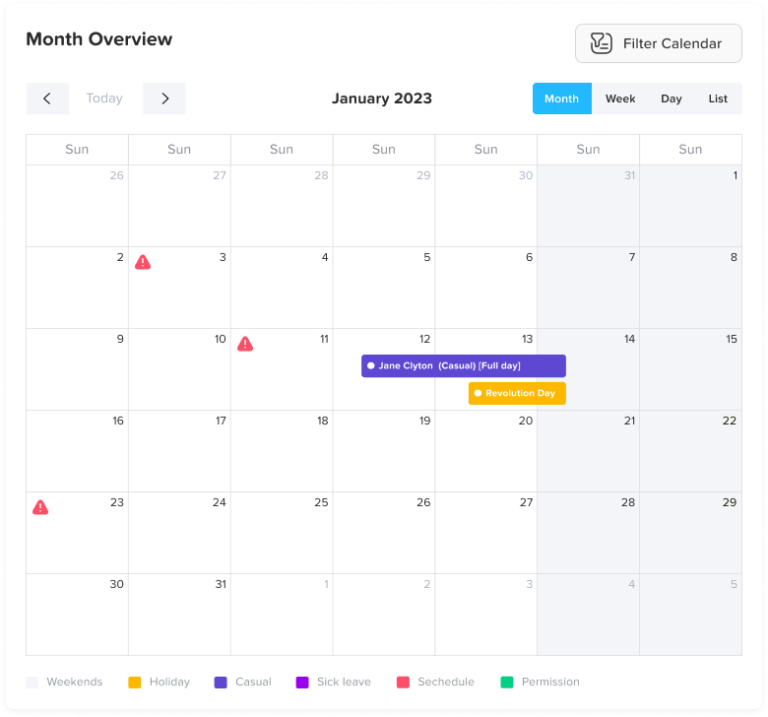
Emergency leave becomes harder to manage when notifications, balances, approvals, schedules, and attendance records are spread across emails, spreadsheets, and chat messages.
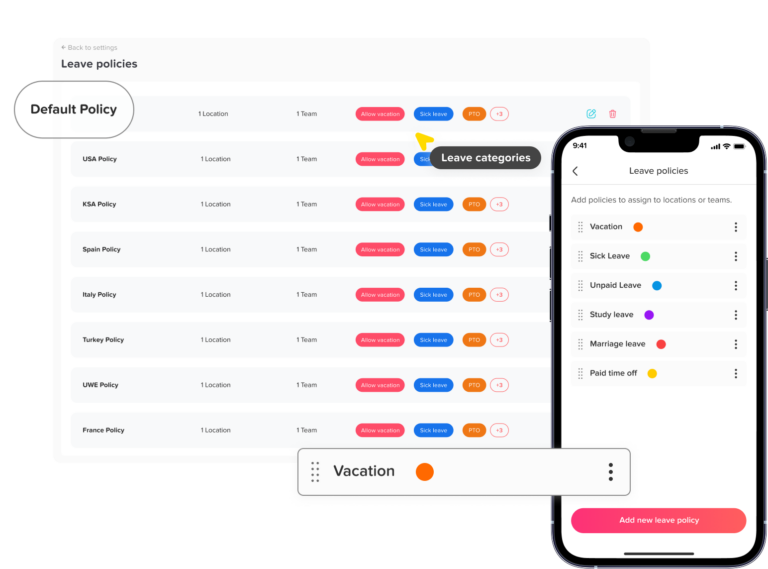
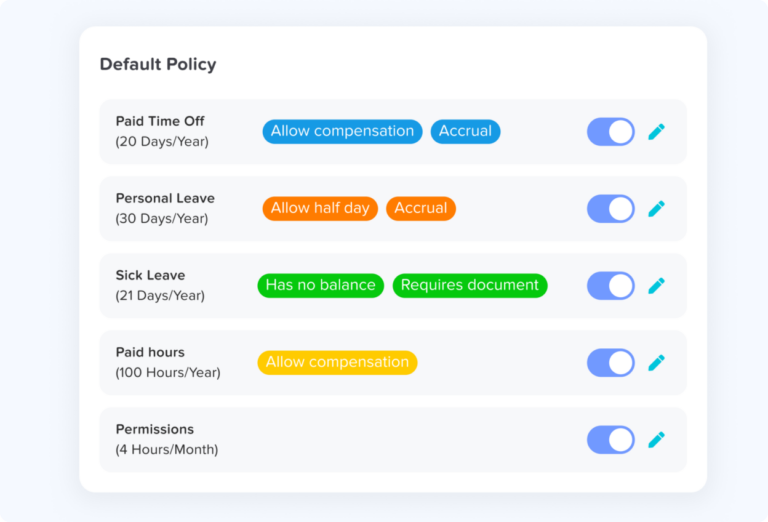
Day Off enables companies to create custom leave types, including emergency leave, sick leave, bereavement leave, personal leave, and unpaid leave. Employees can submit requests, while managers can review the leave type, dates, reason, and approval status through a structured workflow.
With Day Off, organizations can:
- Create a dedicated emergency leave type
- Configure paid or unpaid leave policies
- Assign one- or two-level approval workflows
- Allow automatic approval for selected leave types
- Track employee leave balances
- Record full-day and partial-day requests
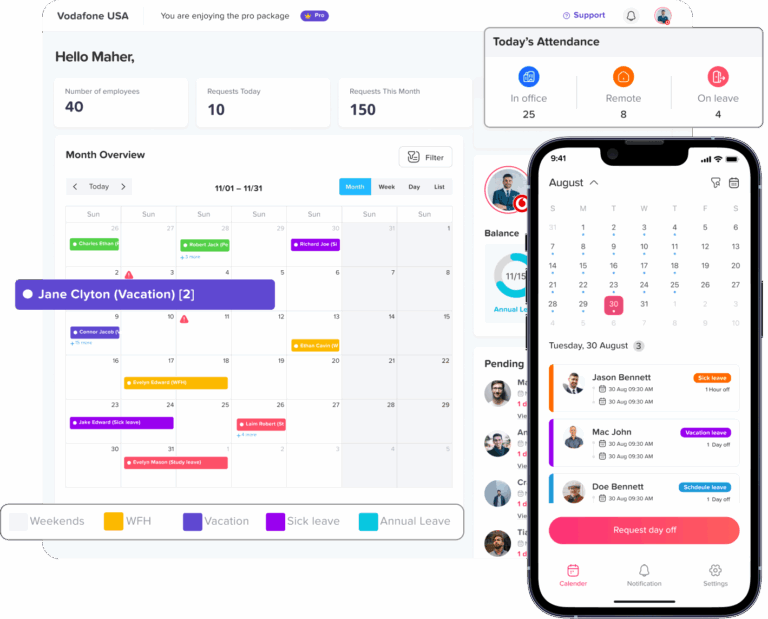
- View approved absences in a shared calendar
- Organize employees by team and location
- Maintain a history of requests and decisions
- Generate leave reports
- Give employees mobile access to submit urgent requests
Day Off’s shared calendar helps managers see approved leave and team availability, while its request history creates a clearer record of when a request was submitted and how it was handled.
The system supports the administrative process, but managers and HR must still review whether a request qualifies for protected leave, accommodation, or another legally required process.
Frequently Asked Questions About Emergency Time Off
What qualifies as an emergency for work?
An emergency is generally an unexpected, urgent situation that requires immediate attention and makes normal advance notice impractical.
Examples may include a sudden illness, serious family medical issue, accident, death, fire, flood, evacuation, or urgent dependent-care problem.
The company’s policy should provide examples while allowing managers and HR to consider individual circumstances.
What counts as a family emergency for work?
A family emergency may include:
- A family member being hospitalized
- A serious accident or illness
- A child becoming sick at school
- An urgent caregiving need
- A death in the family
- A family member facing an immediate safety crisis
Whether the absence is paid or legally protected depends on the situation, the employee’s eligibility, company policy, and applicable law.
Can I call out of work for a family emergency?
Employees may notify their employer that they cannot work because of a family emergency. They should follow the company’s call-in procedure as soon as reasonably possible.
The employer may record the time as PTO, sick leave, emergency leave, bereavement leave, unpaid leave, or protected leave depending on the circumstances.
Can my employer deny emergency leave?
An employer may deny an ordinary emergency leave request when it is not legally protected and does not meet the company’s policy.
However, the employer should first determine whether the situation may qualify under FMLA, the ADA, the PWFA, military leave protections, sick leave laws, or another requirement.
Do I have to explain my family emergency to my employer?
Employees generally need to provide enough information for the employer to understand that they cannot work and whether a formal leave process may apply.
They usually do not need to give every private detail to their direct manager. Medical information and sensitive documentation should normally be handled by HR.
Can my employer ask for proof of a family emergency?
An employer may request reasonable documentation when permitted by its policy and applicable law.
The type of evidence should be proportionate to the situation. Documentation rules may be limited by sick leave, FMLA, disability, privacy, or other legal requirements.
Is emergency leave paid?
Emergency leave is not automatically paid under federal law. Employees may be able to use PTO, sick leave, personal leave, bereavement leave, or another available balance. Otherwise, the absence may be unpaid.
Can I use PTO for a family emergency?
Many employers allow employees to use general PTO for a family emergency.
If the company has separate sick, bereavement, or emergency leave categories, the employee may need to use the leave type that best matches the situation.
Can I leave work early because of a family emergency?
An employee may tell the manager that an urgent situation requires them to leave.
The manager should record the time, arrange coverage, and determine the appropriate leave category. Potentially protected situations should be referred to HR.
Can I be fired for missing work because of an emergency?
The answer depends on the reason for the absence, employee eligibility, applicable laws, company policy, and whether notice was provided.
Some emergency absences may be protected by laws such as FMLA, the ADA, the PWFA, or USERRA. Other personal emergencies may be governed only by the employer’s attendance and leave policies.
Can I receive an attendance point for a family emergency?
Possibly, if the absence is not protected and the company’s policy treats it as an attendance occurrence.
However, employers should not assign points before reviewing whether the absence is approved, protected, or connected to a reasonable accommodation.
Is car trouble a valid reason to miss work?
Sudden car trouble may be a valid reason for lateness or an absence, but it is not automatically protected leave.
The employer may consider alternative transportation, delayed arrival, remote work, available PTO, and whether the issue is part of a repeated pattern.
Does a childcare emergency count as emergency leave?
An unexpected childcare failure may qualify under the company’s emergency or personal leave policy.
It is not automatically protected under federal FMLA merely because it is unexpected. HR should review whether the situation is connected to a child’s qualifying health condition or another protected reason.
Can my employer require me to find someone to cover my shift?
A company may have a shift coverage process, but employees experiencing genuine emergencies may not be able to arrange coverage before leaving.
Managers should take responsibility for immediate operational coverage rather than delaying necessary medical or safety action.
Can emergency leave be taken for only a few hours?
The employer should deduct only the scheduled working time the employee actually missed.Can emergency leave be taken for only a few hours?
What happens if I have no PTO left during an emergency?
The employee may request:
- Unpaid personal leave
- A temporary schedule adjustment
- Remote work, when practical
- Advance or negative PTO, if allowed
- Another eligible leave balance
- Protected unpaid leave, when applicable
The employer should review legal protections separately from the employee’s paid balance.
Final Thoughts
Emergencies do not follow the normal PTO calendar. Employees may need to miss work or leave immediately because of a sudden medical issue, family crisis, accident, home emergency, dependent-care problem, or unsafe situation.
A good emergency time off policy gives employees a clear way to report these events without forcing them to provide unnecessary personal information during a crisis. It also gives managers a consistent process for arranging coverage, selecting the correct leave type, and referring potentially protected situations to HR.
Employers should avoid treating every short-notice absence as misconduct. The first step should be understanding whether the situation was genuinely unexpected, whether immediate action was necessary, and whether a leave or accommodation law may apply.
At the same time, employees should understand that emergency leave does not always mean paid leave or automatic approval. Payment may depend on available PTO, sick leave, personal leave, or another company benefit.
By creating clear rules and using a centralized system such as Day Off, organizations can manage emergency requests more fairly, maintain accurate balances, and give managers better visibility into team availability. The goal is to protect both employee well-being and business continuity without relying on inconsistent, last-minute decisions.
Related reading: Floating Holiday vs. PTO: What Is the Difference?