








Rehiring a former employee can save time, reduce recruitment costs, and bring valuable experience back into the organization. However, it also raises important questions about paid time off.
Should the employee’s old PTO balance be restored? Does the employee begin earning leave as a new hire? Does previous service count toward a higher accrual rate? What happens if unused vacation was paid out when the employee originally left?
There is no single answer that applies to every rehired employee. The correct approach depends on the employer’s written PTO policy, the type of leave involved, whether the previous balance was paid out, the length of the break in service, and the laws that apply where the employee works.

At the federal level in the United States, the Fair Labor Standards Act does not generally require private employers to provide paid vacation, sick leave, or PTO. These benefits are normally controlled by company policies, employment agreements, collective bargaining agreements, and state or local laws.
This guide explains what can happen to PTO when an employee is rehired, how HR teams should restore or recalculate balances, and what employers should include in a rehire PTO policy.
What Is a Rehired Employee?
A rehired employee is someone who previously worked for an organization, left employment, and later returned as an employee.
The original separation may have resulted from:
- Resignation
- Layoff
- Seasonal employment ending
- Contract completion
- Retirement followed by reemployment
- Termination followed by later rehire
- A temporary workforce reduction
- A personal break from employment
- Returning after working for another company
The employee may return after several weeks, months, or years. They may also return to a different department, location, position, schedule, or employment classification.
The length and circumstances of the break can affect whether prior PTO balances, waiting periods, accrual rates, and service dates are restored.
What Happens to PTO When an Employee Is Rehired?
A rehired employee’s PTO may be handled in one of several ways:
- The previous balance is restored in full.
- Only legally protected sick leave is restored.
- No balance is restored because it was paid out at separation.
- The employee begins with a new-hire PTO balance.
- The previous balance is restored up to a legal or policy limit.
- Prior service is recognized for accrual purposes, but the old balance is not restored.
- The employee receives a prorated frontloaded balance for the remainder of the PTO year.
The correct result depends on the answers to several questions:
- What type of leave did the employee have?
- Was the unused balance paid out?
- How long was the break in service?
- Is the employee returning to the same legal employer?
- Does state or local law require reinstatement?
- Does the PTO policy recognize prior service?
- Is the employee returning to the same employment classification?
- Was the employee previously covered by a separate sick leave policy or a combined PTO bank?
Employers should review these questions before entering a new balance into the leave tracking system.
PTO Rehire Scenarios at a Glance
| Rehire Situation | Possible Treatment |
|---|---|
| Vacation balance was paid out at separation | Usually no previous balance to restore |
| Unused PTO was forfeited under a lawful policy | Employee may begin with a new balance, subject to applicable law |
| Employee returns within the policy’s reinstatement period | Previous balance may be restored |
| State sick leave law requires reinstatement | Required sick leave balance must be restored |
| Employee returns after the reinstatement deadline | Previous balance may not need to be restored |
| Combined PTO bank was fully paid out | Employer may not need to restore the paid balance |
| Prior service is recognized | Employee may return at a higher accrual tier |
| Employee returns as part-time instead of full-time | Balance or accrual rate may need recalculation |
| Seasonal employee returns each year | Sick leave reinstatement rules may apply |
| Employee had a negative PTO balance | Employer must decide how the prior deficit is treated |
This table provides general examples. Employers must check their own policies, contracts, payroll records, and applicable laws before making a final decision.
Was the Employee’s PTO Paid Out When They Left?
The first step is to review the employee’s final payroll records.
If unused PTO or vacation was paid in full at separation, restoring the same hours after rehire could give the employee the benefit twice. In most cases, the employee would begin earning new PTO under the rehire policy rather than receiving the paid-out hours again.
For example, suppose an employee had 40 unused vacation hours when they resigned. The employer paid those 40 hours with the final paycheck. If the employee returns six months later, there is generally no remaining vacation balance to restore because the value of the balance was already paid.
However, the employer may still choose to recognize the employee’s previous service when deciding:
- The accrual rate
- Annual PTO entitlement
- Eligibility tier
- Waiting period
- Maximum balance
- Anniversary date
Restoring service credit and restoring a paid PTO balance are two different decisions.
When PTO Was Not Paid Out
When an employee’s unused balance was not paid out, HR should determine why.
Possible reasons include:
- The employer does not pay unused sick leave
- The balance was not vested
- The policy allowed lawful forfeiture
- The employee was not eligible for payout
- The balance was expected to remain available for rehire
- The company made a payroll error
- The employee left before completing a waiting period
HR should not assume that every unpaid balance was legally forfeited. Some states treat earned vacation as wages or require certain sick leave balances to be reinstated after rehire.
For example, California treats earned vacation as wages and generally requires vested, unused vacation to be paid when employment ends. California does not require payout of ordinary accrued sick leave, but it may require unused sick leave to be restored when an employee returns within 12 months.
Is Vacation PTO Different From Sick Leave After Rehire?
Yes. Vacation, sick leave, and combined PTO balances may be governed by different rules.
Vacation Leave
Vacation leave is usually controlled by the employer’s policy and applicable state wage laws.
An employer should review:
- Whether vacation was earned or frontloaded
- Whether the balance was vested
- Whether it was paid at separation
- Whether state law permits forfeiture
- Whether the policy promises reinstatement
- Whether prior service affects the new accrual rate
In California, earned vacation generally cannot be forfeited and must be paid when employment ends. Therefore, an employee whose vested vacation was properly paid would not usually have that paid balance restored after rehire.
Paid Sick Leave
Paid sick leave is often not paid when employment ends. However, some state and local laws require employers to restore unused sick leave when an employee is rehired within a specified period.
For example:
- California generally requires restoration of accrued, unused sick leave when an employee returns to the same employer within 12 months. If a combined PTO balance covering sick leave was paid out at separation, restoration may not be required under that rule.
- Washington requires employers to reinstate previously accrued, unused paid sick leave when an employee is rehired within 12 months, including when the employee returns to a different location operated by the same employer. Hours paid in full at separation generally do not need to be restored.
- Certain federal contractors must restore unused paid sick leave when a covered employee is rehired within 12 months, unless that leave was paid out at separation.
These are examples, not a complete list of rehire laws. Employers should check the rules for every state and locality in which they employ people.
Combined PTO Banks
A combined PTO policy places vacation, personal time, and sometimes statutory sick leave into one balance.
This can make rehire decisions more complicated.
HR must determine:
- How much of the balance was paid out
- Whether the PTO plan satisfies local sick leave requirements
- Whether any legally protected portion must be restored
- Whether the employee’s entire PTO balance was treated as vacation wages
- Whether the policy separates statutory sick leave records internally
Employers should maintain enough detail to distinguish between ordinary company-provided PTO and leave required by law.
Does the Length of the Break in Service Matter?
The employee’s time away from the company can determine whether a balance or eligibility status must be restored.
A rehire policy may establish different treatment for employees returning:
- Within 30 days
- Within 90 days
- Within six months
- Within 12 months
- Within one year
- After more than one year
- After several years
For example, a policy may state:
- Rehired within 90 days: restore the previous balance and service date.
- Rehired within one year: restore unused sick leave and prior accrual tier.
- Rehired after one year: treat the employee as a new hire.
- Rehired after three years: restore prior service only with HR approval.
A company may use these internal rules when they are lawful, but statutory sick leave rules can override a less generous policy.
California and Washington, for example, both have paid sick leave rules that can require restoration when an employee is rehired within 12 months.
Does the Employee’s Original Hire Date Return?
The original hire date and the rehire date serve different purposes.
Original Hire Date
This is the date the employee first began working for the company.
It may be relevant when calculating:
- Total prior service
- Seniority
- Long-service awards
- PTO accrual tiers
- Benefit eligibility
- Internal reporting
Rehire Date
This is the date the employee begins the new period of employment.
It may be used for:
- Payroll setup
- New employment documentation
- Rehire waiting periods
- Current-year PTO calculations
- Performance review cycles
- New probation periods
Adjusted Service Date
Some employers create an adjusted service date that recognizes the employee’s previous service but excludes the break.
For example:
- First employment period: 3 years
- Break in service: 1 year
- Rehire date: July 1
- Recognized service on rehire: 3 years
The employee may immediately enter the PTO tier for employees with three years of service, even though the current employment period begins on July 1.
The policy should explain whether prior service is:
- Fully recognized
- Partially recognized
- Recognized only after a short break
- Recognized only for certain benefits
- Not recognized at all
Does a Rehired Employee Need to Complete the PTO Waiting Period Again?
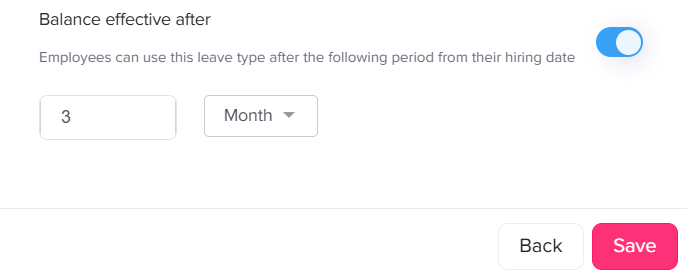
It depends on the company’s policy and applicable law.
An employer may choose to:
- Waive the waiting period for all rehired employees
- Waive it only when the employee returns within a defined period
- Credit the employee’s previous days of employment
- Require a new waiting period
- Apply different rules to vacation and statutory sick leave
The policy should distinguish between earning PTO and using PTO.
A rehired employee may:
- Begin accruing immediately but wait before using leave
- Receive a frontloaded balance immediately
- Receive a restored balance that is available immediately
- Begin as a completely new employee
- Receive credit for the previous waiting period
Washington requires reinstated paid sick leave to be available immediately for many rehired employees who already completed the eligibility period. If the employee had not completed the eligibility period before leaving, prior days worked may count toward the required period after rehire.
Employers should not automatically reapply a waiting period when a law requires prior employment to be credited.
Does Previous Service Affect the PTO Accrual Rate?
| Recognized Service | Annual PTO Entitlement |
|---|---|
| Less than 1 year | 10 days |
| 1 to 3 years | 15 days |
| 4 to 6 years | 20 days |
| 7 years or more | 25 days |
Suppose an employee worked for the company for five years, left for eight months, and was rehired.
The employer might choose one of the following approaches:
Restore the Previous Accrual Tier
The employee returns with five years of recognized service and receives 20 days annually.
Restart Service
The employee is treated as a new hire and begins with 10 days annually.
Use an Adjusted Service Date
The employee begins with five years of service but does not receive credit for the eight-month break.
Restore the Tier After a New Waiting Period
The employee accrues at the new-hire rate for the first 90 days and then returns to the previous tier.
The employer’s written policy should identify which approach applies. Inconsistent treatment between similar rehired employees can create confusion and employee relations problems.
What Happens to Frontloaded PTO After Rehire?
Under a frontloaded PTO policy, employees receive a defined balance at the beginning of the year, anniversary cycle, or employment period.
When an employee is rehired during the year, the employer may:
- Provide the full annual grant
- Prorate the grant based on the rehire date
- Restore the unused part of the previous grant
- Subtract PTO already used before separation
- Provide no additional grant until the next PTO year
- Restore only the amount required by law
Frontloaded PTO Example
A company provides 120 PTO hours every January.
An employee:
- Received 120 hours on January 1
- Used 40 hours
- Left with 80 hours remaining in April
- Was not paid for the remaining hours
- Returned in September
The policy might:
- Restore all 80 hours.
- Provide a prorated September-to-December balance.
- Provide no new PTO until January.
- Restore only the legally required sick leave component.
- Provide a new grant but subtract the 40 hours already used.
The policy should prevent an employee from receiving more leave than intended while still satisfying reinstatement requirements.
What Happens to Accrued PTO After Rehire?
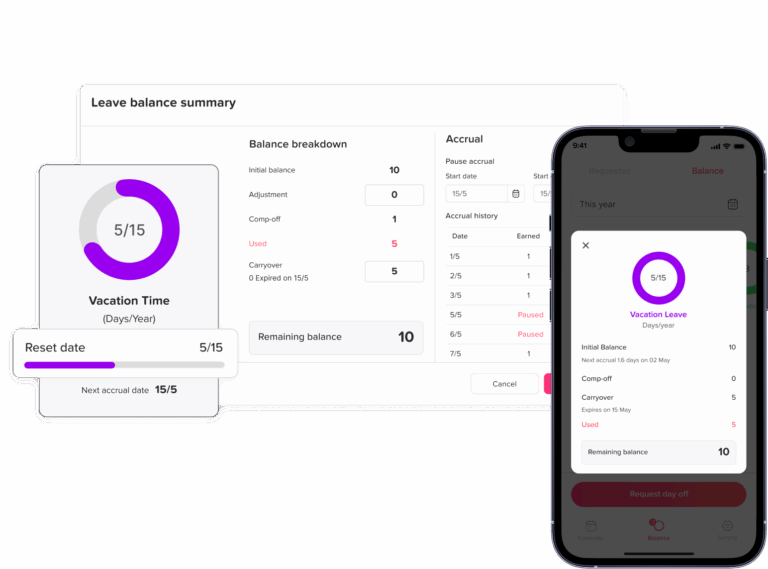
Under an accrual policy, employees earn PTO gradually based on time worked, pay periods, or months of service.
When an employee returns, HR should determine:
- The balance remaining at separation
- Whether the balance was paid
- Whether it must be restored
- The employee’s new accrual rate
- The next accrual date
- Whether the break affects the anniversary date
- Whether prior service counts
- Whether accrual begins immediately
Accrued PTO Example
An employee had:
- 18 hours of unused vacation
- 12 hours of unused sick leave
- A six-month break in service
At separation:
- The 18 vacation hours were paid.
- The 12 sick leave hours were not paid.
- The employee works in a jurisdiction requiring sick leave restoration within 12 months.
On rehire:
- Vacation begins at zero because it was paid.
- The 12 sick hours are restored.
- New accrual begins according to the company policy.
- The employee’s prior service may or may not affect the accrual rate.
What Happens to a Negative PTO Balance?
A rehired employee may have had a negative PTO balance when the original employment ended.
For example, the employee may have borrowed 24 PTO hours and left before earning them back.
The company must decide whether the old deficit:
- Was recovered from final pay where legally permitted
- Was forgiven at separation
- Will be restored as a negative balance
- Will reduce the employee’s new PTO entitlement
- Will be handled as a payroll or debt matter
- Cannot legally be deducted or recovered
Employers should not automatically deduct a prior negative PTO balance from wages or a new PTO bank without reviewing applicable wage deduction rules and the employee’s agreement.
The rehire policy should clearly state whether a previous negative balance survives a break in service.
What Happens to Previously Approved PTO?
A former employee may have had future PTO requests approved before leaving the organization.
Those requests do not normally remain active automatically after rehire.
HR should review whether:
- The leave dates are still relevant
- The employee discussed the absence during rehiring
- The manager agreed to honor the original approval
- The employee will have enough PTO by the requested date
- The employee’s new schedule affects the number of hours
- The request conflicts with current staffing needs
- The request should be paid or unpaid
A good practice is to discuss preplanned vacations during the rehire process and document the agreement in writing.
Rehired Seasonal Employees and PTO
Seasonal employees frequently leave and return to the same employer.
Examples include employees working in:
- Tourism
- Hospitality
- Agriculture
- Retail
- Education
- Summer programs
- Holiday operations
- Events
Employers should not automatically erase all seasonal employees’ leave records at the end of each season.
For example, California requires accrued, unused paid sick leave to be restored when a seasonal employee returns to the same employer within 12 months, subject to the rules for balances that were paid out.
Washington also requires reinstatement of unused paid sick leave when an employee is rehired by the same employer within 12 months.
A seasonal employee policy should define:
- The expected break in service
- Whether the employee is terminated or placed on inactive status
- How balances are stored
- Which balances are paid
- When sick leave is restored
- Whether prior days count toward waiting periods
- How service affects accrual rates
Rehire PTO Examples
Example 1: Vacation Was Paid Out
Maria leaves with 32 unused vacation hours. The company pays the full balance in her final paycheck. She returns four months later.
Possible result: The 32 hours are not restored because they were paid. Maria begins earning new vacation under the rehire policy.
Example 2: Sick Leave Must Be Restored
David has 20 unused sick leave hours and leaves the company. He returns after eight months in a jurisdiction requiring restoration within 12 months.
Possible result: The 20 sick leave hours are restored, provided they were not paid out and no exception applies.
Example 3: Previous Service Is Recognized
Leah worked for the company for six years before resigning. She returns after five months.
Possible result: Her old PTO balance was paid, so it is not restored. However, the company recognizes her six years of service, placing her in the 20-day annual PTO tier.
Example 4: Employee Returns After the Policy Deadline
Omar leaves with 16 unused sick leave hours and returns after two years.
Possible result: The company’s policy and applicable law do not require restoration after such a long break, so Omar starts with a new balance.
Example 5: Employee Changes to Part-Time
Sofia previously worked 40 hours per week and returns in a 20-hour role.
Possible result: Required sick leave is restored in hours, while future PTO accrual is calculated using the new part-time schedule.
Example 6: Frontloaded PTO Was Partially Used
Noah received 80 annual PTO hours, used 60, left the company, and returned during the same PTO year.
Possible result: The company reviews whether the unused 20 hours must be restored and whether the employee is eligible for an additional prorated grant. The policy should prevent a duplicate annual allocation.
Rehire PTO and FMLA Eligibility
PTO eligibility and Family and Medical Leave Act eligibility are separate matters.
A company may treat a rehired employee as a new hire for vacation purposes while still needing to recognize previous service when assessing FMLA eligibility.
Under federal FMLA rules, the required 12 months of employment do not have to be consecutive. In general, employment before a break of seven years or more does not need to be counted, subject to exceptions such as certain military service or written agreements.
This does not mean the employer must restore an old vacation balance. It means HR should not assume that a rehire is automatically a new employee for every leave-related purpose.
HR systems should keep enough historical information to evaluate:
- Previous employment dates
- Hours worked
- Breaks in service
- Prior FMLA eligibility
- PTO balances
- Statutory sick leave
- Service-based accrual tiers
What Records Should HR Review Before Restoring PTO?
Before entering a balance for a rehired employee, HR should review:
- The original hire date
- The separation date
- The rehire date
- The reason for separation
- Final PTO and sick leave balances
- Final payroll and PTO payout records
- Leave used during the previous employment period
- The employee’s previous PTO policy
- The policy assigned after rehire
- The employee’s work location
- The employee’s new schedule and classification
- Applicable reinstatement laws
- Collective bargaining or employment agreements
- The prior service date used for accrual
- Any negative PTO balance
- Any previously approved future leave
HR should document how the new balance was calculated rather than entering a number without an explanation.
How to Calculate a Rehired Employee’s PTO Balance
A basic rehire calculation may use the following formula:
Restorable unused balance + new accrued or prorated PTO – prior amounts paid or already used = new available balance
However, the exact calculation depends on the leave policy.
Example Calculation
An employee had:
- 24 unused PTO hours at separation
- 16 hours paid out
- 8 unpaid sick leave hours that must be restored
- 12 hours of prorated new vacation entitlement
Calculation:
8 restored sick hours + 12 new vacation hours = 20 total available hours
The employer should record the balances separately if vacation and sick leave have different rules.
How to Write a Rehire PTO Policy
A clear rehire policy should answer the following questions.
Which Employees Qualify?
Define whether the policy applies to:
- Voluntary resignations
- Layoffs
- Seasonal employees
- Retirees
- Employees terminated for misconduct
- Employees returning through an acquisition
- Employees rehired by an affiliated company
What Is the Reinstatement Period?
State whether balances or prior service are restored when the employee returns within:
- 90 days
- Six months
- 12 months
- Another defined period
The policy should also acknowledge that applicable laws may provide greater rights.
Which Leave Balances Are Restored?
Clarify the treatment of:
- Vacation
- Sick leave
- Combined PTO
- Personal days
- Floating holidays
- Compensatory time
- Purchased leave
- Donated leave
- Negative balances
What Happens to Paid-Out PTO?
State that balances paid in full at separation are not restored unless required by law or company policy.
Does Previous Service Count?
Explain whether previous service affects:
- Accrual rates
- Annual entitlement
- Waiting periods
- Carryover caps
- Seniority
- Anniversary-based resets
When Can Restored Leave Be Used?
Specify whether restored balances are available:
- Immediately
- After a waiting period
- After manager approval
- On the next payroll date
- After HR completes the balance review
How Are Disputes Handled?
Give employees a process for reporting:
- Missing balances
- Incorrect service dates
- Duplicate payouts
- Wrong accrual rates
- Unrestored sick leave
- Incorrect waiting periods
Sample Rehire PTO Policy
The following example is a starting point and should be reviewed for the jurisdictions where employees work.
Paid Time Off for Rehired Employees
Employees rehired within 12 months of their previous separation may receive credit for prior service when determining PTO eligibility and accrual rates, subject to company policy and applicable law.
Unused vacation or PTO that was paid in full when the employee’s previous employment ended will not be restored.
Accrued, unused sick leave will be restored when required by applicable state or local law. Any additional restoration will be handled according to the company’s leave policy.
Employees rehired within 12 months may have the standard PTO waiting period waived if they completed it during their prior employment. Employees returning after more than 12 months will generally be treated as new hires unless HR approves prior-service credit or applicable law requires different treatment.
PTO balances will not be finalized until HR reviews the employee’s previous balance, separation payment, work location, employment classification, and current leave policy.
Previously approved leave requests do not remain approved automatically after rehire. Employees should resubmit or confirm future leave dates with their new manager.
When company policy conflicts with a legal leave requirement, the applicable legal requirement will control.
Common PTO Rehire Problems
Restoring a Balance That Was Already Paid
This creates a duplicate benefit and an incorrect leave liability.
HR should compare the final paycheck with the old PTO record before restoring hours.
Failing to Restore Required Sick Leave
A system may treat every rehire as a new employee and automatically assign a zero balance.
This can violate state or local sick leave reinstatement rules.
Restarting the Wrong Waiting Period
An employee may be forced to repeat a waiting period even though prior employment should be credited.
Using the Wrong Accrual Tier
The employee may be placed in the new-hire tier even though the policy recognizes previous service.
Combining Old and New Leave Incorrectly
An employee may receive both the old frontloaded balance and a full new annual grant, resulting in more leave than the policy intended.
Losing Historical Records
Deleting the original employee profile can remove balance transactions, approvals, service dates, and audit records needed for the rehire calculation.
Ignoring a Change in Work Location
An employee may return in another state or country with different leave requirements.
Assuming All PTO Is the Same
Vacation, statutory sick leave, floating holidays, and combined PTO may require different treatment.
Best Practices for Managing PTO After Rehire
Keep the Original Employment History
Do not erase the previous employee record. Preserve:
- Old balances
- Requests
- approvals
- Adjustments
- Accruals
- Payouts
- Work locations
- Policy assignments
Separate Payout From Restoration
Record whether each leave type was:
- Paid
- Forfeited
- Preserved
- Required to be restored
- Transferred to another balance
Confirm the Employee’s Work Location
Reinstatement rules may depend on where the rehired employee works, not only where the company is based.
Document Prior-Service Decisions
Record whether prior service affects:
- PTO tiers
- Waiting periods
- Anniversary dates
- Carryover
- Other benefits
Review the Balance With the Employee
Provide the employee with a written balance statement showing:
- Restored hours
- New hours
- Paid-out hours
- Accrual rate
- Next accrual date
- Service date
- Any waiting period
Audit Rehire Balances
HR should periodically check for:
- Duplicate balances
- Missing sick leave
- Incorrect hire dates
- Wrong accrual policies
- Improper waiting periods
- Balance restoration without documentation
How Day Off Helps Manage PTO for Rehired Employees
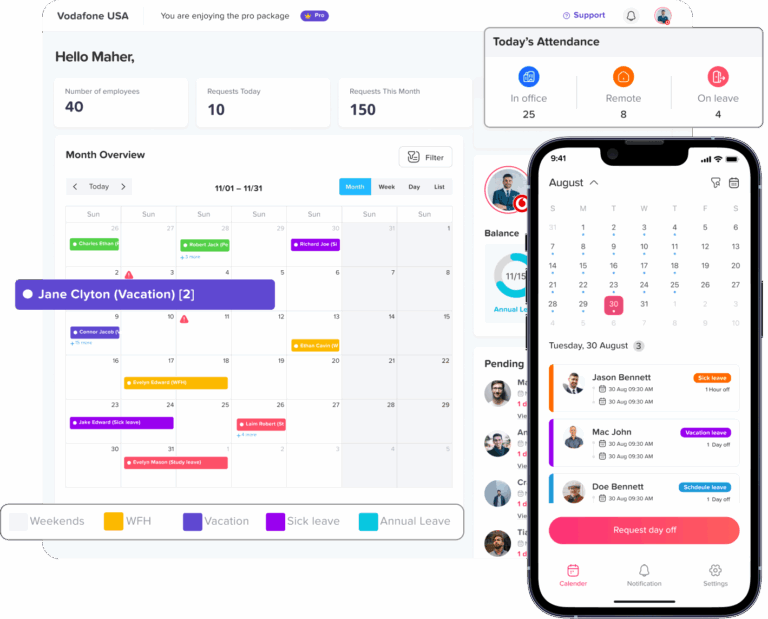
Managing rehire PTO through spreadsheets can be difficult because HR must compare old balances, payout records, service dates, leave policies, and new accrual settings.
Day Off helps HR teams keep employee leave information organized in one place.
With Day Off, companies can:
- Maintain employee leave balances
- Configure custom leave policies
- Set accrual rates and carryover limits
- Use fixed-date or anniversary-based resets
- View current and used leave
- Organize employees by location, team, and policy
- Track pending, approved, and rejected requests
- Review accrual information and reports
- Preserve historical leave data
- Update an employee’s balance when a rehire adjustment is required
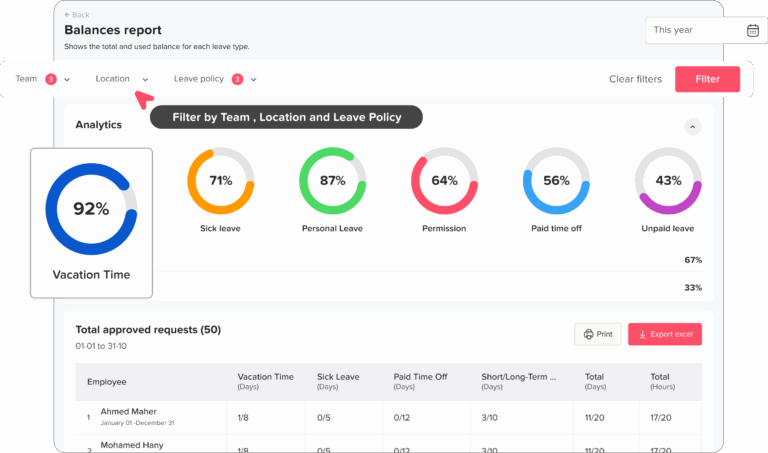
Day Off provides reports that show employee leave policies, current balances, used leave, quotas, and future accrual information. This can help HR verify a rehire calculation and explain the result to the employee.
Keeping historical records and current policies together reduces the risk of restoring a paid-out balance, losing required sick leave, or assigning the employee to the wrong accrual tier.
Frequently Asked Questions About PTO and Rehired Employees
Does PTO reset when you are rehired?
PTO may reset, be restored, or be recalculated depending on the company’s policy and applicable law. Paid-out vacation usually does not need to be restored, while unused statutory sick leave may need to be reinstated when the employee returns within a specified period.
Do rehired employees get their old PTO back?
Not always. The employee may receive the old balance if it was preserved and the policy or law requires restoration. A balance that was paid in full when the employee left is generally not restored again.
What happens to unused PTO if an employee quits and comes back?
HR should determine whether the unused PTO was paid, forfeited, preserved, or subject to a reinstatement law. The length of the break and the type of leave also affect the result.
Does previous employment count toward PTO accrual?
It may. Some employers recognize prior service and return employees to their former PTO accrual tier. Others restart service when the employee is rehired. The policy should explain how previous employment is credited.
Does a rehired employee have to wait to use PTO again?
The employee may need to complete a new waiting period if the policy requires it. However, previous employment may need to be credited under certain sick leave laws, and some employers waive the waiting period for employees rehired within a defined period.
Is a rehired employee considered a new employee?
A rehire may be treated as a new employee for some purposes but not others. The employee may have a new payroll start date while retaining prior service for PTO tiers, sick leave reinstatement, seniority, or FMLA eligibility.
Do employers have to restore sick leave after rehire?
Some state, local, and federal contractor rules require unused sick leave to be restored when an employee returns within a specified period. For example, California and Washington generally have 12-month restoration rules for covered paid sick leave.
What happens if PTO was paid out before the employee was rehired?
When PTO was paid in full at separation, the employer generally does not restore the same hours. The employee begins earning new PTO under the applicable rehire policy.
Can a company restore PTO even when it is not legally required?
Yes. An employer can provide a more generous policy by restoring unused balances, waiving waiting periods, or recognizing prior service, provided the policy is applied lawfully and consistently.
Should the original hire date or rehire date be used for PTO?
The answer depends on the policy. The rehire date may control the current employment period, while the original or adjusted service date may be used to determine accrual tiers and seniority.
What happens if an employee is rehired in a different state?
The employee may become subject to different sick leave, vacation, payout, and reinstatement rules. HR should review the law in the employee’s new work location before assigning a balance.
What happens if an employee returns as part-time?
Required leave may still need to be restored, but future PTO accrual may be based on the employee’s new part-time hours or schedule.
Do seasonal employees keep their sick leave when they return?
They may. In some jurisdictions, seasonal employees who return within the required period must receive their unused sick leave balance. California and Washington provide examples of rules requiring restoration within 12 months.
Can a negative PTO balance follow an employee after rehire?
Only if the employer’s lawful policy or agreement permits it. HR should confirm whether the balance was recovered, forgiven, or preserved when the employee originally left.
Does prior service count toward FMLA after rehire?
It can. The FMLA’s 12 months of employment do not need to be consecutive. In general, prior service within seven years may need to be counted, subject to the full eligibility requirements and certain exceptions.
Should previously approved PTO remain approved after rehire?
Not automatically. The employee should confirm the dates with the new manager, especially if the role, schedule, balance, or staffing situation has changed.
How should HR correct an incorrect rehire PTO balance?
HR should review the previous balance, final payout, statutory sick leave, prior service, new schedule, and current policy. The correction should be documented, approved, and communicated to the employee.
Final Thoughts
What happens to PTO when an employee is rehired depends on more than the employee’s previous balance. HR must consider whether the leave was paid out, the type of PTO involved, the length of the break in service, prior-service rules, the employee’s new work location, and any legal reinstatement requirements.
The most important step is to review the employee’s complete leave history before treating the person as either a completely new employee or a continuous employee. Paid-out vacation should not normally be credited twice, while protected sick leave may need to be restored even when the company’s general policy would otherwise reset the balance.
A clear rehire PTO policy gives employees and managers consistent answers. It should explain when balances return, whether previous service counts, how waiting periods work, and what happens to paid-out or negative PTO.
Using a leave management system such as Day Off can also make the process easier by keeping policies, balances, accruals, requests, and historical records organized. Accurate records help HR restore the right leave, apply the correct accrual rate, and give rehired employees a clear explanation of their available PTO.