







Gen Z is becoming an increasingly important part of the workforce, and its expectations are helping reshape how companies think about work, flexibility, wellbeing, and time off.
But there is an important distinction to make.
Gen Z is not necessarily asking for more PTO. It is asking for a better experience around the PTO it already has.
Employees increasingly expect to see their leave balance without contacting HR. They want to request time off from the same tools they use every day. They want clear rules, predictable approvals, and policies that recognize that people have different cultural, family, health, and personal needs.

That expectation is not limited to Gen Z. It reflects a broader shift toward employee self-service and more transparent workplace practices.
Deloitte’s 2026 Gen Z and Millennial Survey, which included more than 23,000 respondents across 44 countries, found that Gen Z and millennials continue to place significant importance on wellbeing, work-life balance, financial security, and meaningful work.
For HR teams, the lesson is straightforward:
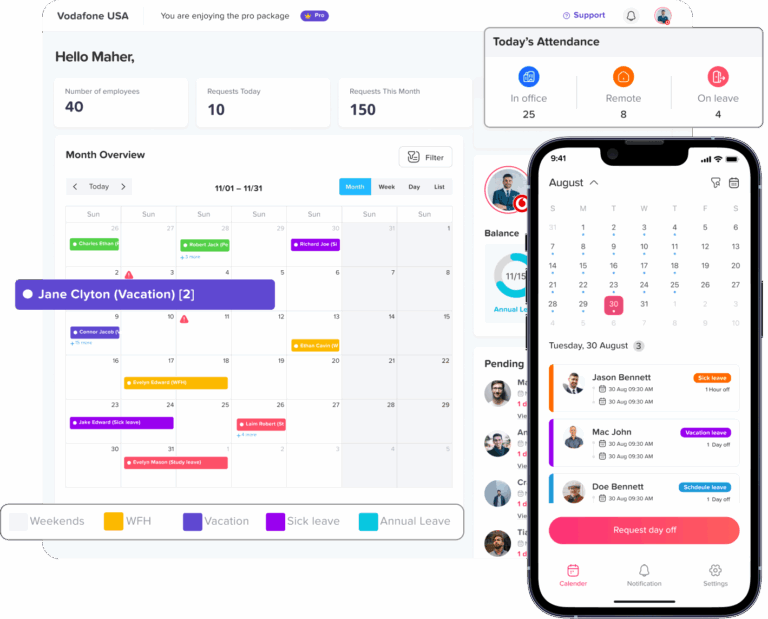
A good PTO policy is no longer just a document. It is an employee experience.
If employees have to email HR to find out how many days they have left, wait several days for a manager to approve a request, or search through different documents to understand carryover rules, the policy may be technically correct,but operationally frustrating.
This guide explains what Gen Z expects from PTO and leave management, where traditional processes fall short, and how to build a modern PTO policy that works better for everyone.
Why Gen Z is changing the conversation around PTO
Gen Z employees grew up with digital services that provide immediate access to information.
You can check your bank balance from your phone. You can book a flight without calling an agent. You can track a delivery in real time. You can make a doctor’s appointment online.
That creates a different baseline expectation for workplace systems.
When an employee has to send an email that says, “Can you tell me how many vacation days I have remaining?” a process that might once have seemed normal can now feel unnecessarily complicated.
This does not mean every Gen Z employee expects every workplace interaction to happen through an app. It does mean that self-service, visibility, and speed have become normal expectations in many parts of everyday life.
There is another important factor: wellbeing.
Deloitte’s 2025 research found that Gen Z employees continue to place substantial importance on wellbeing and work-life balance. Nearly nine in ten Gen Z respondents said a sense of purpose is important to job satisfaction and wellbeing, while workplace concerns such as long working hours were among the factors contributing to stress.
Time off sits directly inside that conversation.
A leave policy tells employees not only how many days they can take, but also something about how the company views rest, personal responsibilities, health, and life outside work.
What Gen Z expects from a modern PTO policy
PTO balances should be visible
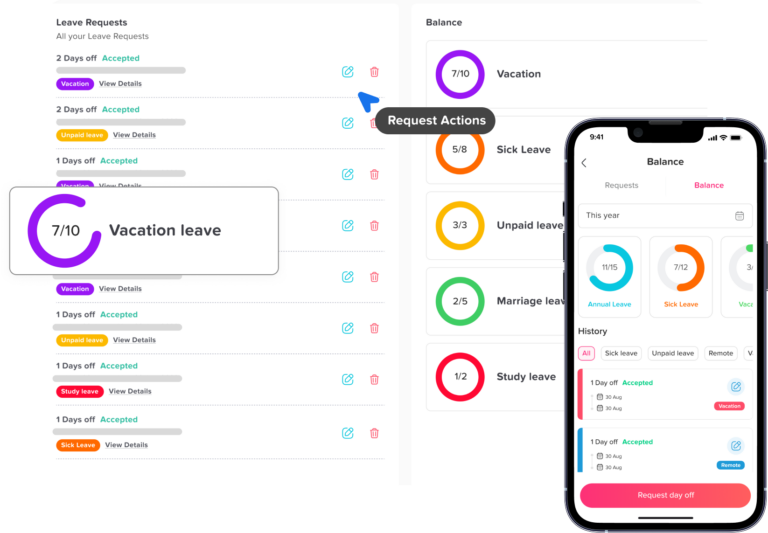
One of the simplest improvements an employer can make is also one of the most valuable: let employees see their own leave balance.
Employees should be able to answer questions such as:
- How many vacation days have I earned?
- How many have I used?
- How many are currently pending?
- How many remain?
- When will I receive my next accrual?
- How many days can I carry over?
- When do carried-over days expire?
They should not have to ask HR for these numbers.
What to change: Give employees self-service access to their accrued, used, pending, and remaining leave.
The goal is not merely convenience. Transparency reduces unnecessary HR questions and gives employees greater confidence that their benefits are being administered correctly.
Requesting time off should take seconds, not a workflow marathon
A modern employee should not need to:
- Find the PTO form.
- Download it.
- Fill it out.
- Email it to a manager.
- Wait for a response.
- Forward the approval to HR.
- Update a spreadsheet.
- Add the absence to a calendar.
Yet variations of this process still exist in many small and midsize businesses.
A better experience is simple:
Choose the dates → select the leave type → submit → get notified.
Mobile access matters too. Employees should be able to request time off whether they are sitting at their desk, working remotely, or planning a vacation outside working hours.
And ideally, employees can use tools they already work in.
For example, Day Off supports leave management through Slack and Microsoft Teams, allowing employees to submit requests and managers to handle approvals without switching to a separate workflow.
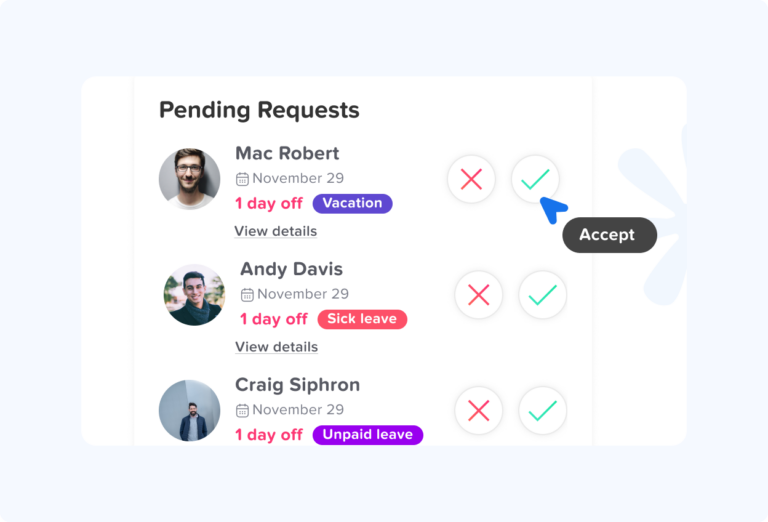
Employees want predictable approval times
An unanswered PTO request creates uncertainty.
An employee may have a flight to book, family plans to coordinate, childcare to arrange, or an appointment to schedule. “Pending” is not always a useful answer.
The solution is not necessarily to approve every request immediately. The solution is to make the process predictable.
For example: All standard PTO requests will receive a decision within two business days.
That gives employees a clear expectation while giving managers enough time to check staffing requirements.
Companies can also automate reminders when requests have been sitting with an approver for too long.
What to change: Define a PTO approval SLA and make the process accountable.
The exact number, one business day, two days, or another reasonable period, is less important than choosing a standard and consistently meeting it.
Mental health and wellbeing should not be hidden inside vague categories
Employees should not have to invent a reason for taking legitimate time away from work.
If your company supports mental health days, personal wellbeing leave, or another form of wellbeing-related absence, say so clearly in the policy.
Deloitte’s research highlights why this matters. In its mental wellbeing research, many Gen Z and millennial respondents reported needing time away from work because of stress, while some employees who took time off gave a different reason for their absence.
The precise structure will depend on local law and your benefits strategy. Some companies may use a dedicated mental health leave category; others may provide broader personal days that employees can use without disclosing details.
The important principle is:
Employees should understand what they are entitled to without feeling that they need to justify every personal need.
What to change: Clearly define wellbeing-related leave and explain whether documentation is required.
And always make sure the policy complies with applicable employment, sick-leave, disability, privacy, and other local requirements.
Flexible holidays recognize that employees do not all celebrate the same days
A fixed holiday calendar can unintentionally assume that every employee observes the same religious, cultural, or national holidays.
That becomes especially complicated for international and distributed teams.
A modern leave policy can use:
- Country-specific public holidays
- Office-specific holidays
- Floating holidays
- Personal days
- Different holiday calendars for different employee groups
A floating holiday is particularly useful because it gives employees some control over when they use a portion of their holiday entitlement.
For example, instead of automatically giving everyone the same two days, a company might provide two floating holidays employees can use for religious observance, cultural celebrations, birthdays, family events, or other personal occasions.
What to change: Separate mandatory public holidays from flexible days employees can choose.
Fairness needs to be built into the system
Imagine two employees request the same Friday off.
One manager approves immediately.
Another manager regularly takes several days to respond and rejects similar requests because of an informal team rule that nobody else knows about.
Even if the company has a fair written policy, employees may perceive the system as unfair.
This is why leave fairness is partly a policy issue and partly a management issue.
Companies should define:
- Approval rules
- Minimum notice periods
- Blackout dates
- Accrual rules
- Carryover limits
- Holiday calendars
- Rules for overlapping requests
- Escalation procedures
Managers can still make decisions based on legitimate operational requirements. But the framework should not change dramatically depending on who happens to approve the request.
What to change: Standardize the rules first. Leave managers discretion where it is genuinely necessary, not where consistency can be automated.
Time off should actually mean time off
There is little value in approving someone’s vacation if they spend the entire trip answering work messages.
A good leave process should make it obvious to colleagues that an employee is unavailable.
That means connecting approved leave with calendars and availability tools where appropriate.
Day Off currently supports integrations with Google Calendar and Outlook Calendar for approved time off requests. It also supports Slack and Microsoft Teams for leave management and team availability.
This creates a simple behavioral benefit:
Before someone sends a “quick question,” they can see that the person is on leave.
That is a small change, but repeated across an organization it can help create a stronger culture of genuine disconnection.

Gen Z PTO expectations vs. traditional leave management
The biggest difference between a traditional PTO process and a modern one is often not the policy itself.
It is the infrastructure behind it.
| Employee need | Traditional process | Modern leave process |
|---|---|---|
| Check my balance | Email HR or check a spreadsheet | Self-service balance |
| Request PTO | Email, form, or paper | Mobile or workplace integration |
| Track approval | Follow up with manager | Automated status and notifications |
| Know who is away | Search emails and calendars | Shared leave calendar |
| Calculate accruals | Manual spreadsheet formulas | Automated accrual rules |
| Handle carryover | Manual year-end calculation | Defined and automated rules |
| Apply rules consistently | Manager-dependent | Centralized policy rules |
| Understand holidays | Ask HR or search a document | Location-specific holiday calendar |
| Report on leave | Build spreadsheets | Automated reporting |
The pattern is important.
The policy may not be the problem. The plumbing may be.
A company can have an excellent PTO policy and still deliver a frustrating employee experience if everything behind that policy is manual.
How to build a Gen Z-friendly PTO policy
You do not need to redesign your entire HR function overnight.
Start with these seven steps.
Step 1: Audit how PTO actually works
Do not start with the policy document.
Start with the employee experience.
Take the last 25–50 PTO requests and measure:
- How long did approval take?
- How many required follow-ups?
- How many were submitted outside the official process?
- How often did HR have to calculate balances manually?
- How often did employees ask about remaining days?
- Were any requests handled differently by different managers?
The answers will show you where the real friction is.
Step 2: Make balances self-service
Employees should be able to see their leave information without contacting HR.
At minimum, show:
- Total allowance
- Accrued amount
- Used amount
- Pending amount
- Remaining balance
- Carryover
- Expiration dates where applicable
This one change can eliminate a surprising amount of administrative work.
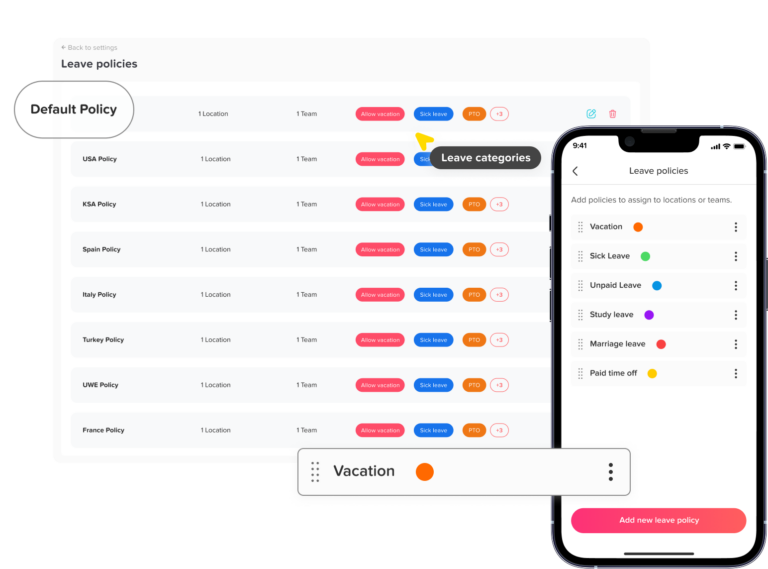
Step 3: Define every leave type
Avoid vague categories such as “special leave” unless the policy clearly explains what they mean.
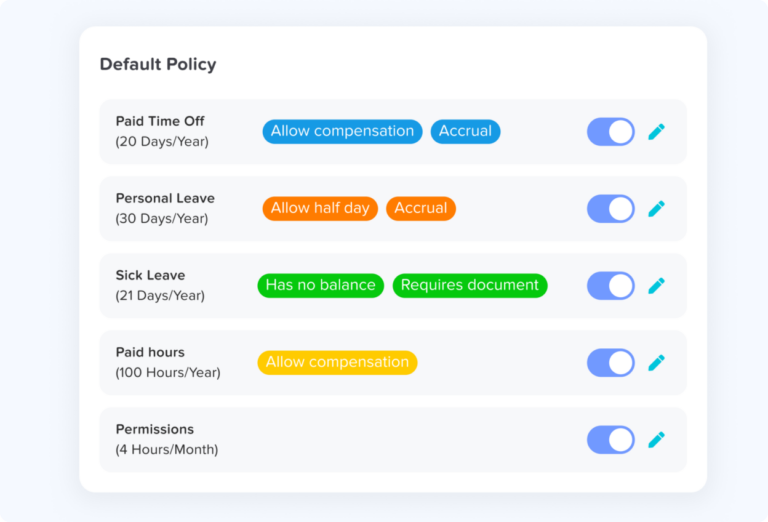
Define categories such as:
- Annual/vacation leave
- Sick leave
- Personal leave
- Mental health or wellbeing leave
- Parental leave
- Caregiver leave
- Bereavement leave
- Floating holidays
- Public holidays
- Unpaid leave
Not every organization needs every category. The important thing is that employees know what exists and when each type applies.
Step 4: Set an approval SLA
Choose a realistic target.
For example: Standard PTO requests will be approved or declined within two business days.
Then automate reminders and monitor whether managers meet the standard.
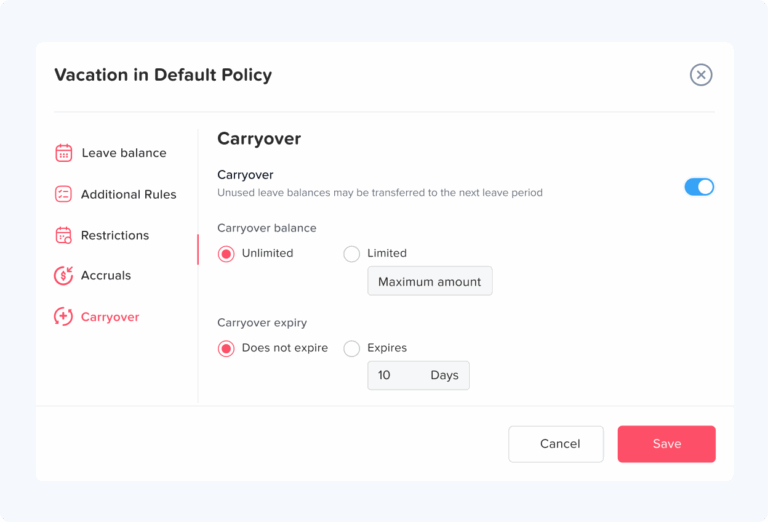
Step 5: Make carryover rules impossible to misunderstand
Carryover is one of the easiest parts of a PTO policy to get wrong.
Your policy should answer:
- How many days can carry over?
- When do they expire?
- Can employees carry over unlimited days?
- Does the rule differ by country?
- What happens when someone leaves the company?
- Are there legal exceptions?
Do not bury these rules in a paragraph of legal language.
Make them easy to find.
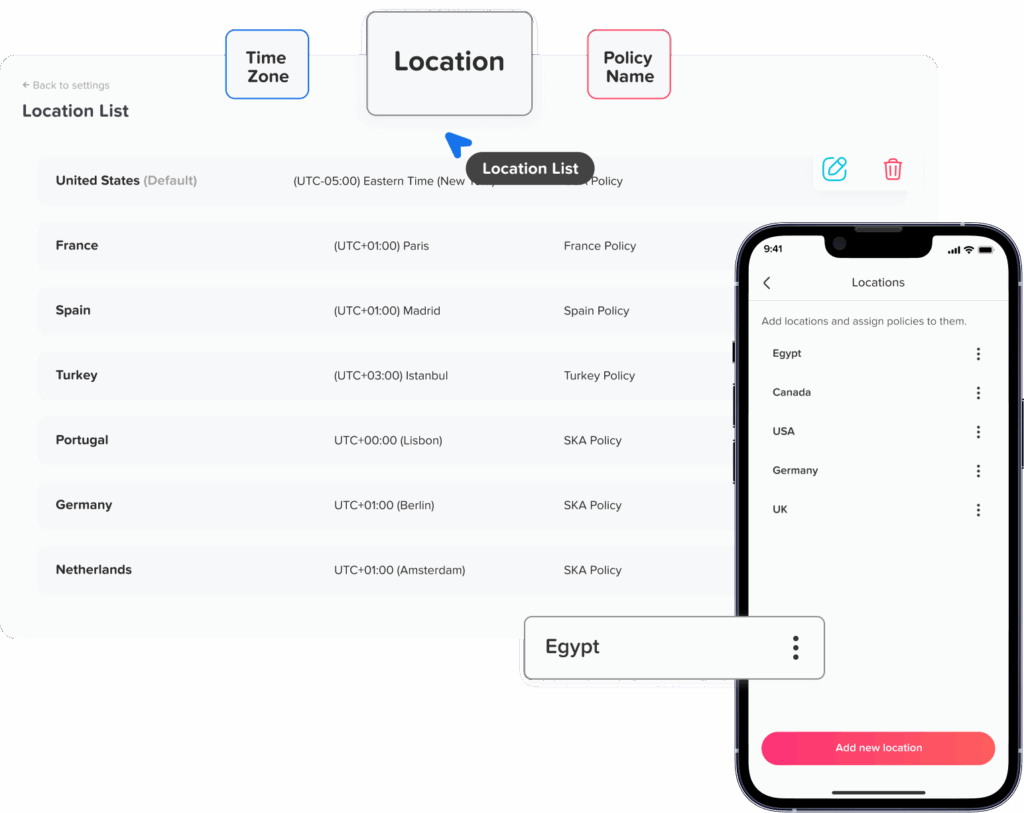
Step 6: Localize the policy
If you have employees in multiple countries, avoid assuming one holiday calendar works for everyone.
Configure holidays, working days, leave types, and legal requirements according to the relevant location.
This is particularly important for international companies where employees may technically work for the same organization but be subject to different statutory leave requirements.
Step 7: Put the process in one system
If employees need a PDF to understand the policy, a spreadsheet to check their balance, Slack to ask their manager, and email to get approval, the process is fragmented.
The goal is not to eliminate the policy document.
The goal is to connect the policy to a system that actually applies it.
What a modern PTO policy should include
A strong policy should be easy to understand before an employee needs to take leave.
At minimum, explain:
Eligibility
Who receives PTO and when does eligibility begin?
Accrual
How is leave earned, monthly, annually, per pay period, or upfront?
Request process
Where should employees submit requests?
Notice periods
How much notice is expected for one day, several days, or extended leave?
Approval
Who approves requests and how quickly should they respond?
Blackout dates
Are there periods when leave is restricted because of business requirements?
Sick leave
What are the rules for illness and documentation?
Mental health and personal leave
What options exist for wellbeing and personal needs?
Public and floating holidays
Which holidays are company holidays, and which can employees choose?
Carryover
What happens to unused leave at the end of the year?
Separation
What happens to unused PTO when an employee leaves?
Local requirements
Which rules vary according to country, state, or other jurisdiction?
The policy should always be reviewed against applicable employment law before publication.
Add parental and caregiver leave to the conversation
One area worth expanding beyond traditional PTO is caregiver flexibility.
Employees do not only need time away from work for vacations.
They may need leave for:
- A new child
- A sick parent
- A partner’s medical appointment
- Childcare emergencies
- School events
- Family caregiving
- Bereavement
- Medical appointments
These needs can be particularly difficult to manage with a policy designed only around “vacation days.”
A modern leave strategy should therefore distinguish between ordinary PTO and legally protected or company-provided forms of family and medical leave.
This is also an area where a single global policy may not be appropriate. Parental and caregiver entitlements can vary significantly by jurisdiction.
The employee experience, however, should remain simple:
Employees should be able to understand what type of leave applies to their situation and how to request it.
How Day Off can support a modern PTO policy
Day Off is designed to turn leave policies into an easier day-to-day process for employees, managers, and HR teams.
Instead of relying on spreadsheets, email threads, and manual calculations, organizations can centralize leave management and give employees direct visibility into their time off.
| What employees need | How Day Off helps |
|---|---|
| Visible balances | Employees can view their leave balances and usage |
| Easy requests | Employees can submit time-off requests through the platform |
| Workplace integrations | Leave management is available through Slack and Microsoft Teams |
| Calendar visibility | Approved leave can sync with Google Calendar and Outlook Calendar |
| Multiple leave types | Organizations can configure different leave policies and types |
| Accrual management | Accrual information can be tracked and reported |
| Carryover tracking | Carryover reports show unused leave and expiration information |
| HR reporting | HR teams can access leave, accrual, and carryover reports |
| Team visibility | Managers and employees can see relevant availability information |
Day Off’s current feature set includes Slack and Microsoft Teams integrations, Google Calendar and Outlook Calendar synchronization, accrual reporting, and carryover reporting.
For a small or midsize company, the practical benefit is straightforward: HR spends less time answering repetitive PTO questions, while employees get more control over information that belongs to them.
A sample Gen Z-friendly PTO policy outline
Use the following as a starting point, then adapt it to your organization’s size, workforce, benefits, and local employment requirements.
Annual leave
Employees receive X days of annual leave per year, accrued monthly and visible through the company’s leave management system.
Sick leave
Employees receive X days of sick leave, subject to applicable local requirements. Documentation is required only where legally permitted and necessary under company policy.
Mental health and wellbeing
Employees receive X wellbeing days per year. Employees do not need to disclose personal details when requesting this type of leave, subject to applicable law and policy.
Floating holidays
Employees receive X floating holidays that may be used for religious, cultural, personal, or other eligible observances.
Public holidays
Public holidays are determined according to the employee’s country or applicable work location.
Approval SLA
Managers should approve or decline standard leave requests within two business days.
Carryover
Employees may carry over X days into the following leave year. Carried-over days expire on March 31, unless a different rule applies under local law or company policy.
Notice period
Employees should provide:
- At least two weeks’ notice for planned leave of three or more consecutive working days.
- Reasonable notice for single-day requests.
- As much notice as reasonably possible for unexpected or emergency leave.
Blackout dates
Any restricted leave periods must be published in advance and communicated clearly to affected employees.
Metrics HR should track
A modern PTO policy should be measured, not simply published.
Here are five useful metrics.
Average approval time
How long does it take employees to receive an answer?
If your target is two business days and the actual average is five, the policy and the process are out of alignment.
PTO utilization rate
How much of employees’ available leave is actually being used?
Low utilization can have several explanations. It may indicate that employees feel pressure not to take leave, that the process is difficult, that workloads are too high, or simply that employees have different preferences.
Treat it as a signal, not a verdict.
Requests by channel
Track how employees actually submit requests.
If your official process is an HR portal but 60% of requests arrive through Slack DMs or email, your employees are telling you something about the usability of the process.
Carryover at year-end
High unused balances can indicate:
- Employees cannot take time off when they want it.
- Managers discourage leave.
- Employees are unclear about the policy.
- Workloads make leave difficult.
- The company offers more leave than employees realistically use.
Carryover is therefore more than an accounting figure. It can be a culture signal.
Approval variance by manager
Compare approval times and approval rates across teams.
Large differences do not automatically mean unfairness, but they are worth investigating.
The goal is not to force every manager to approve every request.
The goal is to make sure employees are operating under a reasonably consistent system.
Common PTO policy mistakes to avoid
A good PTO policy should do more than define how much time employees can take off. It should make the process clear, predictable, and easy to use. Here are some common mistakes to avoid.
Mistake 1: Writing a policy nobody reads
A 20-page document may be legally thorough, but it is practically useless if employees cannot quickly find the answer they need.
Keep the policy easy to scan. Use plain language, clear headings, examples, and FAQs. Put the most important information, eligibility, allowances, approval rules, carryover, and how to request time off, where employees can find it quickly.
Mistake 2: Offering flexibility without clarity
“Employees have flexible PTO” sounds attractive until nobody knows what it actually means.
Flexibility still needs guardrails. Employees should understand how much notice is expected, whether manager approval is required, how busy periods are handled, and what happens when multiple people request the same dates.
The goal is flexibility without ambiguity.
Mistake 3: Making managers the database
Managers should approve leave, not be the only people who know how much leave an employee has.
Employees should be able to see their available balance, approved time off, pending requests, and upcoming leave without having to ask their manager or HR.
A transparent system reduces unnecessary questions and makes the process easier for everyone.
Mistake 4: Treating every country the same
Global companies need globally consistent principles, but they do not necessarily need identical PTO rules everywhere.
Leave entitlements, public holidays, carryover requirements, sick leave, parental leave, and termination rules can vary significantly by country and sometimes by region.
Use a consistent global framework, then localize the details where local law or market practice requires it.
Mistake 5: Calling something “unlimited” without explaining expectations
Unlimited PTO can sound like maximum flexibility, but it can also create uncertainty.
If employees do not know what “reasonable” usage looks like, they may actually take less time off because they are worried about appearing excessive or disengaged.
A defined allowance can sometimes provide more psychological clarity than an unlimited policy. If you offer unlimited PTO, explain the expectations around minimum usage, planning, team coverage, and manager approval.
Mistake 6: Ignoring what happens after approval
Approval is not the end of the process.
Employees also need calendars, availability indicators, notifications, and handover expectations to make leave work smoothly.
A strong PTO process should answer practical questions such as: Who needs to be notified? Should the employee update the team calendar? What happens to meetings? Who covers urgent work? When should handover notes be completed?
The easier these steps are, the less likely leave is to create disruption.
Mistake 7: Making the approval process unnecessarily complicated
PTO should not require employees to navigate a maze of emails, spreadsheets, and approvals.
If a request needs multiple approvals, make it clear who is responsible at each stage. Automate routine notifications and keep the employee informed about whether the request is pending, approved, or declined.
A simple process encourages employees to plan ahead instead of delaying requests.
Mistake 8: Forgetting about busy periods and blackout dates
Some roles and businesses have periods when taking leave is more difficult, for example, during major launches, peak retail seasons, audits, or year-end deadlines.
If restrictions apply, state them clearly and explain why. Avoid informal rules that employees only discover after submitting a request.
Where possible, give employees enough notice to plan around restricted periods.
Mistake 9: Creating rules that managers apply differently
A policy can be perfectly clear on paper and still feel unfair if managers interpret it differently.
One manager may approve almost every request while another regularly rejects them. Over time, this can create inconsistent employee experiences and undermine trust in the policy.
Give managers clear approval guidelines and examples of how to handle common situations. Review approval patterns periodically to identify inconsistencies.
Mistake 10: Forgetting about carryover and unused PTO
Employees need to know what happens to unused time off.
Can PTO be carried into the next year? Is there a limit? Does unused PTO expire? Are there different rules for different types of leave? What happens when an employee leaves the company?
These details should be explicit rather than left to interpretation.
Mistake 11: Measuring PTO by policy instead of employee experience
A policy can look excellent on paper while still being difficult to use.
Pay attention to what employees actually experience: How long does approval take? How often are requests rejected? Do employees struggle to understand their balances? Are people taking enough time off?
The best PTO policies are not just compliant. They are easy to understand, easy to use, and consistently applied.
Frequently Asked Questions About Gen Z and PTO Policies
What is a PTO policy?
A PTO policy is a set of rules that explains how employees earn, request, use, and track paid time off. Depending on the company and location, PTO may cover vacation, personal days, or other forms of paid leave.
A well-designed PTO policy should also explain eligibility, accrual, approval requirements, carryover, expiration, holidays, and what happens to unused PTO when employment ends.
What does Gen Z expect from PTO policies?
Gen Z employees are not necessarily looking for unlimited vacation or significantly more paid time off. Many expect the PTO experience to be transparent, flexible, and easy to manage.
That can include self-service access to PTO balances, simple digital requests, predictable approval processes, flexible holidays, and clear rules around when and how leave can be used.
These expectations are increasingly relevant across generations as more employees become accustomed to digital self-service at work.
How much PTO should a company offer?
There is no universal PTO amount that works for every organization.
The appropriate PTO allowance depends on factors such as location, industry, employee seniority, company size, local employment requirements, and whether the company also provides separate sick, parental, or personal leave.
Rather than choosing a number based solely on what competitors offer, companies should consider whether employees can realistically use the leave they receive and whether the policy meets applicable legal requirements.
What is the difference between PTO and vacation leave?
PTO is a broader term that can refer to paid time away from work for vacation, personal needs, or other eligible reasons. Vacation leave traditionally refers specifically to time taken for rest, travel, or personal time.
The distinction varies between employers and jurisdictions. Some companies combine vacation and personal days into one PTO bank, while others maintain separate leave categories.
The policy should clearly define what each type of leave means.
Should PTO expire?
Whether PTO should expire depends on the company’s policy and applicable employment laws.
Some organizations use a “use it or lose it” approach, while others allow employees to carry unused PTO into the next year, sometimes subject to a cap or expiration date.
Because carryover and forfeiture rules can be regulated differently across jurisdictions, employers should verify local requirements before implementing an expiration rule.
What happens to unused PTO when an employee leaves?
The treatment of unused PTO after termination or resignation depends on the company’s policy and the laws that apply to the employee.
In some locations, accrued unused vacation may need to be paid out. In others, different rules may apply depending on the type of leave and the circumstances of separation.
A PTO policy should explain the company’s approach while making clear that applicable law takes precedence where required.
Is unlimited PTO better than traditional PTO?
Not necessarily.
Unlimited PTO removes a fixed annual vacation allowance, but it does not automatically mean employees will take more time off. Without clear expectations, some employees may actually take less leave because they are unsure how much time off is considered acceptable.
Traditional PTO can provide greater visibility because employees know exactly how much leave they have available.
The better approach depends on the company’s culture, workforce, legal environment, and ability to establish clear expectations around taking time off.
How can companies encourage employees to actually use their PTO?
Making PTO easy to request is only part of the solution.
Companies can encourage healthy PTO usage by ensuring managers support time off, monitoring unused balances, planning team coverage, avoiding unnecessary communication during vacations, and making expectations around disconnecting clear.
HR can also look for patterns such as consistently low PTO utilization or unusually high carryover. These may indicate that employees are struggling to take the time off available to them.
Should employees be required to give notice before taking PTO?
Most companies benefit from having reasonable notice requirements for planned PTO.
For example, an organization might ask employees to provide more notice for longer periods of leave while allowing shorter notice for single-day requests.
However, notice requirements should account for unexpected situations such as illness, emergencies, or legally protected leave. The policy should distinguish between planned vacation and situations where advance notice may not be possible.
Can a manager deny a PTO request?
A manager may need to decline or reschedule planned PTO when there is a legitimate operational reason, depending on the company’s policy and applicable law.
However, managers should not be left to create their own rules.
A clear PTO policy should explain how requests are evaluated, how conflicting requests are handled, whether blackout periods apply, and what employees can do if they believe a request has been handled inconsistently.
How can HR make PTO management easier?
The biggest improvement is usually to replace manual processes with employee self-service.
A PTO management system can allow employees to view balances, submit requests, track approvals, and see team availability while giving HR tools for accruals, reporting, holidays, and policy administration.
This reduces repetitive HR questions and makes the PTO process more transparent for employees and managers.
Should PTO be included in employee onboarding?
Yes. Employees should understand their leave benefits before they need to use them.
During onboarding, HR should explain how PTO accrues, where employees can see their balance, how requests are submitted, who approves them, and any important rules around carryover, holidays, and expiration.
Providing this information early prevents employees from having to learn the policy when they are already trying to plan time away.
How often should a company review its PTO policy?
A PTO policy should be reviewed regularly, particularly when employment laws, company benefits, workforce locations, or working practices change.
An annual review is a useful baseline for many organizations. Companies operating across multiple countries may need more frequent reviews to ensure local leave requirements and holiday calendars remain accurate.
HR should also review employee questions, PTO utilization, approval times, and carryover patterns to identify areas where the policy or process could be improved.
Conclusion: Modern PTO Is About the Experience
Gen Z may be changing the conversation around PTO, but the underlying expectations are becoming relevant to employees across the workforce.
People want to know how much leave they have, request it without unnecessary friction, receive timely answers, and feel confident that their time off will actually be respected. They want policies that are clear enough to understand and flexible enough to reflect the realities of modern work.
For HR teams, that means a modern PTO policy should go beyond defining an annual allowance. It should create a complete employee experience—from checking a balance and submitting a request to getting approval, coordinating coverage, and disconnecting from work.
The best PTO policy is not necessarily the one that offers the most days. It is the one employees understand, managers apply consistently, and HR can administer efficiently.
As expectations around flexibility, wellbeing, and employee self-service continue to evolve, companies that make PTO simple and transparent can create a better experience for everyone.