







A sabbatical can be one of the most valuable forms of extended leave an employer offers. Unlike ordinary vacation or paid time off (PTO), a sabbatical gives employees an opportunity to step away from their normal responsibilities for a longer period of time and return to work with a clear plan.
For employees, that extended break may be used for rest, travel, education, research, volunteering, personal projects, or simply spending more time away from the demands of a full-time job. For employers, a structured sabbatical program can provide a way to recognize long-term service while encouraging better planning, documentation, and knowledge sharing across teams.

However, a sabbatical program needs clear rules.
Questions quickly arise when a company does not have a written policy: Who qualifies? How long can the leave last? Is it paid? Do benefits continue? Can two people from the same team take sabbaticals at the same time? What happens if the employee wants to extend the leave? Is their original position guaranteed when they return?
A well-written sabbatical leave policy answers these questions before they become problems.
This guide explains what sabbatical leave is, how employers can design a policy, what to include in a sabbatical leave agreement, and how software such as Day Off can help HR teams manage extended employee leave.
What Is Sabbatical Leave?
Sabbatical leave is an extended, employer-approved period away from work. It is generally longer than ordinary vacation or PTO and is often offered to employees who have completed a certain number of years with the organization.
There is no single universal definition of a sabbatical. Employers can design programs around their own workforce, budget, and operational requirements.
For example, a company might allow an employee who has completed five years of continuous service to request a sabbatical of four to twelve weeks. Another organization might offer a longer period after seven years of service.
Employees may take sabbatical leave for many different reasons, including:
- Rest and personal renewal
- Extended travel
- Further education or professional development
- Volunteering or community work
- Research
- Creative projects
- Personal development
- Family or personal priorities, where permitted by company policy
The important distinction is that a sabbatical is generally a planned and approved period of absence that forms part of the employer’s leave program.
A sabbatical is also different from simply resigning from a job. Under a formal sabbatical arrangement, the employee remains subject to the terms of the employer’s policy and any individual leave agreement, including requirements concerning the start date, end date, compensation, benefits, and return to work.
Because sabbaticals can last weeks or months, employers should document the arrangement rather than relying on informal conversations between a manager and employee.
Sabbatical Leave vs. PTO: What’s the Difference?
Sabbatical leave and PTO both provide time away from work, but they usually serve different purposes.
PTO is generally designed for shorter, recurring periods of time off. Employees may use PTO for vacations, personal appointments, rest days, or other routine absences.
Sabbatical leave, on the other hand, is usually a longer-term benefit connected to an employee’s service or another eligibility requirement.
For example, an organization might allow employees to take PTO throughout the year while making them eligible for a sabbatical after five years of continuous employment.
The difference can also be administrative. A normal PTO request might require little advance planning. A two- or three-month sabbatical may require project handovers, temporary reassignment of responsibilities, client communication, hiring temporary support, or coordination with other employees’ planned absences.
For this reason, sabbatical policies often have separate eligibility requirements, notice periods, and approval processes.
What Are the Benefits of Offering Sabbatical Leave?
A sabbatical program is not automatically the right benefit for every organization. It requires planning and can create operational challenges, particularly for small teams.
However, a well-designed program can provide several potential advantages.
Supporting Long-Term Retention
A sabbatical can give long-serving employees another reason to remain with an organization.
For example, an employer might offer a sabbatical after five years of continuous service. An employee approaching that milestone may view the benefit as part of the long-term value of staying with the company.
This does not mean a sabbatical will automatically improve retention. Its value depends on the wider employee experience, including compensation, management, career opportunities, workload, flexibility, and company culture.
Still, for employees who value extended time away from work, a sabbatical can be a meaningful long-term benefit.
Giving Employees More Time to Disconnect
Traditional vacation can sometimes be difficult to use as genuine extended time away, particularly for employees with significant responsibilities.
A longer leave gives employees more time to disconnect from day-to-day work.
Whether the employee uses the period for travel, education, personal projects, or simply rest, the defining feature is that the absence is substantially longer than a typical vacation.
Encouraging Documentation and Cross-Training
An extended employee absence exposes weaknesses in processes that may otherwise go unnoticed.
If only one employee knows how to perform a critical task, manage a particular customer relationship, or maintain an important process, a sabbatical can reveal the resulting operational risk.
Preparing for a sabbatical encourages teams to document processes, assign backup owners, share knowledge, and clarify responsibilities.
Those improvements can continue benefiting the organization after the employee returns.
Recognizing Long-Term Service
Some employers use sabbaticals as a form of long-service recognition.
Instead of offering only financial rewards for tenure, a company can provide employees with additional time and flexibility.
This can be particularly relevant for organizations where employees have been with the company for many years and where extended breaks are difficult to arrange informally.
Strengthening the Employee Benefits Package
A sabbatical can complement existing benefits such as PTO, flexible work arrangements, professional development, parental leave, and wellness programs.
It should not be viewed as a replacement for legally required or legally protected forms of leave.
Rather, it can be an additional discretionary benefit with its own eligibility and approval rules.
How Long Should a Sabbatical Last?
There is no legally mandated or universally accepted sabbatical length.
An employer can determine the minimum and maximum duration based on operational needs and the purpose of the program.
For example, a policy might allow sabbaticals of:
- Four to eight weeks
- Four to twelve weeks
- One to three months
- Up to six months
The longer the permitted leave, the more important workforce planning becomes.
A four-week sabbatical may be manageable through temporary redistribution of responsibilities. A six-month absence could require substantially more planning, including temporary hiring or a formal reassignment of duties.
Employers should therefore avoid choosing a maximum duration simply because another company uses it.
Instead, consider:
- How long critical roles can realistically remain uncovered
- Whether temporary replacements are available
- How projects are structured
- Whether customers depend on specific employees
- How much notice managers need
- Whether other types of leave may overlap with the sabbatical
- Whether the company can continue benefits during the absence
The policy should state the minimum and maximum duration clearly so employees understand what they can request.
Paid vs. Unpaid Sabbatical Leave
One of the biggest decisions when creating a sabbatical policy is whether employees will receive compensation during their leave.
There is no single model that works for every employer.
Paid Sabbatical
A paid sabbatical allows the employee to continue receiving salary during the approved period according to the employer’s policy.
The main advantage is that employees can take an extended break without facing the same financial barrier associated with unpaid leave.
The trade-off is cost. The company continues paying compensation while the employee is away from their normal responsibilities and may also need to pay for temporary coverage.
Unpaid Sabbatical
With an unpaid sabbatical, the employee remains on approved leave but does not receive their normal salary during the leave period.
This reduces the direct payroll cost to the employer but may make the benefit inaccessible to employees who cannot afford a prolonged unpaid absence.
If a company offers unpaid sabbaticals, it should clearly explain the impact on benefits, insurance premiums, PTO accrual, retirement contributions, and other employment-related arrangements.
Partially Paid Sabbatical
A hybrid arrangement can provide a middle ground.
For example, a company could pay an employee for the first four weeks of a sabbatical and allow an additional four weeks of unpaid leave.
Another approach is to pay a defined percentage of normal salary throughout the approved period.
Whatever model an employer chooses, the compensation rules should be written clearly enough that employees can understand exactly what they will receive.
| Factor | Paid Sabbatical | Unpaid Sabbatical | Partially Paid Sabbatical |
|---|---|---|---|
| Salary | Continues according to policy | Normally stops during leave | Continues at defined level |
| Employer cost | Higher | Lower | Moderate |
| Financial barrier for employees | Lower | Higher | Moderate |
| Benefits | Must be defined by policy and applicable rules | Must be defined by policy and applicable rules | Must be defined by policy and applicable rules |
| Administrative complexity | Requires payroll coordination | Requires benefits and employment-status coordination | Requires both |
| Best suited for | Strong long-service benefit | Flexibility with lower direct payroll cost | Balanced approach |
How to Create a Sabbatical Leave Policy
Creating the policy is easier when employers work through each decision separately.
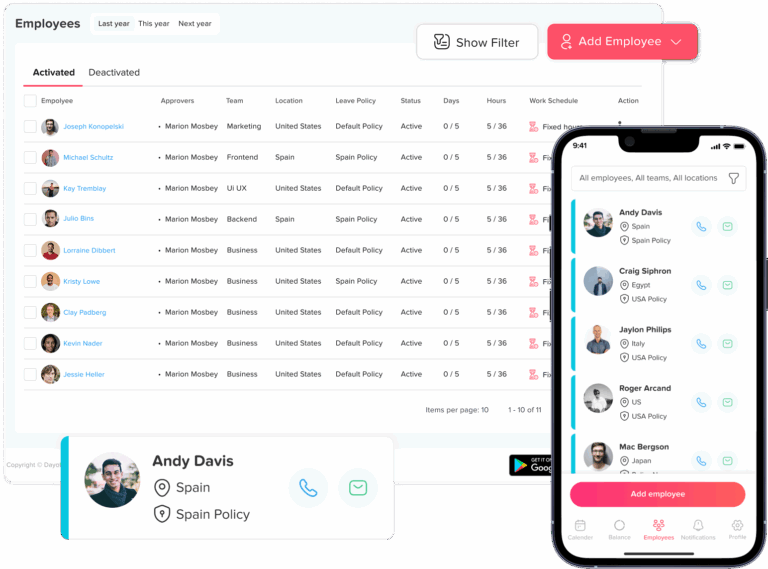
Define Who Is Eligible
Start by determining which employees can apply.
- Common eligibility requirements may include:
- A minimum number of years of continuous service
- A specific employment status
- Satisfactory standing with the organization
- Completion of any required probationary period
- A minimum period between sabbaticals
For example:
Employees who have completed five consecutive years of service may apply for sabbatical leave.
You should also decide whether eligibility is based on the employee’s original hire date, a specific anniversary date, or another method.
If eligibility differs between employee groups, explain the differences clearly and ensure the rules comply with applicable law.
Define the Sabbatical Duration
Next, decide how long an employee can be away.
A policy might establish a minimum of four weeks and a maximum of twelve weeks.
It should also explain whether the maximum applies to one continuous period or whether employees can split their sabbatical into separate periods.
For most organizations, a simple rule is easier to administer:
Sabbatical leave must be taken as one continuous period.
If exceptions are possible, specify who can approve them.
Decide How the Sabbatical Is Paid
Clearly state whether the leave is paid, unpaid, or partially paid.
If the employee receives partial pay, specify the percentage or payment method.
Also explain whether normal salary, commissions, bonuses, allowances, or other forms of compensation are affected.
This is particularly important for employees whose compensation includes variable components.
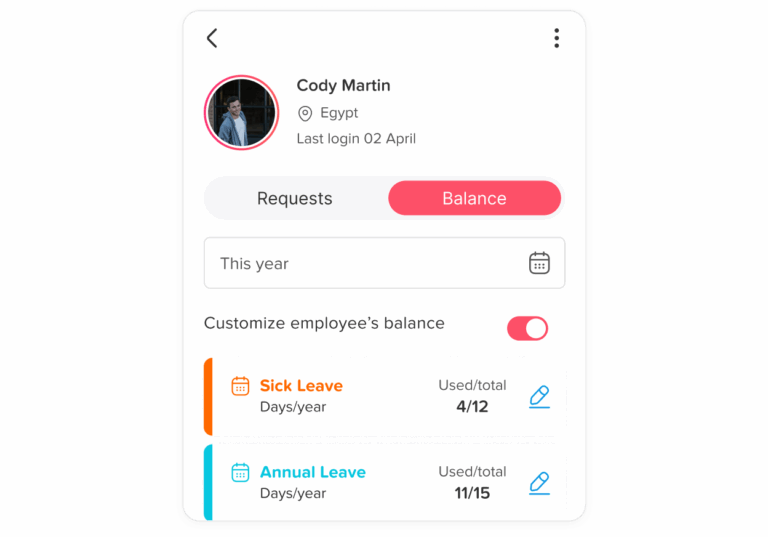
Explain What Happens to Benefits
Benefits can become complicated during an extended absence.
Your policy should explain what happens to benefits such as:
- Health insurance
- Life insurance
- Retirement contributions
- PTO accrual
- Employee discounts
- Bonuses
- Other company benefits
The exact treatment may depend on the benefit plan and applicable law, so HR should confirm these details before publishing the policy.
Establish the Notice Period
Sabbaticals require more planning than ordinary PTO.
A company may require employees to submit a request 60, 90, or more days before the proposed start date.
The notice period should give the company enough time to:
- Review the request
- Plan team coverage
- Reassign projects
- Communicate with customers
- Hire temporary support if necessary
- Resolve scheduling conflicts
The policy should also explain whether the notice requirement can be waived in exceptional circumstances.
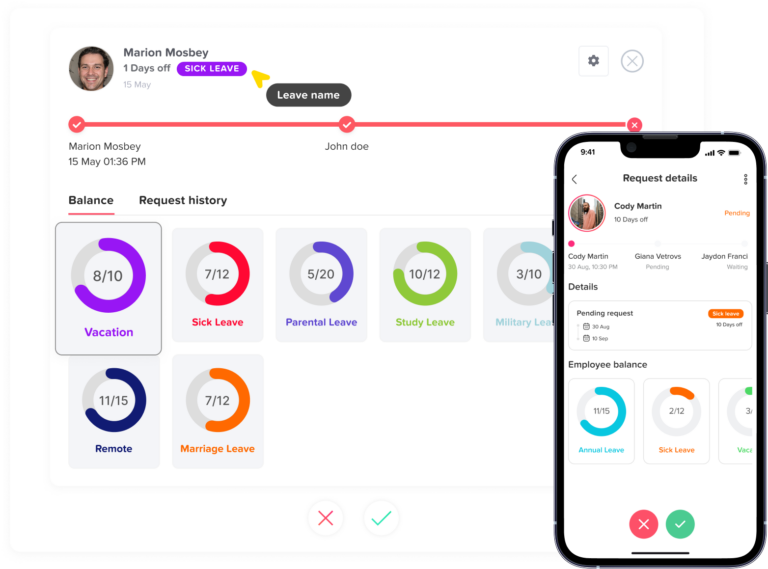
Create an Approval Process
Determine who has authority to approve a sabbatical.
Depending on the organization’s structure, the process might involve:
- Employee submits the request.
- Manager reviews the proposed dates and coverage plan.
- Department leadership reviews the request.
- HR confirms eligibility and policy requirements.
- The request is approved or declined.
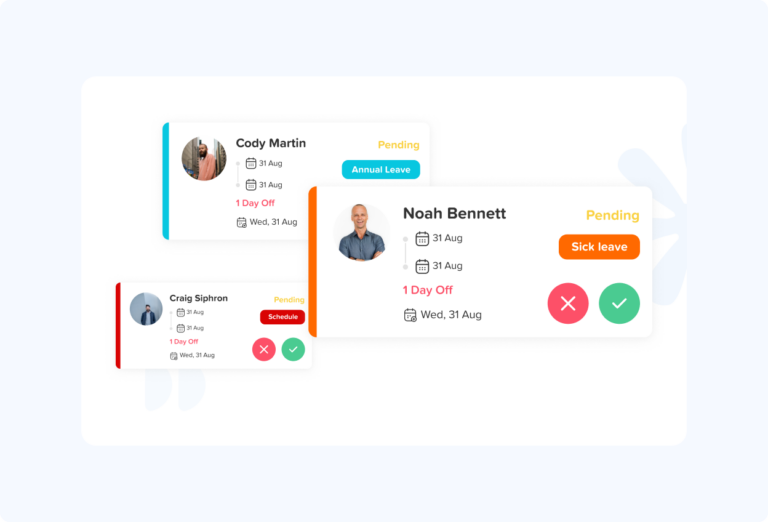
For larger organizations, automated approval workflows can make this process easier to manage and provide a record of each decision.
Establish Rules for Overlapping Leave
Two employees from the same team being absent at the same time could create operational problems.
A policy can therefore include rules about overlapping leave.
For example:
The company may postpone a sabbatical request when another employee in the same team or function is already scheduled for an extended absence.
Be careful with wording here. The goal should be to establish a reasonable scheduling process rather than giving managers unlimited discretion.
Require a Handover Plan
A transition plan is one of the most important parts of managing a long absence.
Before the employee leaves, ask them to document:
- Current projects
- Upcoming deadlines
- Important contacts
- Recurring responsibilities
- Key procedures
- Open issues
- Customer commitments
- Temporary owners for important tasks
The employee’s manager should review the handover before the sabbatical begins.
Define Return-to-Work Expectations
The policy should clearly explain what happens when the sabbatical ends.
If the company offers reinstatement to the same role, say so.
If the policy provides for a comparable role instead, define what “comparable” means as clearly as possible.
Avoid vague promises that could conflict with employment law, organizational restructuring, or contractual obligations.
Put Everything in Writing
The employee should receive written confirmation of the approved sabbatical.
The individual agreement should ideally include:
- Start date
- End date
- Approved duration
- Compensation
- Benefits treatment
- Return-to-work arrangements
- Handover requirements
- Extension rules
- Any other relevant conditions
This gives both the employee and employer a clear record of what was agreed.
What Should a Sabbatical Leave Request Include?
Employers can create a standardized request form to make applications easier to evaluate.
A sabbatical request might ask the employee to provide:
Requested start date:
[Date]
Expected return date:
[Date]
Reason for sabbatical:
[Optional explanation, depending on company policy]
Current responsibilities:
[Summary]
Proposed handover plan:
[Details]
Temporary coverage:
[Person/team responsible during absence]
Important deadlines during leave:
[List]
Employee confirmation:
I understand the company’s sabbatical leave policyed sections with your organization’s actual rules and have the final version reviewed for compliance with applicable law and the terms associated with my approved leave.
The organization can then use the request as the basis for the manager and HR approval process.
Free Sabbatical Leave Policy Template
The following template provides a starting point for employers. Replace the bracketed sections with your organization’s actual rules and have the final version reviewed for compliance with applicable law.
Sabbatical Leave Policy
Purpose
The purpose of this policy is to provide eligible employees with an opportunity to take an extended period away from work while establishing clear procedures for requesting, approving, administering, and returning from sabbatical leave.
Eligibility
Employees who have completed [5 years] of continuous service may apply for sabbatical leave, subject to the terms of this policy. Employees may become eligible for a subsequent sabbatical after [5 years] following their return from the previous sabbatical.
Duration
Approved sabbatical leave may range from [4 weeks] to [12 weeks]. Sabbatical leave must be taken [continuously / according to the conditions specified by the company].
Compensation
Sabbatical leave will be [fully paid / partially paid at X% / unpaid] according to the terms confirmed at the time of approval.
Benefits
During sabbatical leave, [describe applicable benefits and employee contribution requirements] will be administered according to the company’s benefits plans and applicable law.
Application Process
Employees must submit a written sabbatical request to their manager and HR at least [60/90 days] before the requested start date.
The request should include the proposed leave dates and any information required to support the transition and coverage plan.
Approval
Sabbatical requests are subject to approval based on eligibility, operational requirements, team coverage, timing, and other relevant considerations established by the company.
Approval of one request does not guarantee approval of future requests.
Handover Requirements
Before starting the sabbatical, the employee must complete a reasonable transition plan covering current projects, responsibilities, deadlines, key contacts, and temporary ownership of critical tasks.
Return to Work
At the end of an approved sabbatical, the employee will [return to their previous position / return to a comparable position], subject to the terms of this policy, applicable law, and any applicable employment agreement.
Extensions
Requests to extend an approved sabbatical must be submitted at least [X days] before the scheduled return date. Extensions are subject to company approval and applicable law.
Early Return
Employees who wish to return before the approved end date must contact [manager/HR] as soon as reasonably possible. The company will determine whether an earlier return can be accommodated.
Policy Changes
The company may amend this policy as permitted by applicable law. Employees will be informed of material policy changes through the organization’s normal communication process.
Sabbatical Leave and Employment Law
Employers should be particularly careful when a sabbatical policy overlaps with another type of employee leave.
A discretionary sabbatical is not the same as legally protected leave.
In the United States, for example, the Family and Medical Leave Act (FMLA) provides eligible employees of covered employers with job-protected leave for certain qualifying family and medical reasons. Eligible employees can generally receive up to 12 workweeks of FMLA leave in a 12-month period for qualifying reasons, while eligible military caregivers may have up to 26 workweeks in certain circumstances. (dol.gov)
Employers should therefore avoid writing a sabbatical policy in a way that could restrict an employee’s separate rights under federal, state, or local law.
For example, an employee should not be required to use a discretionary sabbatical simply because they also qualify for a legally protected form of leave.
The rules also differ outside the United States. Countries may have their own statutory leave requirements, employment protections, benefit rules, and notice requirements.
Before implementing a sabbatical policy, HR should review:
- Federal employment laws
- State and local employment laws
- Benefits-plan requirements
- Employment contracts
- Collective bargaining agreements, where applicable
- Company policies
- Applicable discrimination and accommodation requirements
For U.S. employers, the Department of Labor provides information about FMLA rights and employer responsibilities. (dol.gov)
This guide is general information, not legal advice. Employers should consult qualified employment counsel regarding their specific circumstances.
Managing Sabbatical Leave With Day Off
Day Off is a leave management platform designed to help organizations manage employee time off, leave policies, approvals, calendars, balances, and related HR processes.
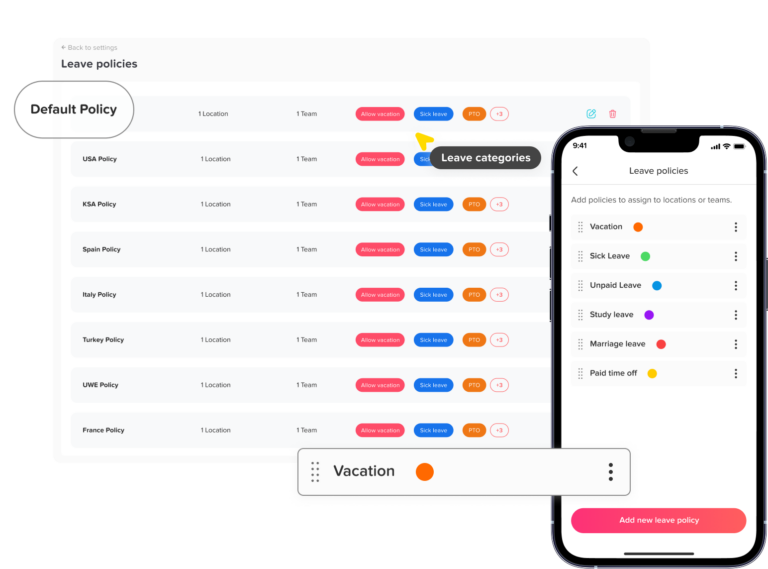
For an organization introducing a sabbatical program, one useful feature is the ability to create and configure custom leave types. This means a company can create a dedicated leave type for sabbaticals instead of trying to track extended leave through a generic vacation category.
Create Custom Leave Types
Organizations can configure different leave types and policies based on their internal rules.
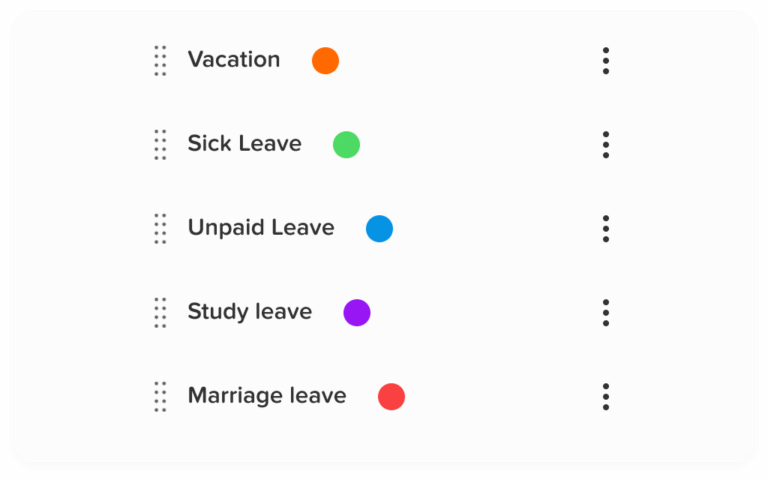
For example, HR could create:
- Vacation
- Sick leave
- Personal leave
- Parental leave
- Sabbatical leave
- Volunteer leave
Other company-specific leave categories
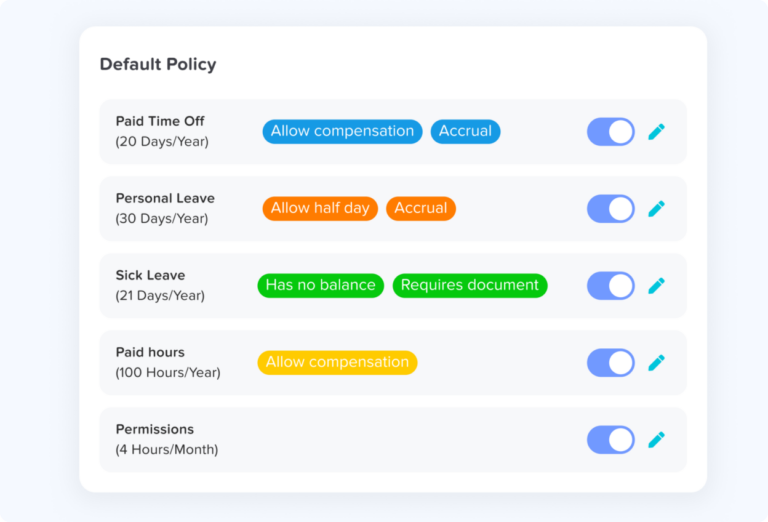
Day Off’s leave policy functionality supports settings for balances, accruals, carryover, approval requirements, documents, negative balances, and other leave-management rules.
This can be particularly useful when different employee groups have different leave policies.
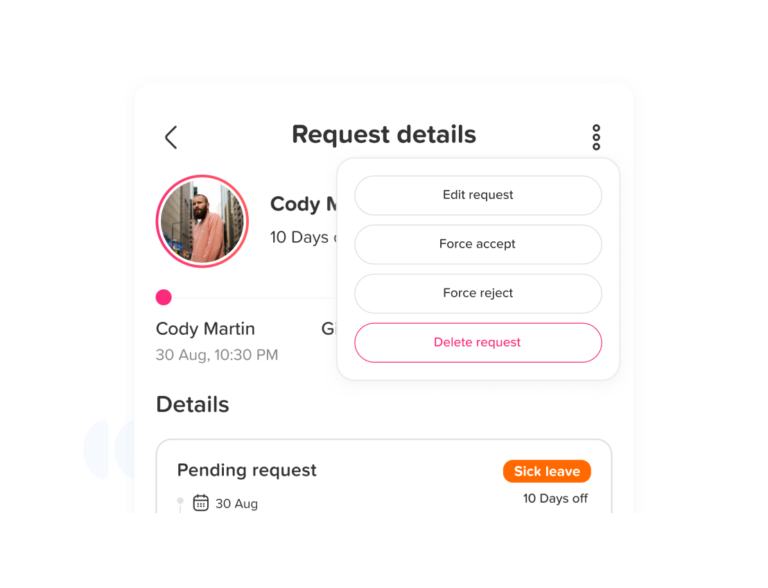
Configure Approval Workflows
A sabbatical request often requires more review than a single day of PTO.
Day Off supports approval workflows that allow leave requests to be reviewed by designated approvers. Its documentation also describes two-step approval workflows and multiple approvers for approval steps.
For example, an organization could have a process where:
Employee → Manager → HR
This gives the organization a defined workflow rather than relying on email threads and manual follow-ups.
Give Managers Better Visibility
Long absences can affect the rest of a team.
Before approving a sabbatical, managers may want to see whether other employees are already scheduled to be away.
Day Off provides leave calendars that allow organizations to view planned absences and manage time off across teams and locations. (day-off.app)
This visibility can make workforce planning easier when several employees have overlapping leave.
Manage Different Leave Policies
Organizations do not always have one universal leave policy.
Different countries, locations, teams, or employee groups may have different rules.
Day Off supports multiple leave policies and can assign policies to different employees, teams, or locations.
This can help HR teams keep different leave structures organized without maintaining separate spreadsheets for every employee group.
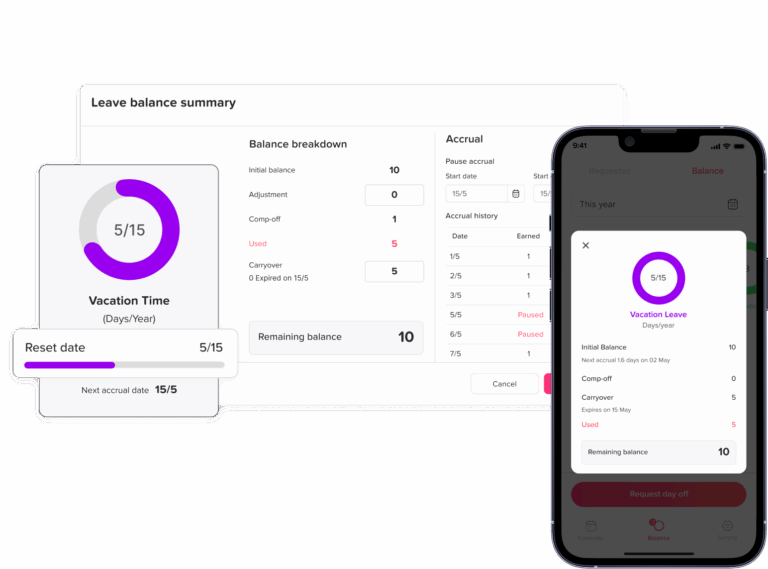
Track Accruals and Carryover
While sabbaticals are not necessarily accrued like vacation, some organizations use balances or tenure-based rules as part of their broader leave structure.
Day Off provides configurable accrual and carryover functionality for applicable leave policies.
This can help HR automate calculations that might otherwise require manual spreadsheet formulas.
Use Reports for Leave Data
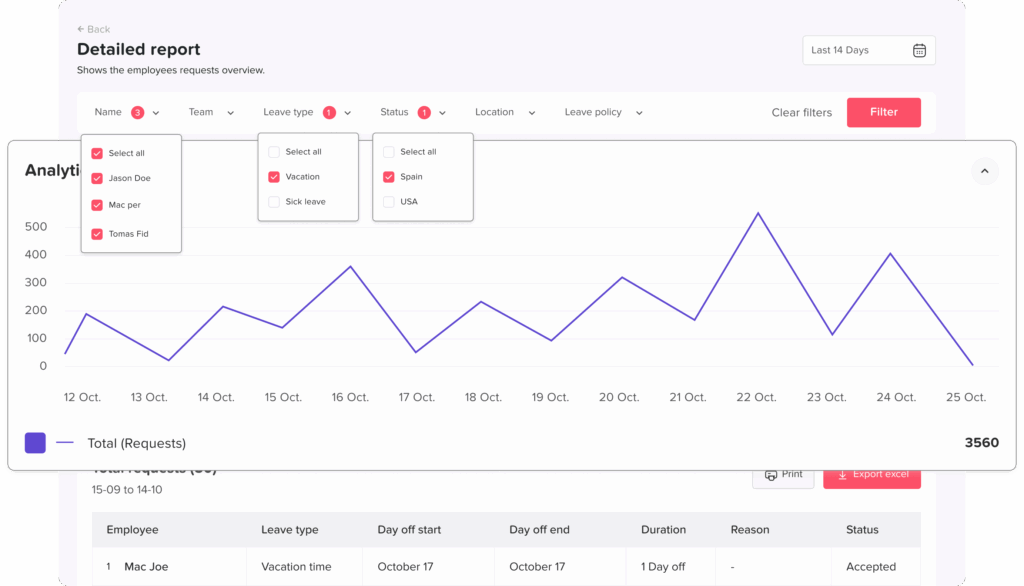
HR teams often need more than a calendar.
They may need to review historical leave, analyze employee absences, or generate reports for managers and administrators.
Day Off includes reporting functionality as part of its leave management platform.
Centralizing this information can make it easier to answer questions about leave usage without searching through individual email conversations or spreadsheets.
Connect Leave Data With Workplace Tools
Day Off supports integrations with workplace tools including Google Calendar, Outlook, Slack, and Microsoft Teams, depending on the available plan and configuration.
Calendar integrations can help employees and managers keep approved absences visible alongside their normal schedules.
Connect With Other Systems Through the API
Organizations with internal HR platforms or custom workflows can also use Day Off’s public API to work with employee, leave, and company data.
For larger organizations, this can provide a way to connect leave information with other internal systems instead of maintaining completely separate records.
Best Practices for Implementing a Sabbatical Program
A successful sabbatical policy is not only about choosing the number of weeks employees can take. The surrounding process matters just as much.
Keep the Rules Simple and Objective
Employees should not have to interpret complicated policy language to determine whether they qualify.
Use clear criteria wherever possible.
For example:
Employees become eligible after completing five years of continuous service.
That is easier to administer than a rule based on subjective assessments of whether someone has “contributed significantly to the organization.”
Give Employees Enough Notice
Extended leave requires planning.
A longer notice period gives managers enough time to redistribute work, arrange temporary coverage, and communicate with customers or other stakeholders.
Make Coverage Part of the Process
Do not treat the handover as an optional courtesy.
For extended absences, make transition planning part of the approval process.
The employee should know what information needs to be documented before their leave begins.
Separate Sabbaticals From Protected Leave
Managers should understand that not every extended absence is a sabbatical.
An employee who has a qualifying reason for legally protected leave should be evaluated under the applicable leave laws and company policies rather than automatically being directed to use a discretionary sabbatical.
Put Individual Agreements in Writing
In addition to the general policy, consider documenting each approved sabbatical.
- The agreement can confirm:
- Approved start date
- Expected return date
- Compensation
- Benefits
- Coverage arrangements
- Any applicable conditions
- Return-to-work expectations
This reduces the possibility of disagreements later
Review the Policy Regularly
A leave policy should not be written once and forgotten.
Review it periodically to ensure it still reflects:
- Current employment laws
- Benefits plans
- Company structure
- Workforce needs
- HR processes
- Leave-management technology
A legal or HR compliance review can be particularly important when the company operates across multiple jurisdictions.
Sabbatical Leave FAQs
Can an employee work another job while on sabbatical leave?
Whether an employee can work for another organization during a sabbatical depends on the employer’s policy, employment agreement, and applicable law. Employers may restrict outside employment where it creates a conflict of interest, involves a competitor, creates confidentiality concerns, or interferes with the employee’s obligations to the company.
If outside work is permitted, the sabbatical policy should explain whether employees need prior written approval before accepting other employment, consulting work, or freelance assignments.
Can employees take sabbatical leave during a probationary period?
Most organizations limit sabbatical eligibility to employees who have completed a defined period of service, so employees in probationary or introductory periods typically would not qualify.
If an employer wants to make an exception, it should be clearly documented rather than handled differently from employee to employee. Keeping sabbatical eligibility separate from short-term personal leave can also make the policy easier to administer.
Can employees take a sabbatical while working remotely?
Remote work and sabbatical leave are separate arrangements. An employee working remotely is still expected to perform their job, while an employee on sabbatical is generally taking an approved period away from their normal work responsibilities.
An employer may allow an employee to spend their sabbatical abroad or in another location, but that can raise additional tax, immigration, insurance, data-security, or employment-law considerations. Companies should review those issues before approving arrangements that involve working or residing in another country.
Should employees be required to explain why they want a sabbatical?
Not necessarily. An employer can decide how much information it needs to evaluate a sabbatical request.
Some organizations allow sabbaticals for any legitimate personal purpose and therefore only require the requested dates. Others may ask employees to provide a general reason, particularly if the program is designed around education, research, volunteering, or professional development.
If the company collects information about the reason for leave, it should avoid requesting unnecessary sensitive personal information and should handle employee information appropriately.
Can an employer cancel an approved sabbatical?
The policy should explain whether an approved sabbatical can be changed or canceled and under what circumstances.
For example, an organization may reserve the right to reconsider an approved leave in exceptional business circumstances. However, employers should be cautious about making broad promises or giving themselves unlimited discretion after an employee has already made plans based on an approval.
Any cancellation or material change should be handled consistently and in accordance with the company’s policy, employment agreements, and applicable law.
Does sabbatical leave affect an employee’s seniority?
It can, depending on how the employer defines service and seniority.
A policy may specify whether time spent on sabbatical counts toward continuous service, future eligibility for benefits, promotion requirements, or eligibility for another sabbatical.
Because seniority can affect employment rights and benefits in some jurisdictions, employers should make sure their sabbatical rules do not unintentionally conflict with applicable law or contractual obligations.
Can employees take sabbatical leave consecutively with other types of leave?
An employer may allow employees to combine sabbatical leave with other forms of company-provided leave, but the rules should be defined in advance.
For example, a policy could allow an employee to use PTO immediately before or after a sabbatical. Other combinations may require additional review, particularly when legally protected leave is involved.
The policy should explain whether different leave types can be taken consecutively and whether separate approval is required for each type.
Should employees continue receiving company equipment during sabbatical leave?
The company should establish a clear approach to equipment and system access before an employee begins an extended absence.
Depending on the employee’s role and the length of the sabbatical, the organization may require the employee to return laptops, access cards, company phones, or other equipment. IT may also temporarily suspend access to certain systems.
These decisions should be based on legitimate operational and security requirements and communicated to the employee before the leave begins.
How should managers communicate with employees during a sabbatical?
A sabbatical is intended to provide an extended break from normal work, so unnecessary work communication should generally be avoided.
Before the employee leaves, the manager should establish who will handle urgent issues and how genuinely necessary communication will be managed.
If the organization expects employees to remain reachable for specific situations, that expectation should be clearly communicated before the sabbatical begins rather than introduced unexpectedly during the leave.
What should HR review after an employee returns from sabbatical?
The return from a sabbatical is an opportunity to make the transition back to work as smooth as possible.
HR and the manager may want to confirm the employee’s return date, review any changes that occurred during the absence, restore relevant systems or benefits, and clarify current responsibilities.
For longer sabbaticals, a short re-entry meeting can also help the employee understand changes to projects, teams, policies, technology, or reporting structures that occurred while they were away.
The company can also use the return process to collect feedback about the sabbatical program and identify improvements for future employees.
Conclusion
A well-structured sabbatical leave policy can give employees the flexibility to take an extended break while giving employers the clarity they need to manage long-term absences. The most effective policies clearly define eligibility, duration, compensation, benefits, approval requirements, handover responsibilities, and return-to-work expectations.
For employers, the goal is to create a program that is fair, consistent, and practical to administer. A written policy helps employees understand what they can expect while helping managers plan coverage and maintain business continuity. It is also important to keep sabbatical leave separate from legally protected forms of leave and to review the policy regularly as employment laws and company needs change.
As the number of leave types and employee requests grows, managing everything manually can become increasingly difficult. Using a leave management platform such as Day Off can help HR teams organize custom leave types, approval workflows, employee calendars, leave policies, and reporting in one place.
Ultimately, a successful sabbatical program is about creating a clear agreement between the employee and employer: employees receive meaningful time away from work, while the organization has a reliable process for planning, approving, and managing that absence.