








When a new employee joins a company, one of the first questions they may ask is: When does my PTO accrual start? That starting point is known as the PTO accrual effective date.
The answer is not always as simple as “on the first day.” Some employers begin PTO accrual on the employee’s hire date. Others wait until the next pay period or the first full calendar month. A company may also allow PTO to begin accruing immediately while requiring employees to complete a waiting period before they can use it.

Each approach can work, but the policy must clearly distinguish between:
- When PTO begins accruing
- When the system adds accrued PTO to the employee’s balance
- When the employee becomes eligible to use it
- How to calculate partial weeks, months, and pay periods
Without clear rules, two employees with the same annual PTO entitlement may receive different balances simply because they started on different dates.
This guide explains the most common PTO accrual effective dates, provides calculation examples, identifies potential problems, and helps employers choose a fair and manageable approach.
What Is a PTO Accrual Effective Date?
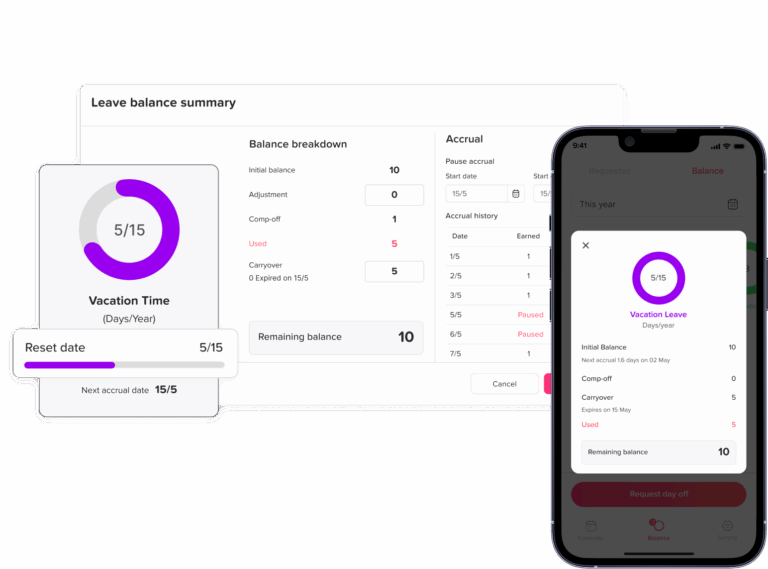
A PTO accrual effective date is the date on which an employee begins earning paid time off under the company’s leave policy.
For example, an employee hired on August 14 might begin earning PTO:
- On August 14, the hire date
- At the start of the next pay period
- On September 1, the first full month after hire
- After completing a probationary or waiting period
- On another eligibility date defined in the policy
The effective date is important because it determines how much PTO the employee earns during the first year.
However, the accrual effective date is not necessarily the same as the date on which PTO appears in the employee’s balance.
An employee may begin earning PTO on August 14, but the company may post the earned amount to the employee’s account at the end of August or on the next payroll date.
PTO Accrual Date vs. PTO Availability Date
Employers should clearly separate earning PTO from using PTO.
PTO Accrual Date
This is when the employee begins earning leave.
For example:
Employees begin accruing PTO on their date of hire.
PTO Posting Date
This is when the earned PTO appears in the employee’s visible balance.
For example:
Accrued PTO is added to employee balances on the final day of each monthly accrual cycle.
PTO Eligibility or Usage Date
This is when the employee may begin requesting or using the balance.
For example:
Employees begin accruing PTO on their date of hire but may not use accrued PTO until completing 90 calendar days of employment.
An employee could therefore have six hours of accrued PTO in the system but be temporarily unable to request it.
This distinction is especially important because some leave laws require accrual to begin before employees become eligible to use the leave. For example, Massachusetts earned sick time generally begins accruing on the date of hire, while use may be delayed until the employee’s 90th calendar day.
Why the PTO Accrual Effective Date Matters
The selected effective date affects several parts of PTO administration.
New-Hire Balances
An employee who starts in the middle of a month may receive:
- A prorated amount for the partial month
- A full monthly accrual
- No accrual until the following month
Payroll and HR Records
When PTO accrues by pay period, the effective date determines whether a new employee receives PTO during the current payroll cycle or begins with the next one.
Employee Expectations
Employees may assume they begin earning leave immediately unless the policy states otherwise.
Fairness Between Employees
Two employees starting a few days apart may receive different first-year PTO balances when the company uses full-month or full-pay-period rules.
Compliance
General vacation PTO is not required under the federal Fair Labor Standards Act, and the benefit is typically governed by the employer’s policy or agreement. However, state and local vacation or sick leave laws may control when certain leave begins accruing, when it becomes available, and whether accrued amounts can be forfeited.
Employers should review every jurisdiction in which they employ people rather than applying one rule automatically to the entire workforce.
The Three Most Common PTO Accrual Start Dates
The most common approaches are:
- Accrual beginning on the employee’s hire date
- Accrual beginning with the next pay period
- Accrual beginning on the first full calendar month
Each approach has different advantages and administrative challenges.
Option 1: PTO Accrual Begins on the Hire Date
Under a hire-date policy, the employee begins earning PTO on the first day of employment.
This approach is usually considered the most precise because it recognizes every eligible day of employment.
For example:
Employees begin accruing paid time off on their first day of active employment.
The company may calculate the first partial period based on:
- Calendar days employed
- Working days employed
- Hours worked
- The percentage of the accrual cycle completed
- A fixed prorated schedule
Hire-Date Accrual Example
Assume:
- Annual PTO entitlement: 120 hours
- Monthly accrual: 10 hours
- Employee hire date: August 14
- August contains 31 calendar days
- Employee is eligible for 18 calendar days during August, including August 14
A calendar-day proration could be:
10 monthly PTO hours ÷ 31 days × 18 eligible days = 5.81 hours
The employee would earn approximately 5.81 PTO hours for the partial month.
The company must define how the result is rounded. It might record:
- 5.81 hours
- 5.8 hours
- 5.75 hours
- 6 hours
The same rounding method should be used consistently.
Advantages of Starting on the Hire Date
- Recognizes every eligible day of employment
- Produces an accurate first-year balance
- Treats employees more consistently regardless of start date
- Works well for employees with variable hours
- Reduces large differences between employees hired a few days apart
Potential Problems
- Requires partial-period calculations
- Can create small decimal balances
- Depends on clear rounding rules
- May require payroll or time-tracking integration
- Can be harder to manage manually in spreadsheets
Best For
Hire-date accrual is often a strong choice for:
- Hourly employees
- Part-time employees
- Variable-schedule employees
- Organizations with automated leave tracking
- Policies that calculate PTO based on hours worked
Option 2: PTO Accrual Begins With the Pay Period
Under a pay-period approach, PTO is earned or credited according to the company’s payroll cycle.
Common schedules include:
- Weekly
- Biweekly
- Semimonthly
- Monthly
Employers must decide how to handle an employee who starts in the middle of a pay period.
Approach A: Prorate the First Pay Period
The employee earns a proportionate amount based on the portion of the pay period worked.
Approach B: Give the Full Pay-Period Accrual
The employee receives the full amount if they work any eligible portion of the period.
This is simple but may give an employee more PTO than the time actually employed would normally produce.
Approach C: Begin With the Next Full Pay Period
The employee receives no PTO for the partial cycle and begins accruing at the start of the next complete payroll period.
This is easier to administer but may delay accrual by several days or weeks.
Pay-Period PTO Calculation Example
Assume:
- Annual PTO entitlement: 120 hours
- Biweekly payroll: 26 periods per year
- PTO per full pay period: 120 ÷ 26 = 4.62 hours
- Pay period: August 3 through August 16
- Hire date: August 10
- Employee is employed for 7 of the 14 calendar days
A proportional calculation could be:
4.62 hours ÷ 14 days × 7 eligible days = 2.31 hours
The employee receives 2.31 hours for the partial period and 4.62 hours for each full eligible pay period afterward.
PTO per pay period is normally calculated by dividing the annual entitlement by the number of accrual periods. For an employee entitled to 120 annual hours, this would equal approximately 2.31 hours weekly, 4.62 hours biweekly, 5 hours semimonthly, or 10 hours monthly.
Should Accrual Start on the Hire Date but Post on Payday?
Yes. This is often the clearest version of a pay-period system.
Under this method:
- PTO begins being earned on the hire date
- The partial period is prorated
- The earned amount is added to the balance on payday or at the end of the cycle
For example:
PTO begins accruing on the date of hire and is credited to the employee’s balance at the end of each biweekly pay period. Employees hired during a pay period receive a prorated accrual for that period.
This wording distinguishes the accrual effective date from the posting date.
Advantages of Pay-Period Accrual
- Aligns with payroll processing
- Creates predictable balance updates
- Makes payroll reconciliation easier
- Works well for salaried employees
- Gives employees regular and understandable accrual amounts
Potential Problems
- Partial pay periods require a documented rule
- Employees may think they are not earning PTO until payday
- Payroll schedule changes can affect posting dates
- Semimonthly periods are not always equal in length
- Employees hired near the end of a cycle may receive very little or no first-period accrual
Best For
Pay-period accrual is often suitable for:
- Salaried teams
- Companies with established payroll cycles
- Employers that want PTO and payroll records aligned
- Policies that provide fixed accrual amounts instead of using hours worked
Option 3: PTO Accrual Begins on the First Full Month
Under this approach, employees who start during a month begin accruing PTO on the first day of the following month.
For example:
- Hire date: August 3
- Accrual effective date: September 1
The employee receives no accrual for August, even though they worked most of the month.
A policy might state:
Employees begin accruing PTO on the first day of the first full calendar month following their hire date.
First-Full-Month Example
Assume:
- Employee hire date: August 14
- Annual PTO entitlement: 120 hours
- Monthly accrual: 10 hours
- Accrual begins: September 1
Depending on the posting rule, the employee may receive:
- 10 hours on September 1, when accrual is posted at the beginning of the month
- 10 hours on September 30, when accrual is posted at the end of the month
The policy must identify which date applies.
Advantages of the First-Full-Month Approach
- Easy to explain
- Avoids partial-month calculations
- Produces clean monthly balances
- Reduces administrative work
- Can be manageable for small organizations using manual records
Potential Problems
- Employees hired early in the month may lose nearly a full month of accrual
- Small differences in hire dates can produce significant balance differences
- It may conflict with mandatory sick leave accrual rules
- Employees may view the approach as unfair
- The policy must make clear that no PTO is earned during the initial partial month
Best For
This approach may work for:
- Small organizations with simple monthly administration
- Voluntary vacation plans where delayed accrual is permitted
- Employers that clearly communicate the rule before employment begins
However, it should not be applied to legally required sick leave without confirming that the timing complies with applicable law.
Hire Date vs. Pay Period vs. First Full Month
| Accrual Method | When Earning Begins | First Partial Cycle | Administrative Difficulty | Main Consideration |
|---|---|---|---|---|
| Hire date | First day of employment | Usually prorated | Moderate | Most precise and equitable |
| Pay period | Hire date or next payroll cycle | Prorated, fully credited, or skipped | Low to moderate | Must define treatment of mid-period hires |
| First full month | First day of following month | Usually no accrual | Low | May create a long initial gap |
| End of waiting period | After a defined service period | No accrual before eligibility | Low | Must comply with applicable leave rules |
| Hours worked | As eligible hours are worked | Naturally prorated | Moderate | Requires accurate time records |
Can Employers Delay PTO Accrual Until After a Waiting Period?
For general vacation benefits, the answer may depend on the employer’s policy and applicable state law.
Federal law does not generally require private employers to provide vacation pay. Therefore, employers often have flexibility to establish eligibility and accrual rules, subject to state and local requirements, employment agreements, and collective bargaining agreements.
California provides a useful example of why employers must examine state rules carefully. The state does not require employers to provide vacation, but when vacation is offered, earned vacation counts as wages. Its guidance also recognizes that a genuine policy may establish an initial period during which employees do not earn vacation, provided the arrangement is not designed to disguise vacation that is actually being earned.
This does not mean every state follows the same rule.
Employers should avoid assuming that a waiting period allowed for voluntary vacation is also permitted for mandatory sick leave.
Accrual Waiting Period vs. Usage Waiting Period
These policies produce different results.
Accrual Waiting Period
The employee earns no PTO during the waiting period.
Example:
Employees begin earning PTO after completing 90 days of employment.
An employee who reaches day 90 has a zero balance and begins accumulating leave from that point forward.
Usage Waiting Period
The employee earns PTO from the hire date but cannot use it until the waiting period ends.
Example:
Employees begin accruing PTO on the date of hire but may not use it until completing 90 days of employment.
An employee may already have several PTO hours available when the usage waiting period ends.
Why the Difference Matters
Suppose an employee earns 10 hours per month and completes a three-month waiting period.
Under an accrual waiting period:
- Months one through three: 0 hours earned
- Month four: accrual begins
- Balance at the beginning of month four: 0 hours
Under a usage waiting period:
- Months one through three: 30 hours earned
- Employee cannot use the hours during the waiting period
- Balance available after eligibility begins: approximately 30 hours
The employee handbook should never use vague wording such as “PTO begins after 90 days” without explaining whether it refers to accrual or use.
How Should Employers Handle Mid-Month Hires?
Employers typically choose one of four approaches.
Prorate by Calendar Days
The monthly accrual is divided by the number of days in the month and multiplied by the employee’s eligible days.
Prorate by Working Days
The company counts only scheduled workdays.
This may be suitable for fixed Monday-to-Friday schedules but becomes harder for rotating or variable schedules.
Prorate by Hours Worked
PTO is calculated according to actual eligible working hours.
For example:
Annual PTO hours ÷ annual working hours × eligible hours worked
A full-time employee receiving 120 annual PTO hours over a 2,080-hour work year would earn approximately 0.0577 PTO hours for every eligible hour worked.
Begin With the Next Full Cycle
The employee earns nothing for the partial month and begins with the next complete accrual period.
This is simple, but the company must ensure the rule is lawful and communicated clearly.
How Should Employers Handle Mid-Pay-Period Hires?
The policy should answer the following questions:
- Does any work during the pay period produce a full accrual?
- Is the amount prorated?
- Must the employee work a minimum number of days or hours?
- Is accrual based on calendar days, working days, or hours?
- Does the employee receive the accrual if the hire date falls on the final day of the period?
- Is the balance credited at the start or end of the cycle?
A clear policy could state:
Employees begin accruing PTO on the date of hire. Employees hired during a pay period receive a prorated accrual based on the number of calendar days actively employed during that pay period. PTO is posted to the employee’s balance at the end of the cycle.
PTO Accrual Examples for Different Frequencies
Assume an employee receives 120 PTO hours per year.
| Accrual Frequency | Number of Periods | PTO per Full Period |
|---|---|---|
| Weekly | 52 | 2.31 hours |
| Biweekly | 26 | 4.62 hours |
| Semimonthly | 24 | 5 hours |
| Monthly | 12 | 10 hours |
| Quarterly | 4 | 30 hours |
| Annual frontload | 1 | 120 hours |
The displayed amounts may require rounding. Employers should confirm that rounded periodic amounts still provide the intended annual entitlement.
For example, rounding a biweekly accrual of 4.615384 hours to 4.62 produces 120.12 hours across 26 periods. A company may accept this small difference, adjust the final accrual, or maintain more decimal places internally.
What Date Should Be Used for Frontloaded PTO?
Frontloaded PTO is different from periodic accrual.
Instead of earning small amounts each cycle, employees receive a larger balance at once.
The grant may occur:
- On the employee’s hire date
- After a waiting period
- On January 1
- On the employee’s work anniversary
- At the start of the company’s benefit year
For midyear hires, employers must decide whether to:
- Provide the full annual amount
- Provide a prorated grant
- Provide a fixed new-hire amount
- Wait until the next benefit year
A prorated annual grant may be calculated as:
Annual PTO entitlement ÷ 12 × eligible months remaining
For example, an employee with a 120-hour annual entitlement who is eligible for six months may receive:
120 ÷ 12 × 6 = 60 hours
The policy should also explain whether partial months count as full months or are prorated separately.
Common PTO Accrual Effective-Date Problems
The Policy Does Not Define When Accrual Starts
A policy may say employees “receive 15 days per year” without explaining the start date or earning schedule.
Employees cannot verify their balances when the basic timing rule is missing.
Accrual and Usage Are Confused
Managers may tell employees they “do not get PTO for 90 days” when the actual policy allows accrual immediately but restricts use.
This can lead to incorrect balances.
Employees Hired in the Same Month Receive Different Treatment
One manager may prorate the first month, while another begins accrual on the next full month.
The same rule should apply to all employees covered by the policy.
Partial Periods Are Calculated Manually
Spreadsheets may use different numbers of days, inconsistent rounding, or the wrong annual entitlement.
The Payroll Date Is Mistaken for the Accrual Date
PTO may appear on payday even though it was earned throughout the preceding period.
The record should show both the earning period and posting date.
Sick Leave Rules Are Treated Like Vacation Rules
A company may legally delay voluntary vacation accrual but be required to begin statutory sick leave accrual earlier.
California, for example, permits qualifying paid sick leave plans to use different accrual methods, but those methods must meet specified accrual milestones. Massachusetts generally requires earned sick time accrual to begin on the date of hire.
Status Changes Are Not Applied Correctly
An employee who moves from part-time to full-time may receive the wrong accrual rate if the policy does not define whether the new rate starts:
- On the status-change date
- At the next pay period
- At the beginning of the next month
Accrual Is Backdated Without Documentation
When HR corrects an effective date, the adjustment should show:
- Original effective date
- Corrected effective date
- Hours added or removed
- Reason for the correction
- Person authorizing the change
- Employee notification
The Employee Can Request PTO Before It Is Posted
Some systems may allow an employee to request projected future PTO, while others require the hours to appear in the current balance.
The policy should explain whether requests are evaluated using:
- Current available balance
- Projected balance on the leave date
- Manager-approved negative balance
- Annual entitlement
How to Choose the Best PTO Accrual Effective Date
There is no single best method for every employer.
Consider the following factors.
Workforce Type
Hours-worked or hire-date accrual may be more appropriate for part-time, hourly, seasonal, and variable-schedule employees.
Fixed pay-period accrual may be easier for salaried employees with predictable schedules.
Payroll Frequency
Aligning PTO postings with payroll can simplify reconciliation, but the policy should still identify when leave is earned.
Administrative Capacity
A first-full-month rule may be easy to manage manually, while precise hire-date proration is easier with automated software.
Employee Experience
Beginning accrual on the hire date is easy to explain and may feel fairer to employees.
Legal Requirements
Check vacation, paid sick leave, wage, and recordkeeping rules in every employee location.
Policy Simplicity
The method should be simple enough for employees and managers to understand without requiring HR to explain each balance individually.
PTO Accrual Effective-Date Policy Checklist
Before publishing the policy, define:
- Which employees are eligible for PTO
- The date accrual begins
- Whether an initial waiting period applies
- Whether the waiting period delays accrual, use, or both
- The accrual frequency
- Whether balances are posted at the start or end of each cycle
- How partial periods are calculated
- The rounding method
- Whether overtime hours earn PTO
- Whether paid holidays earn PTO
- Whether PTO continues during paid leave
- Whether PTO pauses during unpaid leave
- How part-time and variable-hour employees accrue
- How employment status changes affect accrual
- Whether future projected PTO can be requested
- How corrections are documented
- Whether accrual caps apply
- When higher tenure-based rates become effective
Sample PTO Accrual Policy Language
Hire-Date Accrual Example
Eligible employees begin accruing PTO on their date of hire. PTO is accrued monthly and credited at the end of each calendar month. Employees hired during a month receive a prorated accrual based on the number of calendar days actively employed during that month.
Pay-Period Accrual Example
Eligible employees begin accruing PTO on their date of hire. PTO is credited at the end of each biweekly payroll cycle. Employees hired during a pay period receive a prorated amount based on the portion of the period during which they were actively employed.
First-Full-Month Example
Eligible employees begin accruing PTO on the first day of the first full calendar month following their hire date. No vacation PTO is earned during the partial month in which employment begins.
This version should only be used after confirming that it complies with applicable law.
Immediate Accrual With Delayed Use
Employees begin accruing PTO on their date of hire. Accrued PTO may be used after the employee completes 90 calendar days of active employment. Completion of the waiting period does not change the original accrual effective date.
How Day Off Helps Manage PTO Accrual Effective Dates
Manually calculating PTO for employees who start in the middle of a month or pay period can create balance errors.
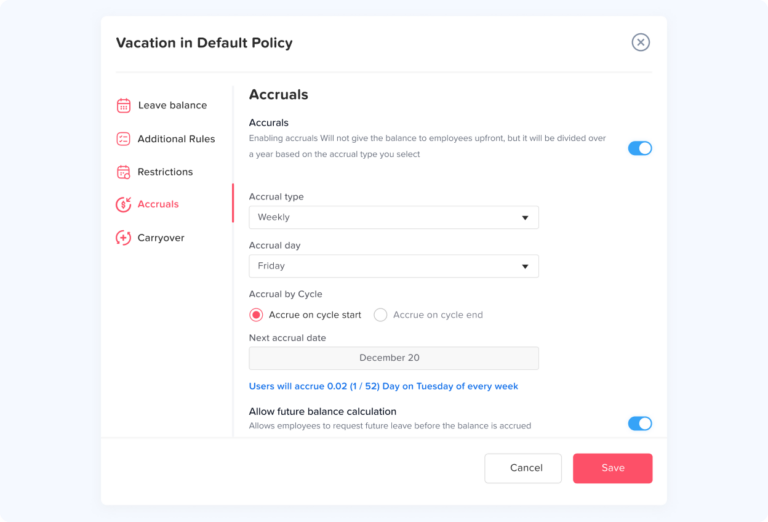
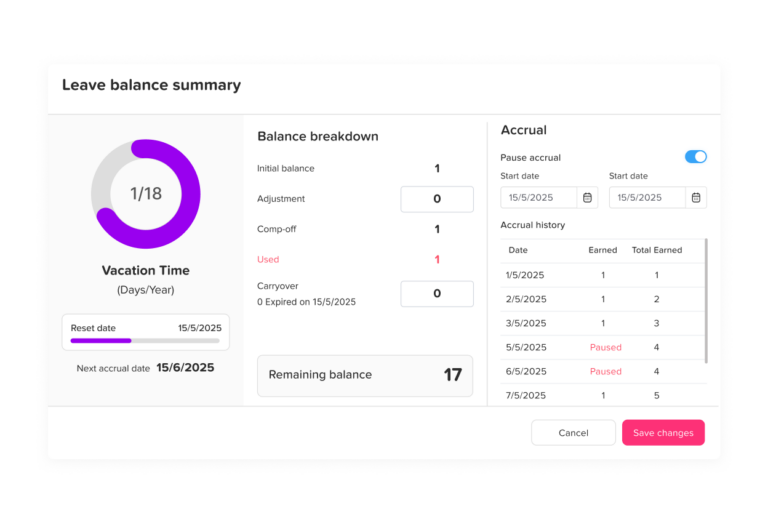
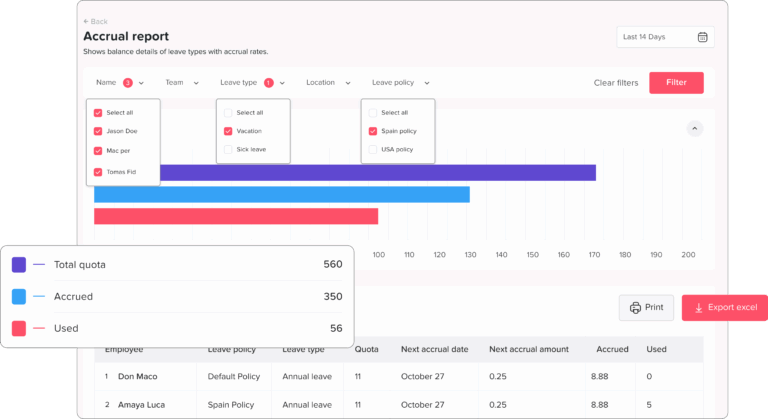
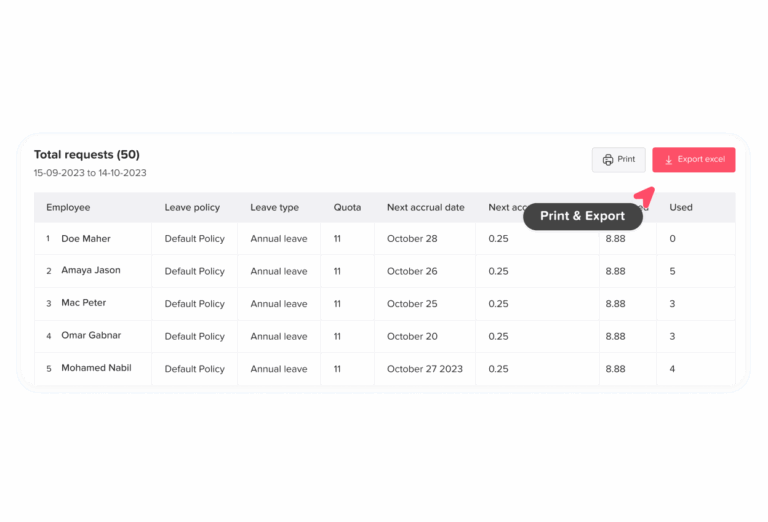
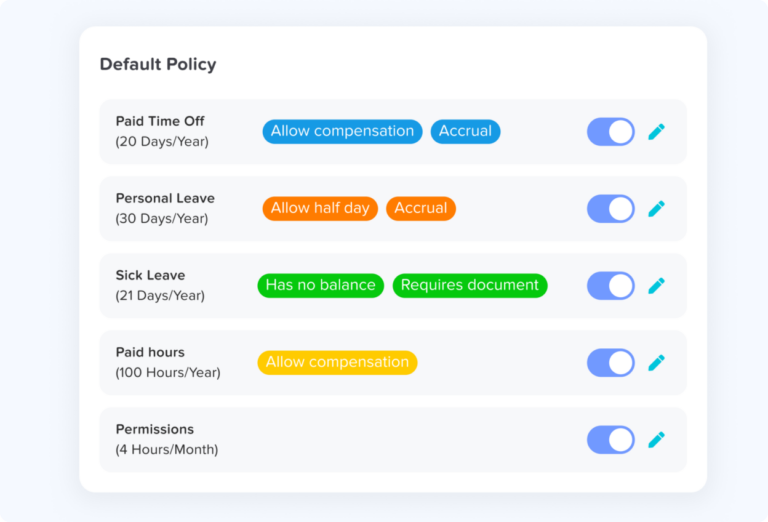
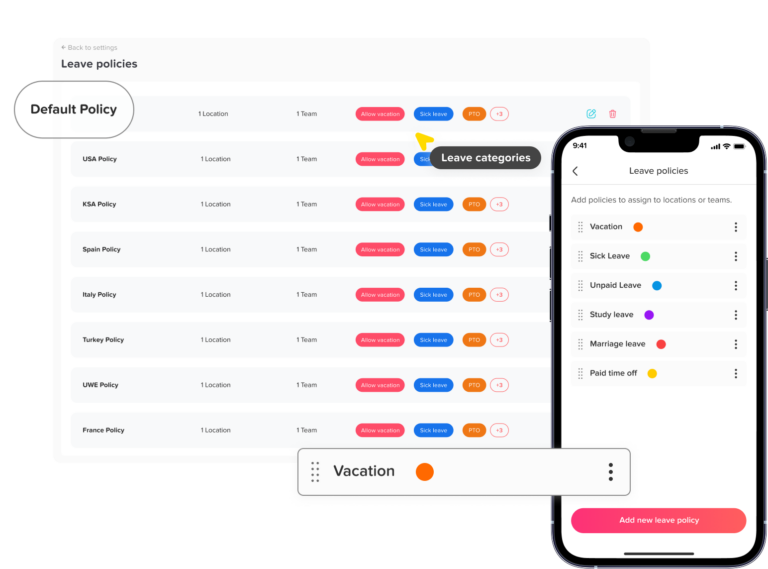
Day Off allows administrators to configure leave accrual rules within each leave policy. Depending on the selected setup, administrators can choose weekly, biweekly, monthly, or semimonthly accruals, select the accrual day, and specify whether leave is added at the start or end of the cycle. The system also displays the next accrual date and an accrual summary.
With Day Off, HR teams can:
- Create different PTO policies for employee groups
- Configure recurring accrual schedules
- Track upcoming accrual dates
- Review employee balances
- Make documented balance adjustments
- Manage different leave types separately
- Organize employees by team, location, or policy
- Connect requests with available balances
- Reduce manual spreadsheet calculations
Automated accrual tracking is especially useful when employees have different hire dates, schedules, entitlements, locations, and tenure levels.
Frequently Asked Questions About PTO Accrual Effective Dates
When does PTO start accruing at a new job?
PTO may start accruing on the employee’s first day, at the beginning of the next pay period, on the first full month after hire, or after a waiting period. The exact date depends on the employer’s written policy and any applicable state or local leave laws.
Federal law generally does not require private employers to provide paid vacation, so vacation accrual rules are usually established by company policy, employment agreements, or state law.
Does PTO start accruing on the date of hire?
Many employers begin PTO accrual on the employee’s hire date. The employee may earn a prorated amount for the first partial month or pay period.
Other employers delay vacation accrual until the next complete payroll cycle or another eligibility date. Mandatory sick leave may follow different rules. For example, Massachusetts earned sick time generally begins accruing on the employee’s first date of actual work, although use may be delayed until the 90th calendar day.
Can an employer make employees wait 90 days to accrue PTO?
An employer may be able to delay the accrual of voluntary vacation PTO when permitted by applicable law and clearly stated in the policy.
However, there is an important difference between:
- Waiting 90 days to begin earning PTO
- Earning PTO immediately but waiting 90 days to use it
Some state sick leave laws require accrual to begin before the employee becomes eligible to use the balance. Employers should therefore review local requirements before applying a 90-day rule to a combined PTO or sick leave bank.
Do employees accrue PTO during a probationary period?
Employees may accrue PTO during probation, depending on company policy and applicable law.
A common approach is to begin accrual on the hire date while preventing employees from using the balance until they complete 30, 60, or 90 days. Another policy may delay both accrual and use.
The employee handbook should clearly state which approach applies. It should not simply say that employees “receive PTO after probation.”
What is the difference between accruing PTO and being allowed to use it?
Accruing PTO means the employee is earning time and adding it to a balance.
Using PTO means the employee is eligible to submit a request and take paid leave from that balance.
For example, an employee may begin earning eight PTO hours per month from the hire date but be unable to use those hours until completing a 90-day waiting period.
At the end of the waiting period, the employee could already have approximately 24 accrued hours available.
Does PTO begin on the first day or after the first paycheck?
That depends on how the employer defines the accrual and posting dates.
An employee may begin earning PTO on the first day while the balance is not posted until the first paycheck or the end of the first complete pay period.
A clear policy might state:
PTO begins accruing on the date of hire and is credited to the employee’s balance at the end of each biweekly pay period.
This explains that the employee is earning PTO before it appears in the system.
What happens to PTO if an employee starts in the middle of a pay period?
The employer may:
- Prorate the first accrual
- Give the full pay-period accrual
- Begin accrual with the next complete pay period
- Calculate PTO according to the hours actually worked
The selected method should be stated in the policy and applied consistently to employees covered by the same PTO plan.
How is PTO prorated for a new employee who starts mid-pay period?
The employer can divide the full pay-period accrual by the number of days in the period and multiply it by the employee’s eligible days.
For example:
- Full biweekly accrual: 4.62 hours
- Pay period length: 14 days
- Employee is active for 7 days
4.62 ÷ 14 × 7 = 2.31 PTO hours
The employer should also define whether the calculation uses calendar days, scheduled working days, or actual hours worked.
What happens if an employee starts in the middle of the month?
The employer may prorate the first month or wait until the first complete calendar month.
Suppose an employee receives 10 PTO hours per month and starts on the 16th day of a 30-day month. A calendar-day calculation could be:
10 ÷ 30 × 15 eligible days = 5 PTO hours
Another policy may provide no accrual for the partial month and begin with the following month. This approach should be confirmed against applicable vacation and sick leave laws.
Is PTO normally prorated during the first month of employment?
Many employers prorate PTO so the employee earns leave for the portion of the month they were employed. This avoids giving employees hired late in the month the same amount as employees who worked the entire month.
However, proration is not universal. Some companies provide the full monthly amount, while others begin on the next full month.
The policy should explain the calculation and rounding method.
How much PTO do employees accrue per paycheck?
The amount depends on the annual entitlement and number of pay periods.
For an employee receiving 120 PTO hours annually:
| Payroll Frequency | Pay Periods | PTO per Period |
|---|---|---|
| Weekly | 52 | 2.31 hours |
| Biweekly | 26 | 4.62 hours |
| Semimonthly | 24 | 5 hours |
| Monthly | 12 | 10 hours |
The basic calculation is:
Annual PTO hours ÷ number of accrual periods
Employers may need to adjust the final accrual slightly when periodic amounts are rounded.
Does PTO accrue every paycheck or once a month?
PTO can accrue weekly, biweekly, semimonthly, monthly, quarterly, by hours worked, or on another schedule selected by the employer.
Employees should check whether the balance is added:
- At the beginning of the cycle
- At the end of the cycle
- On payday
- After the timesheet is approved
- On a fixed day of each month
The frequency and posting date should both appear in the PTO policy.
Why is my PTO not showing after my first paycheck?
Possible reasons include:
- The company begins accrual with the next full pay period
- PTO is credited after payroll rather than on payday
- A waiting period applies
- The employee was not assigned to the correct leave policy
- The first partial period was excluded
- The accrual has been earned but not posted
- The employee reached an accrual cap
- The HR or payroll system contains an incorrect hire date
The employee should ask HR for the accrual effective date, posting schedule, current policy assignment, and transaction history.
Can PTO be accruing even if the balance is not visible yet?
Yes. Some systems calculate PTO throughout a pay period but do not display the final amount until the period closes.
For example, an employee may earn PTO from July 1 through July 14, with the amount appearing in the leave system on July 15.
The policy should distinguish between the period in which PTO is earned and the date it becomes visible.
Can an employee request PTO before it has been accrued?
That depends on whether the company allows employees to use projected future balances.
Some employers approve a request when the employee is expected to have enough PTO by the requested leave date. Others require the full amount to be available when the request is submitted.
The policy should explain whether requests are evaluated using:
- The current balance
- The projected balance on the leave date
- The balance on the approval date
- A permitted negative PTO limit
Can an employer backdate PTO accrual after the waiting period?
An employer may set up a policy under which no PTO is displayed during the waiting period but the balance is credited retroactively to the hire date once eligibility is completed.
For example, an employee may complete a 90-day waiting period and then receive the PTO earned during those 90 days.
This should be clearly described as an immediate-accrual, delayed-use policy. It should not depend on informal manager decisions.
Does PTO accrue while an employee is using PTO?
It depends on the employer’s accrual rules.
Some employers treat paid PTO hours as eligible paid time and continue accrual during vacations. Others calculate accrual using only hours actually worked.
The policy should specify whether eligible hours include:
- Regular working hours
- Vacation PTO
- Paid sick leave
- Paid holidays
- Other paid leave
- Overtime
Different policies can reach different results, so the rule should be applied consistently.
Does PTO accrue during unpaid leave?
PTO commonly stops accruing during unpaid leave when the policy requires employees to be in active paid status or to work eligible hours.
However, employers may choose to continue accrual, and applicable laws, contracts, or collective bargaining agreements may require different treatment.
The policy should explain whether accrual stops immediately, after a full unpaid pay period, or only after a defined length of leave.
Does PTO continue to accrue during FMLA leave?
The answer depends on whether the FMLA leave is paid or unpaid and how the employer treats comparable types of leave.
Under federal FMLA rules, employees are not automatically entitled to earn additional benefits during unpaid FMLA leave. Benefits earned before the leave began must remain available when the employee returns.
If the employee uses paid PTO concurrently with FMLA leave, the employer should apply the same accrual rules it uses for comparable paid leave. FMLA itself generally provides unpaid, job-protected leave, although employees may use or be required to use available paid leave under applicable rules.
Does PTO accrue during maternity or parental leave?
The answer depends on the type of leave and the employer’s policy.
PTO may continue accruing when the parental leave is paid and the employer treats paid leave as eligible service. Accrual may pause during an unpaid portion of leave if the same rule applies to comparable unpaid absences.
Employers should also review any applicable family leave, disability, pregnancy, state, or local requirements before stopping accrual.
Final Thoughts
The PTO accrual effective date determines more than when an employee sees a few hours added to their balance. It affects first-year entitlements, payroll records, employee expectations, leave availability, and the accuracy of future calculations.
Starting accrual on the hire date is generally the most precise approach, especially when partial periods can be calculated automatically. Pay-period accrual can simplify payroll administration, while a first-full-month rule may reduce manual calculations but create a longer initial gap for new employees.
Whatever method an employer chooses, the policy should clearly explain when PTO begins accruing, when it is posted, when employees may use it, and how partial periods are handled. Employers should also review state and local requirements carefully, particularly when a PTO bank is used to satisfy mandatory paid sick leave obligations.
With a leave management system such as Day Off, HR teams can automate accrual schedules, monitor effective dates, adjust balances, and give employees better visibility into how their PTO is earned. Clear rules and reliable records help prevent balance disputes while creating a more consistent time-off experience for everyone.