








Related reading: Retroactive PTO Requests, How to Manage PTO During Product Launches, Deadlines, and Busy Seasons, PTO Expiration Policy, PTO for Interns, and How to Track PTO by Location for Multi-Office Teams.

Making this change requires more than adding a balance to each employee’s account. Employers must choose an effective date, determine opening balances, handle approved future leave, define accrual rules, update payroll and HR systems, and communicate the new policy clearly.
This guide explains how to move from unlimited PTO to accrued PTO while protecting employee trust and maintaining accurate leave records.
What Does Moving From Unlimited PTO to Accrued PTO Mean?
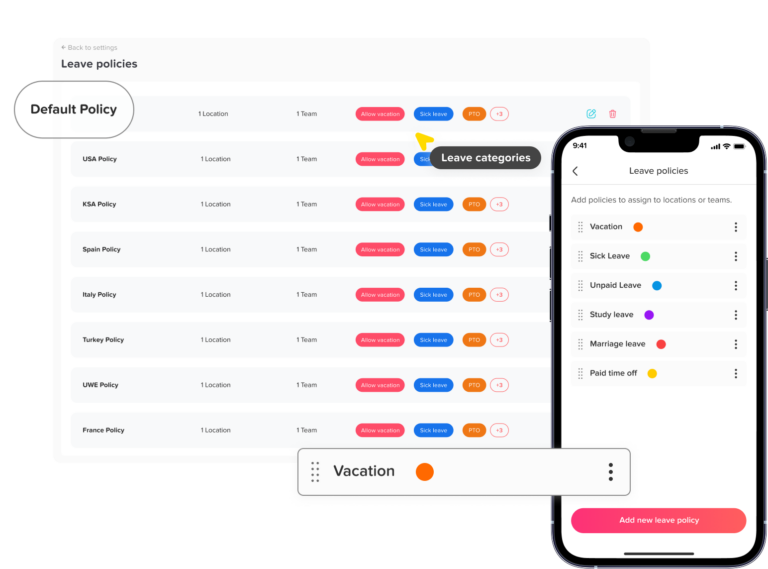
Under an unlimited PTO policy, employees do not usually earn or maintain a fixed vacation balance. They may request paid time off as needed, subject to manager approval, workload, performance expectations, and company rules.
Under an accrued PTO policy, employees earn a specific number of hours or days over time.
For example, an employee entitled to 120 PTO hours annually may earn:
- 2.31 hours each week
- 4.62 hours every two weeks
- 5 hours twice per month
- 10 hours each month
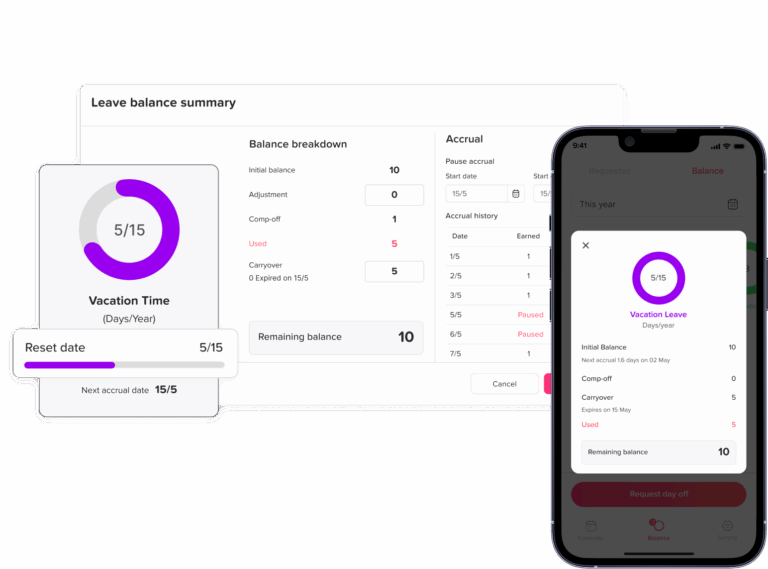
Day Off defines accrual rules as a method of distributing leave balances gradually instead of granting the full entitlement at once. The balance is divided across a selected period and added according to the company’s chosen schedule.
The change therefore moves the company from a policy based mainly on approval and flexibility to one based on measurable balances, earning schedules, and documented deductions.
Why Do Companies Move Away From Unlimited PTO?
An unlimited PTO policy may look simple, but it still requires clear expectations and consistent management.
A company may decide to introduce accrued PTO because it wants to:
- Give employees a visible and predictable leave balance
- Reduce uncertainty about how much time off is acceptable
- Improve scheduling and workforce planning
- Apply the policy more consistently across managers
- Track PTO usage more accurately
- Create clearer rules for part-time and variable-hour employees
- Coordinate PTO with payroll and attendance records
- Define carryover, caps, and termination treatment
- Meet location-specific sick leave or vacation requirements
- Reduce employee concerns about requesting leave
The change does not necessarily mean employees will receive less time off. An employer can create a generous accrued policy while providing more structure and transparency.
Unlimited PTO vs. Accrued PTO
| Policy Area | Unlimited PTO | Accrued PTO |
|---|---|---|
| Employee balance | Usually no fixed balance | Specific hours or days |
| How leave is provided | Requested as needed | Earned gradually or granted upfront |
| Main control | Approval and performance expectations | Available balance and approval |
| Carryover | Usually not applicable | May be allowed or limited |
| Accrual cap | Usually not applicable | May stop further accrual |
| Termination payout | Often no defined balance, subject to policy and law | May be required in some jurisdictions |
| Employee visibility | Depends heavily on policy clarity | Employees can see earned and available leave |
| Administration | Simple in theory, but may be inconsistent | More calculations, but clearer records |
| Workforce planning | Based on requests and manager judgment | Supported by balances, forecasts, and reports |
Neither policy is automatically better for every workplace. The right choice depends on company culture, workforce structure, employee locations, administrative capacity, and the quality of the policy.
Can an Employer Change From Unlimited PTO to Accrued PTO?
Employers can often change future PTO policies, but the process depends on applicable laws, contracts, collective bargaining agreements, offer letters, and existing policy commitments.
Federal law in the United States generally does not require private employers to provide paid vacation. Vacation benefits are usually determined by an agreement between the employer and employee.
State rules may impose additional requirements once vacation is offered. California, for example, treats earned vacation as wages and does not permit accrued vacation to be forfeited.
Employers should therefore review the transition with qualified legal and payroll professionals, especially when employees work in multiple states or countries.
Review How the Unlimited Policy Actually Operated
Before changing the policy, HR should examine both the written rules and how the company administered them in practice.
Questions to review include:
- Did employees truly have no defined annual entitlement?
- Was there an informal maximum number of days?
- Were employees told they should take approximately a certain amount?
- Did managers deny requests after employees reached an unwritten limit?
- Did the company track unused vacation as if it were a balance?
- Were employees required to earn time before using it?
- Did leave increase with tenure?
- Were employees promised a specific minimum amount?
- Was unused leave discussed during termination?
- Did offer letters describe PTO differently from the handbook?
This review is important because labeling a policy “unlimited” does not guarantee that it will always be treated as a genuine unlimited policy.
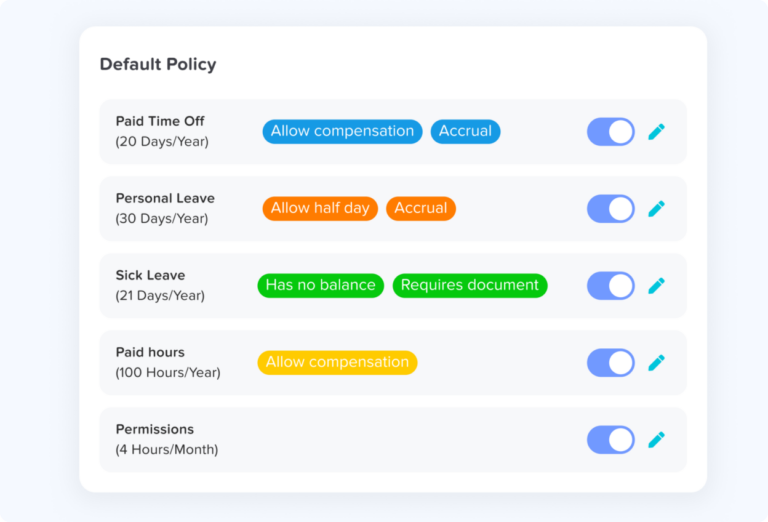
In McPherson v. EF Intercultural Foundation, a California appellate court concluded that the state’s vacation payout requirements applied to a purported unlimited policy based on the particular facts of how that policy was communicated and administered. The decision did not establish that every unlimited policy creates accrued vacation, but it shows why employers must examine the policy’s real operation rather than relying only on its name.
Step 1: Choose a Clear Effective Date
The new accrued PTO policy should begin on a specific date.
Possible effective dates include:
- January 1
- The beginning of a fiscal year
- The start of a new pay period
- The beginning of a calendar month
- The employee’s anniversary date
A single company-wide date is usually easier to communicate and administer.
Starting at the beginning of a pay period can also reduce payroll and balance errors because the old and new policies do not overlap within the same payroll cycle.
The transition notice should state:
- The final day of the unlimited policy
- The first day of the accrued policy
- When the first accrual will be earned
- When the first accrual will appear in employee balances
- Which policy applies to requests spanning the transition date
Step 2: Decide the Annual PTO Entitlement
The employer must determine how much PTO employees will receive under the new policy.
The entitlement may be based on:
- Employment category
- Weekly working hours
- Length of service
- Job level
- Employee location
- Collective bargaining terms
- Company benefit strategy
An example structure might be:
| Employee Group | Annual PTO Entitlement | Example Monthly Accrual |
|---|---|---|
| Full-time employees | 120 hours | 10 hours |
| Employees working 30 hours weekly | 90 hours | 7.5 hours |
| Employees working 20 hours weekly | 60 hours | 5 hours |
| Senior employees | 160 hours | 13.33 hours |
These amounts are only examples. Employers should create a structure that fits their workforce and applicable leave requirements.
Step 3: Select the Accrual Method
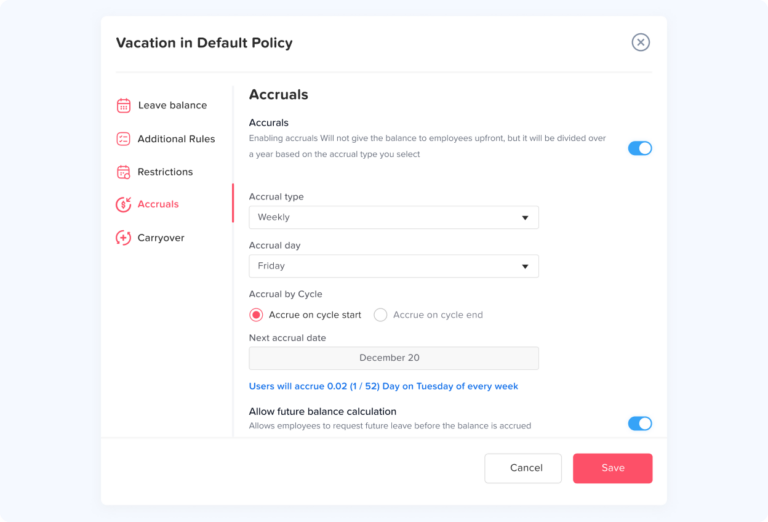
Companies can use several methods to provide the new entitlement.
Weekly Accrual
The annual entitlement is divided by 52.
For 120 annual hours:
120 ÷ 52 = approximately 2.31 hours per week
Biweekly Accrual
The entitlement is divided by 26 payroll periods.
120 ÷ 26 = approximately 4.62 hours per pay period
Semimonthly Accrual
The entitlement is divided by 24 periods.
120 ÷ 24 = 5 hours per period
Monthly Accrual
The entitlement is divided by 12 months.
120 ÷ 12 = 10 hours per month
Hours-Worked Accrual
Employees earn PTO according to eligible hours worked.
For example, a policy may provide one PTO hour for every 20 hours worked.
This method can be useful for part-time, seasonal, and variable-hour employees.
Frontloaded PTO
Instead of gradual accrual, the employer grants the full or prorated balance at the beginning of the leave year.
Although frontloading is not technically periodic accrual, it still creates a defined PTO balance and may be easier for employees who need to schedule leave early in the year.
Step 4: Determine Employees’ Opening Balances
Opening balances are often the most difficult part of the transition.
Because a genuine unlimited PTO policy does not normally create individual balances, there may be no unused amount to transfer.
Employers generally have several options.
Option 1: Provide a Prorated Balance
If the accrued policy begins halfway through the year, employees receive the portion of the annual entitlement remaining in that year.
For example:
- Annual entitlement: 120 hours
- Transition date: July 1
- Remaining portion of year: 6 months
120 ÷ 12 × 6 = 60 hours
The employee may receive 60 hours on July 1 or earn those 60 hours gradually during the remaining six months.
Option 2: Begin Accrual With a Zero Opening Balance
Employees start earning PTO from the effective date without receiving an initial grant.
For example, an employee begins with zero hours on July 1 and earns 10 hours at the end of each month.
This approach is simple, but it may leave employees without enough PTO for vacations that were planned or approved under the unlimited policy.
Option 3: Provide a Transition Grant
The employer may give every eligible employee a fixed opening amount, such as 40 hours, and then begin normal accrual.
A transition grant can help employees adjust to the new system and avoid beginning the policy with an unusably low balance.
Option 4: Provide a Tenure-Based Opening Balance
Employees with longer service receive a larger starting balance.
This may reflect the company’s new tiered entitlement structure, but it should be applied consistently.
Option 5: Grandfather Certain Employees
The employer may allow existing employees to keep the unlimited policy while placing new hires under the accrued policy.
This reduces the immediate effect on current employees but creates two policies that HR must administer simultaneously.
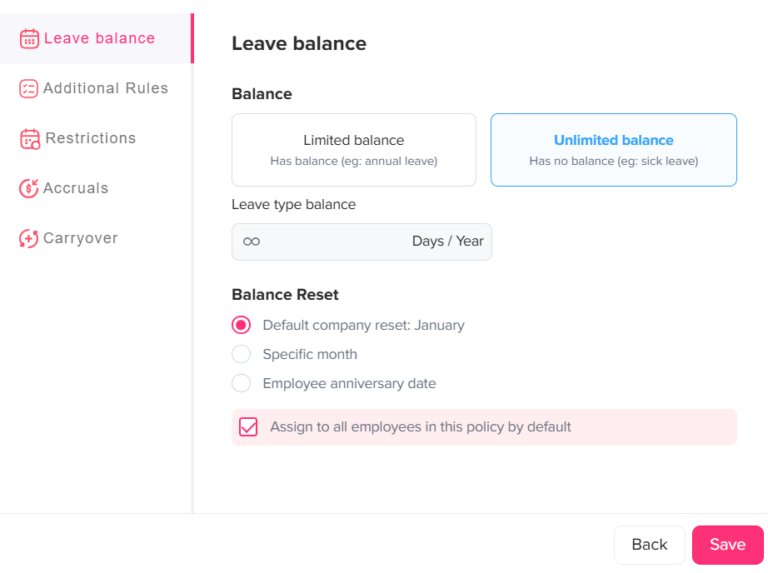
Should Previous Unlimited PTO Usage Affect the Opening Balance?
Previous time taken under the unlimited policy should not automatically be treated as an advance against the new accrued balance.
For example, an employee who took 15 days under the unlimited policy should not suddenly receive a negative balance because the new annual entitlement is 12 days.
The leave was taken under the rules that applied at the time.
Using previous leave to reduce the new balance can create several problems:
- Employees may feel they are being penalized retroactively
- Managers may have approved the leave without warning employees about a future deduction
- Employees who used little PTO may receive a larger benefit than employees who used the policy normally
- The calculation may conflict with the written unlimited policy
- The approach may create wage or contract concerns
Previous usage can be reviewed for workforce planning, but the new balance should usually begin according to a clearly defined transition rule rather than a retroactive deduction.
Step 5: Handle Existing or Accrued Vacation Rights
A genuine unlimited policy may not contain a fixed accrued balance. However, employers must verify that no employee has an existing balance from:
- A previous accrued PTO policy
- A separate vacation bank
- A merger or acquisition
- A prior employment classification
- A location-specific statutory leave balance
- A contractual entitlement
- A manually maintained leave record
Existing earned balances should not simply disappear when the new policy begins.
HR should prepare a balance reconciliation showing:
- Balance before the transition
- Any protected or vested amount
- Transition grant or prorated entitlement
- New accrual start date
- Final opening balance
Step 6: Protect Approved Future Leave
Employees may already have approved vacations scheduled after the transition date.
The employer should decide whether these requests will:
- Remain approved without affecting the opening balance
- Be deducted from the new accrued balance
- Be partially covered by a transition grant
- Create an approved negative balance
- Be treated as a special transition exception
Canceling previously approved leave can disrupt travel plans and reduce employee trust.
A practical approach is to preserve approved requests and give employees enough transition PTO to cover them, or document that the approved leave will be honored even if the employee has not yet accrued the full amount.
The decision should be communicated before the new policy begins.
Example of Handling Approved Future PTO
Assume:
- New policy begins July 1
- Annual entitlement is 120 hours
- Employee receives a prorated 60-hour balance
- Employee already has 80 hours of approved vacation in August
Possible treatments include:
- Grant the employee 80 transition hours so the approved vacation remains covered.
- Grant 60 hours and permit a temporary negative balance of 20 hours.
- Deduct 60 hours from PTO and approve 20 hours as a paid transition exception.
- Honor the full 80 hours outside the new balance, then begin accrual normally.
The company should select one consistent method rather than leaving each manager to decide independently.
Step 7: Define Carryover and Accrual Caps
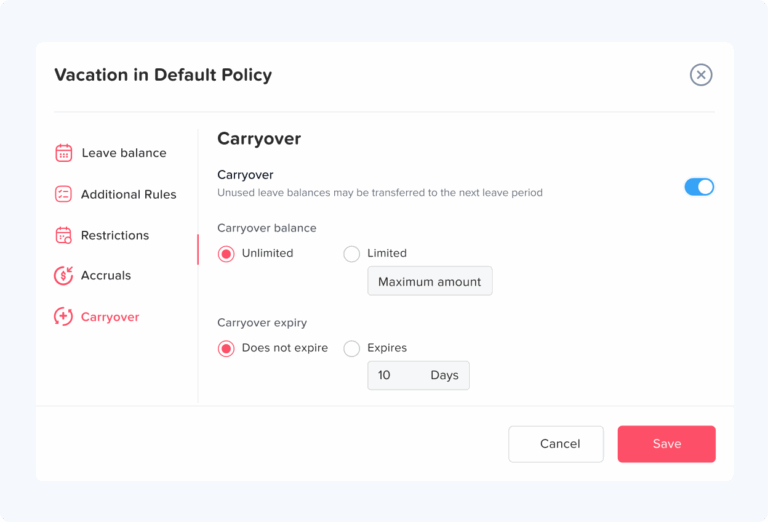
An accrued policy must explain what happens when employees do not use all their PTO.
Carryover Limit
A carryover limit controls how much unused PTO moves into the next leave year.
Example:
Employees may carry over up to 40 unused PTO hours into the following year.
Accrual Cap
An accrual cap controls the maximum balance an employee may hold.
Example:
Employees stop earning additional PTO when their balance reaches 180 hours. Accrual resumes after the balance falls below the cap.
An accrual cap does not usually remove the existing balance. It pauses future earning.
Employers should review applicable law before adopting expiration or use-it-or-lose-it rules. California, for example, allows reasonable accrual caps but does not allow earned vacation to be forfeited.
Step 8: Decide How PTO Will Be Treated at Termination
The policy should explain what happens to unused accrued PTO when employment ends.
Possible treatments include:
- Payment of the full unused balance
- Payment only where required by law
- No payment where lawful and clearly stated
- Different treatment for vacation and statutory sick leave
Termination payout requirements vary by jurisdiction.
California requires earned vacation to be included in final wages when employment ends.
Employers with remote or multi-state teams should apply the rule that governs the employee’s work location rather than relying solely on the company headquarters.
Step 9: Review Sick Leave Requirements
A company moving from unlimited PTO may decide to create one combined accrued PTO bank covering vacation, personal time, and illness.
Before doing so, HR should confirm whether the combined policy satisfies state and local paid sick leave requirements.
Depending on the jurisdiction, the policy may need to meet rules covering:
- Minimum accrual rates
- Minimum annual availability
- Permitted reasons for leave
- Family-member coverage
- Carryover
- Usage waiting periods
- Documentation
- Minimum increments
- Pay-stub or balance notices
- Reinstatement after rehire
California, for example, permits employers to use qualifying PTO policies to meet paid sick leave obligations, but the policy must provide at least the required leave and comply with the applicable usage and accrual rules.
Some employers reduce compliance complexity by keeping statutory sick leave separate from vacation PTO.
Step 10: Define the Treatment of Different Employee Groups
The transition policy should address:
- Full-time employees
- Part-time employees
- Hourly employees
- Salaried employees
- Seasonal workers
- Remote employees
- Employees in different locations
- Employees on extended leave
- Employees in a probationary period
- Employees with approved accommodations
- Employees covered by contracts or collective bargaining agreements
Employees should not be assigned to a general accrual policy simply because it is administratively convenient.
Part-time and variable-hour employees may need a prorated or hours-worked formula. Day Off notes that part-time PTO is commonly calculated proportionally or according to eligible hours worked.
Step 11: Update All Policies and Systems
The new rules should be updated consistently across:
- Employee handbook
- Offer letter templates
- Employment agreements
- HR information system
- Payroll system
- PTO tracker
- Timesheet software
- Manager guides
- Onboarding materials
- Internal knowledge base
- Employee self-service portal
Conflicting documents can create disputes.
For example, the handbook may say employees receive 15 days annually while the PTO system grants 120 hours monthly. Although these amounts may be equivalent for an eight-hour schedule, they may not be equivalent for employees working 10-hour shifts.
Step 12: Communicate the Change Clearly
Employees should receive written notice before the new policy becomes effective.
The communication should explain:
- Why the company is making the change
- When the new policy begins
- The employee’s annual entitlement
- The employee’s opening balance
- How PTO will accrue
- When the balance will be updated
- How approved future leave will be treated
- Whether carryover and caps apply
- What happens at termination
- Who employees should contact with questions
Employees should also receive examples showing how the policy works.
Avoid describing the change only as an administrative update. Employees may view unlimited PTO as an important benefit, so HR should directly explain how the new structure affects their ability to take leave.
Sample Transition Timeline
| Time Before Launch | Recommended Action |
|---|---|
| 8–12 weeks | Review legal requirements, contracts, and current policy operation |
| 6–8 weeks | Select entitlement, accrual method, opening balance, caps, and carryover |
| 4–6 weeks | Configure HR, payroll, and PTO systems |
| 3–4 weeks | Review future approved leave and employee exceptions |
| 2–4 weeks | Send written employee notice and manager guidance |
| 1–2 weeks | Test balances, accrual calculations, approvals, and reports |
| Effective date | Activate the new policy and provide opening-balance statements |
| First pay period | Audit accruals and resolve errors |
| First 90 days | Review usage, disputes, manager decisions, and employee feedback |
Sample Policy Language
Transition From Unlimited PTO to Accrued PTO
Effective January 1, the company’s unlimited PTO policy will be replaced with an accrued PTO policy.
Eligible full-time employees will receive an annual PTO entitlement of 120 hours. PTO will accrue at a rate of 5 hours per semimonthly pay period and will be credited at the end of each payroll cycle.
Employees will receive an opening transition balance of 40 hours on the effective date.
PTO approved before the effective date will remain approved. These requests will be reviewed individually to confirm how they will be applied to the transition balance.
Employees may carry over up to 40 unused hours into the following year. PTO accrual will pause when an employee’s balance reaches 180 hours and will resume after the balance falls below that amount.
Unused PTO will be handled at separation in accordance with company policy and applicable law.
Statutory sick leave and other protected leave rights will continue to be administered according to applicable requirements.
Common Problems When Changing to Accrued PTO
Giving Every Employee a Zero Balance
Employees may be unable to take planned leave during the first few months of the policy.
A transition grant or projected-balance approval process can reduce this problem.
Charging Employees for Time Taken Under the Old Policy
Previous unlimited PTO should not normally become a retroactive deduction from the new balance.
Ignoring Approved Vacations
Employees may already have paid for flights, hotels, or family arrangements based on approved leave.
Confusing Annual Entitlement With Accrual Cap
An employee may earn 120 hours annually but be allowed to hold up to 180 hours. These are different limits.
Using One Policy for Every Location
Vacation and sick leave rules vary by jurisdiction.
Failing to Define Partial-Year Entitlements
A policy beginning in July should explain whether employees receive a full-year entitlement, a prorated amount, or gradual accrual for the remaining year.
Applying the Policy Inconsistently
Managers should not be allowed to provide different opening balances or transition exceptions without HR oversight.
Removing Existing Earned Balances
Any balance earned under a previous policy should be reviewed before it is changed, frozen, converted, or paid.
Not Testing the Accrual Calculation
Rounding and frequency errors can cause employees to earn more or less than the intended annual amount.
For example:
4.62 hours × 26 biweekly periods = 120.12 hours
The employer may retain additional decimal places or adjust the final accrual.
How Day Off Supports the Transition
Day Off can manage both limited and unlimited PTO policies, allowing companies to create different rules for different employee groups.
When moving to accrued PTO, HR teams can use Day Off to:
- Create a new accrued leave policy
- Select weekly, biweekly, semimonthly, or monthly accruals
- Set accrual timing
- Assign annual entitlements
- Apply different policies to employee groups
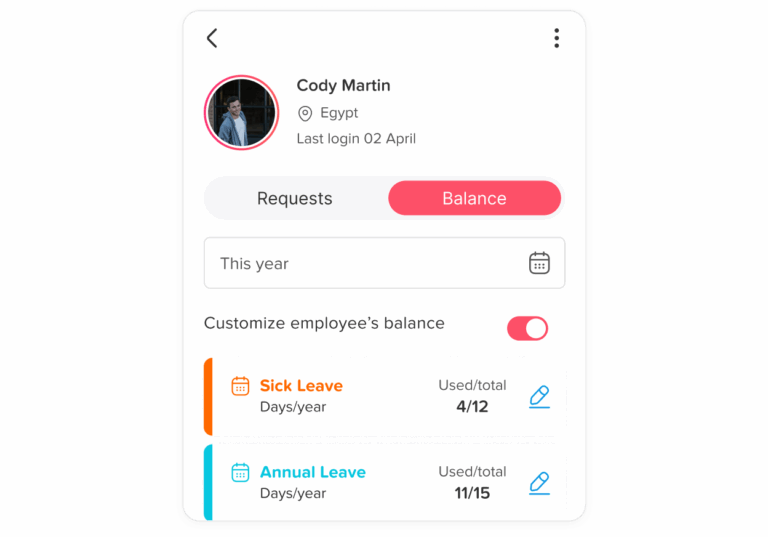
- Enter opening balances
- Track manual balance adjustments
- Manage carryover rules
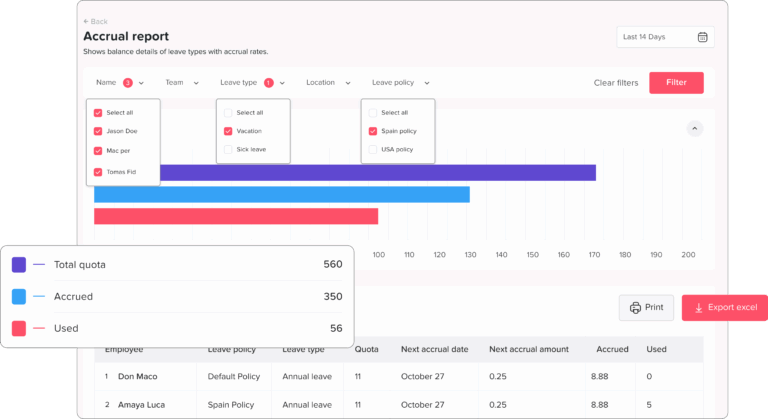
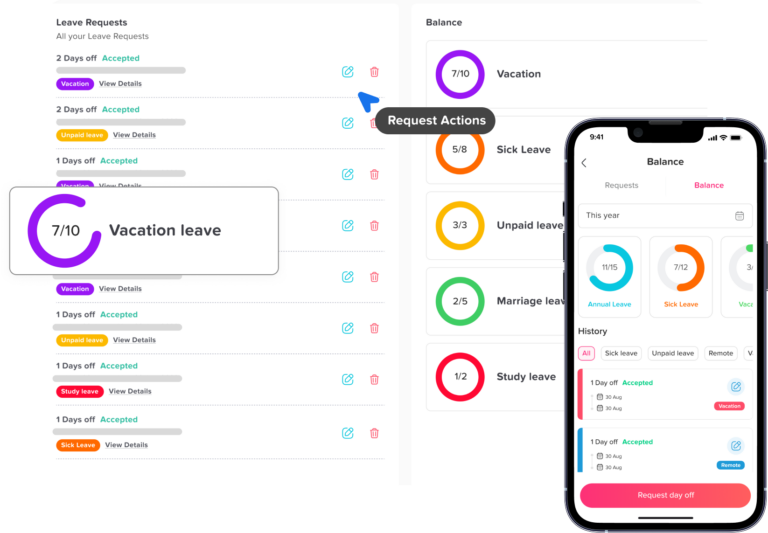
- Monitor employee balances
- Review requests and approvals
- See team availability
- Export leave reports
Day Off allows organizations to define leave policies for different types of leave and assign customized rules to different groups.
Before activating the new policy, administrators should test several employee scenarios, including midyear hires, part-time schedules, future requests, accrual caps, and employees on leave.
Frequently Asked Questions
Can a company change from unlimited PTO to accrued PTO?
Yes, a company can usually replace an unlimited PTO policy with an accrued PTO policy for future leave, but the change should be reviewed carefully before implementation.
The employer should check:
- Employment contracts
- Offer letters
- Collective bargaining agreements
- State and local leave laws
- Existing earned vacation balances
- Required employee notice periods
The new policy should have a clear effective date and should not be applied retroactively to leave that was already approved or taken under the unlimited policy.
What happens to time already taken under unlimited PTO?
Leave taken under the unlimited policy should normally remain governed by the rules that applied when the leave occurred.
For example, if an employee took 15 days of approved unlimited PTO before the new policy began, those days should not usually be deducted from the employee’s new accrued balance.
Applying the new policy to past leave may create confusion and could appear to penalize employees for using a benefit that was available to them at the time.
Do employees receive a payout when unlimited PTO ends?
A genuine unlimited PTO policy usually does not create a fixed unused balance, so there may be no amount to pay when the policy ends.
However, the employer should review how the policy actually operated. A payout issue may arise if:
- Employees were given a specific annual number of days
- Managers enforced an informal maximum
- Vacation was tracked as an earned balance
- Employees were required to earn leave before using it
- A previous accrued balance remained in the system
- Contracts promised a defined entitlement
Employers should review these situations with qualified legal and payroll professionals before deciding that no payout or balance preservation is required.
Should employees start the accrued policy with zero PTO?
They can, but starting everyone at zero may create practical and employee-relations problems.
Employees may already have vacations planned shortly after the transition. If they begin with no available PTO, they may be unable to take previously expected leave.
Alternatives include:
- A prorated opening balance
- A fixed transition grant
- A tenure-based starting balance
- Temporary negative PTO
- Honoring approved leave outside the new balance
The best approach is one that gives employees reasonable access to time off while keeping the new policy consistent.
How do you calculate PTO when the policy changes midyear?
The annual entitlement can be prorated based on the portion of the year remaining.
For example:
- Annual entitlement: 120 hours
- Policy begins July 1
- Six months remain
120 ÷ 12 × 6 = 60 hours
The employer may grant the 60 hours immediately or allow employees to earn them gradually over the remaining six months.
The policy should also explain whether partial months are counted, prorated, or excluded.
What happens to vacation already approved under unlimited PTO?
Previously approved leave should be reviewed and addressed before the transition date.
The employer may:
- Honor the leave without deducting it from the new balance
- Deduct it from a transition grant
- Allow a temporary negative balance
- Apply part of the request to accrued PTO and treat the rest as a transition exception
Canceling previously approved leave can create financial and employee-relations problems, especially when employees have already booked travel.
Employees should receive written confirmation explaining how their approved leave will be treated.
Can an employer reduce PTO benefits?
An employer may be able to reduce future PTO benefits, but it should not remove leave that employees have already earned or that applicable law treats as vested.
The employer should clearly explain:
- The previous benefit
- The new annual entitlement
- The effective date
- How existing balances will be handled
- Whether current employees will be grandfathered
- Whether future accrual rates will change
Any reduction should be applied prospectively and reviewed for compliance with local requirements.
Is unlimited PTO better than accrued PTO?
Neither policy is automatically better.
Unlimited PTO may provide flexibility and reduce balance administration, but it can also create uncertainty if employees do not know how much leave is acceptable.
Accrued PTO gives employees a visible balance and a clearer entitlement, but it requires more detailed rules for accrual, carryover, caps, and payouts.
Accrued PTO may be more suitable when the company wants:
- Predictable leave balances
- Consistent manager decisions
- Better workforce planning
- Clear rules for part-time employees
- More detailed reporting
- Stronger payroll coordination
Unlimited PTO may work better when the company has a strong leave culture, consistent managers, and clear expectations.
Does accrued PTO have to carry over?
Not always. Carryover rules depend on the employer’s policy and the laws that apply where the employee works.
Possible approaches include:
- Unlimited carryover
- Carryover up to a fixed limit
- Carryover with an expiration period
- No carryover where lawful
- An accrual cap that prevents the balance from growing beyond a maximum
The employer should distinguish between a carryover limit and an accrual cap. A carryover limit controls what moves into the next leave year, while an accrual cap controls the maximum balance an employee can hold.
Is accrued PTO paid when an employee leaves?
It depends on applicable law and the company’s written policy.
Some jurisdictions require employers to pay unused earned vacation when employment ends. In others, the written policy may determine whether unused PTO is paid.
The employer should review:
- The employee’s work location
- Whether the balance includes vacation or statutory sick leave
- The final available balance
- Any negative PTO amount
- The reason for separation
- Applicable contracts or agreements
The termination policy should be written clearly and applied consistently.
Can accrued PTO have a maximum balance?
Yes. Employers may use an accrual cap where permitted.
For example, an employee may earn 120 hours annually but be allowed to hold a maximum balance of 180 hours.
When the balance reaches 180 hours:
- The existing balance remains available
- New accruals temporarily stop
- Accrual resumes after the employee uses enough PTO to fall below the cap
A cap should pause future accrual rather than remove leave that has already been earned.
Final Thoughts
Moving from unlimited PTO to accrued PTO can provide employees with clearer benefits and give HR teams more reliable records for scheduling, payroll, reporting, and workforce planning. However, a successful transition depends on more than selecting an annual number of vacation days.
Employers must review how the unlimited policy operated, preserve existing earned rights, select a fair opening-balance method, protect approved future leave, define accrual and carryover rules, and communicate the change before it becomes effective.
The new policy should make employees feel more certain about their time off, not less. Clear balances, predictable accruals, consistent approvals, and accurate records can help achieve that goal.
With Day Off, organizations can configure the new accrued policy, assign employees to the correct rules, track balances, manage approvals, and maintain a clear history throughout the transition.