







When an employee submits a PTO Request, they usually need an answer quickly enough to book travel, arrange childcare, schedule appointments, coordinate with family, or simply know whether they can make plans. For managers, however, approving time off may require checking staffing levels, overlapping absences, deadlines, shift coverage, and company policy. The challenge is finding a reasonable approval timeframe that gives managers enough time to review the request without leaving employees waiting unnecessarily.

For most routine planned PTO requests, a good internal target is one to two business days. Simple requests may be approved the same day, while requests involving long absences, busy periods, multiple employees asking for the same dates, or additional approval levels may reasonably take longer.
There is no universal approval deadline that applies to every ordinary vacation request. In the United States, for example, the Fair Labor Standards Act does not require employers to provide paid vacation leave. Vacation benefits are generally determined by the employer’s policies, employment agreements, or applicable state and local requirements.
That makes a clear internal PTO approval policy especially important.
How Long Should PTO Request Approval Take?
A practical PTO Request approval standard for most businesses is:
- Same day to 2 business days for routine requests
- Up to 3 business days when managers need to check scheduling or coverage
- 3 to 5 business days for longer absences or requests that require multiple approvers
- As soon as possible for urgent or unexpected situations
These are recommended workplace targets, not universal legal deadlines.
The key is consistency. Employees should know approximately when they can expect an answer, and managers should not leave PTO request pending indefinitely.
| PTO Request Type | Suggested Manager Response Time | Why |
|---|---|---|
| Routine vacation day | Within 1 to 2 business days | Usually requires a basic balance and coverage check |
| Partial-day PTO | Same day or within 1 business day | Usually has a smaller scheduling impact |
| Multi-day vacation | Within 2 to 3 business days | May require more staffing coordination |
| Extended vacation | Within 3 to 5 business days | May affect projects, schedules, and handovers |
| Peak-season request | Within 2 to 3 business days | Multiple requests may need to be compared |
| Urgent personal absence | As soon as reasonably possible | Employee may need an immediate answer |
| Request requiring multiple approvals | Within 3 to 5 business days | More than one manager may need to review it |
Why Fast PTO Request Approval Matters
The speed of the approval process may seem like a small administrative issue, but it can have a significant effect on both employees and managers.
Employees need certainty
An employee requesting a vacation may be waiting to:
- Book flights
- Reserve accommodation
- Confirm family plans
- Schedule medical appointments
- Arrange childcare
- Organize transportation
- Plan around a partner’s work schedule
If a PTO Request remains pending for a week or more without explanation, the employee may have to choose between making plans without approval or losing an opportunity altogether.
Fast decisions create clarity.
Managers need time to prepare
Approval also affects workforce planning.
Once a manager knows who will be absent, they can:
- Redistribute responsibilities
- Change schedules
- Arrange shift coverage
- Move deadlines
- Assign temporary ownership of tasks
- Inform relevant team members
- Avoid approving too many people for the same period
Delaying the decision can therefore make absence planning more difficult for the manager as well.
Slow approvals can reduce trust
A PTO Request policy may say employees are entitled to request time off, but the experience can feel very different if requests regularly sit unanswered.
Employees may start:
- Sending repeated reminders
- Asking managers verbally instead
- Avoiding making plans
- Submitting requests much earlier than necessary
- Assuming silence means approval
- Feeling that PTO Request is difficult to use
A good leave process should make requesting time off predictable rather than stressful.
Is There a Legal Deadline for Approving PTO Request?
For ordinary vacation PTO in the United States, there generally is not one federal rule saying that a manager must approve or reject the request within a specific number of days.
The U.S. Department of Labor explains that the Fair Labor Standards Act does not require employers to provide vacation pay or paid time for vacations. These benefits are generally matters of agreement between the employer and employee.
However, employers should not assume that every absence labeled “PTO” can be treated as an ordinary vacation request.
Some absences may be protected by federal, state, or local law.
PTO and protected leave are not always the same thing
An employee might submit time off for:
- Their own serious health condition
- Caring for a qualifying family member
- Pregnancy or parental leave
- Paid sick leave
- Military family leave
- Domestic violence-related leave
- Jury duty
- Other legally protected reasons
Different rules may apply depending on the reason for the absence and the employee’s location.
For example, under the federal Family and Medical Leave Act, covered employers generally must provide an eligibility notice within five business days after learning that an employee’s leave may qualify for FMLA protection, absent extenuating circumstances. Once the employer has enough information to determine that the leave qualifies, a designation notice generally must also be provided within five business days.
These FMLA requirements should not be confused with a company’s normal vacation approval target.
Similarly, some jurisdictions protect an employee’s right to use accrued sick leave. California law, for example, prohibits employers from denying an employee the right to use accrued sick days for qualifying purposes.
Companies should therefore distinguish between discretionary vacation requests and absences that may involve legal protections.
What Should a Manager Check Before Approving PTO Request?
Managers should make decisions promptly, but that does not mean approving every request immediately.
A consistent review process helps managers make fair decisions.
Does the employee have enough PTO Request?
The manager or leave system should first check the employee’s available balance.
For example, if an employee requests 40 hours but has only 24 hours available, the company’s policy may determine whether:
- The request is rejected
- Only part of the request is approved
- The employee can use unpaid leave
- The balance can go negative
- Future accrued PTO Request can be used
Automating the balance check can significantly reduce approval time.
Did the employee provide enough notice?
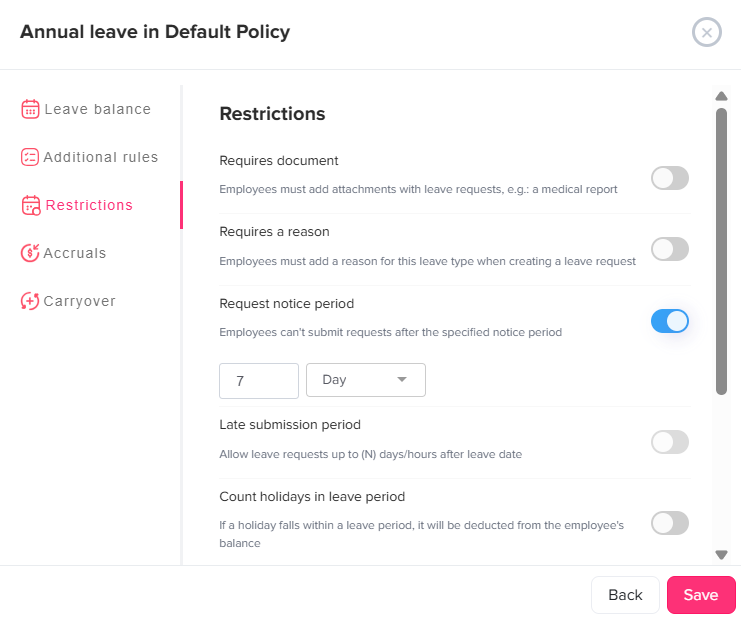
Many companies require advance notice for planned vacations.
For example:
- 2 business days for one day off
- 1 week for several days off
- 2 to 4 weeks for extended vacations
Notice requirements should be clearly stated in the PTO Request policy.
Unexpected illness and emergencies should normally follow a separate call-out or sick leave procedure rather than being treated exactly like planned vacation.
Are too many employees already off?
Managers should check the team calendar before approving overlapping absences.
The question should not simply be:
“Is someone else already off?”
Instead, managers should consider whether the team can realistically operate with both employees absent.
Two employees being away at the same time may be perfectly manageable in one department and operationally difficult in another.
Is there sufficient coverage?
The manager should determine whether essential work can still be completed.
Consider:
- Shift coverage
- Customer support coverage
- Required staffing minimums
- Project deadlines
- Required skills
- On call responsibilities
- Client meetings
- Payroll or reporting deadlines
The goal is not to eliminate every inconvenience caused by an absence. Time off will naturally require some planning.
The question is whether the absence creates a genuine operational problem.
Are there conflicting requests?
Problems often arise around:
- Christmas
- New Year
- Thanksgiving
- School holidays
- Summer vacation
- Public holidays
- Major company deadlines
- Seasonal busy periods
Companies should establish a rule before conflicts occur.
Possible approaches include:
- First request submitted, first considered
- Rotating holiday priority
- Seniority
- Business need
- Voluntary team coordination
- A combination of factors
The method should be applied consistently.
Should Managers Approve PTO on a First Come, First Served Basis?
First come, first served can be useful because it creates an objective process, but it should not necessarily be the only factor.
Suppose two employees request the same week off.
Employee A submitted the request first, but Employee A and Employee B are the only two employees trained to perform an essential function.
Automatically approving both requests may leave the company without necessary coverage.
A better policy could state that requests are generally reviewed in the order received, subject to staffing and operational requirements.
That provides predictability without removing management’s ability to protect business operations.
How Long Is Too Long to Leave a PTO Request Pending?
For a normal vacation request, more than five business days without an explanation is usually longer than necessary for most organizations.
A complicated request may legitimately require additional time. The problem is not always that approval takes longer. The problem is leaving the employee without information.
If additional review is necessary, the manager should communicate that.
For example:
“Your request is still being reviewed because several team members have requested the same dates. We expect to confirm availability by Thursday.”
The employee now knows:
- The request has been seen
- Why it is delayed
- When to expect an answer
That is much better than leaving the request in a pending status indefinitely.
What If the Manager Does Not Respond to a PTO Request?
Companies should have an escalation process for unanswered requests.
A request should not depend entirely on one manager noticing an email or remembering to log into a system.
A simple escalation structure might look like this:
| Time Pending | Recommended Action |
|---|---|
| First 1 to 2 business days | Request remains with the assigned manager |
| After 2 business days | Manager receives an automatic reminder |
| After 3 business days | Employee may send a follow-up |
| After 4 to 5 business days | Request may be escalated to HR, an admin, or another authorized approver |
| Manager is unavailable | Route the request according to the company’s backup approval process |
What Happens If the Manager Is on Vacation?
A manager’s own PTO Request should not prevent the rest of the team from receiving leave decisions.
Businesses should prepare for this by using:
- Backup approvers
- Multiple approvers
- Temporary approval delegation
- HR or administrator escalation
- Multi step approval workflows
For example, if a manager will be away for two weeks, requests should not remain pending until they return.
The organization should either process requests before the manager leaves or assign another authorized person to review them.
Should PTO Request Be Automatically Approved If the Manager Does Not Respond?
Usually, no.
Automatic approval after a certain number of days can create staffing problems if a manager genuinely missed the notification.
A better approach is usually automatic escalation rather than automatic approval.
For example:
- Employee submits PTO Request.
- Manager receives the request.
- No decision is made within two business days.
- Manager receives a reminder.
- Request remains unanswered for another period.
- HR, an administrator, or another approver is notified.
This keeps the process moving without approving an absence that has never actually been reviewed.
Some organizations may choose automatic approval for certain low risk requests, but the policy should be carefully designed and communicated.
Should Urgent PTO Request Be Handled Differently?
Yes.
A request submitted three months before a vacation should not necessarily follow the same process as an employee who has a family emergency tomorrow morning.
Urgent requests require faster communication.
Managers should distinguish between:
Planned leave
Examples:
- Vacation
- Wedding
- Travel
- Personal day
- Scheduled appointment
These requests can usually follow the standard PTO Request approval process.
Unplanned or urgent leave
Examples:
- Sudden illness
- Family emergency
- Accident
- Unexpected caregiving responsibility
- Emergency appointment
These may require an absence notification rather than traditional advance approval.
They may also involve sick leave or another legally protected type of leave, so managers should be careful not to treat every urgent absence as an optional vacation request.
Factors That Can Change PTO Request Approval Time
Not every request requires the same level of review.
| Factor | Potential Effect on Approval |
|---|---|
| One employee requests one day | Usually quick to review |
| Employee requests several weeks | More planning may be needed |
| Several employees request the same dates | Manager may need to compare coverage |
| Request occurs during peak season | Staffing requirements may require closer review |
| Employee has insufficient balance | HR or policy review may be required |
| Multiple approval levels | Processing may take longer |
| Manager is absent | Backup approval process should be used |
| Leave may be legally protected | HR review may be necessary |
| Employee works rotating or irregular shifts | Exact scheduled hours may need to be calculated |
How Much Advance Notice Should Employees Give for PTO Request?
Approval speed and employee notice requirements are two different issues.
A company could require employees to submit planned vacation two weeks in advance while still requiring managers to respond within two business days.
That creates a much more predictable process.
A PTO Request policy might use rules such as:
- One-day absence: at least 3 business days’ notice
- Two to four consecutive days: at least 1 week
- One week or more: at least 2 weeks
- Extended leave: as much advance notice as reasonably possible
The appropriate notice period depends heavily on the business.
A restaurant, hospital, retail store, software company, construction business, and remote marketing agency may all have very different staffing requirements.
Avoid Making Employees Request PTO Unnecessarily Early
Long notice requirements can create their own problems.
Requiring employees to request every vacation months ahead may be unrealistic.
Plans change. Employees may not know their exact schedule far in advance.
Instead of simply requiring more notice, companies should focus on creating a process that provides enough time for reasonable staffing decisions.
How Managers Can Approve PTO Request Faster
Most delays are not caused by difficult decisions. They are caused by inefficient processes.
Use one PTO request system
Employees should not have to guess whether to request leave through:
- Slack
- Microsoft Teams
- Text message
- Spreadsheet
- Paper form
- HR portal
A centralized process helps managers see every request in one place.
Display PTO balances automatically
Managers should not need to ask HR how much vacation an employee has remaining every time someone requests leave.
The available balance should be visible during the review.
Keep a shared leave calendar
A team calendar allows managers to immediately see:
- Who is already off
- Which dates have overlapping requests
- Upcoming holidays
- Team availability
This removes one of the most common reasons for approval delays.
Send automatic notifications
Managers should receive a notification when a new request arrives.
If it remains unanswered, the system can send a reminder.
Create backup approvers
Every team should know who can make leave decisions when the normal manager is unavailable.
Use clear approval criteria
Managers should not have to invent a decision process every time someone requests PTO.
A written policy should explain:
- Required notice
- Minimum and maximum request duration
- Blackout periods
- How overlapping requests are handled
- Required balance
- Who approves requests
- How urgent requests are handled
- When requests may be denied
Clear rules create faster and more consistent decisions.
How PTO Software Can Reduce Approval Delays
Manual PTO management often spreads information across multiple places.
The employee balance may be in one spreadsheet, the team schedule in another, the request in an email, and the manager’s response in a chat message.
Leave management software brings these parts together.
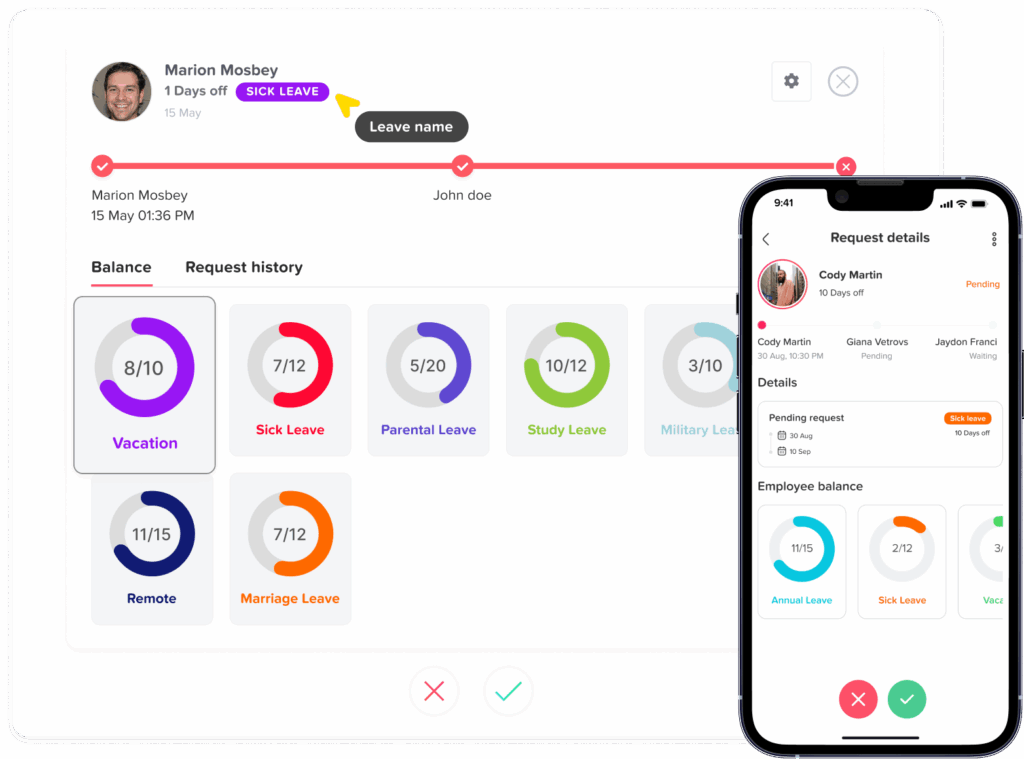
For example, with Day Off, employees can submit leave requests digitally while managers review balances, dates, policies, and team availability from the same system. Approval workflows can also help ensure requests reach the correct decision makers rather than sitting unnoticed in someone’s inbox.
A structured system is especially useful when a company has:
- Multiple teams
- Different leave policies
- Remote employees
- Multiple office locations
- Different work schedules
- Two-level approvals
- Several managers
- Large numbers of PTO requests
The purpose of automation is not simply to approve requests faster. It is to give managers the information they need to make faster, more consistent decisions.
Create a PTO Request Approval Service Level Target
Companies can establish an internal response target for managers.
For example:
Routine PTO request should normally receive an approval or rejection within two business days of submission. Requests requiring additional staffing review should receive a decision within five business days whenever possible. If additional time is required, the employee should be informed of the reason for the delay and when a decision is expected.
This creates accountability without promising that every request will be approved.
The target concerns the response time, not the outcome.
What Should a PTO Request Approval Policy Include?
A strong policy should answer the questions employees are most likely to have.
Include:
- Who can request PTO
- How PTO is requested
- How much notice is required
- Who reviews requests
- Expected approval timeframe
- How balances are calculated
- Whether negative PTO is allowed
- Minimum request increments
- Maximum consecutive leave
- Rules for peak periods
- How overlapping requests are handled
- Whether holidays count against PTO
- What happens if a manager is absent
- How employees should report emergencies
- When a request may be denied
- How employees are notified of decisions
The more clearly these rules are documented, the fewer disputes managers need to resolve individually.
Can a Manager Deny a PTO Request?
For ordinary discretionary vacation leave, whether a manager can deny a request generally depends on applicable law, company policy, employment agreements, and the nature of the leave.
Common operational reasons for denying or asking an employee to change a vacation request may include:
- Insufficient staffing
- Too many employees already approved for the same dates
- Required minimum coverage
- A documented blackout period
- Insufficient available PTO
- Failure to meet a reasonable notice requirement
- A major business deadline
However, managers should avoid inconsistent decisions.
For example, approving one employee’s holiday request while denying another employee’s identical request without a legitimate reason can create perceptions of unfair treatment.
Managers must also determine whether the requested absence could involve legally protected leave before treating it like ordinary vacation.
Should Managers Explain Why a PTO Request Was Denied?
In most cases, yes.
A simple explanation helps employees understand whether they can change the request and submit another one.
Instead of:
Rejected.
A manager could explain:
Three team members are already approved for these dates, and approving another absence would leave the support team below minimum coverage. If your dates are flexible, please submit an alternative period.
The second response provides useful information and gives the employee a clear next step.
Measuring the PTO Request Approval Process
Organizations with frequent leave requests can monitor approval performance.
Useful metrics include:
- Average PTO approval time
- Percentage approved within the target timeframe
- Number of requests pending more than three days
- Number of escalated requests
- Approval rate
- Rejection rate
- Most common rejection reasons
- Number of overlapping leave conflicts
These metrics can reveal whether a problem is caused by individual managers or by the leave process itself.
For example, if most managers approve requests within one day but one department averages seven days, the business can investigate the reason.
Example of an Effective PTO Request Approval Process
Consider a company where an employee wants to take five vacation days.
Step 1: Employee submits the request
The employee selects the dates and submits the PTO Request through the company’s leave system.
Step 2: The system checks the balance
The employee has enough available PTO for the absence.
Step 3: Manager receives a notification
The request appears in the manager’s approval queue.
Step 4: Manager checks team availability
One other employee will be off during part of the same week, but sufficient coverage remains.
Step 5: Manager approves the request
The request is approved the following business day.
Step 6: Employee receives confirmation
The employee can now finalize their plans.
Step 7: Team calendar updates
The approved absence becomes visible to the relevant employees or managers.
The entire process may take less than 24 hours because the manager has all necessary information available.
Common PTO Request Approval Mistakes
Leaving requests pending
One of the biggest mistakes is simply failing to make a decision.
Even a rejection is more useful than indefinite uncertainty.
Approving requests verbally only
A manager saying “that’s fine” in a hallway conversation can create confusion later.
Employees should receive a recorded approval.
Applying different rules to different employees
Managers should follow the same policy consistently.
Treating every request as a staffing emergency
Time off is a normal part of workforce management. Organizations should plan for reasonable employee absences.
Automatically denying overlapping requests
Two people requesting the same day does not automatically mean one must be rejected. Managers should evaluate actual staffing requirements.
Ignoring protected leave requirements
A request that initially looks like ordinary PTO could involve protected sick, medical, family, or other leave.
When the reason indicates that legal protection may apply, the request should be reviewed appropriately.
Frequently Asked Questions
How quickly should a manager approve PTO?
For routine vacation requests, one to two business days is a reasonable internal target for many organizations. More complex requests may take three to five business days. Companies should define their own expected response time in their PTO policy.
Is two weeks too long to wait for PTO approval?
For an ordinary vacation request, two weeks without any communication would generally be an unnecessarily long period for most businesses. If the decision requires additional review, the manager should at least inform the employee why the request is still pending and when a response can be expected.
Can I book a vacation while my PTO request is still pending?
Employees should normally wait until their PTO has been formally approved before making non-refundable travel arrangements unless company policy clearly states otherwise. Submitting a request does not necessarily mean the absence has been approved.
Does submitting PTO mean it is automatically approved?
No. Unless the company’s policy specifically provides automatic approval, a submitted request normally remains pending until an authorized manager or approver accepts it.
Can a manager ignore a PTO request?
A manager should not leave requests unanswered. Companies should establish response expectations and an escalation process so employees know what to do when a request remains pending.
What should I do if my manager does not approve or deny my PTO?
Follow the company’s escalation process. This could involve sending the manager a reminder, contacting another authorized approver, or asking HR or an administrator to review the pending request.
Can a manager deny PTO because another employee is already off?
Potentially, depending on the company’s policy and applicable law. However, another employee being absent should not automatically require denial. Managers should consider whether enough staffing and coverage remain.
How far in advance should employees request PTO?
The appropriate notice period depends on the length of the leave and the company’s staffing needs. Many businesses require more advance notice for extended vacations than for one-day requests. The requirement should be clearly documented.
Can a manager revoke already approved PTO?
Policies and applicable laws vary, and canceling approved leave should generally be handled carefully. Businesses should define when an approved absence can be changed and communicate with the employee as early as possible if a serious operational issue arises.
Is there a federal law requiring vacation PTO to be approved within a certain number of days?
For ordinary vacation leave in the United States, the FLSA does not establish a general deadline requiring an employer to approve a vacation request within a particular number of days. However, other types of leave, such as FMLA leave or legally protected paid sick leave, may carry specific requirements.
Conclusion
For most companies, managers should aim to make a decision on a routine PTO Request within one to two business days. More complicated requests may reasonably take three to five business days, but employees should not be left wondering indefinitely whether their time off has been accepted.
The most effective PTO approval process is not necessarily the one that approves every request instantly. It is the one that is fast, predictable, consistent, and transparent.
Clear notice requirements, defined approval deadlines, team calendars, backup approvers, automated notifications, and centralized leave records can make PTO decisions much easier for both managers and employees.
Most importantly, businesses should distinguish ordinary vacation PTO from sick leave, FMLA, and other potentially protected absences. A clear company policy can establish the expected timeline for routine requests, while HR and management remain responsible for applying any federal, state, local, contractual, or industry specific requirements that may apply.