








A tiered PTO policy rewards employees with more paid time off as they complete additional years of service. For example, an employee may receive 120 hours of PTO during their first two years, 144 hours after completing three years, and 160 hours after completing five years.
The structure appears simple until an employee reaches a seniority milestone in the middle of a pay period.
Should HR apply the old accrual rate to the entire pay period? Should the new rate apply immediately? Should the accrual be divided between the two rates? Should the increase wait until the next full pay period?
A consistent seniority PTO accrual calculation depends on the wording of the company policy, the effective date assigned to the new tier, the accrual frequency, payroll configuration, and applicable employment laws.

In many cases, the clearest approach is to make the new rate effective on the employee’s anniversary and prorate the pay period between the old and new rates. However, employers may also use the first full pay period after the anniversary when this method is clearly stated in the policy and permitted by applicable law.
This guide explains how to calculate a mid-period tenure-based PTO increase, compare the available methods, prevent balance errors, and document the rule in a clear tiered PTO policy.
What Is a Seniority-Based PTO Policy?
A seniority-based PTO policy increases an employee’s paid leave entitlement after the employee completes a defined period of service.
The employee’s entitlement may increase after:
- One year of employment
- Three years of employment
- Five years of employment
- Ten years of employment
- Another milestone selected by the employer
A company might use the following structure:
| Completed service | Annual PTO entitlement | Example biweekly accrual |
|---|---|---|
| Less than 3 years | 120 hours | 4.62 hours |
| 3 to less than 5 years | 144 hours | 5.54 hours |
| 5 years or more | 160 hours | 6.15 hours |
This arrangement is often called a tiered PTO policy because employees move through different entitlement levels as their tenure increases.
The additional PTO may be provided through:
- Weekly, biweekly, semimonthly, or monthly accruals
- Accrual based on eligible hours worked
- An annual PTO grant
- A frontloaded balance on the employee’s anniversary
The delivery method matters because it determines when and how the higher rate should begin.
Why Mid-Pay-Period PTO Increases Need a Clear Rule
Employee anniversaries do not always fall on the first day of a payroll period.
For example, an employee may reach five years of service on August 10 while the biweekly pay period runs from August 3 through August 16. Part of the period falls under the old seniority tier, while the remaining days fall under the new tier.
Without a defined rule, different people may calculate the accrual differently:
- HR may apply the new rate from the anniversary date.
- Payroll may wait until the next full pay period.
- The PTO system may use the rate active when the period began.
- The employee may expect the full higher accrual.
Even a small difference can lead to complaints, repeated corrections, and inaccurate PTO reports. A clear effective-date rule prevents these problems.
Start With the Written PTO Policy
Before selecting a calculation method, HR should review the exact wording of the policy.
A policy may state: Employees begin earning PTO at the higher rate on the date they complete the required years of service.
This wording supports applying the new rate from the anniversary date and prorating the affected period.
Another policy may state: The higher accrual rate begins with the first full pay period following the employee’s service anniversary.
Under this rule, the old rate continues through the current period, and the new rate begins with the next complete period.
A policy may also determine each employee’s PTO tier at the start of the calendar or benefit year. In that case, an anniversary may not affect the entitlement until the next plan year.
The company should not choose a different method each time an anniversary occurs. The effective date should be written clearly and applied consistently.
Should HR Use the Old or New PTO Rate?
There are four common ways to process a seniority increase that occurs during a pay period.
Option 1: Prorate the Period Between the Old and New Rates
Proration means applying the old rate to the portion of the period before the anniversary and the new rate beginning on the anniversary date.
This is usually the most precise method when the policy says the employee becomes eligible for the higher rate on the anniversary itself.
Example
An employee’s annual entitlement increases from 120 hours to 160 hours. The company uses 26 biweekly accrual periods each year.
The old biweekly rate is calculated by dividing 120 hours by 26 pay periods. This produces an accrual of approximately 4.6154 hours per period.
The new biweekly rate is calculated by dividing 160 hours by 26 pay periods. This produces an accrual of approximately 6.1538 hours per period.
Assume the employee spends seven days of the 14-day period under each rate.
The old-rate portion is calculated by multiplying 4.6154 hours by 7 and dividing the result by 14. This equals approximately 2.3077 hours.
The new-rate portion is calculated by multiplying 6.1538 hours by 7 and dividing the result by 14. This equals approximately 3.0769 hours.
The total accrual for the anniversary period is approximately 5.3846 hours. The employer may round the final amount to 5.38 hours if its policy uses two decimal places.
When this method works best
Proration may be the best option when:
- The policy makes the higher rate effective on the anniversary.
- The PTO system can divide an accrual period.
- The company wants the calculation to reflect the exact effective date.
- HR has a clear rule for counting calendar days, workdays, or eligible hours.
The main disadvantage is that the calculation requires more detail. Manual adjustments may also be necessary when the PTO or payroll system cannot apply two rates during one period.
Option 2: Use the Old Rate for the Entire Period
Under this method, the employee receives the old accrual amount for the pay period containing the anniversary. The higher rate begins with the next full pay period.
Using the previous example, the employee would receive approximately 4.6154 hours for the anniversary period. The following period would use the new rate of approximately 6.1538 hours.
This method is appropriate when the policy clearly states that the higher rate begins with the first full pay period after the employee completes the required service.
When this method works best
This approach may be suitable when:
- The policy is written around complete payroll periods.
- The payroll or PTO system cannot split one period between two rates.
- Employees have been informed about the timing rule.
- The same method is used for all employees covered by the policy.
The main disadvantage is that the employee does not begin earning at the higher rate immediately on the anniversary. This can create disputes when the policy does not clearly explain the delay.
Option 3: Use the New Rate for the Entire Period
Some employers apply the higher rate to the complete pay period containing the anniversary.
Using the same example, the employee would receive approximately 6.1538 hours for the entire anniversary period.
This method is more favorable to the employee because the new rate applies to some days before the employee technically completed the service milestone.
When this method works best
This option can work when:
- The policy says the new tier applies to the anniversary pay period.
- The employer intentionally uses an employee-friendly rule.
- The system determines the rate based on the employee’s status at the end of the period.
- The company accepts the additional PTO cost.
The rule should still be written clearly. Otherwise, employees with different anniversary dates may receive inconsistent treatment.
Option 4: Apply the Increase at the Next Plan Year
Some organizations determine PTO tiers only once each year instead of updating them on individual anniversary dates.
For example, the company may assign each employee’s entitlement based on completed service as of January 1.
An employee who reaches five years of service in August would remain in the previous tier until the following January.
When this method works best
This approach is often used when:
- PTO is granted annually instead of accrued each pay period.
- The policy uses one fixed entitlement date.
- The employer wants simpler annual administration.
- Employees are clearly informed about the plan-year rule.
The main disadvantage is that employees may wait several months to receive the seniority benefit. The policy should explain this timing so employees do not assume the increase begins on their anniversary.
Recommended Treatment by Policy Type
| Policy wording or accrual method | Recommended treatment |
|---|---|
| Higher rate begins on the anniversary | Prorate the affected period |
| Higher rate begins with the next full pay period | Use the old rate for the current period |
| Higher rate applies to the anniversary pay period | Use the new rate for the full period |
| Tier is determined at the start of the plan year | Apply the increase in the next plan year |
| PTO is earned for each eligible hour worked | Apply each rate to the hours worked under that tier |
| PTO is granted on the anniversary | Grant the entitlement assigned to the new service level |
| Policy does not explain the timing | Review prior practice and establish a written rule before calculating |
How to Calculate a Prorated Seniority Increase
The seniority PTO accrual calculation should match the way PTO is earned under the company policy.
A company may divide the period using calendar days, scheduled workdays, or eligible hours worked
Calendar-Day Proration
Calendar-day proration divides the accrual according to the number of calendar days the employee spends under each rate.
To calculate it, multiply the old pay-period accrual by the number of days under the old rate and divide the result by the total number of days in the period.
Then multiply the new pay-period accrual by the number of days under the new rate and divide the result by the total number of days.
Add the two amounts together to find the employee’s total accrual for the period.
This method may be suitable when PTO is attached to the complete accrual period rather than directly connected to scheduled workdays or hours worked.
Workday Proration
Workday proration uses the employee’s eligible scheduled workdays rather than every calendar day.
HR first calculates the portion of the accrual connected to eligible workdays before the anniversary. It then calculates the portion connected to eligible workdays on or after the anniversary.
The two amounts are added together to determine the final accrual.
This approach may be more appropriate when employees have fixed schedules and the company wants the calculation to reflect days the employee was expected to work.
Hours-Worked Proration
When PTO is earned according to eligible hours worked, HR should apply the old hourly accrual rate to hours worked before the anniversary and the new hourly rate to hours worked on or after the anniversary.
For example, assume an employee works 32 eligible hours before the anniversary and 48 eligible hours after it.
The old accrual rate is 0.0577 PTO hours for every eligible hour worked. The new rate is 0.0769 PTO hours for every eligible hour worked.
The employee earns approximately 1.8464 PTO hours for the 32 hours worked under the old rate.
The employee earns approximately 3.6912 PTO hours for the 48 hours worked under the new rate.
The total PTO earned during the period is approximately 5.5376 hours. The final amount should be rounded according to the company’s written rounding rule.
Biweekly PTO Accrual Example
An employee moves from 120 annual PTO hours to 144 annual hours after completing three years of service.
The old biweekly rate is calculated by dividing 120 hours by 26 periods. This equals approximately 4.6154 hours per period.
The new biweekly rate is calculated by dividing 144 hours by 26 periods. This equals approximately 5.5385 hours per period.
Assume the anniversary occurs four days into a 14-day pay period. Three days fall under the old rate, while 11 days fall under the new rate.
The old-rate portion is calculated by multiplying 4.6154 hours by 3 and dividing the result by 14. This equals approximately 0.9890 hours.
The new-rate portion is calculated by multiplying 5.5385 hours by 11 and dividing the result by 14. This equals approximately 4.3517 hours.
The employee’s total accrual for the period is approximately 5.3407 hours. The employer may round this to 5.34 hours.
The policy should also explain whether the anniversary date itself belongs to the old or new tier. Wording such as “beginning on the anniversary date” normally means the anniversary date uses the new rate.
Semimonthly PTO Accrual Example
A semimonthly employer uses 24 accrual periods each year.
The employee moves from 120 annual PTO hours to 160 annual hours.
The old semimonthly rate is calculated by dividing 120 hours by 24 periods. This equals 5 hours per period.
The new rate is calculated by dividing 160 hours by 24 periods. This equals approximately 6.6667 hours per period.
Assume the affected period contains 15 days. Nine days fall under the old tier, while six days fall under the new tier.
The old-rate portion is calculated by multiplying 5 hours by 9 and dividing the result by 15. This equals 3 hours.
The new-rate portion is calculated by multiplying 6.6667 hours by 6 and dividing the result by 15. This equals approximately 2.6667 hours.
The employee’s total accrual for the period is approximately 5.6667 hours. The company may round the amount to 5.67 hours.
HR should use the actual number of days in the semimonthly period. A period running from the 1st through the 15th may not contain the same number of days as a period running from the 16th through the end of the month.
Monthly PTO Accrual Example
An employee’s annual entitlement increases from 120 hours to 144 hours.
The old monthly accrual is calculated by dividing 120 hours by 12 months. This equals 10 hours per month.
The new monthly accrual is calculated by dividing 144 hours by 12 months. This equals 12 hours per month.
Assume the employee’s anniversary occurs on the 16th day of a 30-day month.
The first 15 days use the old rate. Multiplying 10 hours by 15 and dividing the result by 30 produces an old-rate portion of 5 hours.
The remaining 15 days use the new rate. Multiplying 12 hours by 15 and dividing the result by 30 produces a new-rate portion of 6 hours.
The employee’s total monthly accrual is 11 hours.
Some monthly policies do not prorate. They may use the employee’s tier on the first day or final day of the month. The policy should clearly identify which method applies.
Should the New Rate Apply Retroactively?
A tenure-based PTO increase normally applies from the defined effective date forward. It does not usually change PTO earned before the employee completed the required years of service.
For example, an employee who moves to a higher tier in August would not normally have their January through July accruals recalculated at the higher rate.
The usual process is to preserve the PTO already earned under the old rate, apply the higher rate beginning on the policy’s effective date, prorate the anniversary period when required, and use the full new rate for future periods.
A retroactive adjustment may be necessary when the employee qualified earlier but HR or the PTO system failed to activate the new tier.
For example, if the higher rate should have begun in March but the system continued using the old rate through June, HR should calculate the difference between what the employee received and what the employee should have received. The missing hours can then be added as a documented balance adjustment.
What Happens to the Existing PTO Balance?
A seniority increase normally changes how much PTO the employee earns in the future. It should not remove, replace, or recalculate the employee’s existing earned balance.
For example, assume the employee has 42 hours available before the anniversary and earns 5.38 hours during the anniversary period.
The updated balance becomes 47.38 hours before accounting for any PTO used during the same period.
The employee keeps the 42 hours earned under the earlier tier, and the new accrual is added to that balance.
HR should avoid:
- Deleting PTO earned under the previous tier
- Replacing the current balance with the new annual entitlement
- Recalculating PTO already used
- Removing hours because the employee changed tiers
- Applying the higher rate to earlier periods without a valid reason
Annual grant policies may work differently. The policy should explain whether the anniversary creates an additional grant, a prorated increase, or no change until the next scheduled grant date.
How Accrual Caps Affect the Increase
higher accrual rate may not immediately increase the employee’s balance if the employee has already reached the policy’s maximum.
For example, assume the employee has a current balance of 180 hours and the policy has a maximum balance of 180 hours.
Even if the employee’s new biweekly accrual rate is 6.15 hours, the employee may not receive that accrual while the balance remains at the maximum.
Accrual may resume after the employee uses enough PTO to fall below the cap.
Some tiered PTO policies increase both the annual accrual and the maximum balance.
| Seniority level | Annual entitlement | Maximum balance |
|---|---|---|
| Less than 3 years | 120 hours | 180 hours |
| 3 to less than 5 years | 144 hours | 216 hours |
| 5 years or more | 160 hours | 240 hours |
Under this policy, an employee entering the five-year tier receives a higher accrual rate and a higher maximum balance.
HR should therefore review both settings when processing the anniversary. Updating the rate without updating the cap may prevent the employee from receiving the benefit correctly.
What If the Employee Uses PTO During the Anniversary Period?
PTO usage and PTO accrual should be treated as separate transactions.
For example, assume the employee begins the period with a balance of 40 hours, earns a prorated accrual of 5.38 hours, and uses 8 hours of approved PTO.
The closing balance is calculated by adding the 5.38-hour accrual to the 40-hour opening balance and then subtracting the 8 hours used.
The employee’s closing balance is 37.38 hours.
The new accrual rate determines how much PTO the employee earns. It does not usually change how many hours should be deducted for an approved absence.
The deduction should reflect the employee’s scheduled hours or the company’s established leave-deduction rules.
What If the PTO System Cannot Split the Period?
Some PTO and payroll systems can apply only one accrual rate to a complete period.
In that situation, HR may allow the system to calculate the old or new rate and then post a manual adjustment for the difference.
For example, assume the system calculates 4.62 hours using the old rate, but the correct prorated accrual is 5.38 hours.
HR would add a manual adjustment of 0.76 hours.
The adjustment record should include:
- The employee’s anniversary date
- The previous accrual tier
- The new accrual tier
- The calculation method
- The adjustment amount
- The reason for the adjustment
- The person who approved it
Another option is to begin the new rate with the next full pay period, but this should only be used when the written policy supports that approach.
A system limitation should not cause HR to apply different rules to employees covered by the same policy.
Common Seniority PTO Calculation Mistakes
Applying the Higher Rate to the Entire Year
The employee should not normally receive the new rate for periods completed before reaching the seniority milestone.
The higher rate should begin on the date defined by the policy unless the company is correcting a previous error.
Delaying the Increase Without Policy Support
Waiting until the next pay period or plan year may be incorrect when the policy says the employee becomes eligible on the anniversary.
HR should follow the written effective-date rule rather than choosing the easiest system setting.
Replacing the Existing Balance
The employee keeps PTO already earned under the previous tier.
The new tier normally changes future accruals only. It should not replace the employee’s current available balance.
Ignoring the Effective Date
The employee’s anniversary date, payroll date, pay-period start date, and accrual posting date may all be different.
HR should identify which date controls the tier change before completing the calculation.
Forgetting the PTO Cap
An employee may qualify for a higher rate but still receive no accrual because the balance has reached the maximum.
HR should check whether the employee’s new seniority tier also changes the cap.
Using Different Rules for Similar Employees
Employees covered by the same policy should receive the same calculation treatment.
Using proration for one employee and the next-pay-period method for another can create disputes and make PTO records difficult to explain.
Rounding Too Early
Rounding each part of the calculation can produce a different final result.
A better approach is to keep several decimal places throughout the calculation and round only the final accrual according to the company’s policy.
Updating Only One System
HR may update the employee’s seniority tier in the HR system but forget to change the PTO tracker or payroll platform.
All connected systems should be reviewed so the employee’s future accruals remain accurate.
What a Tiered PTO Policy Should Explain
A clear tiered PTO policy should answer the following questions:
| Policy area | What to define |
|---|---|
| Seniority measurement | How completed service is calculated |
| Service date | Whether the hire date or an adjusted service date is used |
| New tier effective date | Anniversary date, anniversary pay period, or next full period |
| Mixed-period treatment | Whether the accrual is prorated |
| Proration method | Calendar days, workdays, or eligible hours |
| Existing balance | Whether previously earned PTO remains available |
| Accrual cap | The maximum balance for each tier |
| Rehired employees | Whether previous service counts |
| Leave of absence | Whether extended leave affects the service date |
| Rounding | How fractional PTO amounts are handled |
| Corrections | Who reviews and approves balance adjustments |
| Employee notice | How employees are informed about tier changes |
The more specific the policy is, the less room there is for inconsistent interpretation.
Sample Seniority PTO Policy Language
For an anniversary-based proration method, the policy may say:
Employees become eligible for a higher PTO accrual rate on the date they complete the required years of recognized service. If the anniversary occurs during an accrual period, the previous rate will apply before the anniversary and the new rate will apply beginning on the anniversary date. Existing PTO balances will remain unchanged.
For a first-full-period method, the policy may say:
The higher PTO accrual rate begins on the first day of the first complete pay period following the employee’s service anniversary. The previous rate will continue through the pay period containing the anniversary.
The wording should match the company’s actual payroll and PTO configuration. The organization should not promise anniversary-date proration if its systems and procedures always wait until the next full period.
HR Checklist for a PTO Anniversary Increase
Before processing the increase, HR should:
- Verify the employee’s original hire date or recognized service date.
- Confirm that the employee completed the required tenure.
- Review any breaks in service or extended unpaid leave.
- Identify the correct seniority tier.
- Confirm when the higher rate becomes effective.
- Determine whether the affected period must be prorated.
- Calculate the old-rate and new-rate portions.
- Review the employee’s current PTO balance.
- Check whether the accrual cap changes.
- Update the HR, payroll, and PTO systems.
- Document any manual adjustment.
- Review the next scheduled accrual.
- Inform the employee about the updated rate and balance.
This process helps HR detect errors before they continue into later pay periods.
Seniority PTO Audit Table
| Audit item | What to verify | Recommended action |
|---|---|---|
| Service date | The correct anniversary date is recorded | Correct the date before changing the tier |
| Current policy | The employee is assigned to the correct policy | Assign the appropriate tiered policy |
| Previous accrual | Earlier periods used the correct rate | Correct previous errors separately |
| Effective date | The increase starts on the policy-defined date | Update the tier start date |
| Proration | Both portions were calculated correctly | Post a documented adjustment |
| Accrual cap | The correct maximum balance applies | Update the cap or pause accrual |
| Existing balance | Previously earned hours were preserved | Restore any incorrectly removed hours |
| Future accrual | The next period uses the higher rate | Correct the recurring setup |
| Employee notice | The change was clearly communicated | Provide an updated balance statement |
| Audit record | The calculation and approval are documented | Add a clear adjustment note |
How Day Off Supports Tiered PTO Policies
Managing seniority milestones through spreadsheets can lead to missed anniversaries, incorrect accrual rates, inconsistent balance adjustments, and unclear employee records.
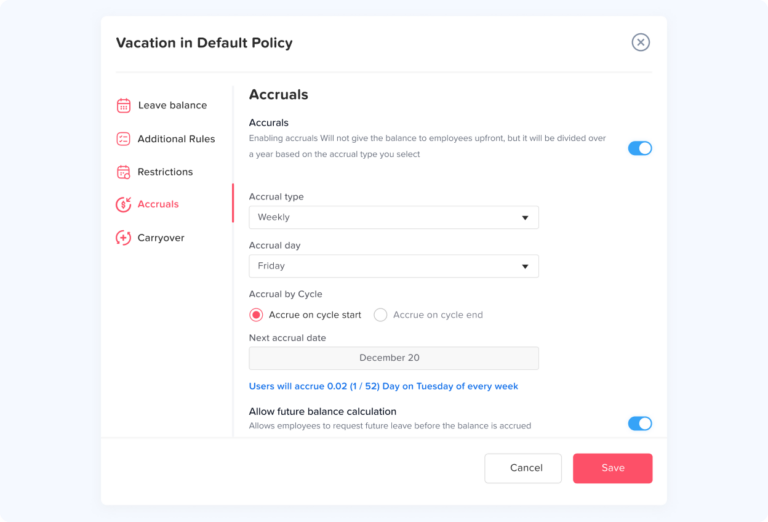
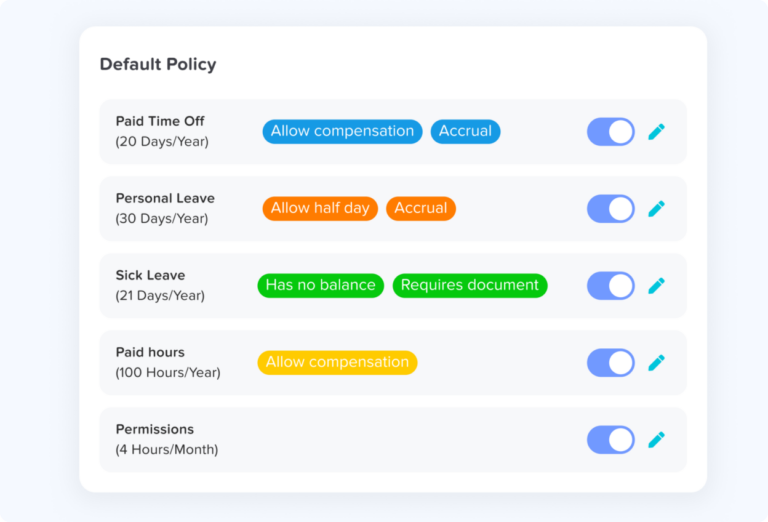
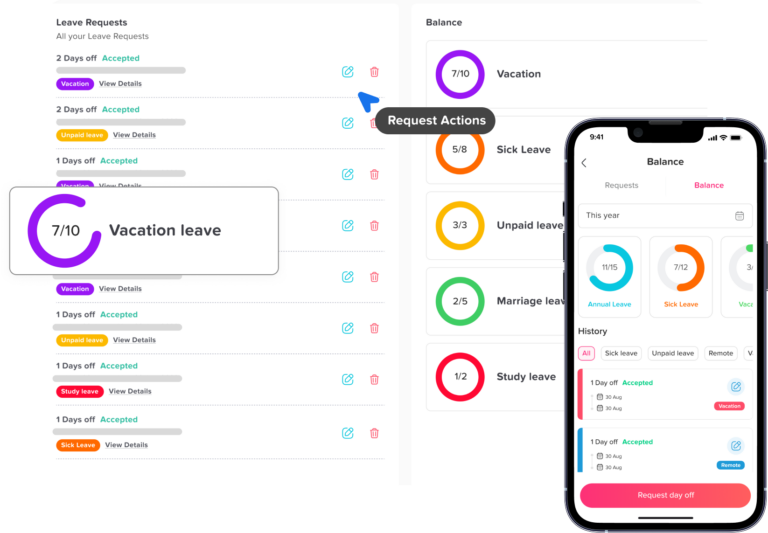
Day Off helps HR teams manage PTO policies, accrual schedules, employee balances, leave requests, and reports from one organized system.
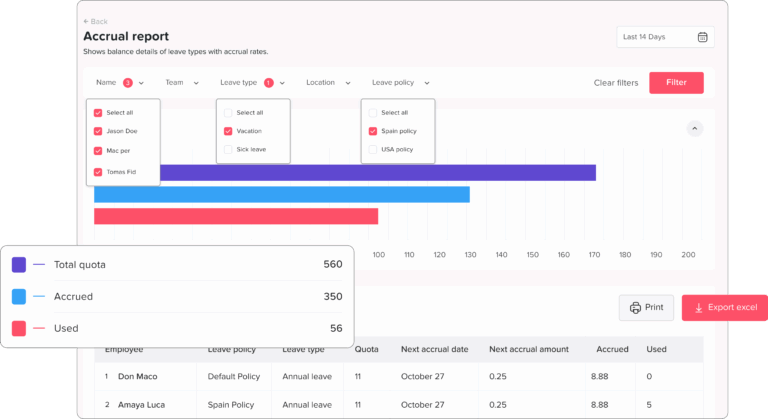
With Day Off, administrators can:
- Assign employees to the appropriate leave policy
- Configure different accrual schedules
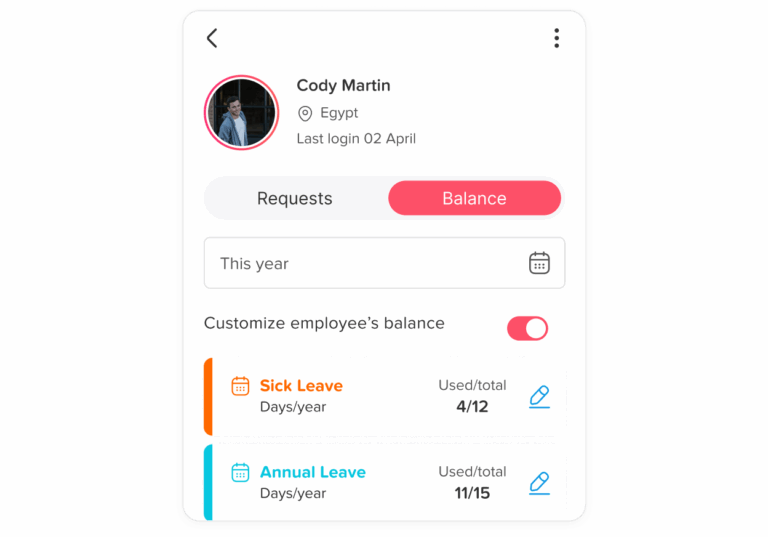
- Review current balances and upcoming accruals
- Track employee anniversary dates
- Record balance adjustments
- Review accrual and balance reports
- Give employees visibility into their available PTO
- Maintain clearer records of policy changes
The system configuration should always match the written policy. Automation can improve accuracy, but the company must first decide exactly when the higher seniority rate becomes effective.
Frequently Asked Questions About Seniority PTO Accrual
How do you calculate PTO accrual based on seniority?
First, identify the employee’s completed years of recognized service and match them to the correct PTO tier. Next, convert the annual entitlement into the company’s accrual frequency.
For example, an employee entitled to 144 PTO hours annually would earn approximately 5.54 hours during each of 26 biweekly accrual periods.
When the employee changes tiers during a pay period, HR must then follow the policy’s rule for proration, full-period changes, or next-period changes.
Does PTO increase on the employee’s anniversary date?
It depends on the wording of the PTO policy.
Some policies make the higher rate effective on the exact anniversary date. Others begin the increase with the next full pay period or at the start of the next benefit year.
The policy should identify one clear effective date. HR should not assume that the anniversary date automatically controls the calculation when the written policy uses a different rule.
Should a PTO increase be prorated when the anniversary falls in the middle of a pay period?
Proration is generally the most precise method when the policy says the higher rate begins on the anniversary date.
HR applies the old rate to the portion of the period before the anniversary and the new rate to the remaining portion. The calculation may be based on calendar days, scheduled workdays, or eligible hours worked, depending on how the policy defines accrual.
If the policy says the higher rate begins with the next complete pay period, proration is not necessary.
Can HR use the old PTO rate for the entire anniversary pay period?
Yes, when the policy clearly states that the higher rate begins with the first full pay period after the employee reaches the seniority milestone.
This method is easier to administer because one rate applies to the entire period. However, it should not be used when the policy promises that the increase becomes effective on the anniversary itself.
For comparison, the federal annual leave system applies a new accrual rate at the beginning of the pay period after the period in which the employee completes the required service. That is one specific policy model, not a universal rule for private employers.
Can the new PTO rate apply to the entire pay period?
The employer may apply the new rate to the entire anniversary pay period when the written policy specifically uses that method.
This approach is more favorable to the employee because it provides the higher rate for days before the anniversary. It is also easier to administer than proration, but the company must use the same rule consistently for employees covered by the policy.
Is a seniority PTO increase retroactive?
A seniority increase normally applies from the policy’s stated effective date forward. It does not usually require HR to recalculate PTO earned before the employee completed the required service milestone.
A retroactive correction may be necessary when the employee qualified for the higher tier earlier, but HR, payroll, or the PTO system failed to apply it on time.
HR should calculate the difference, add any missing PTO, and document why the adjustment was made.
Does the employee’s existing PTO balance change when the accrual rate increases?
The employee’s existing earned balance should normally remain unchanged.
The higher rate affects future accruals. It should not replace the current balance, remove hours earned under the previous tier, or recalculate PTO the employee has already used.
For example, an employee with 42 available hours keeps those 42 hours and begins adding future accruals at the new rate.
What happens if the employee has already reached the PTO accrual cap?
If the employee’s balance is at the maximum allowed under the policy, additional accrual may remain paused even after the employee qualifies for a higher earning rate.
HR should check whether the new seniority tier also includes a higher balance cap. If the cap increases, the employee may be able to resume earning PTO immediately. Accrual caps commonly stop additional earning until the employee’s balance falls below the defined maximum.
Does unpaid leave affect an employee’s PTO anniversary?
It depends on how the company defines recognized or continuous service.
Some policies continue counting service during approved unpaid leave. Others adjust the employee’s service date when the absence extends beyond a specified period.
The policy should explain whether parental leave, extended medical leave, military leave, seasonal inactivity, or another break affects the date used for the next PTO tier.
HR should also review any legal or contractual protections that apply to the absence before changing the employee’s service date.
Does previous service count when a former employee is rehired?
Previous service may count when the company has a service-restoration or rehire policy.
The policy should explain whether:
- All prior service is recognized
- Only service within a defined rehire period counts
- The employee restarts at the first PTO tier
- The original service date is restored
- The employee receives an adjusted seniority date
Without a clear rehire rule, two employees with similar total service may receive different PTO treatment.
What happens if an employee changes from full-time to part-time before the seniority increase?
HR should review both the employee’s seniority tier and their new work schedule.
The employee may still qualify for the higher tier based on completed service, but the entitlement may need to be prorated according to scheduled weekly hours or full-time-equivalent status.
For example, the employee may move to the higher seniority tier while receiving 75% of the full-time annual entitlement because they now work 30 rather than 40 hours per week.
How should HR handle an anniversary on the first day of a pay period?
When the policy makes the new rate effective on the anniversary date, the entire pay period will normally use the higher rate because the employee qualifies on the first day.
HR should still verify that the anniversary date is correct and that any service-date adjustments have already been recorded.
How should HR handle an anniversary on the last day of a pay period?
Under an anniversary-date policy, most of the period would use the old rate, while the final day would use the new rate.
Under a next-full-pay-period policy, the old rate would apply to the entire current period and the higher rate would begin on the first day of the following period.
How often should HR audit seniority-based PTO rates?
HR should review the rate when the employee approaches a service milestone and verify the first accrual posted after the change.
A broader audit can also be completed regularly to compare:
- Employee service dates
- Assigned PTO tiers
- Current accrual rates
- Maximum balances
- Manual adjustments
- Upcoming seniority milestones
Regular reviews help identify missed anniversaries before incorrect accruals continue across several payroll periods.
What should a tiered PTO policy include?
A clear policy should define:
- The service milestones for each PTO tier
- How recognized service is calculated
- The date the higher rate becomes effective
- Whether mixed periods are prorated
- The proration method
- The accrual rate for each tier
- The maximum balance for each tier
- How rehires and breaks in service are handled
- The rounding method
- How employees are notified about changes
The policy should match the actual settings used in the HR, payroll, and PTO systems.
Conclusion
A seniority increase that occurs in the middle of a pay period does not have one universal calculation method. HR may prorate the period, use the old rate until the next complete period, apply the new rate to the full anniversary period, or wait until the next plan year. The correct approach depends on the company’s written tiered PTO policy.
When the policy says the increase begins on the employee’s anniversary, dividing the period between the old and new rates is usually the most precise approach. When the policy says the change begins with the next full pay period, HR can continue using the old rate until the current period ends.
Whichever method the company selects, it should be clearly documented and applied consistently. HR should also preserve the employee’s existing balance, review the accrual cap, update every connected system, and verify the first accrual processed under the new tier.
Day Off helps companies manage employee service information, PTO policies, accrual schedules, balances, adjustments, approvals, and reports in one organized system. A reliable seniority PTO accrual calculation process helps employees receive the benefit they earned while reducing manual corrections, unclear balances, and avoidable disputes.